A guide to green fee value for money

Category: Members (Page 17 of 26)

79. Fortrose & Rosemarkie. 24 June 2018.

Possibly the best located Scottish golf course, with evidence that James Braid’s bunkering came pretty cheap!      

Round £55.   Par 69.  Value (out of 5) – 4.5

“The Black Isle?”  Well, it’s not an isle and it’s not particularly black!  But it is a 10 mile wide by 20 mile long peninsular just north of Inverness, which also has a further very small peninsular on it’s southern Moray Firth coastline which is the heavenly location of Fortrose & Rosemarkie golf course.
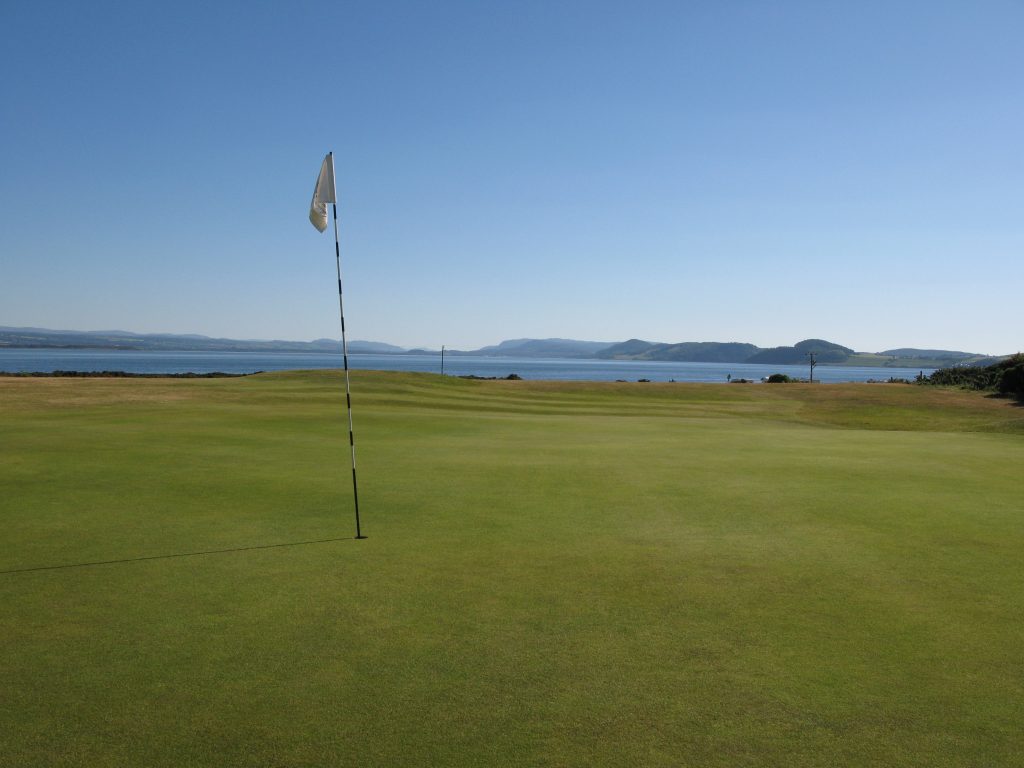
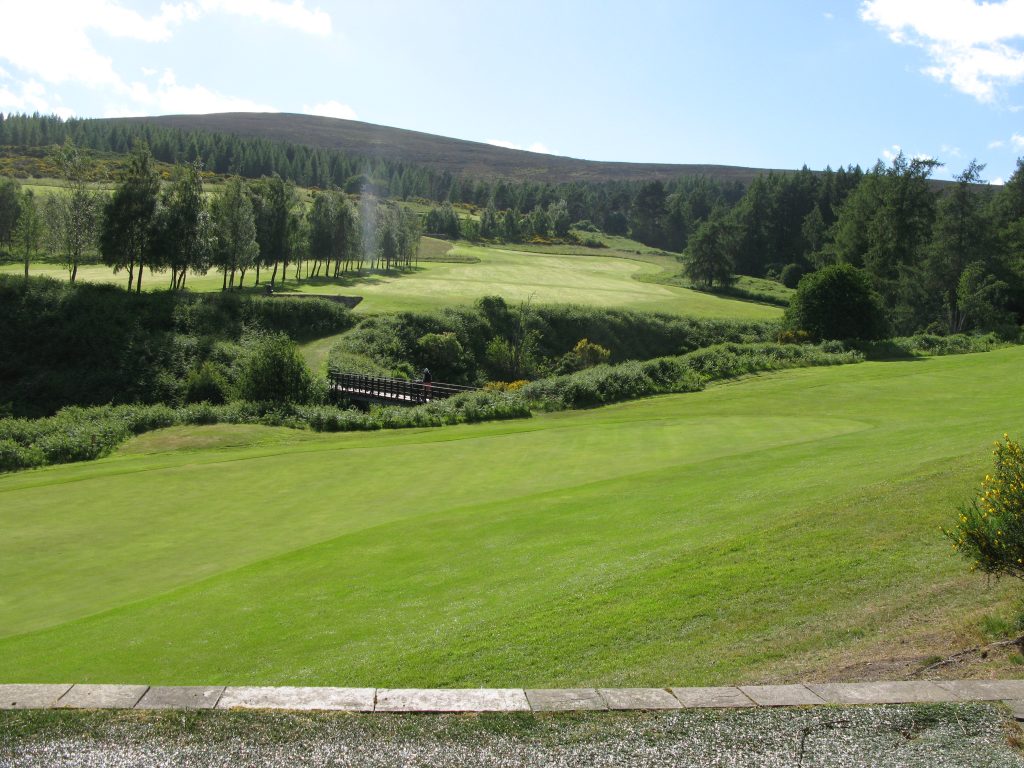
The 9th green looking back to the tee with the Moray and Beauly Firths in the background.

Scots sometimes refer (tongue in cheek) to being “from God’s own country”.  If that were the case, it might just be that God chose the Fortrose & Rosemarkie peninsular for his (or her!) own personal golf course.  I played the course on a wonderfully warm and sunny late midsummer evening for a twilight fee of only £30, shot 39 (4 over) on the back 9, including 2 birdies, and seriously thought that maybe I should just stop played with that golfing memory etched on my brain.  It really can’t get much better…can it?

The Black Isle has recently become a popular destination with the creation of the North Coast 500  but has long been a destination to play some of the cream of Scottish Links, with Royal Dornoch, Nairn and Tain all close by, plus the recent addition of Castle Stuart. Fortrose & Rosemarkie has actually been attracting golfing visitors in high numbers since the expansion of the railways in the late 19th century and golf in the course location is traceable back to 1702.  Established in 1793, is the Club is the 15th oldest in the world, of which they are very proud.
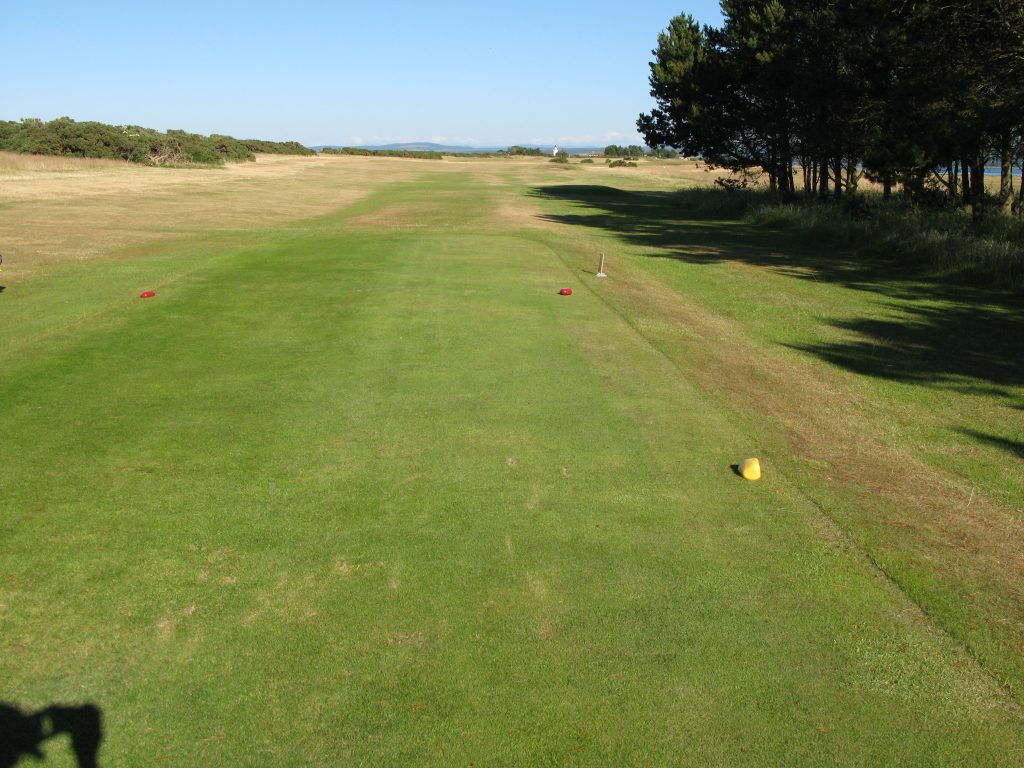
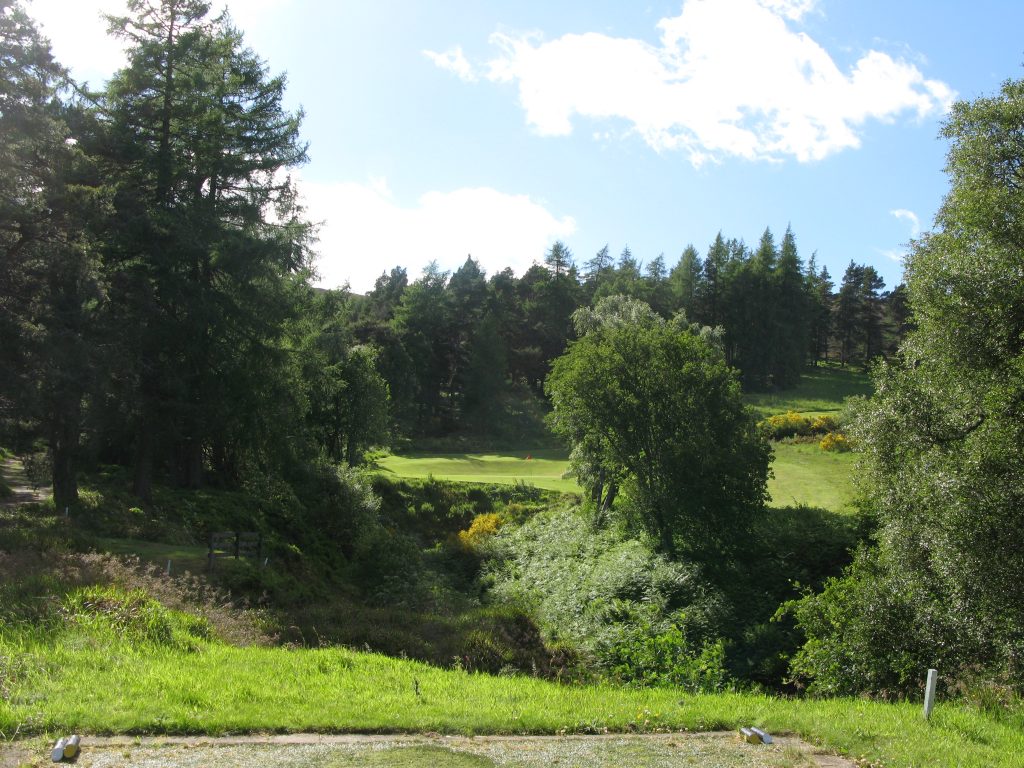
The 11th tee, which is one of several arguably bland holes around the turn at Fortrose and Rosemarkie.

The course is quite short, at only 5893 yards from white tees and 5594 yards from yellow tees which I used.   It is essentially 2 horseshoe loops with the outer loop played clockwise with sea (only in play at a few holes) on your left , then an inner smaller loop played in opposite direction.  The difficulty will be dominated by the weather, but the bunkering and greens are tricky and provide protection when the wind is down.    Originally a 9 hole layout, it was extended to 18 in 1924 and in both 1932 and 1934 James Braid was engaged to advise on layout and bunkering – his 1934 fee was £12.10/  which ended in the course in its current layout.   That is only about  £1000 in current value!
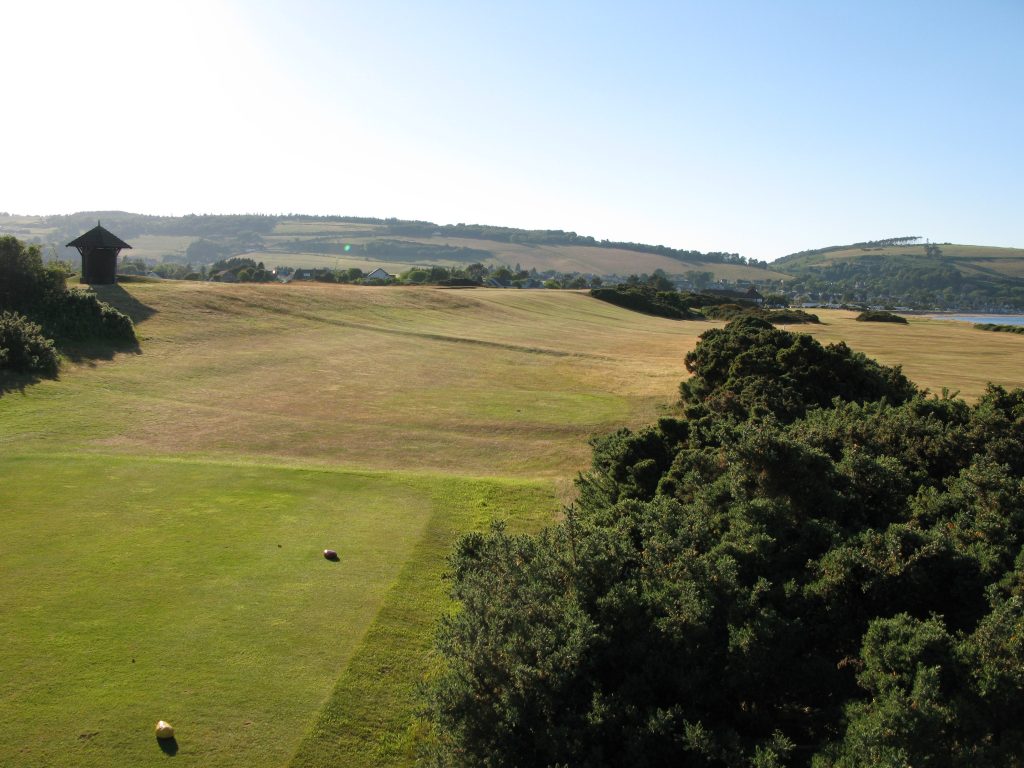
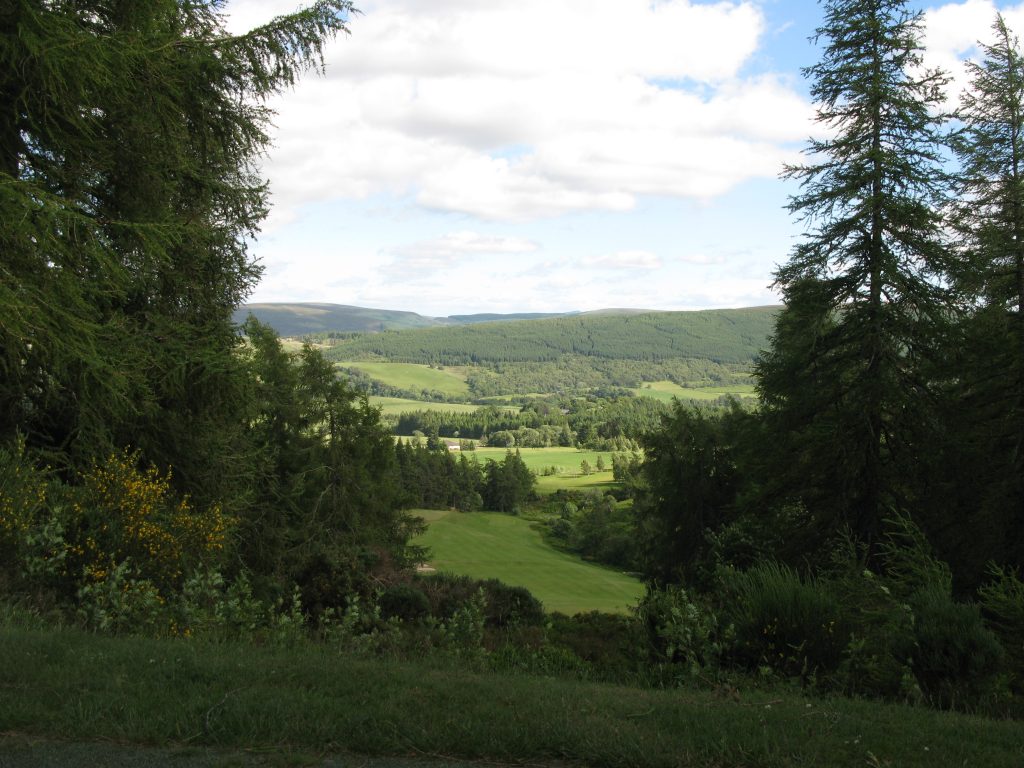
The 17th at Fortrose & Rosemarkie; play left to ensure reaching to the plateau fairway.

There are some majestic holes, most notably the long par 4 4th, played towards the lighthouse at Chanonry Point, which protects the small channel through the Moray Firth towards Inverness, which is a popular viewpoint to see the many dolphins which inhabit the area.  I have spoken to people who have played the course many times and never parred the 4th.
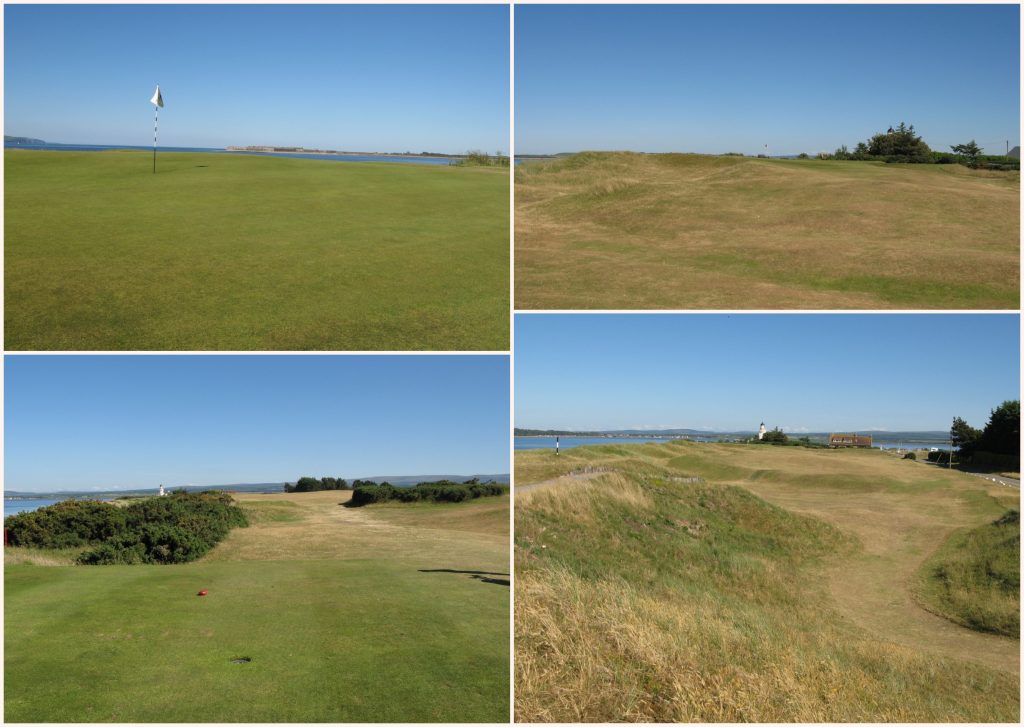
Mission Impossible – the long par 4 4th hole at Fortrose and Rosemarkie, with Lighthouse and Fort George in view.

The 13th is also a great example of visible links architecture and Braid’s bunkers.  A hole with many options from the tee box.
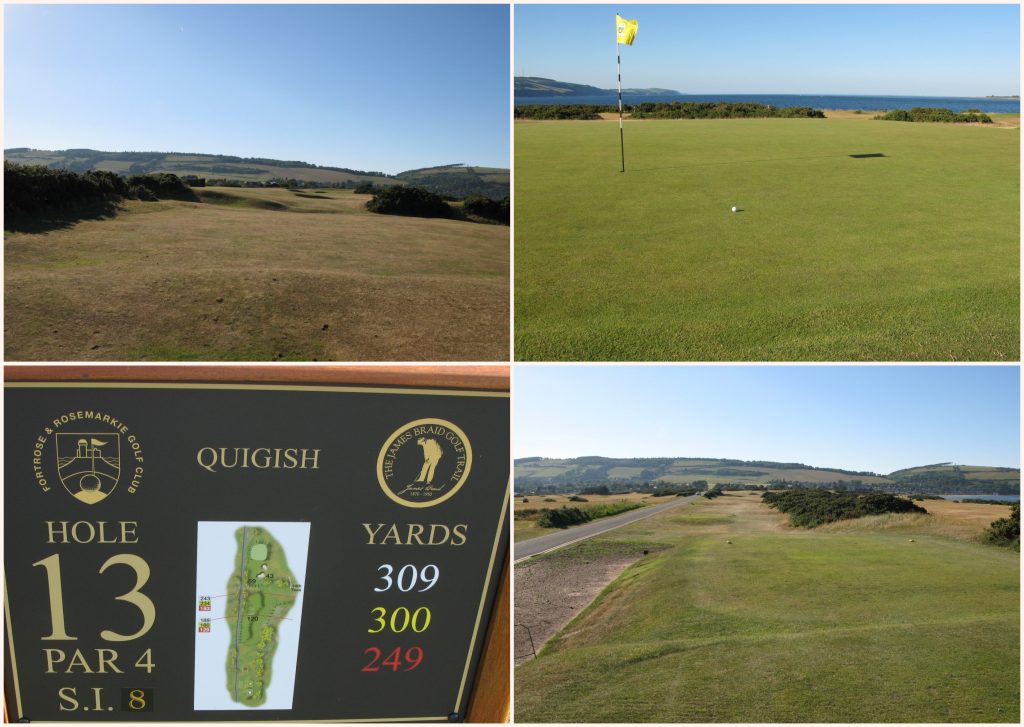
The 13th – a magnificent short par 4.

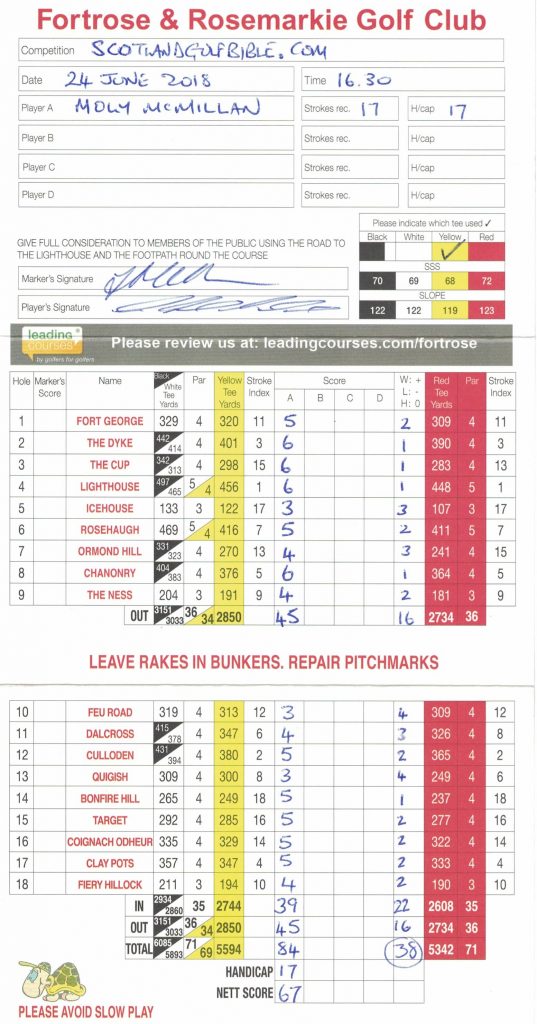
The course was in all round excellent condition when I played and the club are happy for visitors to use any of the tee boxes.    In the benign conditions I shot gross 84 (net 2 under), including 4 double bogies – inevitably one of these was at the 4th!.

This is a must play course, with a twilight fee at only £30 being especially great value.

Facts:

Course Type: Links

Par 69 (yellow; 15 par 4s,  3 par 3s)

Distance: 5594 yards

Moly’s Gross score84

Moly’s scorecard – 84 with only 39 on the back 9.
77. Dufftown. 21 June 2018.

Combine two of Scotland’s great pastimes – golf and hill walking – at this great value course   

Round £20.   Par 68.  Value (out of 5) – 5

Dufftown has a variety of claims among UK golf courses;  highest hole (9th), biggest drop from tee to green (10th) and highest climb from clubhouse to top of course.  You probably get the picture.  If you are looking to play an occasional bit of holiday golf with young kids, treat them to a buggy to avoid the inevitable “I’m tired” conversations after 9 holes.  Thankfully, buggies are available for hire at this course!

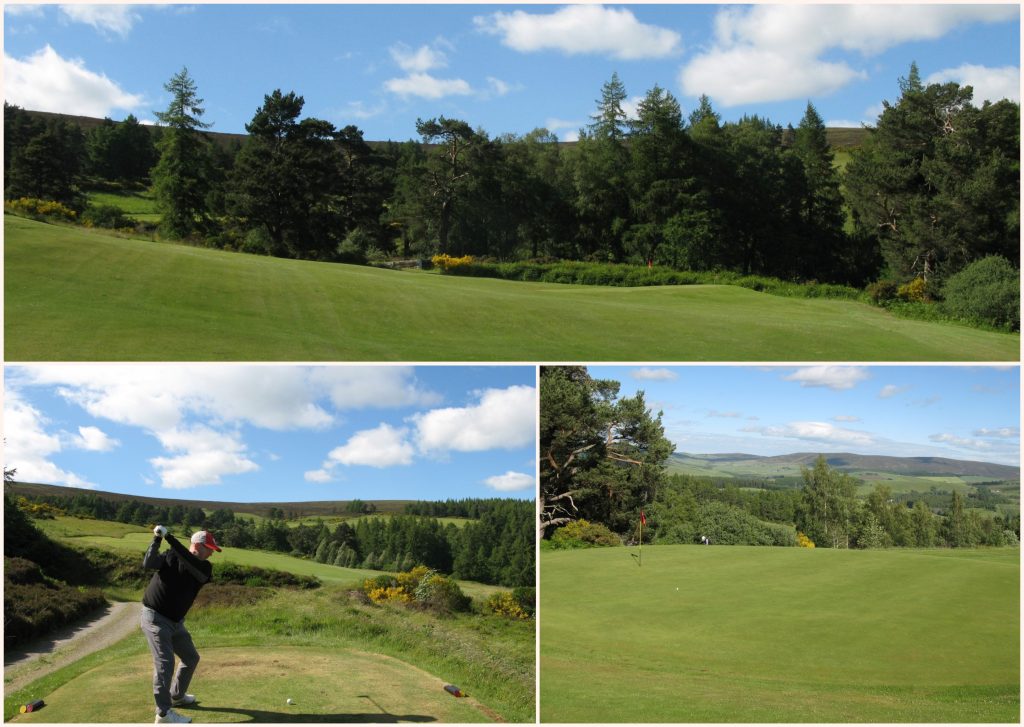
Moly at the 6th tee at Dufftown on a beautiful mid-summer evening.

Dufftown is well worth a visit for a variety of  reasons.  It’s the “whisky capital of the world” and home to William Grant & Sons distillers, producer of the biggest global selling single malt whisky, The Glenfiddich.  There are still traces of the early Picts and Christian communities dotted around Dufftown, so historians are also well served.   The pure local water made it a good location for illegal whisky and there are numerous villainous stories related to that.

Dufftown’s short 7th hole – “Fittie Burn”

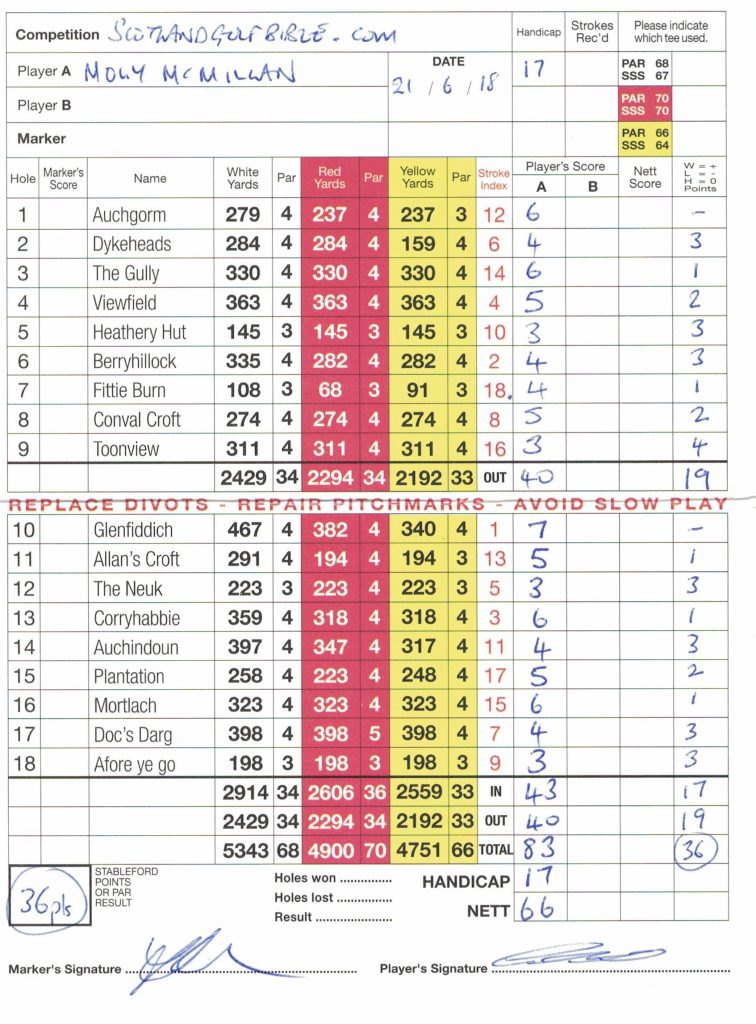
The golf course also has some villainous holes ready to capture and destroy your round.  Although short at only 5343 yards (white), 4751 (yellow) and (4900) red, there is great variety here.  There are many severely uphill or downhill holes and the stroke indexes don’t necessarily follow the normal “length = difficulty” rule.   There are several blind tee  shots and the greens are often on plateaus with dangerous surrounds.  All in all, its going to be difficult to avoid a calamitous hole over the round.

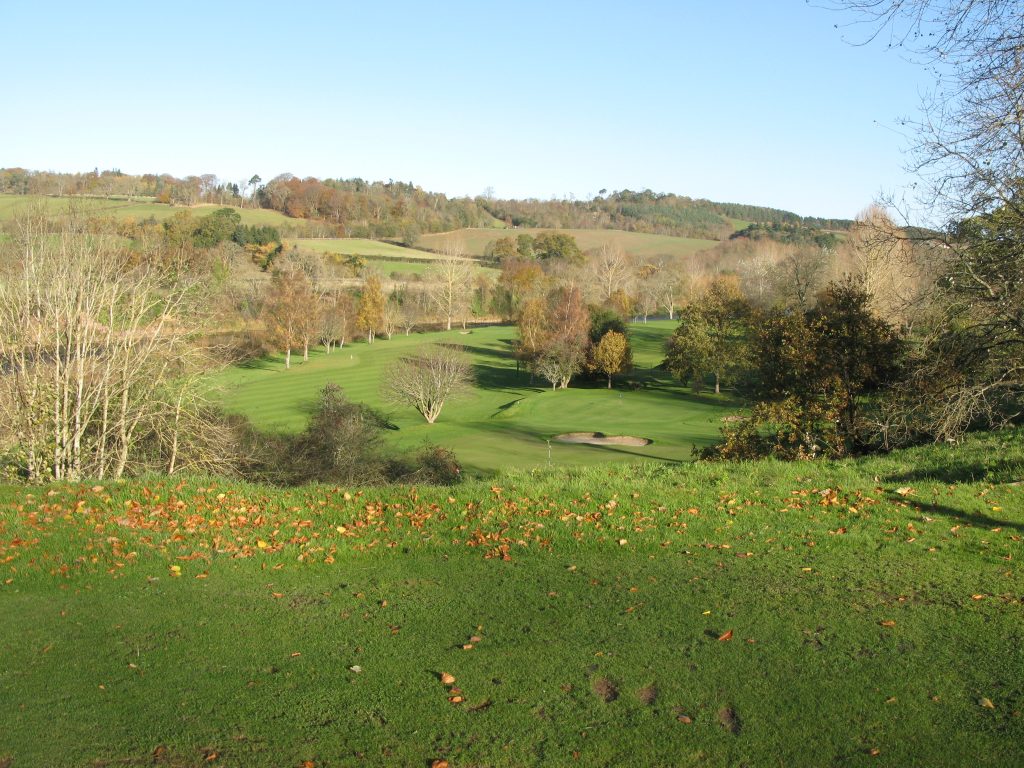
The 10th, the signature hole, is a great example.  Although the landing area is large, the view from the tee is intimidating, then the second shot needs to be played into a ever narrowing channel, to a long and thin green, with OOB all along the right of the left to right sloping fairway.  Record a par 4 and be delighted, record a 5 and be happy to move on.  I took a great triple bogie 7, having lost my drive (2 shot penalty), going through the back to a lateral hazards with my approach (1 penalty), then having a good chip and single putt!

The intimidating 10th at Dufftown – reputed the biggest drop in height on any course in the UK 

The course has one of the shortest holes in Scotland, the 7th (“Fittie Burn”), at around 100 yards, played over a deep gully.  As it was a nice day and we were pretty much alone, I spent 5 minutes looking for balls in the ravine, and found about a dozen – my hay fever took a battering though!

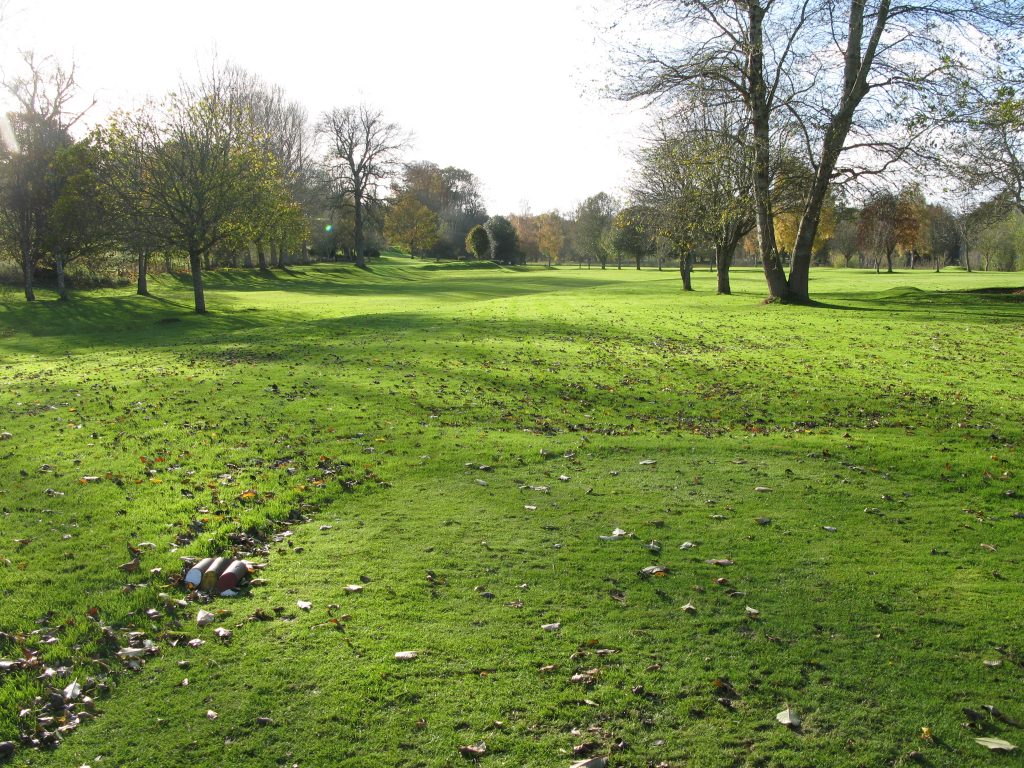
11th tee at Dufftown

The course was in wonderful condition and the greens true and even, albeit they had “lost” the 12th green, which was, according to the local green keeper, due to severe frost damage over the winter.  I had a good day shooting 83 including a birdie 3 at the downhill 9th.

What a wonderful treat to play this golf course on a beautiful mid-summer evening during the warmest June on record in Scotland.  If heaven does exist, and you have to pay green fees up there from a limited budget, then there is a strong argument that says Dufftown is where you would play

Facts:

Course Type: Heathland

Par 66 (12 par 4s, 2 par 3s)

Distance (yellow): 4751

Moly’s Gross score83

Moly’s Dufftown card – 83 for 36 points.

73. St Boswells. 10 Nov 2017.

Picturesque 9 hole course along the bank of the River Tweed      

Round £15.   Par 35.  Value (out of 5) – 3.5

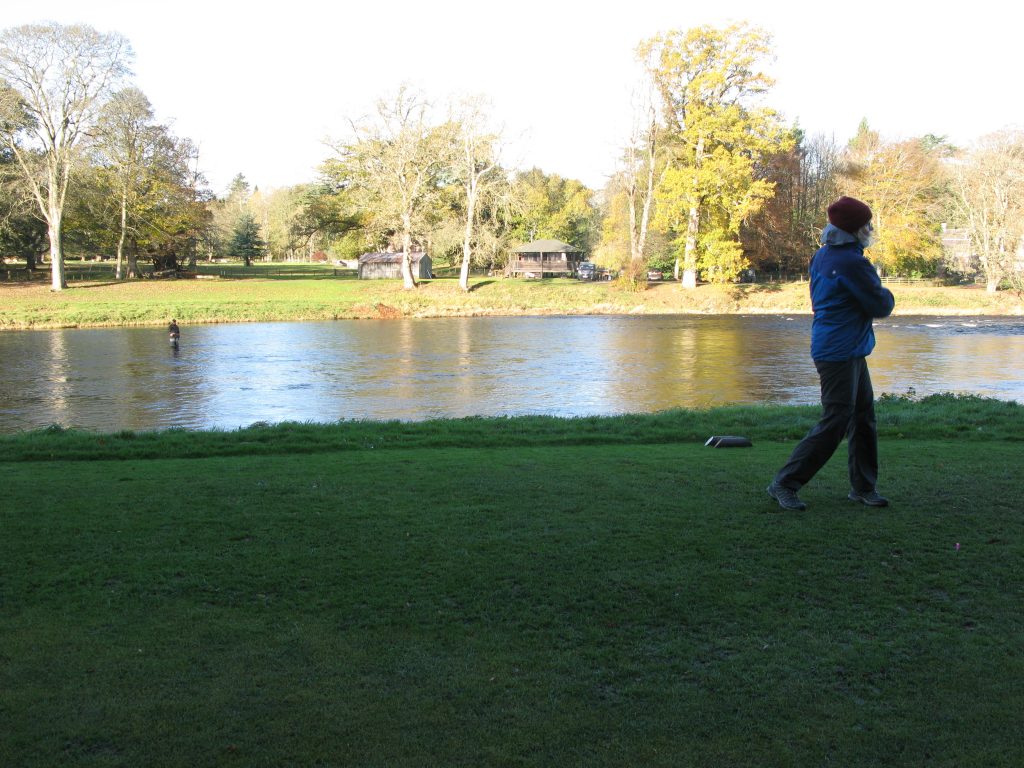
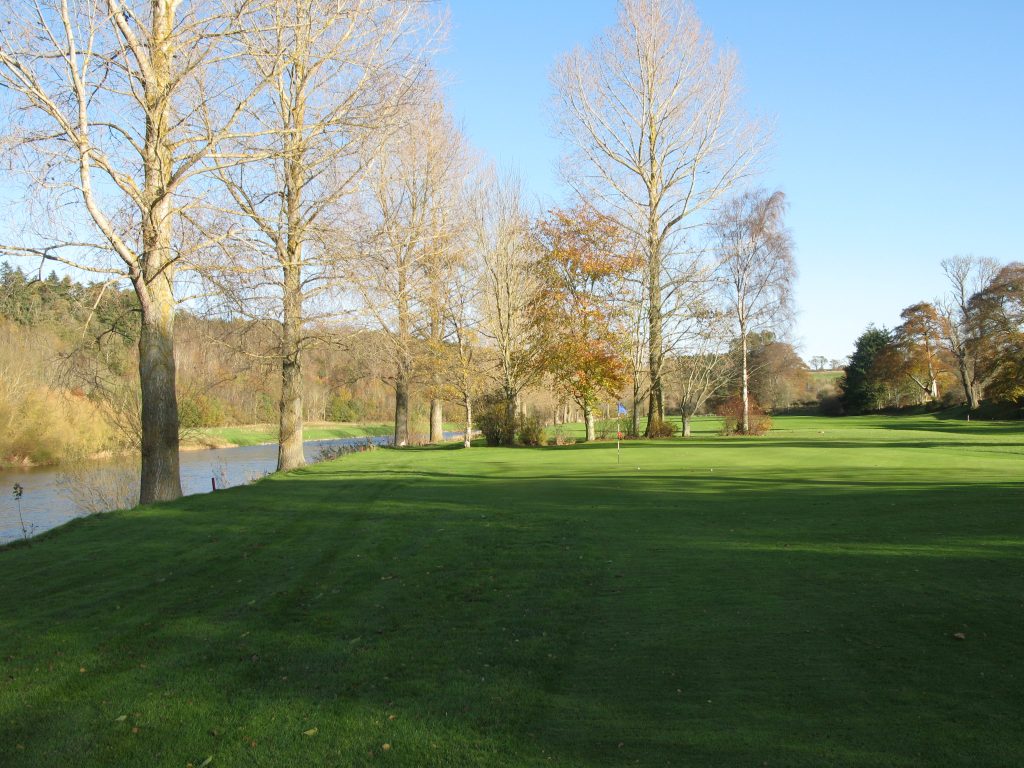
St Boswells golf course is delightfully laid out on the bank of the River Tweed, which is  classed a “lateral water hazard”, in the village of the same name just off the A68 1 mile south of Newtown St Boswells in the Scottish Borders.   It is so close to the river that it might be appropriate to have a local rule forbidding the shouting of “fore”, which must on occasion disturb the many salmon fishermen on the river.

My playing partner Fran drives at the 3rd at St Boswells with the fisherman in the background a common sight on the Tweed.

The course was initially laid out by Open Champion William Park, who wrote ‘the turf resembles that found on seaside courses’.  Indeed, the course does have a slight heathland feel to the surroundings.

The 9th at St Boswells., a short par 4 of 256 yards to finish.

The course was in fact abandoned for 10 years between 1948 – 1958 due to a major river flood, and I couldn’t find out in what way the new layout the differs from the original Willie Park design.

Other than the slight uphill par 3 first hole, followed by the significant drop down to the signature par 3 second green, the course is very flat, unlike many of the courses in the Borders.

The signature 161 yard par 3 second hole, with the beautiful Borders countryside in the background.

This makes for an easy and most picturesque walk for holes 3 through 9.  The course is very favourable to a slicer of the ball, with the river tight along the left for holes 3 to 6, with trees lining the left for the return to the clubhouse from 7 to 9.   The greens were in good condition, albeit they are quite flat other than the 7th, a short par 5 hole, with a basin or saddle type green.

The 5th green at St Boswells with River Tweed awaiting!

The course was very soft when we played despite the high wind on the day, which meant plenty cleaning of muddy balls.  Overall the course had held up well to the recent weather with all greens still in play.

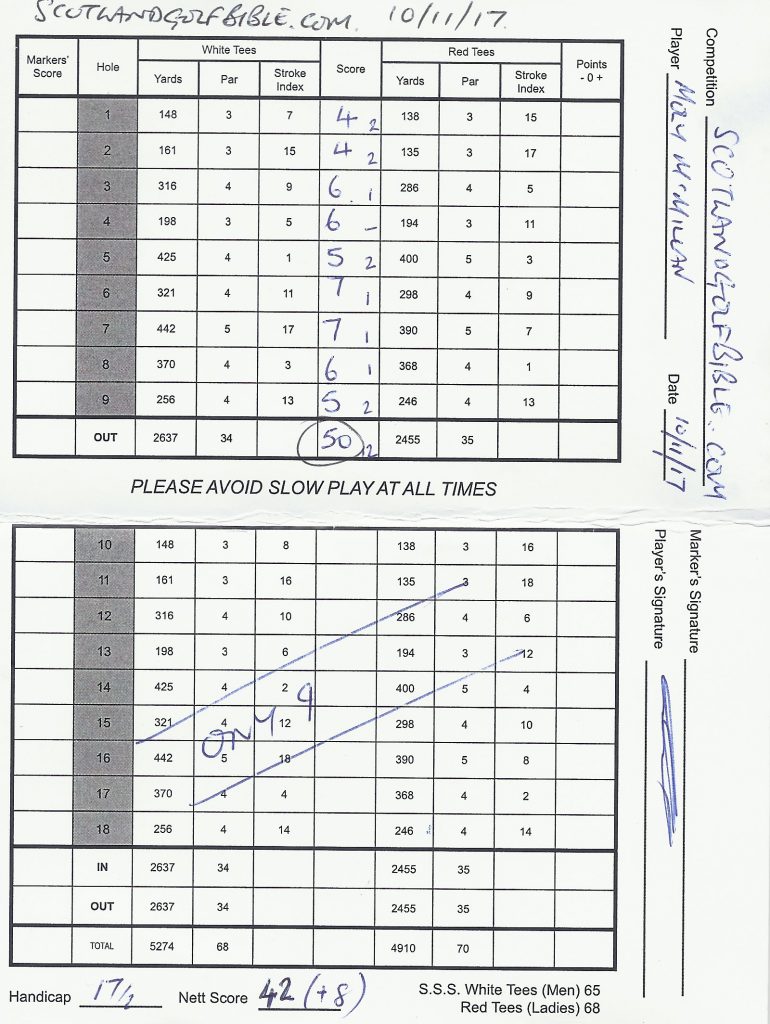
We only paid £5 for 9 holes, but the £15 summer green fee for 9 holes represents good value especially given the beautiful surroundings.   I had a fairly difficult day due to high winds, scoring 50 for only 12 stableford points – including 4 single putts (at 4, 7 and 9)!

Facts:

Course Type: Parkland

Par 35 (1 par 5, 5 par 4s, 3 par 3s)

Distance (white): 2637

Moly’s Gross score50

Moly’s St Boswells scorecard – 50 for 12 points!

72. Crieff Dornock. 2nd Nov 2017.

Pleasant 9 hole course well suited to holiday or “warm up” golf     

Summary:  Round £12.   Par 32.  Value (out of 5) – 4

Crieff Golf Club’s main course, Ferntower, is one of Scotland’s highly regarded inland courses.  The other course, the 9 hole Dornock layout, benefits from the same fine clubhouse and facilities, green keeping staff and well stocked pro-shop, making this a first rate choice for a holiday round of golf if you have a couple of hours to spare.

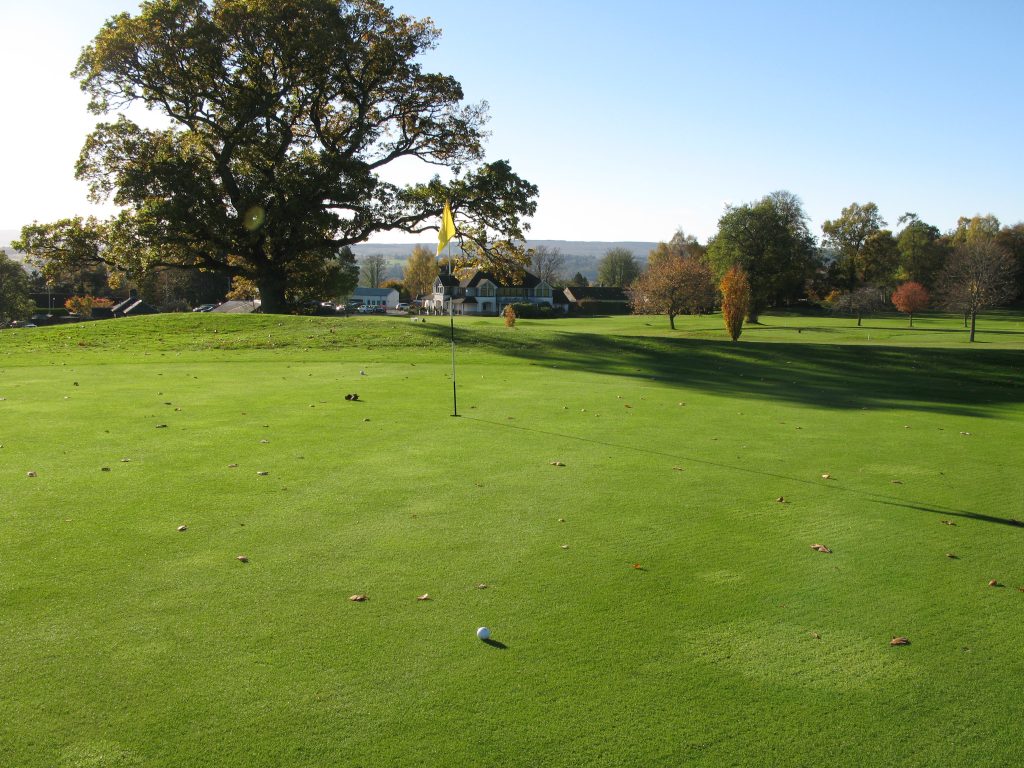
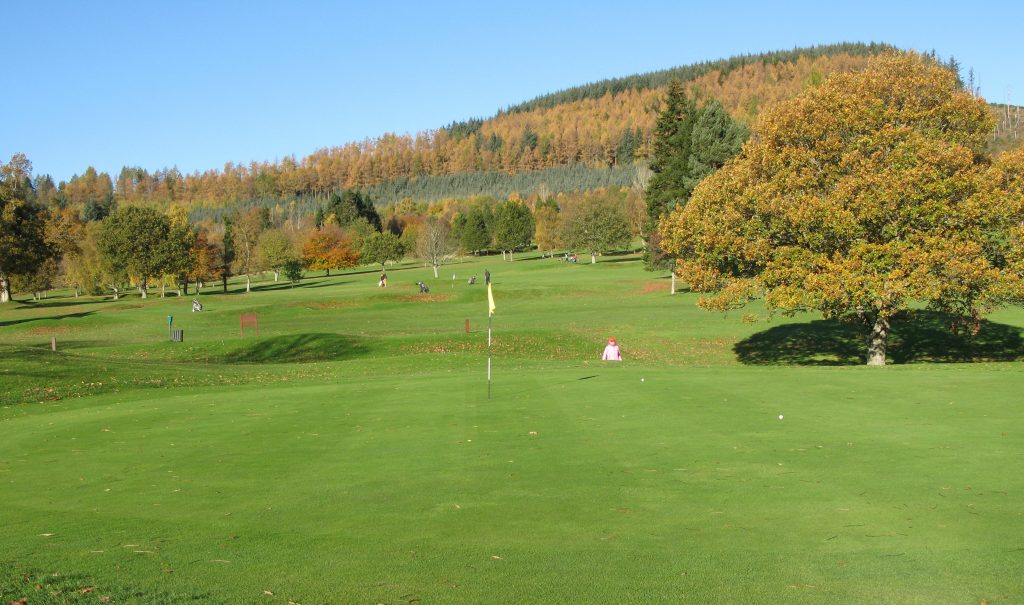
The 9th green at Crieff’s Dornock course, with the clubhouse in the background.

The club was established in 1891, and Old Tom Morris designed the main course, but the Dornock course only opened in 1980.  The open and beautiful Perthshire parkland on which both courses sit was part of the Victorian Spa ground of the well known Crieff Hydro.  Crieff is the gateway town to The Trossacks and both manicured courses are just what one might expect to find here, a destination well worth visiting.

The par 3 8th hole, one of the more challenging holes on Crieff Dornock

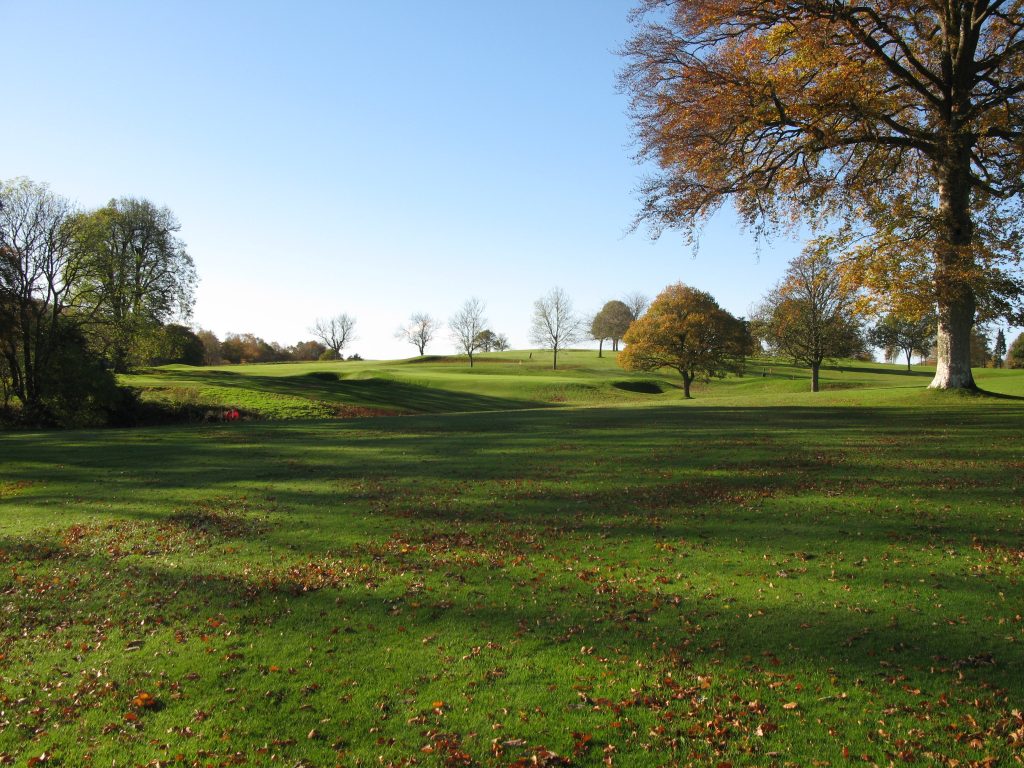
The Dornock course is short, and other than the first hole where out of bounds encroaches on the right, the fairways are very generous, so there is no need to carry too many balls.  The greens are firm and very true and better than most 9 hole courses I’ve played.   The course runs along side the Ferntower course, with some adjoining fairways.

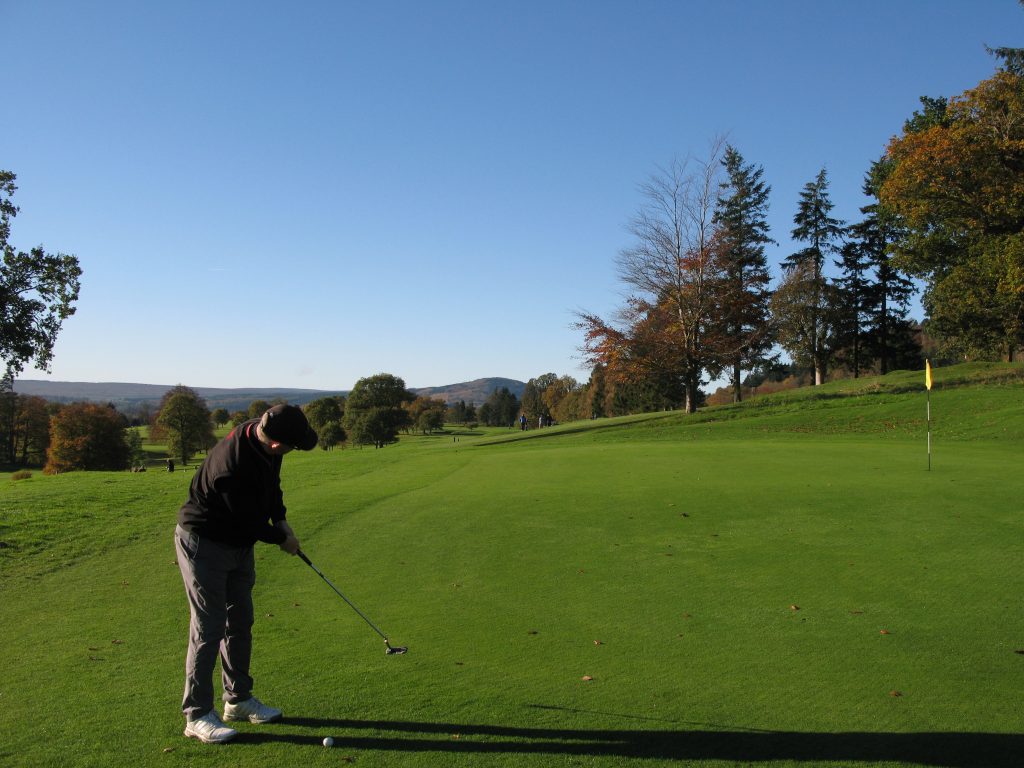
Fran getting out of the bunker at the 8th at Crieff Dornock

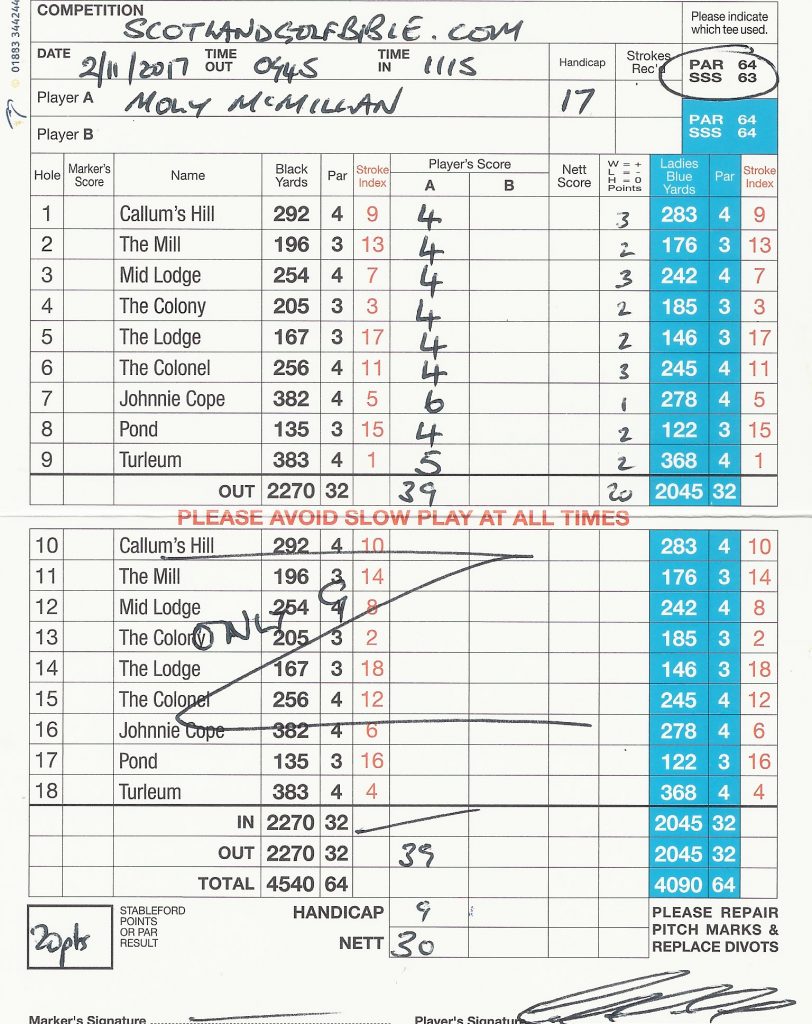
The course is made up of 5 par 4s and 4 par 3s, and it’s the latter holes that are the most challenging, since the par 4s are short and prove good par or birdie opportunities.  This was very welcome for me after my difficulties playing at Tain last week.  On the day, I shot 39, +7, and that included a lost ball (under leaves!) on the fairway at 7.

Moly on the 6th green at Crieff Dornock, with the typical beautiful parkland surrounding.

Dornock was in very good condition when I played, plus dowsed in glorious winter sunshine, with zero wind, which always helps keep the score down.

This course is highly recommended – it was only £5 for a winter 9 holes, and still good value at £12 for 9 holes in Summer.

Facts:

Course Type: Parkland

Par 32 (5 par 4s, 4 par 3s)

Distance (black): 2270

Moly’s Gross score39

Moly’s Crieff Dornock scorecard – 39 (7 over)

« Older posts Newer posts »

© 2026 Scotland Golf Bible

Theme by Anders NorenUp ↑