A guide to green fee value for money

Category: Course Owned By (Page 10 of 48)

154. Montrose 1562. 11 July 22.

Spectacular natural links, but undermined by misleading branding.

Round £100. Par 70. Course Rating / Slope Rating (yellow) 70.3/126. Value (out of 5) – 3

Moly’s score – 91

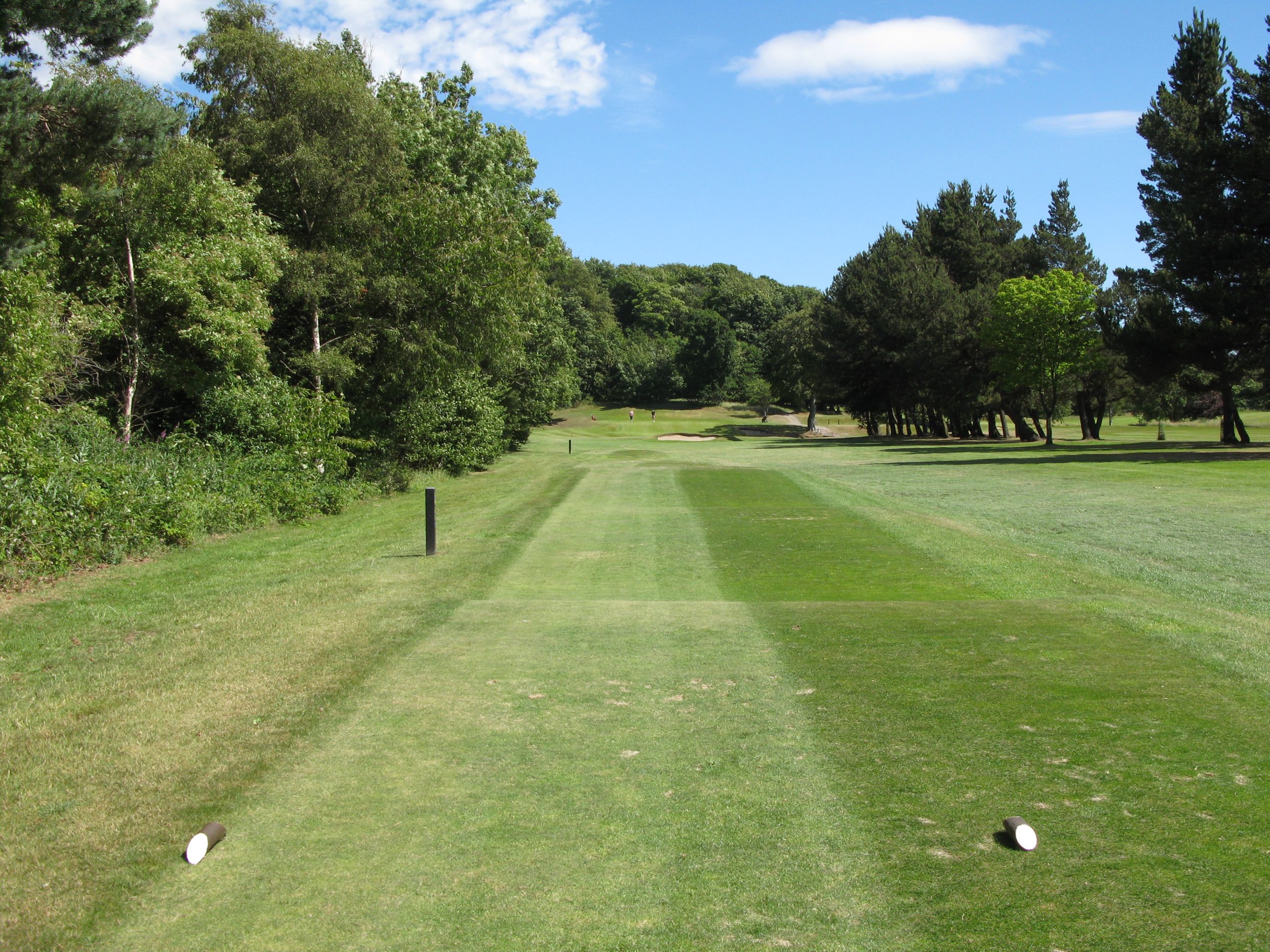
Golfers often stand on a tee and ask “Where’s the green?”. On Montrose’s first tee, I can imagine a newcomer to links golf asking “Where’s the course?”.
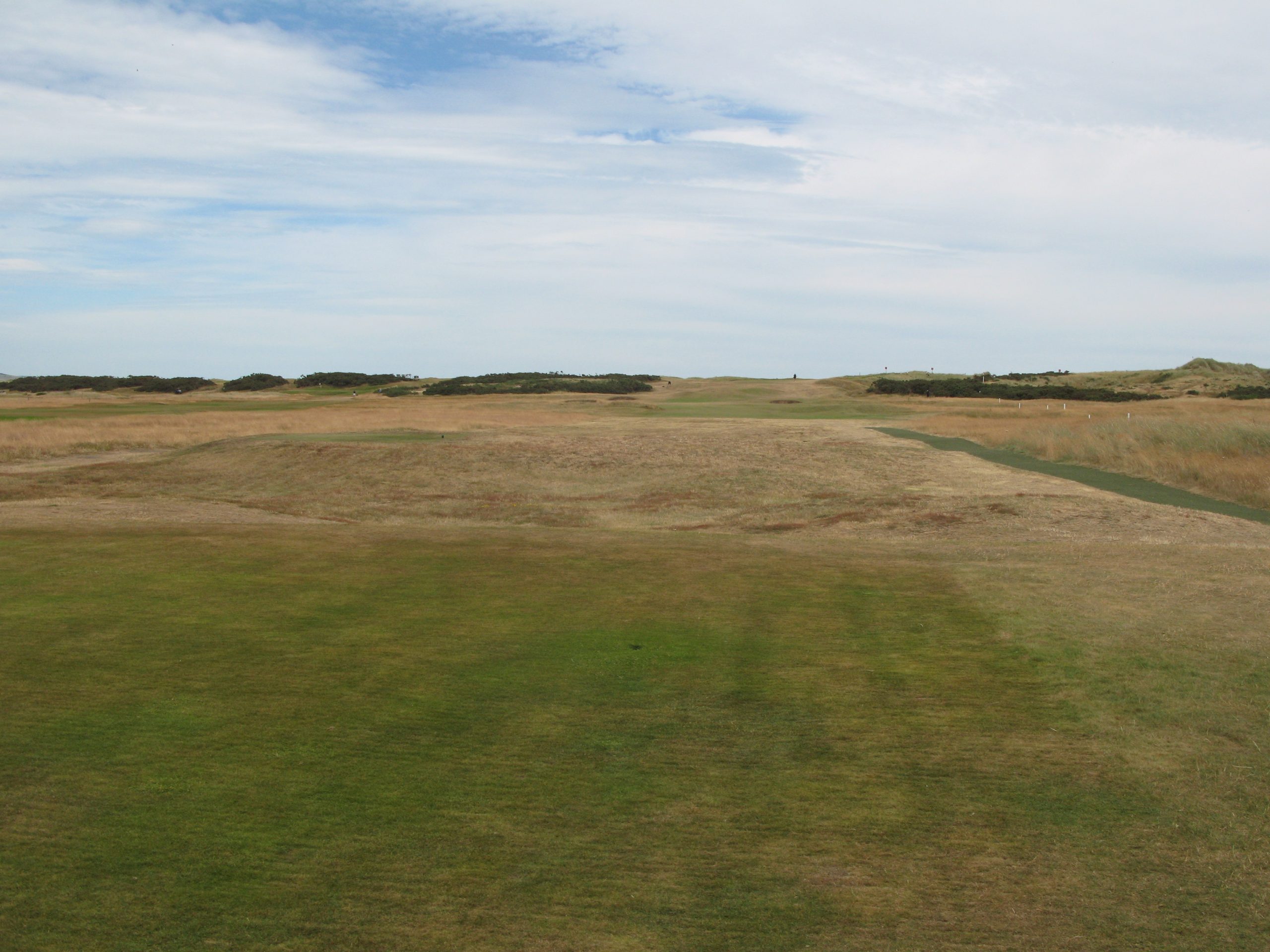
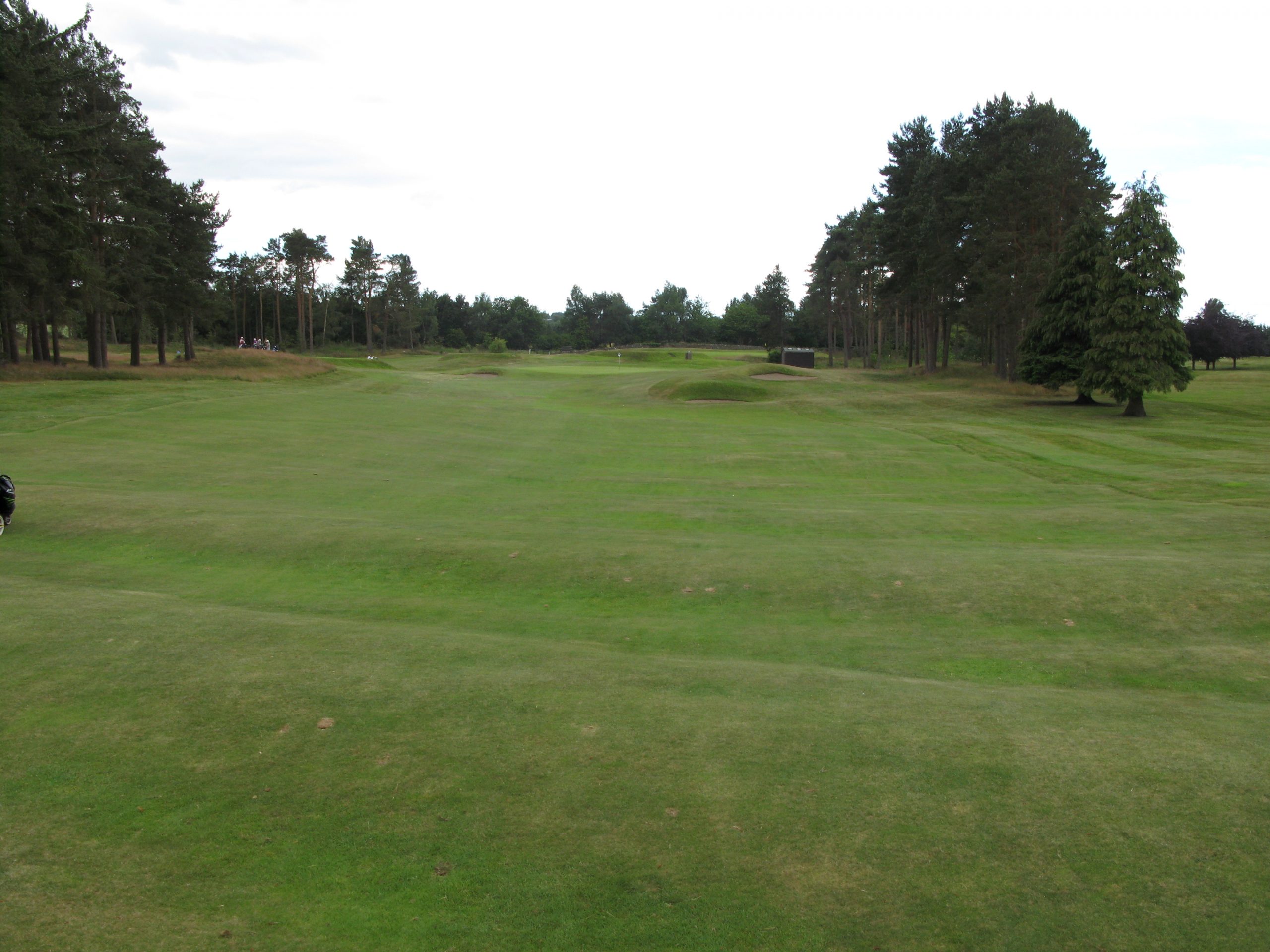
The expanse of links land on view from the Montrose 1562 first tee, albeit in 1562 there would have been no course in this view!

Montrose’s 1562 layout is one of the most natural of all links courses, and as such should be a priority for those wanting to experience this form of the game at its most basic.
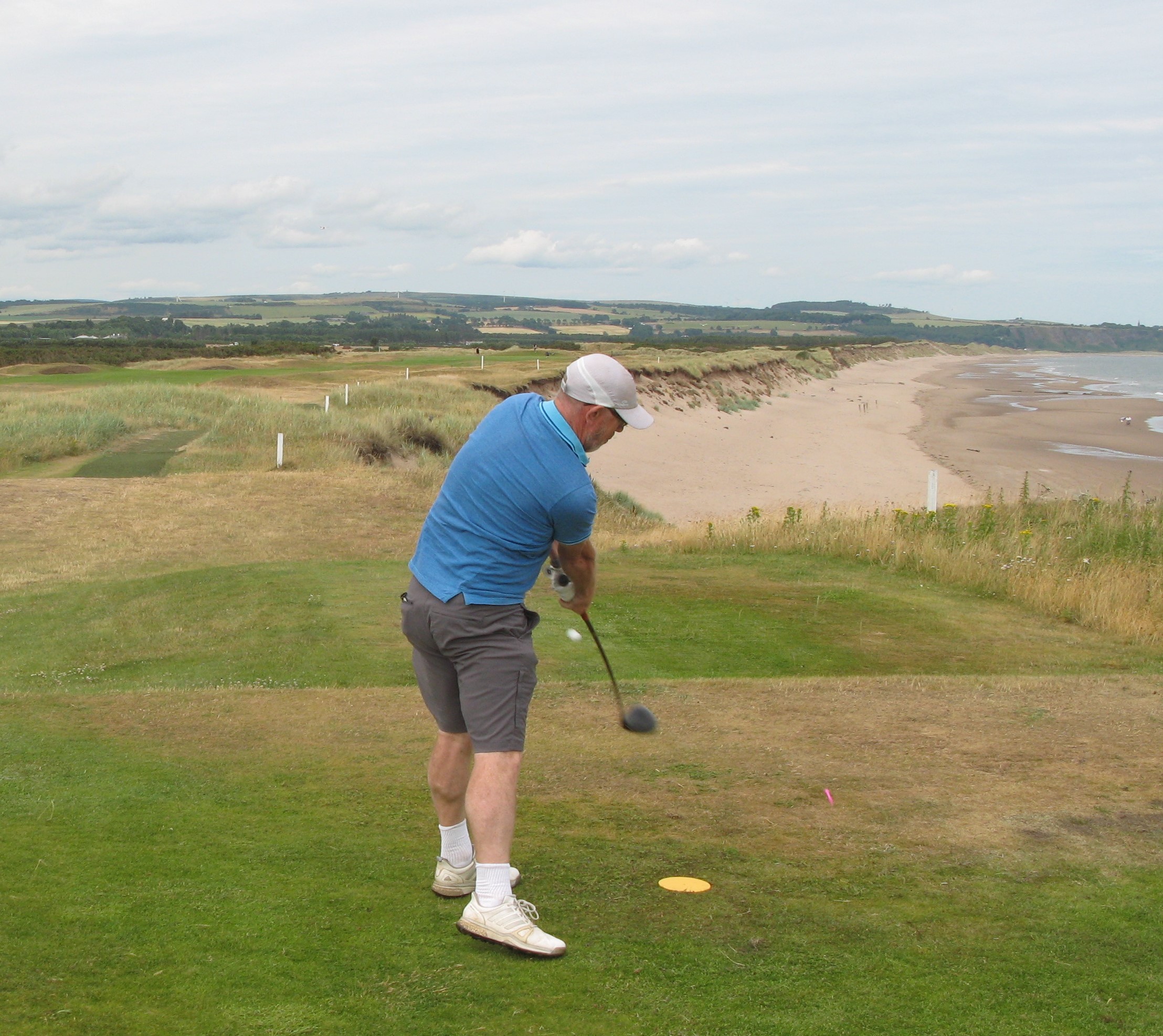
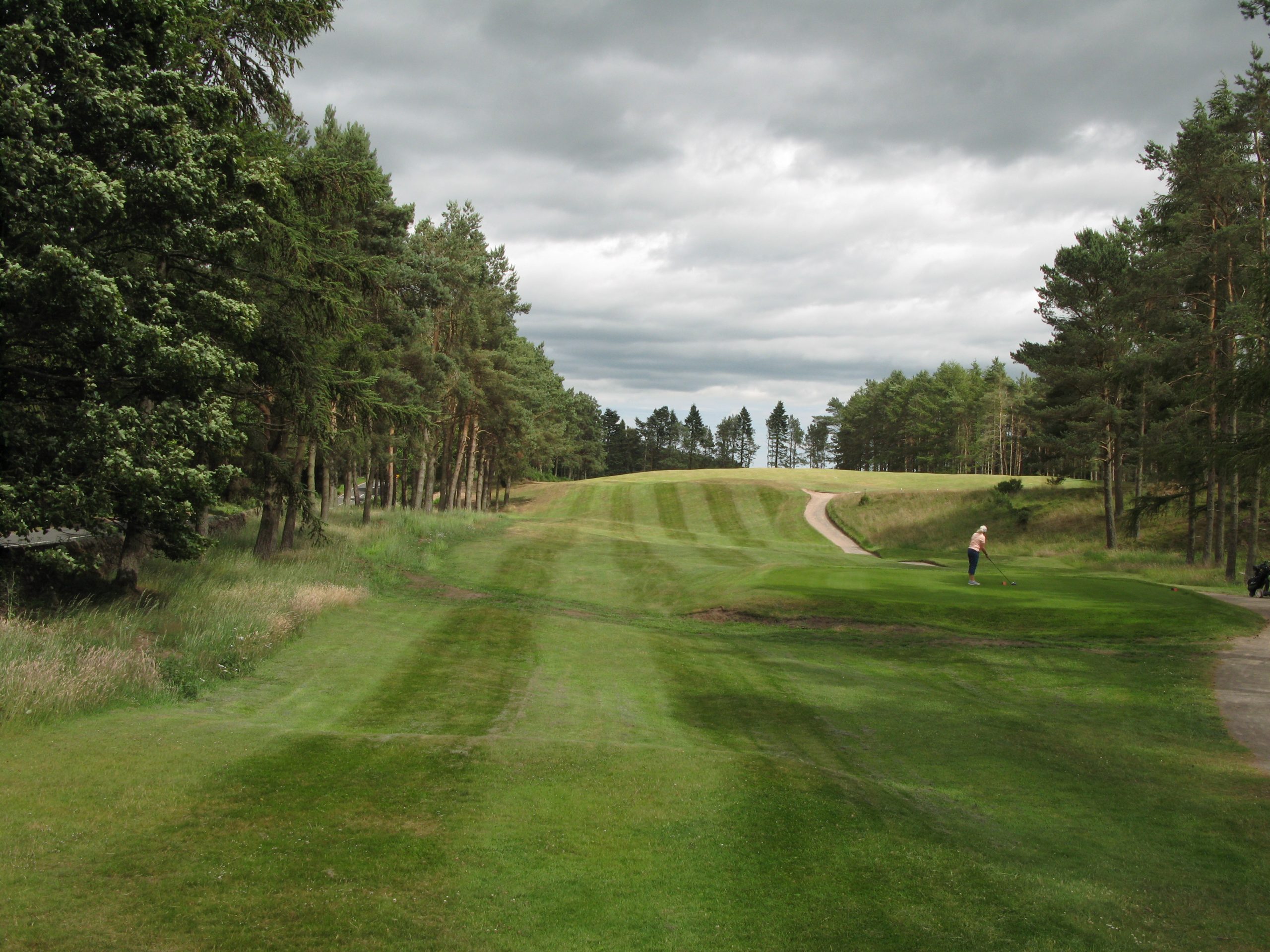
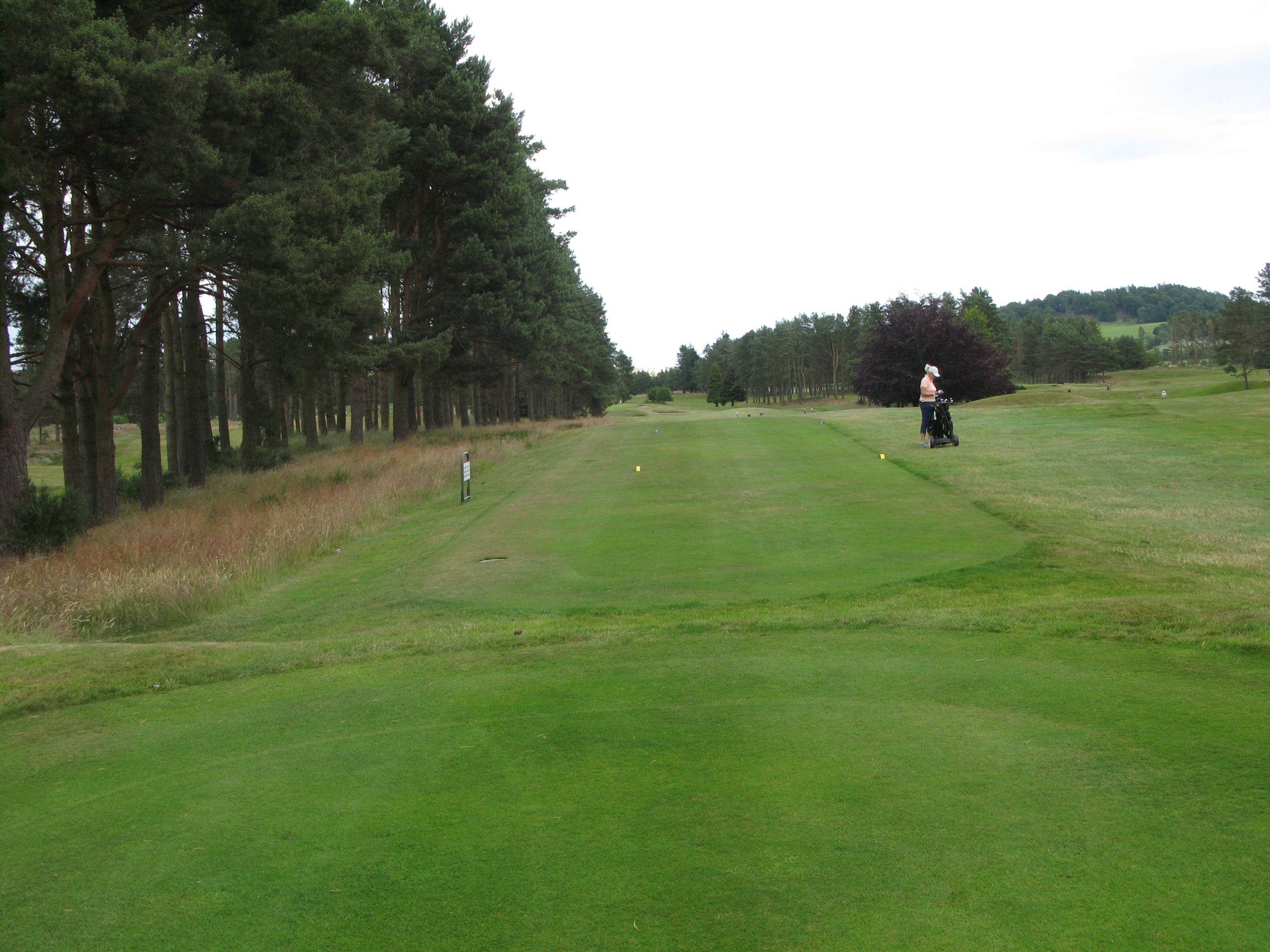
Bear in mind the prevailing wind is left to right at this very formidable tee shot at the second on Montrose. Like many, I suspect, I found the brilliantly positioned left hand fairway bunker. I don’t think there can be many holes where the right hand side OOB starts to your left?

Formerly named the Montrose Medal, the ‘1562’ label has only been used since 2018; ‘1562’ derived from the claim that golf has been played on the land from that year. The current course’s story and location actually begins in the 1860s, and evolved over a 50 year period during which a number of legends, starting with Old Tom Morris and ending with Harry Colt who designed the existing course in 1913. Colt had laid out the Montrose Broomfield course a few years earlier (My earlier blog here). So in fact, the more ‘junior’ of the two Montrose courses, ‘Broomfield’, actually pre-dates the ‘1562’ course!
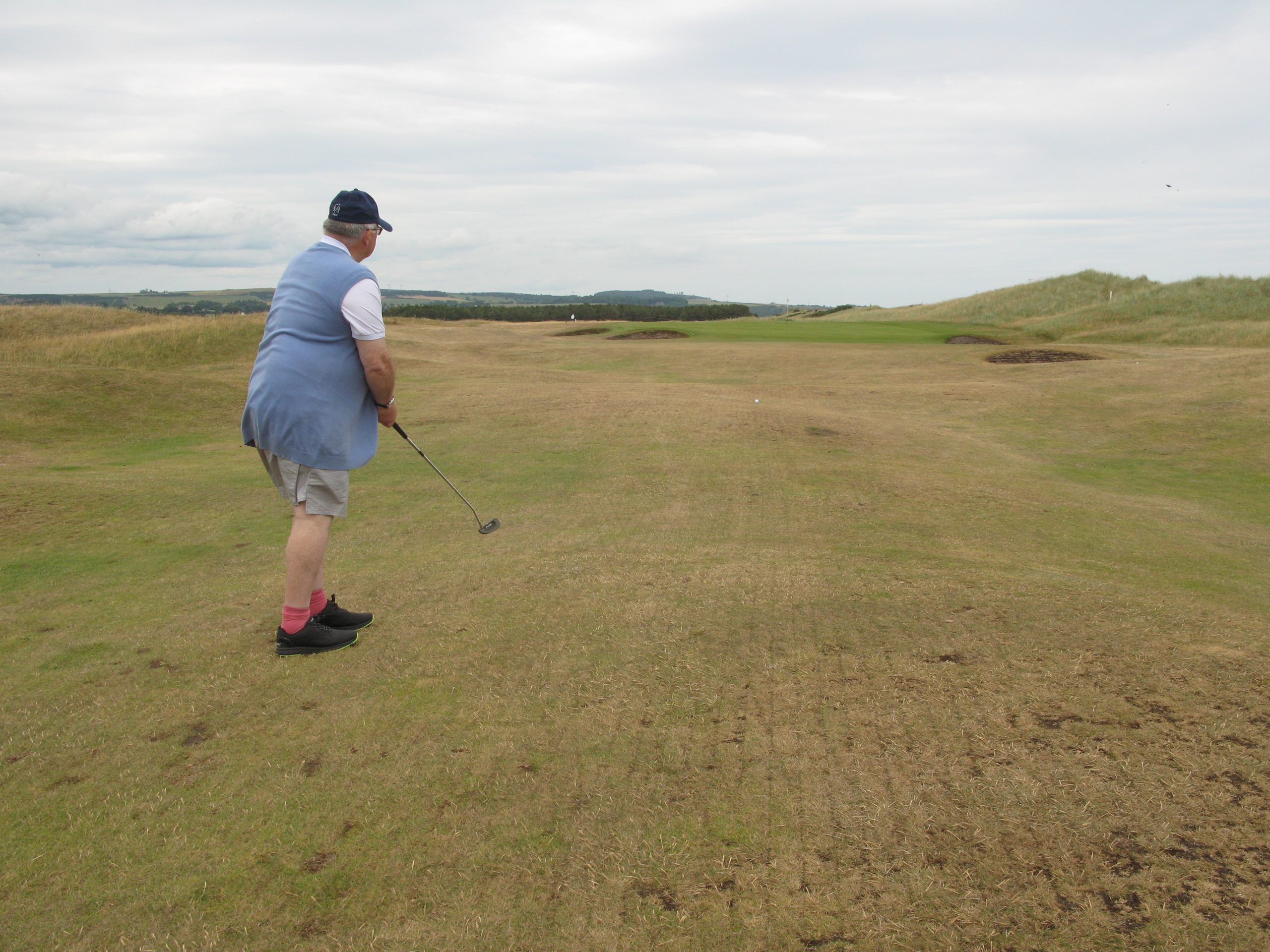
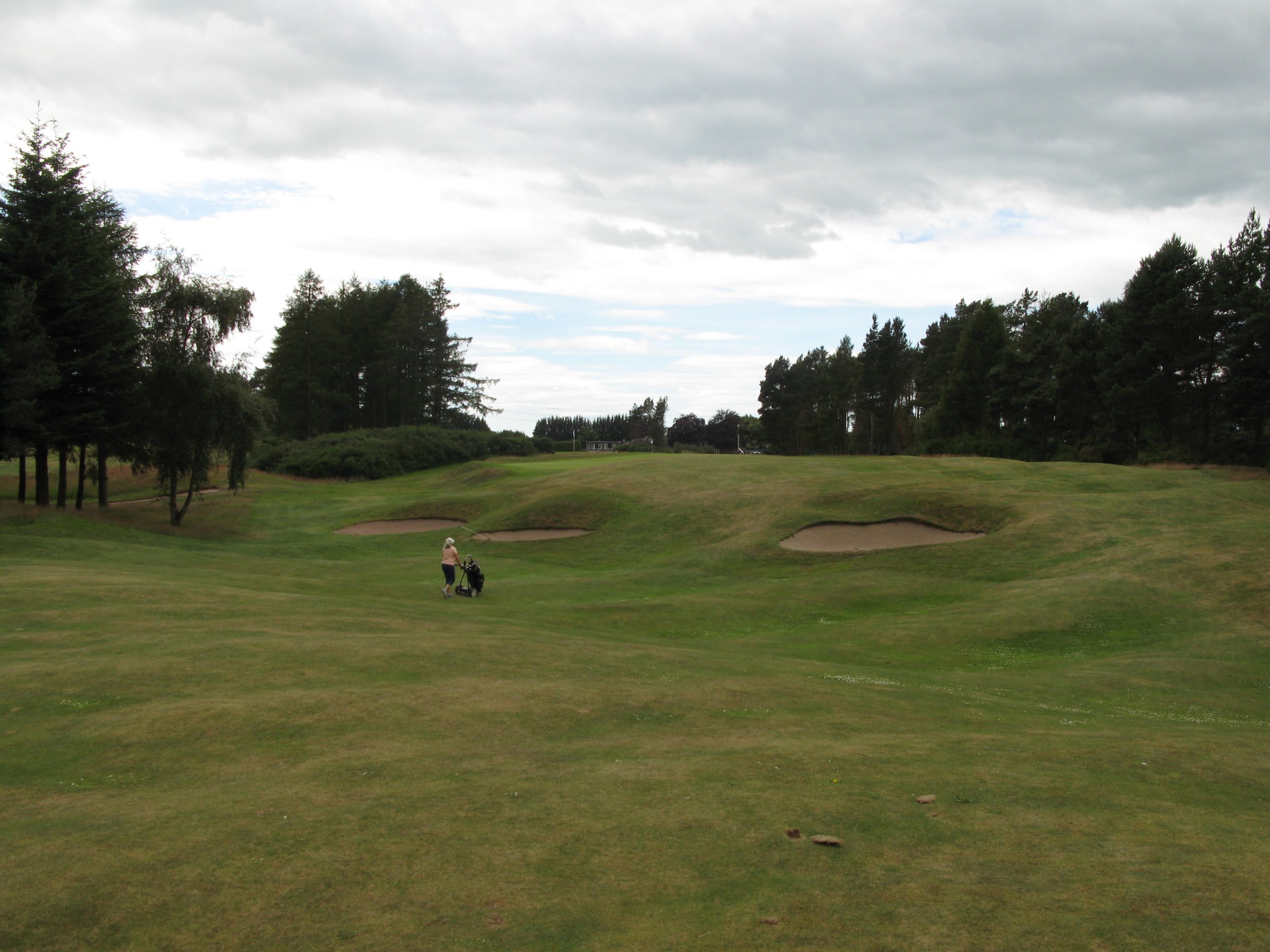
Frank Crowe playing a typical links shot with the putter from well off the 6th green, with the poor fairway condition on show.

Like a number of Scottish Links, there were several different golf clubs that played on the same course, often in club matches versus each other, but sadly only two of them – Royal Montrose Mercantile and Montrose Caledonia – still exist and can be used by visiting golfers.
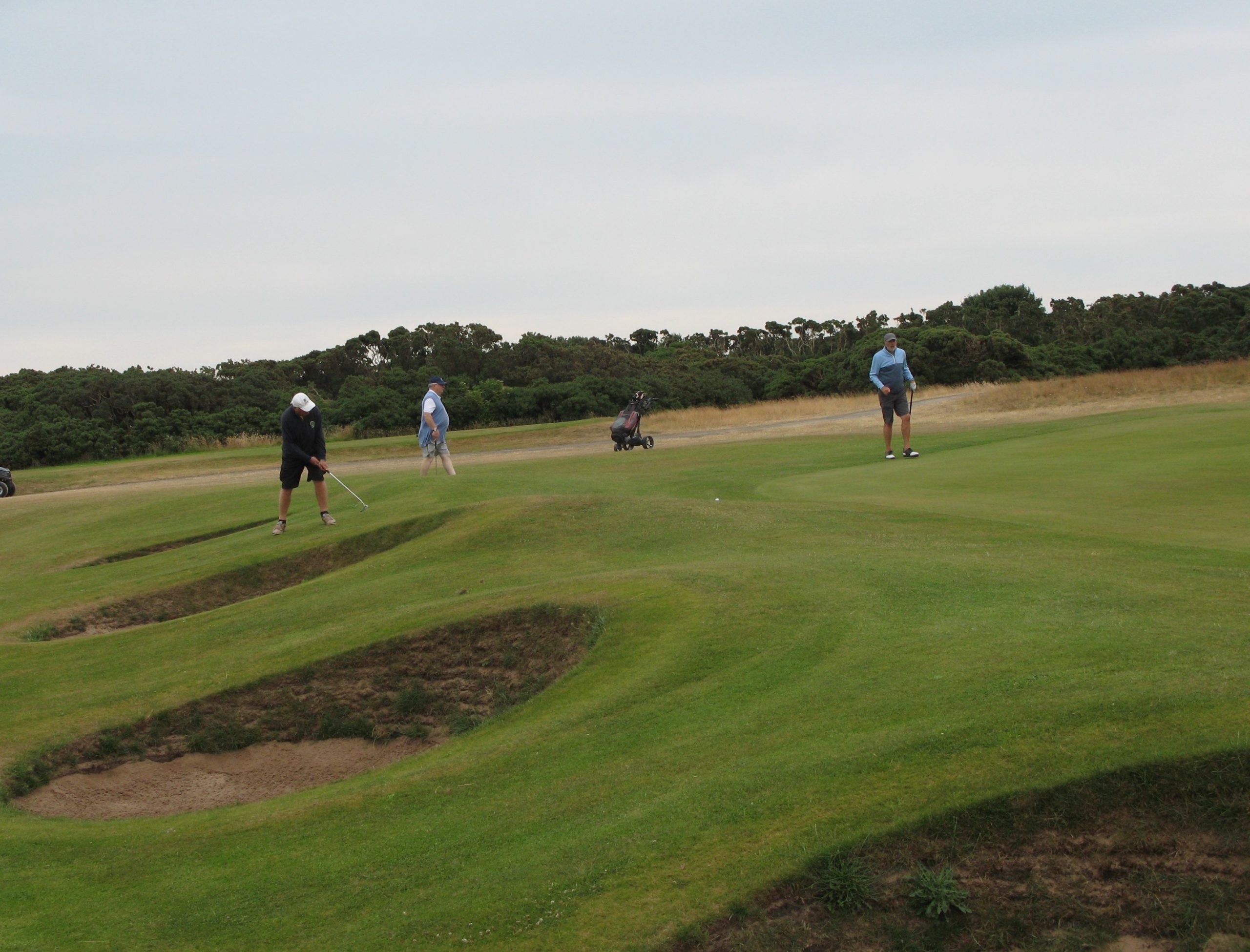
Brian Fearon putts onto the par three 12th green, one of the holes on the east-west spur away from the coast. Looked over by Gordon Samson

The course is a really honest test of links golf, set on the robust and fast running links land of the Angus coastline. There are six northbound coastal holes, starting from the daunting 2nd, then turning back south for a couple of holes, before an east to west and back gorse-laden spur from holes 10 through 15.
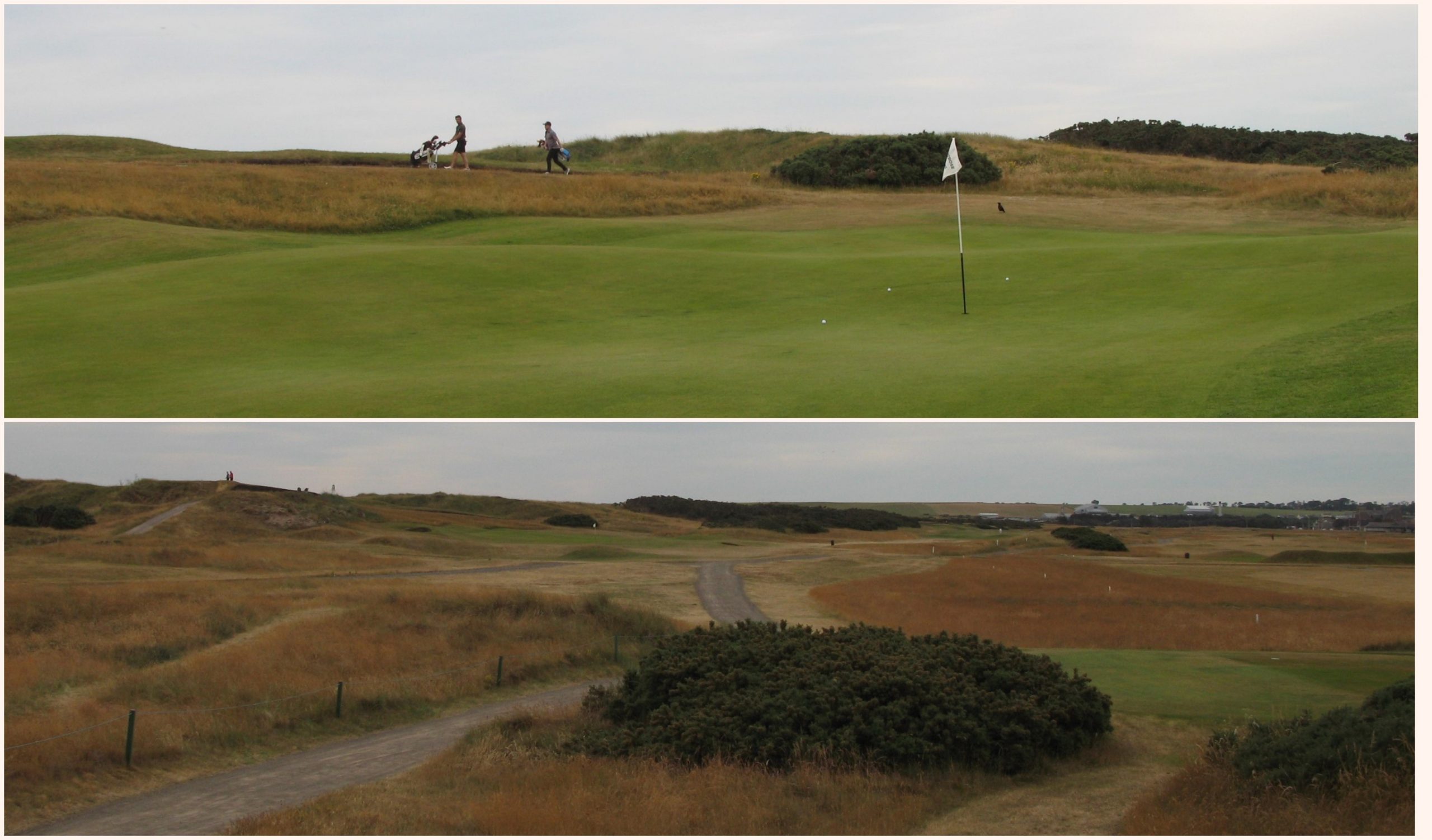
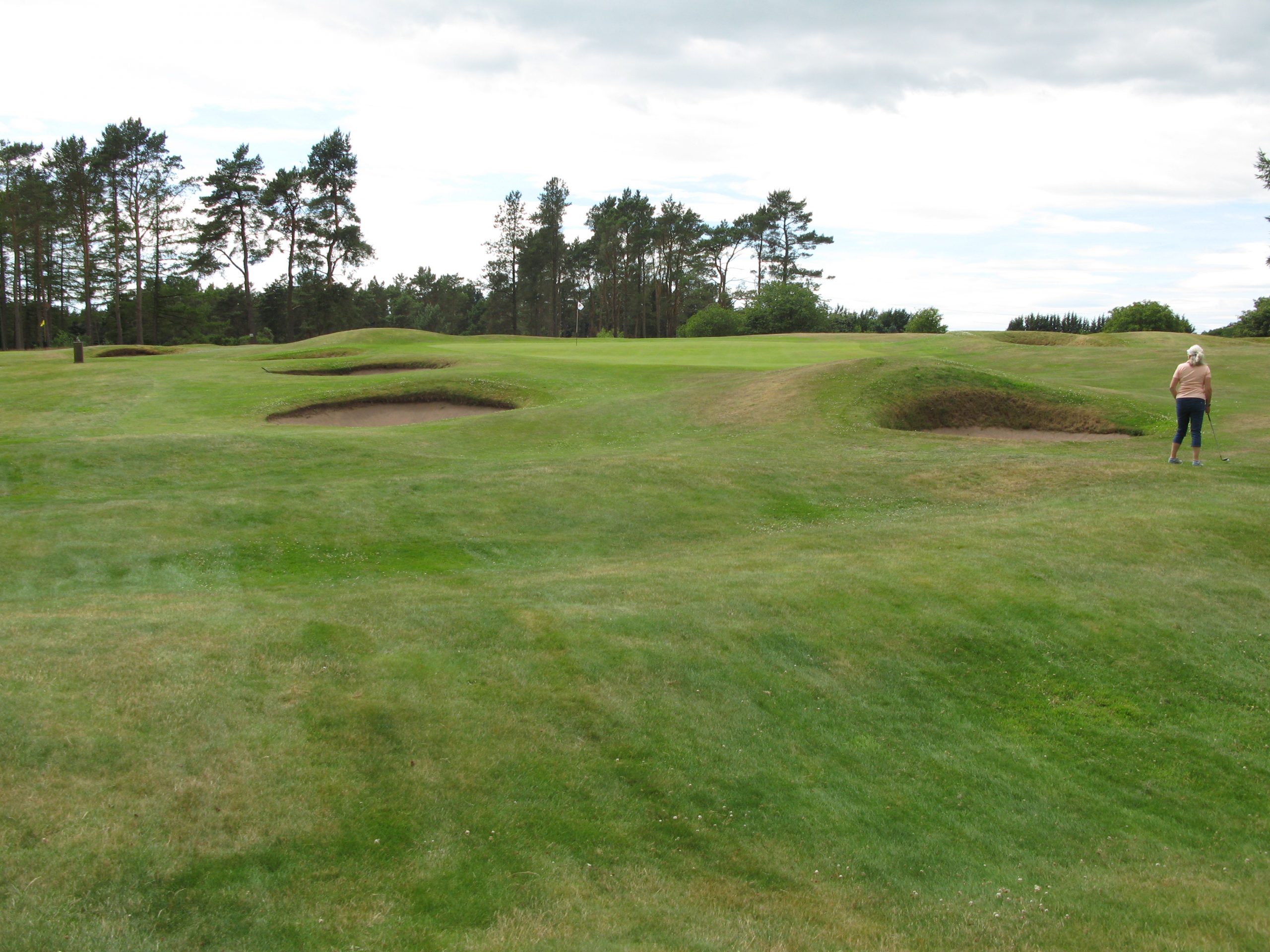
The par three 16th, a very difficult hole. Arguably plays like a par 4, in the prevailing wind.

The par three 16th and par four 17th are then two holes that are good enough for the Championship course of Carnoustie; fitting, as Montrose has been used as a Final Open Qualifying venue. Many a good round will have been destroyed on those late holes.
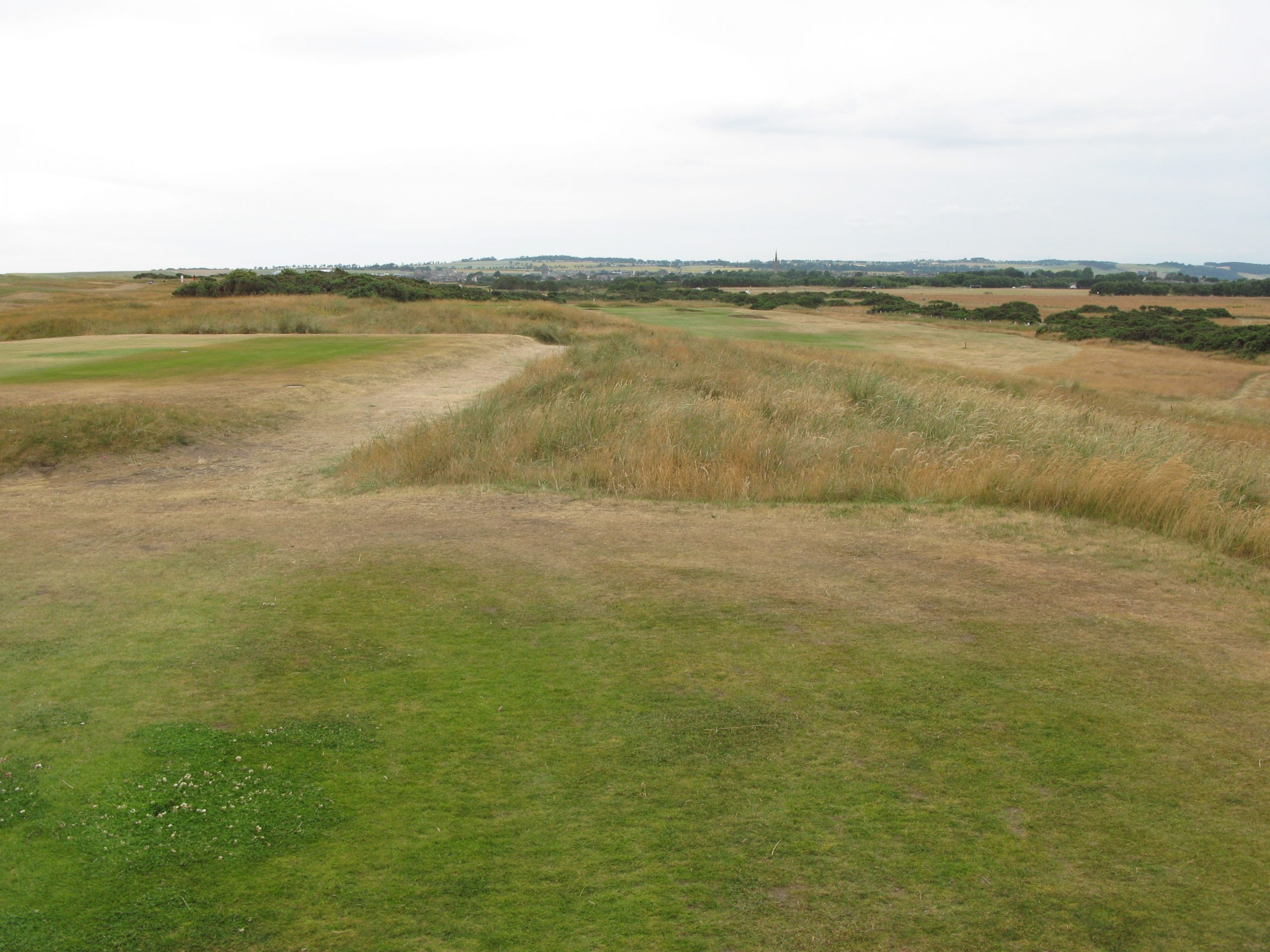
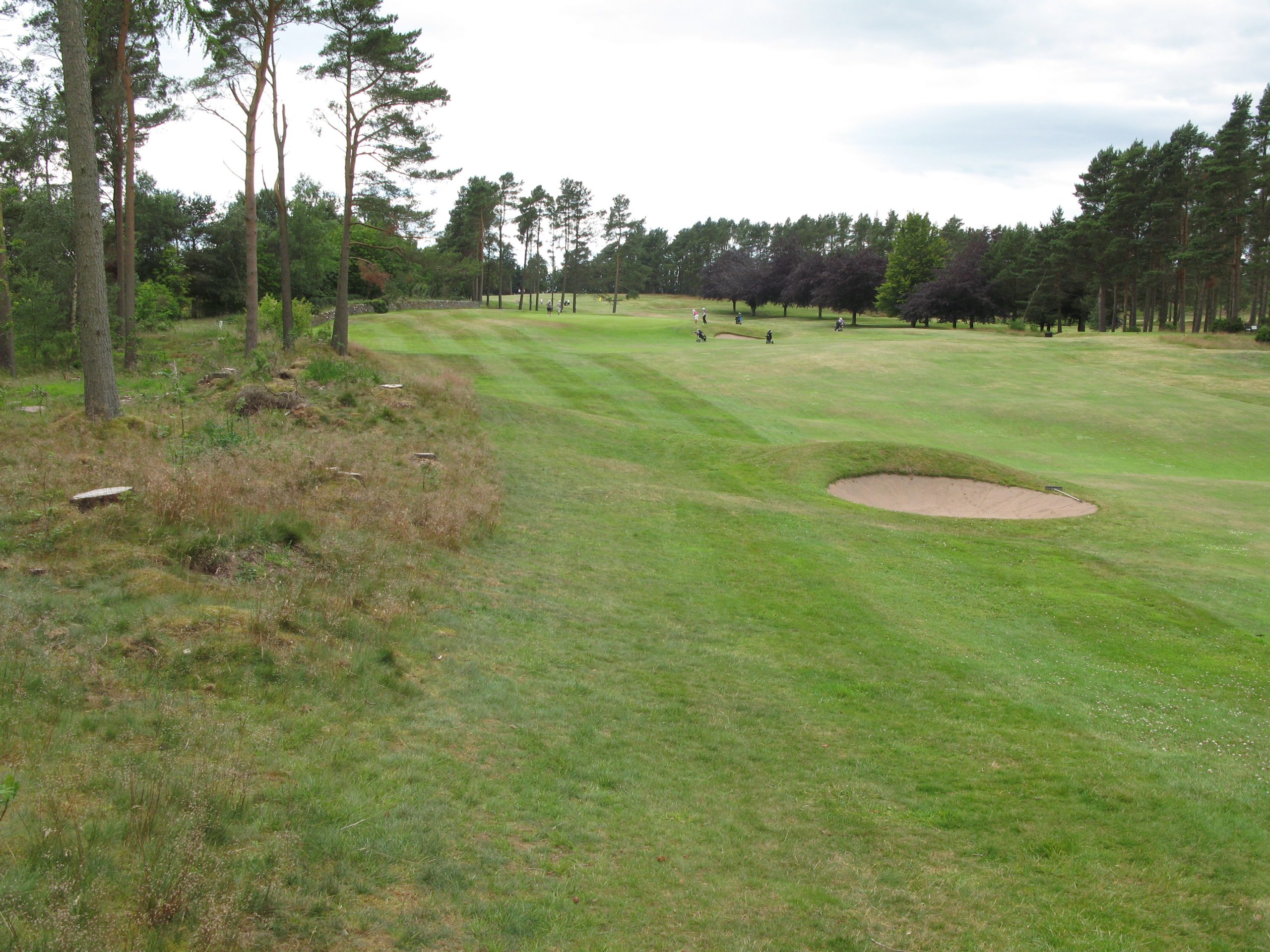
The characteristic feel of the Montrose 1562 course, here at the “Valley” 8th hole.

Unfortunately, when I played alongside 3 of my former Apex trustees, for the inaugural “Apex Trophy”, the course was not in great condition. We encountered the ‘choice’, but very accurate, language of a few local members of this hardy Angus town, mid way between the cities of Dundee and Aberdeen. I was ‘telt’ by an old guy (in his 80s, fully adorned in football colours) that “Son, the course is in its worst …… state I’ve ever seen and I’ve been a member for more than 50 years!”. It was certainly not conditioned good enough for the £65 twilight round fee, never mind the £100 daytime fee.
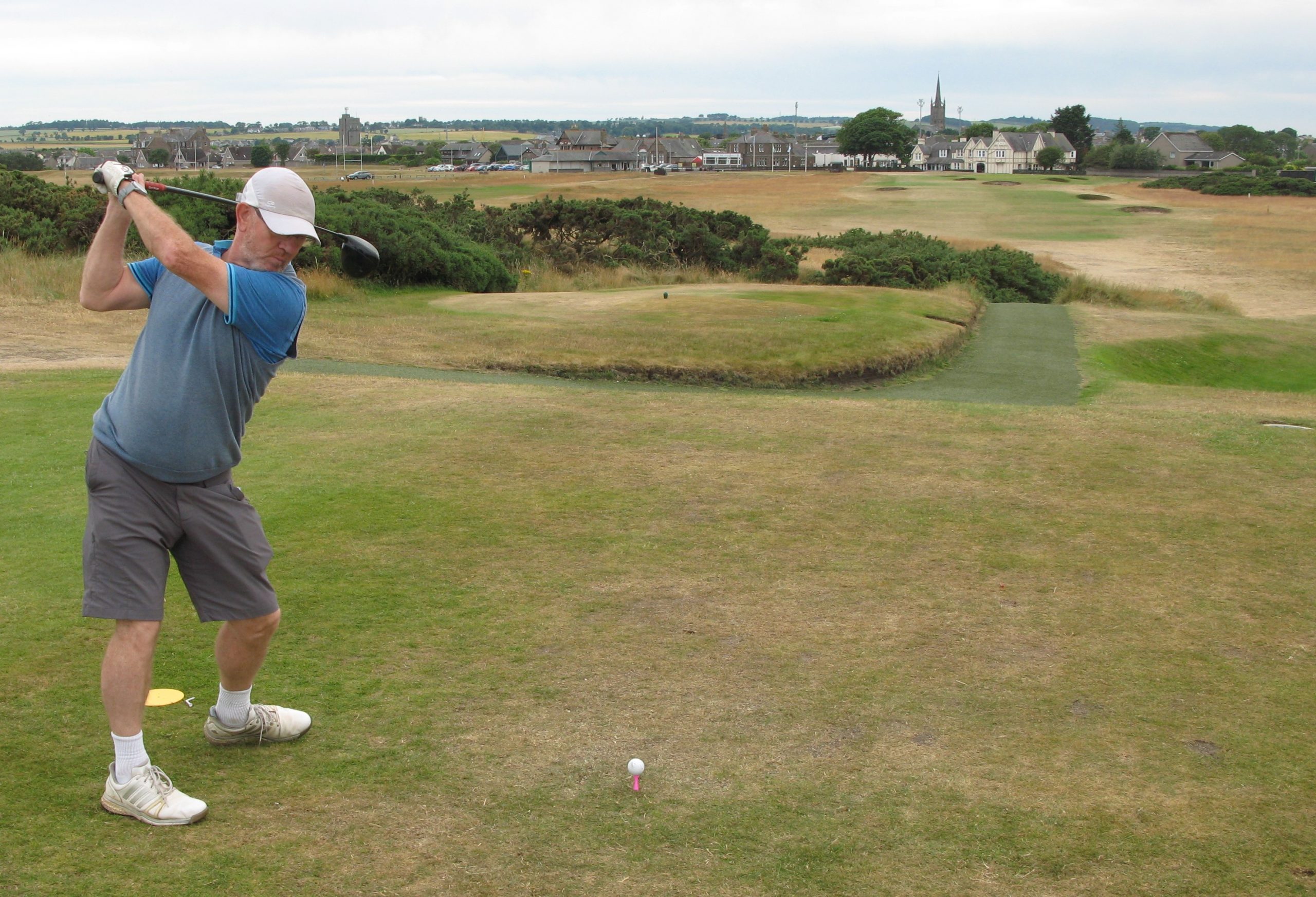
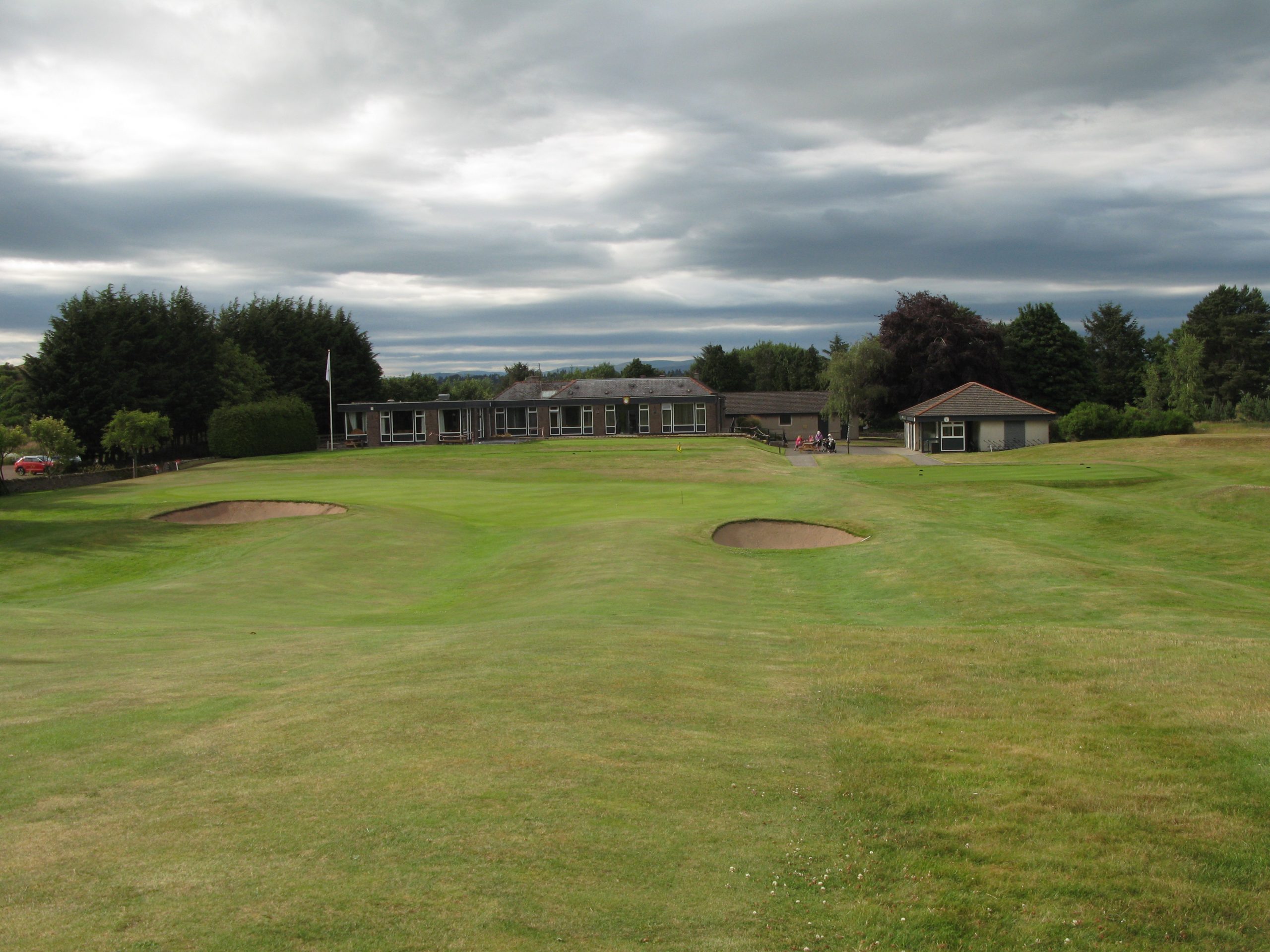
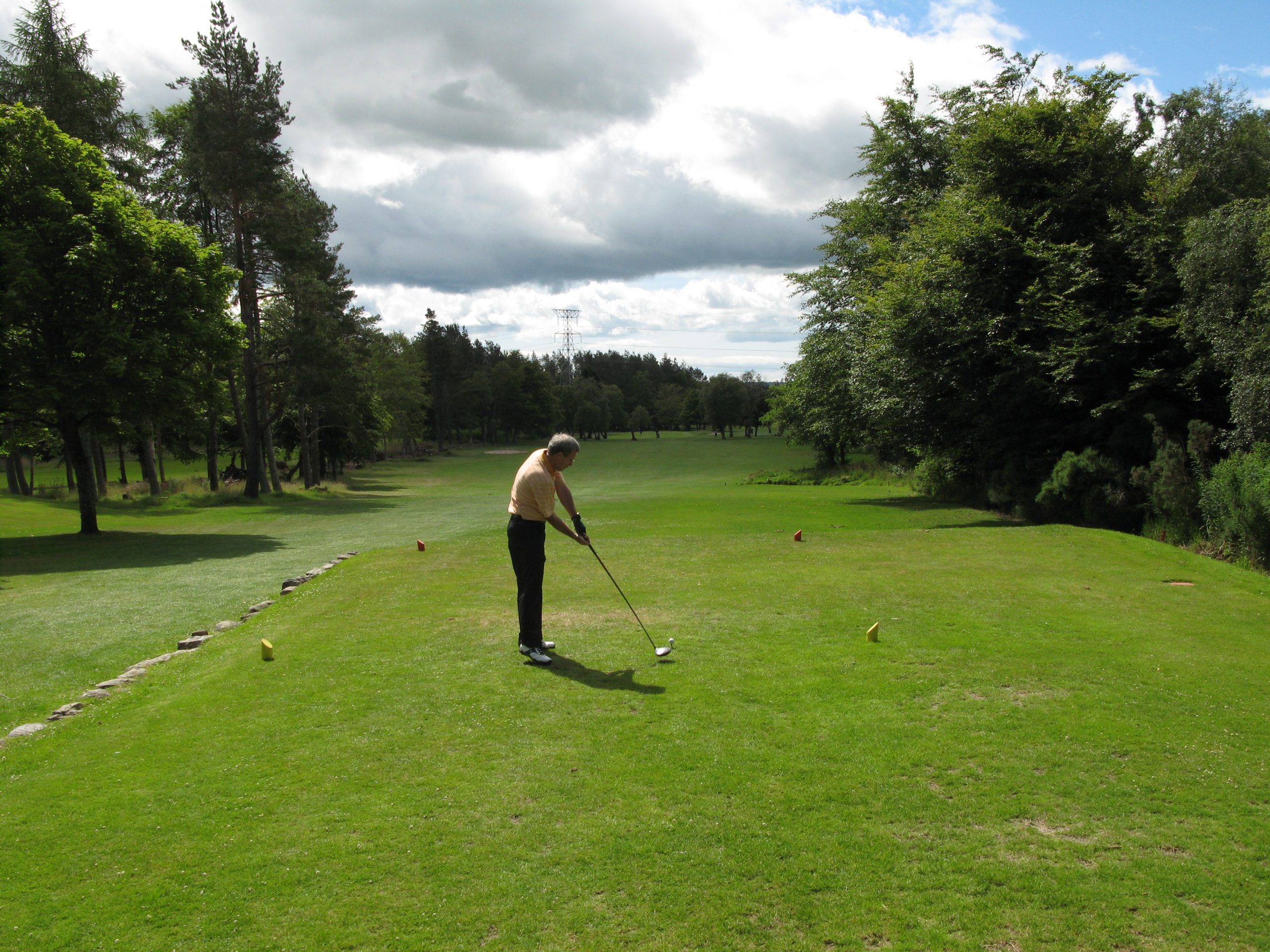
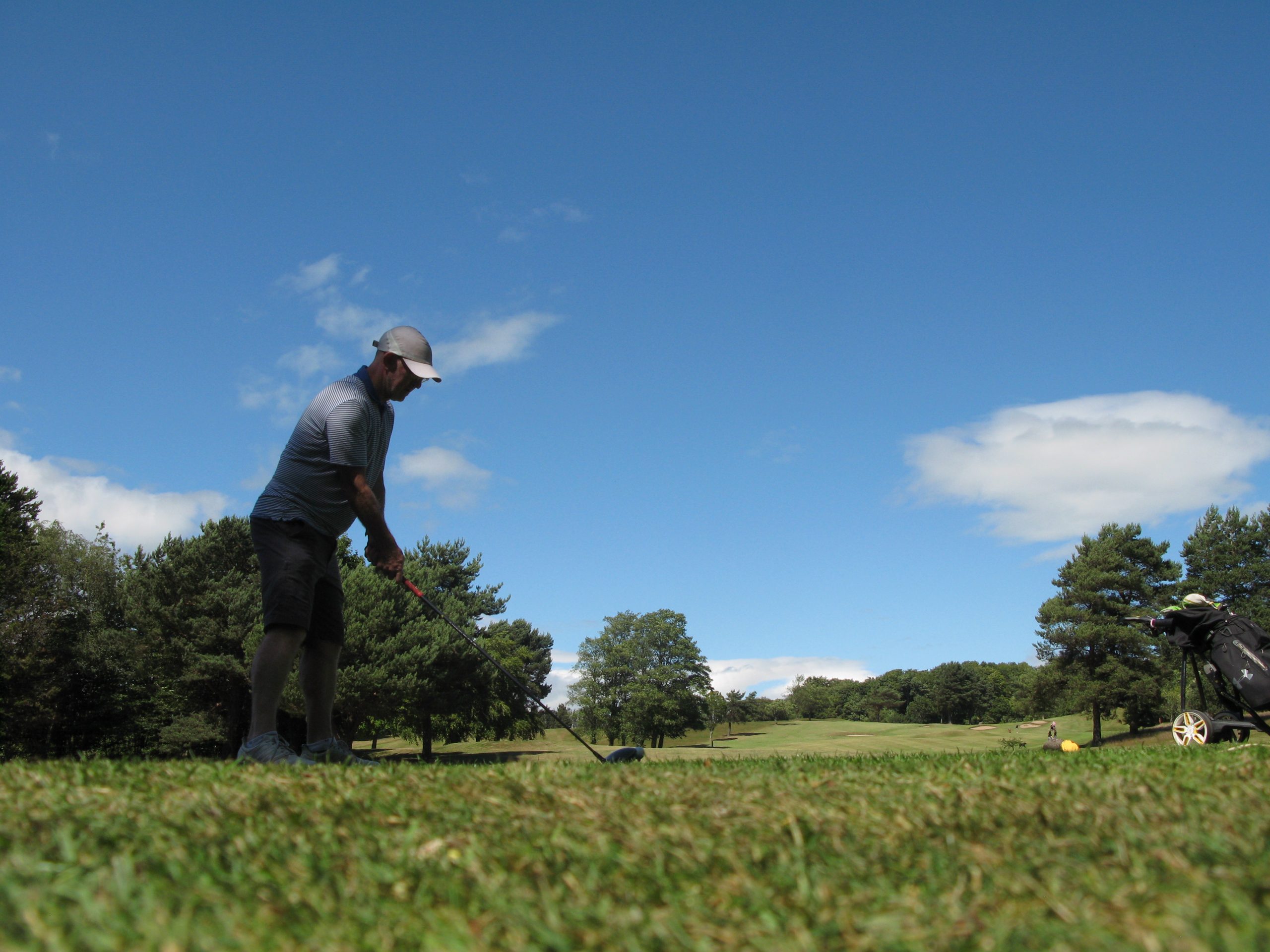
Moly teeing it at the final hole, one of the easier holes at Montrose. The original course was off to the left of this hole.

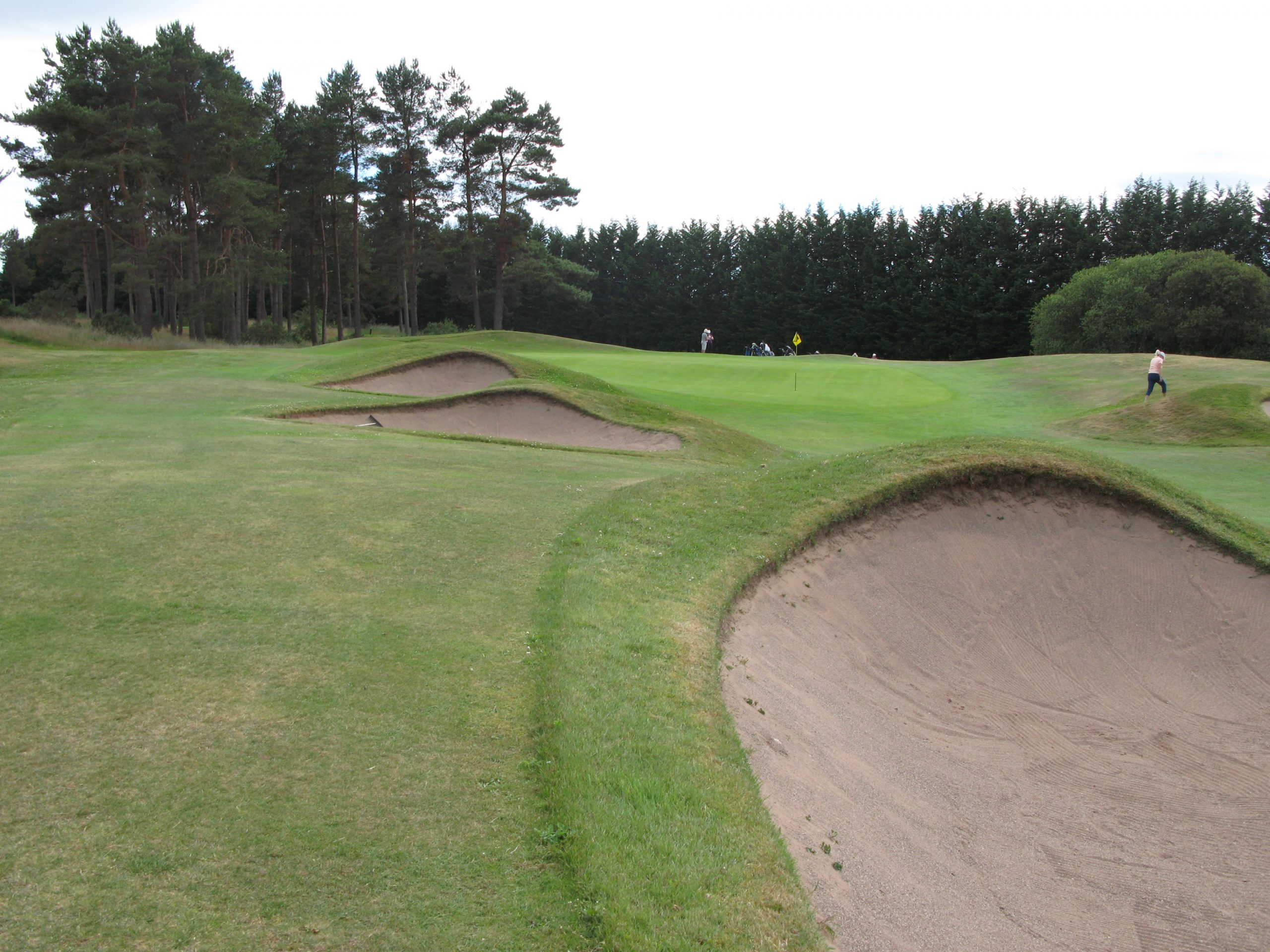
Nevertheless, the bunkers and greens were decent, and the quality of the layout and challenge was never in doubt, with the yellow tees still presenting 6137 yards in length. A strong wind would undo any golfer here.

I played pretty well for 91, but this was nowhere near good enough for the trophy with Gordon Samson shooting an excellent 83 (40 points), and will be severely cut for the next trophy outing!

Facts:

Course Type: Links

Par 70  (1 par 5s, 14 par 4s, 3 par 3s)

Distance (yellow): 6137 yards

Moly’s Gross score: 91
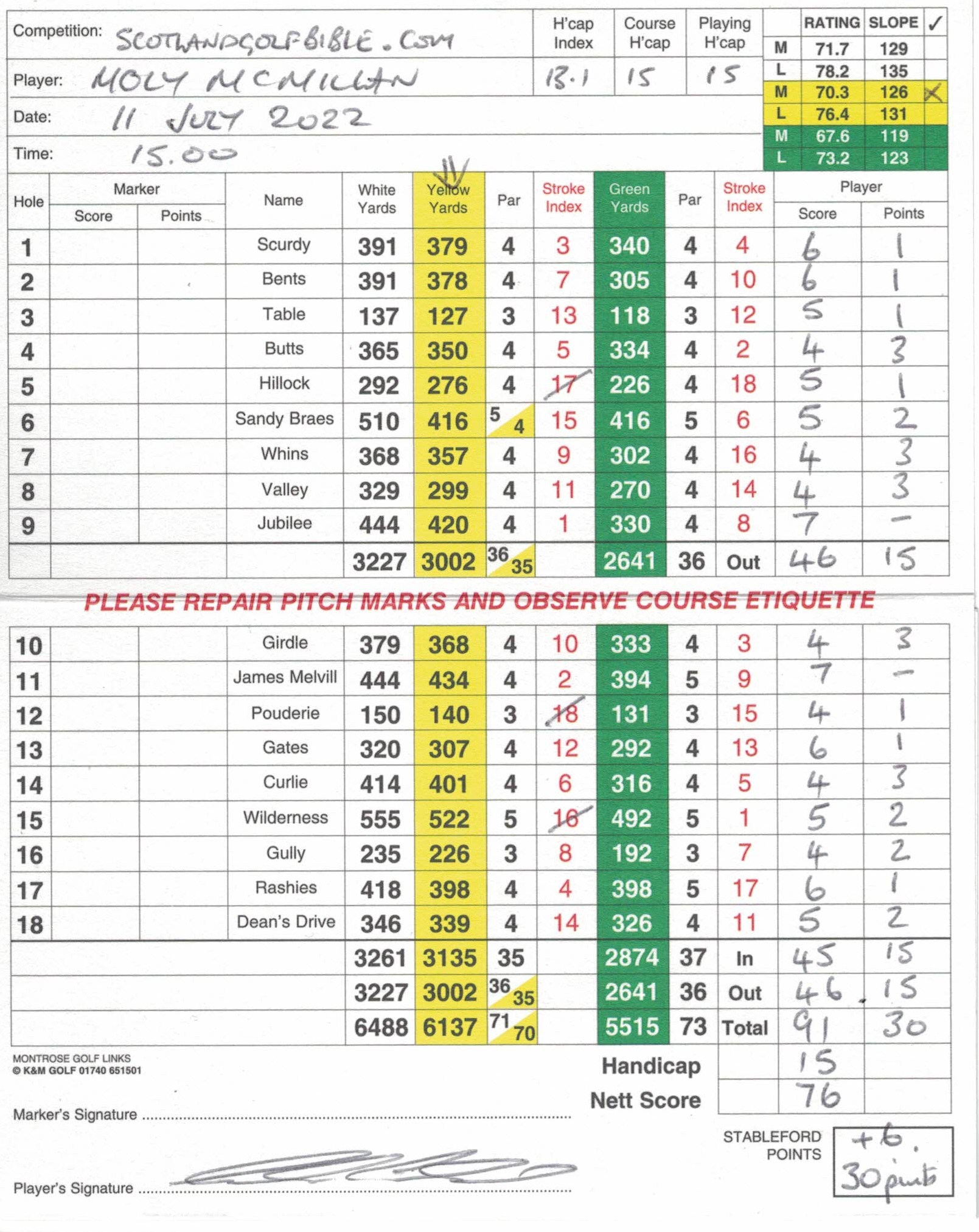
Moly’s Montrose 1562 scorecard – 91

152. Forfar. 9 July 22.

Incredible and possibly unique golf course.

Round £50. Par 69. Course Rating / Slope Rating (yellow) 67.2/119. Value (out of 5) – 5

Forfar is an incredible golf course. Although I’m a native Dundonian and played football in nearby Forfar many times, I had never actually played the golf course – I had no idea what I’d been missing all those years. Whenever I’ve mentioned Forfar to my non-Scots friends, I always get “Forfar four, East Fife five!”. It should be famous for its golf course.

The 4th, ‘Cat Law, a tough par four, with Forfar’s terrain on show.

Having read many reviews of Forfar golf course, I was struck by the number of writers commenting on the unusual terrain – “it’s an ‘inland links'” said many.

The majestically bunkered 17th hole – this is typical of the views playing Forfar.

The geology is very marked. It has hummocks and undulations with so much similarity to a links. Look at the fairways, and it could be Scotscraig, near St Andrews. Look at the numerous Scots Pine, with the hilly surrounds, and it could be Boat of Garten in the Highlands. The wonderful heather and bunkered green surrounds, would make their way easily onto Lanark, Edzell or any number of the great heathland courses.

The blind tee shot at the par four 2nd hole.

I’ve played over 200 golf courses throughout the world, from the Monteray Peninsular, through the championship layouts of South Africa and Australia. Ryder Cup parkland courses and Open Championship links. Asian tour venues. Forfar is both like none of them and yet like all of them, simultaneously.

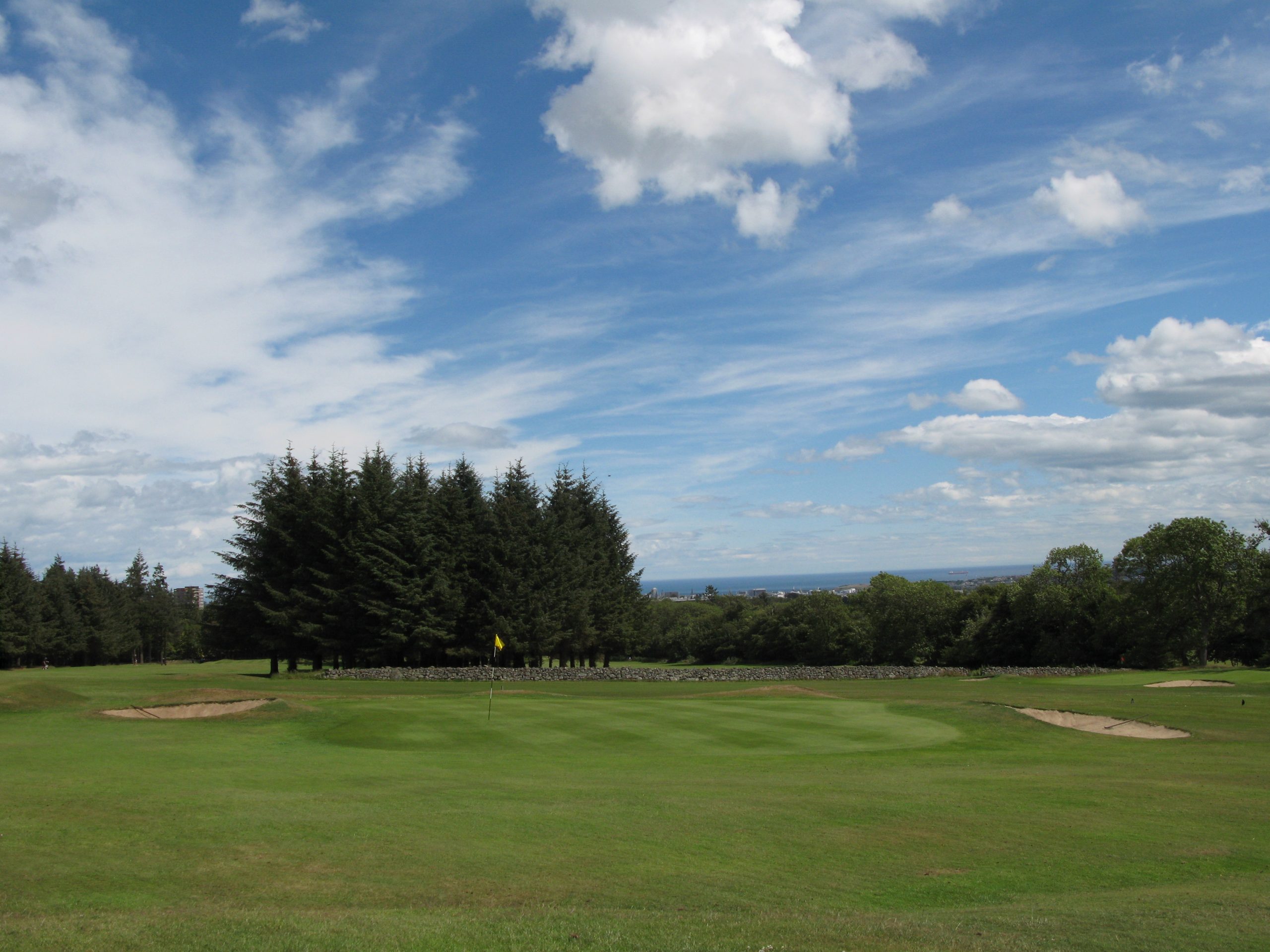
The green complex at the fifth, a challenging long par 3.

On land influenced by the remnant boulders of the last ice age, Forfar sits only 15 miles north of Carnoustie and 15 miles south of Glen Clova in the Angus Glens. The golf course has a lengthy history, claiming to be “the 4th oldest 18 hole course in the world and is the very first Club to have an 18 hole course from inception and inauguration”.  This latter comment is carefully contructed, since there are many earlier 18 hole courses, for example the Lundin/Leven Links (blog here) 18 holes dates to 1868, 3 years before the creation of Forfar.

The approach to the seventh, the par four, ‘Quarry’, SI 2 hole. Play long and right, if you can hit the green in 2.

The course was designed by Old Tom Morris, at a time when no major earth moving was done in course construction. So all that you walk on is natural. The green surrounds are at times genius, which makes sense since James Braid carried out a redesign in 1926, but the majority of the holes remained the same. Overall, its a beautiful golfing challenge.

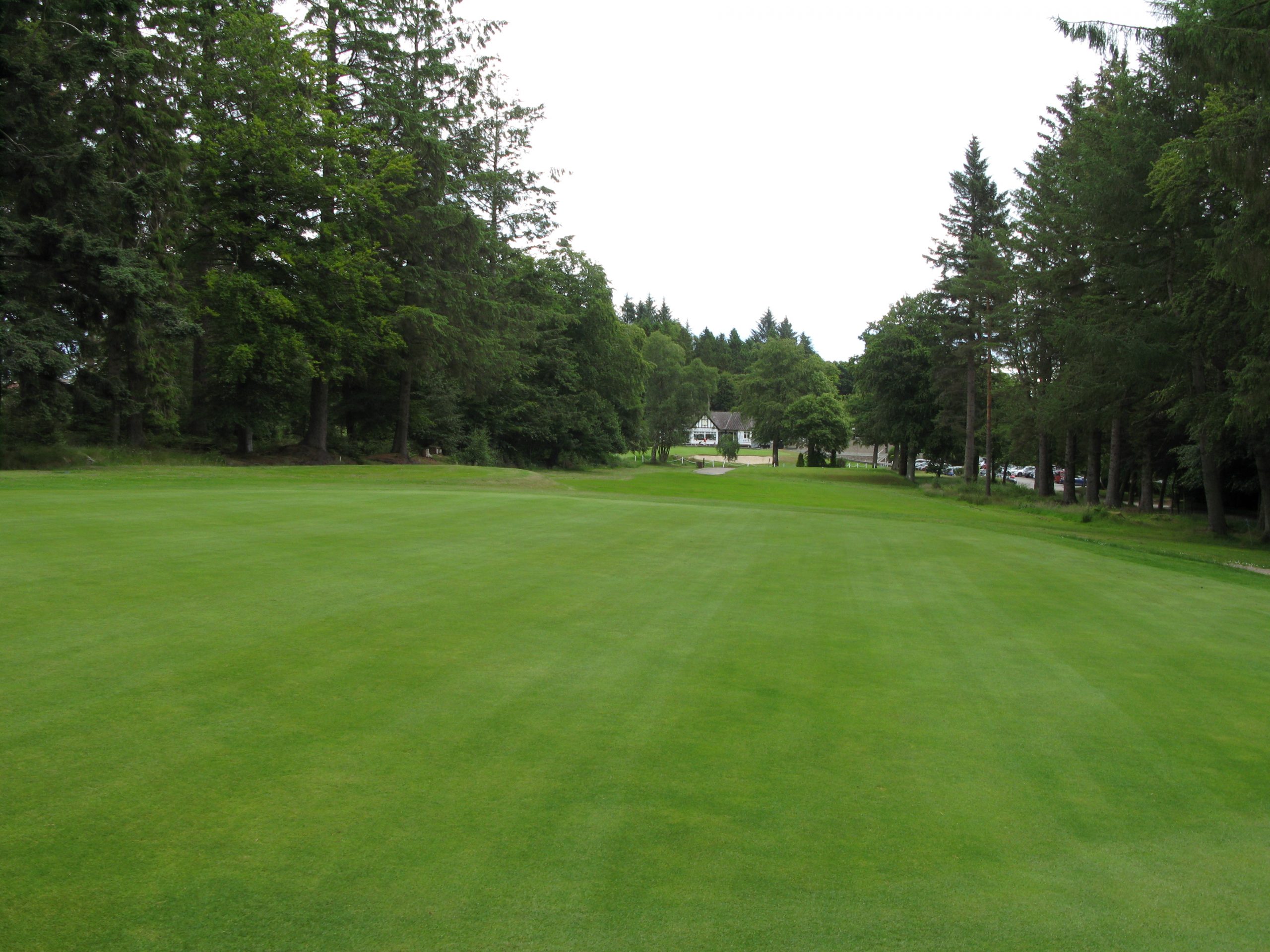
The tricky 18th green to find from a blind approach shot. I was lucky to choose the right club, to get my 3rd birdie of the day. Very unusual for me!

Despite having a few weaker holes, notably the par three ninth, there are many that are memorable. When we played on a calm, July day, the course was in great condition. The fairways were dry and fast running, the turf was firm, the greens slick, the bunkers consistently first class and the teeing grounds all excellent.

The wonderful 12th hole, the SI 1 hole on the course. A par four of 422 yards (yellow).

Value for money is undoubtedly 5 star, at the £50 mid-week rate; we paid only £20 through a Golfnow ‘hot deal’ for a Saturday twilight time. In fact, unbeatable golfing value.

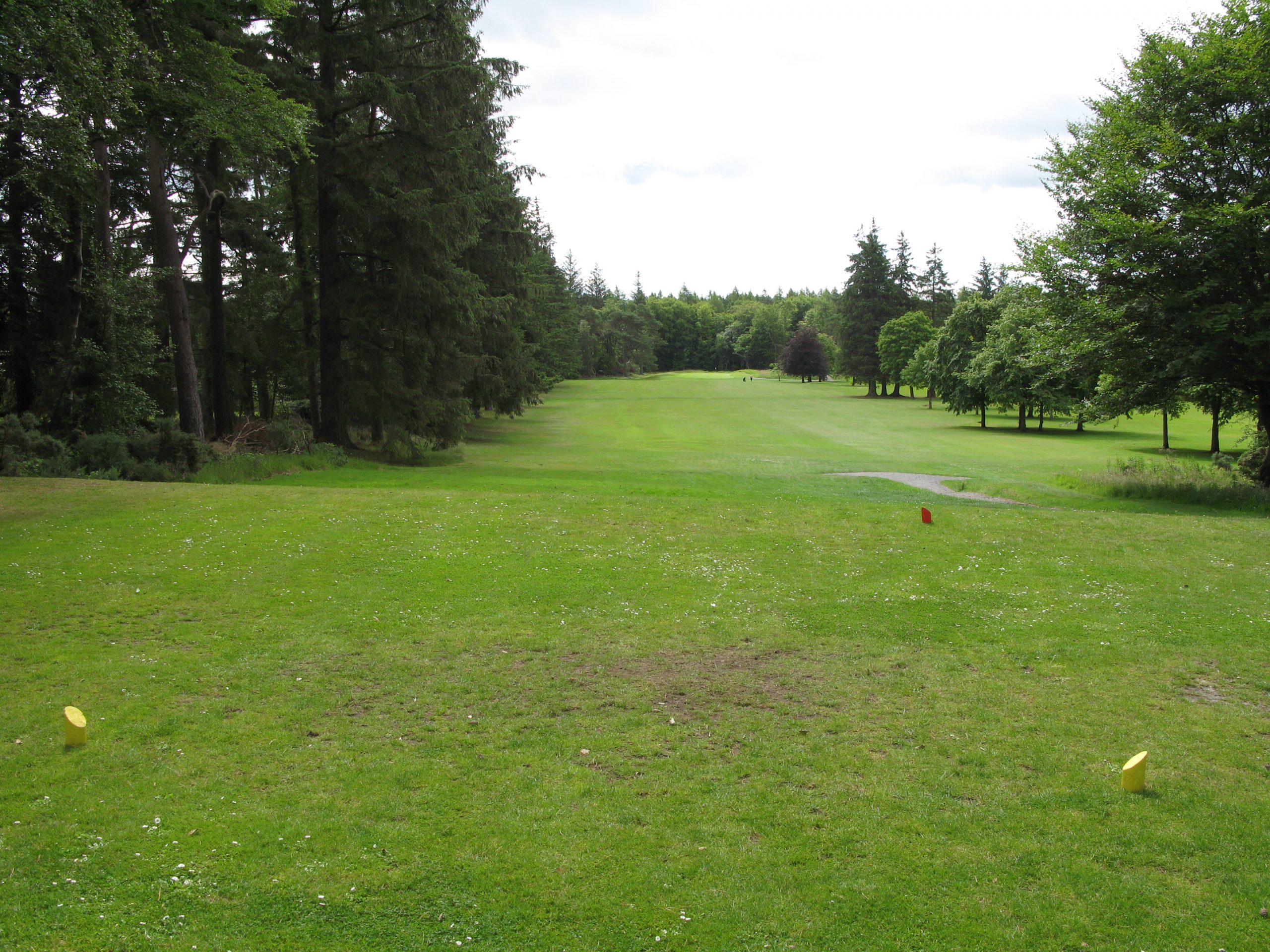
The 10th, a mid length par 4, where storms had left their mark with a loss of trees.

If I had to select only 10 courses that collectively represented the range of golf in Scotland, Forfar might just be be my number one pick, it is that unique. As to its overall ranking, it regularly appears in the “Top 100” Scotland courses, typically around 70th place. This doesn’t do it justice for me, I think it’s easy to justify a top 50 placing.

I can’t recommend Forfar high enough.

Facts:

Course Type: “Inland Links?”

Par 67  (1 par 5s, 13 par 4s, 4 par 3s)

Distance (yellow): 5754 yards

Moly’s Gross score: 84

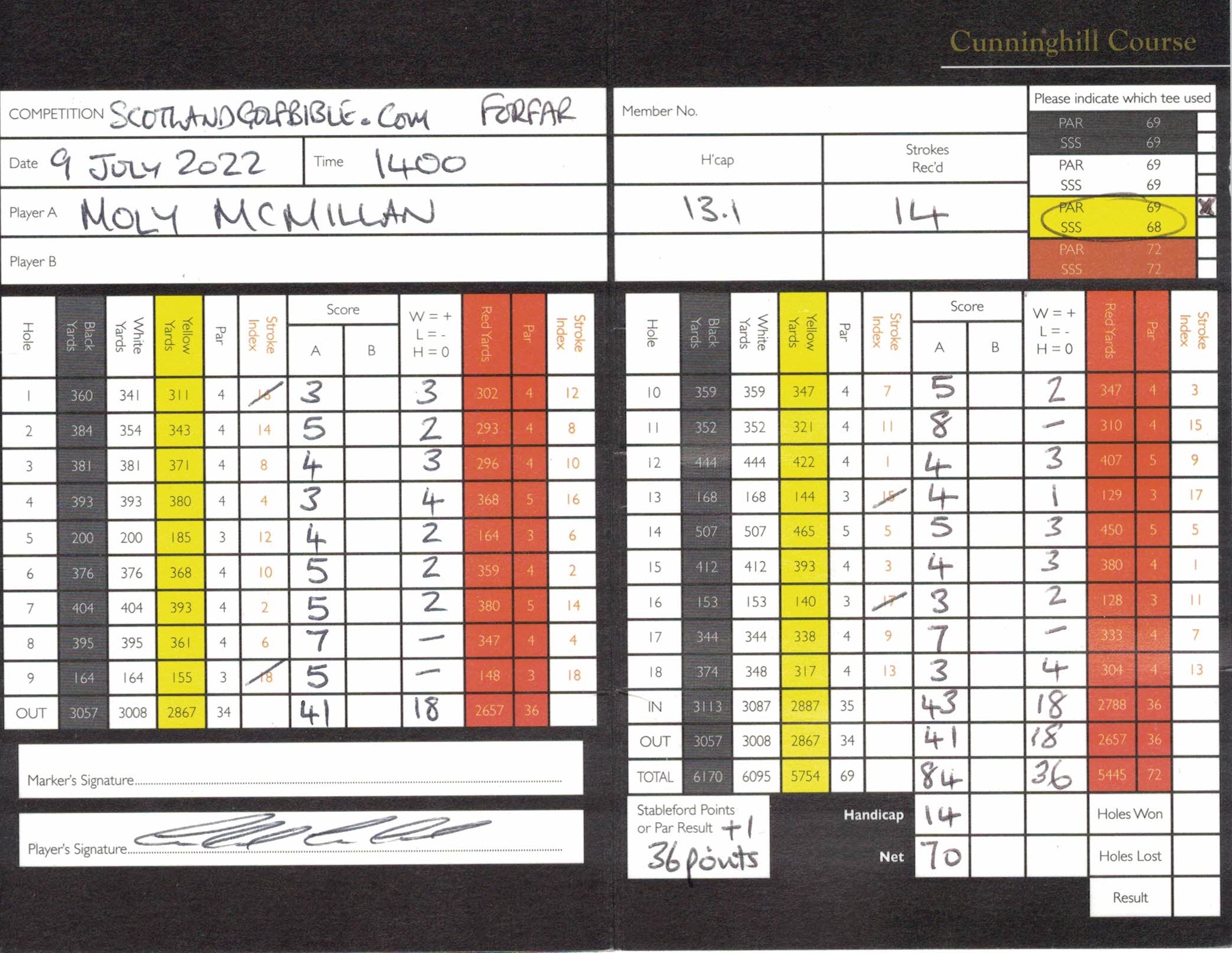
Moly’s Forfar scorecard – a commendable 84. 3 birdies and 3 triple bogies!

151. Hazelhead Pines. 8 July 22.

Decent course that highlights beautiful municipal pricing.

Round £27. Par 67. Course Rating / Slope Rating (yellow) 67.2/119. Value (out of 5) – 3.5

Sport Aberdeen is the local council’s vehicle for publicly funded sport, with its golf offer being managed under ‘Golf Aberdeen’. They manage 5 courses in total, with three of them ( two 18 holes and one 9 hole course) being at Hazelhead Park in the west of the city. The other two courses not at Hazelhead Park are Balnagask and Kings Links.

First green at Hazelhead Pines, a straight forward par 3 to start. The clubhouse is in the background.

All Golf Aberdeen 18 hole courses are priced at £27 for an individual round; albeit I was able to access Hazelhead Pines for only £22, through the Golfnow app.

The Pines course was originally a 9 hole course, but extended to 18 holes in the 1970s; it was designed by the golf architect Roger Dyer with the well known golfers Brian Hugget and Neil Coles. The three also designed other courses, including nearby Auchmill.

The 5th, a par four over 400 yards, a characteristic hole at Hazelhead Pines, highlighting the rather tired looking teeing ground

The best value option at Hazelhead Park, if your body can cope, is to pay the day rate of only £37, for which you can play all three of the park’s courses, which includes their “Jewel in the crown” – the MacKenzie Championship course. That being Dr Alister Mackenzie, one of the most pre-eminent golfing architects of all time, whose credits include Cypress Point, the West Course at Royal Melbourne and Augusta National.

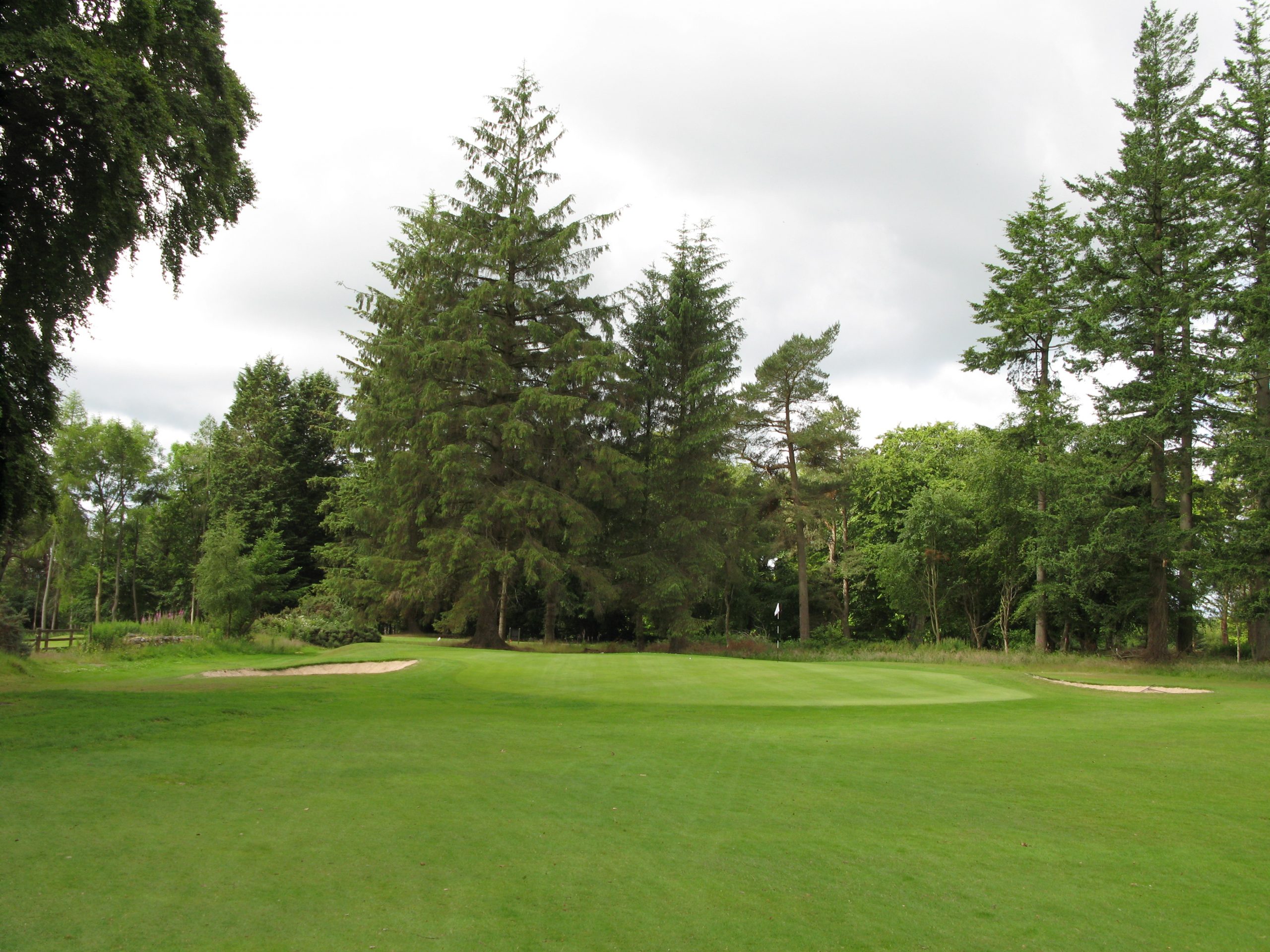
17th at Hazelhead Pines, with far reaching views over Aberdeen

This highlights a pricing anomaly. The Pines course is a nice, but pretty basic layout. Fairly short, with generous fairways that have few bunkers, a number of the holes are unmemorable. The greens are good and some are well bunkered. Other than the teeing grounds, the course was in good condition and the price tag represents decent value. The Hazelhead Park MacKenzie course on the other hand, deserves its “championship” label – a much more sophisticated track, by one of the worlds greatest architects, could attract a much higher price than The Pines. But one could argue that providing both courses at the same price, is the hallmark of good municipal golfing management.

Gary Fleming, of Dullatur GC, another golfer trying to play all Scotland’s golf courses

One of the delights in playing Hazelhead Pines, was meeting up with fellow “Scottish Golf bagger” Gary Fleming, a member of Dullatur GC in Glasgow. Gary, a similar standard golfer to me, had played over 400 Scottish courses, and I was keen to pick his brains for any tips about value and planning. He had played in many Open competitions, winning a few of them – well done Gary and good luck with completing them all.

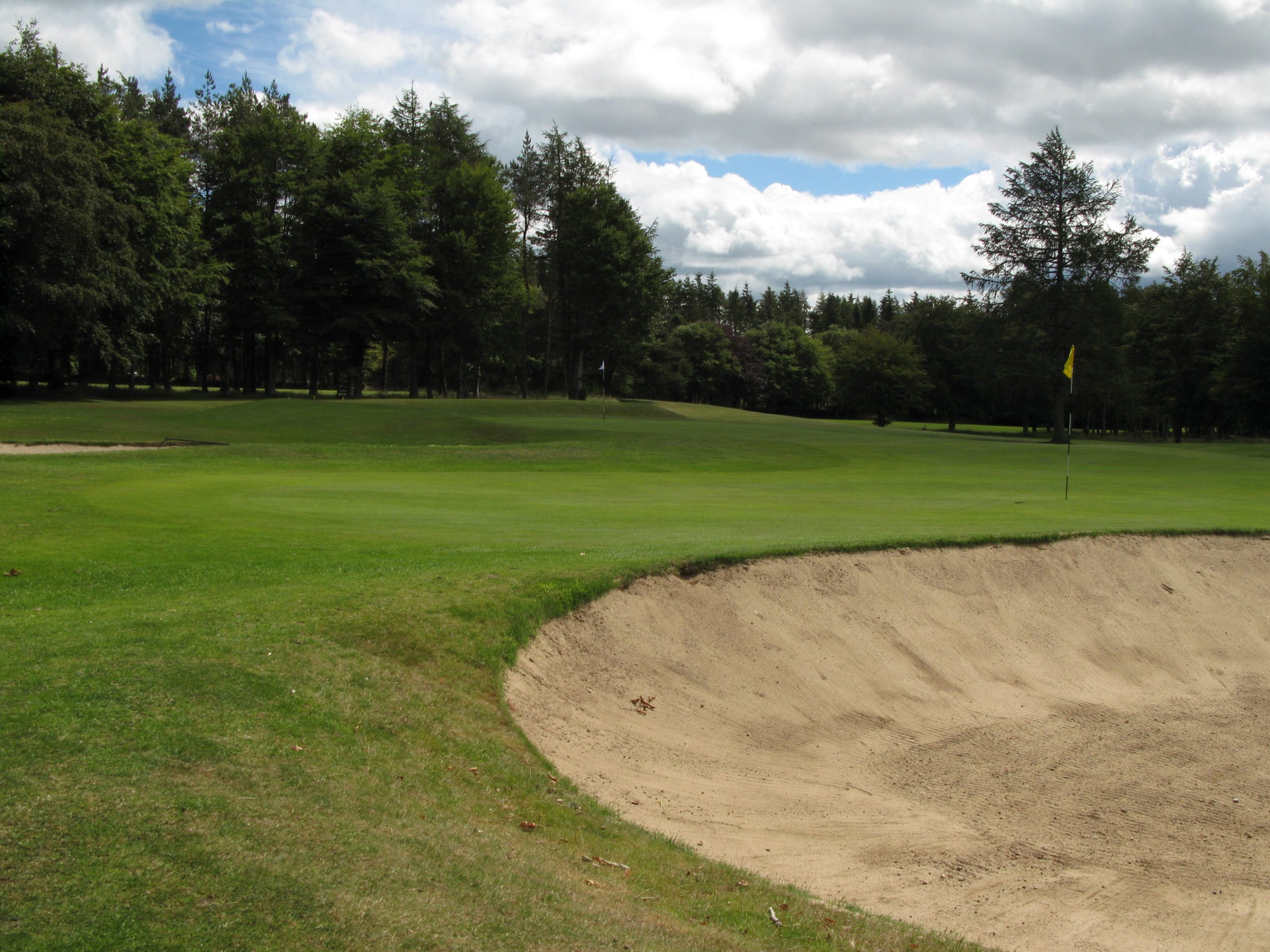
The brilliant 8th green (shared with 13th) at Hazelhead Pines, showing one of the good greenside bunkers.

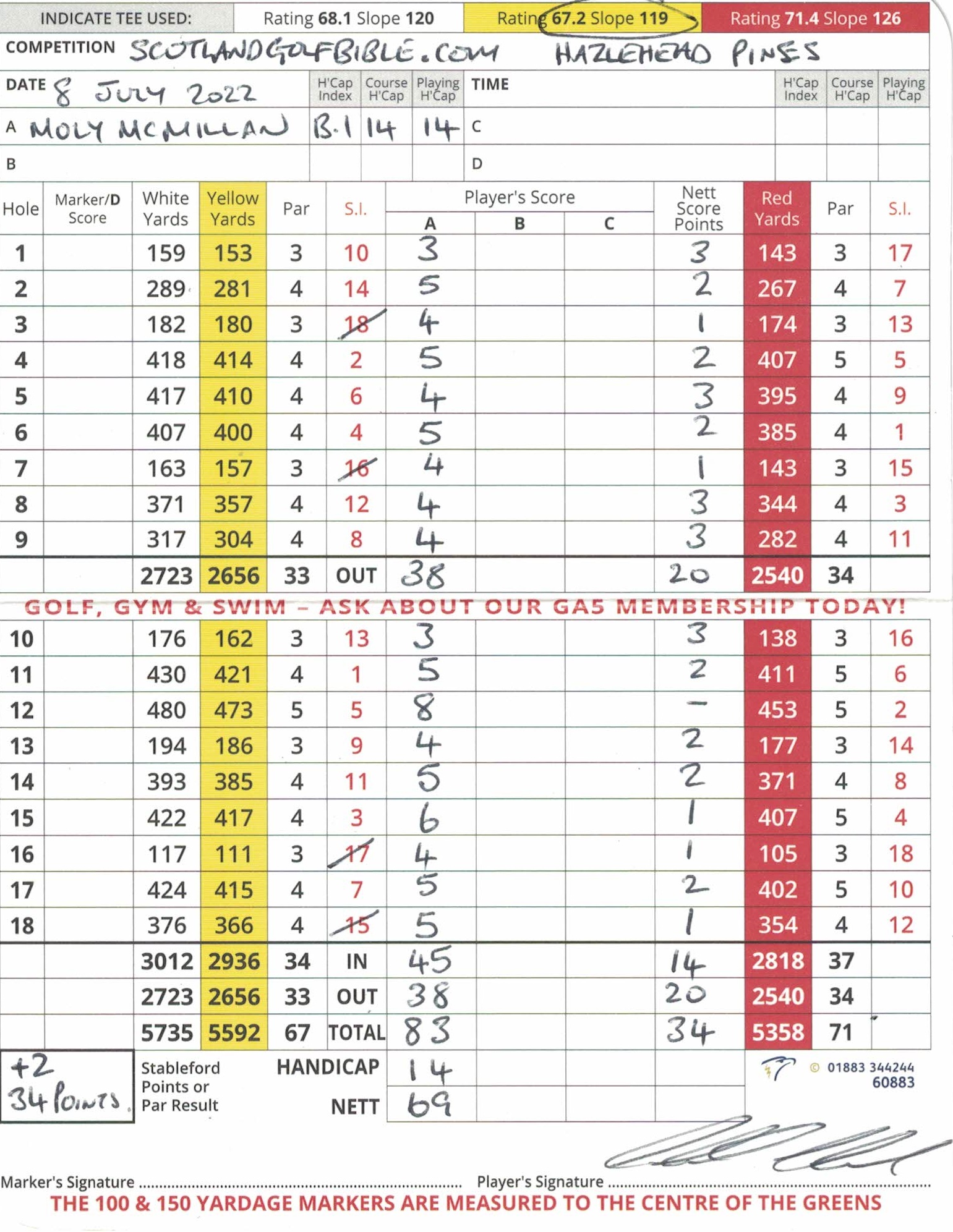
Perhaps inspired by Gary, I played well, shooting 83, just 2 over net. Admittedly, the course actually played much easier than the excellent flyover videos available on the Sport Aberdeen website here would suggest – it’s not nearly as tight as it looks. In that regard the slope rating at 119 for the yellow tees feels a little high.

Stroke Index two 4th at The Pines, a really tough par 4.


It’s worth playing the Pines course, but if you can I suggest playing both on the same day for greatest value. That was what Gary did – he planned better than me!

Facts:

Course Type: Parkland

Par 67  (1 par 5s, 11 par 4s, 6 par 3s)

Distance (yellow): 5592 yards

Moly’s Gross score: 83

Moly’s Hazelhead Pines scorecard – a solid 83

150. Pitreavie (Dunfermline). 7 July 22.

Foreshadows of Augusta at Dr Alister MacKenzie’s only Fife creation

Round £30. Par 70. Course Rating / Slope Rating (yellow) 68.8/134. Value (out of 5) – 5

Paul Brookes, the professional at Pitreavie GC asked me, “Name an architect that has three courses consistently in any list of the world’s top 100 courses?”. He was, of course, speaking about the courses Augusta National, Cypress Point and The West Course at Royal Melbourne, all creations of Dr Alister MacKenzie. Paul could even rephrase the question to be “in the top 10 or 20 best courses ever built”, such is the regard for these designs.

The ‘camoufleur’ skill of Alister Mackenzie on show at the par three 3rd hole. A brilliant golf hole.

You could spend a lifetime, and a fortune, trying to play all of these top 10 world courses; however, you can get a glimpse of MacKenzie’s skill by playing Pitreavie in Dunfermline for no more than £30. Pitreavie is one of only three courses in Scotland fully designed by MacKenzie, the other two being Hazlehead Municipal in Aberdeen and the Eden course at St Andrews.

Moly tees it up at the fifth hole, one of the more scoreable par 4s on Pitreavie.

Born of Scottish parents, MacKenzie was in fact a Yorkshireman. His Scottish name must have been handy though in the early 20th Century US golf growth period, at a time when many of the great Scottish designers, such as Donald Ross (Pinehurst) and Tom Bendelow were making great advances.

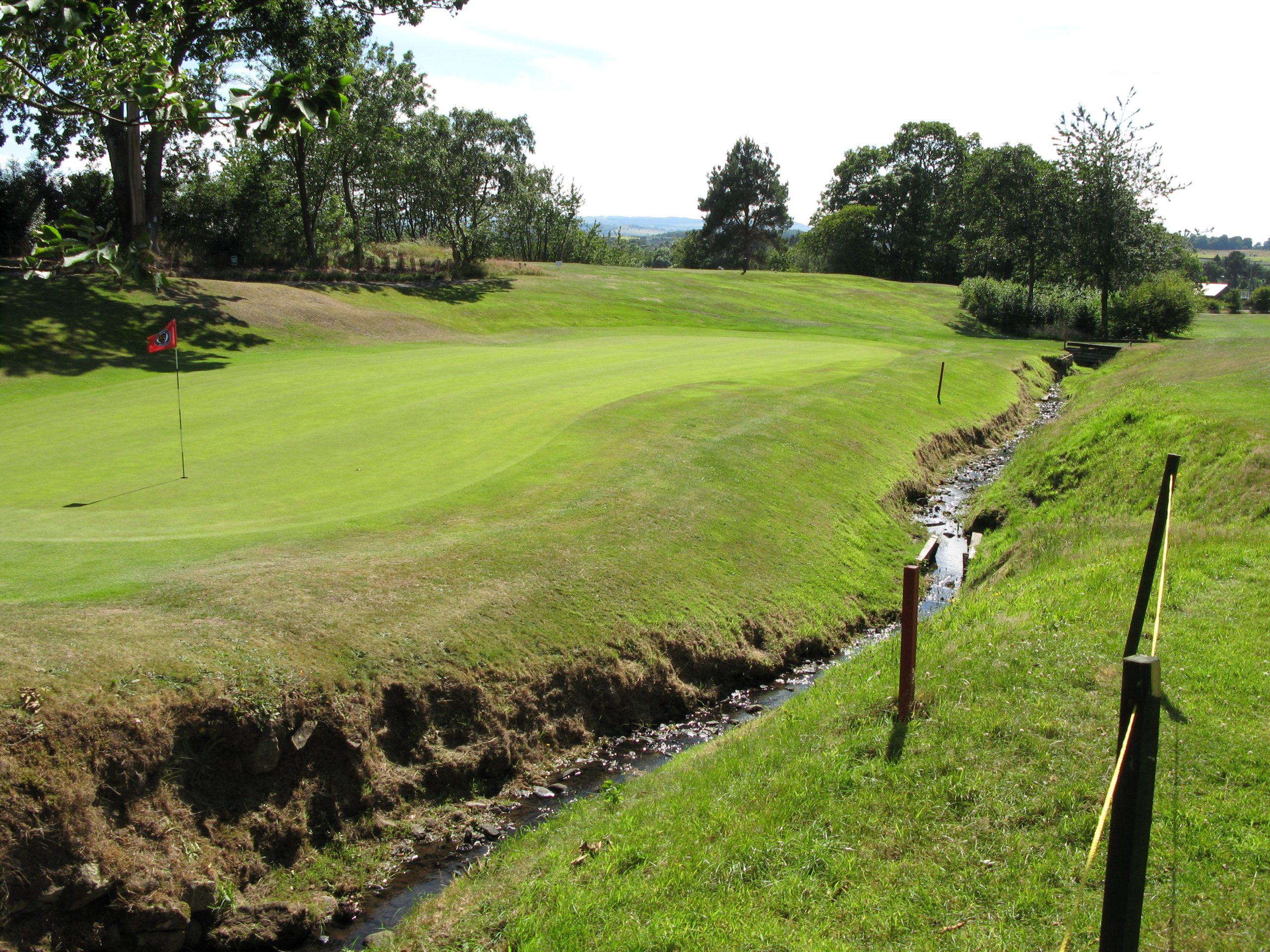
The very wide and narrow 12th green at Pitreavie, a downhill par 3 of only 135 yards. A great hole. The entrance is from the right of this picture.

After two par fives to start, the third is the first real glimpse of MacKenzie’s skill. A long par three, it is the stroke index 2 hole, with a teeing ground almost 65 yards long giving many distance options. But looking at the hole you can’t readily see how hazardous it is. Medical army doctor MacKenzie had specialised during the Boer war and then WW1 to become a camoufleur, a specialist in camouflage. He was to later note the similarities between camouflage and golf design. At the 3rd, there is a hidden burn running across the front and up the right of the long multi level green. It is a formidable ‘camouflaged’ hole, as your eye is drawn naturally to the green tiers.

The third, the most beguiling of par 3rd at nearly 200 yards. I can imaging even low handicap players playing as a 2 shot hole.

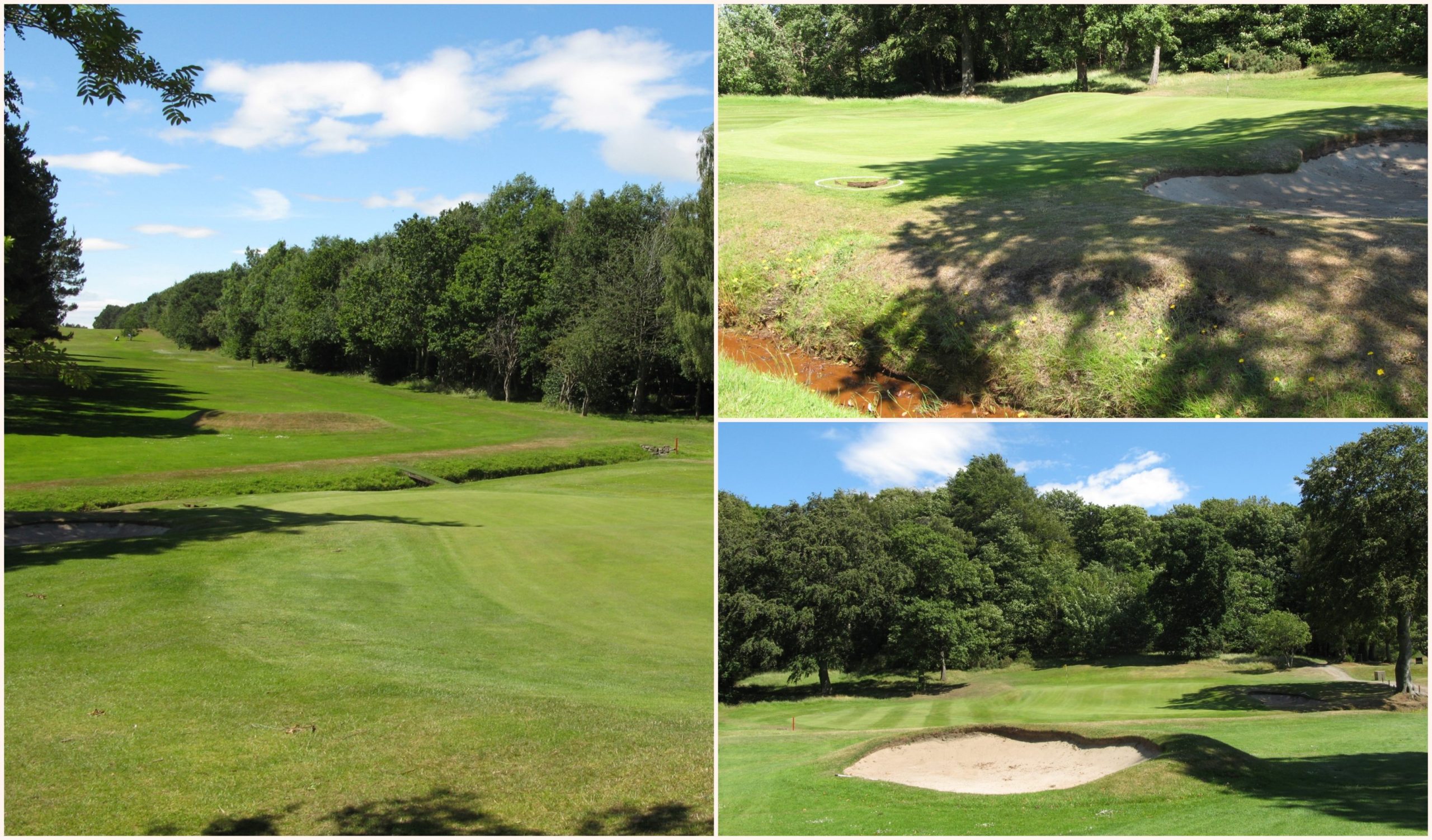
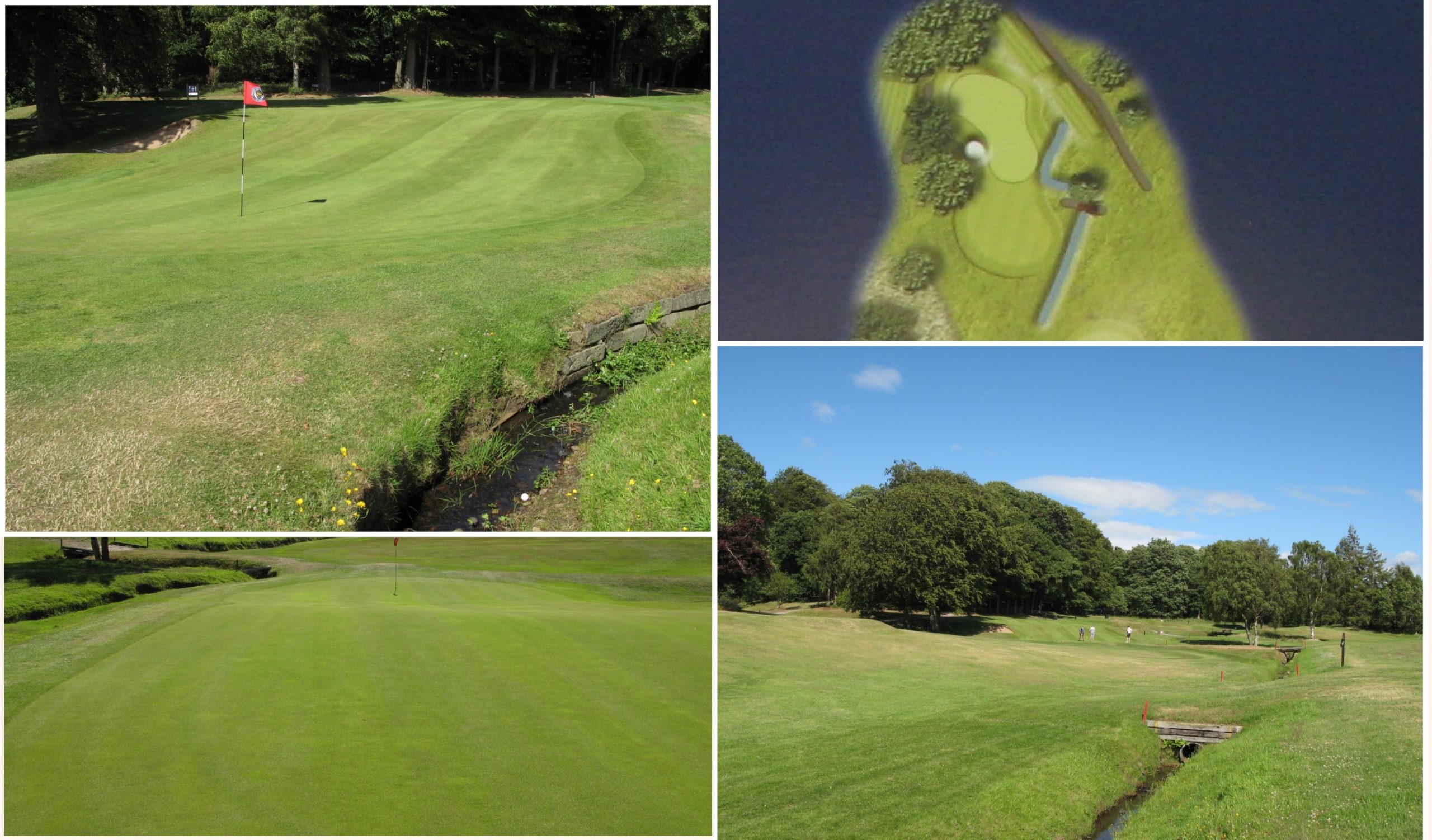
This clever use of the burn is brought into play on several more holes, notably the par threes 6th and 12th holes, and most cunningly at the par four 13th hole, the Stroke Index 1. When you play Pitreavie, keep in mind the use of Ray’s Creek at Augusta, especially at the front of the 13th green. It’s the symmetry between both 13th holes, at Augusta and Pitreavie, that adds to the story.

The wonderful par four SI1 13th hole at Pitreavie. Have a close look at the course map (top right) at how the burn cuts into the green, but is completely unseen from the approach (bottom right). You can see my ball in the top left picture!

Another feature of the course is the undulating terrain. This gives rise to the question about how closely did MacKenzie follow his own 13 principles of course design published in Golf Architecture (1920). “The greens and fairways should be undulating, but there should be no hill climbing”, also “There should be a minimum of blindness for the approach shots”. Whilst there are several blind tee shots, there are indeed no blind approach shots; however, I’ll leave readers to find out about how tough a walk it is in places!

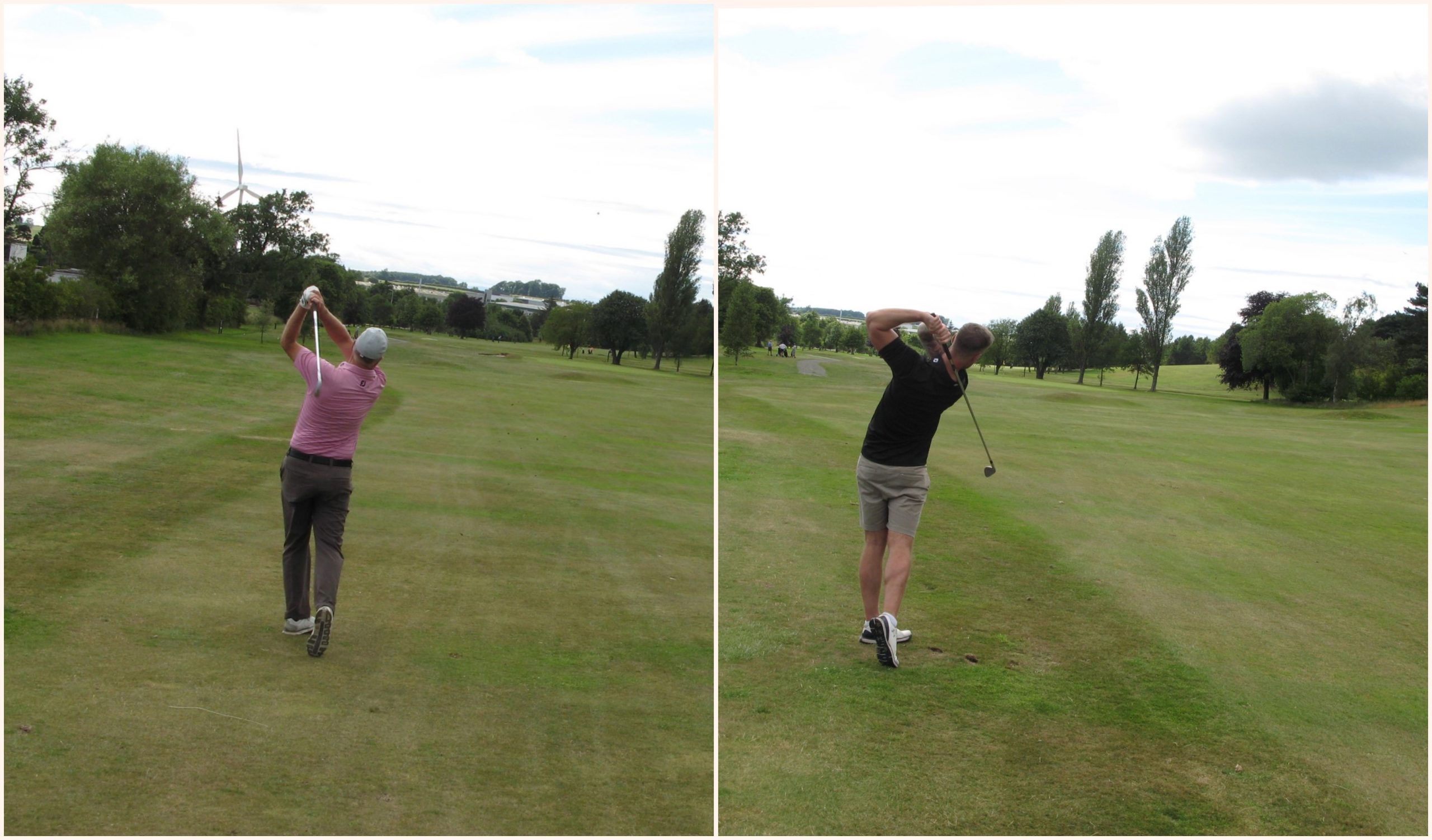
I met up with local members, father and son, Ian and Dean Black. Ian on the left here, with both shown playing into the 17th green.

The course was in great condition when I played. The sand in the bunkers was perfect, often an overlooked part of parkland maintenance. There are also outstanding views from several tees, towards the Queensferry Bridge.

The fairways were fairly open, which reinforces the difficulty of the green surrounds that contribute to the slope indices well into the 130s for both white and yellow tees.

I met up with local members Ian Black and his son Dean, and we enjoyed a few holes together, and I listened to how they were very happy with the course and how good value the membership was.

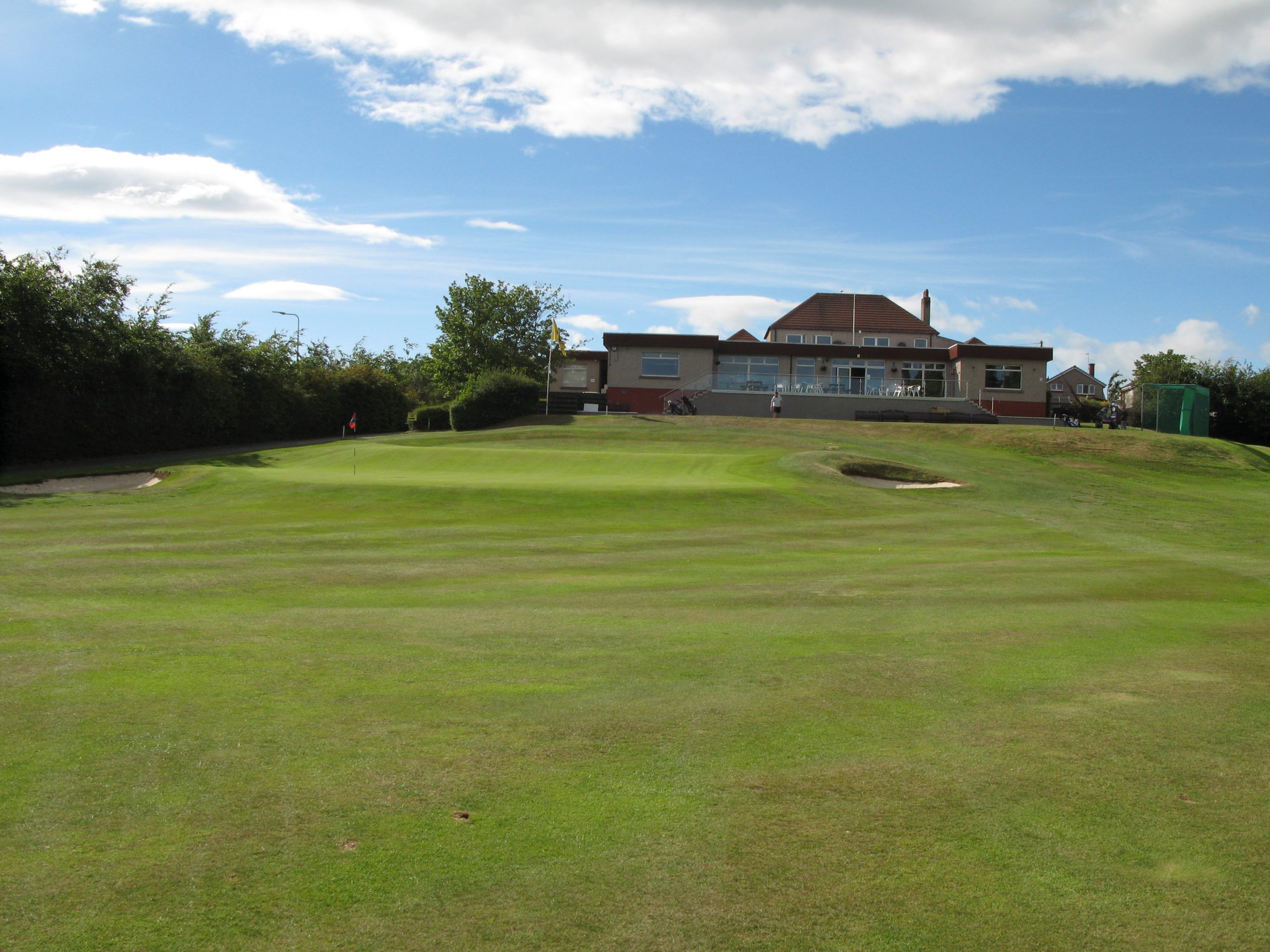
The beautiful 18th green at Pitreavie, adhering to Alister MacKenzie’s design principles.

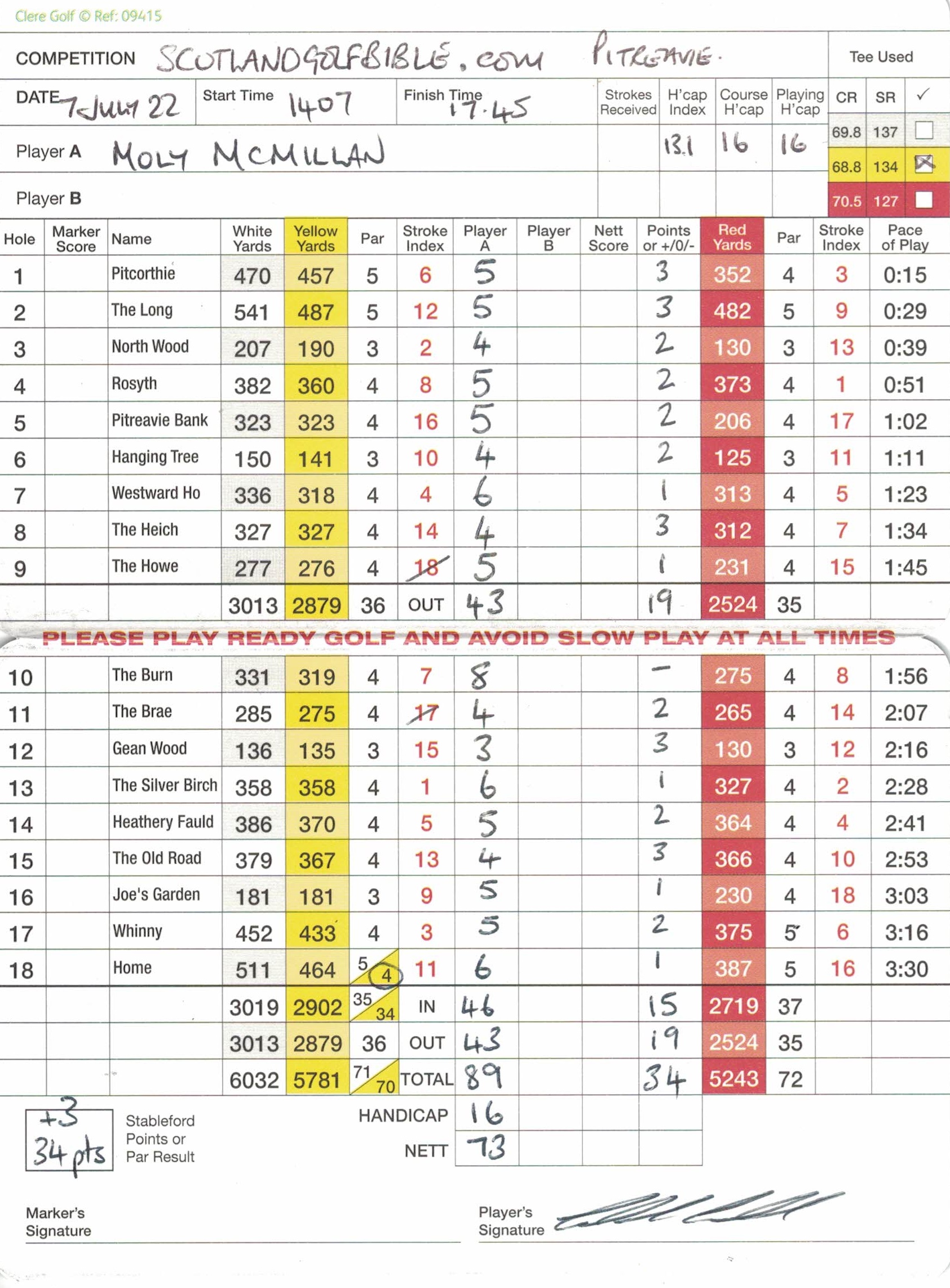
I played well, shooting 89 for 34 stableford points, with only one blob/disaster at the 10th, where I took an 8 at one of the few dog leg holes.

As to value, although there are a few weaker holes, to be able to experience some of MacKenzie’s genius at no more than £30 (I paid only £17.99 on Golfnow) means 5 out of 5 for me. This is outstanding value and highly recommended.

Facts:

Course Type: Parkland

Par 70  (2 par 5s, 12 par 4s, 4 par 3s)

Distance (yellow): 5781 yards

Moly’s Gross score: 89

Moly’s Pitreavie scorecard – 89 for 34 stableford points.

« Older posts Newer posts »

© 2026 Scotland Golf Bible

Theme by Anders NorenUp ↑