A guide to green fee value for money

Category: Unknown (Page 1 of 18)

195. Troon Links (Fullarton). 30 Apr 23.

The junior course, priced like one. Usually.

Price Paid: £19.99 (GolfNow)
Current Price (2026): £28 list; GolfNow £23.99–£25.99 (October)
Value Rating: 4/5 at £19.99 / 4/5 at current GolfNow / 3.5/5 at list
Moly’s Score: 80 gross, 33 Stableford points
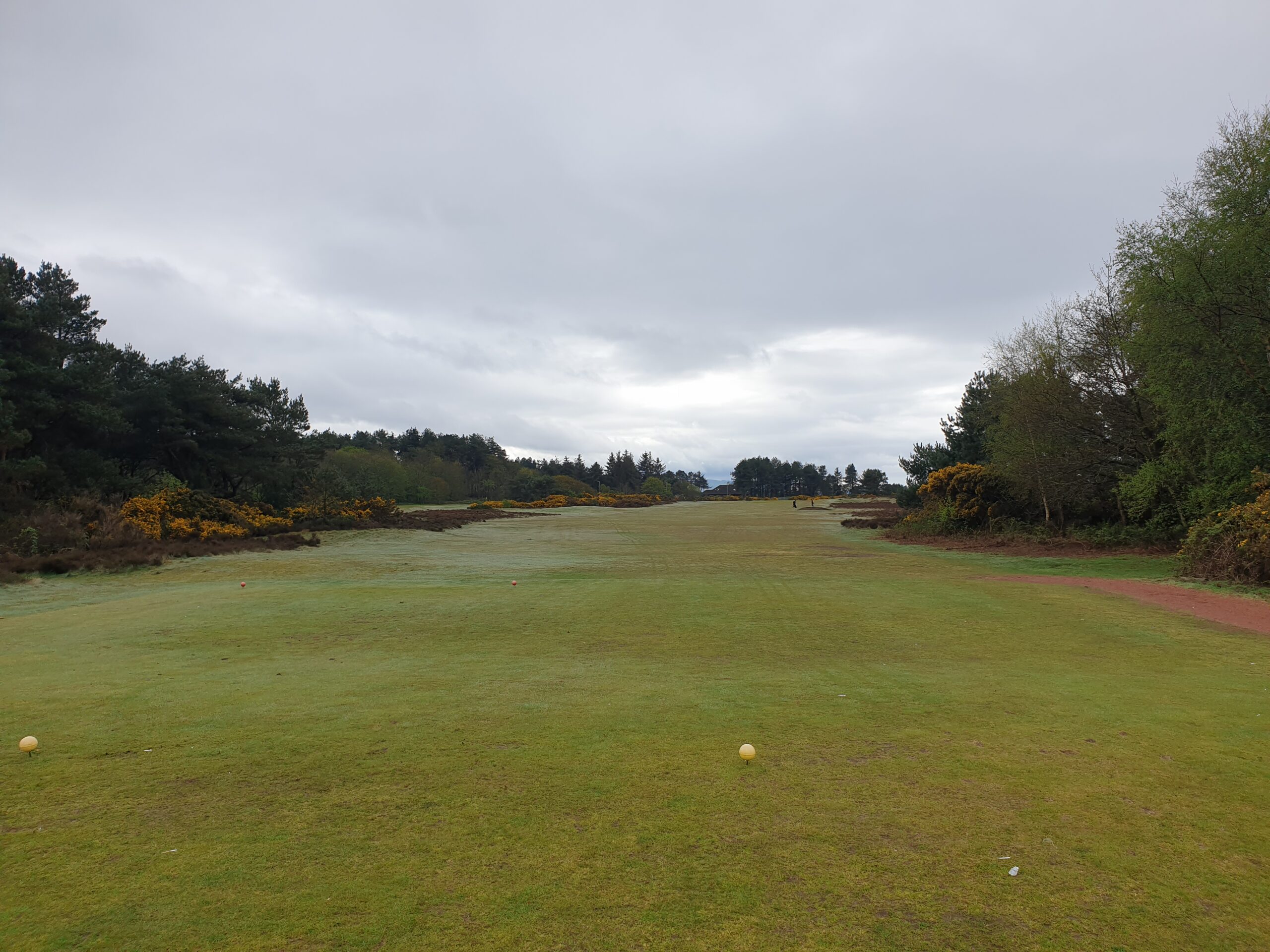
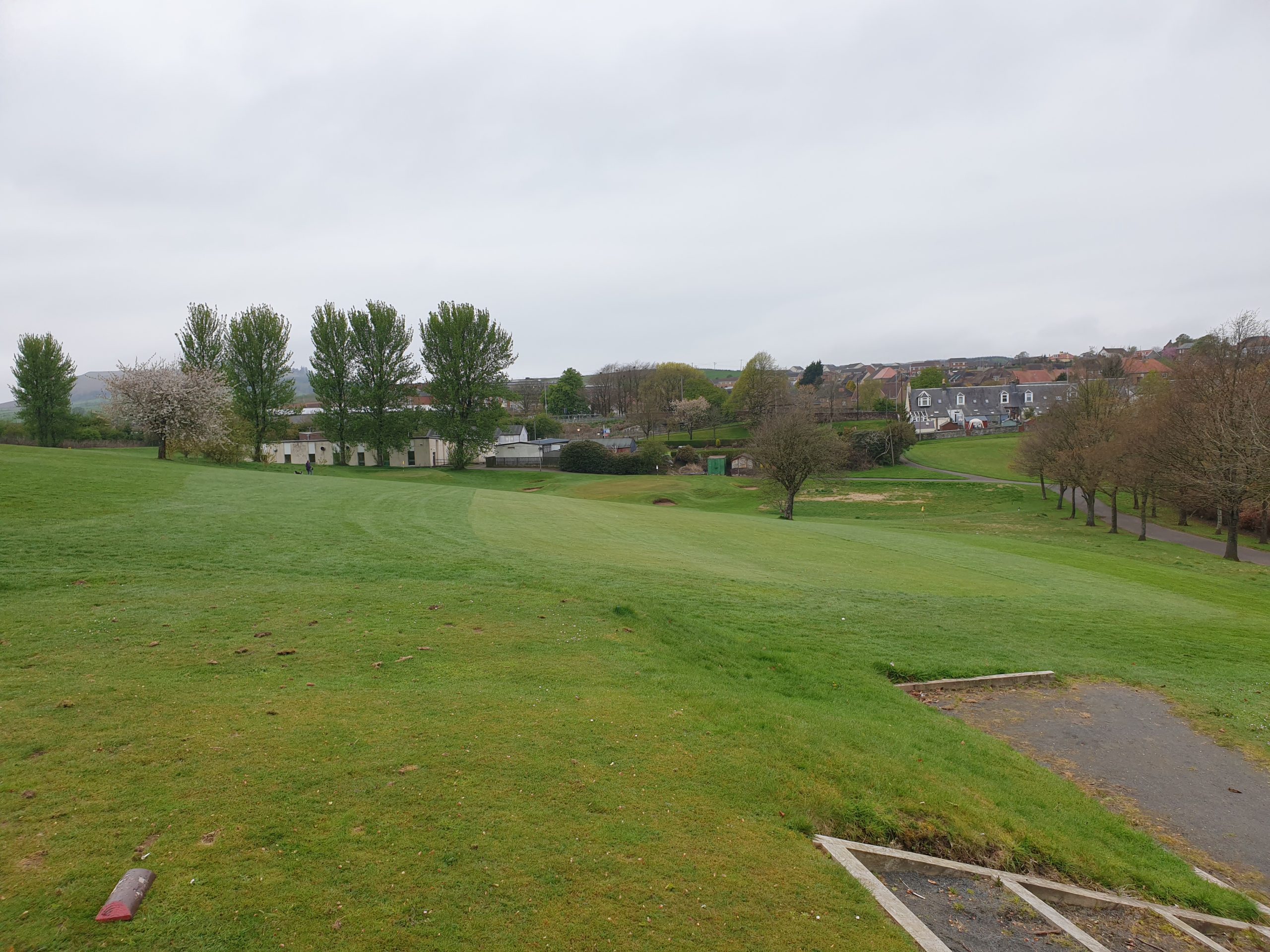
The 4th from the yellow tees, a 300-yard corridor of whin, heather and Scots pine; Fullarton in a single frame.

The day before, I played Lochgreen (Blog 194) for £19.99 on GolfNow. The next afternoon, I played Fullarton for £19.99 on GolfNow. Same clubhouse, same starter, same price.

They are not the same course. Lochgreen is 6,473 yards from the yellows, par 74, and was an Open qualifying course for forty years. Fullarton is 4,724 yards, par 66, with six par 3s and not a single par 5 on the men’s card. I assumed the council had simply priced all three alike. I was wrong, and it is worth explaining why.

Golf South Ayrshire’s list price for Fullarton is £28, against £38 for Lochgreen and Darley. That isn’t a rate per yard. Plenty of courses under 5,000 yards are worth far more than £28, and charge it. It is a ranking: Fullarton is the junior course of the three, and it is priced as one. On the quality of what’s here, that’s about right. The current GolfNow rates keep a similar gap. In April 2023, though, the discount algorithm briefly priced Lochgreen and Fullarton the same. On that weekend, the bargain was next door.
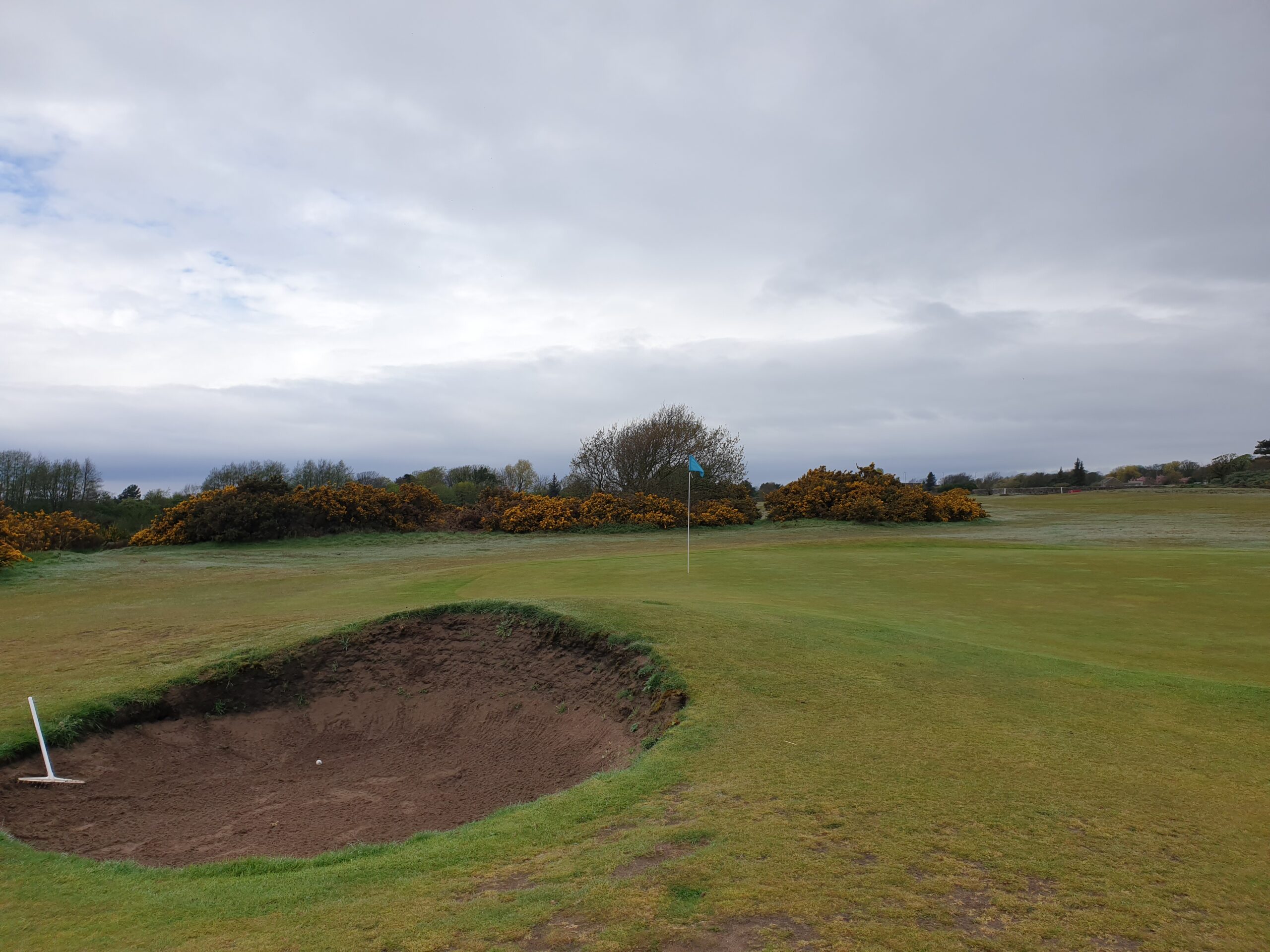
The 7th green and the reason for my 6. One of Fullarton’s few bunkers, and I found it.

Fullarton is a nice little course, routed through whin and pine. The bunkering is minimal and the greens are very small, so the defence is accuracy rather than sand. Miss a small green and you are chipping from tight turf. Miss the fairway and you are in the whin. It was also in better condition than either Lochgreen or Darley, less beaten up.

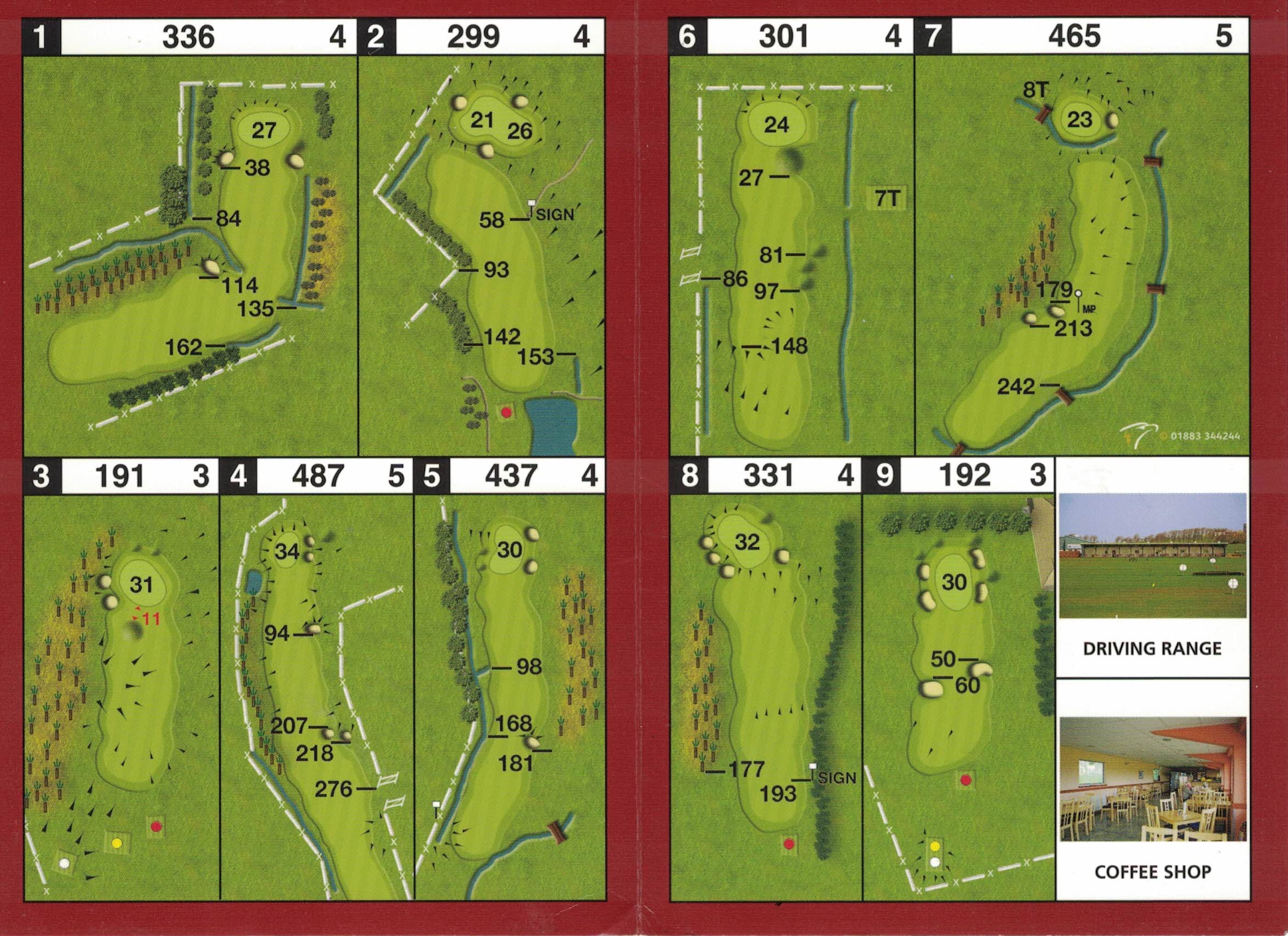
The routing is not obvious, so keep the scorecard map handy, as the 8th and 9th sit amongst the back 9 holes. I went out in 38 gross for 20 points, then came home in 42 for 13. The 173-yard 12th earned a 6 and a blank. Final tally: 80 gross, 33 points.
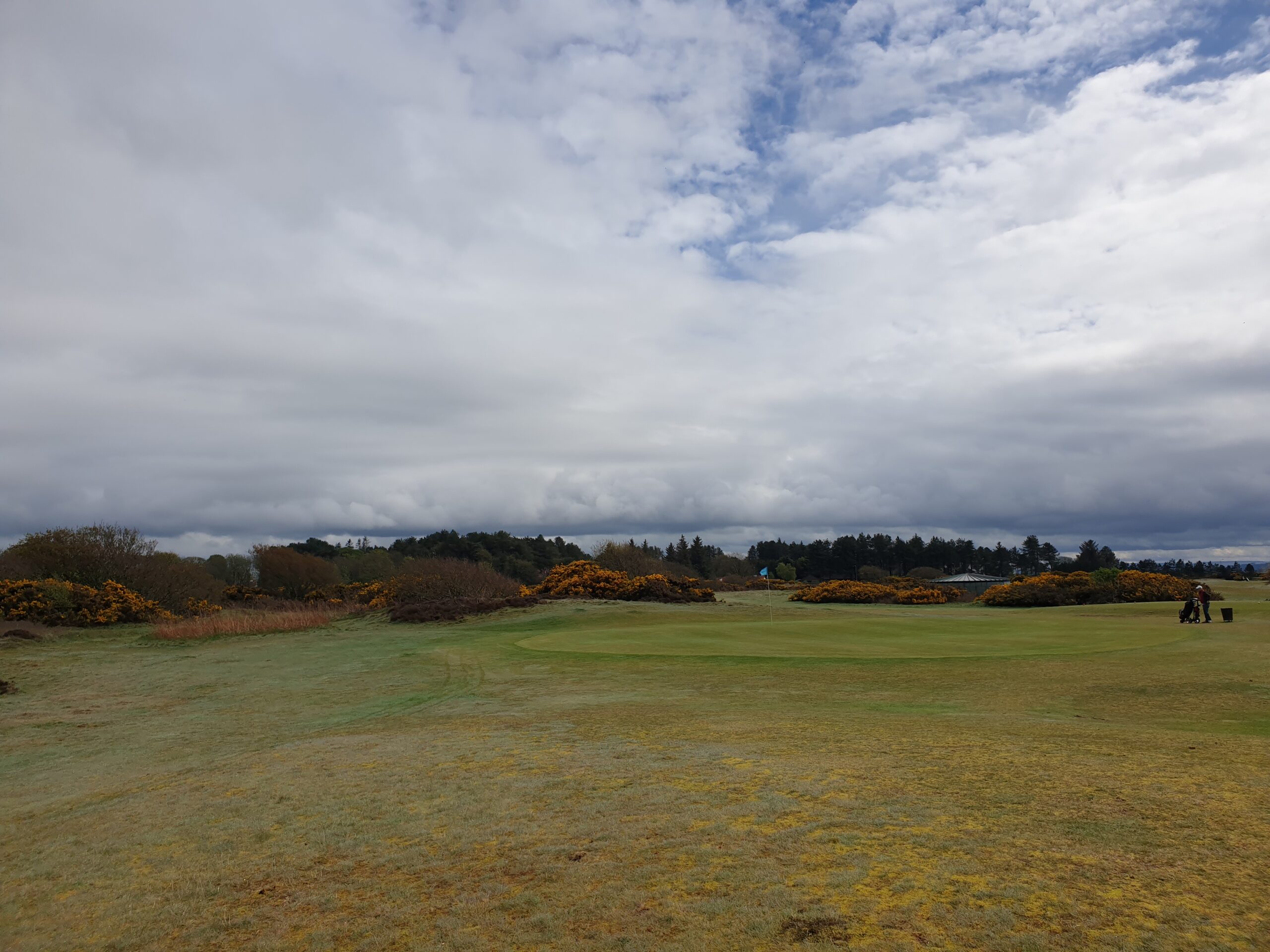
The 11th, 199 yards: the longest of the six par 3s and a small target. The sky cleared just in time for the back nine.

Golf South Ayrshire sells Fullarton at £28 as a quick round for beginners, and should take less than three hours. The marketing copy is less reliable than the pricing, though. Its own GolfNow blurb promises eight par 3s; the scorecard has six. The GolfNow listing gives Fullarton a par of 71 and 6,785 yards, roughly Lochgreen’s length.

Who designed it, and when? Nobody seems to know. GolfNow says 1905. One app credits Joe Finger in 1983, a Texan who as far as I can tell never designed a hole in Scotland. Another says 1973, the year Troon Welbeck Golf Club was founded. Wikipedia hints that the course came with the Fullarton estate after the council bought it.
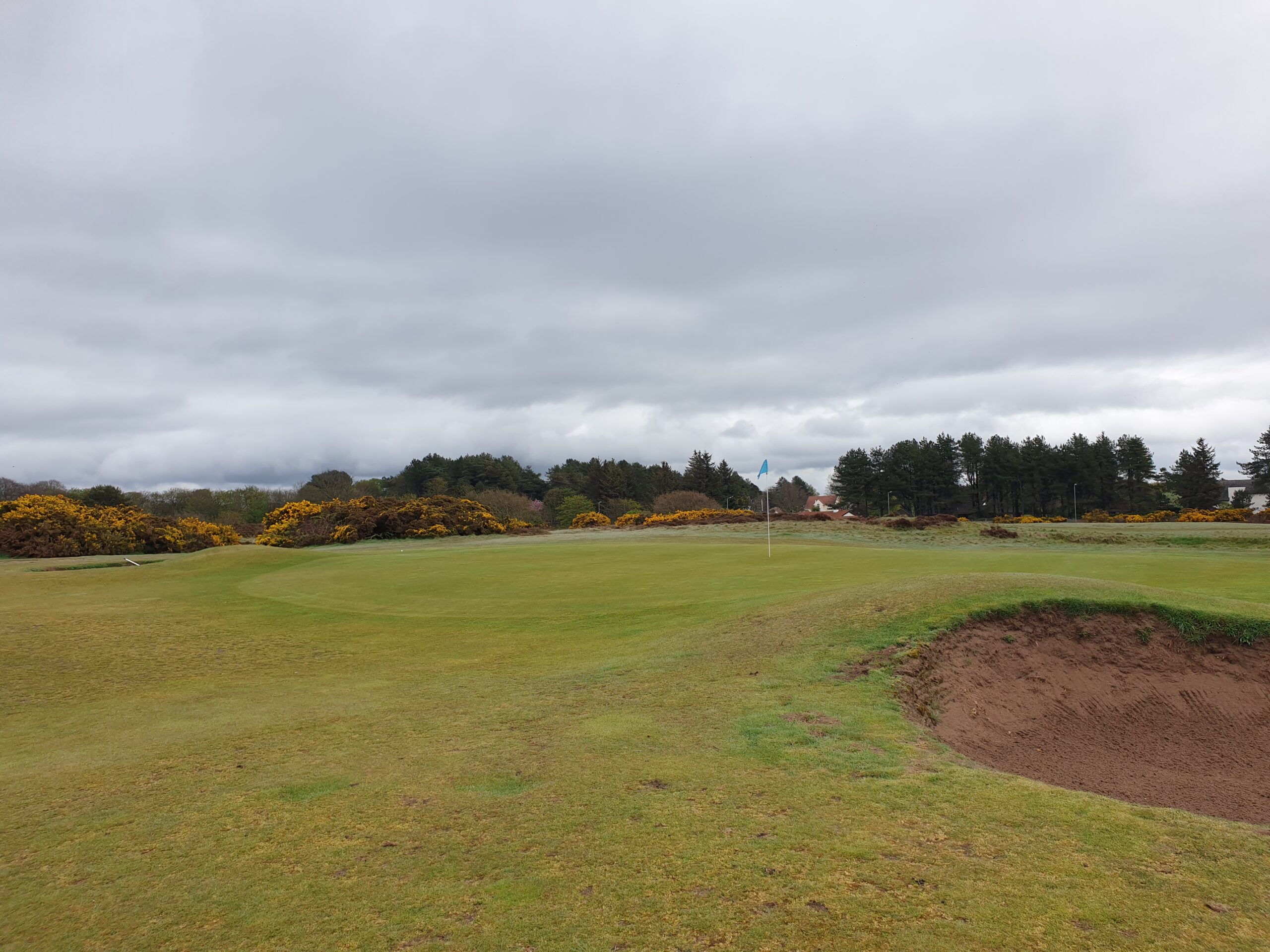
The 9th, a 133-yard par 3 with the edge of town behind the green. Fullarton was once the grounds of an estate; now the houses come right up to the course.

That estate has its own story. Fullarton House was built in 1745 and sold in the early 1800s to the Marquis of Titchfield, later the 4th Duke of Portland. The same family’s land gave Royal Troon its links across the railway. The council bought the house in 1928 and demolished it in 1966; the stables survive as Fullarton Courtyard. That is a story for another blog, and a reminder that the same Duke supplied the Open course and the town’s courses.

At £19.99 or the current GolfNow rate, Fullarton is good value at 4/5. At £28 list it is a fair 3.5/5. It is a short, quick, well-kept links, priced for exactly the golfers it is meant for.

Troon Links trilogy: Darley (Blog 136) for the money, Lochgreen (Blog 194) for the Open.

Facts:
Course Type: Inland links
Par: 66 (12 par 4s, 6 par 3s)
Distance: 4,724 yards (yellow)
Course Rating / Slope: 61.6 / 99
Course Quality: 3/5
Moly’s Gross Score: 80 (33 points)
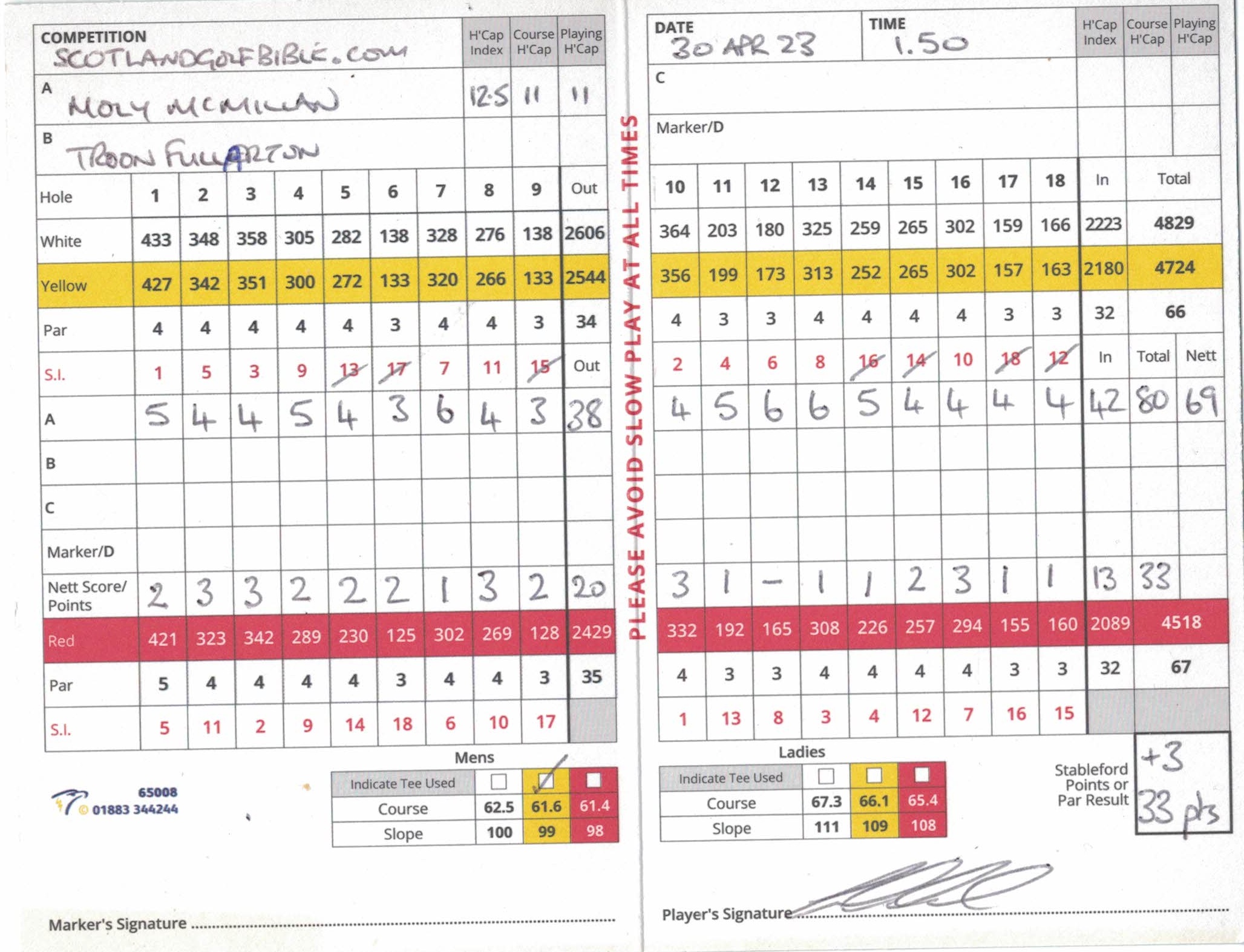
Moly’s card, 80

193. Maybole. 29 Apr 23.

Maybole: a town that has never agreed on anything, including whether it needs a golf course.

Price Paid: £4 (winter rate, paid at the swimming pool over the road)
Current Price (2026): £8 GolfNow; £24 list (Golf South Ayrshire)
Value: 3/5 at £4 paid | 2.5/5 at £8 GolfNow | 1/5 at £24 list
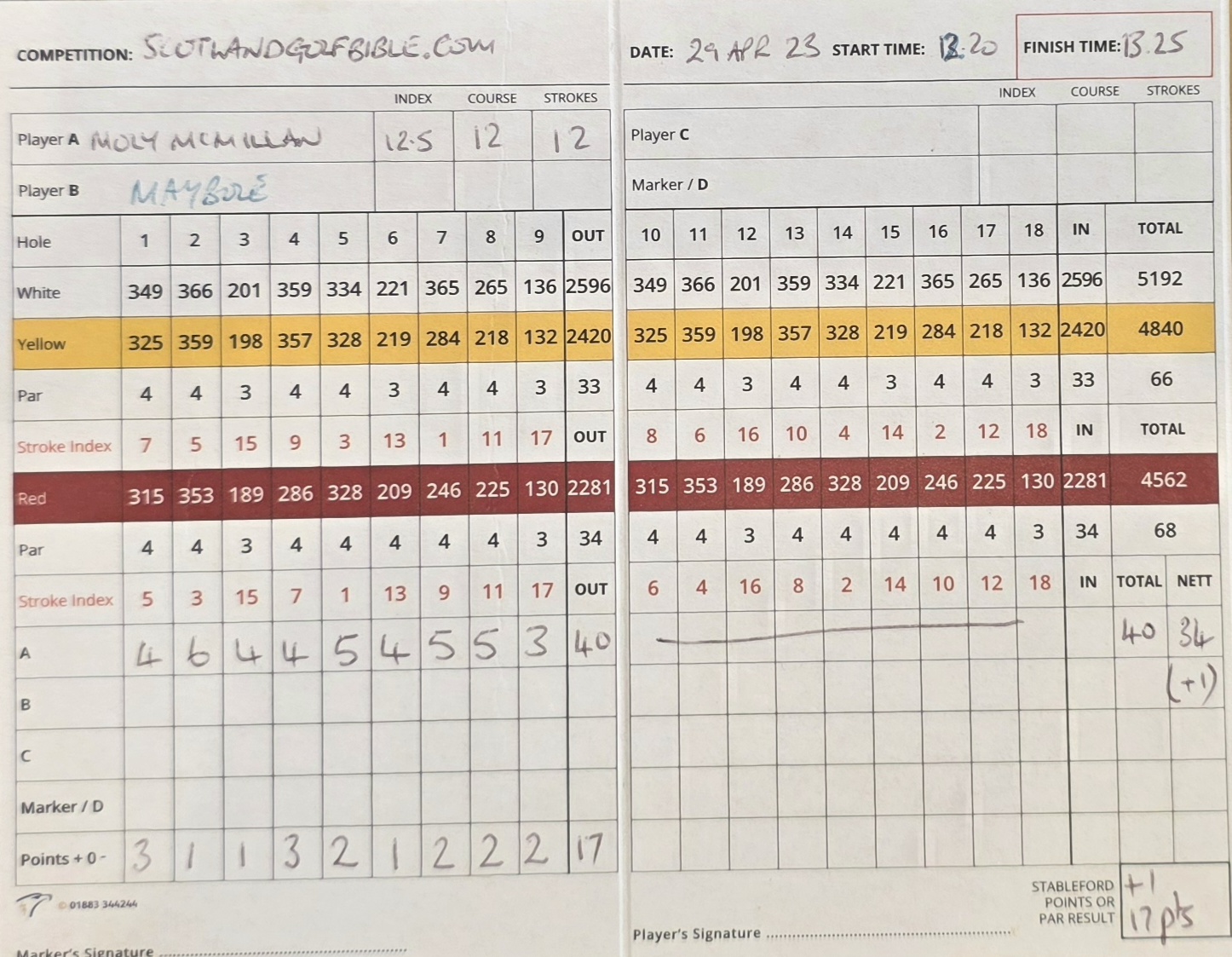
Moly’s Score: 40 gross, 34 net, 17 Stableford points (9 holes)

Getting a consensus in Maybole has never been easy. Start with the name. A charter of 1192 calls the place Maybothel, which some read as Old English for a maiden’s house. Others prefer Gaelic: a plain with a cattle fold on it. The old folk called it Minnybole, which points to a moor instead. When the Ordnance Survey arrived in the 1850s, its surveyors dutifully listed the rival theories and dismissed one as purely fanciful. Nobody has settled it since.

Then there is the town’s most famous argument. In 1562 John Knox came to Carrick and was challenged by Quintin Kennedy, Abbot of Crossraguel, to debate the Mass. They met in the Provost’s house with forty witnesses apiece and argued for three days. Neither man won. The 1860 Encyclopaedia Britannica records that both claimed victory. That is Maybole in a sentence.

Which brings me to golf, and an argument the town has been having for a decade: does Maybole need a golf course?

The club was founded in 1905 on a course off the Dailly Road. It later moved into the Memorial Park, land the town bought to remember its Great War dead. In 1935 a storm lifted the pavilion off its foundations and smashed it. Visitors then paid sixpence a round and couldn’t play on Sundays. Closure threats came in 2016, 2018 and 2020. In February 2023 the club finally folded for “lack of support”, and the golf press mourned a 118-year-old institution.

I went looking to debunk the 118 years, and I couldn’t. Golf’s Missing Links headlines the club as 1905–2023, then says in its own text that it ceased to exist in 1923. Even the archive can’t reach a consensus. But its Golfer’s Handbook entries run unbroken from the 1930s to the 2000s, so 1923 is plainly a slip for 2023. The club’s age stands. The course is younger.

Fourteen months later, Carrick Speakers Golf Club folded too, after 35 years. That made two clubs gone from one nine-holer. The course carries on regardless as one of eight run by Golf South Ayrshire, and the local councillor insists there is no threat to it. A community company now wants the pavilion as a meeting space and e-bike store. That may be the future of the Scottish town course: still there, but no longer anybody’s club.

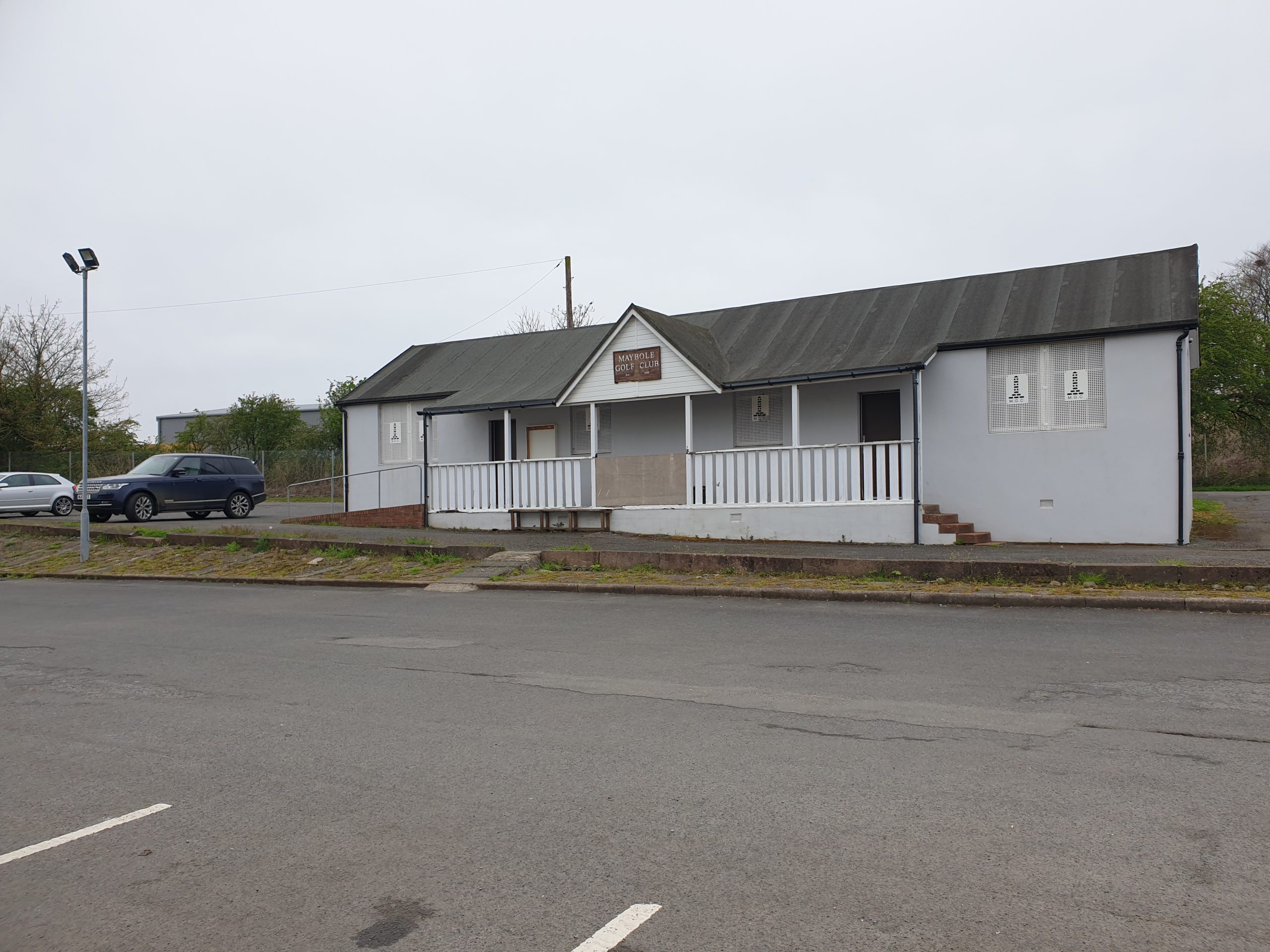
The Maybole Golf Club pavilion, shuttered since the club folded in February 2023. Green fees are now paid at the swimming pool across the road, and a community group has applied to turn the building into a meeting space and e-bike store.

I arrived ten weeks after the club folded, paid my £4 at the pool, and played alone. The course repays the effort. It is hilly and constantly undulating, with small greens. The par 3s are the real examination: the 3rd and 6th measure 198 and 219 yards off the yellows, a long way to a small target, and both cost me a shot. Footgolf shares the fairways, and dog walkers share everything else.

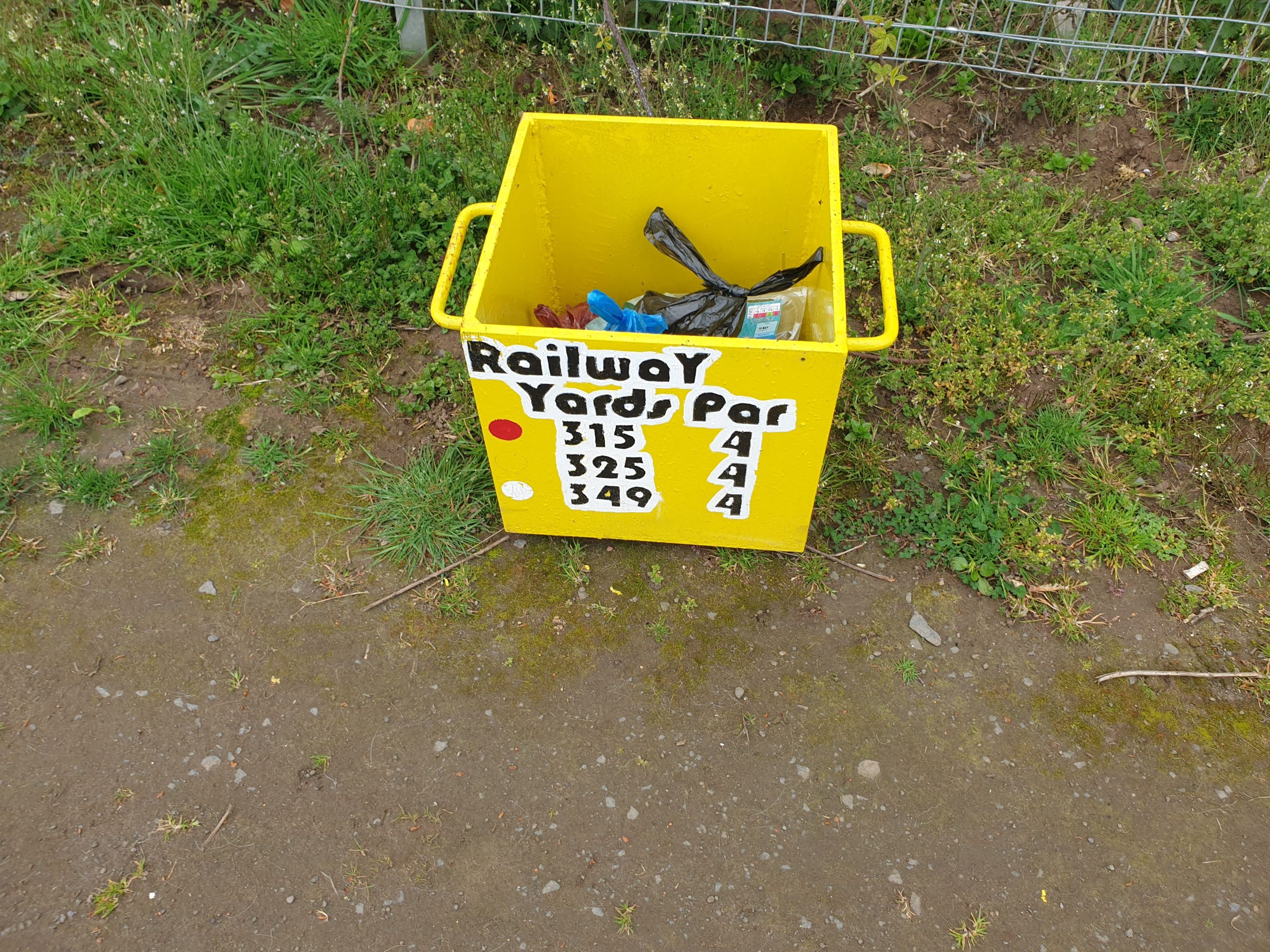
The tee markers deserve a paragraph of their own. Each hole has a yellow metal bin, hand-painted with its name and yardages. The 1st is “Railway”. Somebody took real care over these. The dog walkers have found another use for them.

The 1st, “Railway”: hand-painted yardages on a metal tee bin. It doubles as a dog-bag bin, which is about as municipal as golf gets.

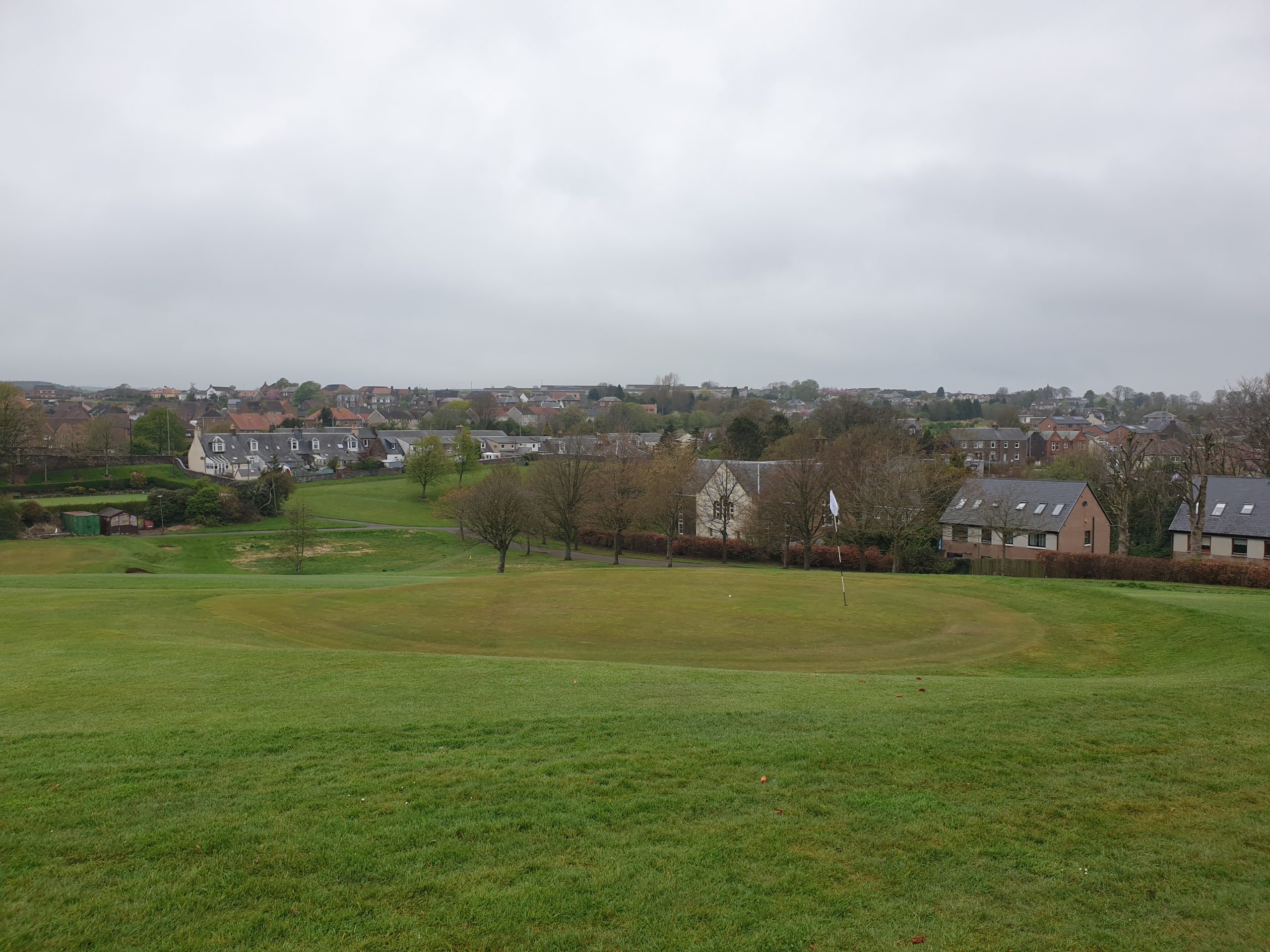
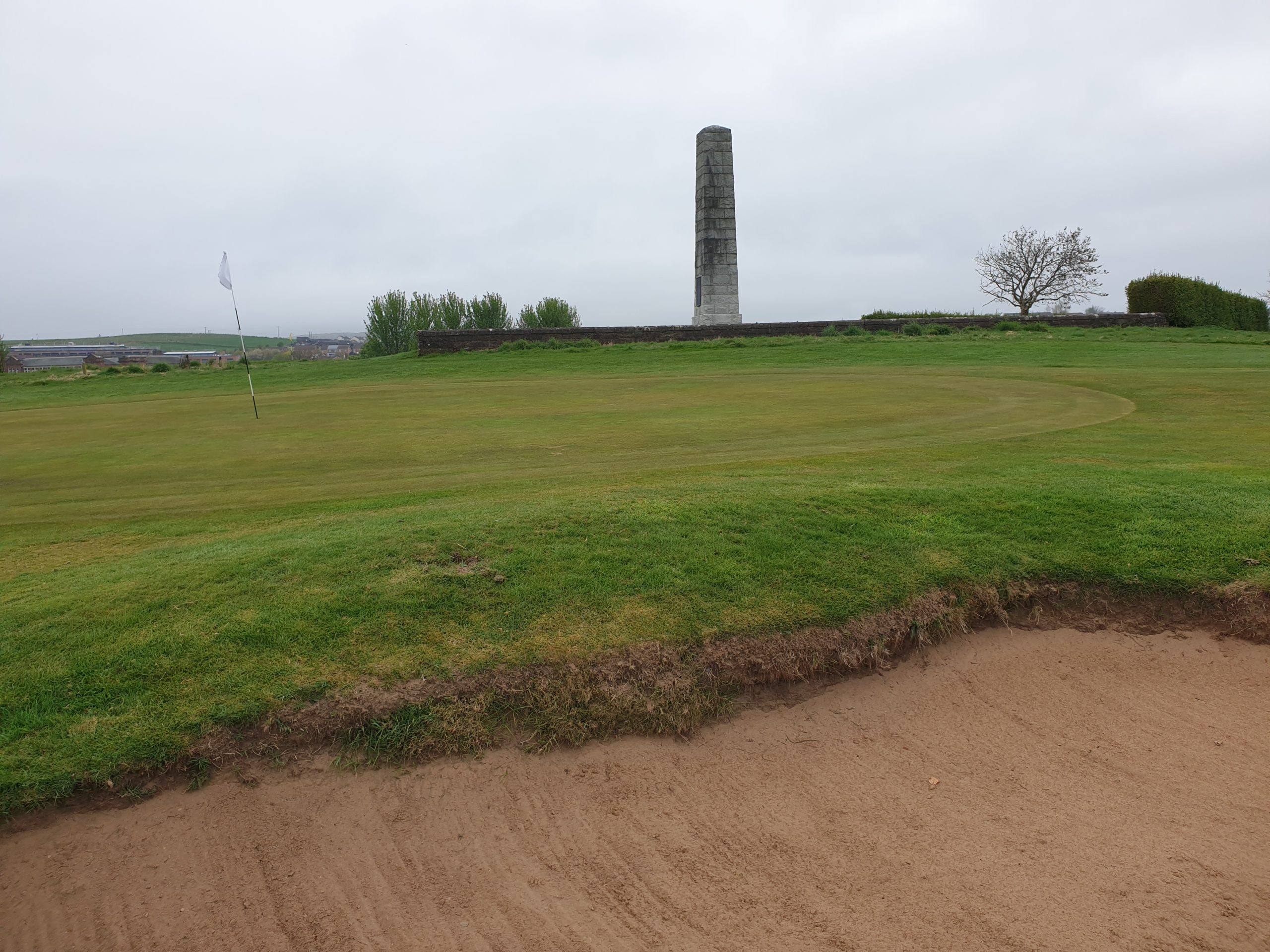
The 3rd green looks back over the rooftops of the old Kennedy capital. The 5th climbs steadily to a green beneath the Maybole War Memorial, a reminder of why this park exists at all.

Behind the 3rd green, Maybole’s slate roofs and church fall away down the hill. The green is small and sloping, typical of the course.
The 5th green beneath the Maybole War Memorial. The bunker is neatly raked, its edge less so: honest council maintenance.

The conditioning is honest council standard: well-cut fairways, raked bunkers, and rough edges where the budget runs out. It is better than its South Ayrshire stablemate Dalmilling (Blog 192). I went round in 40 for 17 points, in 65 minutes, which on those greens felt fair.

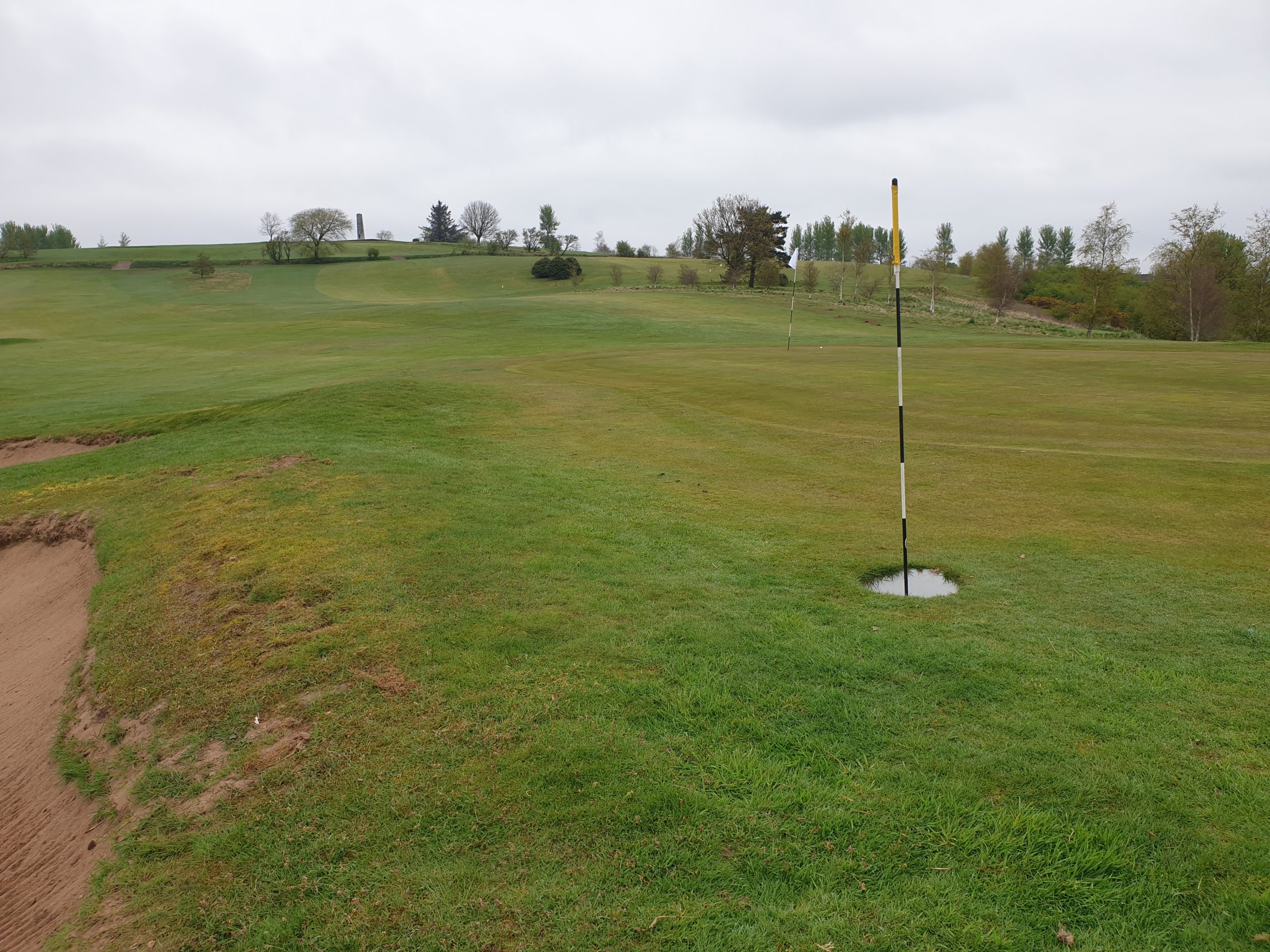
The 4th Green, showing the dovetailed Foot and Normal golf
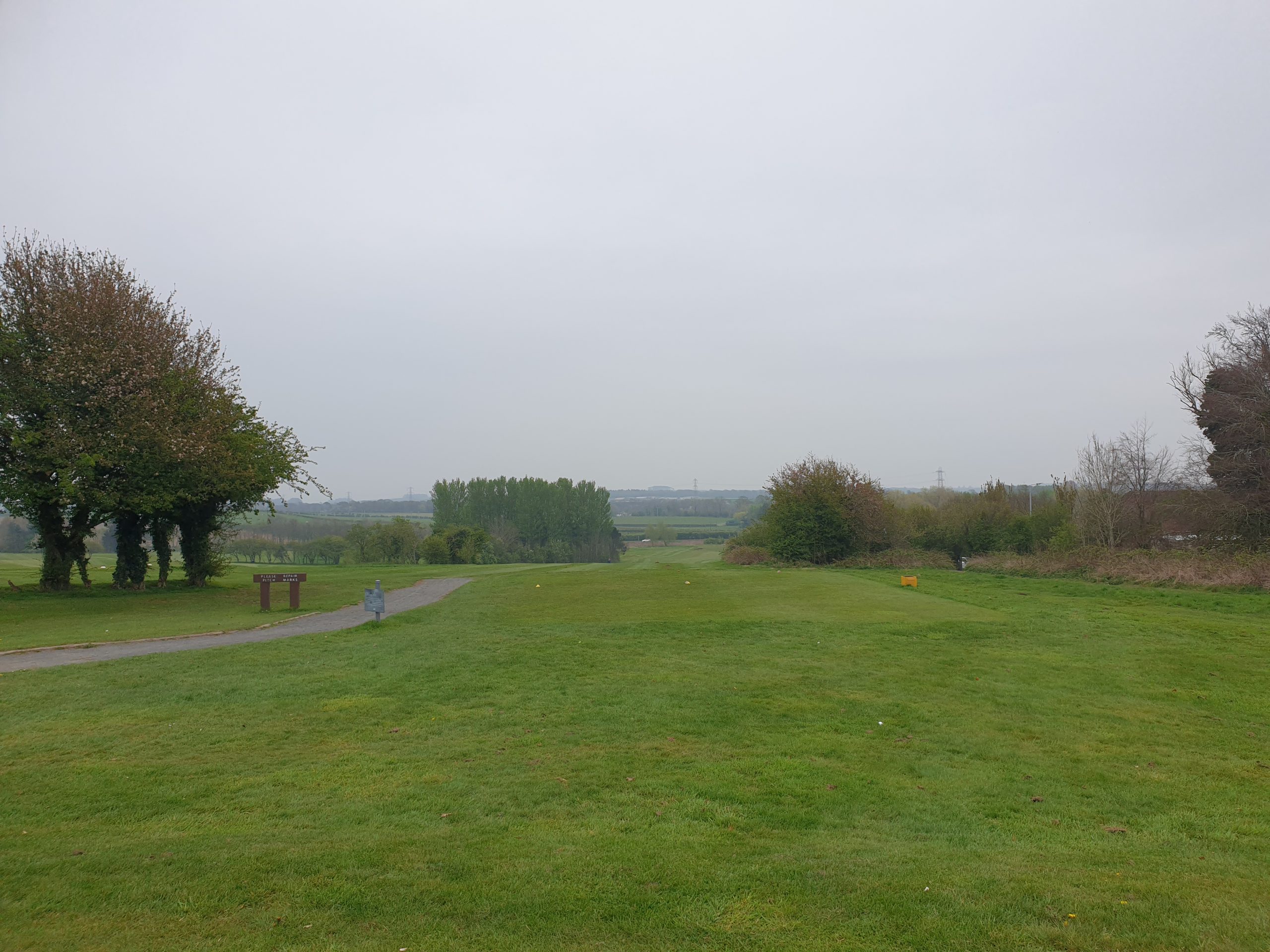
From the 9th tee, the view back to the swimming pool, where you pay, and the town beyond. A lone dog walker is on duty.

At £4 this is 3/5 value. Cheap is not the same as good value: there is no club, no clubhouse, and a course that is honest rather than memorable. At £8 on GolfNow it slips to 2.5/5. At the new £24 rack rate it is 1/5, because for that money you’d expect the clubhouse lights to be on.

Whether Maybole needs a golf course is a debate that, like Knox and the abbot, will probably end with both sides claiming victory. For £4, I’m happy to declare mine.

Facts:
Course Type: Parkland (hilly town course in the Memorial Park)
Par: 33 for 9 holes (6 par 4s, 3 par 3s); 66 played twice
Distance: 2,420 yards from the yellows (4,840 for 18)
Course Rating/Slope: 64.0 / 109 (yellow, 18 holes)
Course Quality: 2/5
Moly’s Gross Score: 40 (34 net, 17 Stableford points)

Moly’s card, 40 shots took 65 minutes!

192. Dalmilling. 28 Apr 23.

Dalmilling – please check this course is still open.

Price paid £17.99 (GolfNow), against a £19 rack rate.

Current price (2026): £45 list; £22 GolfNow; £19 GolfNow Hot Deal.

Value 2/5 at £19–£22 via GolfNow; 1/5 at £45 list price.

Dalmilling has a long history of being given up on. Around 1220, Walter fitz Alan, High Steward of Scotland and ancestor of the Stewart kings, brought the Gilbertines (England’s only home-grown monastic order) to found a priory here on the River Ayr. Within a decade they had resigned it “of their own free will”. By about 1240 the last two canons had been told to hand the lands to Paisley Abbey and go home to England. Nothing of the priory survives.

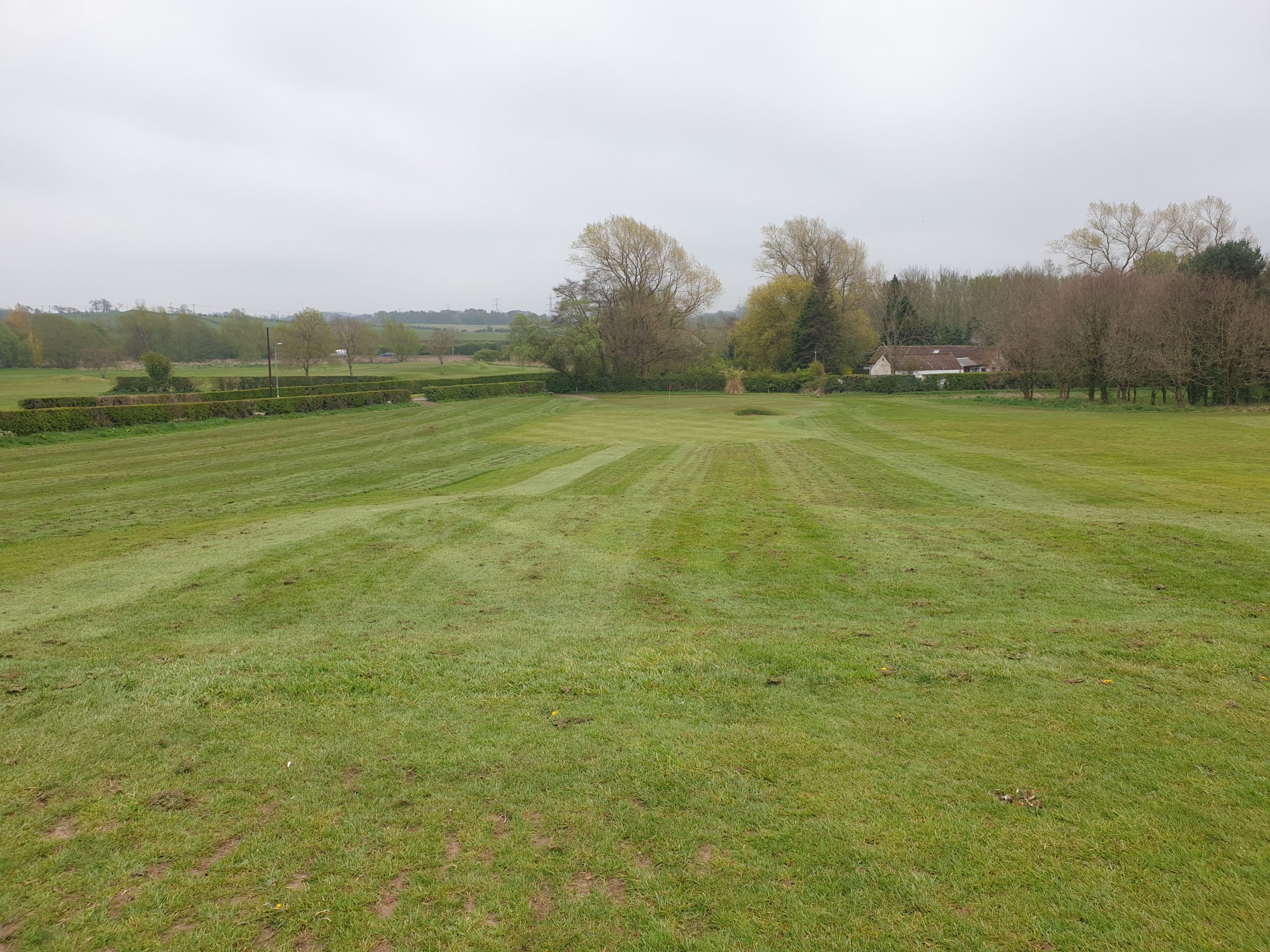
The 1st, encapsulating the fairly bland layout of the least inspiring of South Ayrshire Council’s courses.

The golf course, opened by the council in 1961, has outlasted the monks six times over, no thanks to the landlord, South Ayrshire Council, which has tried to close it at least three times. There was an attempt which ended with a councillor facing 200 angry golfers. In 2017 the council leader wanted houses and an urban park, conceding that the course was good for golfers but not for anyone else. Then in early 2020 it appeared on a list of five of the council’s eight courses earmarked for closure. Each time it survived. The 2018 reprieve came with promises of trees and a perimeter path, and the pandemic golf boom turned the 2020 hit list into an investment Programme. Hence the headline; Before you drive.

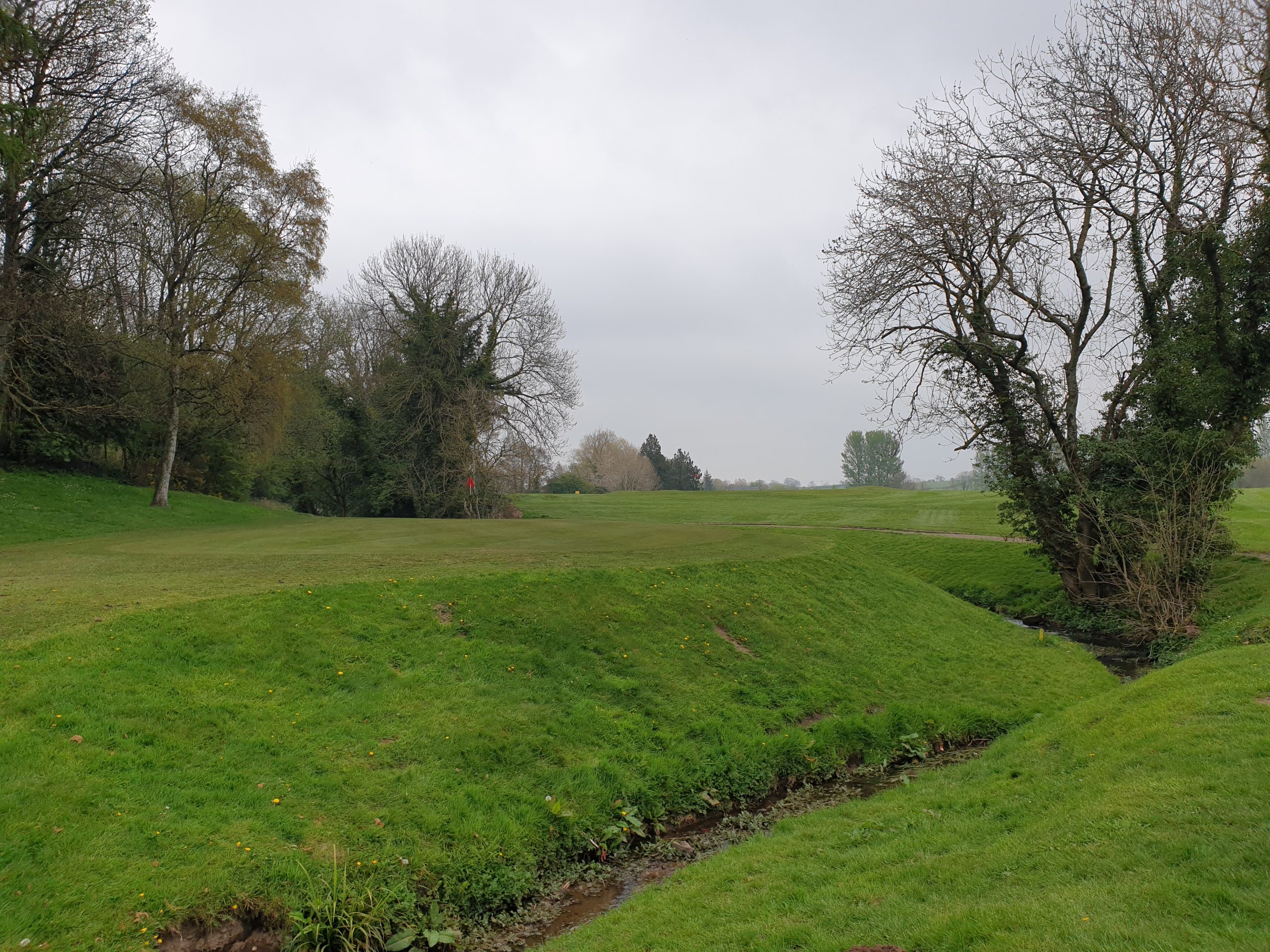
The 6th, the best hole on the course: 107 yards, but the burn in its ditch makes it count.

The council has spent money on the clubhouse but not, as far as I could see, on the course. There were no rakes, a Golf South Ayrshire policy already covered in Blog 136. The tees were marked by little plastic cones, and the teeing grounds were scuffed bare. It took me straight back to the Caird Park nine-holer in Dundee, where I started playing: honest municipal golf, maintained to a budget, for people who expect nothing more.

A typical Dalmilling view at the 8th: wide, open and generous, with divots abounding.

At 5,209 yards from the yellows, with five par 3s, it’s short. The one hole with genuine character is the 6th, a 107-yard par 3 over a burn sunk in a steep-sided ditch, with mature trees on either side. Naturally, I made a double-bogey 5 there.

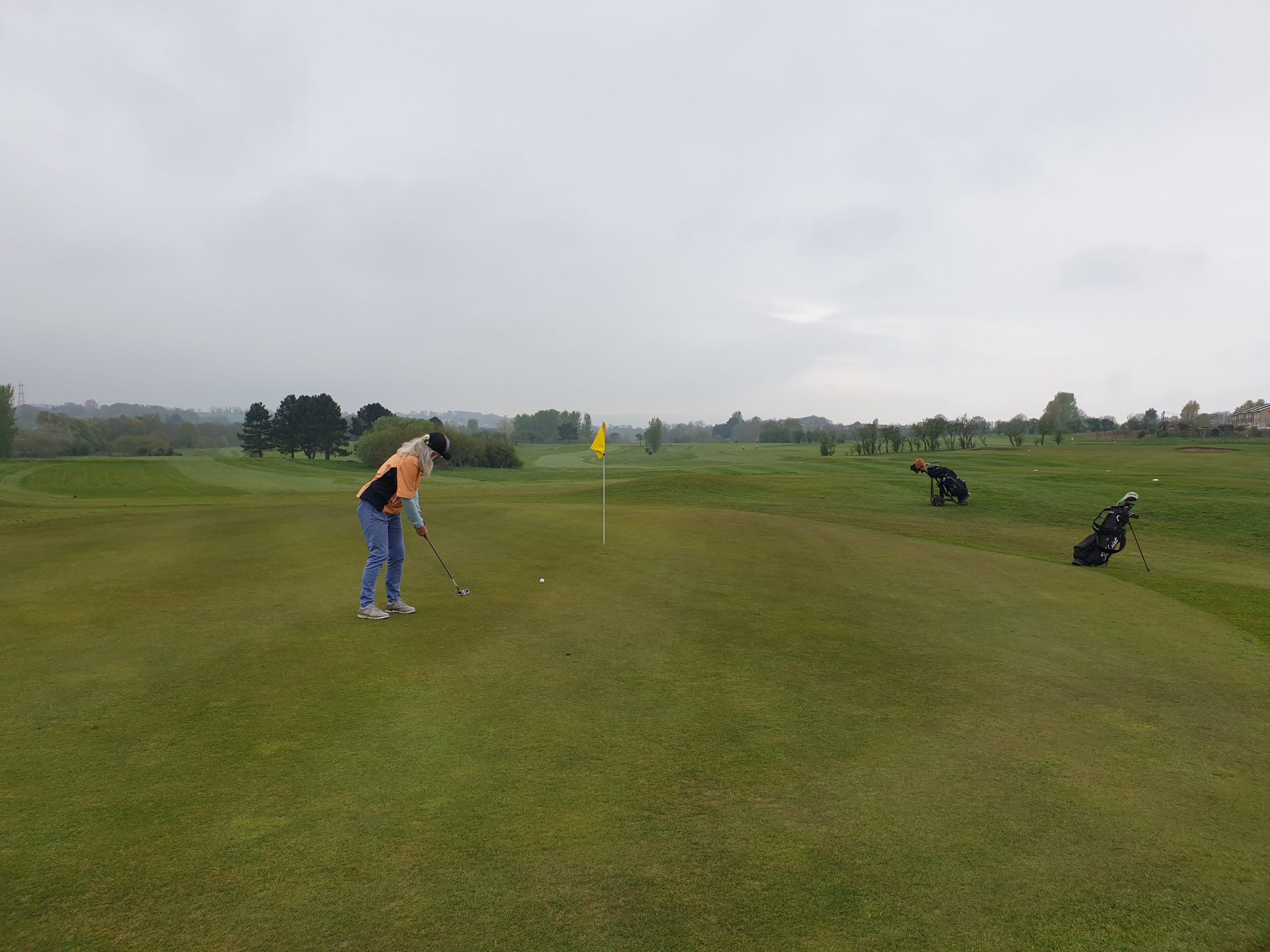
Fran putting on the 12th, with the open layout under a flat grey April sky.

Dalmilling is a good starter course: short, open and forgiving. But it doesn’t need 18 holes. Nine good ones would serve beginners better and cost the council less. I suspect it survives on the season-ticket and green-fee income of Belleisle (Blog 189) and Troon rather than on its own account. At £17.99 it was cheap, but cheap isn’t the same as good value, hence 2/5. The list price has since more than doubled to £45, for a course where I saw no sign of investment. That’s 1/5. GolfNow still sells it for £19–£22, a gap which suggests even the council doesn’t know what it’s really worth. Or perhaps, they’re laying the ground for closure?

Course Type: Parkland
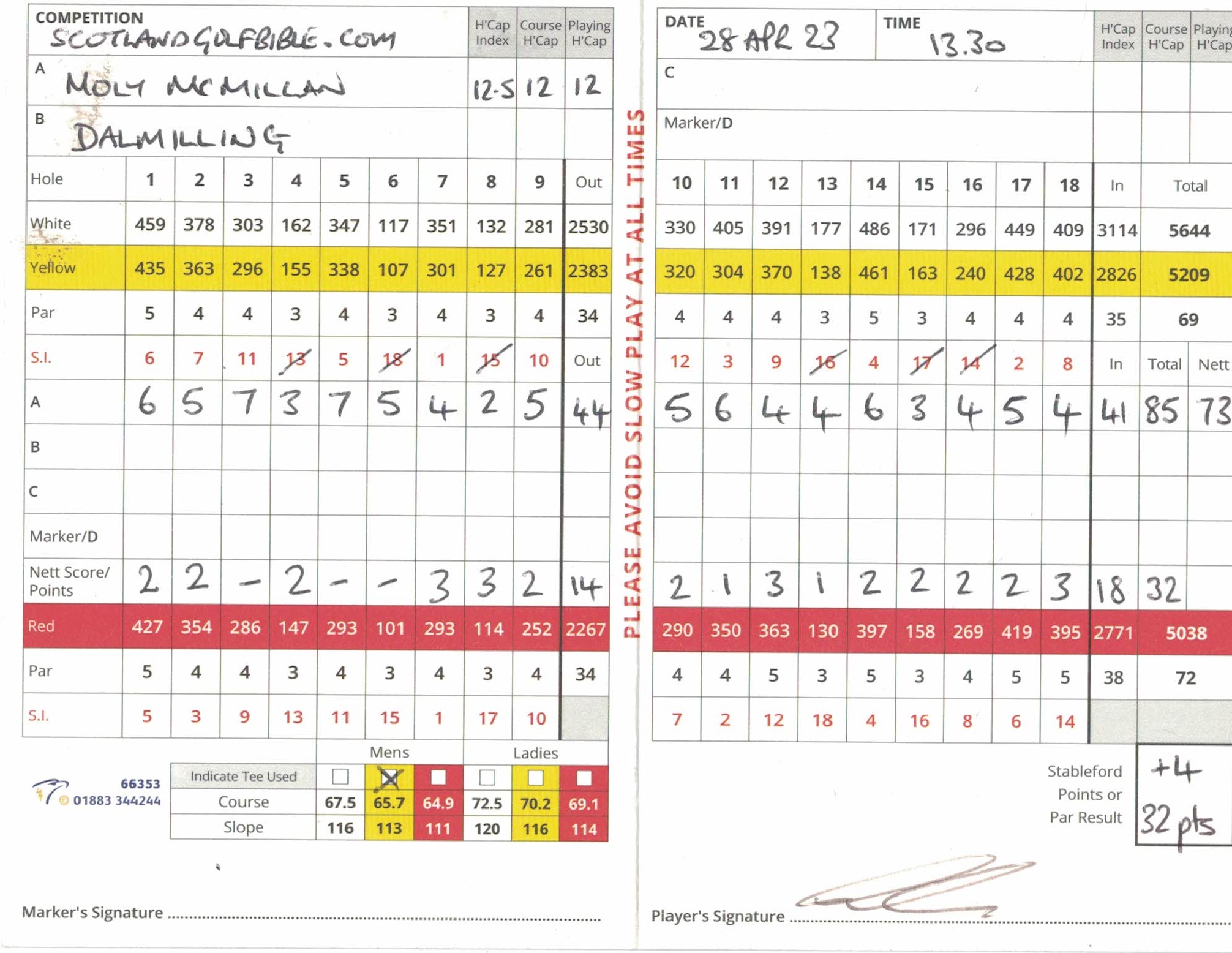
Par 69 yellow tees (2 par 5s, 11 par 4s, 5 par 3s)
Distance: 5,209 yards (yellow tees)
Course Rating / Slope (yellow): 65.7 / 113
Course Quality: 2/5
Moly’s Gross Score: 85 (32 Stableford points)

Moly’s Dalmilling scorecard, poor for such an open course, albeit ground conditions heavy.

185. Broadlees. 25 Mar 2023.

If a farmer builds a golf course, this is what might be par.

Price: £16. Par 36. CR 69.0, Slope 119.

Value: 3.5 / 5.

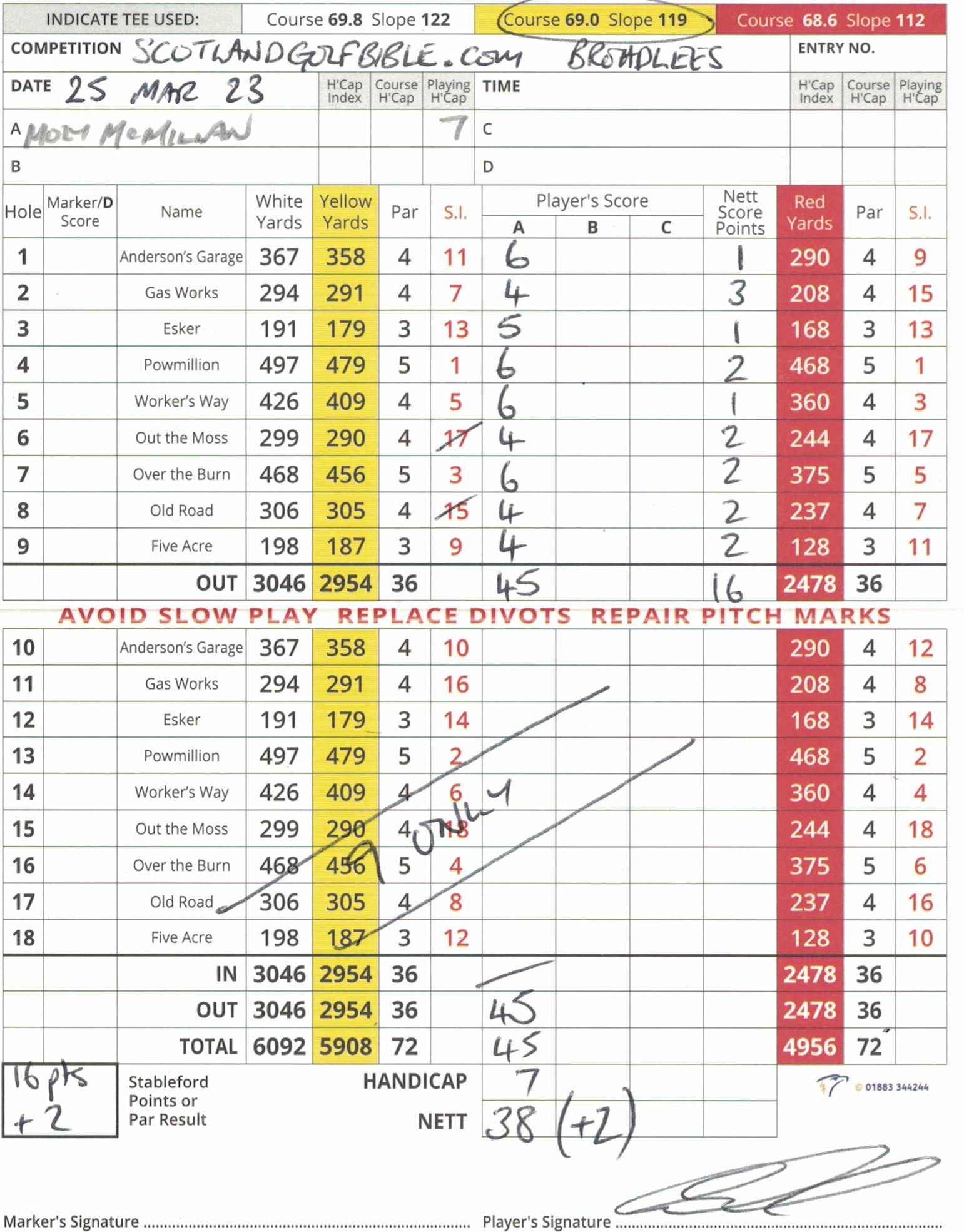
Moly’s Score: 45

In 1987, the UK Government launched the Farm Diversification Grant Scheme, to incentivise farmers to diversify; by the early 1990s courses began sprouting at a rate that may have startled Old Tom Morris. My own club, Isle of Wedmore in Somerset, was built in 1992 on Lineage Farm by Ken Abraham, using a standard hymn sheet – rolling agricultural land, modest construction budget, an unfussy layout, and a prayer that golfers would cover the mortgage.

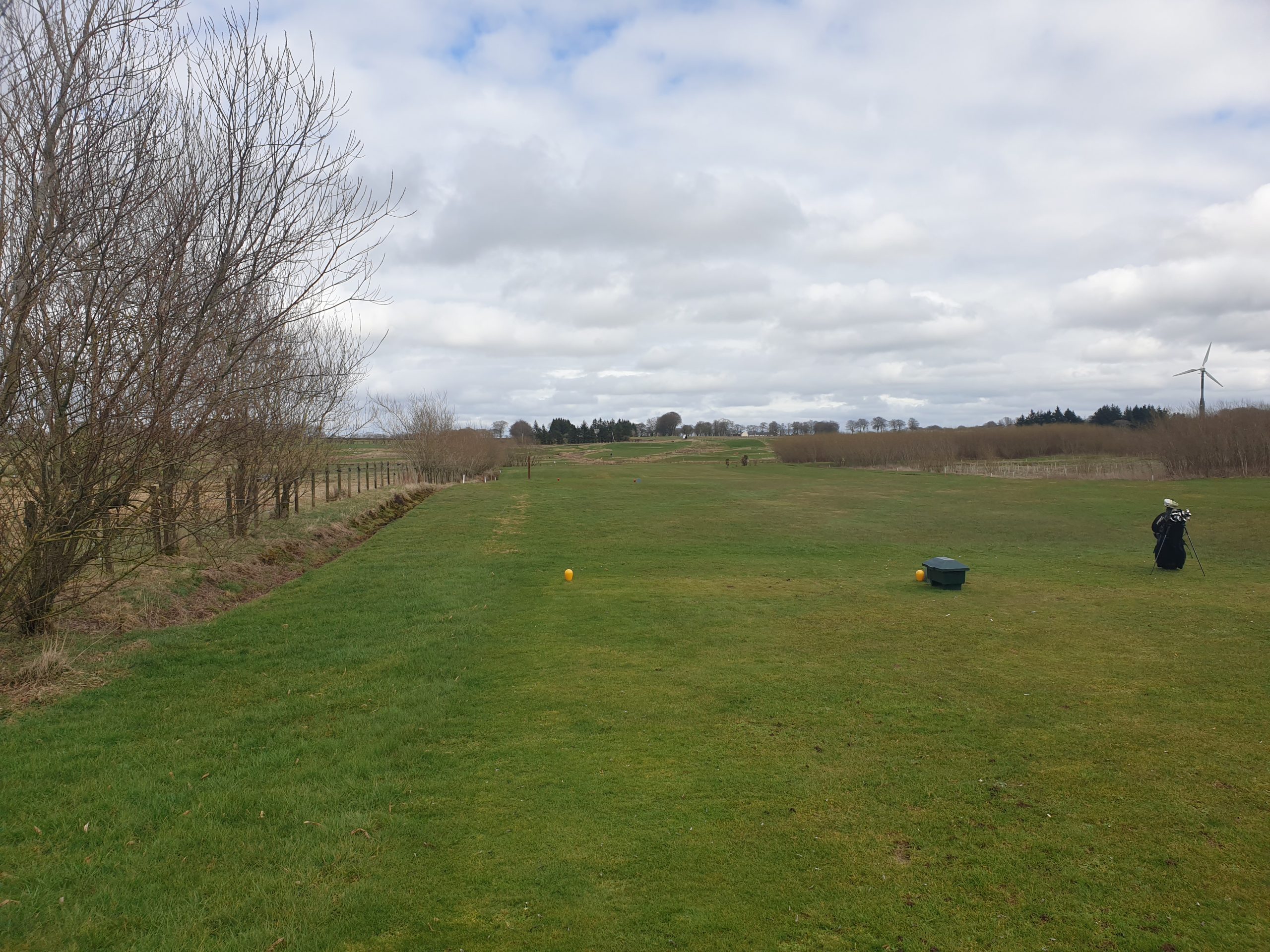
“Anderson’s Garage” the aptly named first hole, par 4, surrounded by Farmer’s fields

Robert and Barbara Anderson did the same in 2004, converting their South Lanarkshire farm into the Broadlees Golf operation; range, 9-hole course, crazy golf, footgolf, academy, cafe and in 2021 a second very unusual addition (covered in Blog 186). They self-confidently named the course’s address “Anderson” Drive, Chapelton, after themselves!

The workmanlike hole names also gives insight to the Andersons; ‘Anderson’s Garage’, ‘Gas Works’, ‘Worker’s Way’, ‘Out the Moss’, ‘Old Road’ and ‘Five Acre’. The ‘Powmillon’ burn (hole 4) runs through well-heeled Strathaven a few miles to the south-east, whose own Golf Club has more bourgeois hole names.

The Broadlees free laminated course guide, that much grander clubs could learn from.

The Andersons display good commercial instincts, no more so than with the ‘free’ laminated course guide (see above). For a pay-and-play operation of this scale it is more than you expect, and much better than many established member clubs that charge several times the greenfee.

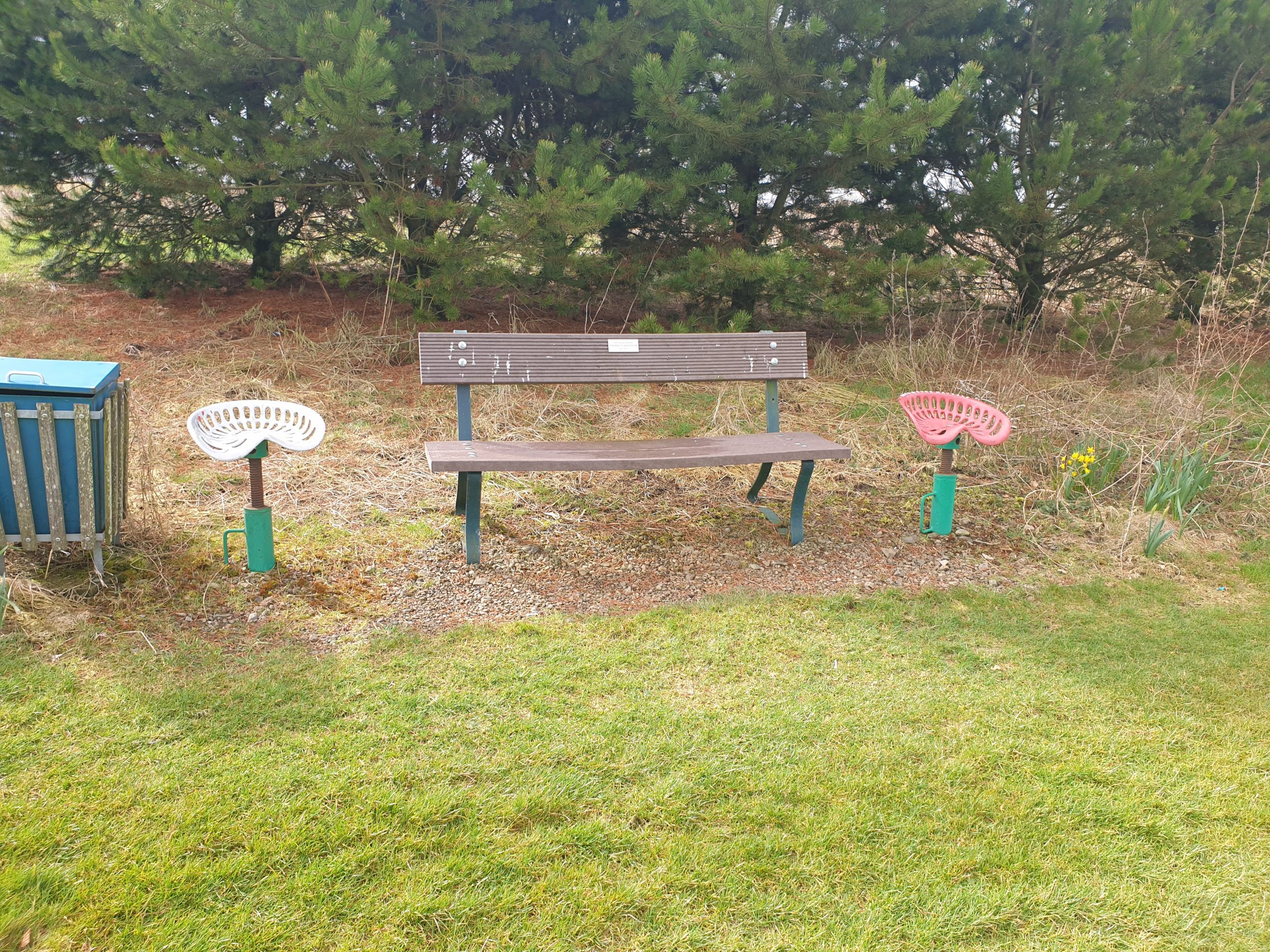
A poignant fifth hole spot with tractor seats (?) repurposed for rest — an honest summary of Broadlees origins. The memorial bench commemorates John Anderson.

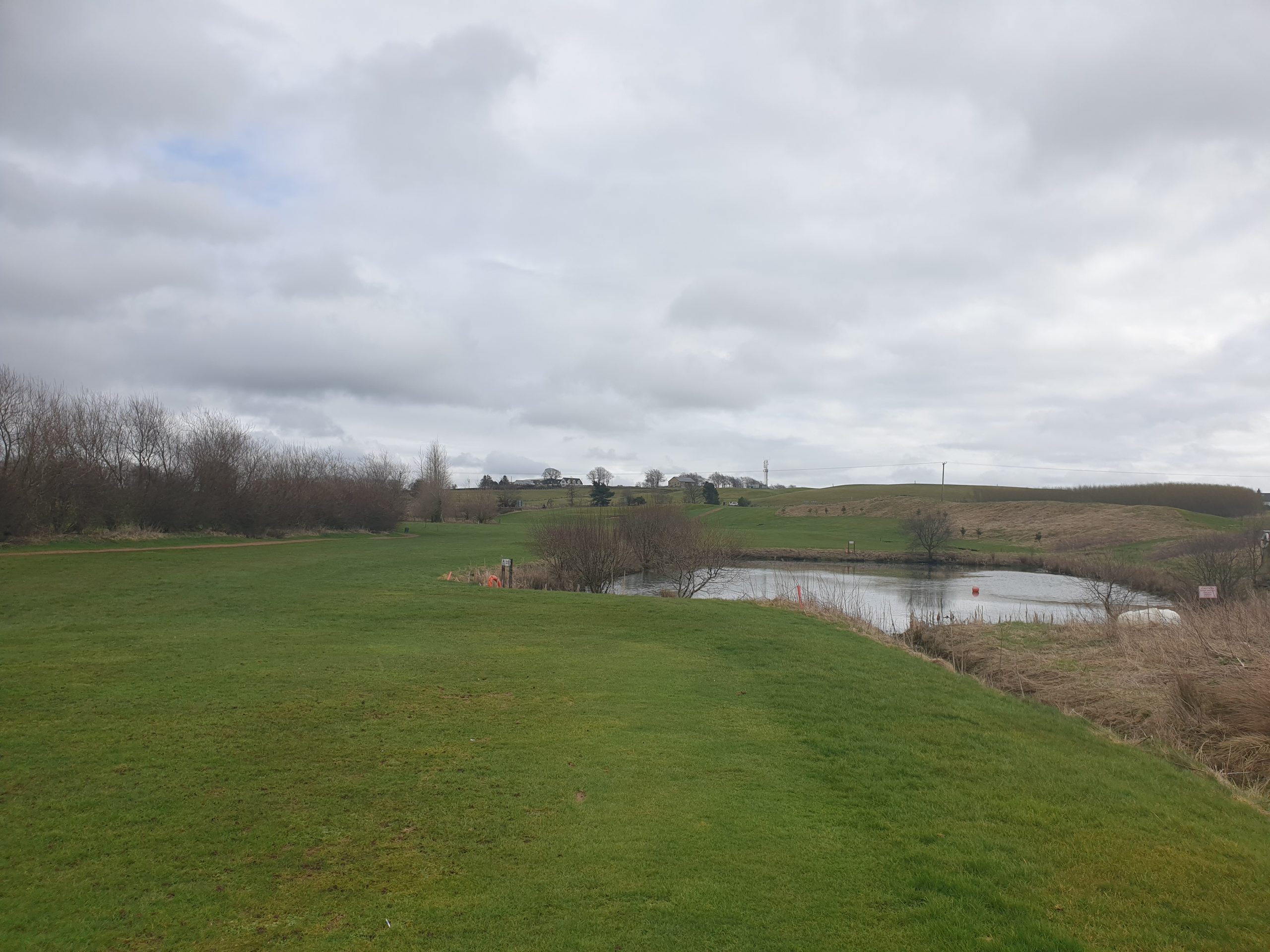
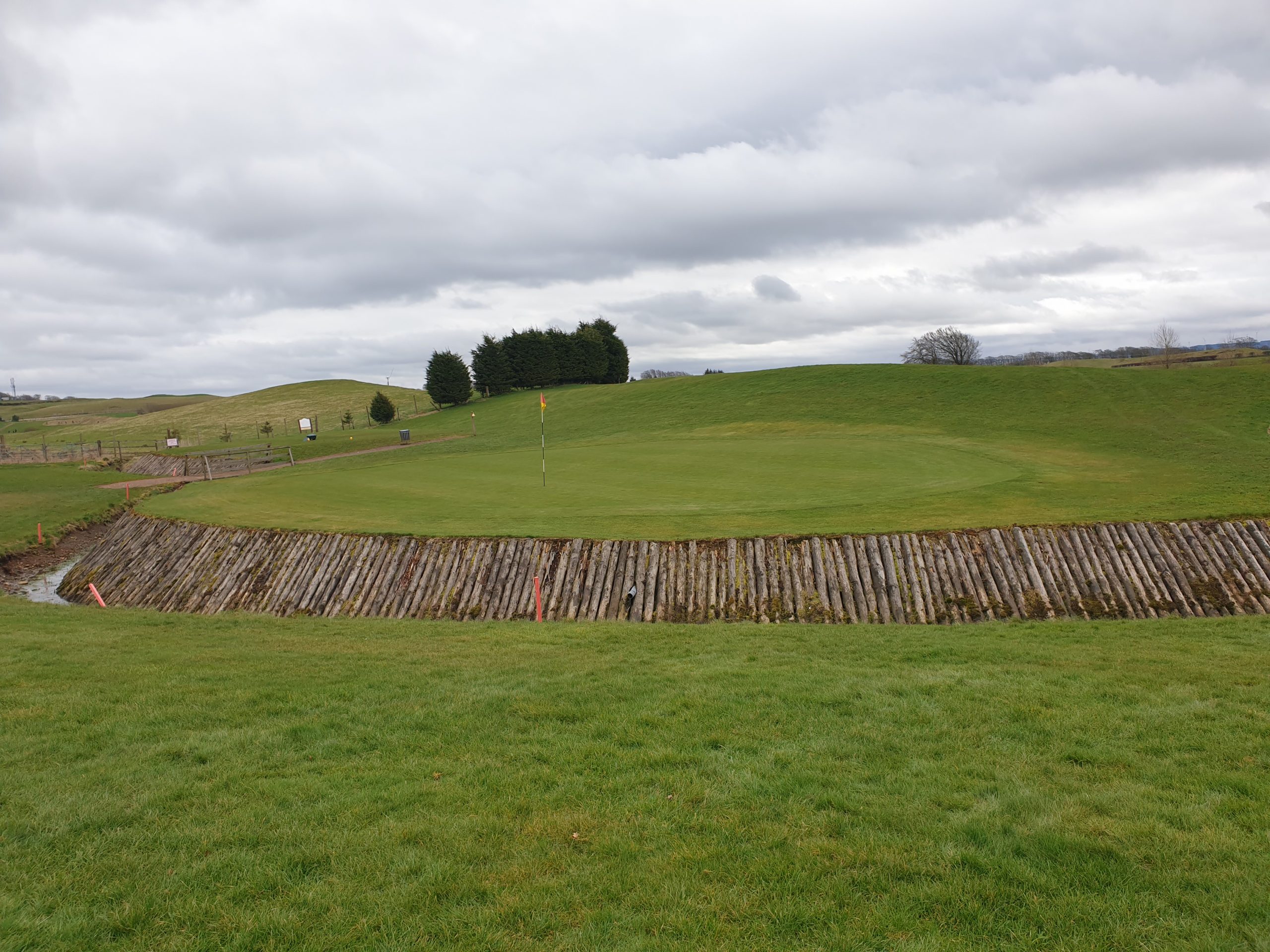
What you might get when a farmer builds a golf course on a limited budget is, I think, what you get here. The bones are reasonable at around 3000 yards, a par 36 with two par fives and two par threes. The par-five 4th (Powmillion, 479 yards) and the par-five 7th (Over the Burn, 456 yards) give the round depth. Water features on some holes, including a pond at the 2nd and a burn that winds its way around the 7th green, retained by a rustic timber revetted bank. Bunkering is sufficient, but was unraked when I played.

The limited framing developed is shown here at the 2nd hole, ‘Gas Works’, a short par 4.

The central challenge with designing a course on open farmland, such as Broadlees, is framing. Well framed holes visually present a picture using trees, contour, rough, bunkers, water and elevation. This skill is epitomised by the Camoufleur Alister MacKenzie, whose work can be seen at Pitreavie (Dunfermline) see blog 150. At Broadlees, fairways unceremoniously bleed into rough. The trees planted are still young; scrub and rough areas are unformed; the contours, while present, have not yet sharpened. I hope the Anderson family get to see Broadlees mature.

The 7th green (Over the Burn, par 5, 456 yards), its rustic timber-revetted bank is the course’s most marked piece of construction.

The greens are the strongest element. True, consistent and well-presented on a late-March morning when much of the course was still very wet. However, the claim that they rank among the finest putting surfaces in Lanarkshire is bold, and nowhere near the truth in my opinion.

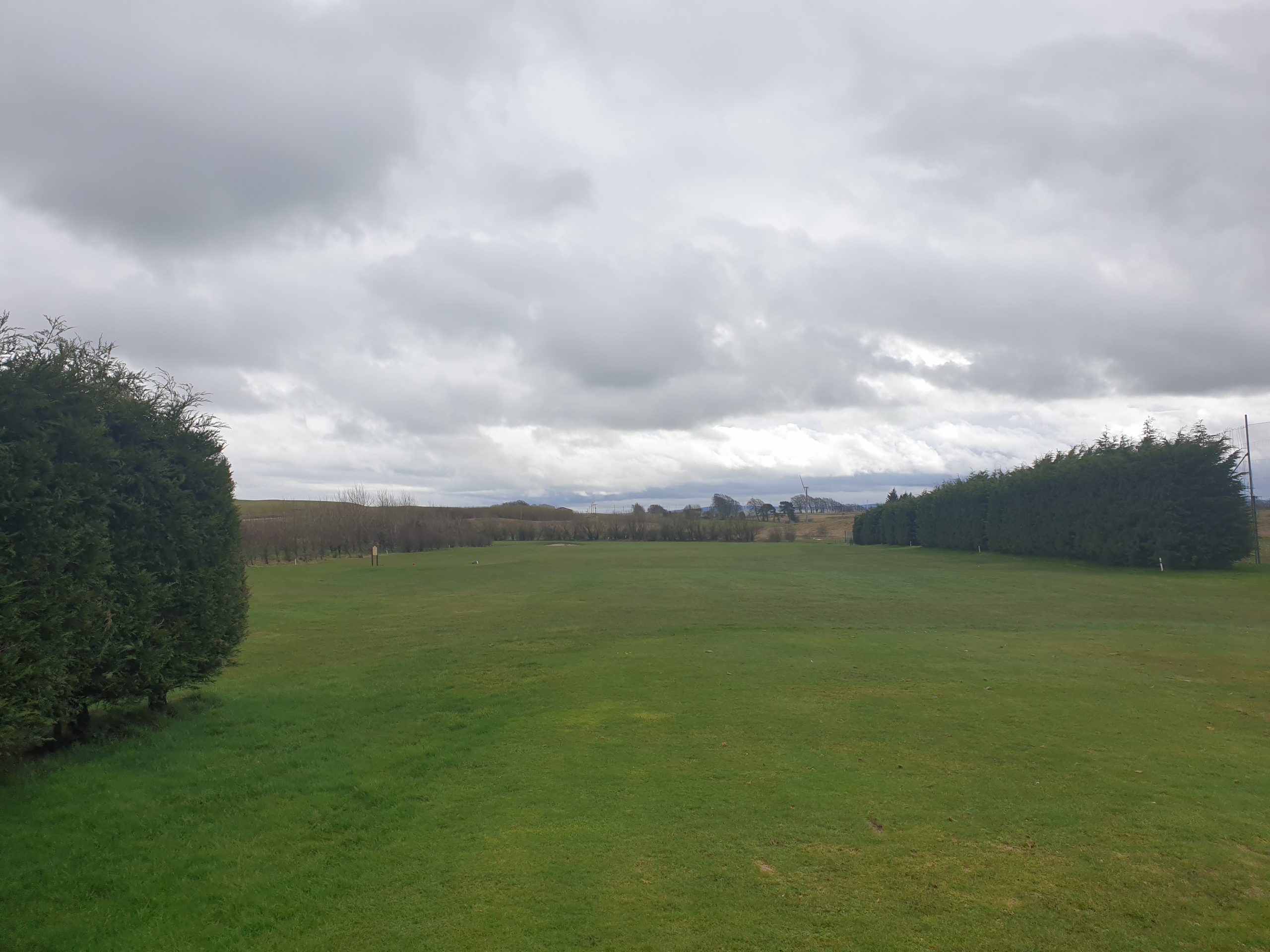
The 6th, ‘Out the Moss’ (par 4, 290 yards). A typical hole on Broadlees

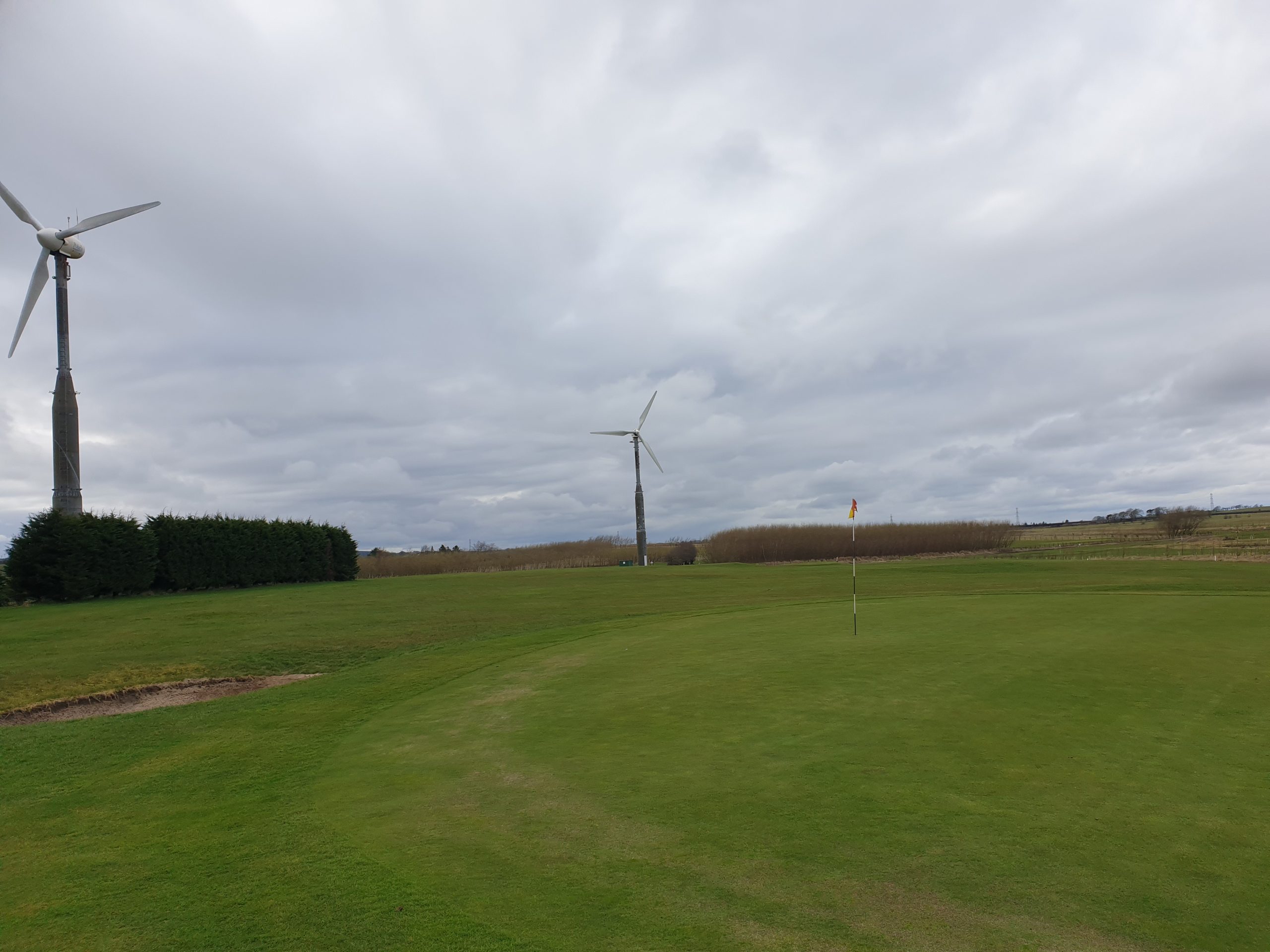
The two wind turbines deserve a mention as they are visible from most holes and dominate the final green. They present a reminder that Broadlees is a commercial enterprise built by farmers who needed multiple revenue streams from a single property. The turbines, golf course, cafe, Santa’s grotto. Each a response to the same challenge – making a small rural business pay in a Scottish golf landscape where established member clubs and council-owned courses provide stiff, and often quietly subsidised, competition.

The ninth, with Farm windturbines

At £16 for nine holes, Broadlees is cheap, and relatively good value. Within a few miles, South Lanarkshire golfers have many choices, so Broadlees needs to keep well below the competition fees, certainly until the course matures.

The Andersons, however, were not finished. In 2021, they added a second course — and this one was genuinely unlike anything else in Scotland. See Blog 186 to find out more.

Value: 3.5 / 5. The Andersons have built something from nothing and kept adding to it for twenty years. That deserves acknowledgement. But a golf course is not only measured by the effort that went into building it. The framing will come. It just wasn’t there yet. But at the price it’s good value.

Facts:

Course type: Parkland/Pasture

Par 36 (2 par 5s, 5 par 4s, 2 par 3s)

Distance: 2,954 yards (yellow tees)

Moly’s Gross Score: 45 (9 holes)

See also: Blog 186 — Broadlees Par 3 Golf Course

Moly’s card. Level 5s, I hit the ball pretty steady.

« Older posts

© 2026 Scotland Golf Bible

Theme by Anders Noren — Up ↑