A guide to green fee value for money

Category: 1901 – 1945 (Page 9 of 14)

82. The Glen, East Links, North Berwick. 11 Aug 2018.

Excellent vistas, with some memorable holes, but clearly an overplayed course and a little worse for wear.

Round £58.   Par 70.  Value (out of 5) – 3

The seaside town of North Berwick, about 25 miles east of Edinburgh, sits along an outstanding coastline that is home to many renowned and world class golf courses, helpfully listed in the East Lothian golf website here.

The Glen golf course sits on the east of the town, and has historically been called “East Links”, to differentiate it from its more westerly and much older “West Links” neighbour, North Berwick golf course, which is one of Scotland’s great championship golf courses.
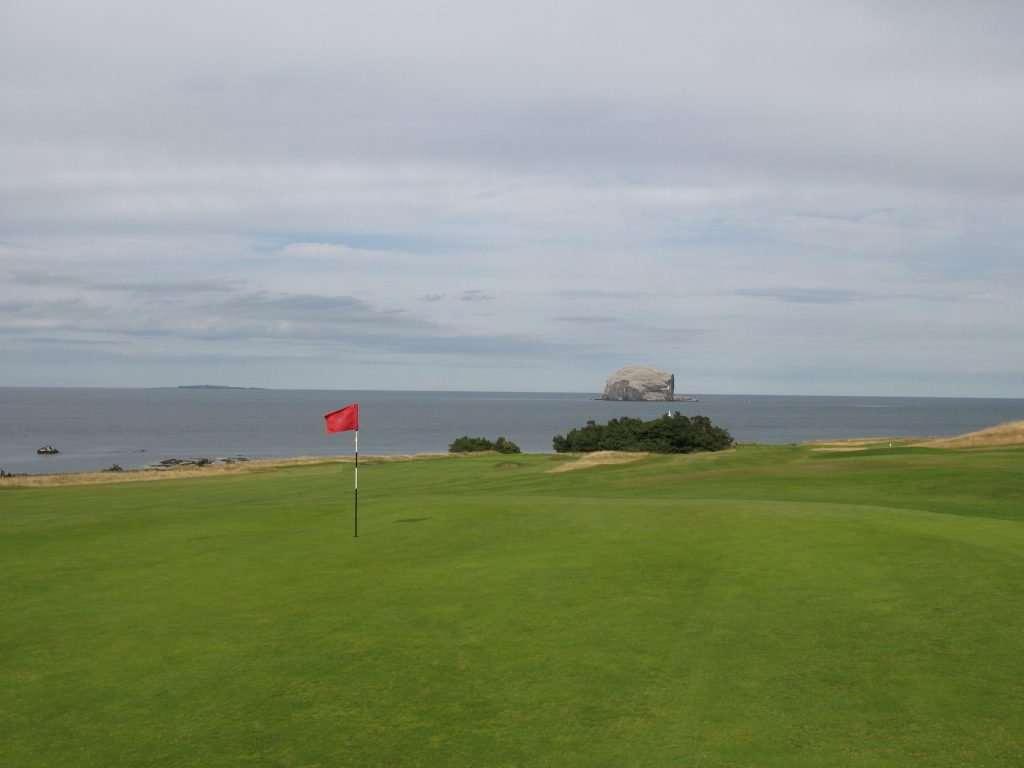
The Bass Rock from the 10th tee at The Glen.

The North Berwick “West Links” golf club actually opened in 1832.  Demand for golf expanded rapidly towards the latter part of the 19th Century along with the expansion of the railways and the increased wealth and leisure time which came from the Industrialised age.  A second 9 hole golf course to meet this demand was laid out in the east of the town in 1894, designed by Ben Sayers, the legendary Scottish golf professional and club innovator, who played a match to mark its opening.    Then, only a little over 10 years later, Sayers again, this time in conjunctions with James Braid, oversaw the extension to 18 holes, of what is now The Glen golf course.
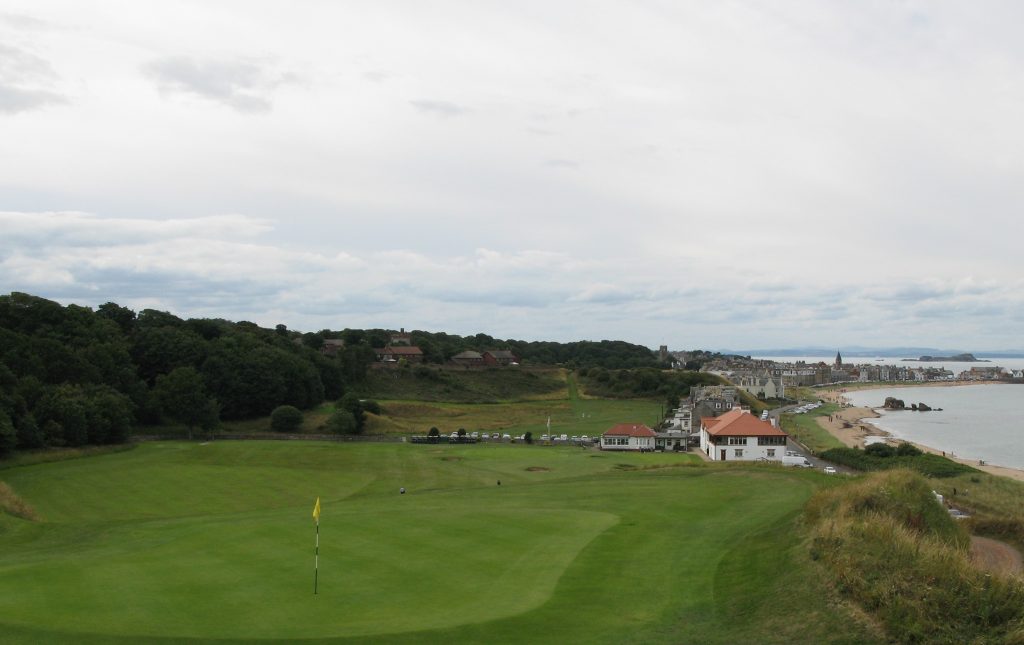
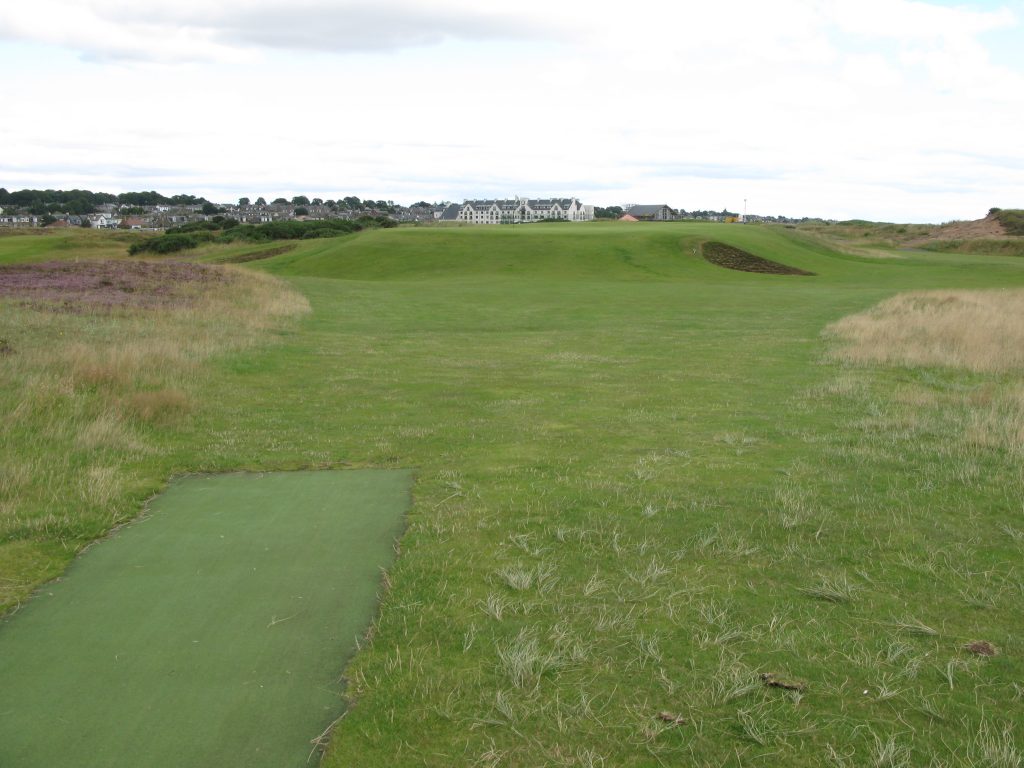
The view from the 1st green at The Glen towards the nice clubhouse.

The course is dominated by the views of the Bass Rock, one of the several islands which dot the outer part of the Firth of Forth.  The rock can appear almost fluorescent in the correct light, which is the result of the white droppings of the large colony of gannets which inhabit it.
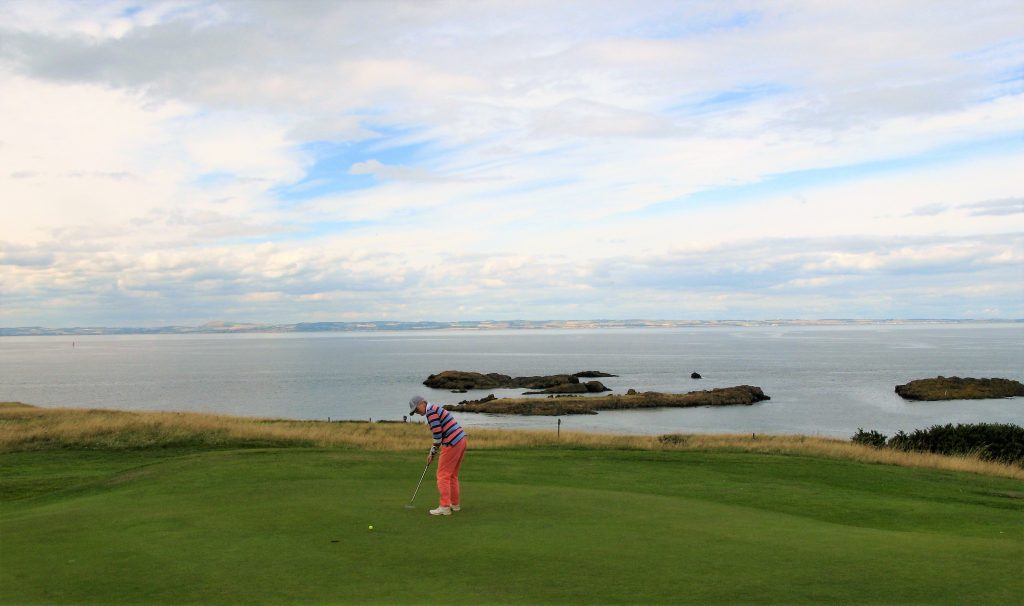
Views North towards the Fife Coast from the mid iron par 3 4th hole, where Fran and I both kept right as guided in the Course planner!

In fact, the coastal views from the course are among the best in Scotland, extending far north to the Kingdom of Fife; however, they serve as a rather flattering deception as many of the holes of the course are in my opinion pretty bland.  In particular, the several holes on the inland most side of the course are built on arable turf and don’t feel particularly links like at all.
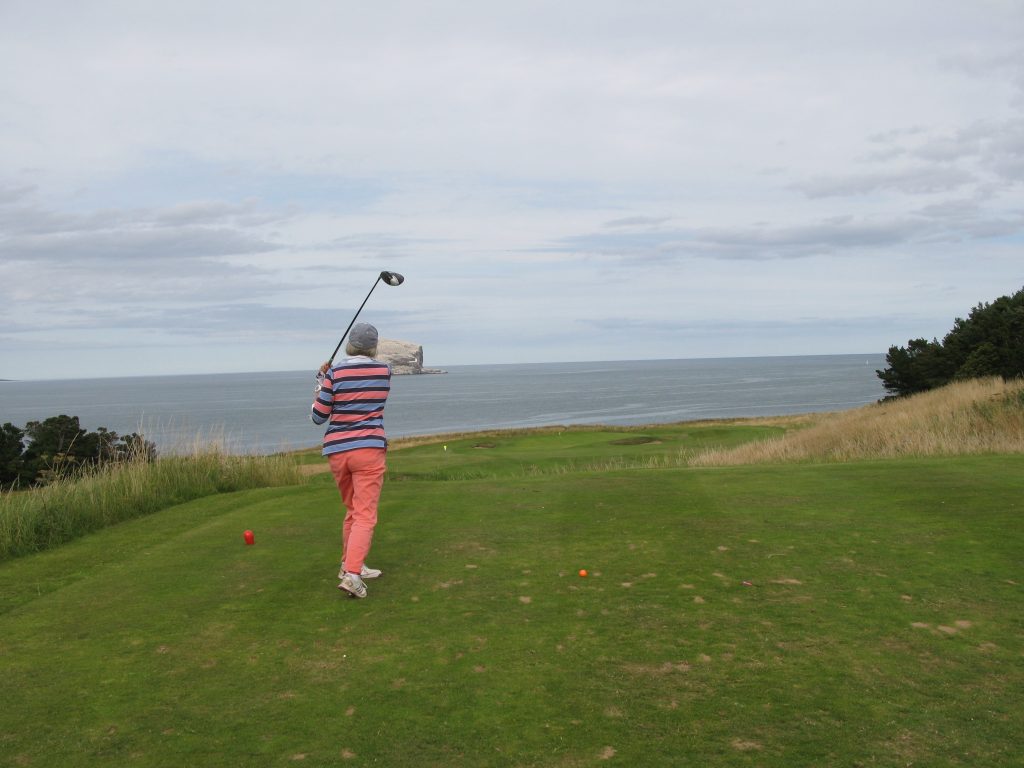
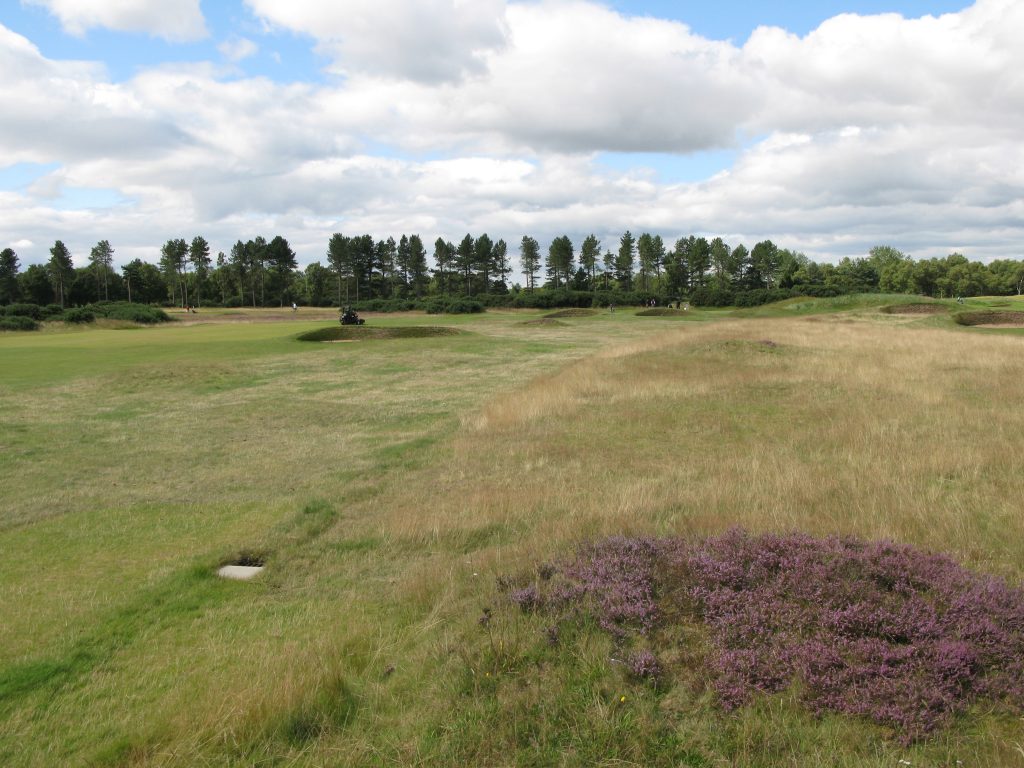
Fran at the 9th, with a view of the typically worn teeing ground.

The course is basically an out and back layout, and starts with one of the most challenging holes, which after a fairly innocuous drive to around 200 yards, requires an uphill shot to a blind green – take at least 2 clubs more than normal, as the green is very long.  If you just get to the top of the hill, you’re faced with almost an inevitable 3 putt!.  This brings me to the greens – they were in good condition but seemed to have a great deal of variability of pace, which I never got used to and I three putted 8 times, which I think must be my record.

The course was otherwise in fair condition, except for the tees which were really very poor, and a clear sign of the amount of play throughout the summer – granted, the dry summer may not have helped the green keepers.  Nevertheless, the high amount of golf played is a really good thing, as golf in Scotland is in general decline.  I think The Glen provide a nice welcome and the facilities and clubhouse are new and very good, another sign of the general wealth on the coastline.
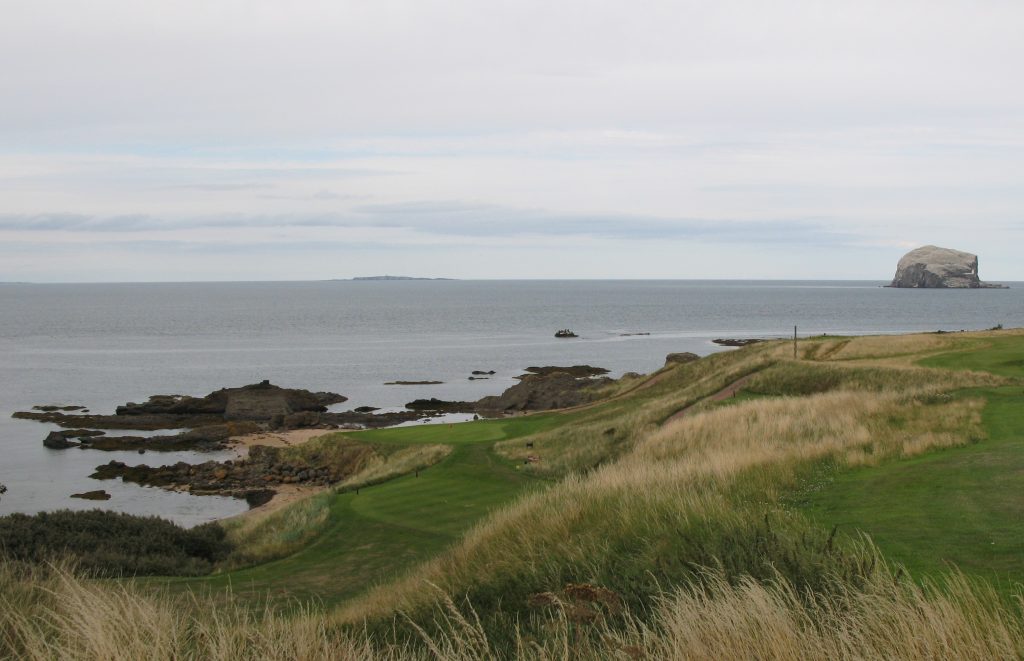
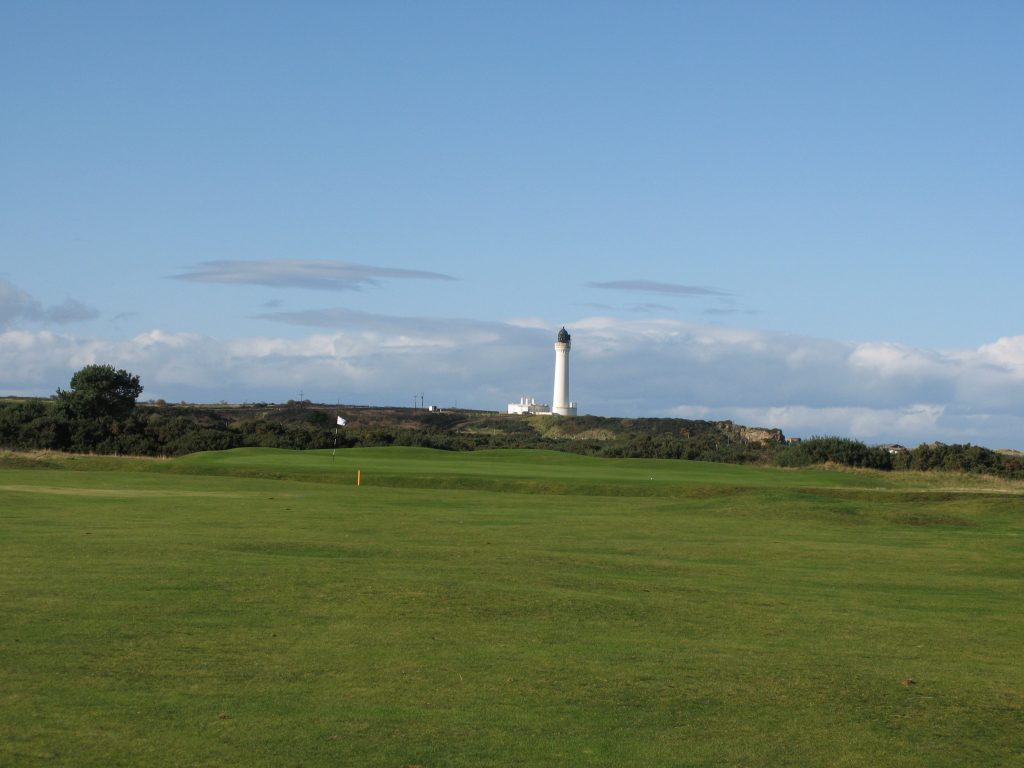
The signature par 3 13th green here seen from a distance. Note the hole is not played in this direction.

The course does have some excellent holes, and some very challenging ones, in its 6000+ yards locker.  The best known is its signature hole, the 13th, which has been likened to the famous short 7th at Pebble Beach in California, which if you look at comparable pictures is not unreasonable.

Other than my putting I had an excellent day, scoring 86, having hit 10 greens in regulation;  this was greatly helped by the pretty wide fairways the course has.  The nicest thing was having a birdie 2 at the signature hole.

It’s worth playing The Glen, but if possible I would think that early season would be a time the course is at its best before the Summer visitor season.

Facts:

Course Type: Links

Par 70 (yellow:  2 par 5s, 12 par 4s,  4 par 3s)

Distance (yellow): 6048 Yards

Moly’s Gross score: 86
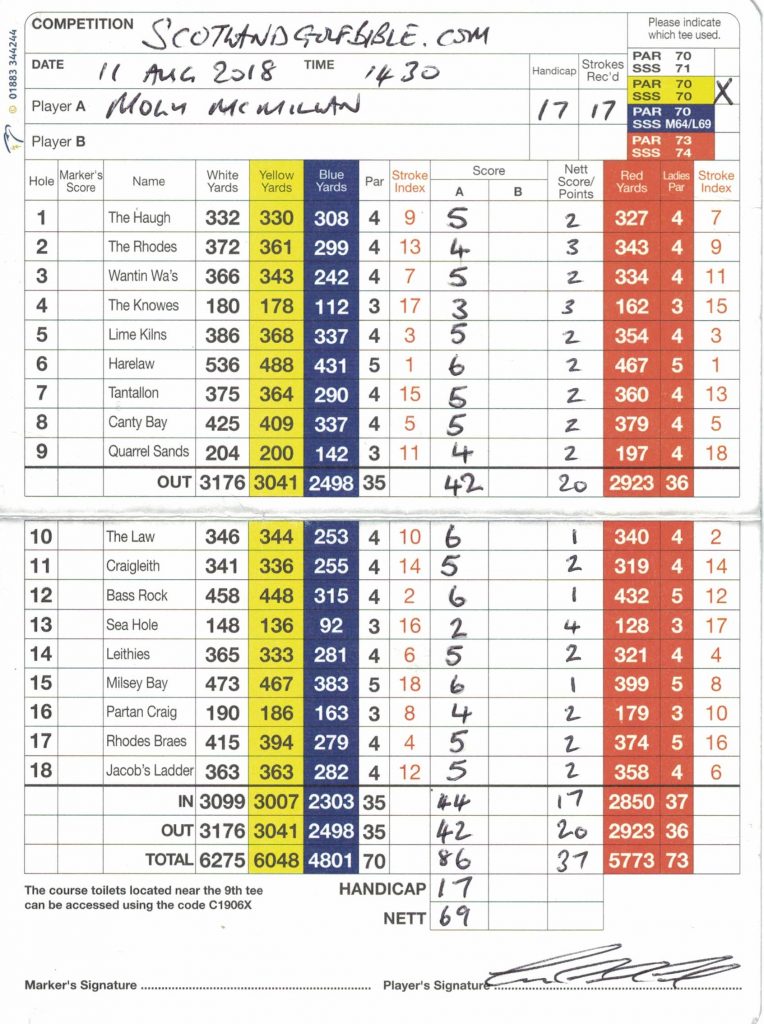
Some excellent play for 86 at The Glen; but included 3 putting 8 greens!
69. Moray New. 24th Oct 2017.

The junior of the two Moray courses is a fine example of links golf.   

Summary:  Round  £50.   Par 70.  Value (out of 5) – 4

Moray Golf Club is in Lossiemouth on the south shore of the Moray Firth, about 6 miles north of Elgin.  The main course, Moray Old, designed by Old Tom Morris, opened in 1889 and is one of the great Scottish Links whose 18th hole has a magnificent green in front of the fine old clubhouse.

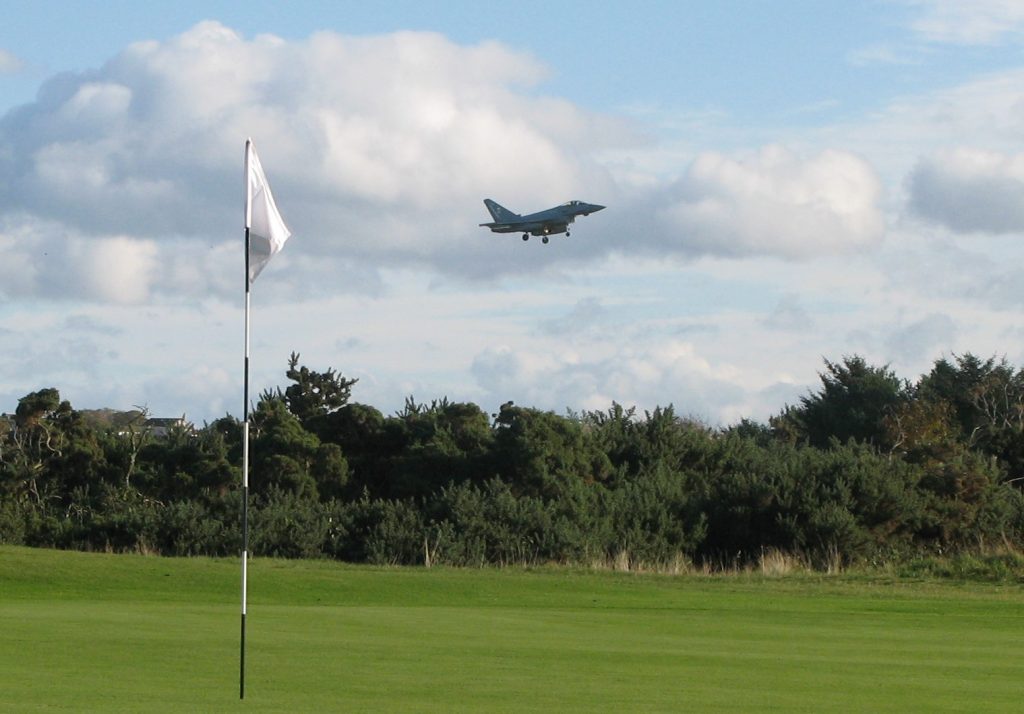
Beware aircraft noise – a Typhoon from RAF Lossiemouth passes over the 6th green at Moray New

The Moray New 18 hole course was designed by Sir Henry Cotton and opened in 1979, and extended the 9 hole “Ladies Relief” course which had been laid out in 1905.  This is one of only 2 Scottish courses “re”-designed by Sir Henry (the other being Stirling).

At just over 6000 yards, off the white tees, Moray New is still a substantial test of golf.  With the wind blowing and the abundance of gorse, accuracy from the tee is very important here.

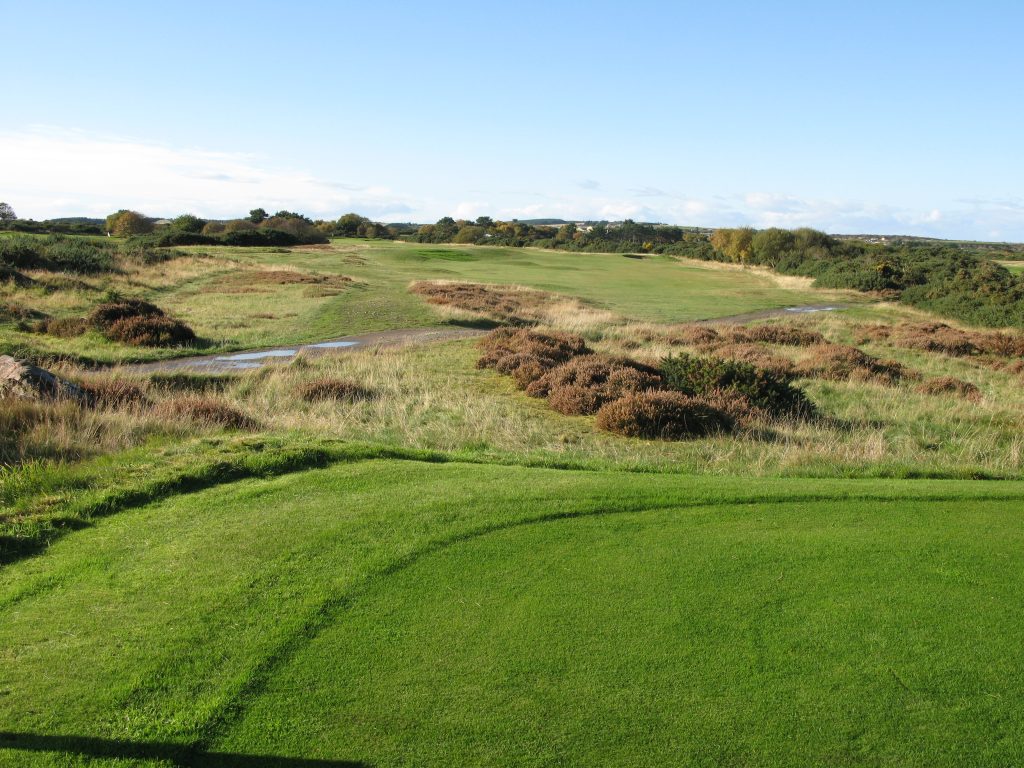
The beautiful looking 3rd at Moray New

The New course is closely intertwined with the Old and it’s important to check which coloured flags are in use on each course.

A significant hazard can be the noise from jet aircraft from the adjacent RAF Lossiemouth base, which is closest to the 6th green on the New.  When I played there was a busy flying day and I was treated to some fast climbing displays by the local Typhoon jets of No’s 1(F), II(AC) and 6 squadrons – the primary task at RAF Lossiemouth is to maintain the Quick Reaction Alert (Interceptor) North mission.

Approach to the 5th at Moray New – with burn in front of green

The course has some fine holes, dominated by the wind of the day.  The 10th is the closest to the coast, and the prevailing wind will normally be against and from the left, making it difficult for a right handed slicer – the green is on a slight plateau and difficult to find.  The par 4 14th, Stroke index 1, will play like a par 5 for all bar the really long hitters.

There are some tricky par 3s, with the innocuous looking short 6th having the burn passing directly in front of the green, making a front tee position very difficult.  The 17th, the longest of the par 3s, has 4 well placed green side bunkers awaiting.  In general, there is some clever bunkering on both fairways and greens throughout the course, although this course does not have the deep re-vetted bunkers found on many a links course.

7th at Moray New, one of the challenging par 4s (SI 7)

The course was in excellent condition for a late October day, demonstrating how accessible Scottish Links courses can be all year round – by comparison many courses inland were closed due to being waterlogged on the same day.

Other than plane spotting, playing at Moray is highly recommended for whisky lovers, since Moray has a well established and long relationship with nearby distillers (several of whom were original members of Moray) from whom the club has bought several vintage whiskys.  It has its own label “Club malt”, currently a Macallan.  Curiously, there is more about the history of whisky on the club’s web site than the golf courses!

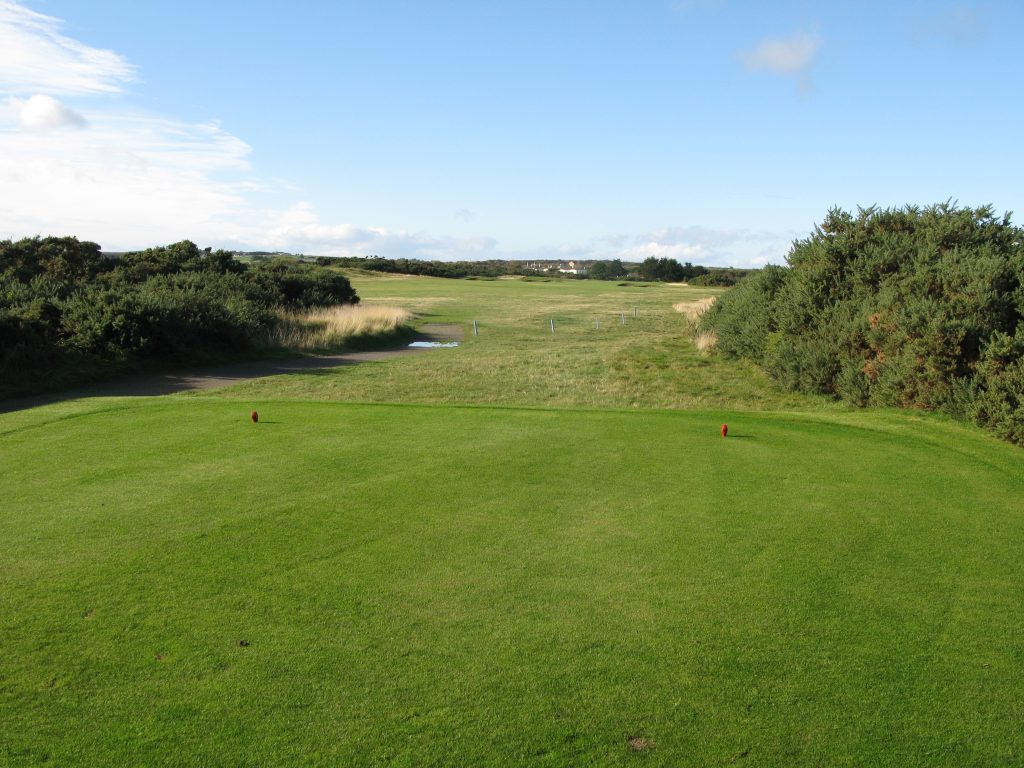
Par 4 10th tee, a nightmare in the prevailing wind from the left!

A story worth noting is the political dispute Moray GC had with, probably in hindsight, its most famous member, the first UK Labour Prime Minister, Ramsay MacDonald –  he was removed from the membership list in 1916 for his opposition to the First World War.  He was finally reinstated as a member in 1929, but never played Moray again.

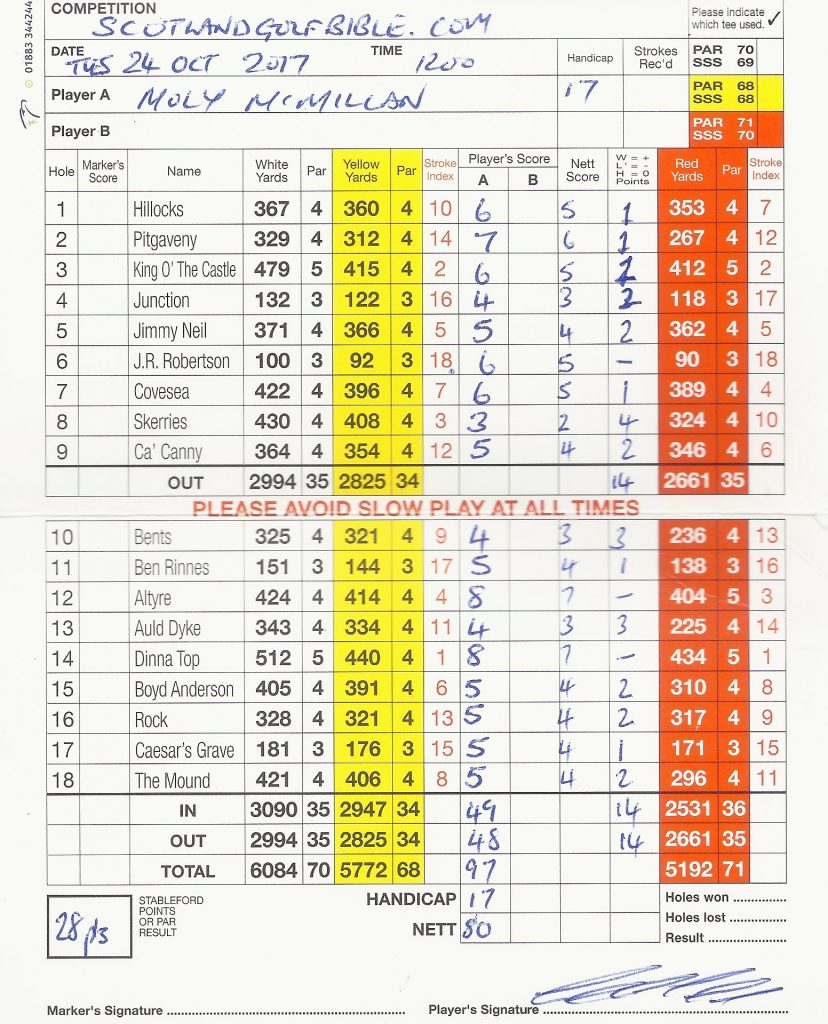
On the day, I played reasonably well for 28 points, although had a few disasters (on 12 and 14 especially), which meant I scored a gross 97.  I got a birdie on 8, which was my highlight.

If you plan to play the Old course at Moray, try and make sure you savour the New as well.  Highly recommended.  I played using The Courier golf voucher deal for only £15 – an absolute bargain.

Facts:

Course Type: Links

Par 68 (14 par 4s, 4 par 3s)

Distance (yellow): 5772

Moly’s Gross score97

Moly’s Moray Old scorecard – 97 for 28 points


62. Carnoustie Burnside. 9th Aug 2017.

Treading on possibly the very origins of links golf

Summary: Cost £46. Par 68.  Score 85. Value (out of 5) – 4.5.

The Burnside course, or more correctly the Carnoustie Burnside course, is eclipsed by its magnificent Championship course neighbour, but that’s only because the Championship course is one of the greatest courses in the world!  Do not play the Championship course without also trying The Burnside, which is a great naturally laid out links course.

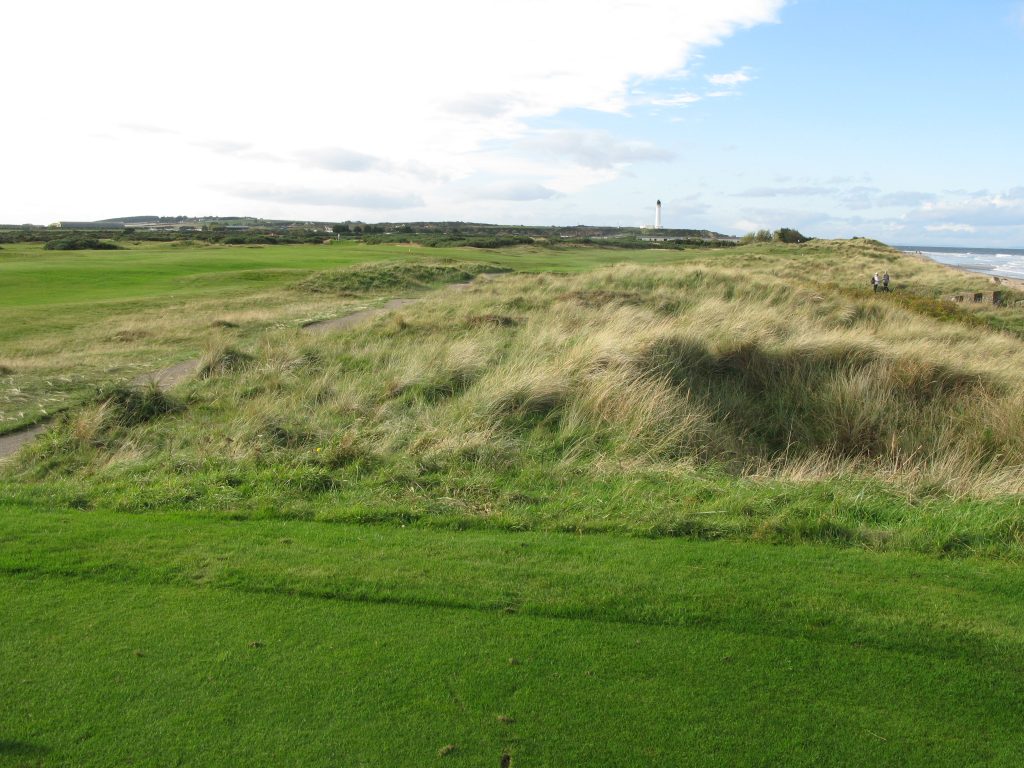
The wonderful links land view from the 15th tee of The Burnside

Golf on the “Barry Links” was recorded as early as 1527, nearly 50 years earlier than St Andrews, making this the area that “Links” golf was first played.  The Scottish Golf History web site lays out a strong case that these first games of links golf were most likely played on the land between the Barry Burn (more of that later) and the railway line currently where holes 1 to 5 of the Burnside course are.

Therefore, arguably, “The Burner” is the most historical of all links golf courses!  You are truly walking among the ghosts of golf’s distant past playing here.

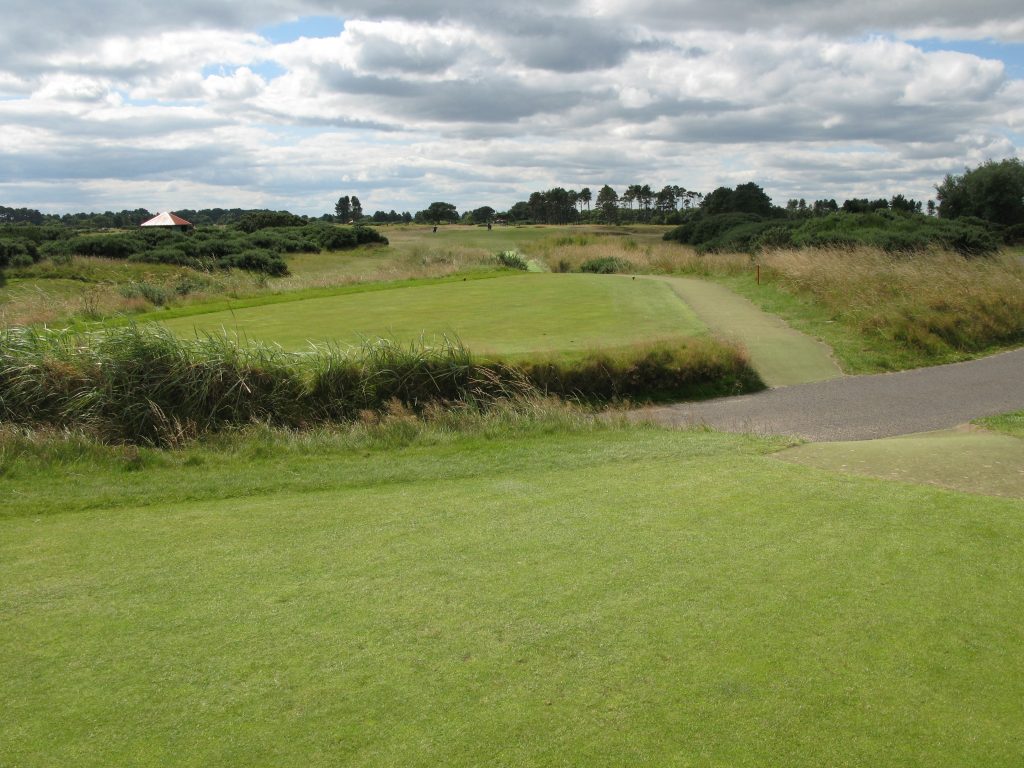
The 3rd hole, the first of 5 wonderful par 3s, the highlight of Burnside – the Barry Burn awaits!

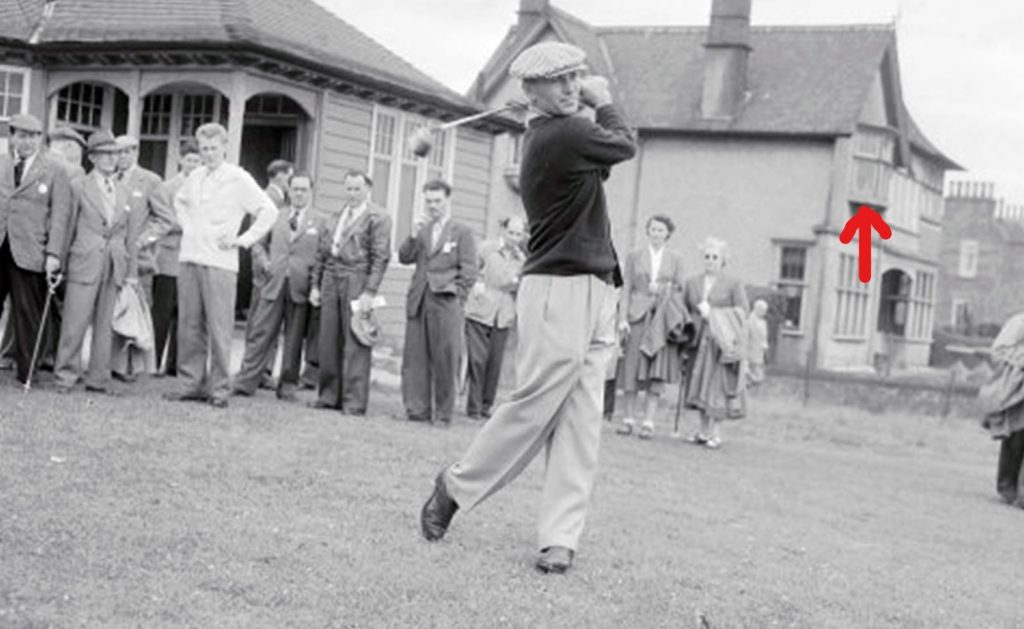
Of course, there are more recent historical stories worth telling.  It’s largely forgotten that when Ben Hogan famously won his 1953 Open at Carnoustie he qualified on The Burnside course.  It was therefore very apt that I played The Burnside with my brother-in-law, Colin Macqueen, since his fascination with golf started during the same summer of 1953 when he and his elder brothers were mesmerised by the large crowds watching Ben Hogan outside the window of their home, “Lismore House”, which overlooks the Burnside’s 18th green.

Hogan playing the Burnside; Colin Macqueen’s “Lismore House” bedroom highlighted.

Colin has dined in Australia, his home of 50 years now, on the true story of him falling out of the upper floor bay window nearly causing Ben to miss a crucial putt!

The Burnside was designed by James Braid and opened in 1934, not long after Braid had redesigned the Championship course in 1926.  Although a relatively short golf course at just under 6000 yards, many of the holes would easily be at home on an Open venue.  The 5th, 9th and 14th are par 3s of the highest calibre, each with a very different challenge.

The beautifully difficult par 3 9th green.

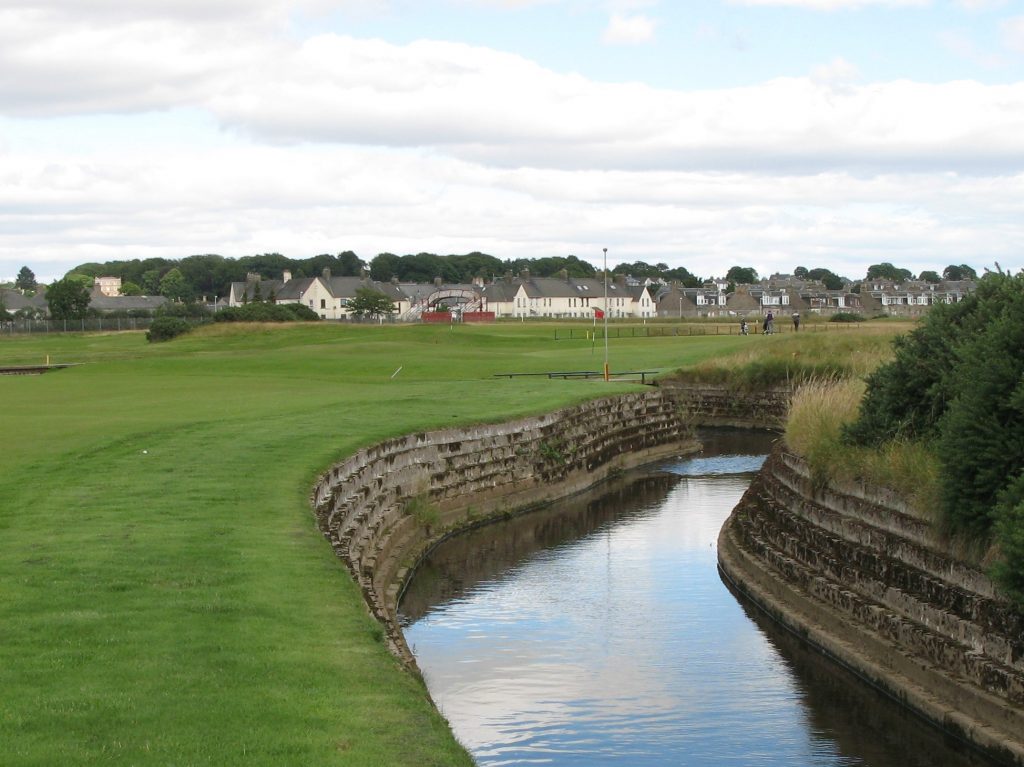
The 5th is surrounded by the Barry Burn (that of Jean van de Velde fame) where it’s virtually impossible to get close to a right-hand pin. The large plateau green at the 9th makes it imperative to hit the green with the tee shot. The long 14th is stoke index 1 for a good reason, and is a magnificent test.

Bunkers sprinkle the 6th fairway at The Burnside

The 17th, a par 4 of about 450 yards, needs to be played with a 3-shot strategy for all bar the very long hitters.   I could also get into details on many other holes, the course is that good.  To cap it all, the greens have very subtle borrows, so putting needs extra concentration.  It is one of the great small James Braid courses.

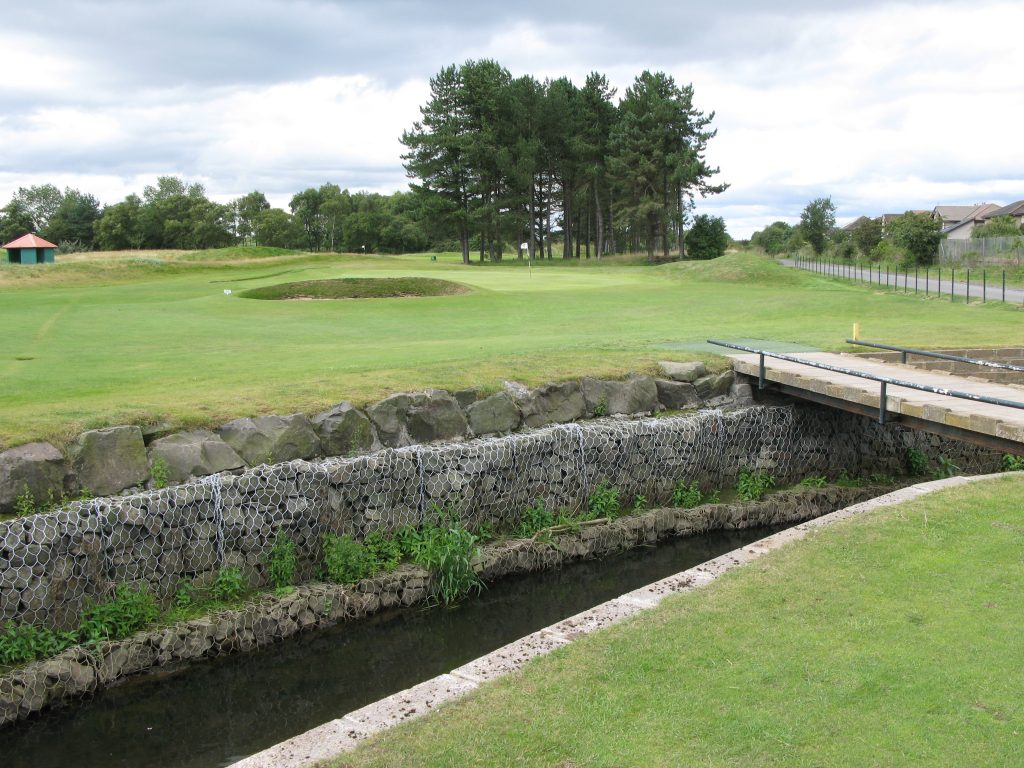
The Barry Burn (of Jean van de Velde fame) at the long par 4 17th – a card wrecker

With the large green keeping staff at Carnoustie, it was no surprise that the course was in such fine condition.  The tees, fairways, bunkers, rough and greens were all superb, and to have the sun shine made for a quite memorable round.  I scored 85 for a net level par score off my new handicap of 17; this was enough to beat Colin 3 and 1, which at least meant he could focus on the 18th green photograph, close to the site of Hogan’s zenith and also Colin’s boyhood fall.

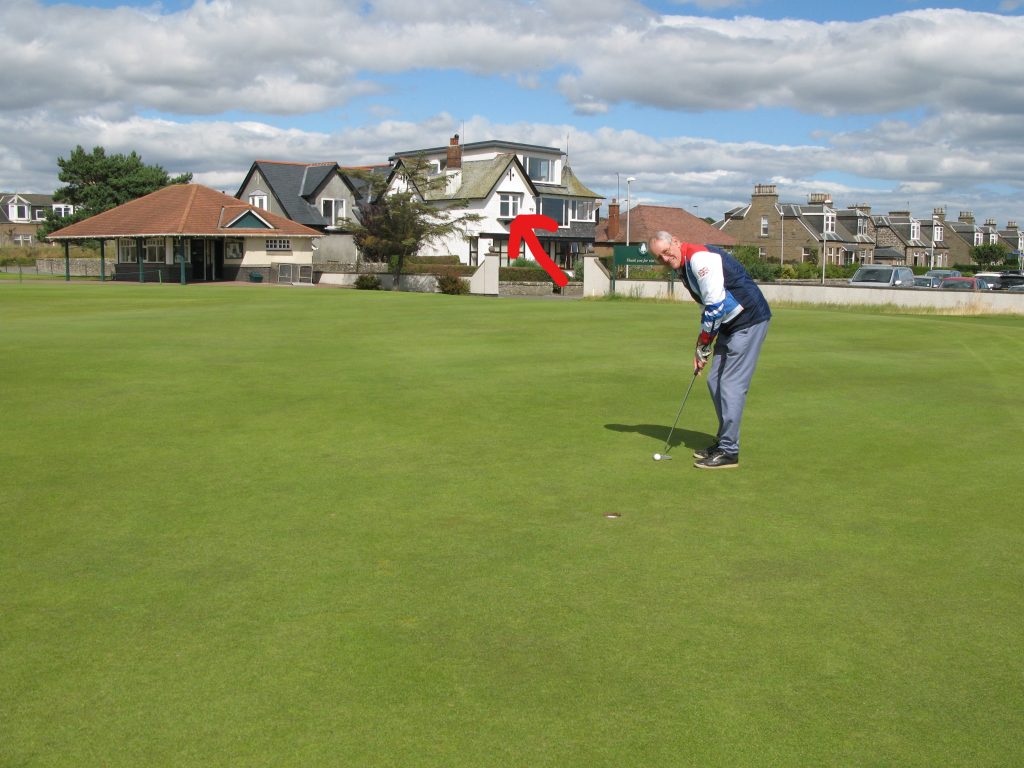
My playing partner, Colin Macqueen, on the 18th with his bedroom highlighted in the background, where he fell in 1953 during Hogan’s Open!

A quite magnificent days’ golf.

Key Facts

Course Type: Links

Par 68 (1 par 5, 12 par 4s, 5 par 3s)

Distance (blue): 5740

Moly’s Gross score: 85

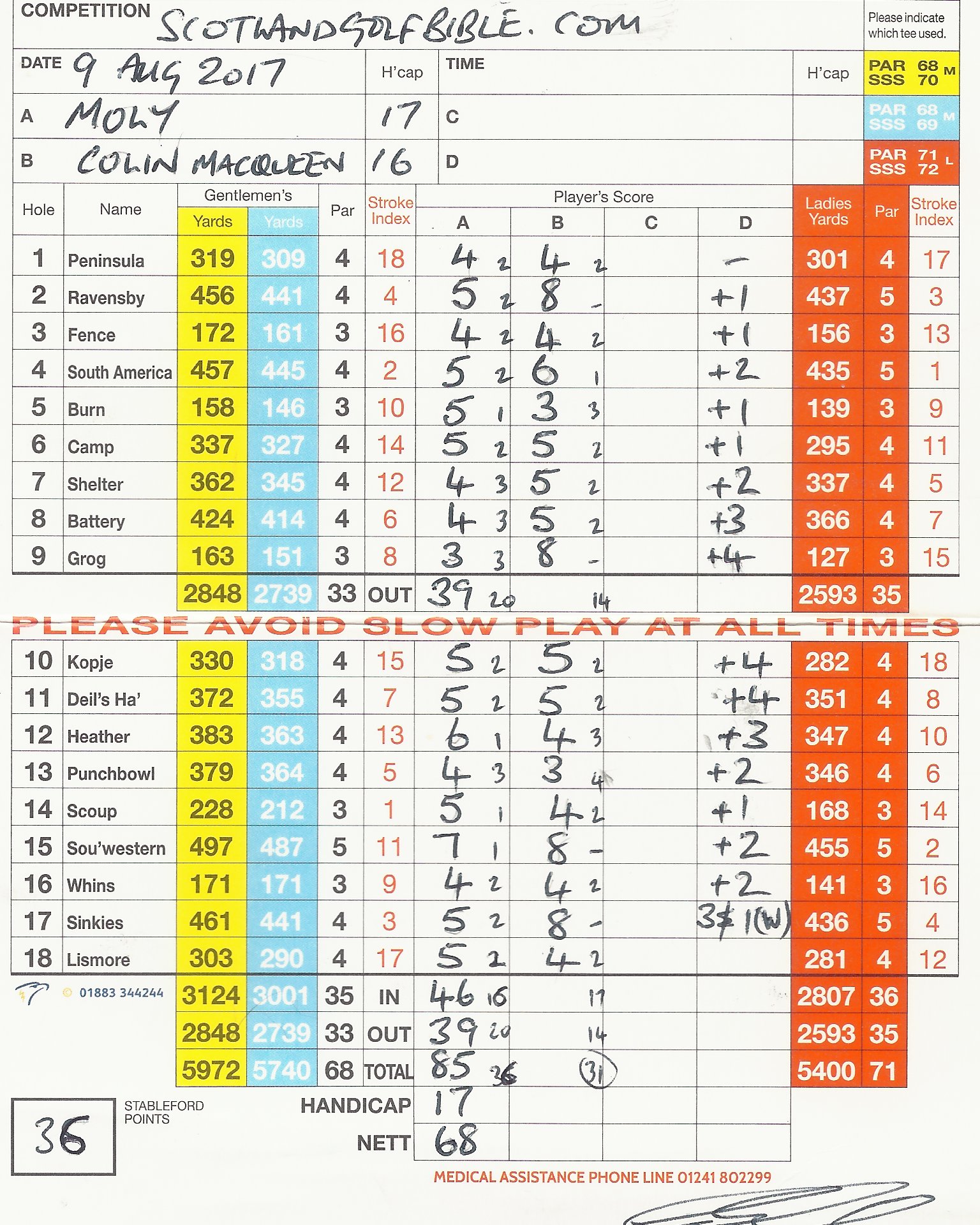
Moly’s Burnside scorecard – 85 for 36 points (off 17)

60. Dalmahoy West. 7th May 2017

Pleasant parkland course which would be ideal for the more social of society golf days.  

Summary:  Cost “between £30 – £55”.  Par 68.  Score 88.  Value (out of 5) – 2.  

So it has taken until 7th May to blog the first course of 2017, due to various travel, work commitments and poor weather!

The 8th fairway at Dalmahoy West, a typically open hole on this short parkland course

Marriot Hotels run the Dalmahoy Hotel, Golf and Country Club, which is on the South East of Edinburgh about a 10 minute drive from Edinburgh Airport.   The resort has 2 courses; the East course is a championship layout designed by James Braid and hosted the Solheim Cup in 1992; I played the East course in 2014;  the West course is a much shorter later addition.   Both course are part of a 1000 acre estate surrounding Dalmahoy Manor, which was built in the 1720s and converted to a hotel and golf resort in 1927, becoming part of the Marriot organisation in the 1990s.

The Par 4 5th green at Dalmahoy West

The East course, like the West course, is an open parkland layout, where there is ample opportunity to be wild off the tee but able to recover and retain a flattering score.  If you’re like me, this will suit you, as it allows a freedom to be aggressive, especially off the tee. Additionally, there is only one of the par 4s (the stroke index two 8th) which is over 400 yards, so for all bar the shortest of hitters you are hitting short irons into most greens.

The 15th tee, at Dalmahoy West, the start of the trickiest stretch on this resort course. The church to the left of the green is a Scottish Episcopal chapel on the grounds.

The highlight of the layout, is the 3 tricky holes staring from the 15th; water is in play to the right of the par 4 15th, and then in front of the short 16th which makes it important to play long, especially into the wind.  The 16th is another par 3, but with 3 well positioned greenside bunkers.   I suspect these 3 holes have damaged many a medal scorecard.

The well guarded par 3 17th green at Dalmahoy West

The course was in reasonable condition when I played, with nice greens, however the tees were poor.  It was not good value for the price:  I paid £23 for a twilight slot based on a price match with Teeofftimes.co.uk, although the rack rate states the price between “£30 – £55”, and it would be robbery if paying greater than £40 here.  It would nevertheless be a really good society venue, particularly for societies where golf is rather secondary to the socialising.

I carded an 88, for 34 points, but had a couple of disaster holes:  a 7 on the par 4 2nd and an 8 on the par 4 11th.  When will I next get a round without major error!


Key Facts

Course Type: Parkland

Par 68 (1 par 5s, 12 par 4s, 5 par 3s)

Distance (yellow): 5051

Moly’s Gross score: 88.

Dalmahoy scorecard – 88

« Older posts Newer posts »

© 2026 Scotland Golf Bible

Theme by Anders NorenUp ↑