A guide to green fee value for money

Category: 1901 – 1945 (Page 8 of 14)

103. Colvend. 13th Sep 2020.

A favorite course of The Times’ sports photographers Marc Aspland and Bradley Ormesher

Round £25. Par 69. Value (out of 5) – 3.5

They say you should never meet your heroes. After reading an article in The Times (25th Aug 2020) about Colvend golf course by the sports photographers Marc Aspland and Bradley Ormesher, I felt obliged to seek out the course whilst in the south west of Scotland on a golf trip a couple of weeks later. Marc and Bradley had written so lovingly about a place that was clearly deep in their hearts, to the extent that the “third hole at Colvend remains my favorite place”, even when compared with Open venues. Really?
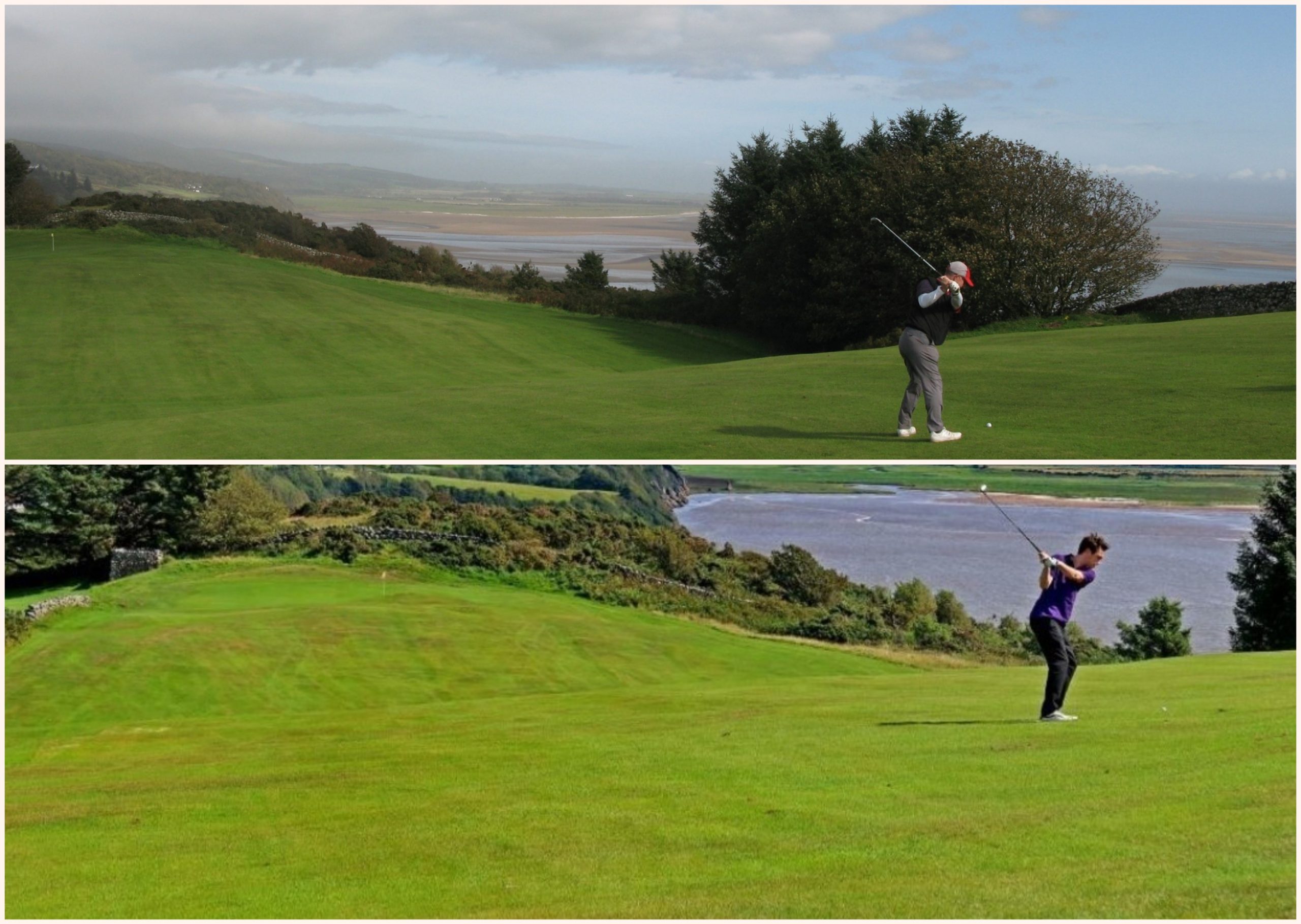
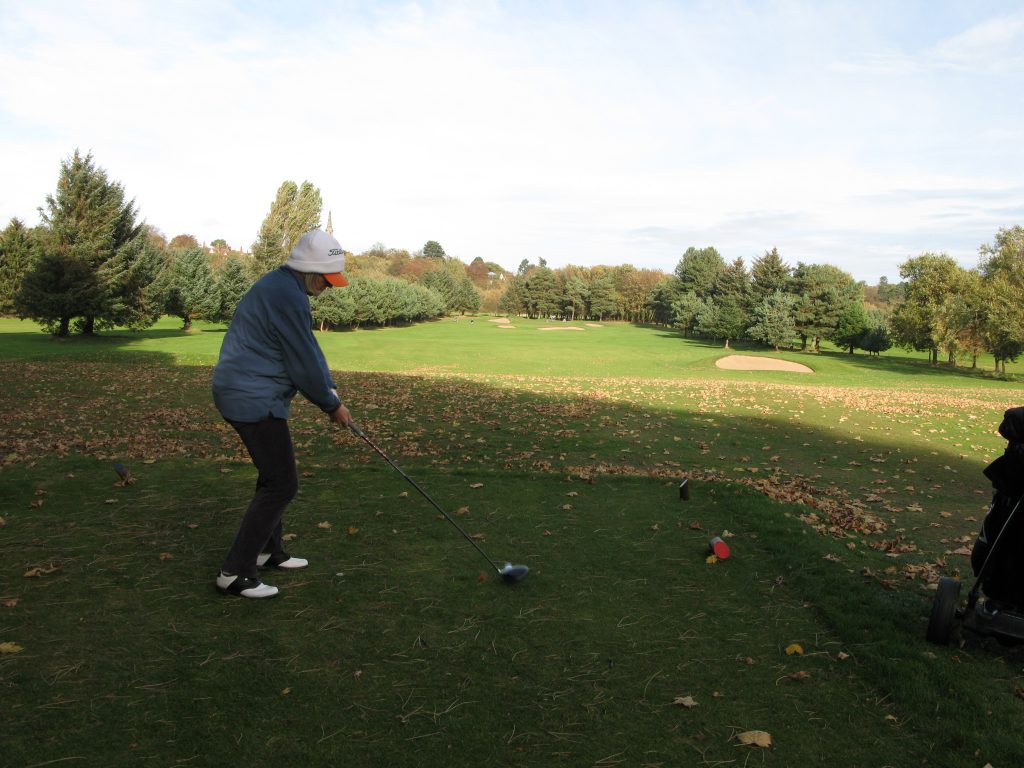
Moly (top) replicates the photo of Marc Aspland (bottom) at the third hole “Solway View” that appeared in The Times article on 25 th Aug 2020.

Colvend golf course has 9 holes either side of the A710, the road which skirts the northern coast of the Solway Firth, from Dumfries and Dalbeattie. The course was established in 1905 with the 9 holes on the coastal side of the road, designed by Willie Fernie (Ailsa course at Turnberry) and the 9 inland holes were added in 2005 by Dave Thomas (Belfry, Spey Valley).
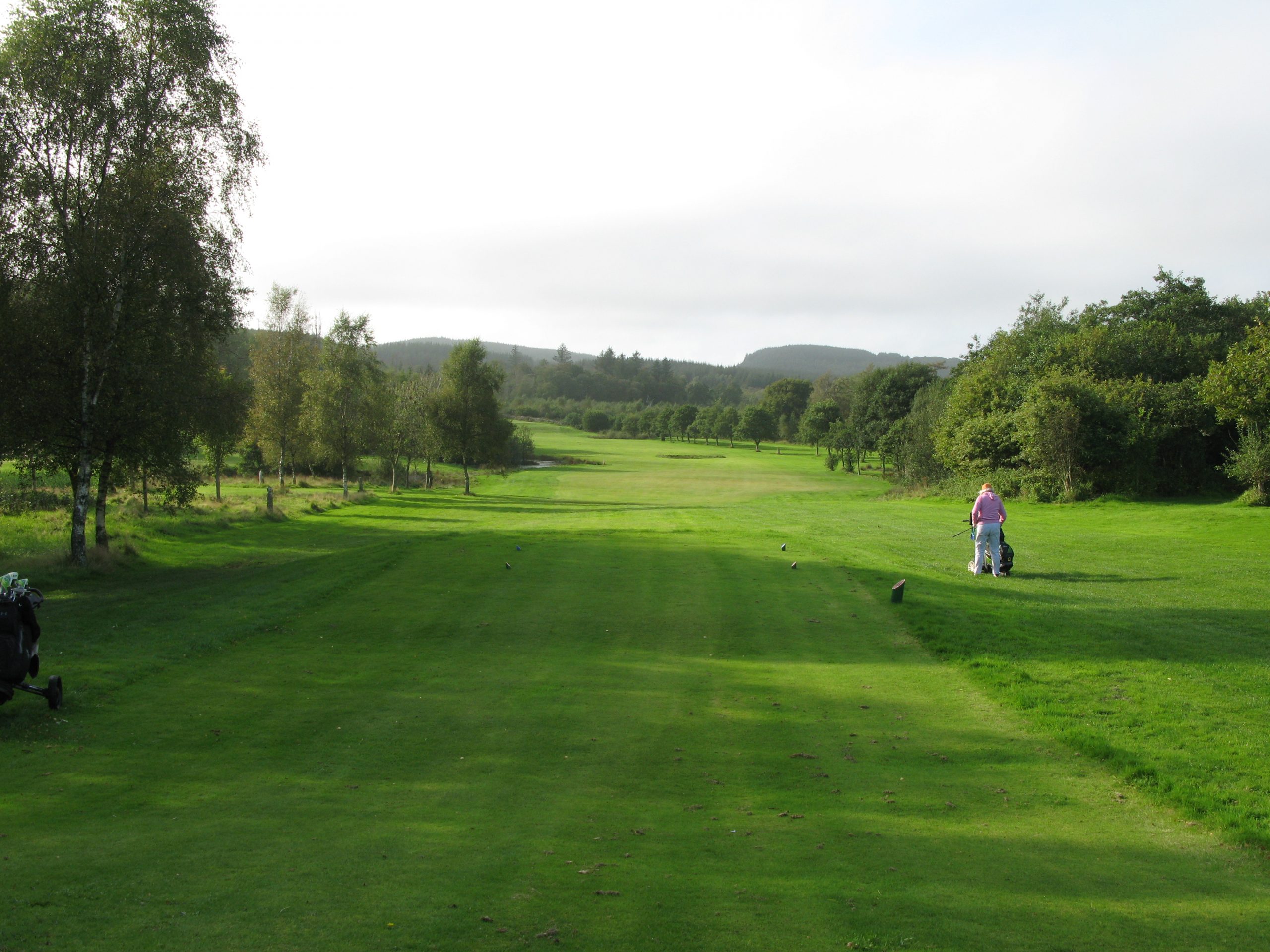
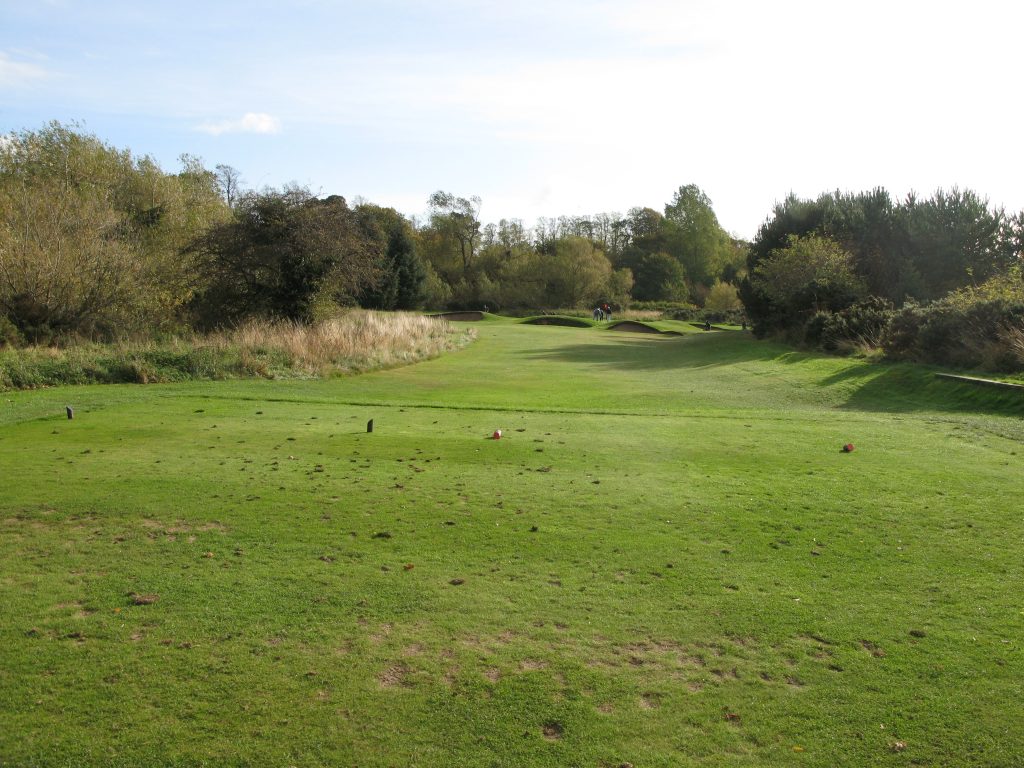
13th hole at Colvend, easily the stroke index 1 hole, and a clearly modern parkland design which could be picked up from the Belfry. Plan your way to a bogie and move on quick!

Although on the coast, this is very much a parkland layout, with great views on a couple of holes across the Solway Firth to the Lake District.

Looking at the card, you’ll see the difference in length between the original holes and the ones later laid out by Thomas – the par 4 18th at 266 yards, was the original 9th hole. There’s also significant architectural differences as well, with the coastal holes being very naturally laid out, and the inland holes being clearly “designed”, no more so than at the 13th, the clear stroke index 1 hole.

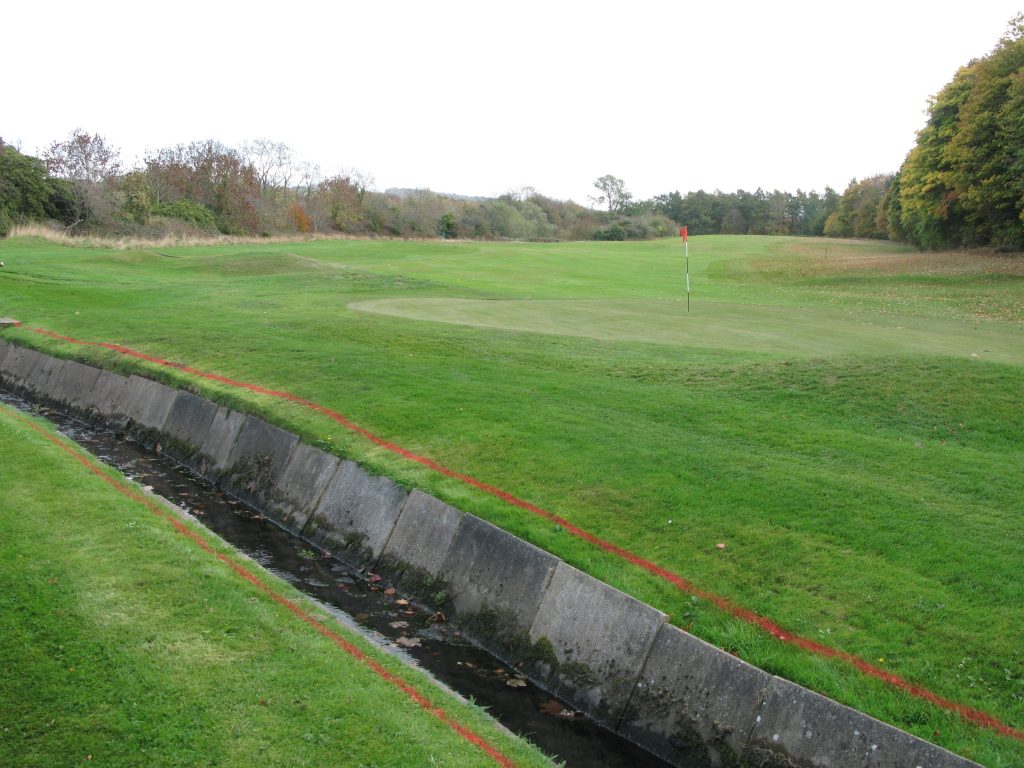
There are some neat challenges as well. The par three 8th has a hidden burn in front so take enough club, but with danger behind the green as well, I imagine this being a “lay-up par 3” for many of the members.
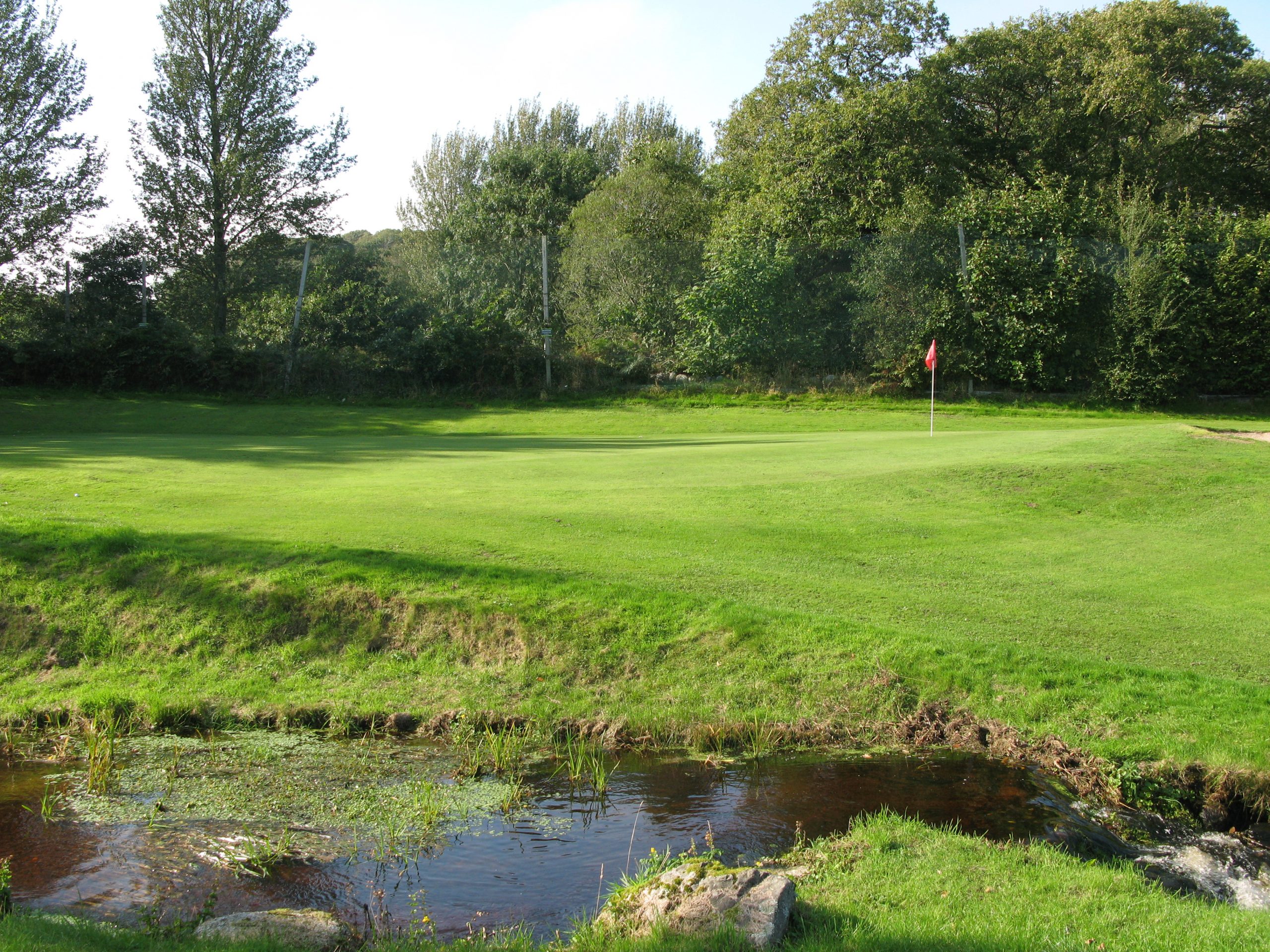
The dangerous 8th green, take at least 1 extra club to avoid the water in front, which is obscured from the tee.

The par-4 dogleg 18th is a clever hole. Only 266 yards long, I imagine the longer hitters see this as a risk reward hole, trying to drive the green. But the green has a burn in front and very large trees obscuring the approach, mean you need to be well back to get over easily. With no wind it’s probably something like 7 iron, then wedge to the green. Very strategic, and to be fair to Dave Thomas, it has the feel of the 10th at the Belfry.
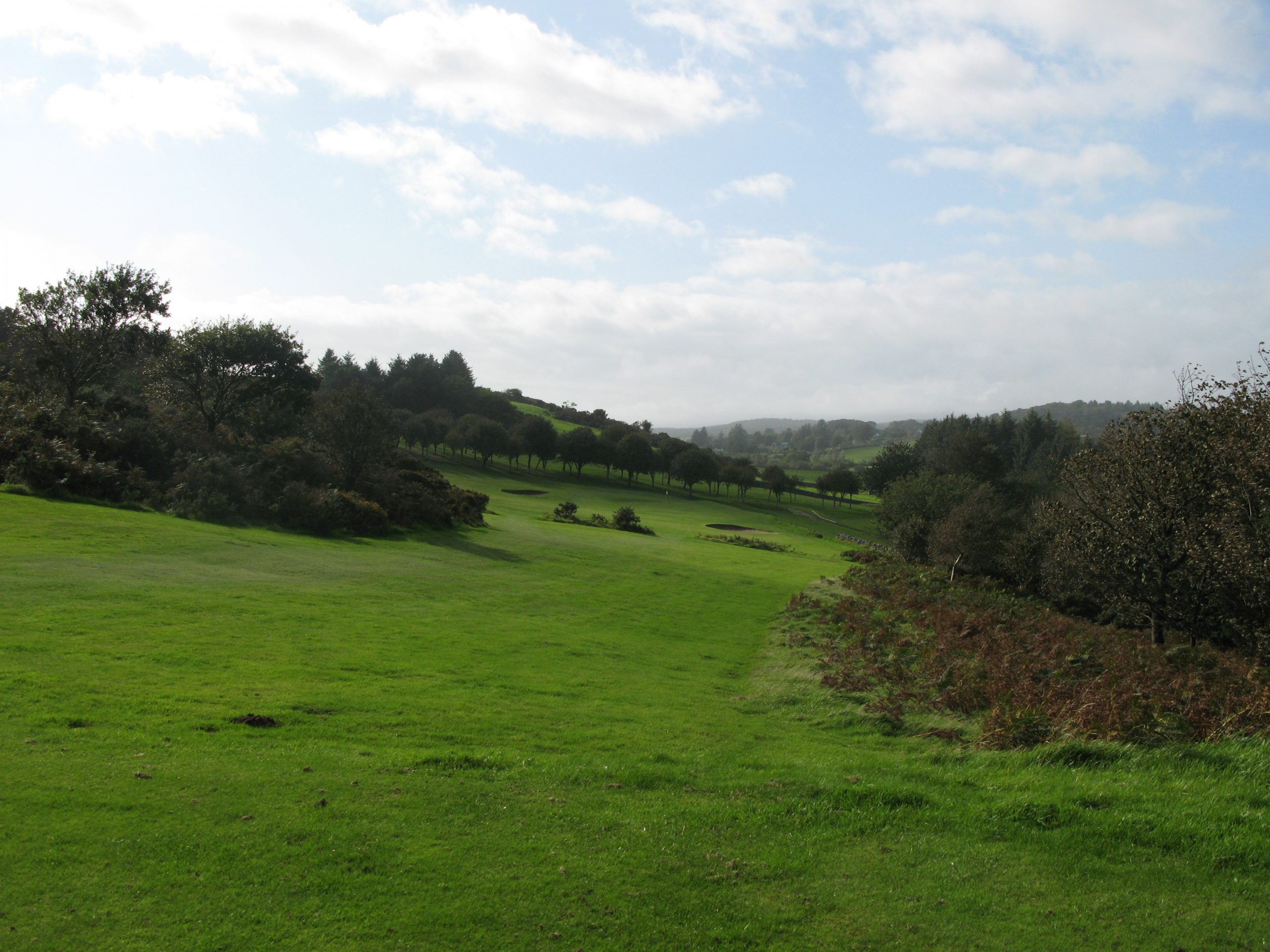
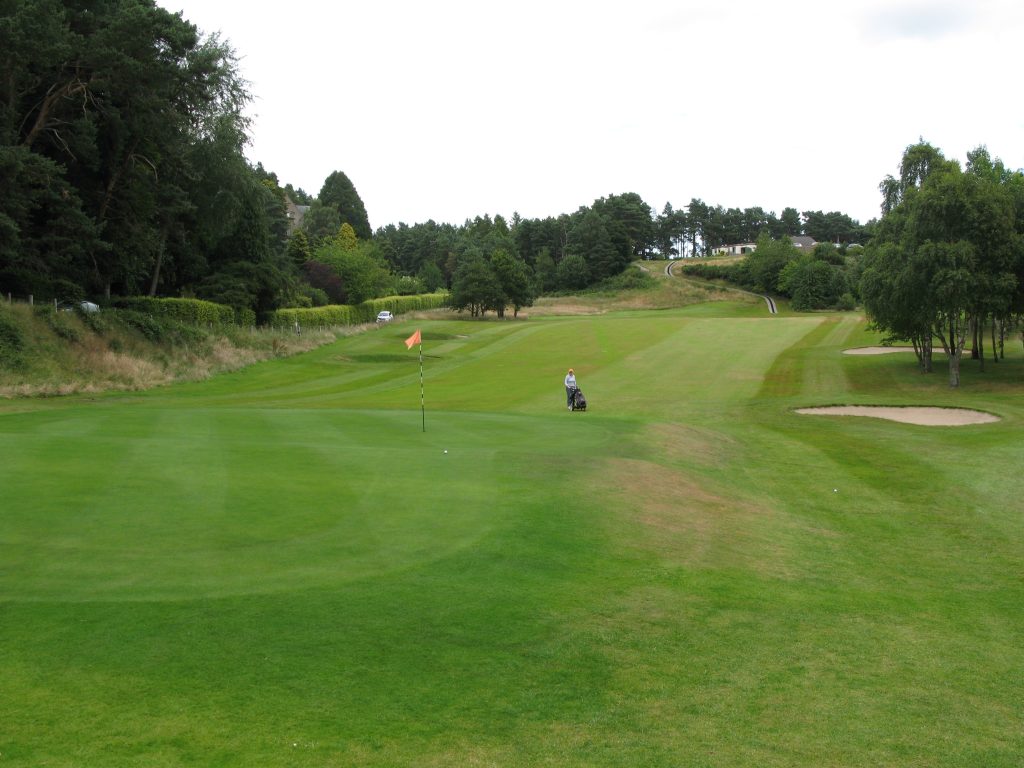
Keep left on the 4th, with plenty of room to chip and putt. One of the original naturally designed holes.

The course was in decent, but not great, condition when I played, but to be fair we had only recently come out of the first prolonged covid-19 lockdown so everyone was just grateful to be out of the house. The greens had become quite mossy.
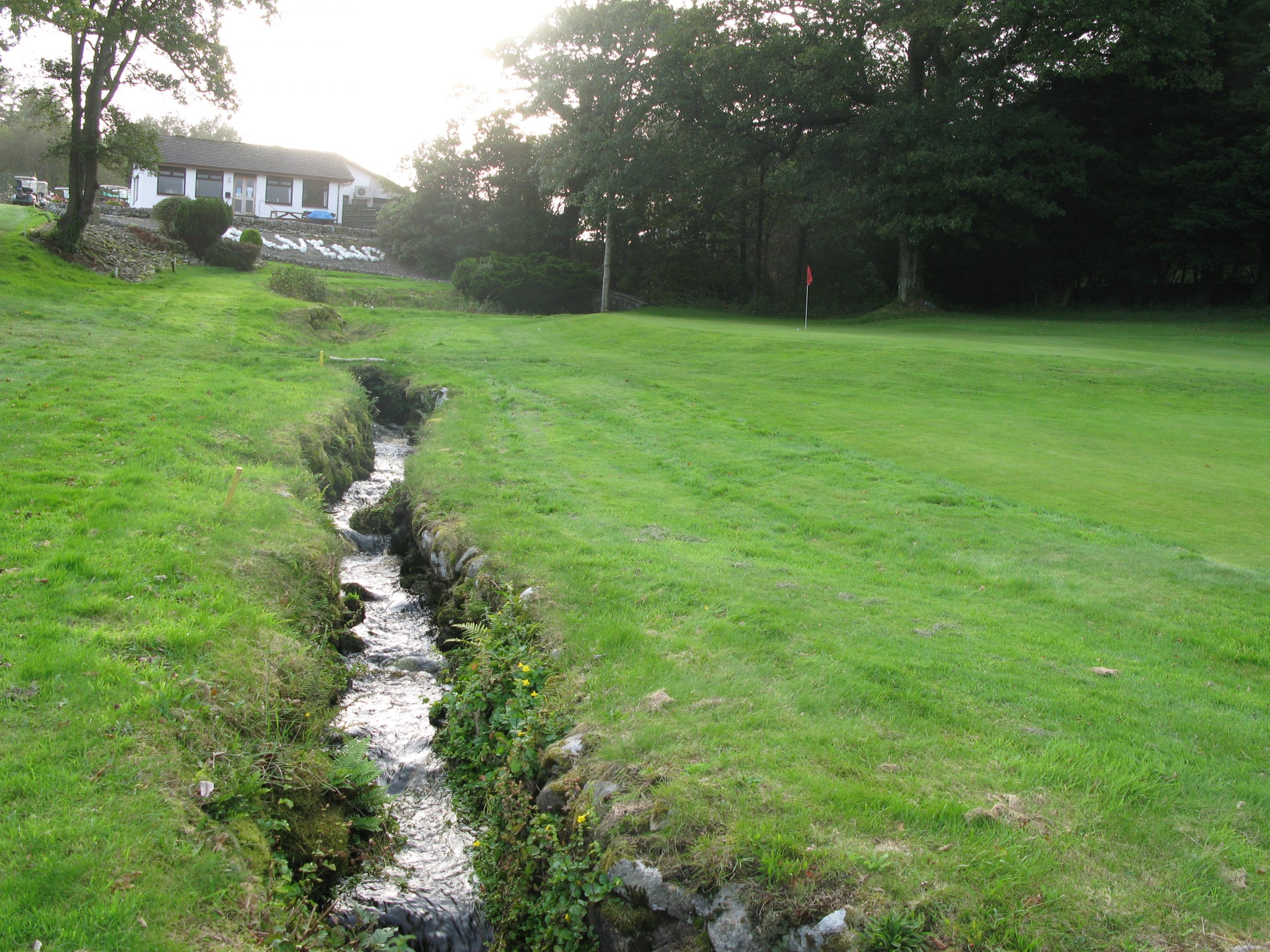
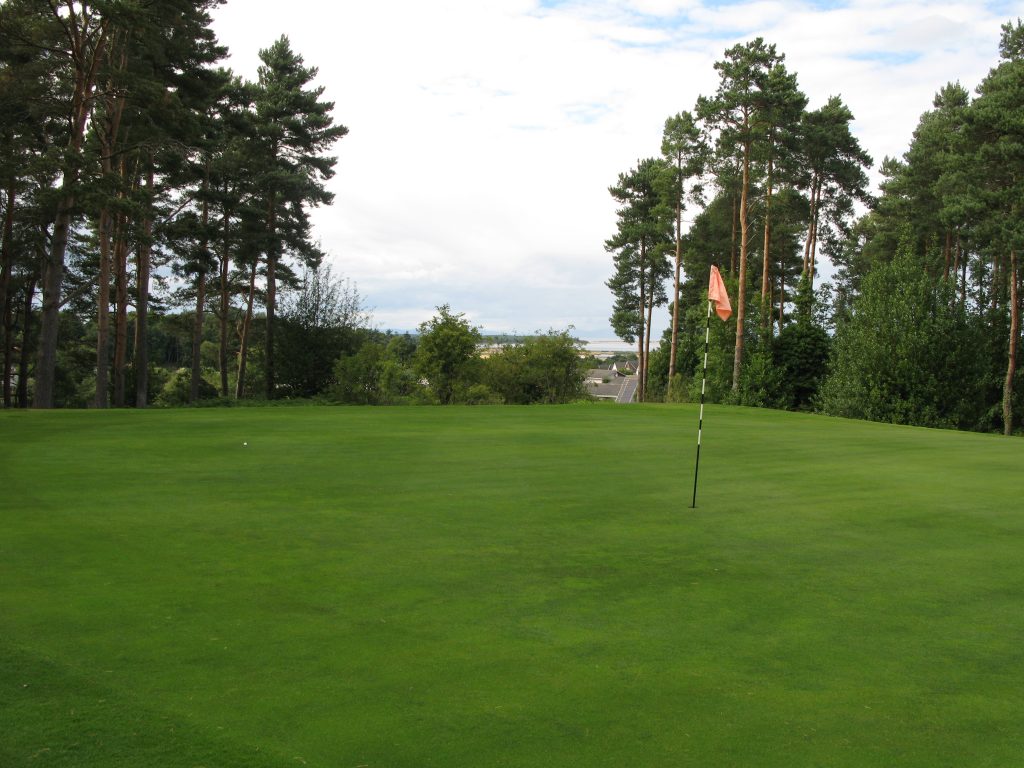
The 18th green at Colvend with treacherous burn awaiting to spoil a good round

Few things to be aware of. This is not an easy walk as the amount of buggies for hire in the car park attested to, so is not necessarily an occasional holiday golf game venue; the steep uphill first being one of several inclines to navigate. There was also a need for better signposting between the 16th green and the 17th tee, which left Fran and I lost for a few minutes.
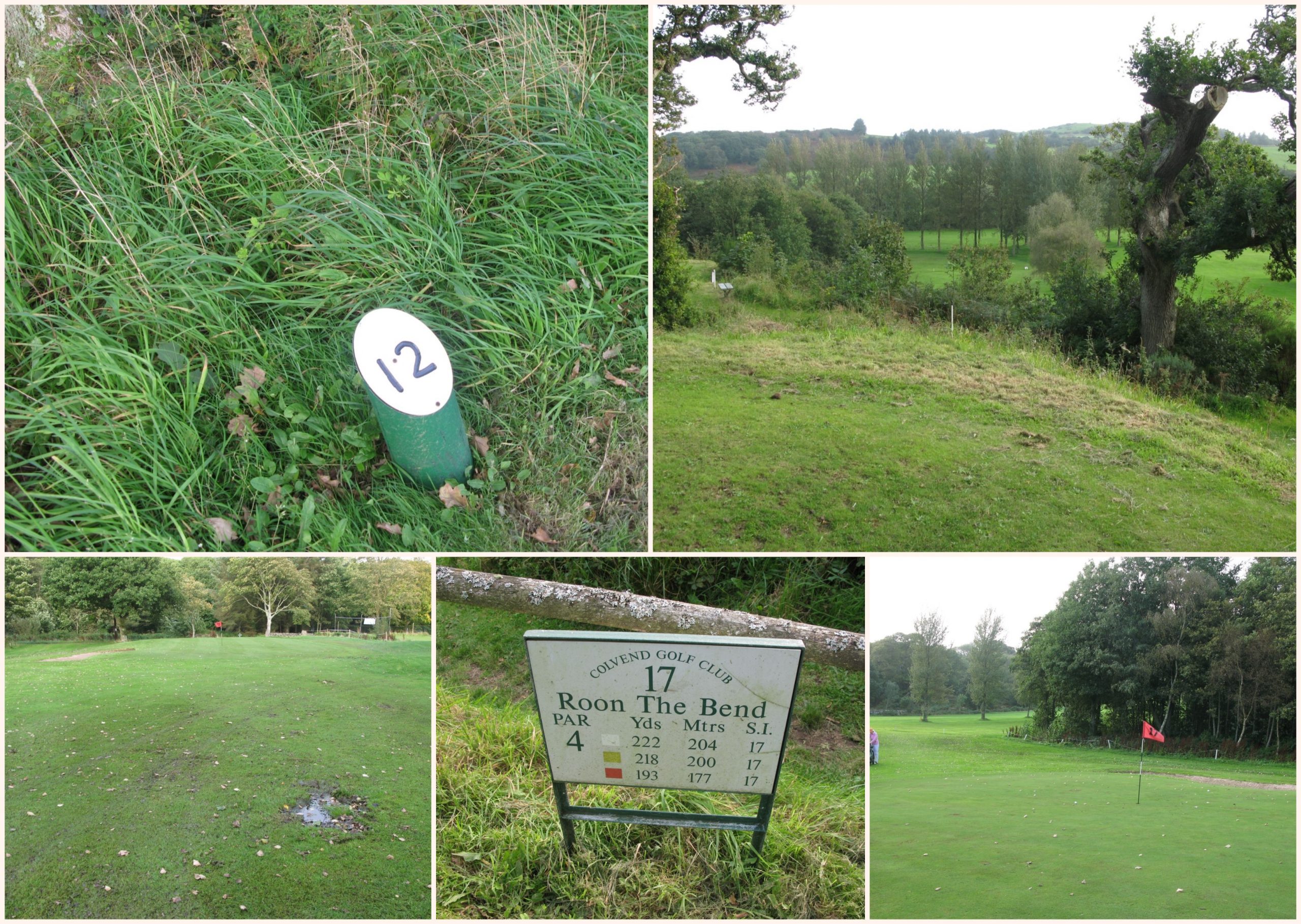
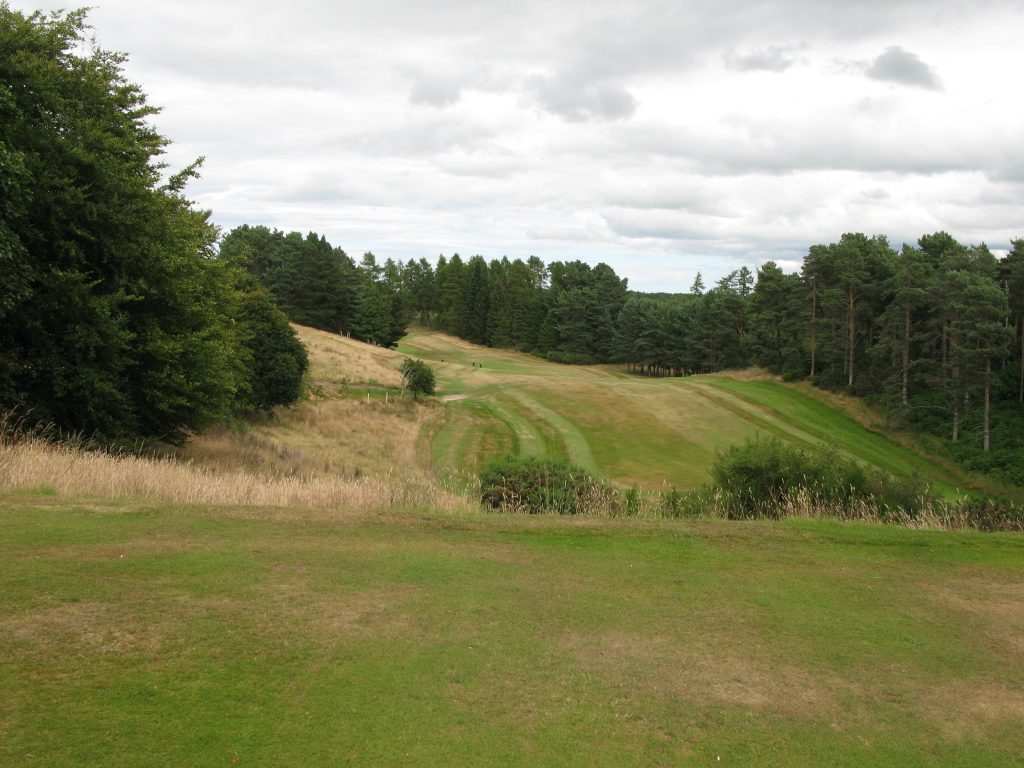
The aptly named “Roon the Bend” 17th hole, which is difficult to find, the clue is its part of the 12th tee, but you can’t see that as you walk onto the “17th” tee.

Despite high winds I scored very well breaking my handicap with a steady round. I did walk off though a little perplexed at how “rose tinted” The Times article had been – it was a nice course, but sometimes over-marketing isn’t actually good business as it can just lead to disappointment. Perhaps it needed a clearer day for those views.

Worth playing.

Facts:

Course Type: Coastal/Parkland

Par 69 (1 par 5, 13 par 4s, 5 par 3s)

Distance: 5036

Moly’s Gross score83

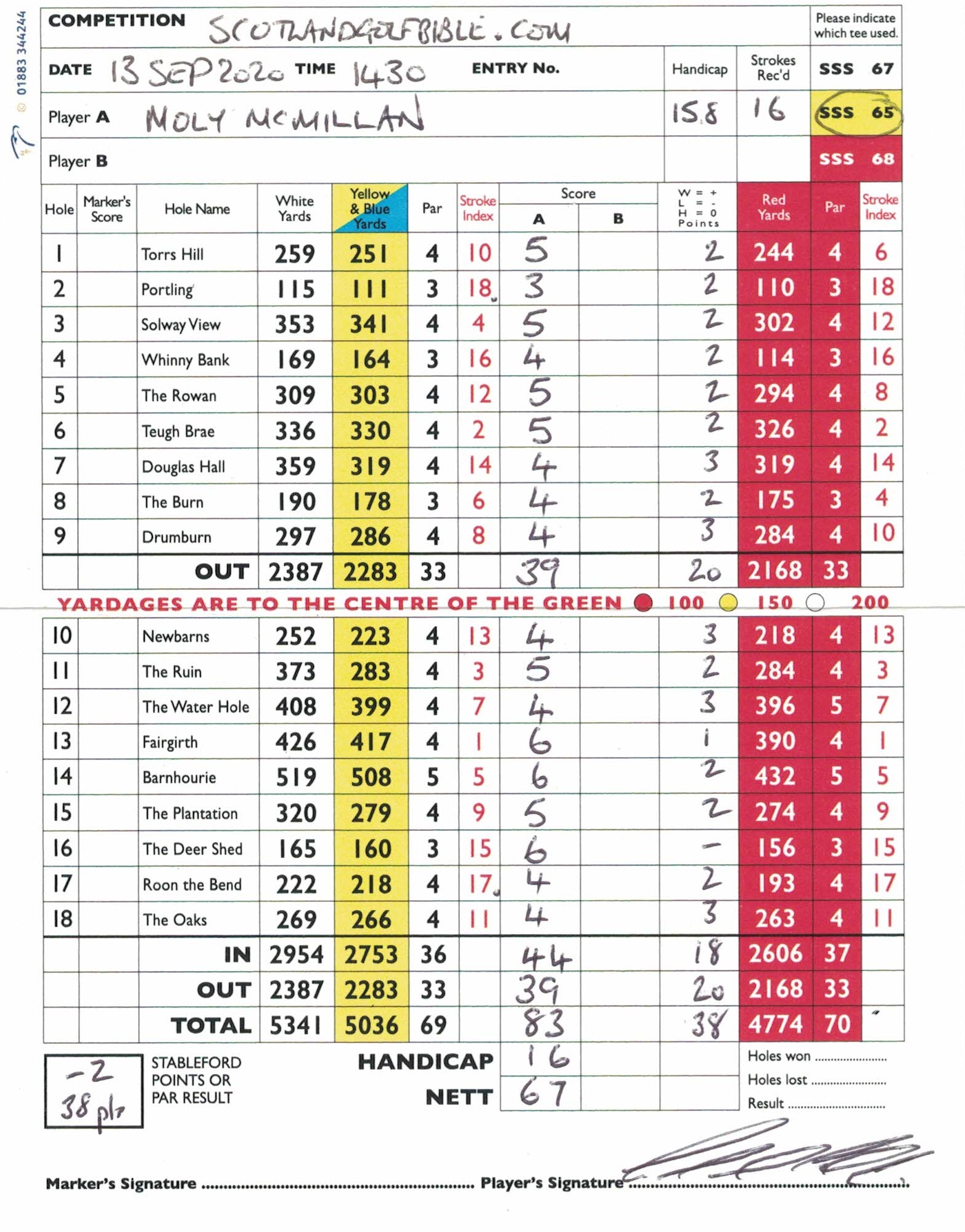
Colvend Scorecard – 83 in high winds a great day out, level against SSS of 67

101. Forres. 21st July 2020.

This course worth playing takes the biscuit, despite the nearby witches!

Round £60. Par 70. Value (out of 5) – 4

The town of Forres sits on the mouth of the Findhorn river about 25 miles north east of Inverness; located on the main A96 Inverness to Aberdeen trunk route, this is an easily accessed course, except for the narrow lanes up to the clubhouse and car park – please don’t try and take a caravan there!

The club, formed in 1889, originally played nearer Findhorn. It moved to playing the current course site, laid out by James Braid, in 1904, and was called Muiryshade Golf Course. It was extended to 18 holes in 1912 by Willie Park, then became Forres CG when, in 1944, the land was bought and gifted to the people of Forres, by Sir Robert McVitie Grant of Logie. Sir Robert made his money by creating the McVitie Digestive biscuit, so it was fitting those that ate the biscuits ended up with the course!

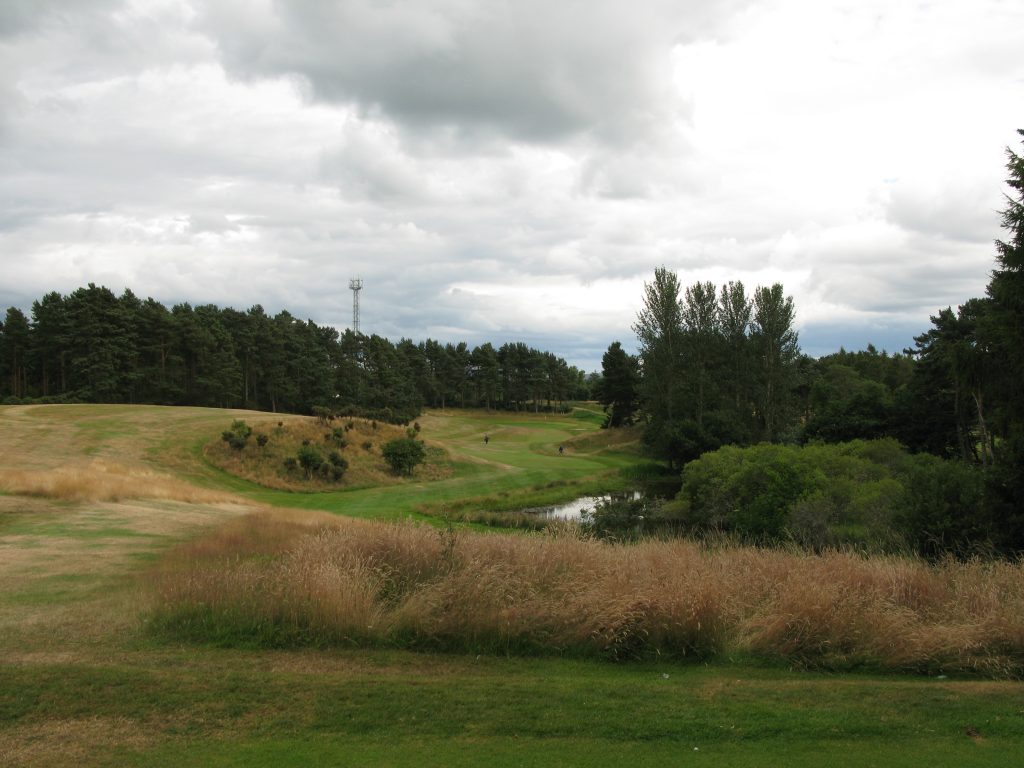
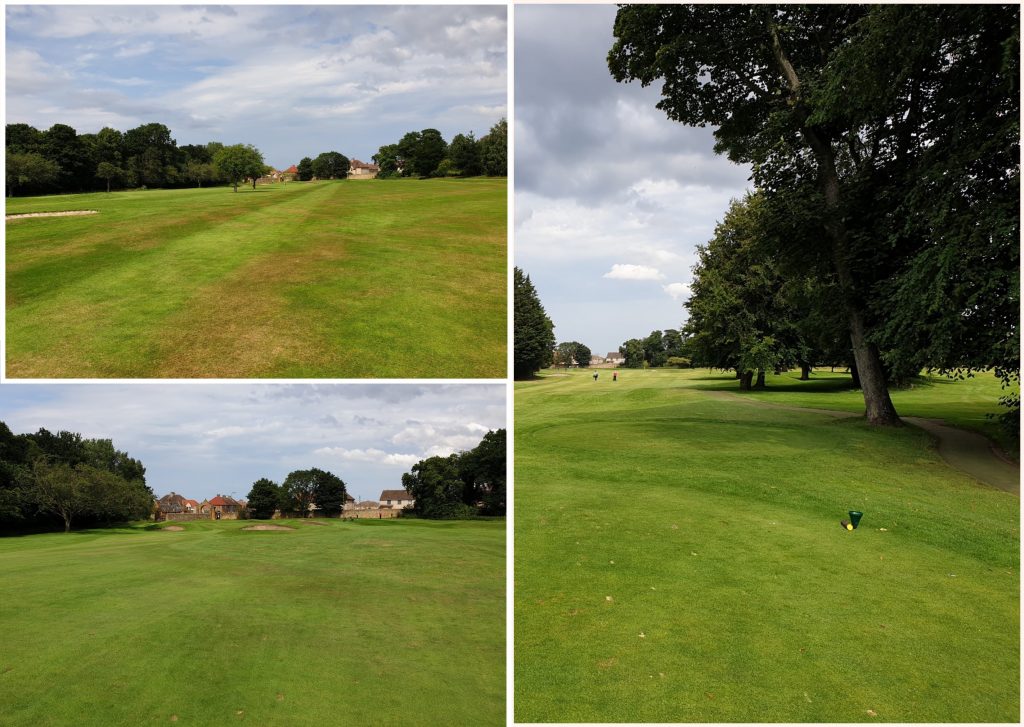
The short par 4 first looking up towards the pro shop. An easy start except for the wild slice!


This is a well maintained parkland/highland course at around 6300 yards off white tees and just under 6000 yards from yellow. It is quite undulating, with a number of semi blind and narrow tee shots, especially on the front nine. The course is rather imbalanced with the front nine par of 36 and back nine of 34, but both of similar length. The course has hosted Scottish national competitions, the best measure of its all round standard.

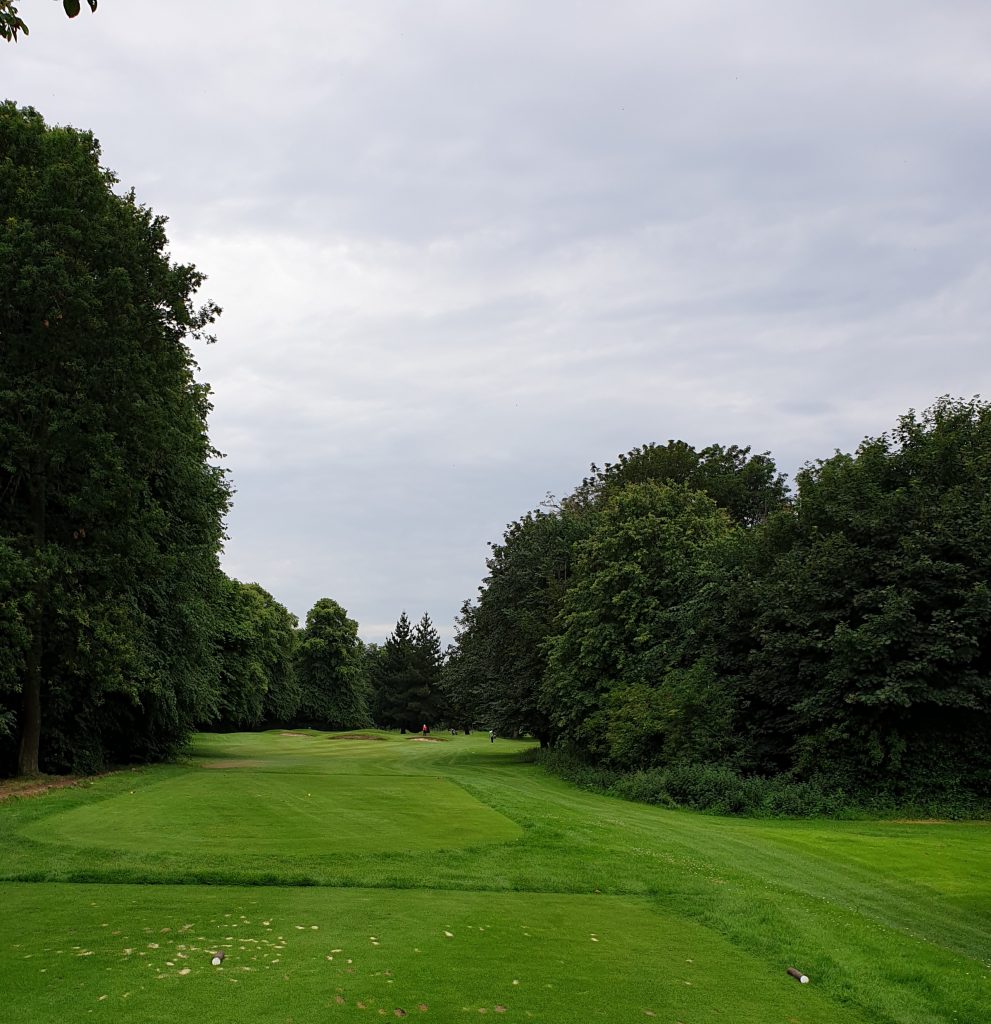
The aesthetically pleasing par four 4th, where a good drive can set up an easy approach shot.

Playing with Fran in excellent sunny conditions the course played shorter than normal with the ball running on its hard fairways. The greens were in great condition and well watered.

There are some really nice holes on the course. The first, a very short par 4 downhill, will temp the longer hitters, but played conservatively should offer a par start even for high handicappers.

Following three further short par 4s, the par 3 fifth hole, “Wee Birkie”, is a cunning par 3, where club selection is all important – miss the green and it’s really difficult to get par – aim for the dead centre of the green here.

Views of the mouth of the river Findhorn in the background of the 9th green at Forres. The pine trees give a real highland feel to this course.

After the easier front nine, the 10th hole is a long par 3, with deep slopes to the right of the green and trees to the left and starts the toughest stretch of the course through to the par 4 15th hole. To do well overall, playing bogie golf through this stretch is good for all other than the single figure players. The signature par 4 16th hole, looks more difficult than it is – a decent 200 yard drive takes you to safe territory, leaving a short approach.

The signature view at Forres from the 16th ‘Pond’ tee – a dangerous card wrecker – but a good drive leaves a short approach

This course was actually the site of one of my best competitive rounds ever more than 25 years ago – an 80 in an RAF Scotland golf competition, including being level par for the front 9. It was very fitting therefore that I shot my best round in a long while – an 84, despite hitting my first shot out of bounds!

Oh, and in case you were wondering about the title – the course sits on a wood reputed to be where ‘the three witches’ from Shakespeare’s Macbeth lived – the 7th hole aptly called “Witch Tree”!

Facts:

Course Type: Highland/Heathland

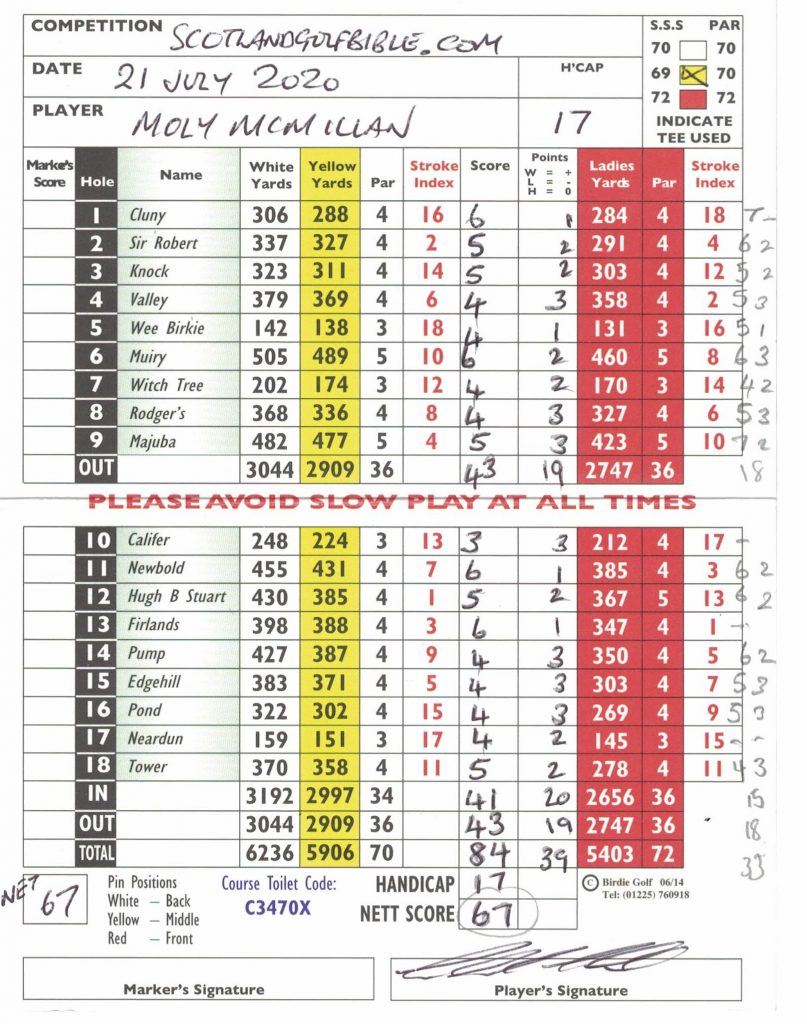
Par 70 (2 par 5s, 12 par 4s, 4 par 3s)

Distance: 5906

Moly’s Gross score84

Moly’s best for a while, gross 84, on a track with fond scoring memories

99. Royal Musselburgh. 26th July 2019.

This ‘Royal’ 6th oldest club in the world is a bit like playing ‘Trigger’s broom’

Round £65. Par 70. Value (out of 5) – 2.5

When reading the history of the Royal Musselburgh GC on its website here I couldn’t help being reminded of the classic comedy sketch below….

This ‘Only Fools and Horses’ sketch came to mind whilst researching Royal Musselburgh GC

….don’t confuse the pedigree of the Golf Club, ‘founded’ in 1774 , with the pedigree of the Golf Course, which is much less prestigious, in my opinion. When you play Royal Musselburgh you’re actually playing a course opened only in 1925; although a pretty good course, it’s on a flat piece of land and it’s over-priced for the course quality, the price undoubtedly influenced by the ‘Royal’ patronage and the Golf Club heritage. In fact, the first 150 years of the history of ‘Royal Musselburgh’ is related to play at Musselburgh Links at the racecourse! Hence the comparison with Trigger’s ’20 year old’ broom! Please forgive my imagination.

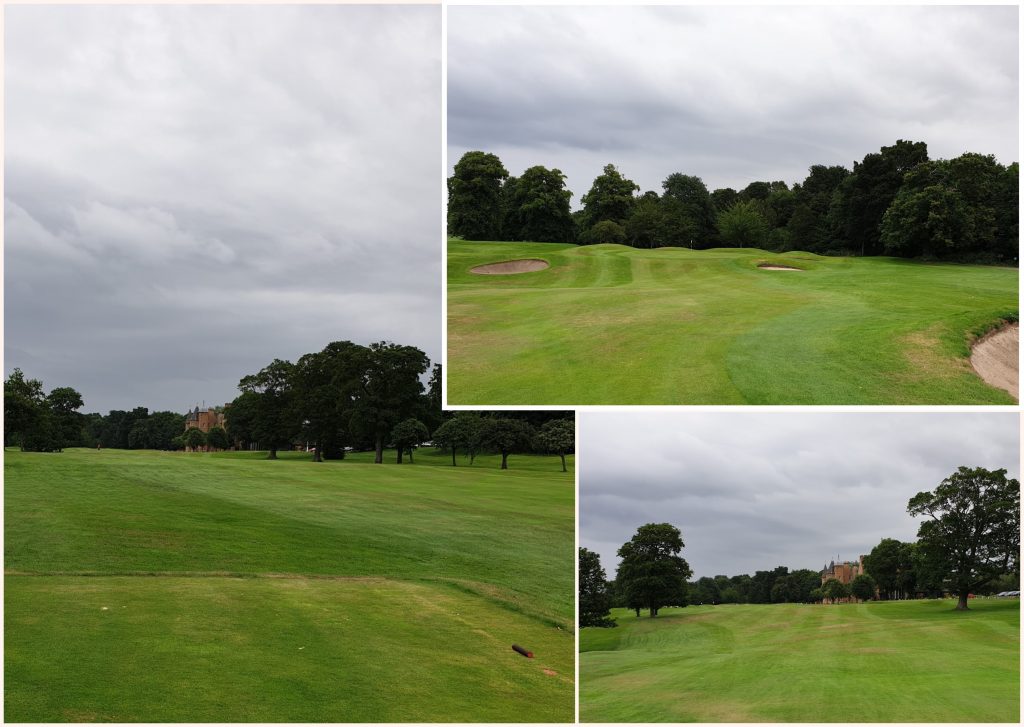
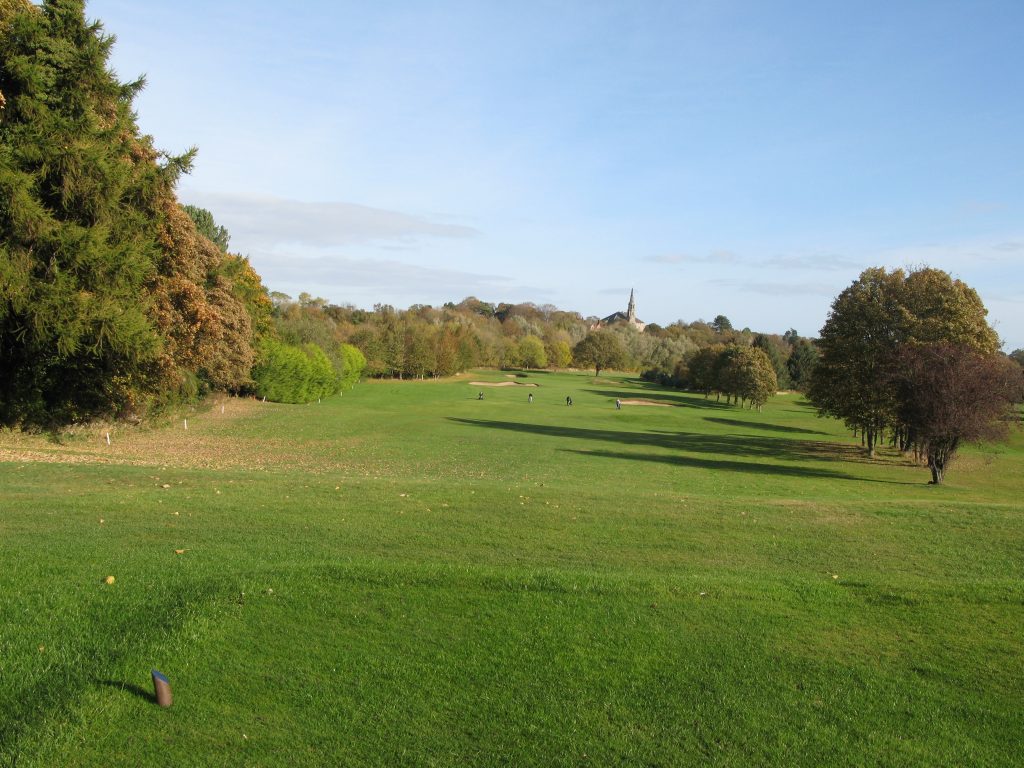
The par 4 third hole at Royal Musselburgh, a typical hole on this flat track.

Musselburgh is the largest of the towns in East Lothian, situated on the coast about 5 miles from Edinburgh and close to the start of the great North Berwick coastal run of courses which includes Muirfield. There are actually three ‘Musselburgh’ courses: ‘Musselburgh Links’, which is in Musselburgh and recognised by the Guinness Book of Records as the oldest course in the world; plain old ‘Musselburgh’, which is actually in Monktonhall; and ‘Royal Musselburgh’, the subject here, somewhat nearer to Prestonpans than Musselburgh! I blogged about Musselburgh here and Musselburgh Links here.

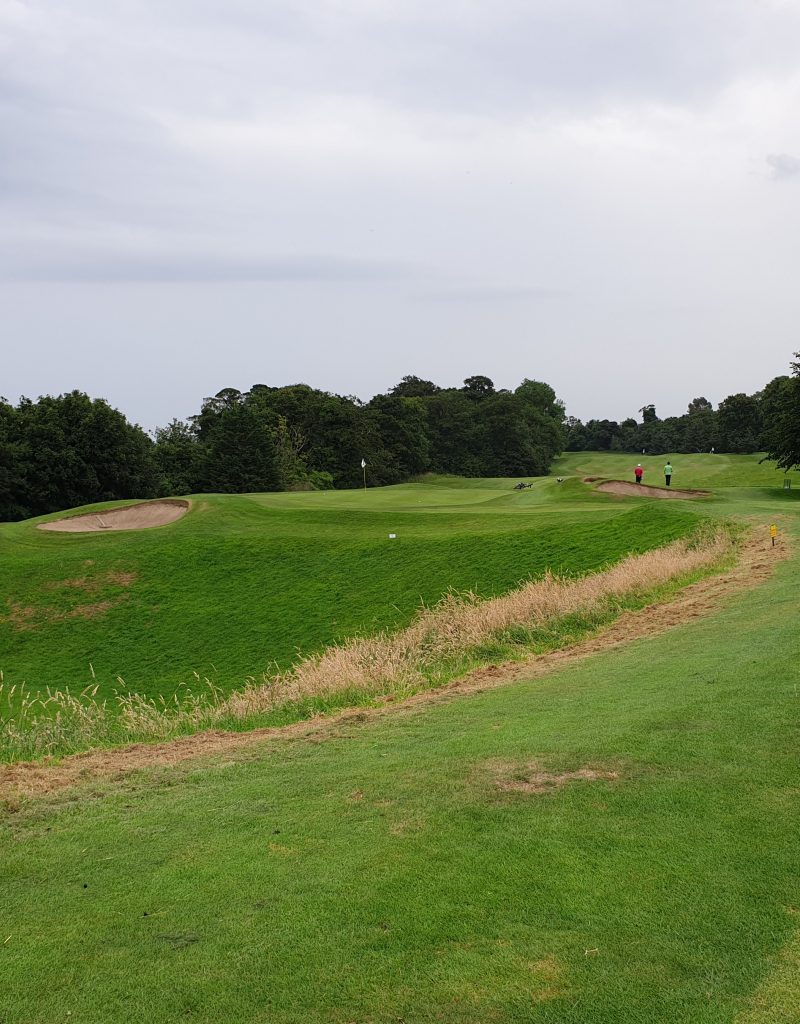
The 6th hole at Royal Musselburgh, one of only 3 par threes on the course.

Although only open since 1925, the course does owe its design to the great James Braid, albeit I couldn’t help thinking that the remit was to make a challenging, but not too challenging a course. It is set on ground leased from the Prestongrange Estate, and its clubhouse is within part of Prestongrange House, which is an impressive building from the outside. The fairways are quite wide and the rough under the trees was cut short allowing balls to be easily found. It’s not surprising that Royal Musselburgh is attractive to society or group visits.

The 14th,the shortest of the par 3s, where club selection is crucial at this, “The Gulley”, hole.

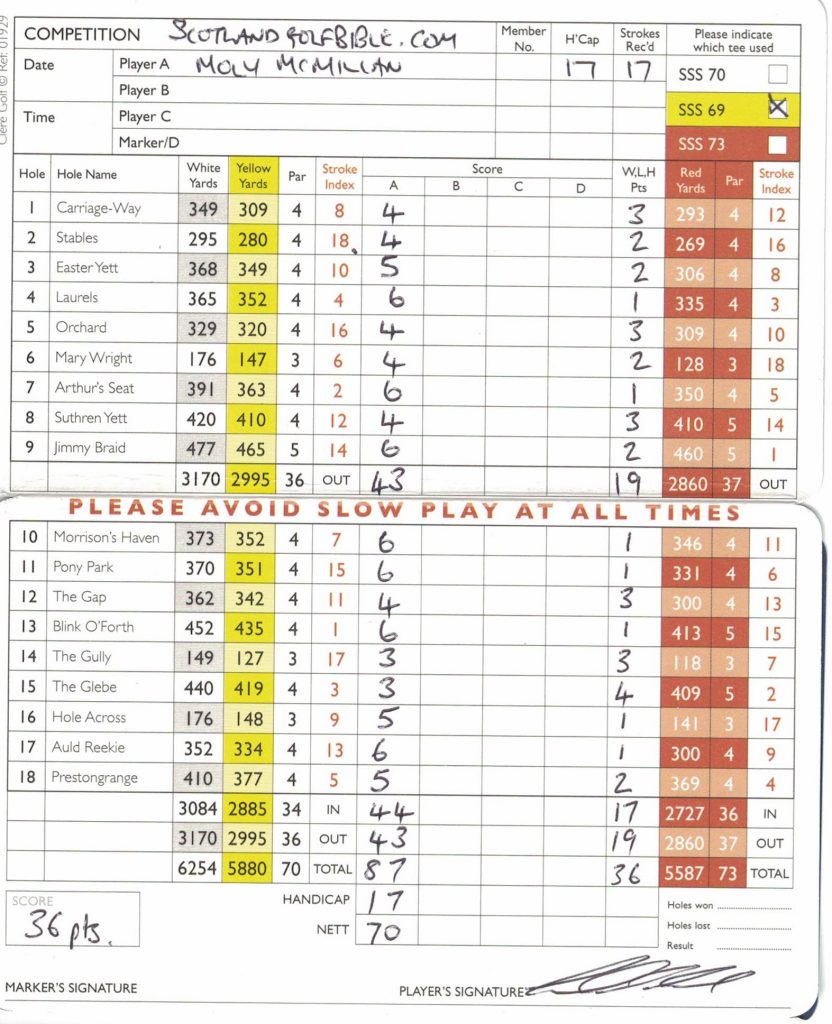
The course has only three par 3s and one par 5, and with several similar par 4s, it was a little repetitive, for my liking. It was though in very nice condition when I played and the greens were very true. I actually played the best of the season, scoring 87 for 36 points, including a birdie at the stoke index 3, par 4 15th hole, including hitting one of my longest drives for years – it was the first time I’d played with my new fitted driver and the technology has helped!

The tough 18th hole at Royal Musselburgh, with a well protected green, with views of Prestongrange House to the right of the hole.

My advice would be it’s a nice course to play if you can get a good discount, otherwise play the two other Musselburgh courses, which have much more to offer, by way of both history (The Links) and quality.

Facts:

Course Type: Parkland

Par 70 (1 par 5, 14 par 4s, 3 par 3s)

Distance: 5880

Moly’s Gross score87

Moly’s scorecard of 87, best score all year made possible by first new driver bought for years.

90. Musselburgh. 22 Oct 2018.

The highest ranked of the three Musselburgh courses even though the other two are more historically significant

Round  £60.   Par 71.  Value (out of 5) – 4

Musselburgh is the largest of the towns in East Lothian, situated on the coast about 5 miles from Edinburgh and close to the start of the great North Berwick coastal run of courses which includes Muirfield.

1st at Musselburgh, a very typically picturesque example of this courses holes

But to say you’re playing ‘Musselburgh’ doesn’t really clarify matters, nor indeed is saying you’re playing in Musselburgh. There are in fact three named ‘Musselburgh’ courses: ‘Musselburgh Links’, which is in Musselburgh and recognised by the Guinness Book of Records as the oldest course in the world; ‘Royal Musselburgh’, the regally appointed course somewhat nearer to Prestonpans than Musselburgh and; plain old ‘Musselburgh’, which is actually in Monktonhall. Confused?

Given that the two other Musselburgh courses enjoy either a pedigree as the oldest course in the world or has a ‘royal’ appendage, I suspect many people are surprised to learn that the course simply called ‘Musselburgh’ is the highest rated of the 3 in most compilations of Scotland’s courses.

The well bunkered short 3rd hole at Musselburgh

This Musselburgh course opened in 1938 having been designed by James Braid as “a championship” layout. Off the back tees it’s over 6800 years long, and hosts many regional standard competitions, and in the past has held regional Open qualifiers and the Final Qualifier as recently as 2013, such is the best measure of this course.

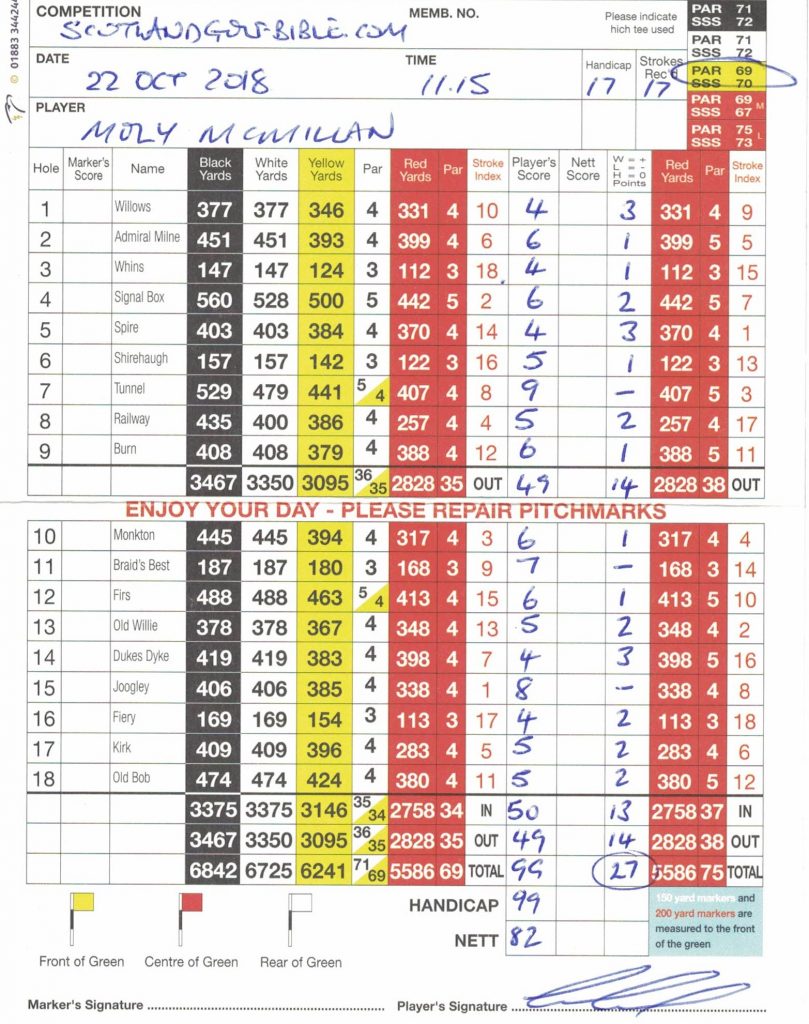
Off the yellow tees, Musselburgh is still over 6200 yards, and given the amount of breeze on the day I played, presented a very stiff challenge. I shot 99, but 3 lost balls accounted for my scoring only 27 stableford points. I drove the ball well, and the often generous fairways allowed for that. The course was in good condition, although it was let down by the poor maintenance of the teeing areas and readers of my other blogs will realise this is one of my common misgivings, especially with a green fee of £60.

The ‘hidden’ hazard behind the difficult par 4 15th hole at Musselburgh

Apparently, the golf course was laid out in open parkand, but visionary tree planting during the 1950s has transformed this into a mature parkland setting and I benefited from the late autumnal colour.

Fran drives at the inviting fairway on the 17th at Musselburgh

The greens were in great condition and very true to putt on, but you needed to be careful with the greenside bunkering, which I thought was the best feature of this nice layout. With the trees fully matured and the constant changes in direction, one needed to keep track of the wind direction.

My favourite holes were the short 3rd, the slight dog leg right 9th, which had a ditch which long drivers needed to be mindful of, and the tough par 4 15th where a water hazard lies at the back of the green which I found having hit my longest 7 iron of the season!

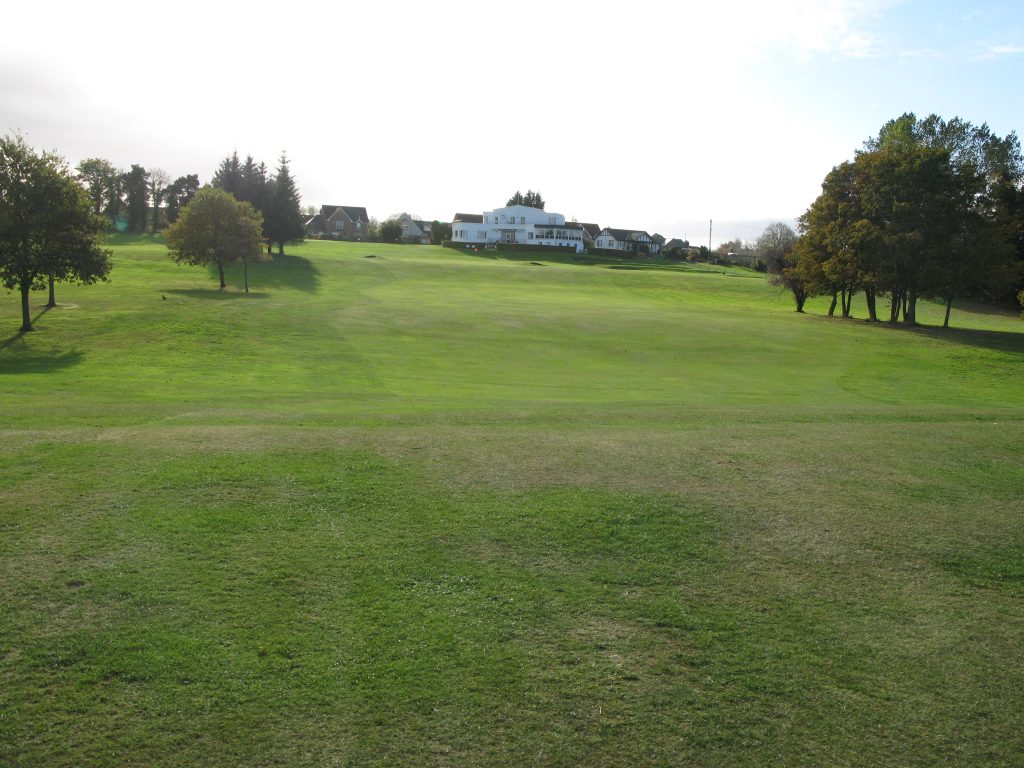
The last hole is a very long par 4 uphill to a welcoming clubhouse. Its worth mentioning the friendliness of the staff in the bar.

The brutish finishing uphill par 4 to the awaiting and impressive clubhouse at Musselburgh

Some Facts

Course Type: Parkland

Par 71 (3 par 5s, 11 par 4s, 4 par 3s)

Distance (yellow)   6241 yards

Moly’s Gross Score  99

Moly’s Musselburgh scorecard – 99 for 27 points
« Older posts Newer posts »

© 2026 Scotland Golf Bible

Theme by Anders NorenUp ↑