A guide to green fee value for money

Category: 1901 – 1945 (Page 7 of 14)

112. Lochmaben. 24 Sep 2020

A gem of a course where Robert the Bruce stole a castle!

Round £38. Par 70. Course Rating / Slope Rating (yellow) 68.4/126. Value (out of 5) – 4

Lochmaben golf course, founded in 1926, is set in a picturesque village of the same name in The Scottish Borders, on the A709 between Dumfries and Lockerbie. There is an interesting and long history of the area dating back to the 1300s and the story of Robert the Bruce.

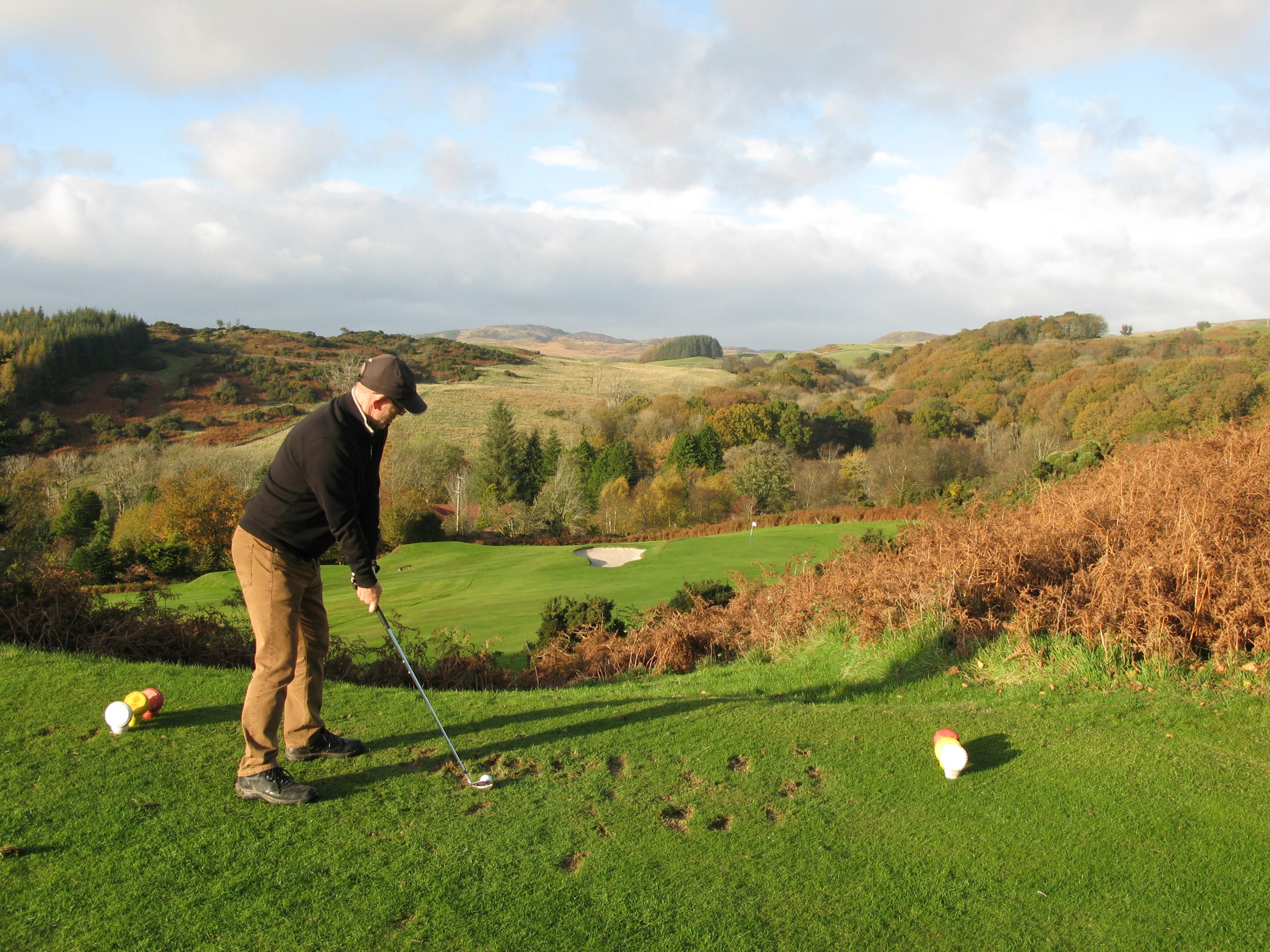
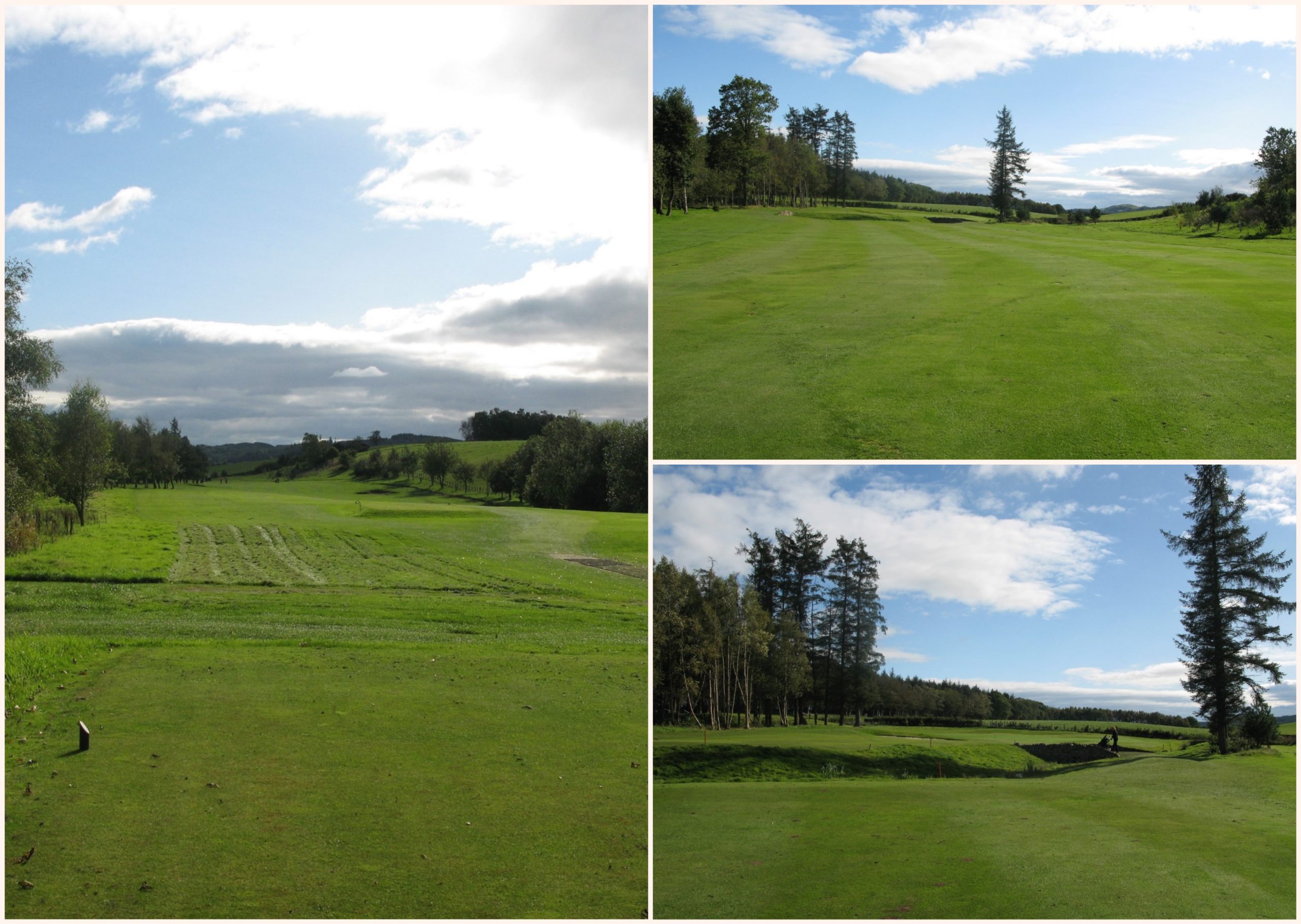
Bruce’s Motte – the wonderful par 3 second hole at Lochmaben – the toughest hole on this course according the Moly

Take a close look at the name of the second hole, ‘Bruce’s Motte’, and you realise you’re actually playing uphill to a plateau upon which Bruce built a fortification to stop intruders. It’s a very fitting name, as the golf hole, a par 3 of 185 yards, is the stroke index 2 hole; and that, on a course with several long par 4s, is a measure of the challenge. I always try to take heed of stroke indices before playing a hole, as often when a short hole is rated so difficult it deserves added attention. Take at least 2 or 3 clubs more to get up the incline and be satisfied with a bogie. I imagine many long term members have never birdied this very demanding hole.

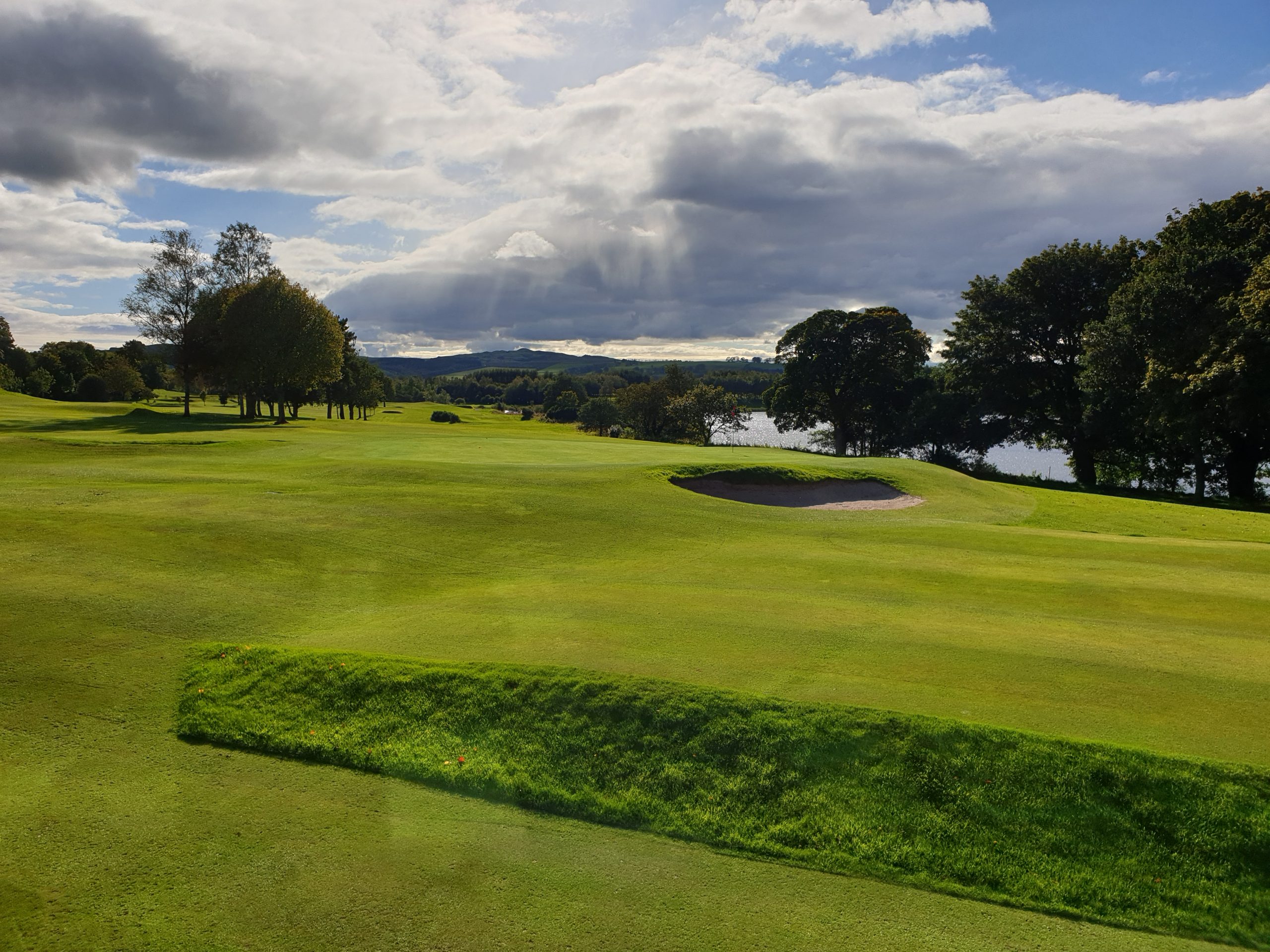
The signature par 3 eight hole, ‘Kirk Loch’ at Lochmaben – a delightful short hole

The course overall is an absolute joy. It’s set around Kirk Loch, one of 3 lochs in which the village of Lochmaben sits in the middle. Intriguingly, none of the 3 lochs are called Loch Maben? Castle Loch, the biggest of the 3, is the site of what was a more formidable castle and central to many of the battles between the Scots and the English in the area.

The 15th, a short par 5, a typical hole on this course; one of the added holes in 1995.

The original layout of the course was only 9 holes, laid out by James Braid, and occupied the majority of the holes on the east of the loch, with the course only extended to 18 in 1995. The lakeside holes, especially the short 8th, are characteristic of more modern design. Overall though, it really works as a ‘joined up’ 18, with some really great holes. Other than the 2nd, which I think is the most difficult, both the 10th and the 17th are challenging par 4’s both playing uphill and at 450 and 423 yards respectfully and are difficult to reach with 2 shots.

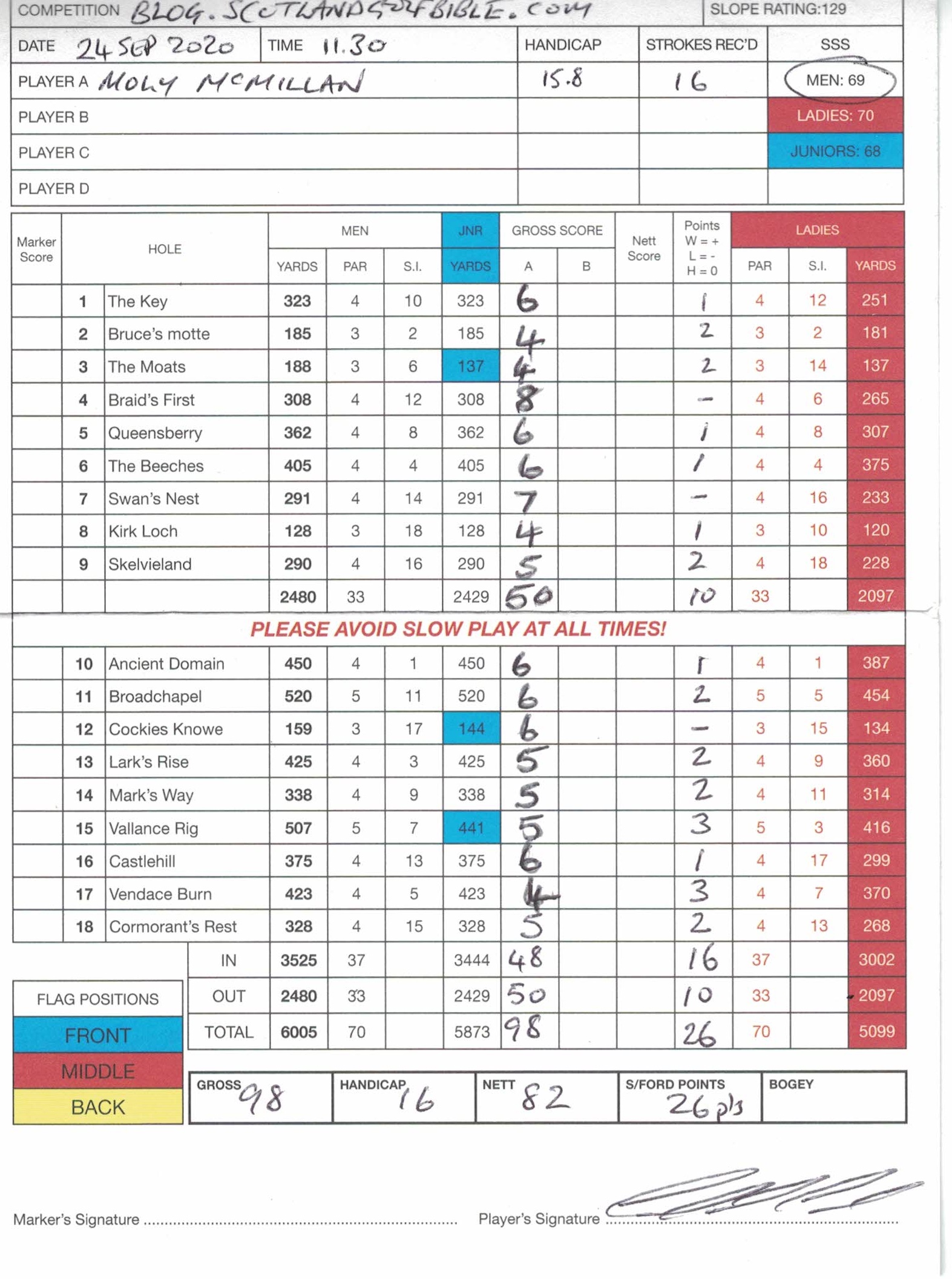
It was in great condition when I played. The fairways were good, the greens very true, and only the bunkers were needing attention, but that was likely due to the covid pandemic. I shot 98, and felt I played not bad. It was one of those courses where local knowledge has a bigger premium than usual, and I imagine the home advantage makes a bigger difference in club matches here.

The good finishing hole at Lochmaben (looking bach from the green), a relatively short (328 yards), but tight, par 4 finishing hole. A good matchplay finish.

It’s not an easy walk, so make sure the trolley batteries are fully charged, but its well worth playing Lochmaben.

Incidentally, Robert The Bruce apparently stole the castle from Edward 1, so the history books say!

Facts:

Course Type: Parkland

Par 70 (2 par 5, 12 par 4s, 4 par 3s)

Distance: 5873

Moly’s Gross score98

Moly’s Lochmaben scorecard – 98 – which felt hard fought for

111. Powfoot. 23 Sep 2020.

Great value James Braid course well worth playing

Round £50. Par 71. Course Rating / Slope Rating (yellow) 69.5/126. Value (out of 5) – 4.5

If I were to list 5 courses, of varying price points and quality, to encapsulate Scottish golf, Powfoot might fit the bill for ‘great course taken for granted’. It would never make the cut of the top 50 Scottish Courses, perhaps even the top 100 courses; however, in many ways, playing Powfoot at under £50, using the typical offers abounding, makes you realise what great value golf exists in Scotland.

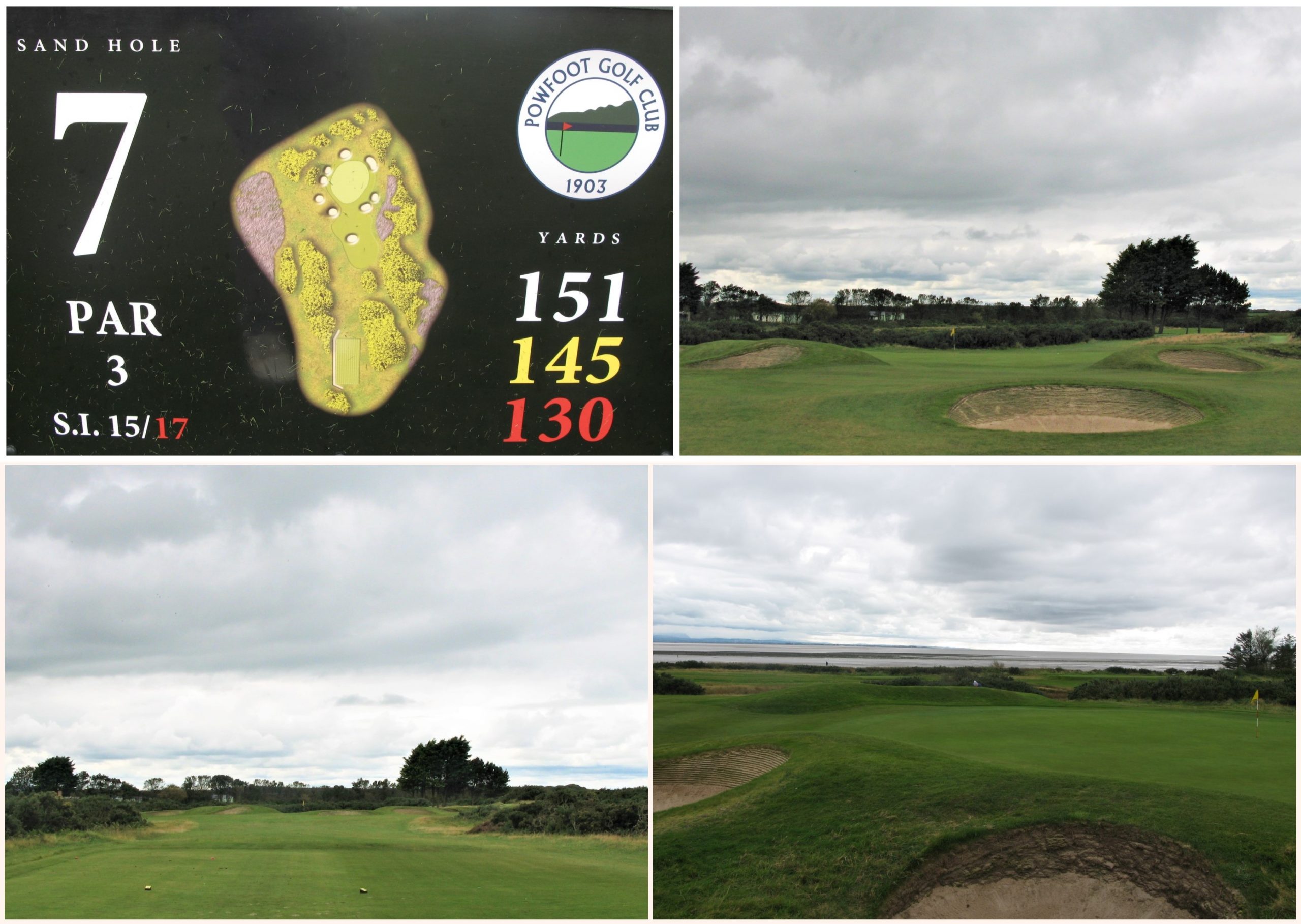
The brilliant par three 7th hole at Powfoot, with 9 greenside bunkers!

Powfoot, which takes the name from the village, sits on the north of the Solway Firth, in Dumfries & Galloway, not far from Annan. Overshadowed by the nearby Southerness course, I suspect a great many golfers bypass Powfoot – that would be a mistake in my opinion.

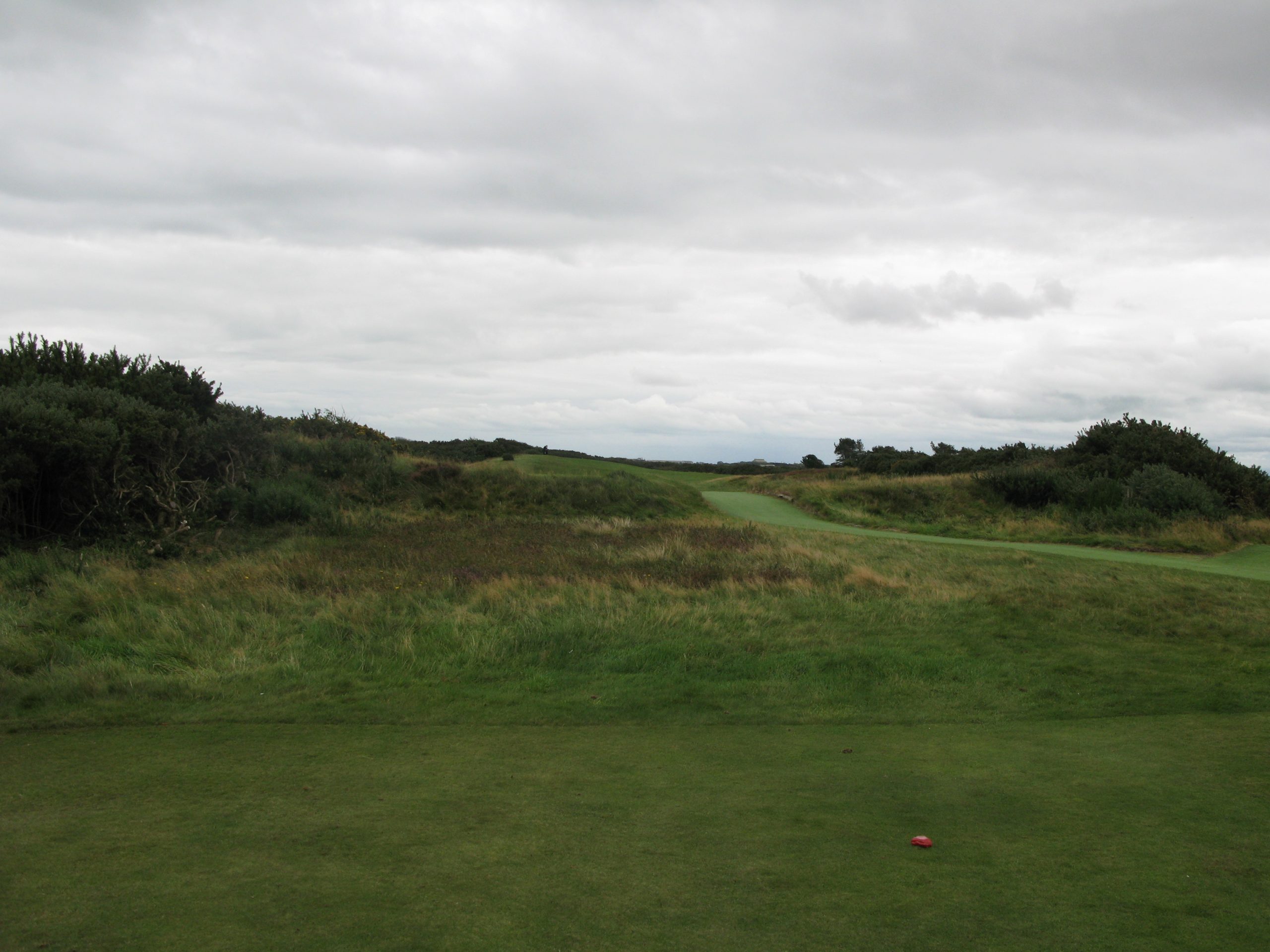
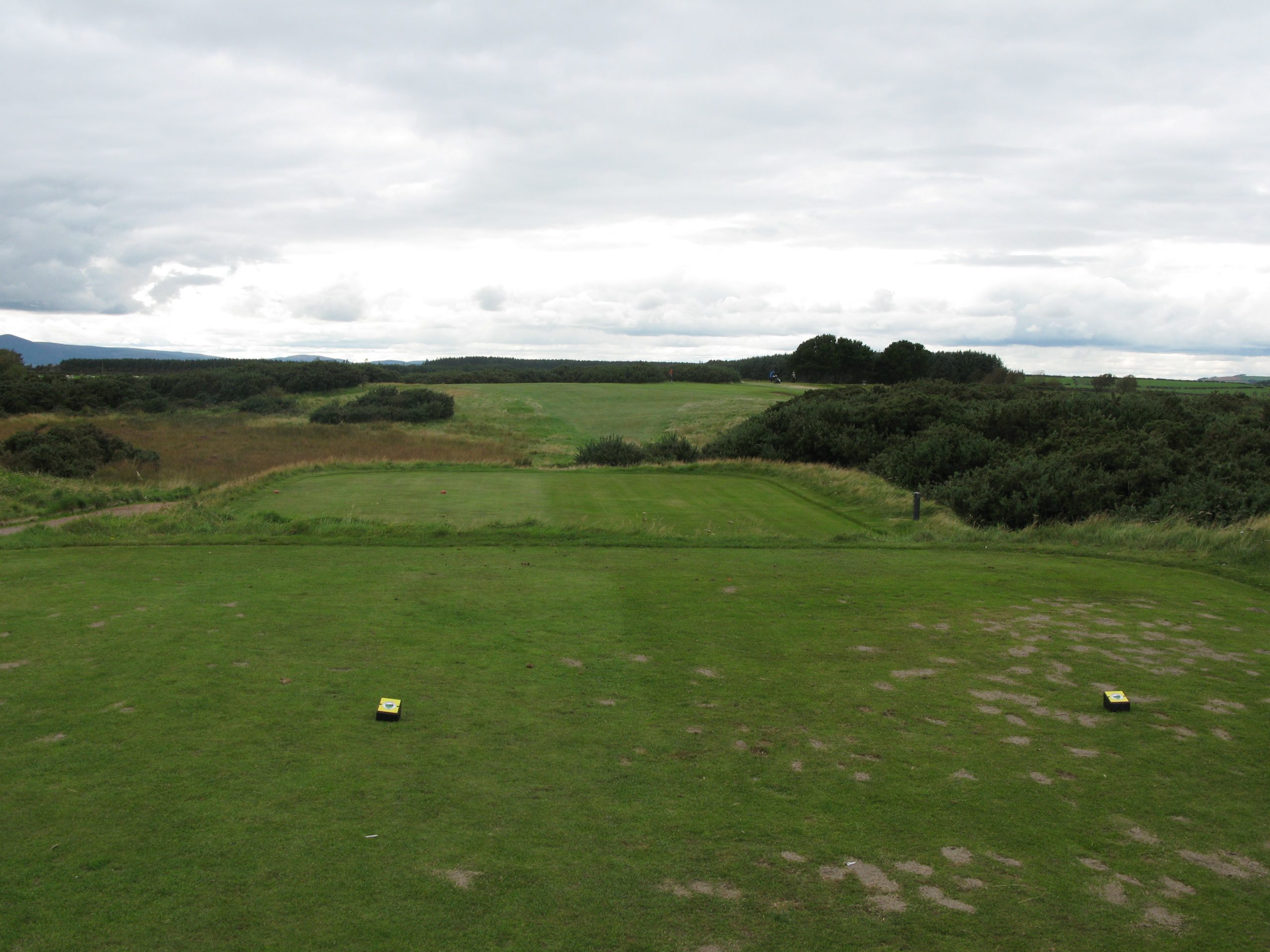
The blind tee shot at Powfoot’s tricky 8th hole, a tough and typical links hole.

Founded in 1903 with 9 holes, it was extended to 18 holes in 1911, then improved on by James Braid in 1923. At over 6200 yards from the white tees, it is a good challenge, especially I suspect when the wind gets up.

It plays and feels like a traditional links course; firm turf, good bunkering, aesthetically framed holes and greens, surrounded by thick gorse bushes. However, the last few holes are really parkland holes, with more trees bordering and sheltering the holes and on arable land.

The well framed 12th hole, a devilish par 3, showing the gorse that abounds on this course. Pay short to be safe. I didn’t and the wheels came off, with a quadruple bogie:(

Dominated by a range of good par 4s (13 of them), there are only 2 par 5s and 3 par 3s. There are quite a few memorable holes. The stroke index par 4 third hole is the first great hole; called ‘shore’ it plays south towards the firth and would be very difficult to reach in 2 shots when the prevailing south westerly wind blows. The seventh is a short par 3 that has nine greenside bunkers – aim for dead centre of the green here. The 8th, a tough par 4, has a blind tee shot and a sloping green that could be approached using the full array of links shots. Likewise the short par four 11th hole demands respect where shots need to be played cautiously to avoid being wrong sided on the right of the fairway and green.

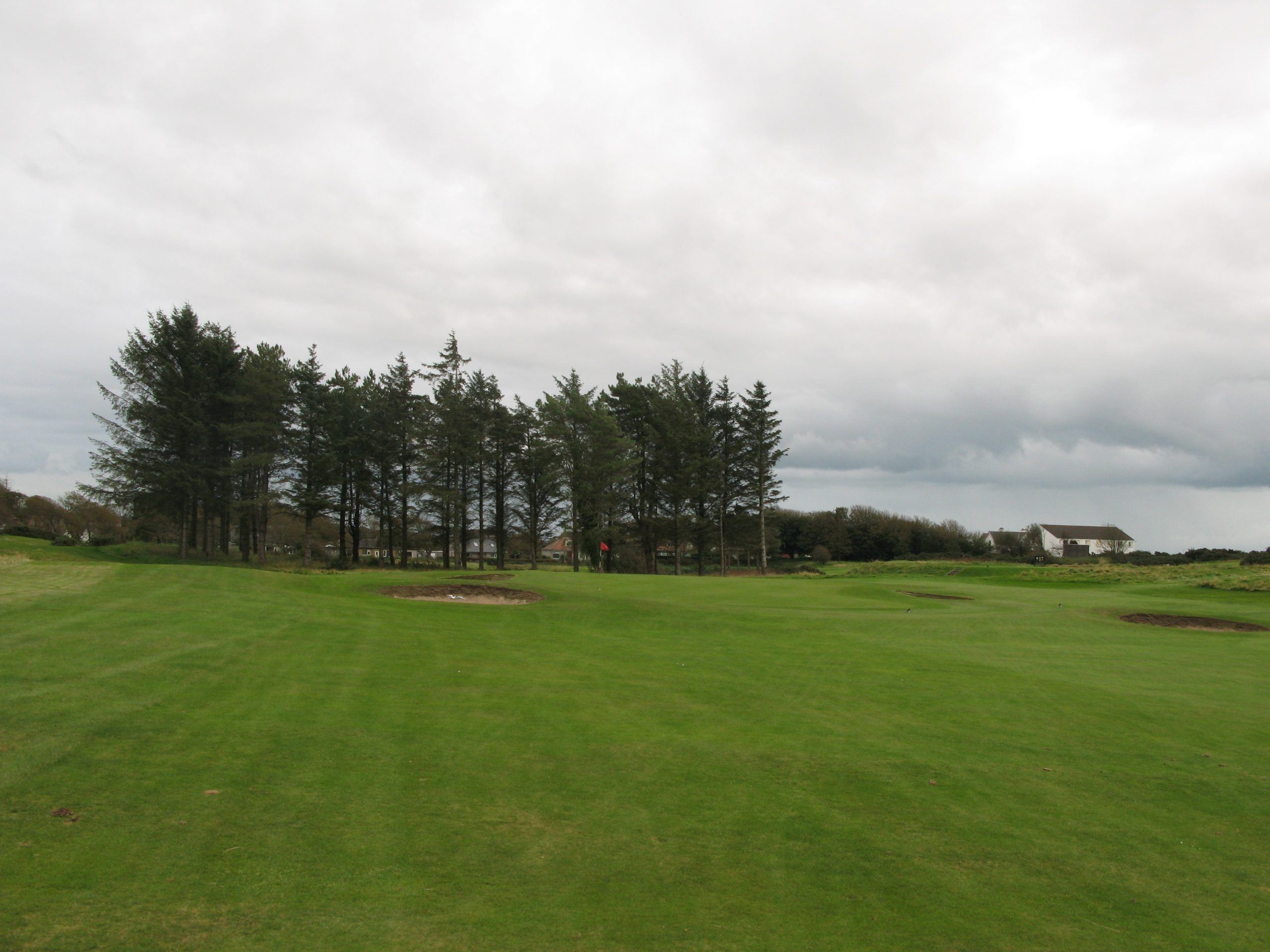
The 17th green, with the copse in the background, on the parkland part of the course.

Despite being in the pandemic the green keepers had presented the course in excellent condition when I played. The bunkers were particularly good and well maintained.

The golfing gods decided to give me a reminder on the cruelty of the game. Playing incredibly well, I was level par for the front 9 and only 1 over after 11 holes. I then played the last 7 holes in 13 over par! Ouch! Nevertheless, it was only the second time in my life I had been level par after 9 holes on a ‘proper’ golf course!

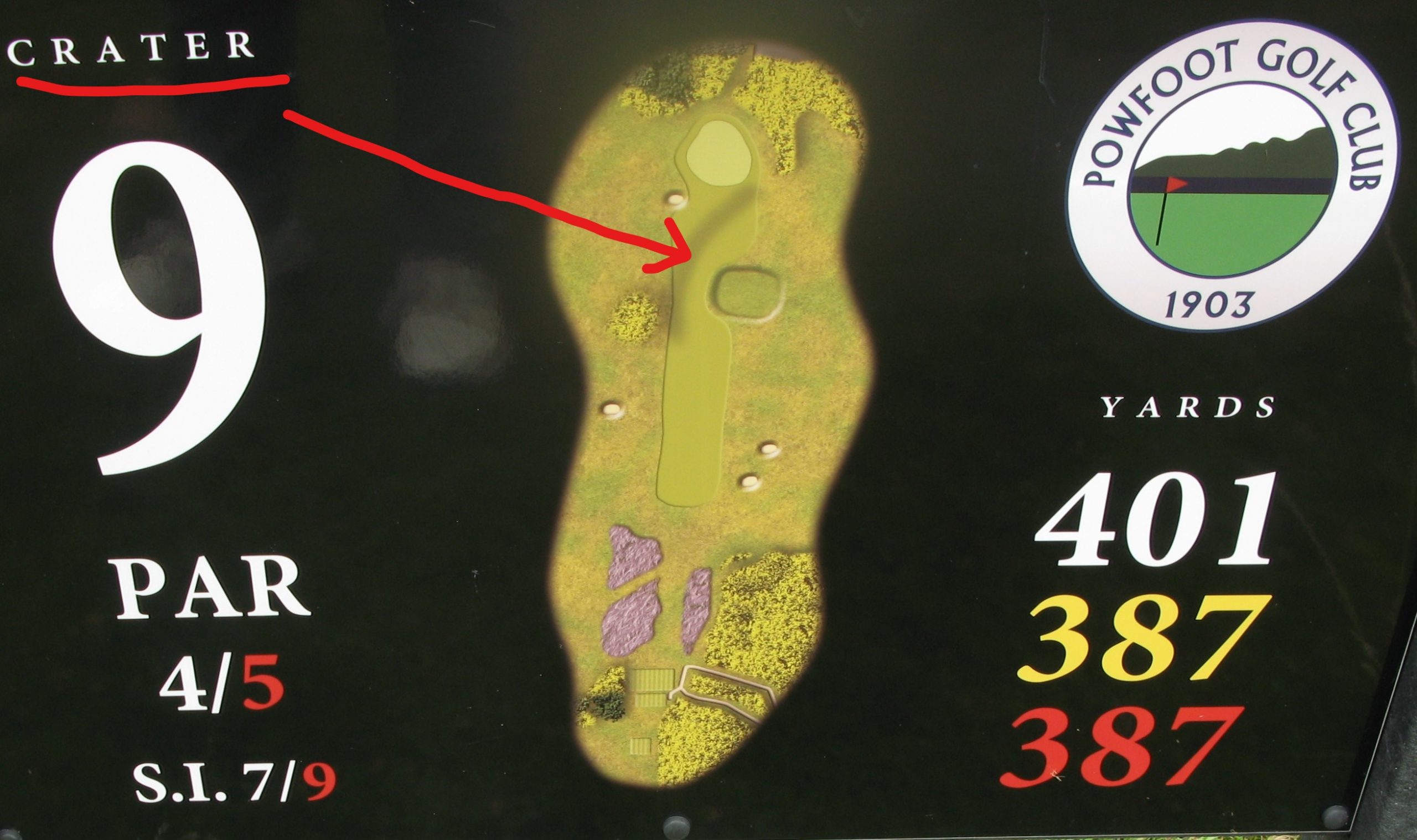
WWII created an unusual hazard at the 9th – with the course guide showing the crater made by a German bomb.

Go out of your way to play Powfoot, highly recommended

Facts:

Course Type: Links

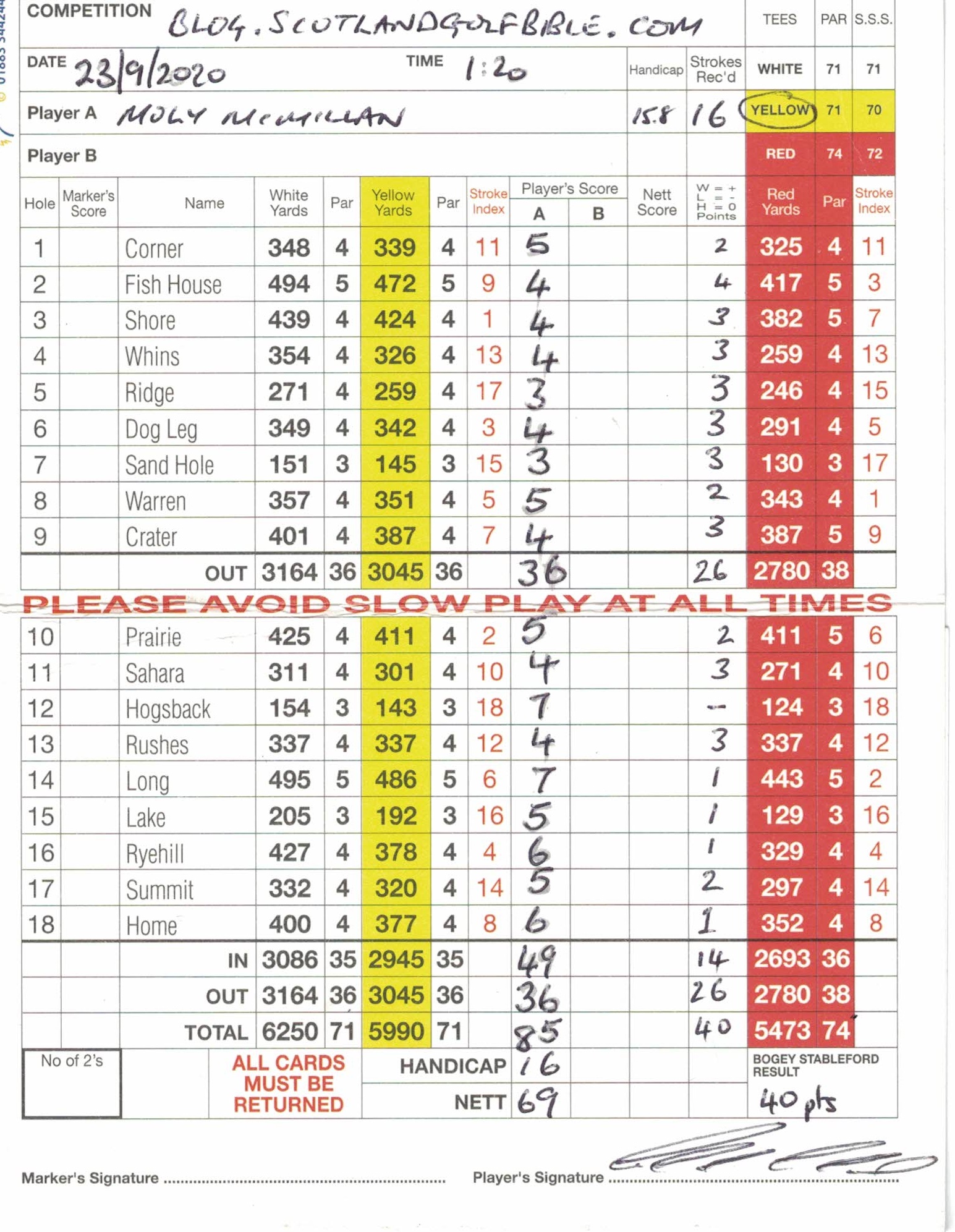
Par 71 (2 par 5, 13 par 4s, 3 par 3s)

Distance: 5990

Moly’s Gross score85

The cruel game of golf – level par front 9, 14 over on back 9.

110. Machrie Bay. 21 Sep 2020.

Don’t make the same mistake as Walter Hagen – this is not worth playing

Round £15. Par 33. Slope (yellow) 100. Value (out of 5) – 1

Machrie Bay, is on the west of the island of Arran, not far from the majestic Shiskine. What a big disappointment – unless you’re chalking up all the courses on Arran, I would give this nine hole course a miss. At £15 for nine holes, this was very poor value when compared with the similar prices on offer on the island.

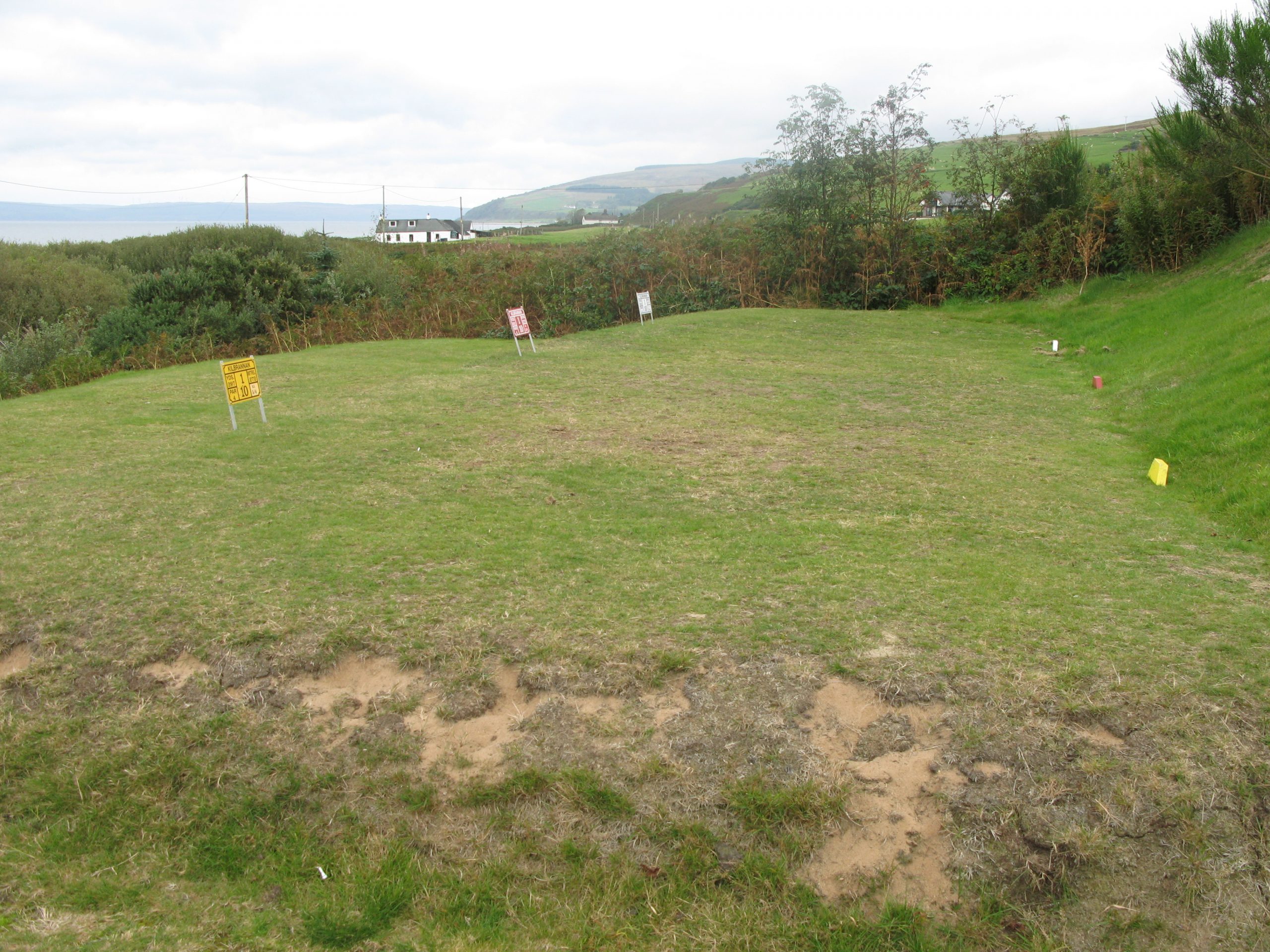
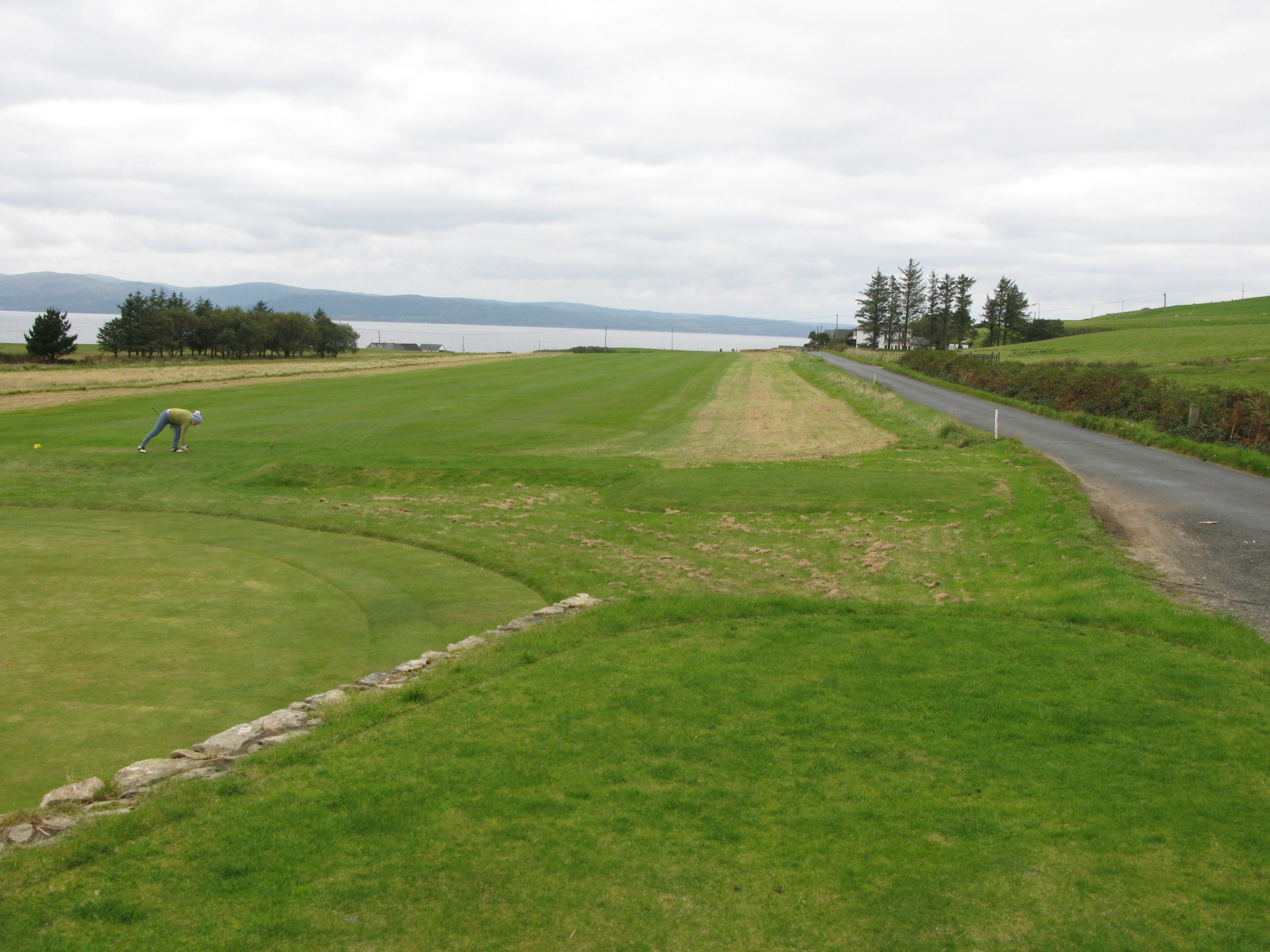
The very poor first tee at Machrie Bay, not an impressive start.

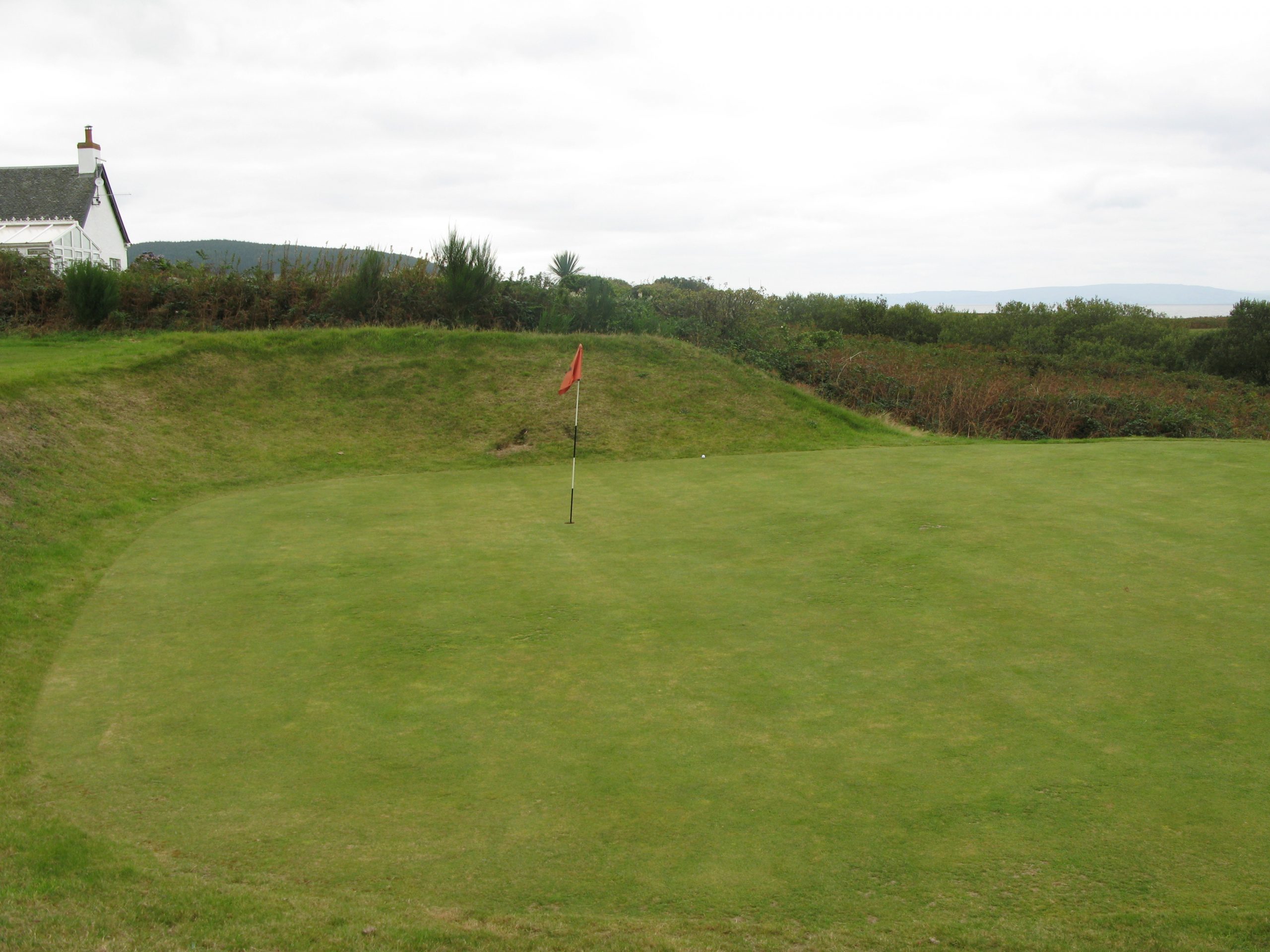
The world was in the middle of the Covid Pandemic when I played, but in looking closely at the poor course condition it was clear that the pandemic was not the reason – the course was suffering years of neglect. The teeing grounds were bad and many of the greens were covered in moss.

The moss covered 1st green at Machrie Bay.

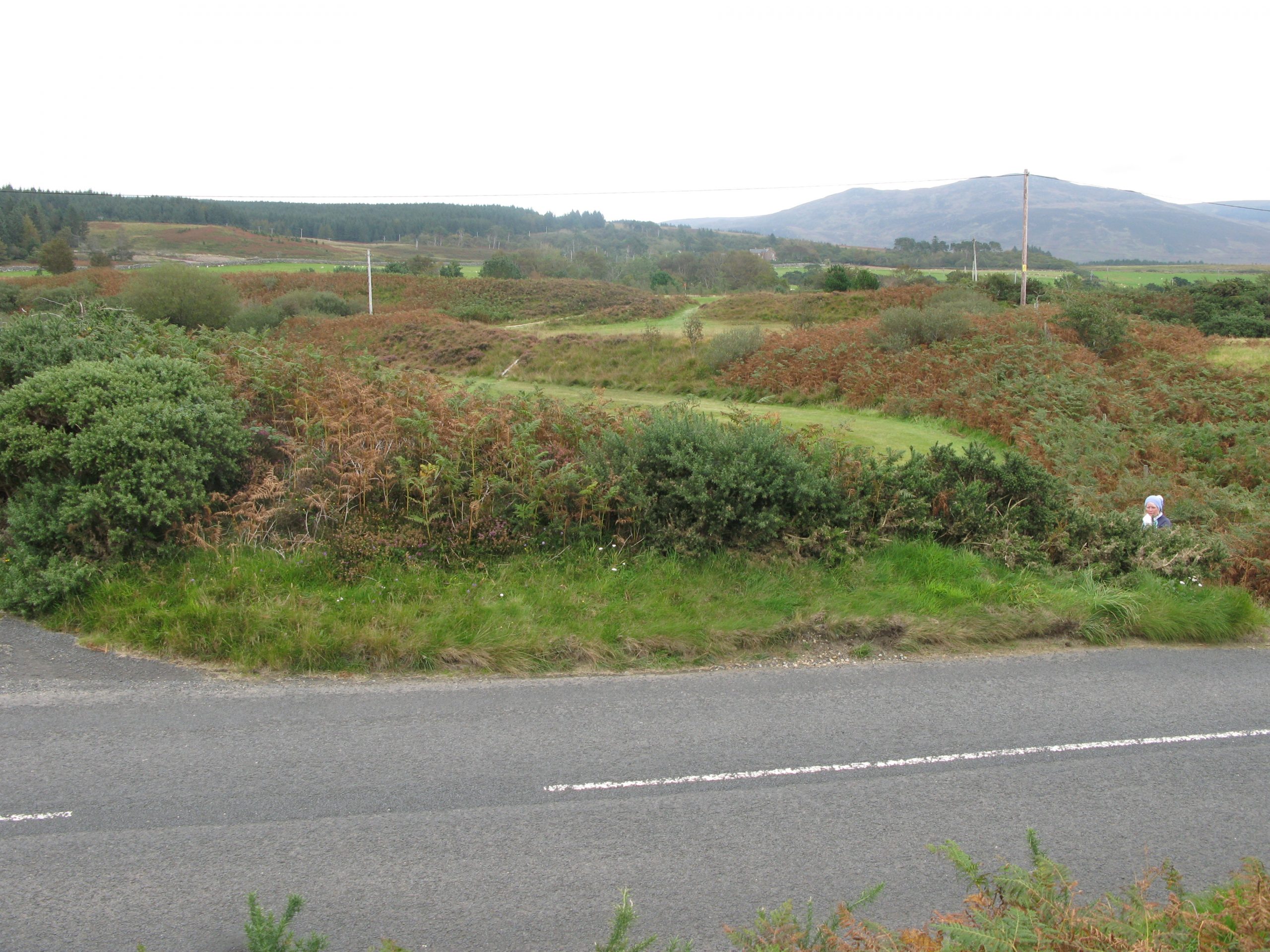
There’s not much to say about the course. It had many very plain holes, little more than fields with a tee at one end and a green at the other. It did have 2 holes worth noting, both which play over the road that circles the island. The 2nd, played from the white tees was a difficult par 3, and the 9th hole, a fairly short par 4, with a very dangerous blind second shot over the road, for which distance control is critical – I played a good shot and never found my ball again!

The tough par 3 second hole at Machrie Bay – pictured from the white tee.

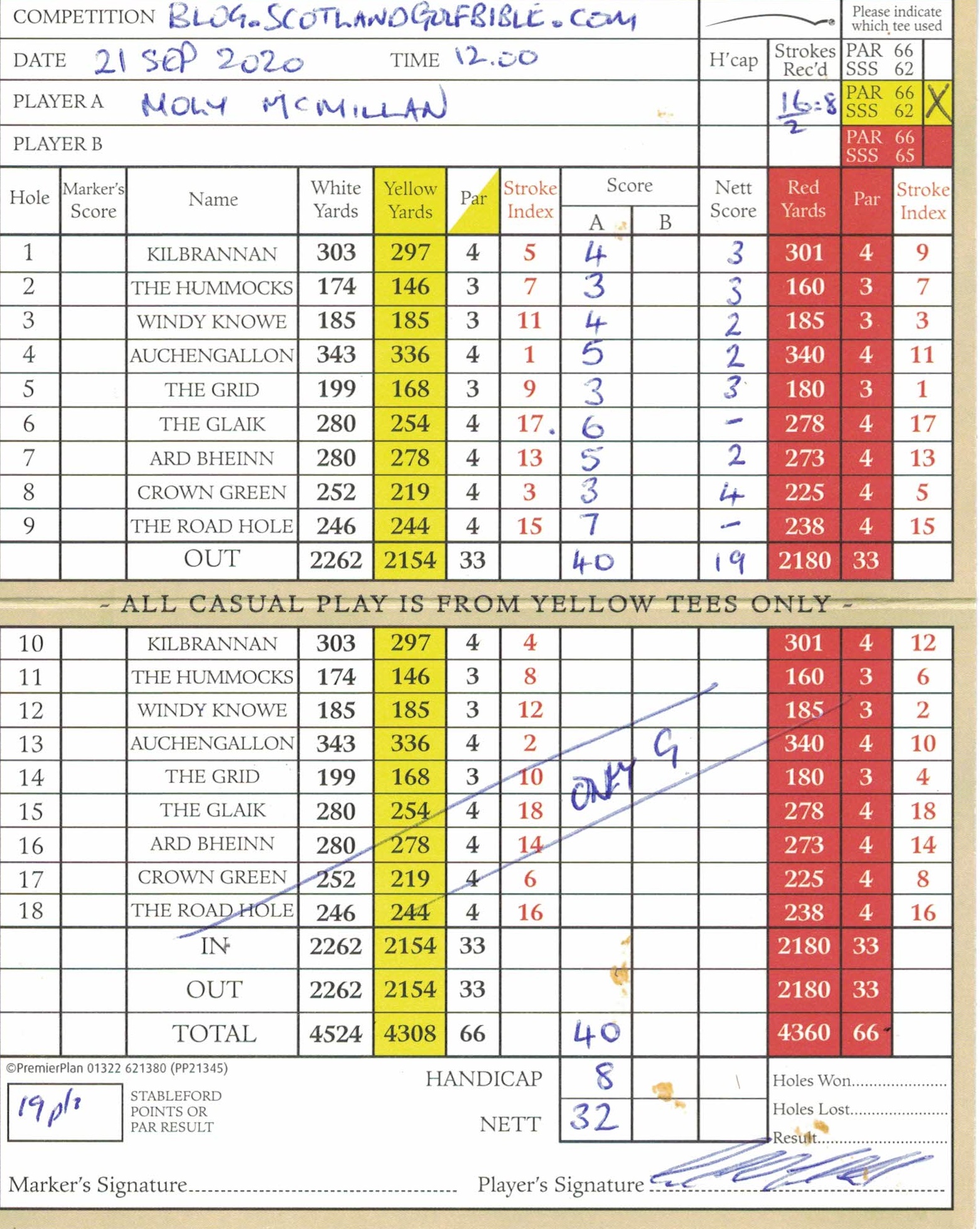
On the day I struck the ball well and scored 40, for 19 stableford points.

The par four 6th hole – the typical bland hole at Machrie Bay

Finally to Walter Hagen. There is a delightful newspaper clipping on the Machrie Bay website here. Enticed to play “The Machrie” course, a beautiful course on Islay, Hagen turned up in Arran to play Machrie Bay. Don’t make the same mistake – but then again doing something the same as Hagen might not be too bad!

Facts:

Course Type: Parkland

Par 33 (0 par 5, 6 par 4s, 3 par 3s)

Distance: 2154

Moly’s Gross score40

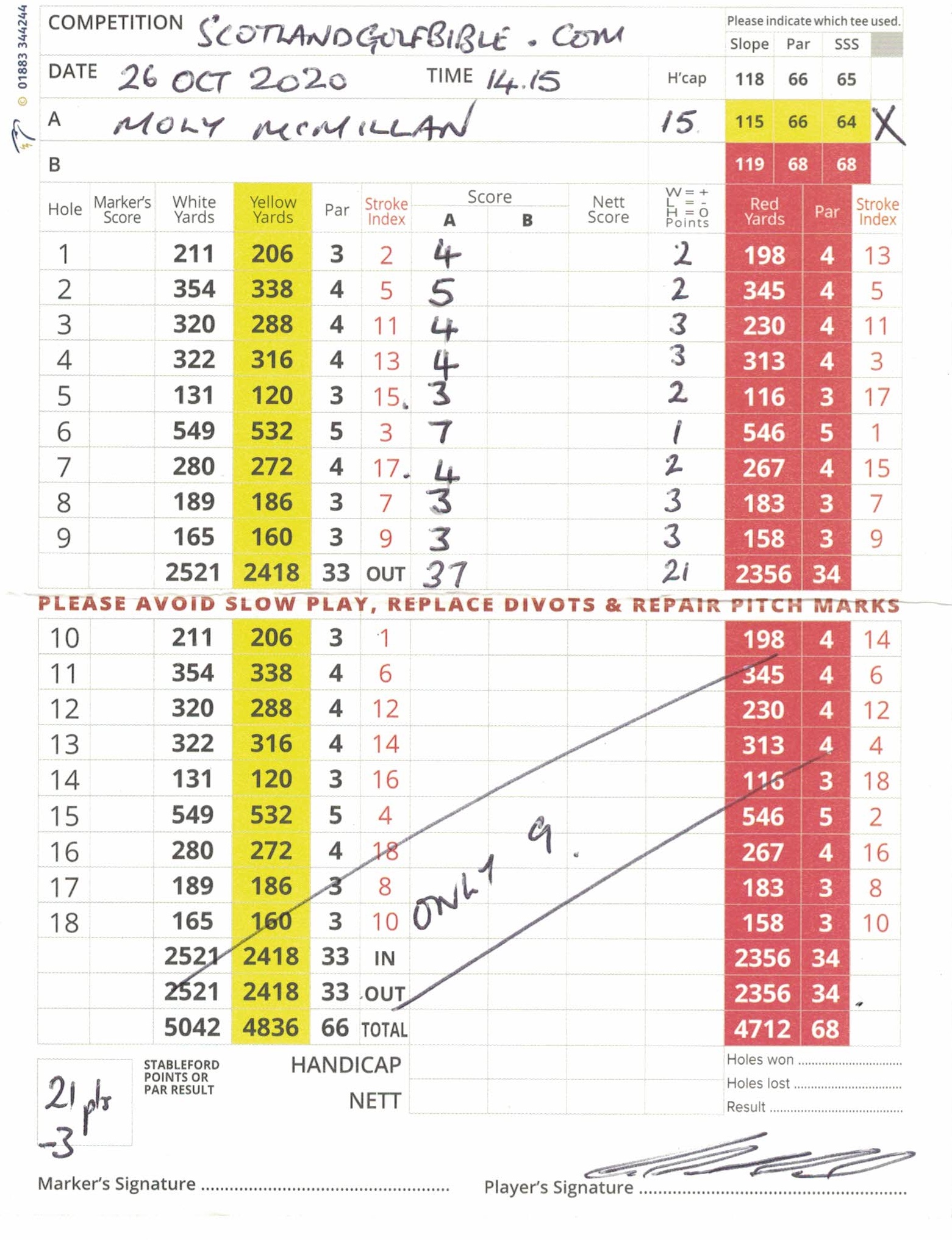
Moly’s Machrie Bay scorecard – gross 40, with triple bogie at the last

103. Colvend. 13th Sep 2020.

A favorite course of The Times’ sports photographers Marc Aspland and Bradley Ormesher

Round £25. Par 69. Value (out of 5) – 3.5

They say you should never meet your heroes. After reading an article in The Times (25th Aug 2020) about Colvend golf course by the sports photographers Marc Aspland and Bradley Ormesher, I felt obliged to seek out the course whilst in the south west of Scotland on a golf trip a couple of weeks later. Marc and Bradley had written so lovingly about a place that was clearly deep in their hearts, to the extent that the “third hole at Colvend remains my favorite place”, even when compared with Open venues. Really?

Moly (top) replicates the photo of Marc Aspland (bottom) at the third hole “Solway View” that appeared in The Times article on 25 th Aug 2020.

Colvend golf course has 9 holes either side of the A710, the road which skirts the northern coast of the Solway Firth, from Dumfries and Dalbeattie. The course was established in 1905 with the 9 holes on the coastal side of the road, designed by Willie Fernie (Ailsa course at Turnberry) and the 9 inland holes were added in 2005 by Dave Thomas (Belfry, Spey Valley).

13th hole at Colvend, easily the stroke index 1 hole, and a clearly modern parkland design which could be picked up from the Belfry. Plan your way to a bogie and move on quick!

Although on the coast, this is very much a parkland layout, with great views on a couple of holes across the Solway Firth to the Lake District.

Looking at the card, you’ll see the difference in length between the original holes and the ones later laid out by Thomas – the par 4 18th at 266 yards, was the original 9th hole. There’s also significant architectural differences as well, with the coastal holes being very naturally laid out, and the inland holes being clearly “designed”, no more so than at the 13th, the clear stroke index 1 hole.

There are some neat challenges as well. The par three 8th has a hidden burn in front so take enough club, but with danger behind the green as well, I imagine this being a “lay-up par 3” for many of the members.

The dangerous 8th green, take at least 1 extra club to avoid the water in front, which is obscured from the tee.

The par-4 dogleg 18th is a clever hole. Only 266 yards long, I imagine the longer hitters see this as a risk reward hole, trying to drive the green. But the green has a burn in front and very large trees obscuring the approach, mean you need to be well back to get over easily. With no wind it’s probably something like 7 iron, then wedge to the green. Very strategic, and to be fair to Dave Thomas, it has the feel of the 10th at the Belfry.

Keep left on the 4th, with plenty of room to chip and putt. One of the original naturally designed holes.

The course was in decent, but not great, condition when I played, but to be fair we had only recently come out of the first prolonged covid-19 lockdown so everyone was just grateful to be out of the house. The greens had become quite mossy.

The 18th green at Colvend with treacherous burn awaiting to spoil a good round

Few things to be aware of. This is not an easy walk as the amount of buggies for hire in the car park attested to, so is not necessarily an occasional holiday golf game venue; the steep uphill first being one of several inclines to navigate. There was also a need for better signposting between the 16th green and the 17th tee, which left Fran and I lost for a few minutes.

The aptly named “Roon the Bend” 17th hole, which is difficult to find, the clue is its part of the 12th tee, but you can’t see that as you walk onto the “17th” tee.

Despite high winds I scored very well breaking my handicap with a steady round. I did walk off though a little perplexed at how “rose tinted” The Times article had been – it was a nice course, but sometimes over-marketing isn’t actually good business as it can just lead to disappointment. Perhaps it needed a clearer day for those views.

Worth playing.

Facts:

Course Type: Coastal/Parkland

Par 69 (1 par 5, 13 par 4s, 5 par 3s)

Distance: 5036

Moly’s Gross score83

Colvend Scorecard – 83 in high winds a great day out, level against SSS of 67
« Older posts Newer posts »

© 2026 Scotland Golf Bible

Theme by Anders NorenUp ↑