A guide to green fee value for money

Category: 1851 – 1900 (Page 7 of 14)

105. Shiskine. 15th Sep 2020

One explanation makes sense – this is perhaps God’s home course.

Round £26 (12 holes). Par 42. Value (out of 5) – 5

Shiskine is probably the greatest 12 hole golf course in the world, but that hardly does the course justice.

The Isle of Arran sits off the North Ayrshire coast, accessible all year round by regular ferry crossings from the Port of Ardrossan or, during Summer, from the Kintyre peninsular.
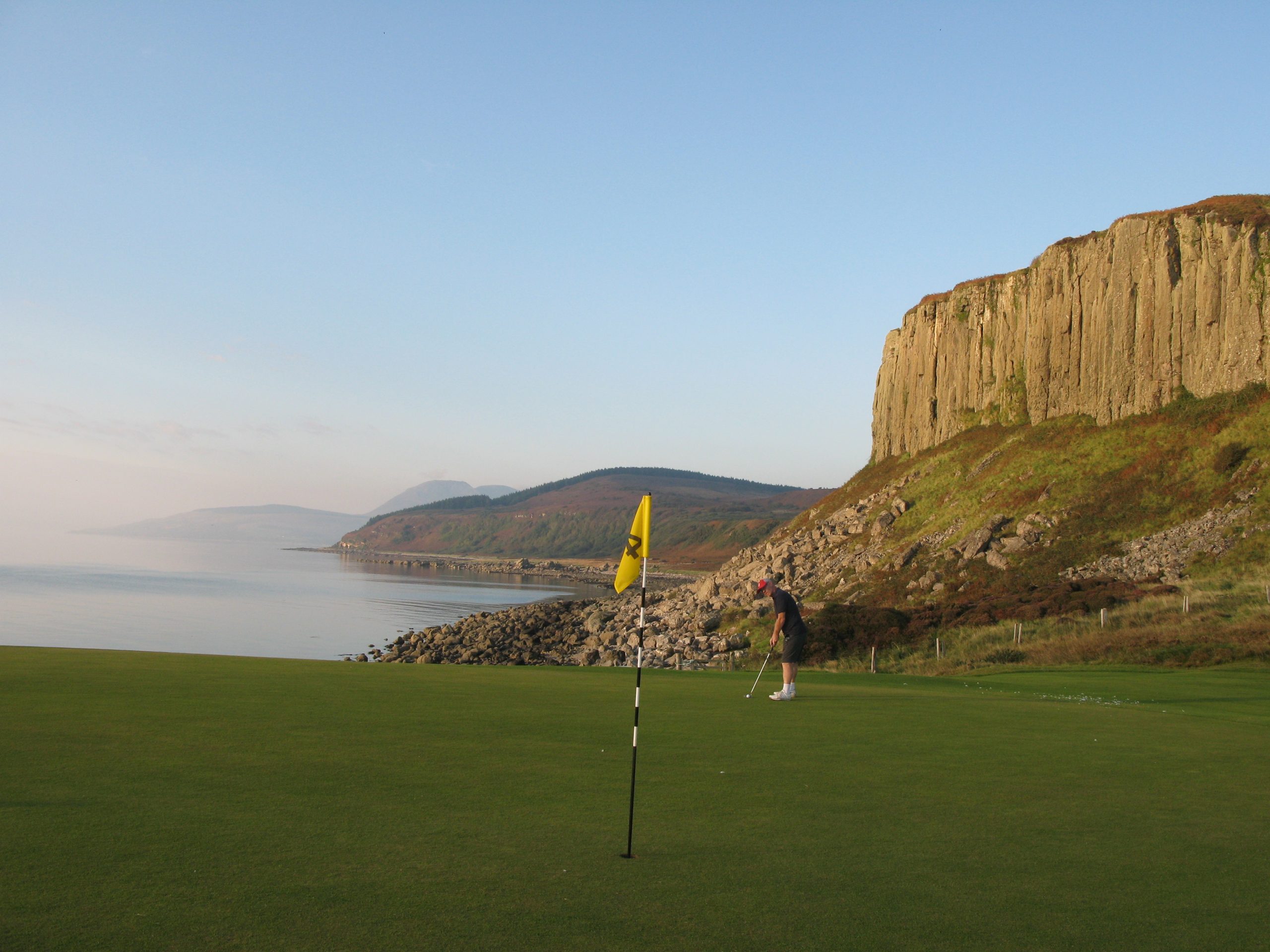
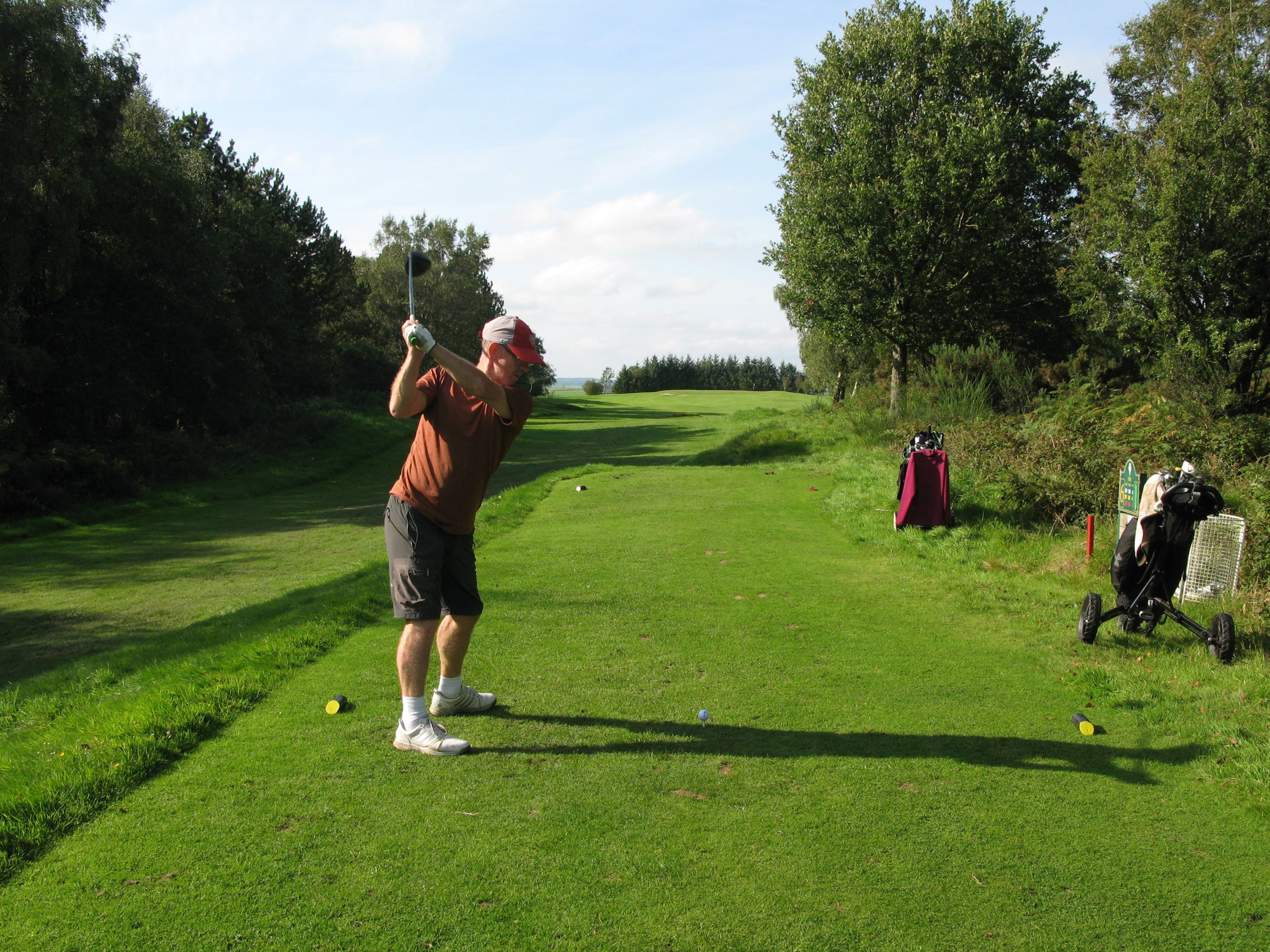
Moly putting for birdie at the 4th “The Shelf” hole at Shiskine, in benign conditions.

Several areas of Scotland self proclaim the title of best destination for golf, with the East Neuk of Fife and the North Berwick coastline being the headline events. But when it comes to the best value destination for golf (worldwide?) Arran sits comfortably at the top of any list – in my humble opinion. This island of 432km2 has a population of 5,000, with a majority of the people working in the hospitality sector. Arran has 7 golf courses, which all sit on the periphery of the island and are easily accessed; none of them has a weekly green fee greater than £30. With many hotels, B&Bs and campsites, Arran is a must visit golfing destination.

Shiskine, set on the west of the island, is the jewel in Arran’s crown.
The par 3 ‘Craws Nest’, 3rd, with views over the beautiful Shiskine layout.

It is said you should never meet your heroes as it can be so disappointing. It was with a similar sentiment I embarked for Arran with nightmares about losing all my balls into the sea from Shiskine’s formidable first tee. Such was my desperation to play that immediately after pitching our caravan and with pristinely tranquil conditions, I psychologically ran to the course to grab a twilight round at only £21. Without a pre-shot routine, and with a vice like will to keep my head over the ball, I drove a low running drive over 200 yards up the fairway – hallelujah! Entering a trance like state, I then proceeded to play the 12 holes in 47, or 5 over par – not quite the best round of my life, but I cannot remember smiling so much to myself during a round of golf.
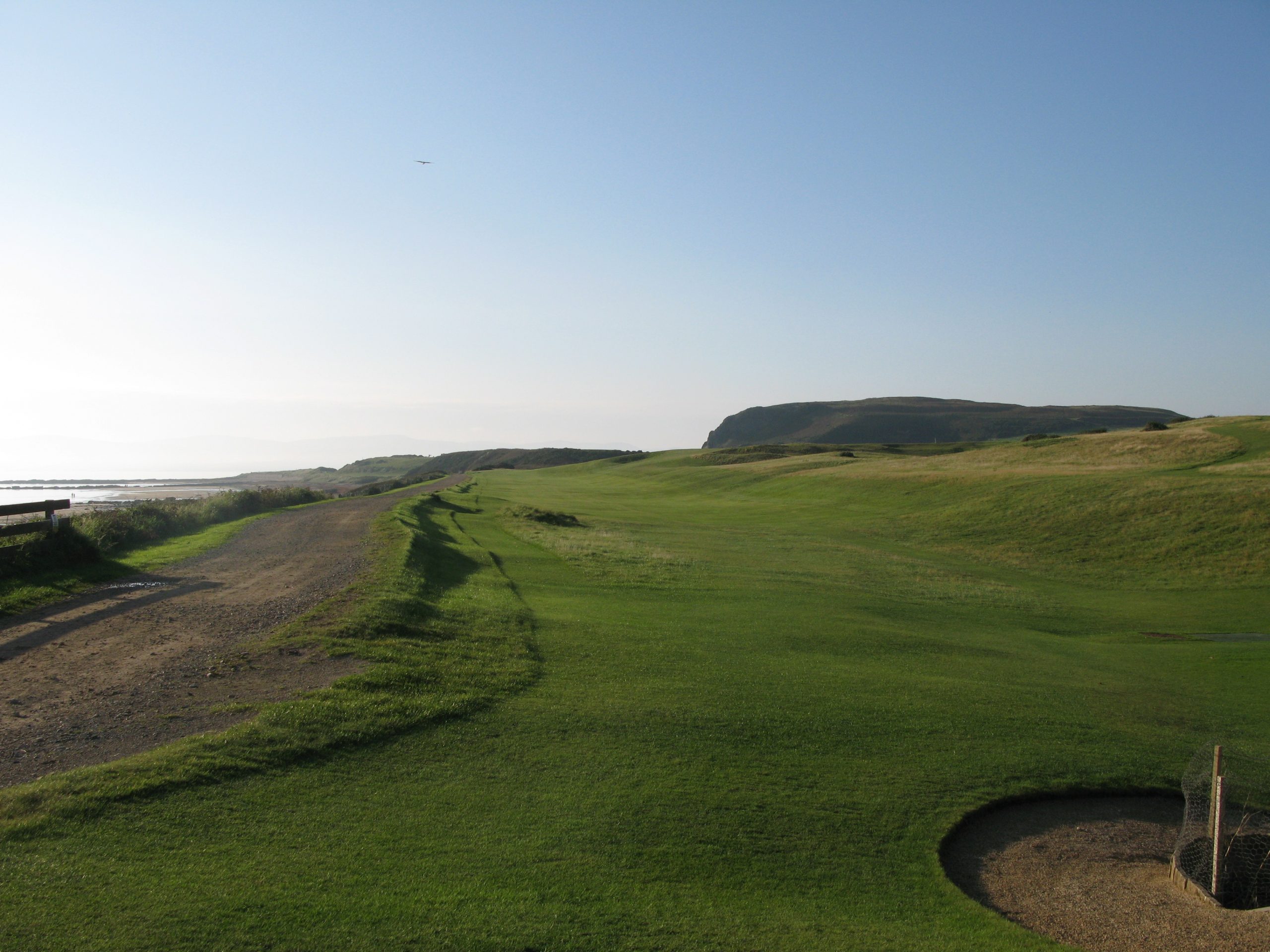
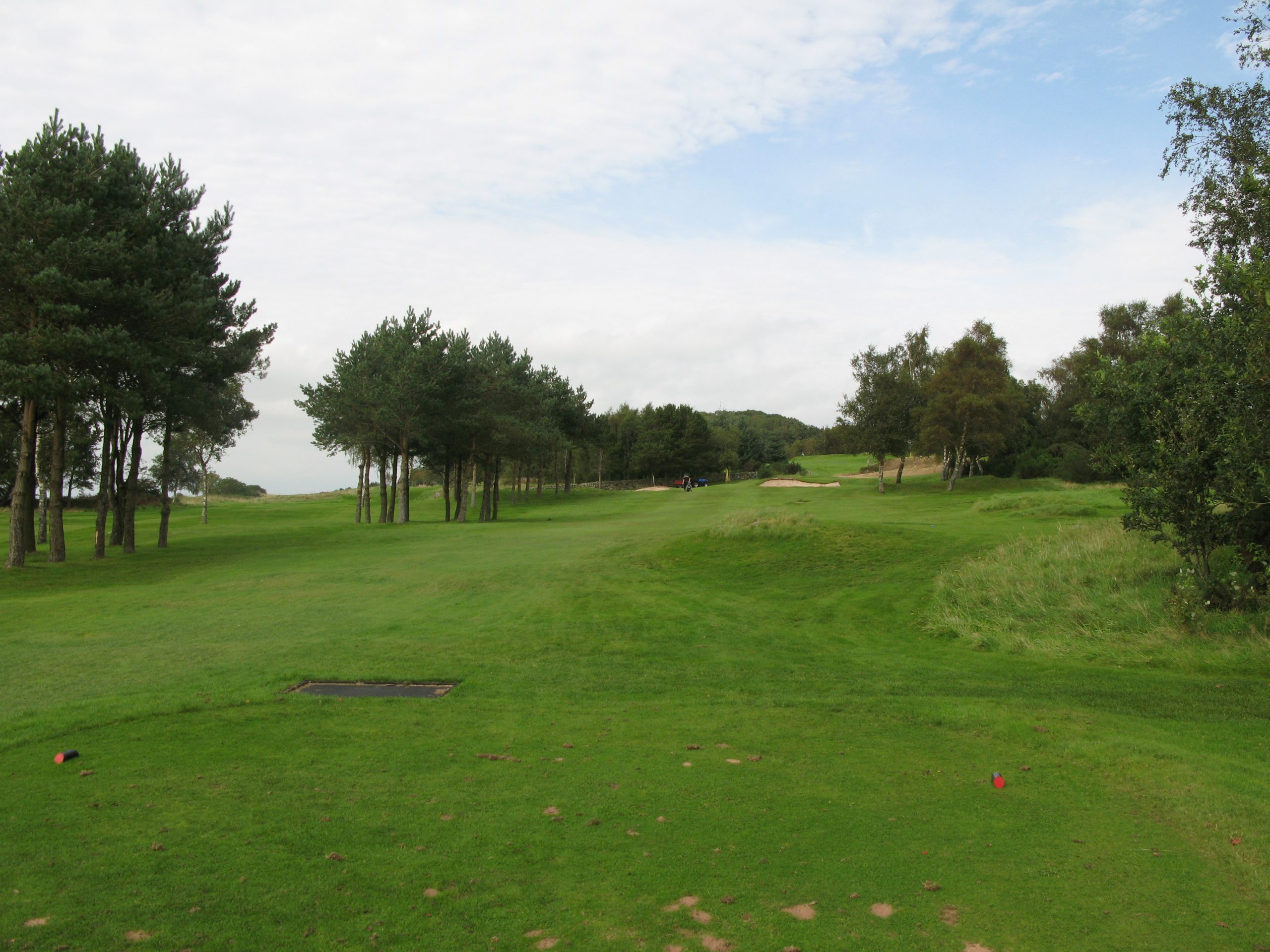
The terrifying par 4 “Road Hole” first at Shiskine, with OOB left all the way to the hole.

Perhaps by ‘divine’ intervention, a feasibility study in the late 1800s rejected building a deep water pier on the current golf course site to serve the local port of Blackwaterfoot. Sometime thereafter, Willie Fernie of Troon (who also designed Turnberry’s Ailsa course), laid out the original 9 hole course, which opened in 1896, although only the current 5th and 9th holes survive from then.
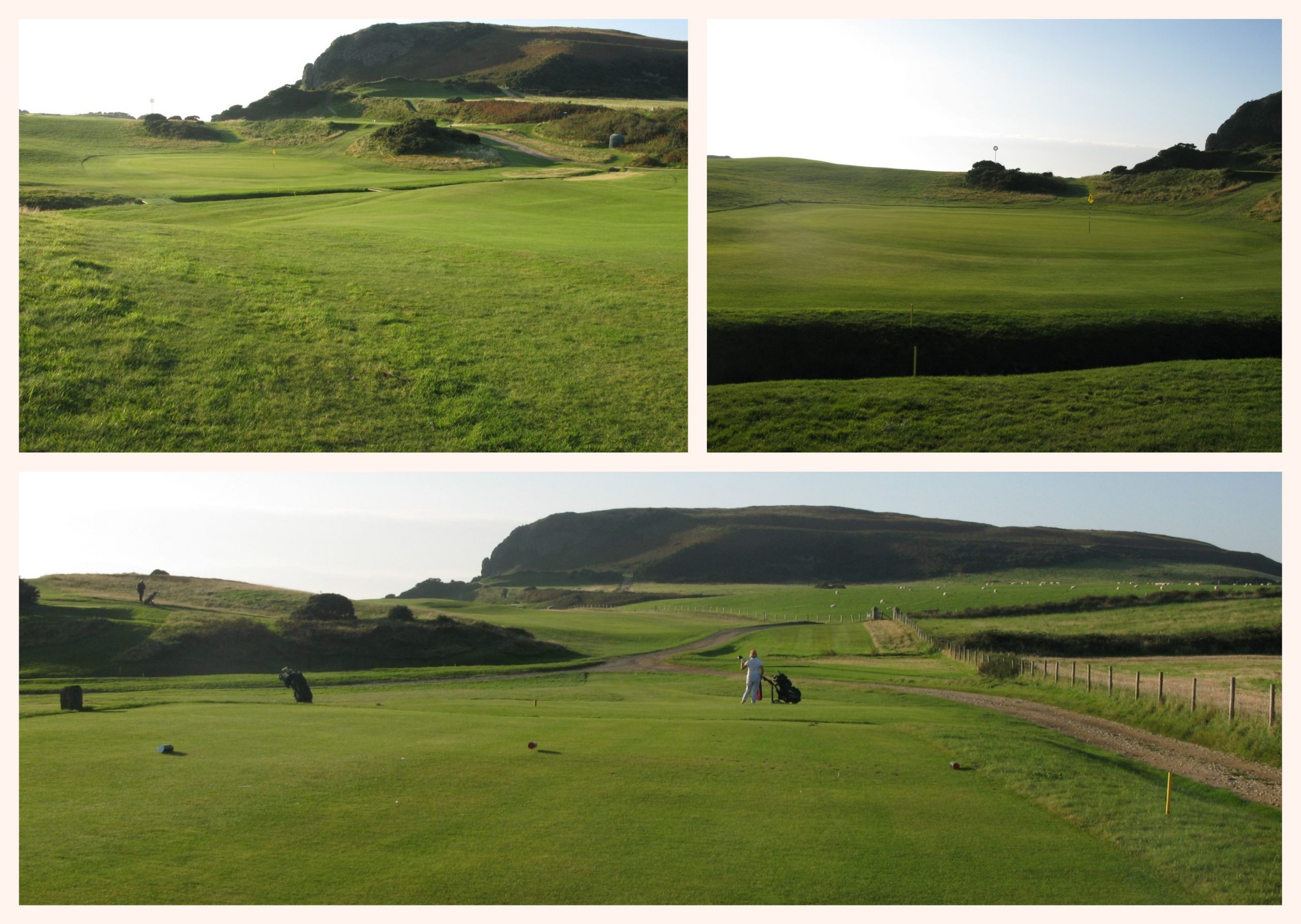
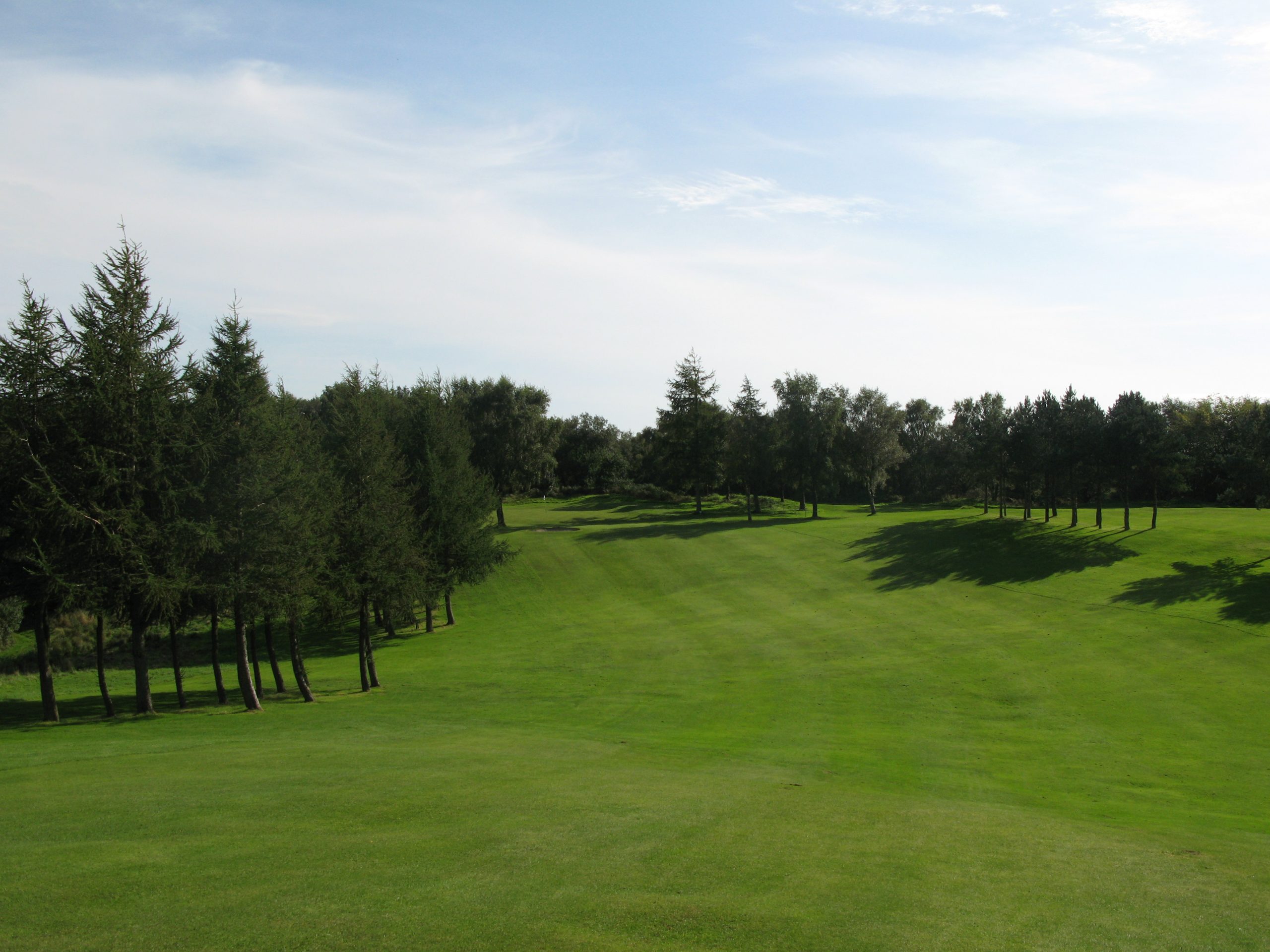
The difficult stroke index1 second hole at Shiskine, a tough par 4 with a burn in front of the green capturing many of the blind second shots into the green. Take enough club. Atop Drumadoon Hill in the background was where 6 holes returned to waste during the first world war

The course was extended to 18 holes just before the first world war using land above the current ‘shelf’ area of the 3rd green, but fell into disrepair during that war. Several attempts during the decades after failed to reestablish an 18 hole course.

Willie Park (Sunningdale and the North Course at Olympic Park, Chicago) then designed the current 12 holes between 1925-28. 18 holes play is reserved for member only competitions with the 1st, 2nd, 9th, 11th, 12th replayed with a further hole using a unique “15th” tee into the 4th green.

The course is not long, at just under 3000 yards from the white tees for the 12 holes, and 4,878 for the 18 hole layout; its slope rating is only 99 and disappointingly has no red ‘ladies’ tee boxes. It has 7 par 3s, 1 par 5 and 4 par 4s. Despite its short length, this is really fun golf, with very many blind tee or approach shots. I would strongly recommend reading the course guide, there is, for example, a bale out area to the right of the blind 3rd green, so aiming right of the flag is imperative. It’s rather hard to adequately describe the course other than saying it’s magical. It’s not perfect though, with the 12th a rather underwhelming short finishing hole. Nevertheless, it actually made me feel like I was playing my part in a Michael Murphy (Golf in the Kingdom) style mystical adventure with Shivas Irons as a playing partner. Perhaps I exaggerate. I can conclude by saying that I doubt you’d find anything like this course other than in Scotland and it’s a must play destination.
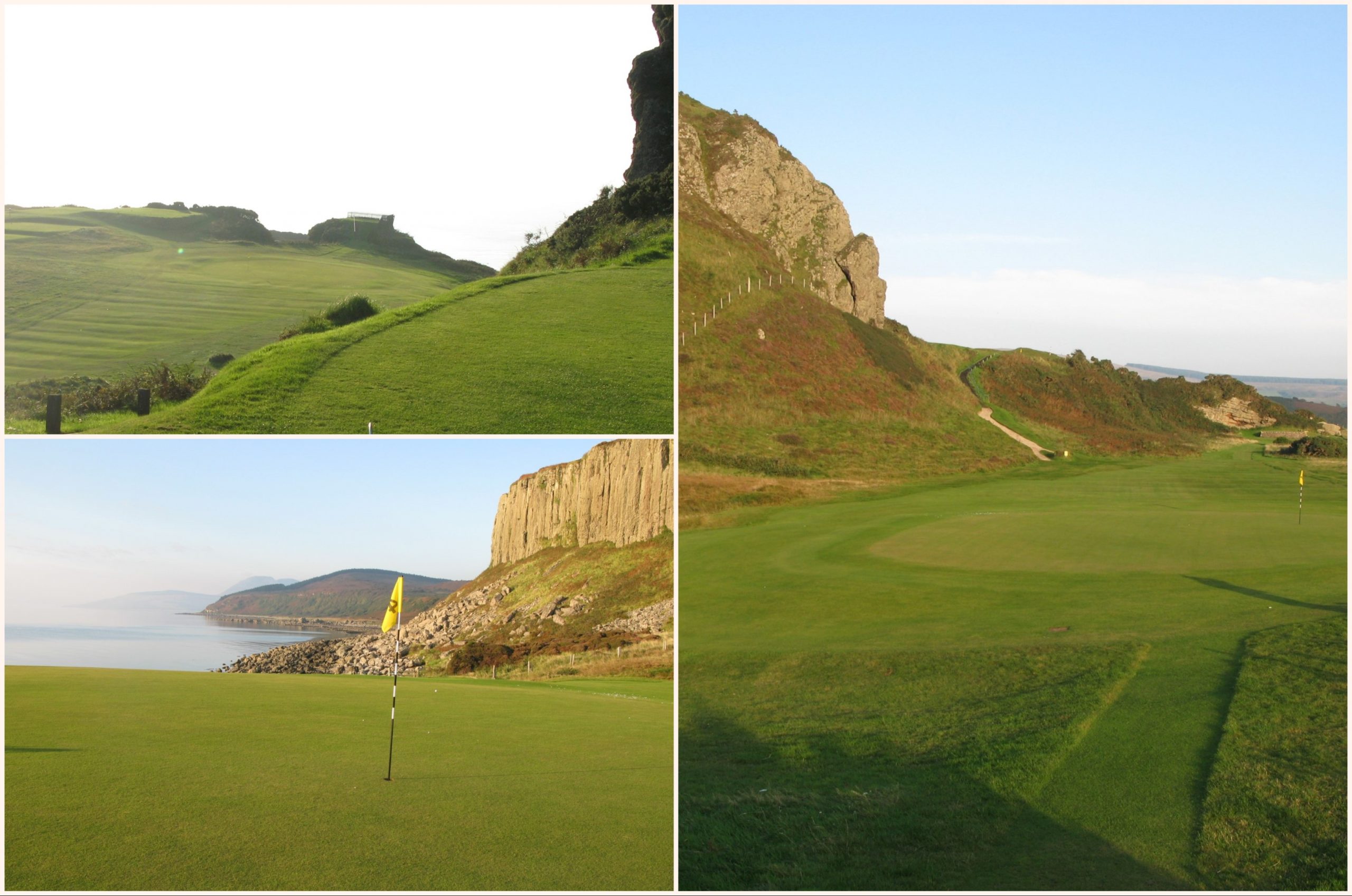
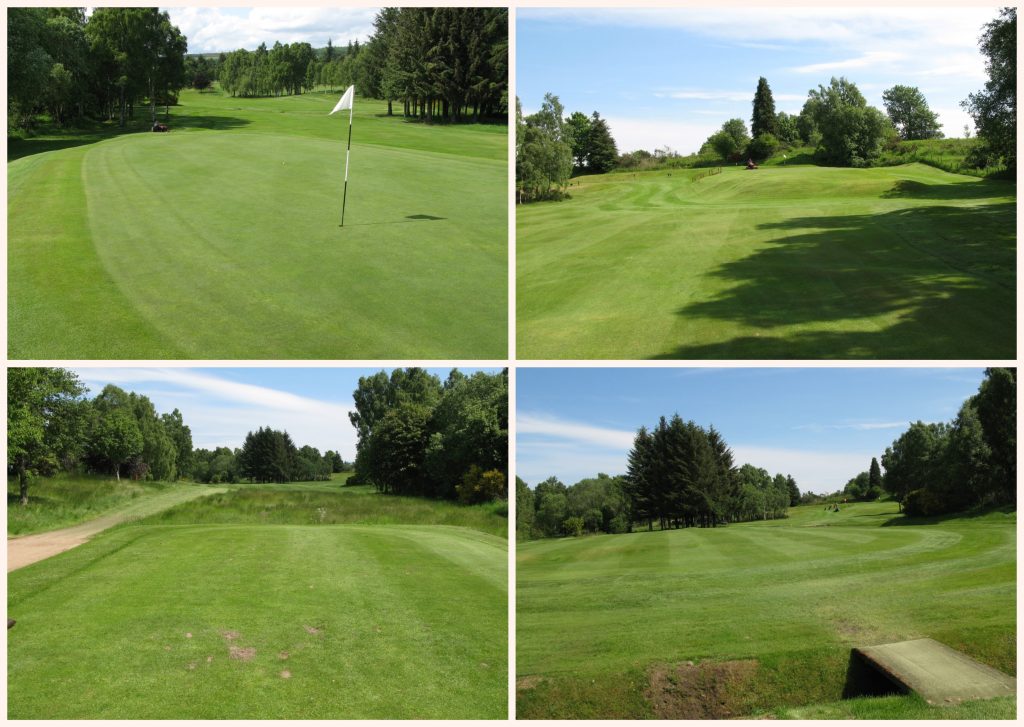
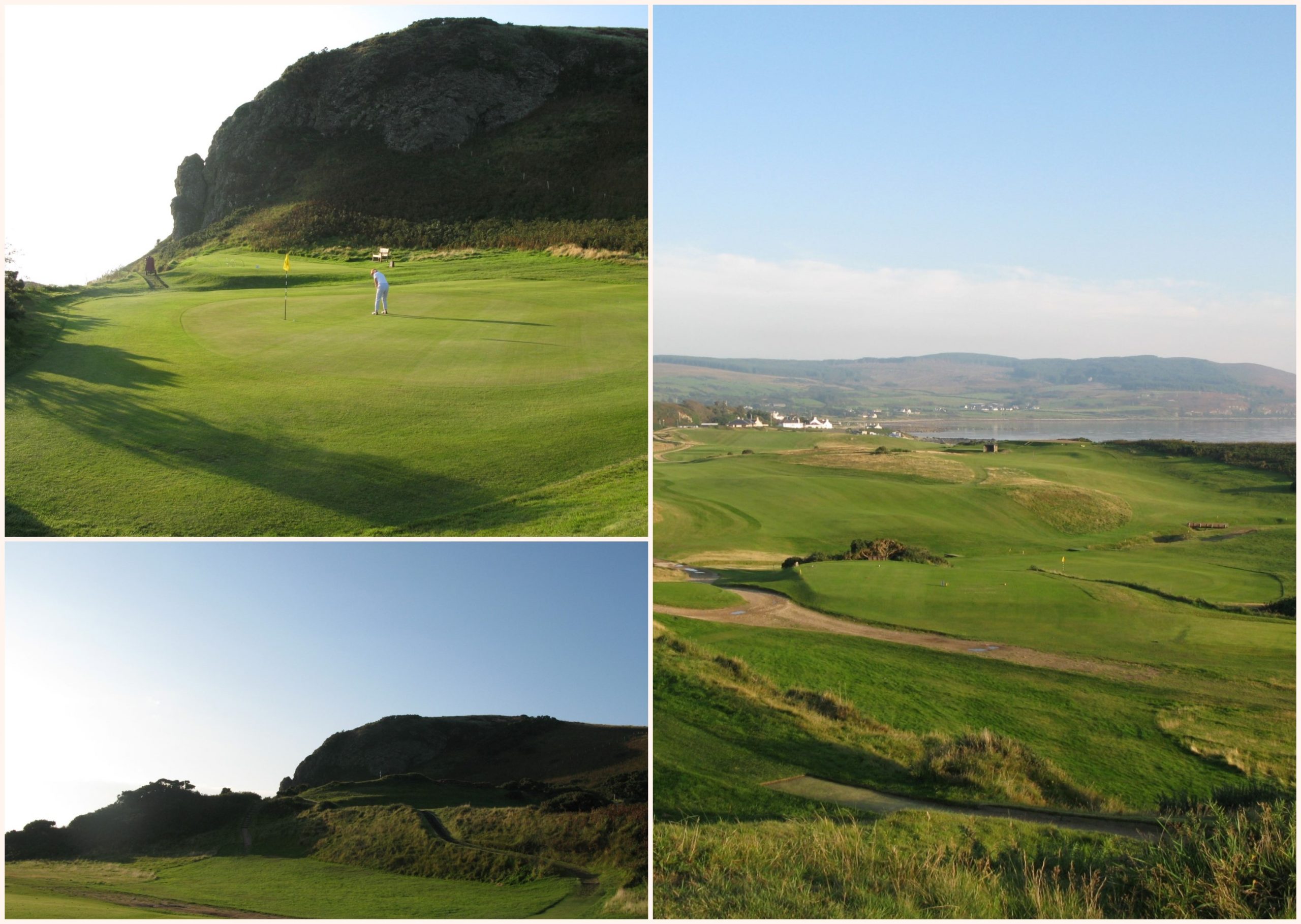
The 4th at Shiskine, a collage of dreams.

I’ve often pondered what golf handicap God might have? I’ve concluded that it would make sense if he or she were to have the exact average Scottish men’s or women’s handicap. God’s preferred course would be majestic, but not too difficult. For example, it wouldn’t have par 4s or par 3s that are really disguised par 5s or 4s respectively. It wouldn’t have any carries off the tee that effectively disenfranchise most higher handicap players. It would be set amid a beautiful landscape. It would offer a mix of guile and strategy. Some of the shots would be frightening. The greens, tees, fairways and all round conditions would be perfect. The weather or elements would play a significant part of the experience. Play would have to be fast – so he/she decided 12 holes was the best length. In the right conditions, it would bring you close to it’s maker.

Perhaps God did design Shiskine after all. Please go and play.

Facts:

Course Type: Links

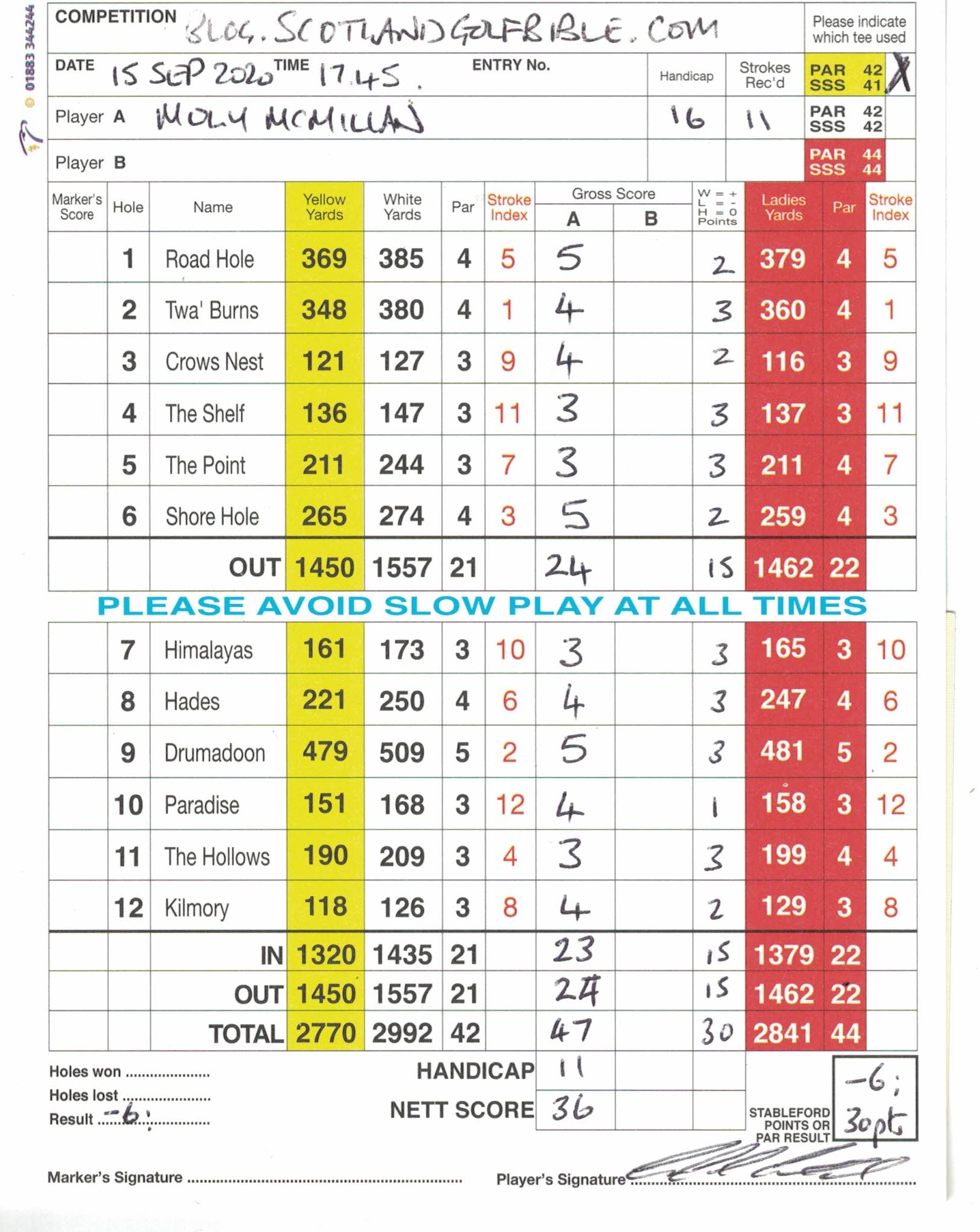
Par 42 (1 par 5, 4 par 4s, 7 par 3s)

Distance: 2770

Moly’s Gross score47

Moly’s life affirming 5 over for the 12 wonderful holes at Shiskine

104. Dalbeattie. 14th Sep 2020.

A delightful and great value “crowd funded” course

Round £10 (9 holes). Par 34. Value (out of 5) – 5

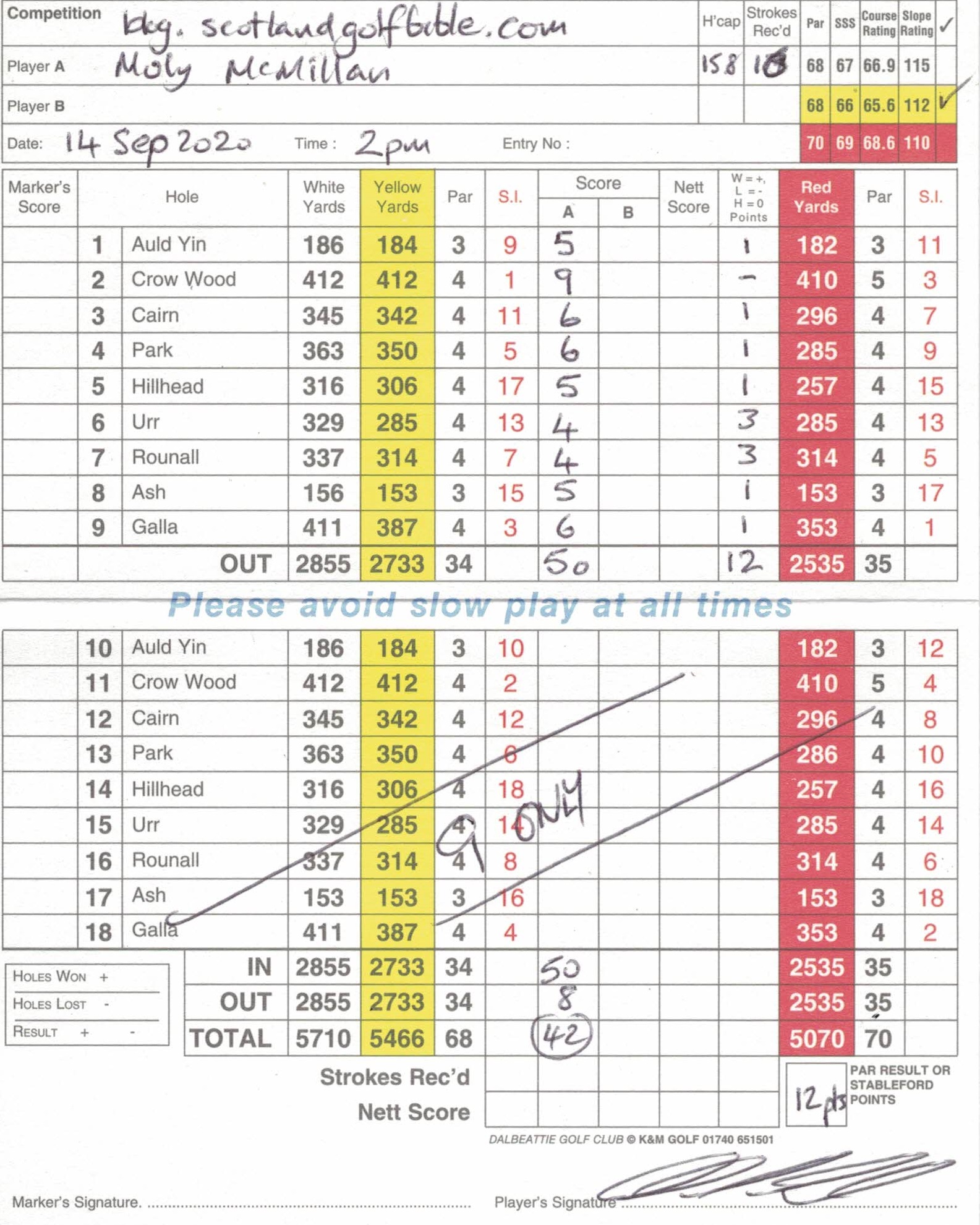
I was glad to meet the greenkeeper half way round my game at Dalbeattie, as I’d called him several unrepeatable names since the 2nd green, where I had hit two great shots to the green and walked off with a 9. I didn’t technically 7 putt, since I had putted off the green at least twice.

“These pin positions are a joke, they are ridiculous!”. “Yes, I agree”, said the very affable greenkeeper, “we held a charity texas scramble yesterday and were told to make the pins impossible”. “Ah, well, they certainly are that!”.

So my 50 for 9 holes, or 16 over par, at least has a decent excuse for once.

Difficult short opening hole at Dalbeattie – which had the first of many impossible pin positions.

In addition to the ‘difficult’ pin positions, the drive into the car park, had also not boded well. The sat nav took us through a small wood on a dirt track, which without our 4 wheel drive we may not have made it. Apparently the locals park on the streets surrounding the 9th green.

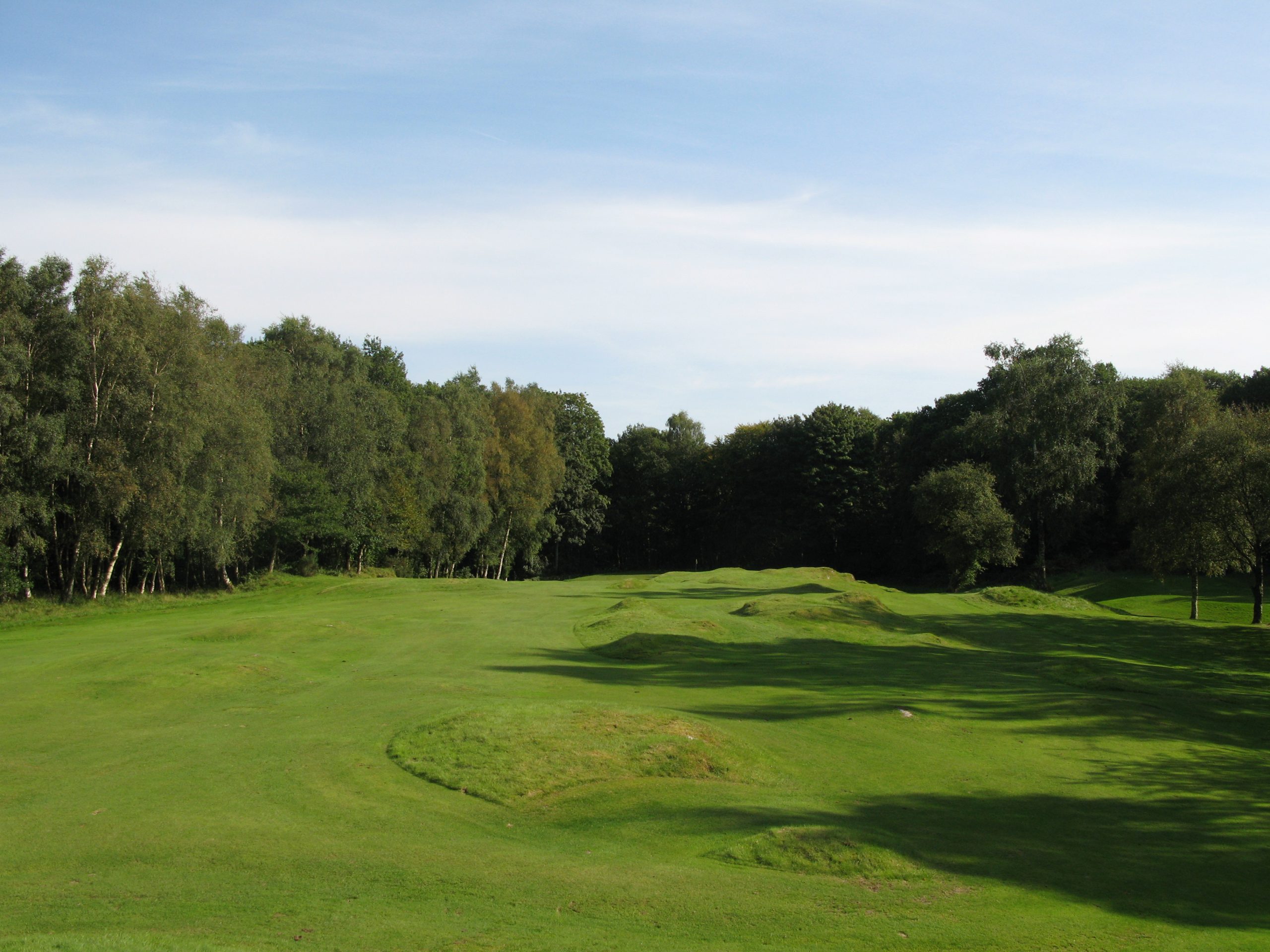
Beautifully contoured 5th fairway at Dalbeattie

Having got my grumbles out of the way, lets get to the point. This is about as good value golf you can buy and also a good data point in the history of golf development in Scotland. The club was founded in 1894, around the time when golf was becoming accessible to holiday makers due to the expansion of the railways. The club has a delightful, albeit short, history page on its web site here. In summary, the elder fathers of the area raised money through a bizarre to ensure Dalbeattie golf club was an attractive venue; in effect it was “crowd funded”.

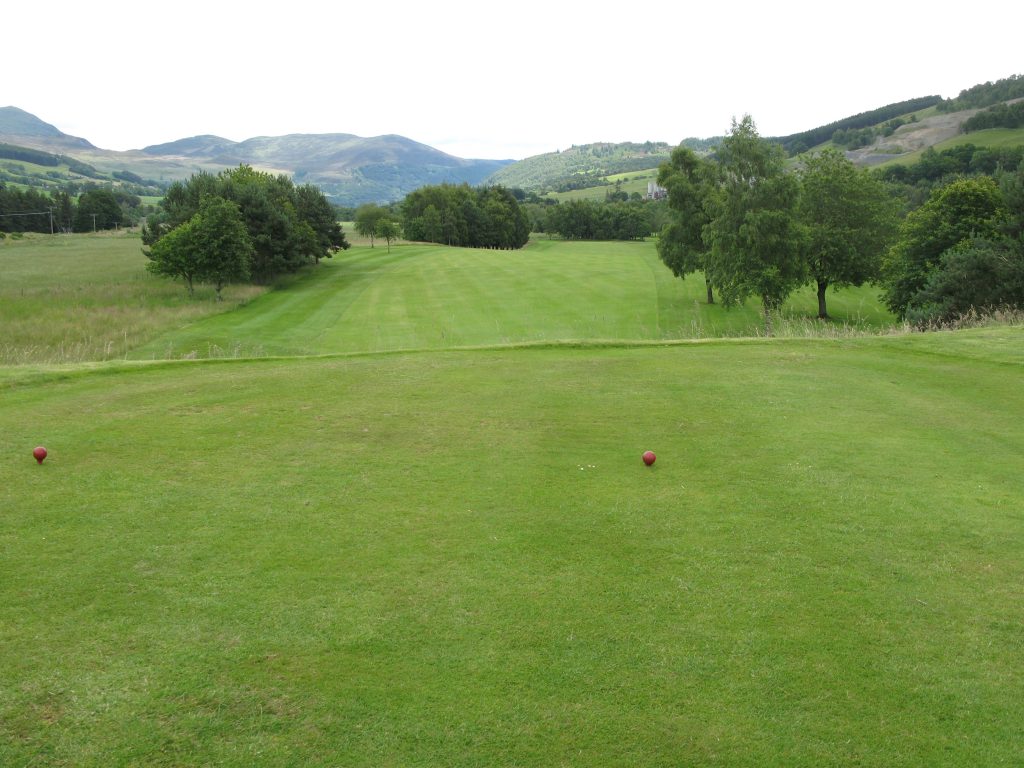
Shorts aren’t always the order of the day in September at Dalbeattie – Moly shown here driving at the short par four 6th hole

Despite some excellent information on the club’s web site, there is no detail of the designer of this 9 hole layout. I suspect it was an experienced golf course architect as there is some lovely design, very both pleasing on the eye; the views are wide ranging along the Urr valley and south to the Lake district.

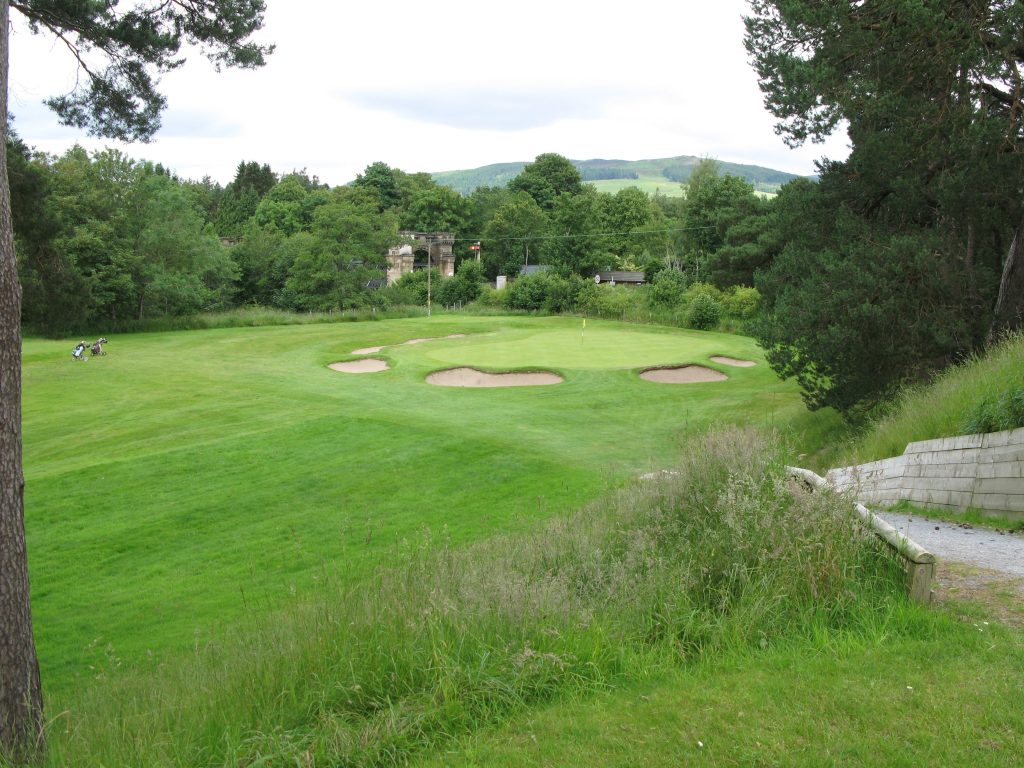
The 7th at Dalbeattie, the nicest framed hole on this course in Moly’s opinion

In particular, there is great framing on many of the holes, with the 5th and 7th holes vying for the signature hole. The 4th, a par 4 dog leg right hole, is also very difficult, with the window to drive intoquite narrow.

The course was in lovely condition when we played on a beautiful September “Indian Summer” day. Just the tonic, before heading off the day after towards the mystical golfing island of Arran.

Very worth playing at Dalbeattie.

Facts:

Course Type: Parkland

Par 34 (7 par 4s, 2 par 3s)

Distance: 2,733

Moly’s Gross score50

Moly’s Dalbeattie scorecard – a pretty poor 50 on this nice course

97. Blair Atholl. 7th July 2019.

Nine hole course to boost your confidence

Round £15.   Par 35.  Value (out of 5) – 3.5

If web searching for Blair Atholl golf club, don’t confuse this Perthshire course with the Blair Atholl Estate golf course in South Africa, built by Gary Player, and a monster of some 8300 yards – yes, that was correct, 8300 yards!

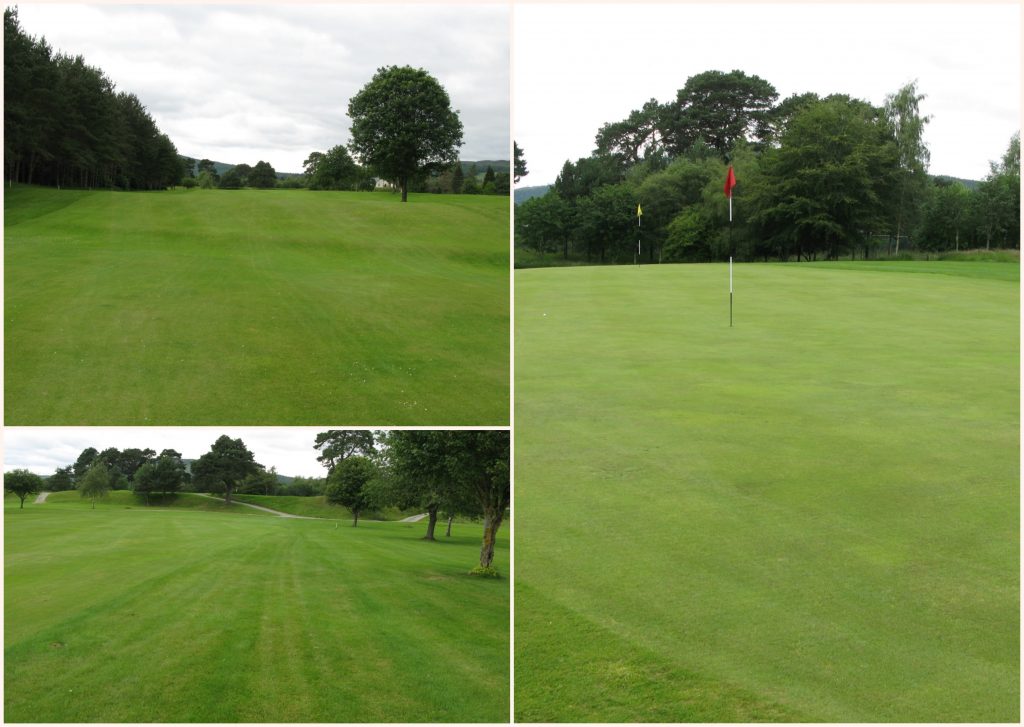
The 438 yard par 4 opening hole at Blair Atholl

Gary Player’s estate actually takes its name from the original Blair Atholl, which is just off the A9 and, since 2008, included within the boundary of the Cairngorms National Park. The original Blair Atholl is also home to a lovely little 9 hole course, which is an easy walking affair of around 3000 yards, or 6000 yards for the 18 holes, not short by any means.

Given its Highland location this course is soft underfoot and was very green during the July time I played here. Surrounded by tranquil ‘highland’ scenery this must be very beautiful to play during the Autumn.

The very short 4th hole at Blair Atholl, at only 96 yards, but well bunkered

With the rough being quite receptive and not too penalising, this is a course which can yield good results – the greens were also receptive and very true. I can well understand why this is a well played course by the tourist community – especially given the restaurant “The Tulach” in the small clubhouse, which also attracts non golfers as well.

The course was established in 1896, and mysteriously on some web sites, is cited as being designed by James Braid, but I’m afraid it does not appear on the list of James Braid courses as kept by the James Braid society. I would appreciate if anyone can advise on the architect.

The course was in good condition when I played, and in particular the teeing grounds had been well prepared.

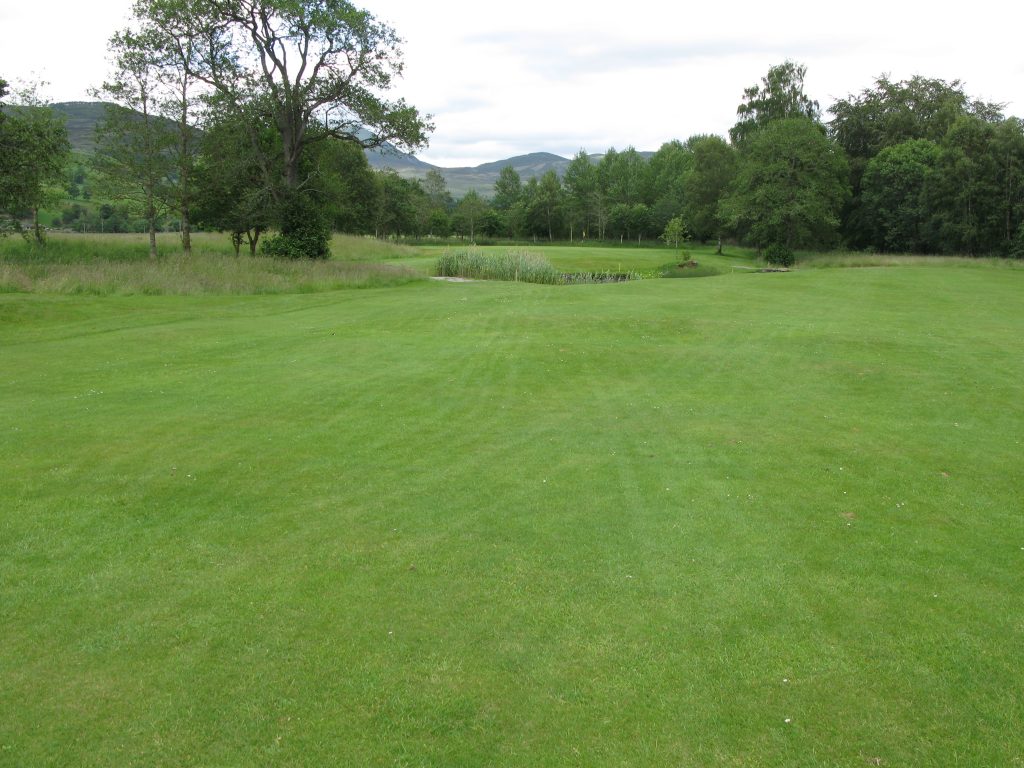
The tricky approach shot over water at the Stoke Index 1, par 4, 7th hole.

After a long par 4 to open, but played ‘down’ from a plateaued tee next to the clubhouse, the next 4 holes, all relatively short, are where the score is gained on this course. If you avoid the water hazards, which are in play on 3 holes and you should play short off the tee, most notably at the 7th (par 4 SI 1), then this course can be a good opportunity to boost your confidence. After the 7th, with the second shot being over water, the par 5 9th hole also needs great care with the second or 3rd shot (depending on your strategy) needing to avoid some mature trees. Also double check the whereabouts of the pin on the 9th, which shares a double green with the 3rd.

The demanding par 5 9th at Blair Atholl

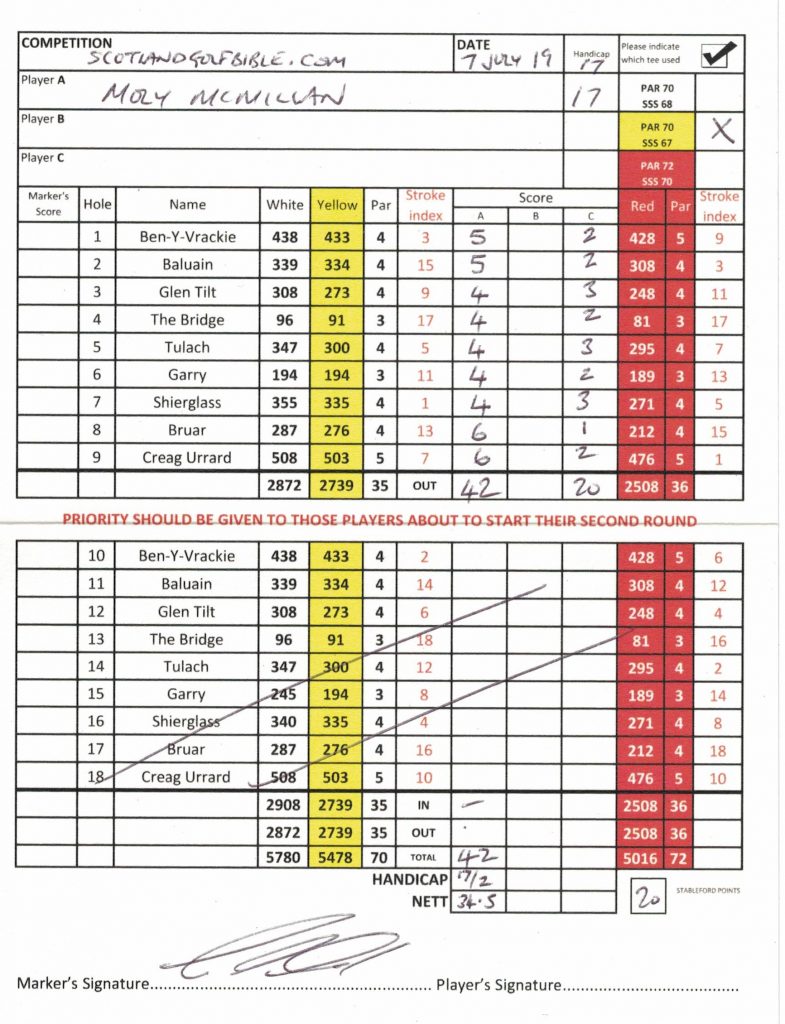
I indeed kept out of the water hazards and my round of 42, for 20 stableford points, was my best play all season.

This is a nice course and worth playing

Facts:

Course Type: Parkland

Par 35 (1 par 5, 6 par 4s, 2 par 3s)

Distance: 2739

Moly’s Gross score: 42

Moly’s scorecard, 7 over par 42, for 20 points.

95. Alyth. 7th June 2019.

Great Value with Architectural Pedigree, along with a recent 9 hole expansion

Round £42.   Par 70.  Value (out of 5) – 4.5

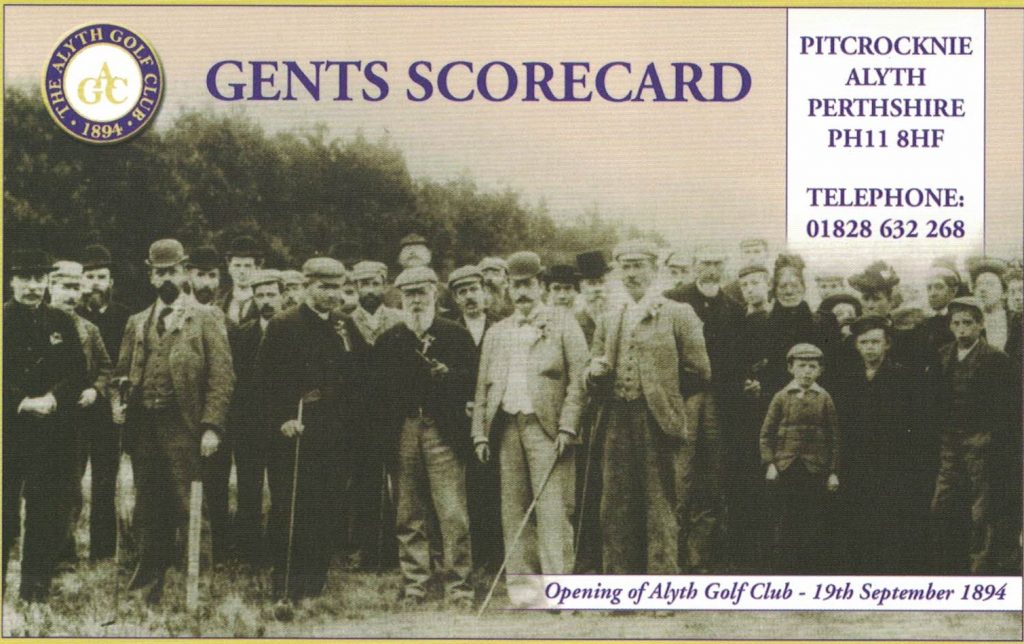
The Alyth scorecard immortalises the founding members

Alyth is a small town of around 3000 with an abundance of golfing choices in this agriculturally rich area of Perthshire. The Alyth golf club now boasts 2 courses – the main 18 hole course (subject of this blog), described as heathland albeit I think it is a parkland course, and dating back to 1895; Old Tom Morris laid out the first 9 holes, then extended to 18 in 1934 by James Braid. Much more recently, in 2016, the club took over the back 9 holes of the Glenisla course when that club closed down. It is one of the small bits of good news in the general decline of golf in Scotland.

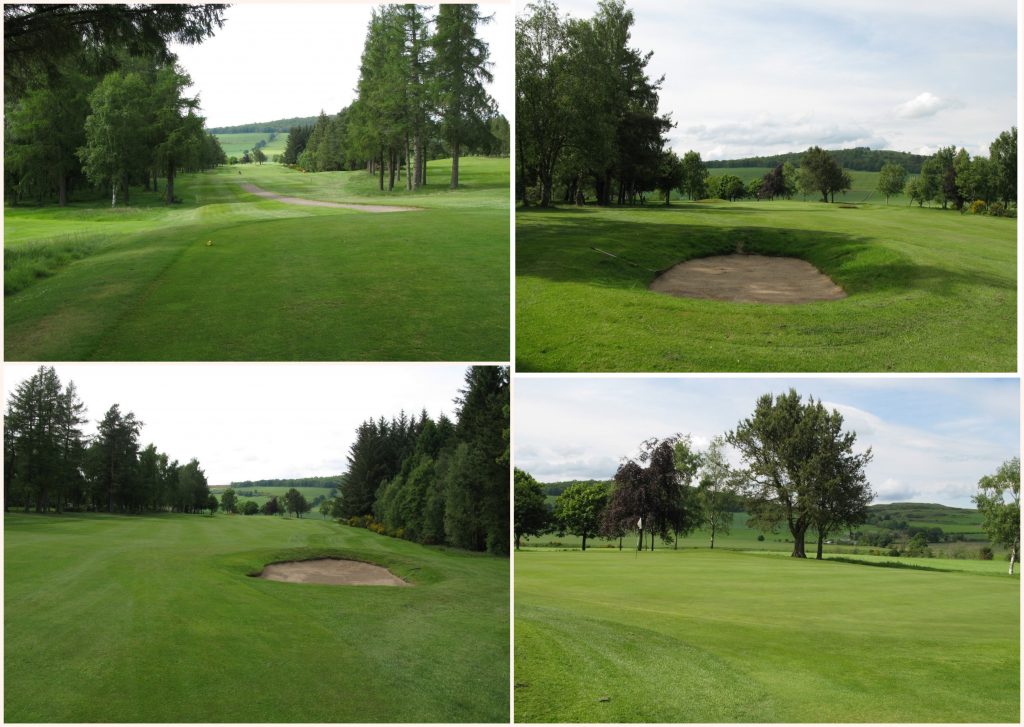
The wonderful Stroke Index 1, 5th hole at Alyth requiring both strategy and shot making

The main 18 hole course is really great value, with offers available through several sources, I suspect prices driven to attract the many tourist golfers who might otherwise just play the nearby world class Blairgowrie or Carnoustie courses. I strongly recommend playing Alyth, where the slightly shorter course, compared with those nearby giants, makes it a much more pleasurable experience, especially given the very picturesque landscape. The course has won awards for “best value”.

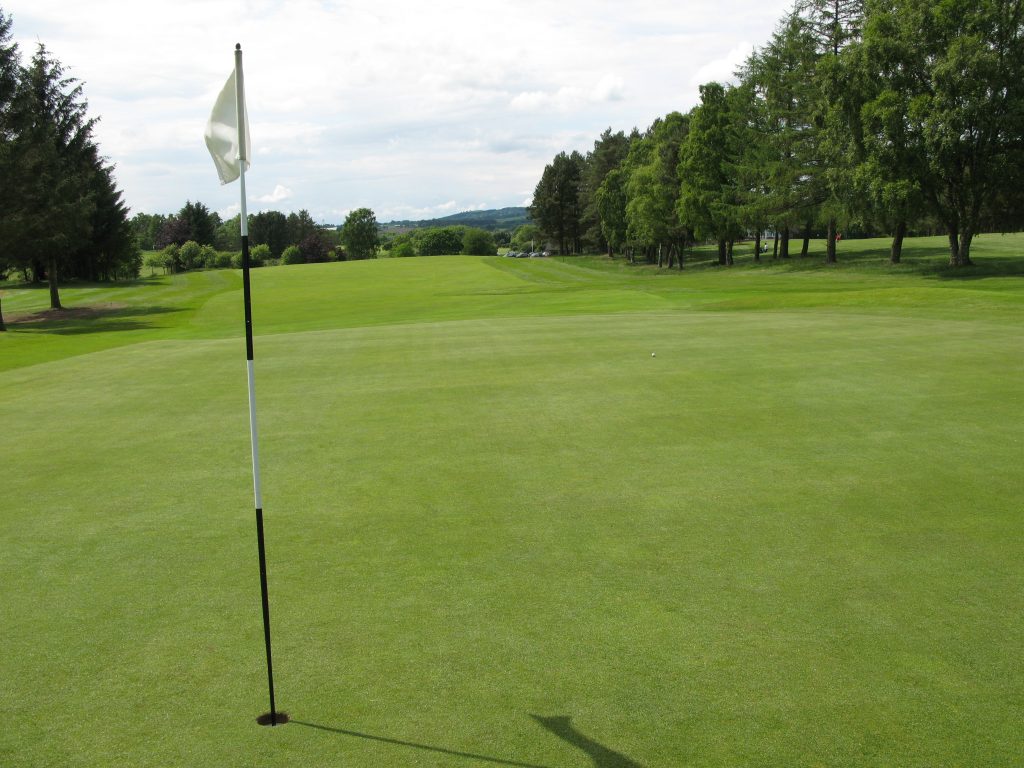
The first green at Alyth, showing the fine standard of the course’s conditioning

Although the course is set amongst tree lined fairways, the course is quite wide and the rough and tree areas not overly penalising, which makes it probably attractive to societies and more occasional golfers.

There are some great holes. The Strike Index 1, 5th hole, is a relatively short par 4, but the fairway ditch which runs diagonally across the fairway needs to be avoided, prior to finding the right club to reach the plateaued green. I was delighted with a bogie and moved on.

The 11th is another really nice hole, a short par 5 with well placed bunkers, that should reward those whose smart club selections take the bunkers out of play.

The short par 5 11th at Alyth, a lovely looking hole

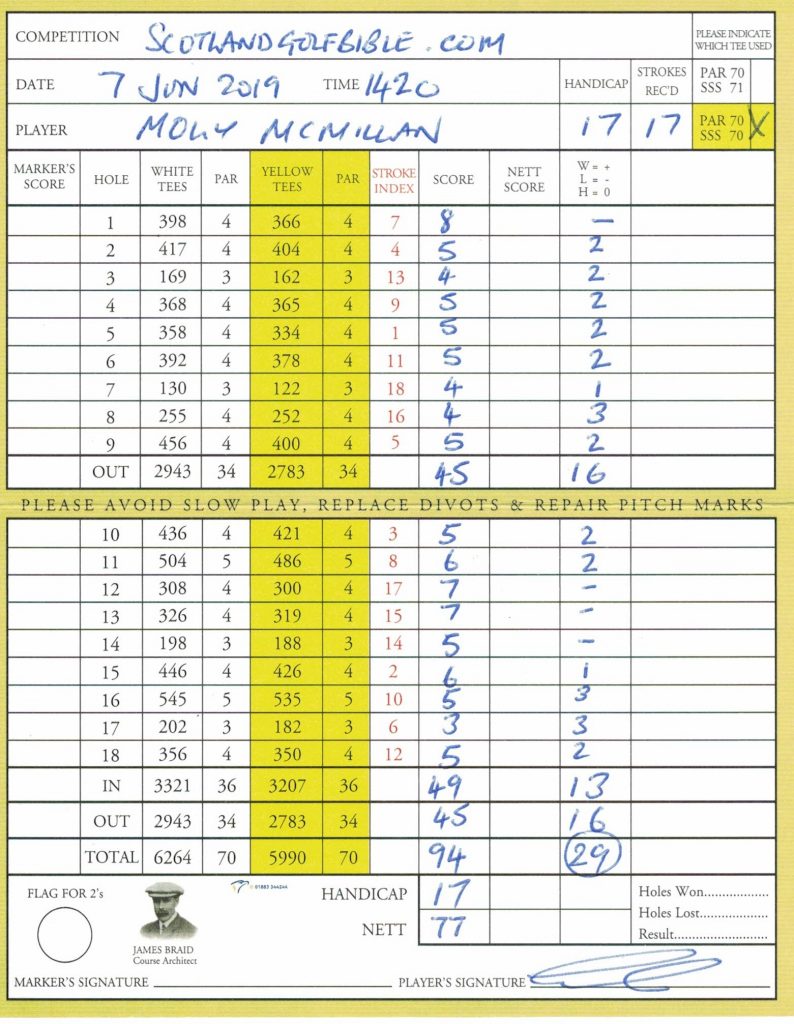
When I played, the course was in excellent condition, with all bar the bunkers immaculate. I shot a gross 94 for 29 stableford points; the most enjoyable part being the very tidy finish over the last 3 holes, which should have been all pars, but for 3 putting the last after hitting my longest drive of the day!

I will go back to Alyth – highly recommended.

Facts:

Course Type: Parkland

Par 70 (2 par 5s, 12 par 4s, 4 par 3s)

Distance (yellow): 5990

Moly’s Gross score: 94

Moly’s 94 scorecard at Alyth
« Older posts Newer posts »

© 2026 Scotland Golf Bible

Theme by Anders NorenUp ↑