A guide to green fee value for money

Category: 1851 – 1900 (Page 5 of 14)

119. Aberfoyle. 5 Nov 2020

A wonderfully understated golf course

Round £25. Par 66. Course Rating / Slope Rating (yellow) 64.1/115. Value (out of 5) – 5

From the endearing conversation with local members, to the beautifully crafted use of space and to meeting the challenge of some excellent holes, Aberfoyle golf course is an absolute joy, set in the magnificent surroundings of the Trossachs area of Scotland. It’s a must play and incredible Scottish golfing value.

The 6th tee at Aberfoyle, with the typical scenic views of he Trossachs countryside.
Bend that right leg Moly!

The course was established in 1890 with 9 holes and only extended to 18 holes in the 1980s, albeit it’s a difficult job trying to guess the original 9. It’s short in length, at well under 5000 yards from the yellow tees most people will use, but still has a slope rating of 115 despite only having 8 bunkers.

My favourite hole at Aberfoyle – the short par four 4th, with tricky thin green from front to back.

Set among the glens, the wind may make some of the longer par 3s and par 4s difficult to reach in regulation. Particularly so, for those holes played into the prevailing wind; the long par three 5th and par four 14th, well deserving of their stroke indexed 2 and 1 ratings.

The approach shot into the first at Aberfoyle, is the first of several blind shots played at this course.

The highlight of my playing was actually a bogie 4 at the 5th, after pulling a 3 wood tee shot into the heath on the left of the green and getting the ball miraculously onto the green with my second. It’s not always birdies that get remembered.

The most memorable hole, however, was the gorgeous short par four 4th hole. Again, played into the prevailing wind, it has a delightful thin green from ‘front to back’. The local guide, excellently displayed on the good club website, is well worth reviewing before play, with the advice on the 4th not to be tempted to go for the green from the tee, but rather play conservatively left with a mid iron, or hybrid, to leave an easy pitch up to the green.
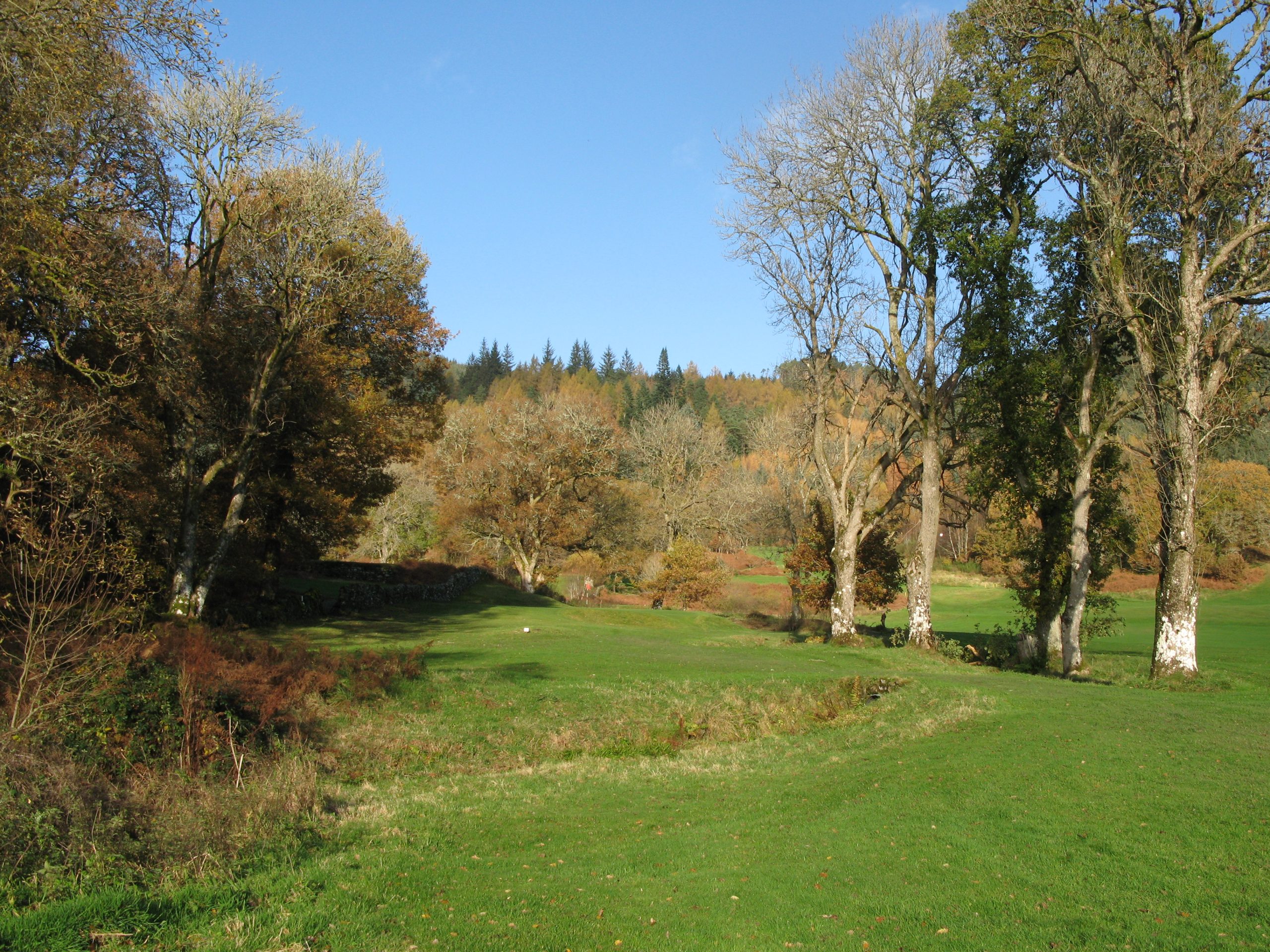
The lovely par three 10th hole at Aberfoyle

The recent weather when I played had been horrendous and I was amazed at the great condition of the course, testament to the natural drainage and mindful greenkeeping. I can imagine the joy of playing Aberfoyle on an early or late Summer evening.

It is a tough walk tough, with several blind shots to encounter (the 17th was the most striking in this regard), so a yardage device is also recommended. There are also some holes that cross each other, something typical of the late Victorian courses. Some amalgamation golf course guides cite James Braid as the designer, but I didn’t get any confirmation of that on the list of courses on the Braid association guide. It would be interesting to know who the designer of the original 9 holes was.
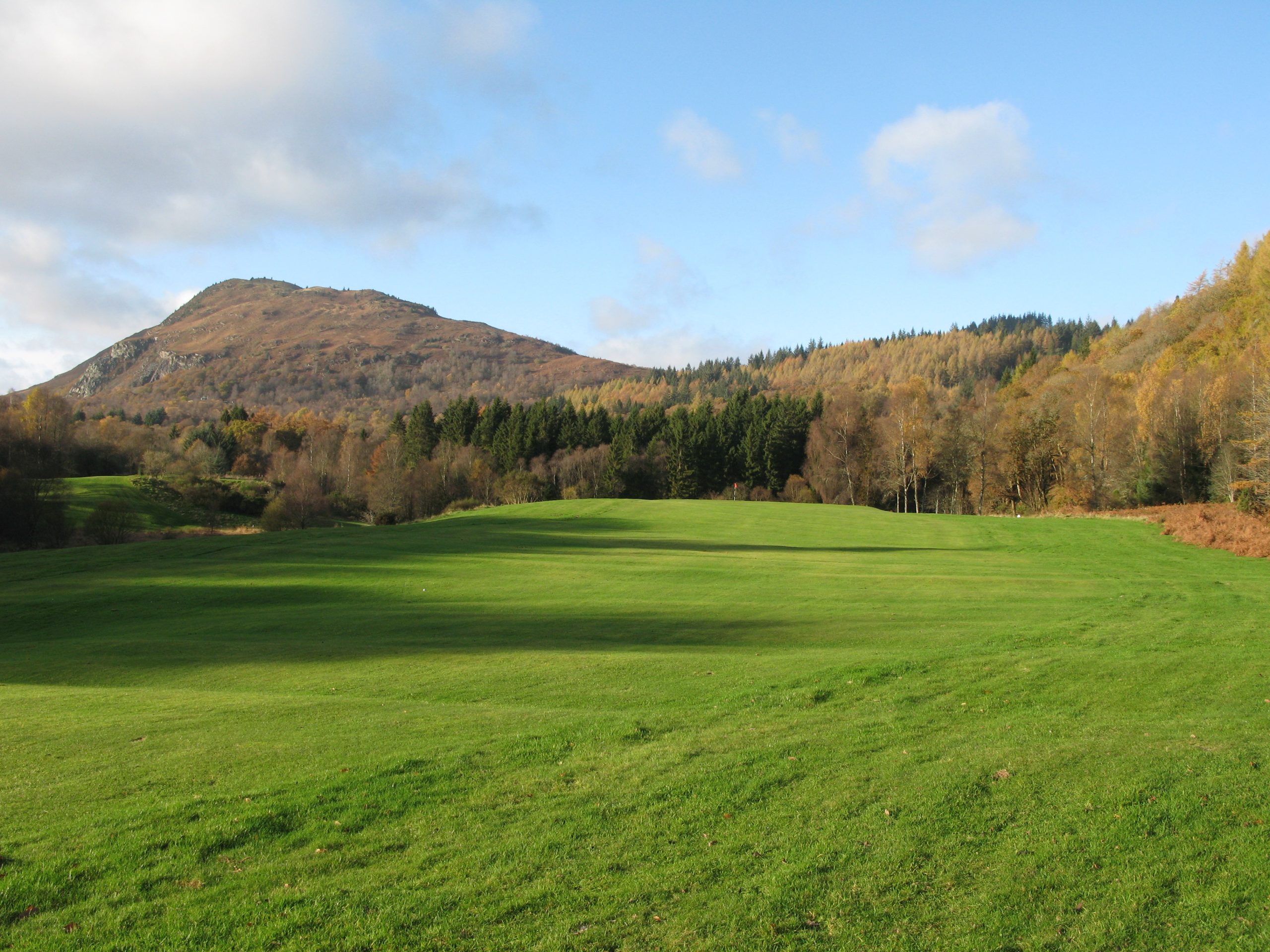
The beautiful scenery at Aberfoyle, displayed here at the 11th

Golf is such a game of “what if’s” – on the day, mine were a triple bogie 7 on the 16th followed by an even worse 9 on the par four 17th having lost 2 balls. Other than those holes, I played pretty well.

It’s a great course Aberfoyle, well worth the journey. One trivial point – having paid £15 on-line using the clubs booking system, I turned up to find a sign on the closed clubhouse door saying “From 1st Nov, only £10”. Despite being a little peeved, this is still 5-star value!

Course Type: Heathland

Par 66 (0 par 5s, 12 par 4s, 6 par 3s)

Distance: 4767

Moly’s Gross score89

Moly’s Aberfoyle scorecard – 89

118. Callander. 4 Nov 2020.

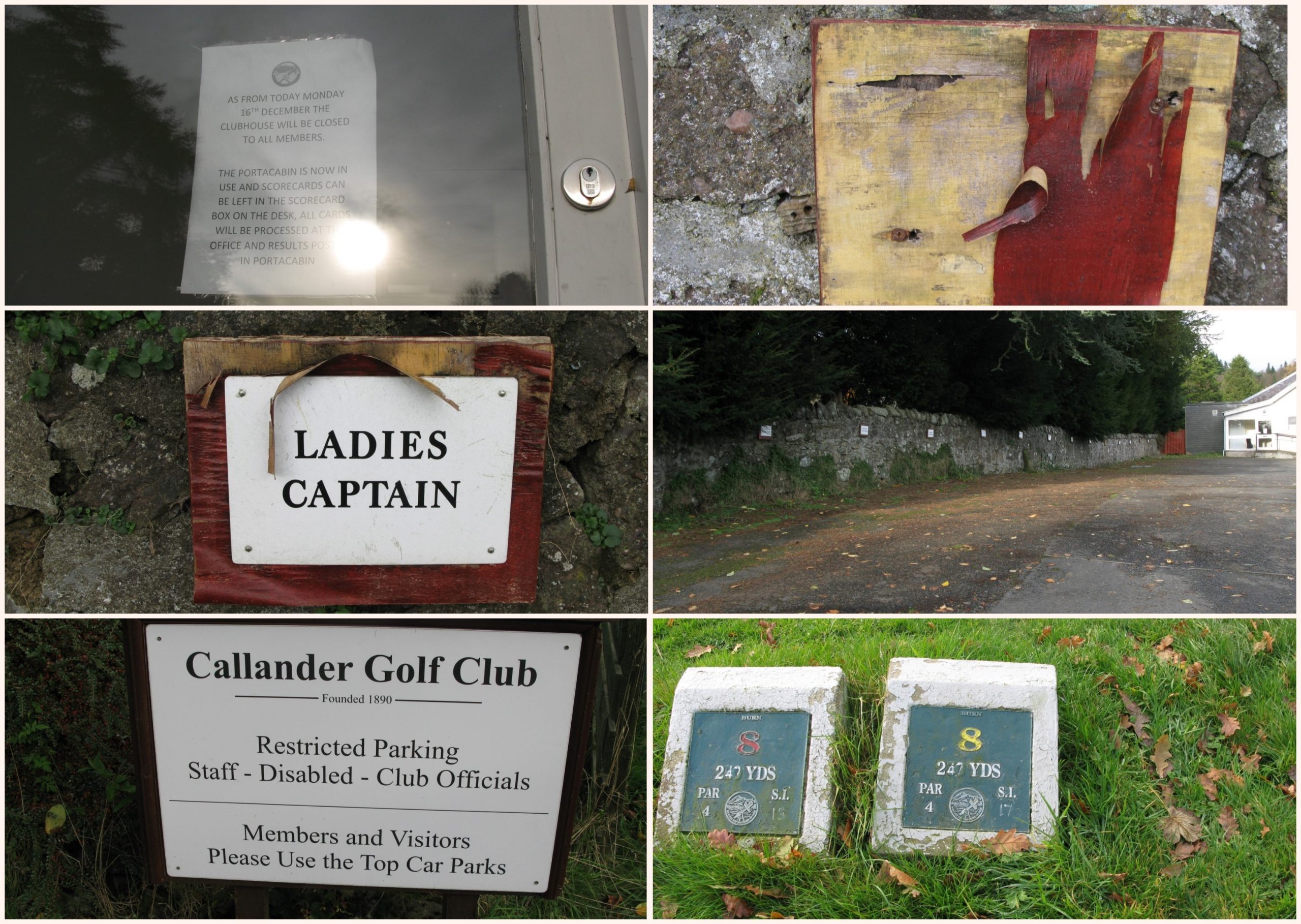
A course down on its luck, well worth playing, but this is no “Gleneagles” as its web site infers.

Round £24. Par 63. Course Rating / Slope Rating (yellow) 62.6/105. Value (out of 5) – 4

There is a well known equation for individual business success – “under promise and over deliver”. Why do some golf clubs get this completely inverted by “over promising and under delivering”. Callander Golf Club is a perfect example of this error.

Callander golf club has seen much better days – its website is also living in the past.

The club has clearly seen better days – the photo above gives a glimpse of the state of its infrastructure. The ‘temporary’ clubhouse was a shipping container. Its web site includes the following statements, some quoted from media outlets:

Callander Golf Club is probably the most scenic golf course in the UK“,

The charming and challenging 15th is one of the most famous par 3s in Scotland“,

“‘The Scotsman’ includes Callander … ahead of Carnoustie’s Championship Course.

“‘Golf Monthly’ rated Callander among the top ten courses in Scotland for visitors, alongside Gleneagles, Turnberry and St. Andrews.

These statements, collectively, are so wide of the mark – in my humble opinion of course! Just image a touring golfer, having played Gleneagles, Turnberry, St Andrews and Carnoustie, turning up at Callander expecting something similar.

Callander’s 7th, one of the many short par 4s, this one called ‘Blind’ for obvious reasons off the tee.

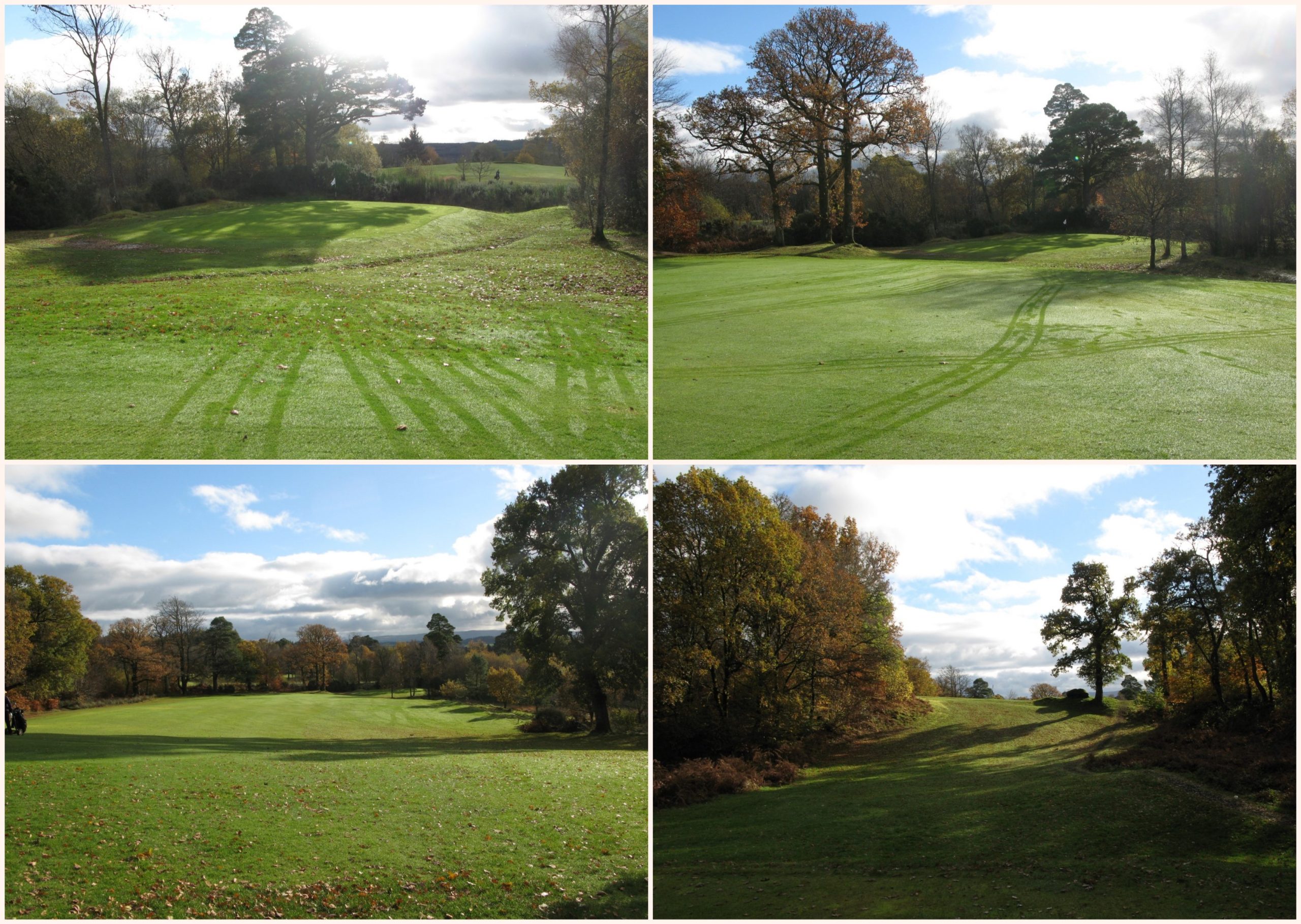
Please, don’t get me wrong, this is a really fun and lovely golf course set within the beautiful Trossachs area of central Scotland, with very picturesque surroundings, some great and memorable holes and in decent condition.

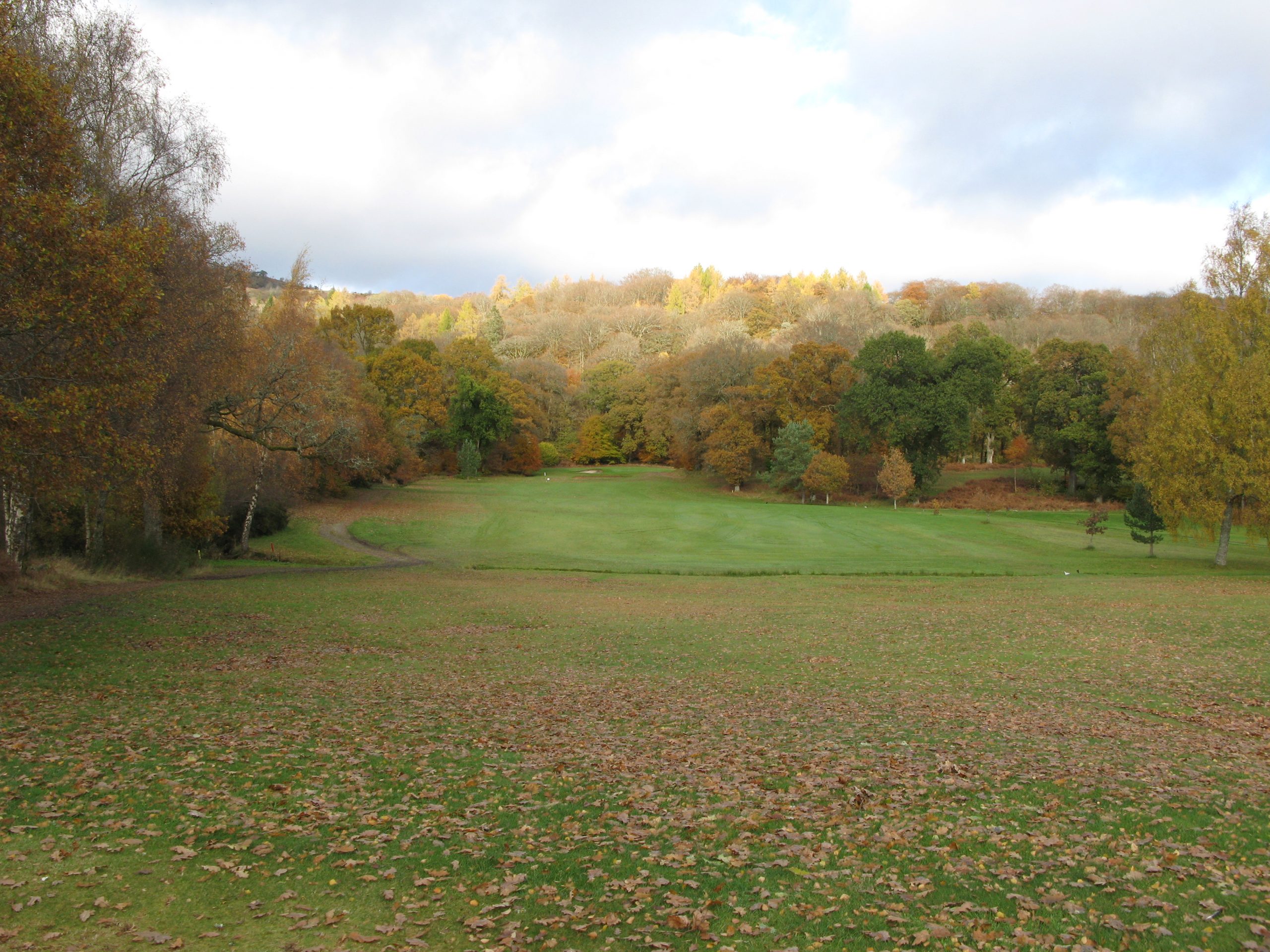
The 6th at Callander, ‘Dell’, the most difficult of all the holes , in full Autumn colours

The course was opened in 1892 as 9 holes designed by Old Tom Morris, then Willie Fernie extended it to 18 holes in 1914. Heady architects both.

This is, in particular, brilliant holiday golf. It’s short, at well under 5000 yards from the yellow tees. It has fairly generous fairways, not too many bunkers and relatively straightforward greens. There is an abundance of par 3s, with five on the back 9 alone, including the cute 15th, where play is through, or more likely, above a tiny channel between tall trees. It’s memorable, and one of those holes that demands straight hitting.

The Slope Rating of 105, gives most golfers the chance of posting a great score for 18 holes – that’s always nice.

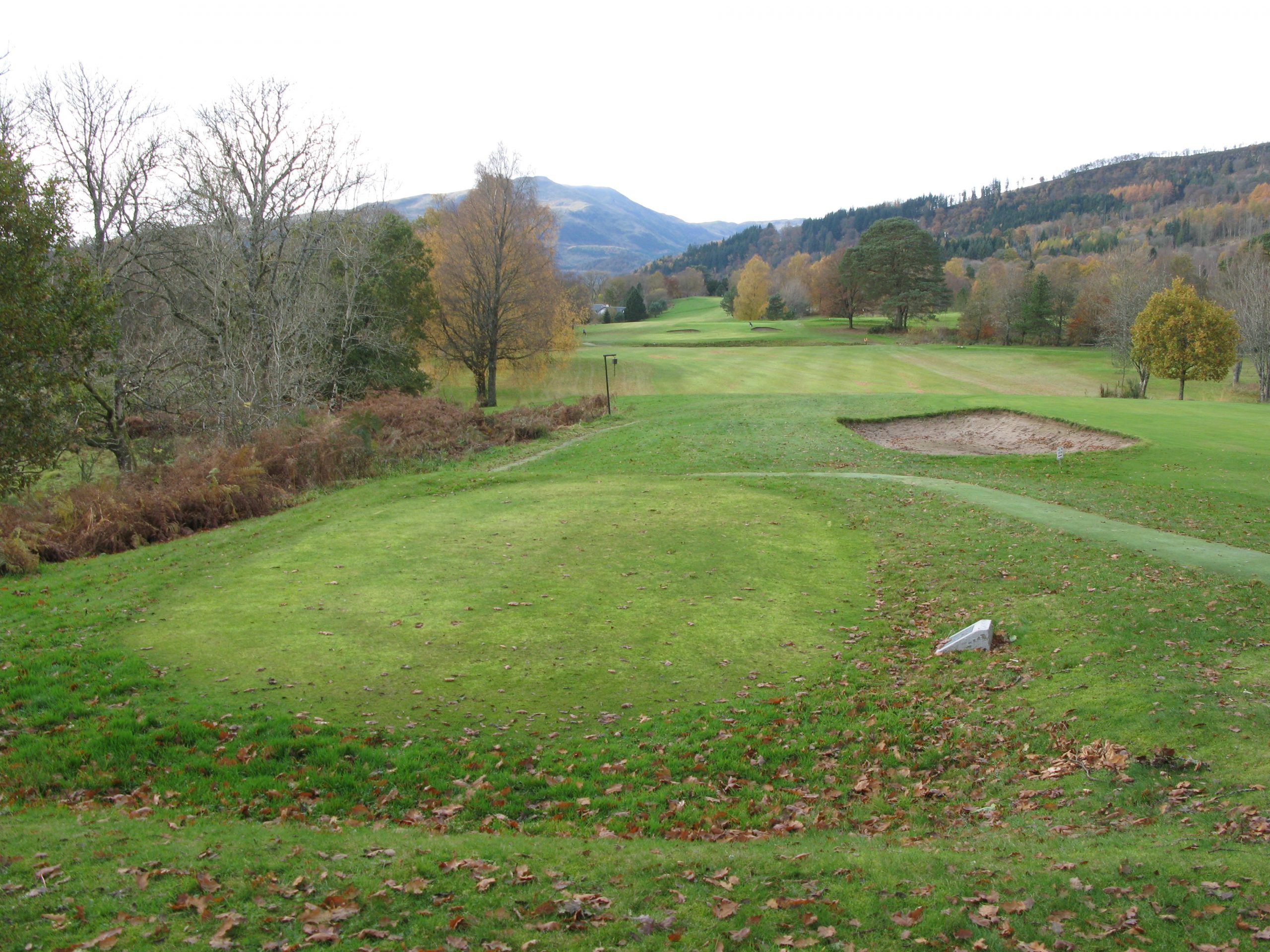
The 16th at Callander, with Ben Ledi in the background

Its well worth playing – but don’t expect to be playing Gleneagles – the green fee will tell the true story, and to that extent it’s also a great course for serious golfers to play as well, in order to experience the great value golf Scotland has to offer. Scots are known for being honest, so lets set the record straight on the web site.

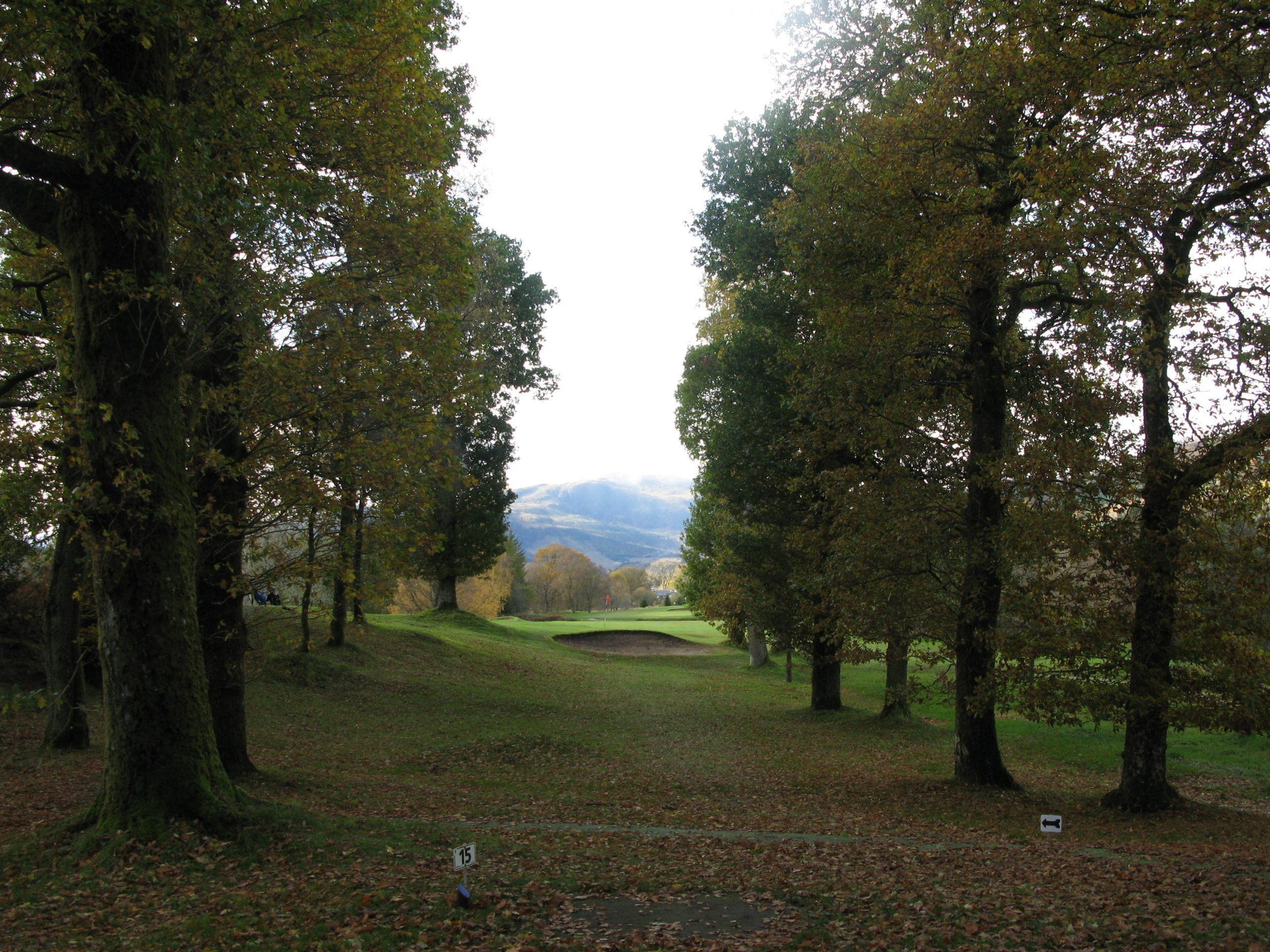
The wonderful par three 15th – ‘Avenue’. But not as famous as, for example, the ‘postage stamp’

On a very wet Autumnal day, with colours in late bloom, Fran and I had the course pretty much to ourselves. I played decent to shoot 80

Course Type: Parkland

Par 64 (0 par 5s (although 1 on the white), 10 par 4s, 8 par 3s)

Distance: 4470

Moly’s Gross score80

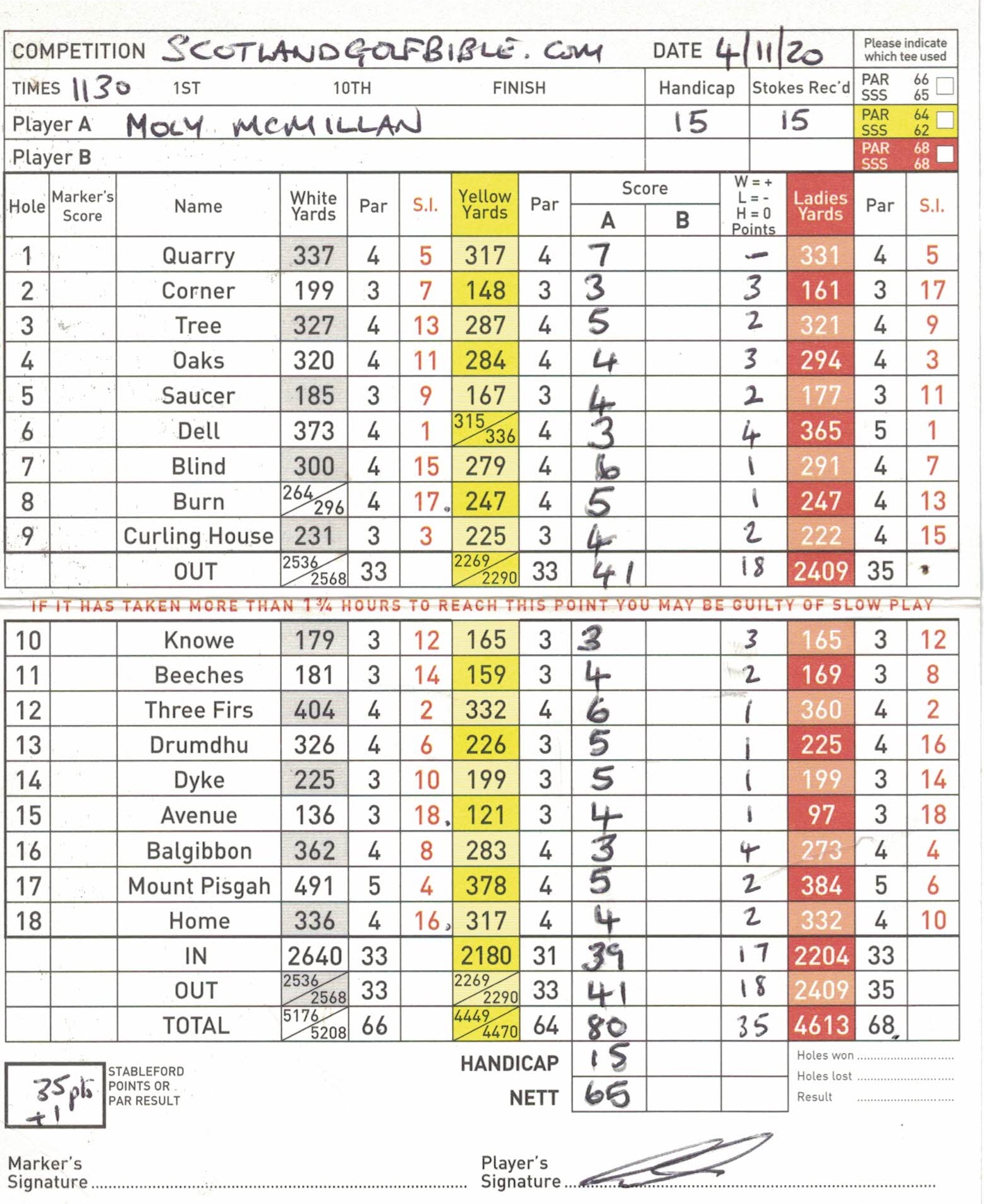
Moly’s scorecard at Callander – 80

116. Kirkcudbright. 28 Oct 2020.

Kuh coo bree’ – worth a visit to this course and the local art galleries

Round £32. Par 69. Course Rating / Slope Rating (yellow) 68/117. Value (out of 5) – 3.5

The town of Kirkcudbright, mysteriously pronounced ‘Kuh-coo-bree’, sits on the east of the River Dee estuary in Dumfries and Galloway. It’s a remarkable place; festooned with art galleries and nice coffee shops – one could imagine it being twinned with Glastonbury, the epi-centre of Druids in Somerset, England.

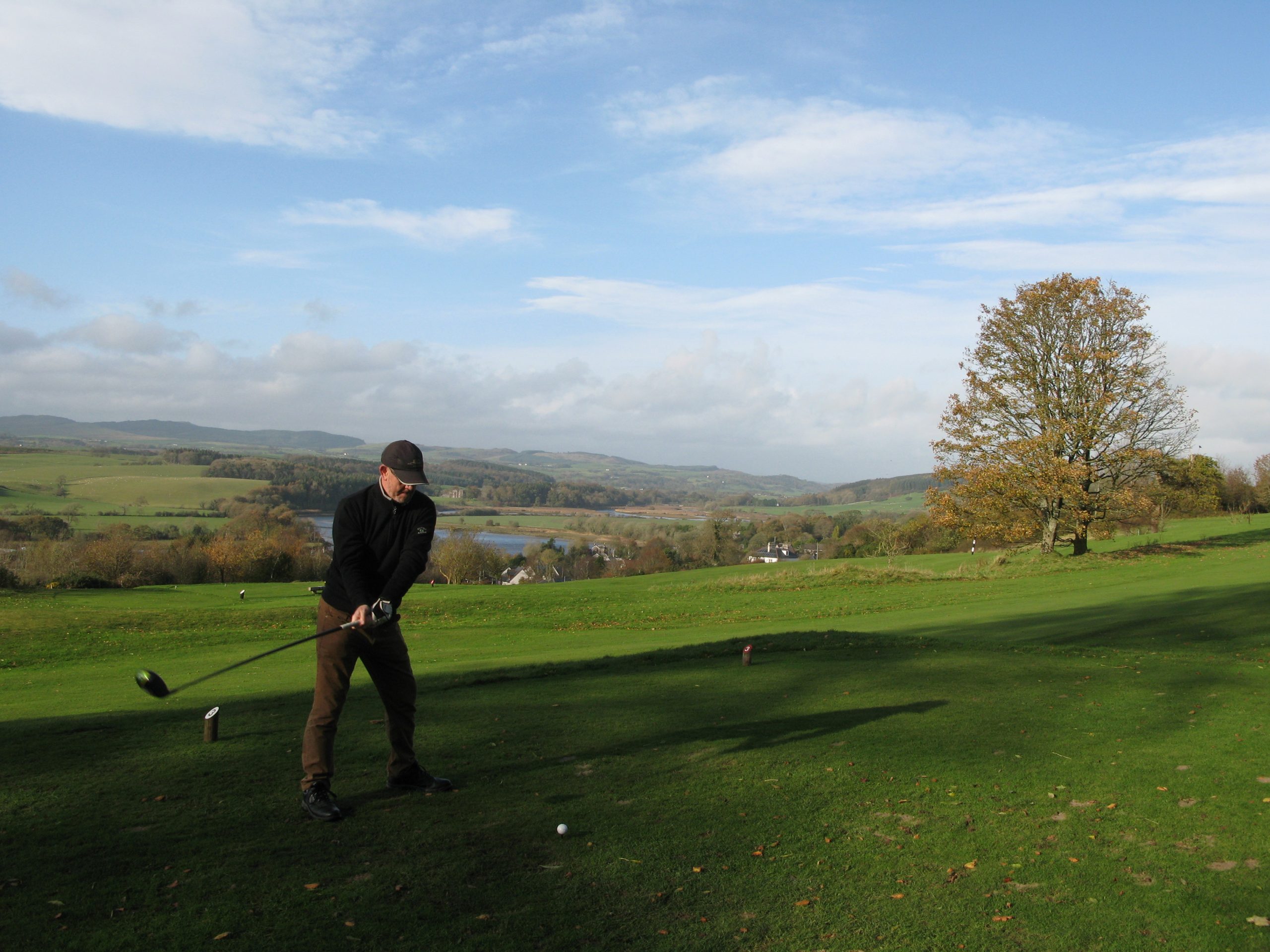
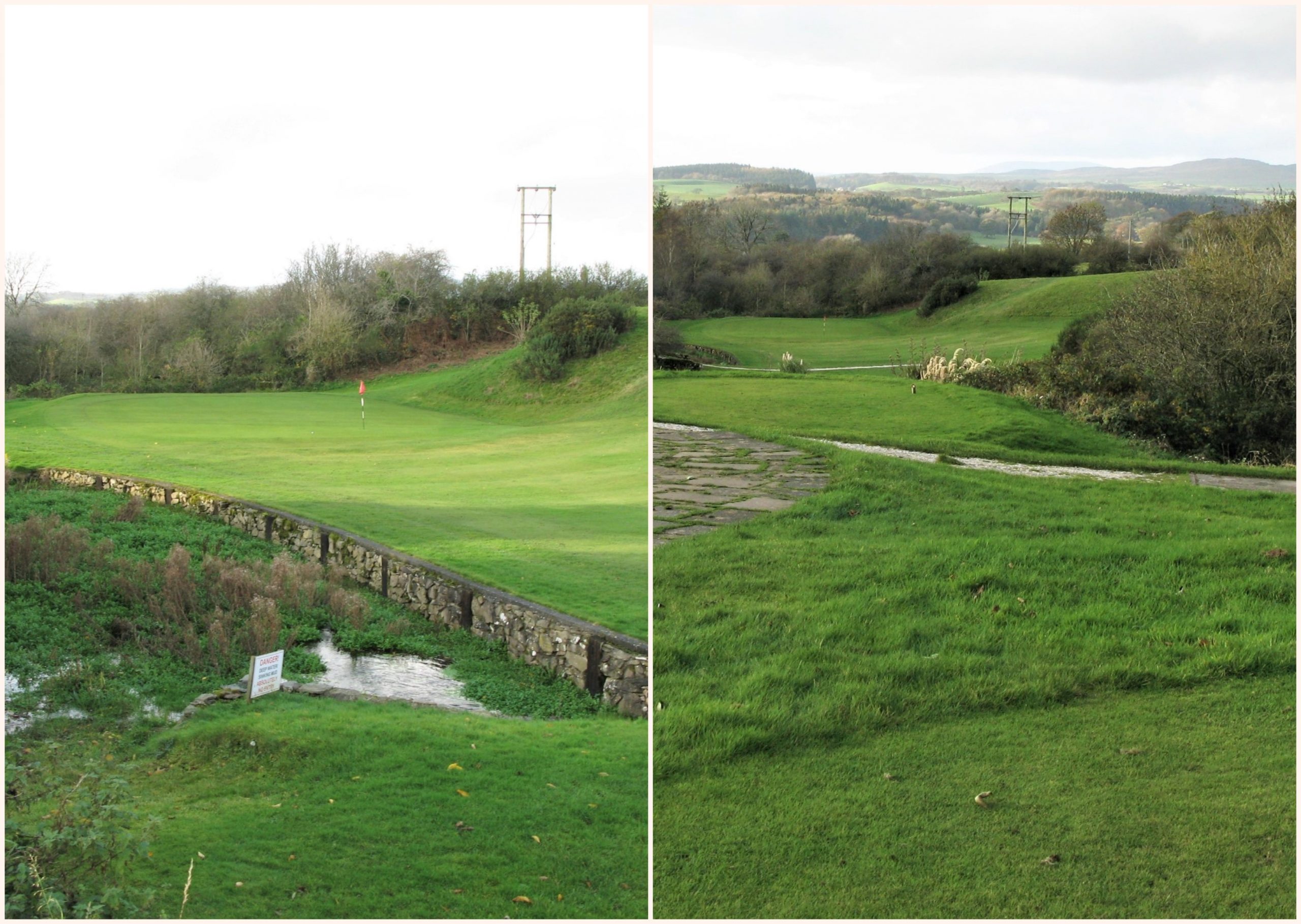
The course, set above the town, gives excellent views of The Galloway Hills providing a very picturesque backdrop – here Moly tees at the 3rd, one of the more straight forward holes – a short par 4.

The town was home of The ‘Kircudbright’ artist movement in the late 1800s, and several of the galleries tell that story. The golf course was in fact founded in 1893, at the very height of the art movement in the town. I wondered how many of the artists, some of international significance, ever played the golf course – after all, the first hole, (Charles) ‘Oppenheimer’ is named after one of the towns best know artists?

A birdie opportunity at the fairly short downhill par five 8th, stroke index 15, hole at Kirkcudbright.

The course was originally 9 holes and only extended to 18 holes in the 1970s, unfortunately neither original or extension architect are listed in the website. After a fairly benign opening par 4 , the second is played uphill across the current 15th hole. After a short par four 3rd, the first of the several difficult holes is the 4th – although a relatively short dog leg right, judging the distance off the tee is crucial to avoid a lost ball. On the day, I saw an old man in the woods searching for golf balls – it was as if I saw the “ghost of golf future” for me.

The signature ninth hole, a challenging par 3 likely requiring a mid to long iron for most players.

The extension of the course, includes a nice run of holes, from 9 through 12, by far the most nuanced part of the course. The 12th, in particular would fit into a much higher standard layout.

The course was in pretty good condition when I played with Fran, but there were a few winter greens in early use, even although they seemed completely playable, and firm.

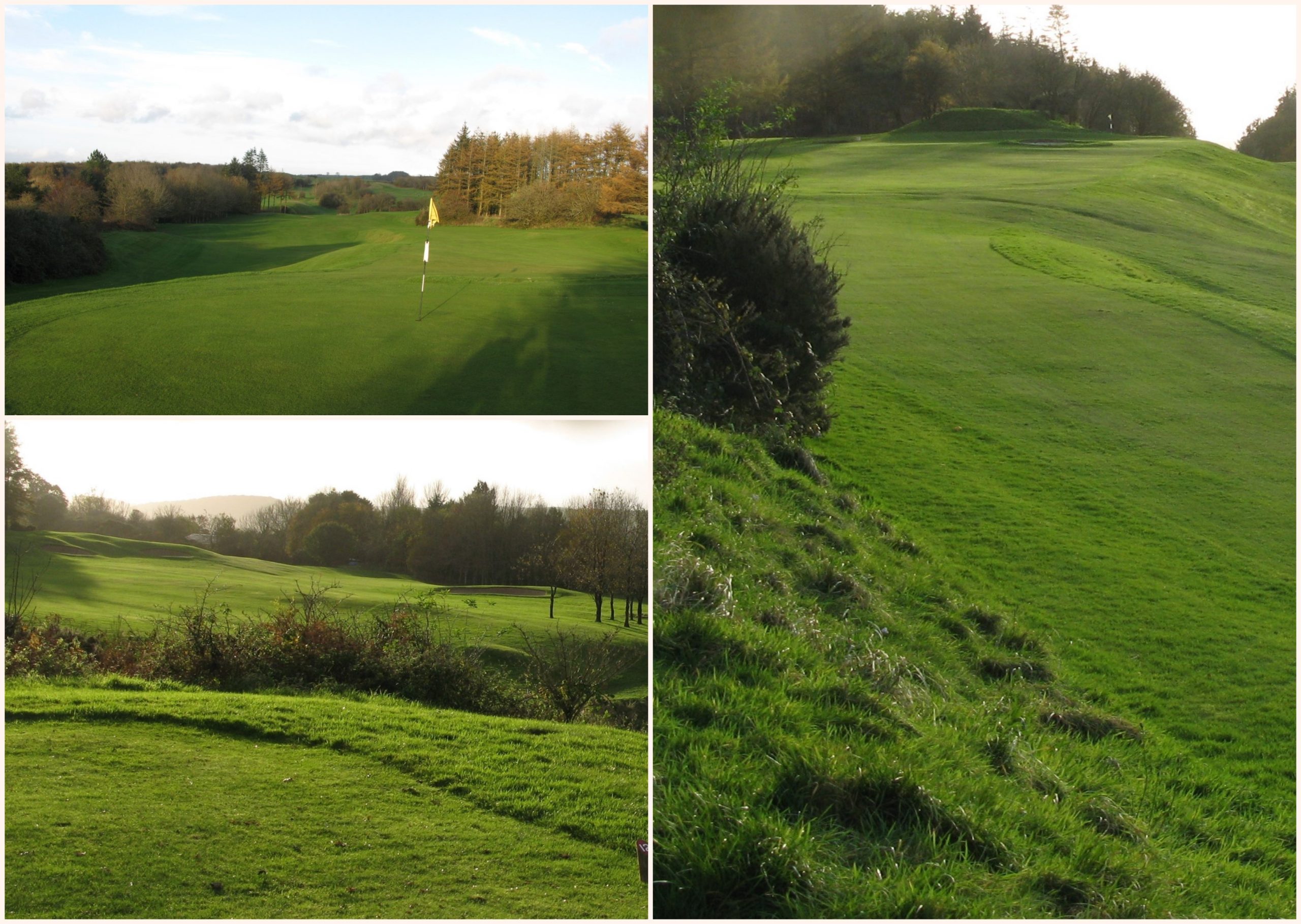
The beautiful par five 12th hole, the best on the course, in Moly’s opinion. The stroke index of 2 fully justified.

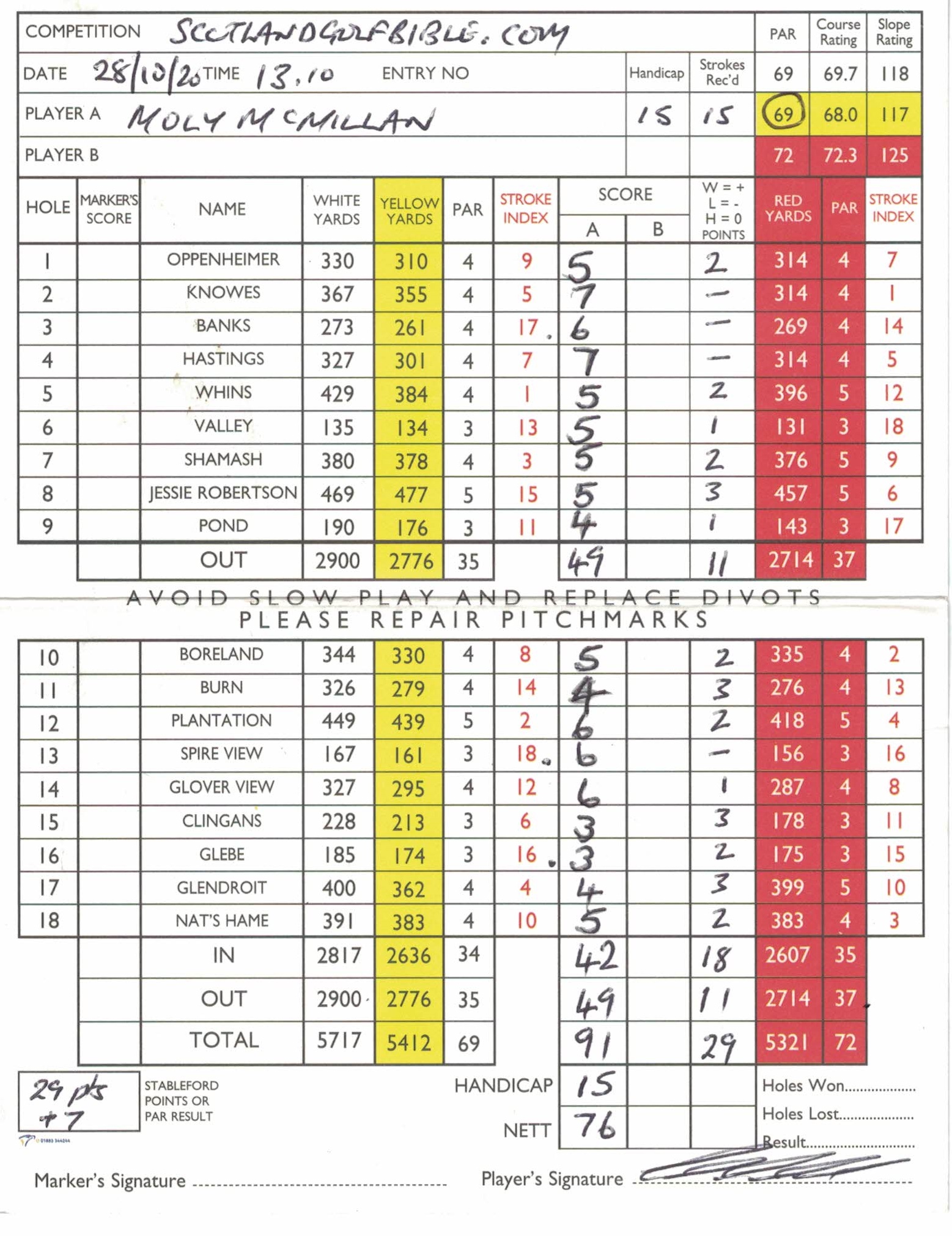
I shot 91, and played pretty well on the back 9, where I had 18 stableford points. This was helped by the wide fairway in the main.

Another wonderful quirk is that the clubhouse is used by an award winning Thai restaurant – I loved this and it just seemed so befitting this ‘cool’ place. The artists would undoubtedly been customers of the restaurant, even if they were not golfers!

Lastly, I have to mention the few local members in the clubhouse were really friendly and helpful explaining the layout of the course.

Course Type: Parkland

Par bb (2 par 5s, 11 par 4s, 5 par 3s)

Distance: 5412

Moly’s Gross score91

A struggle to 91 at Kirkcudbright golf course

114. Wigtownshire County. 25 Oct 2020.

Great value and wide open links course is a means to experience, or more accurately feel like, history

Round £45. Par 70. Course Rating / Slope Rating (yellow) 68.3/124. Value (out of 5) – 4

Wigtownshire County golf course, set beside Luce Bay on the west coast of Dumfries and Galloway, will, I suspect, sharply divide opinion. This is links golf at its most basic, which I really like.

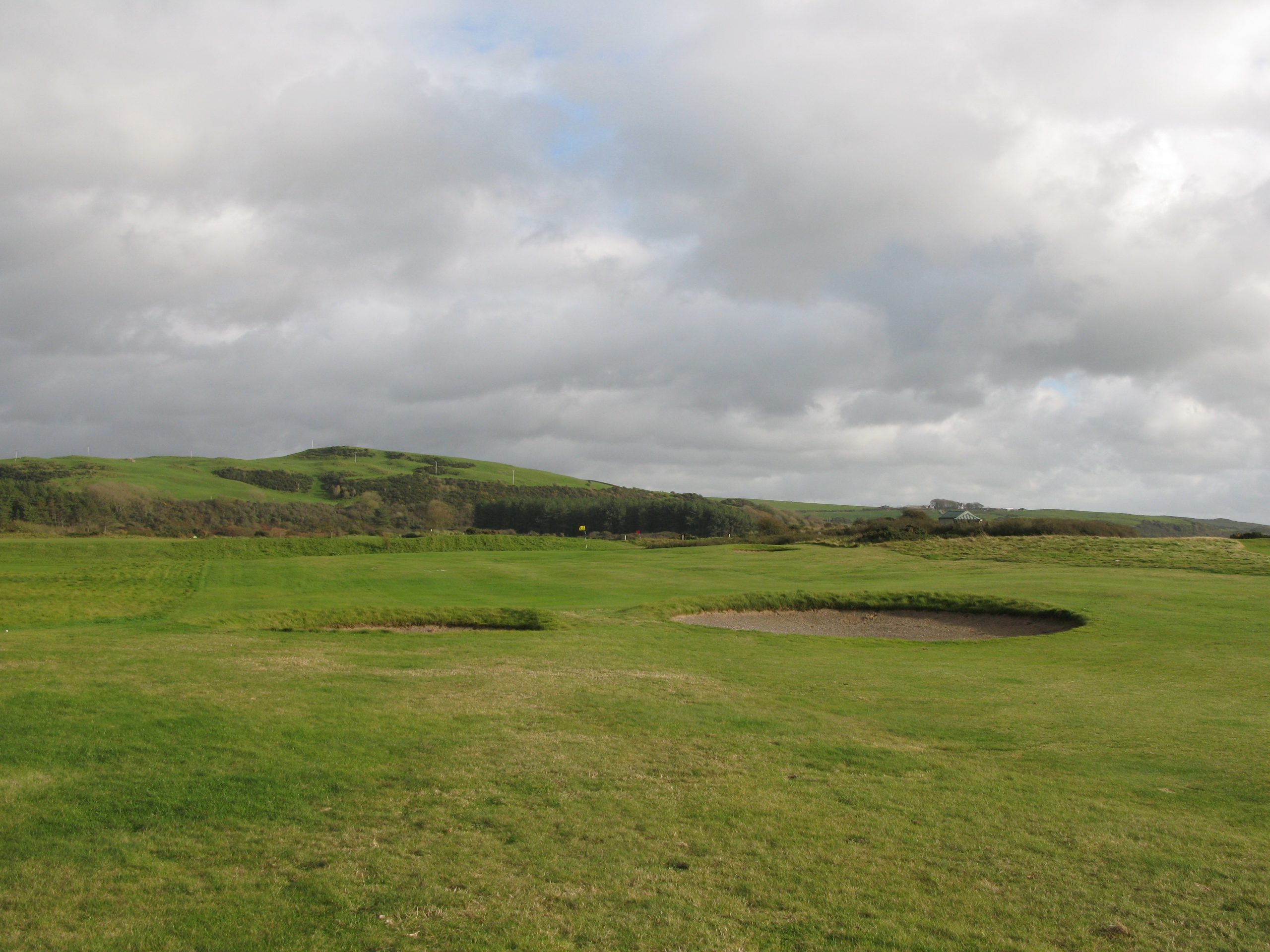
The 8th – a typically basic hole at this course.

It’s an open course, with many wide fairways, so several of the holes aren’t readily framed to the eye. It’s also made up of 14 par fours, with only 1 par five and 3 par 3s; to some this likely lacks the desired variety of holes.

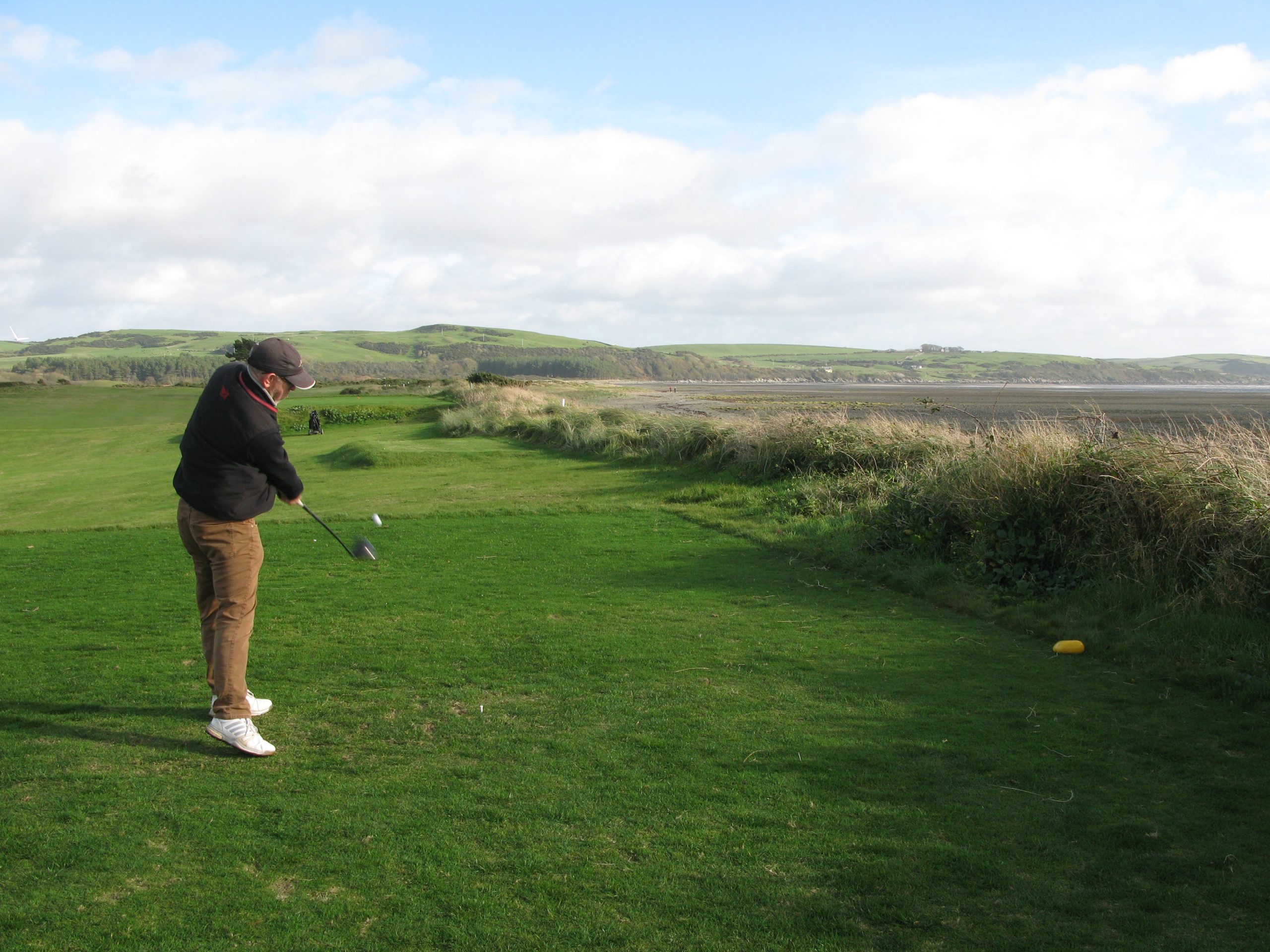
Moly drives at “St Helena”, the dog leg right par 4 fourth hole, which hugs Luce Bay, at Wigtownshire County. Plenty of room to the left.

On the other hand, many golfers who prefer the natural feel of what courses were historically like, might love Wigtownshire County; however, to that extent, the course is also a bit of a façade. It was a 9 hole course (current holes 1 to 4 and 14 through18) when designed in 1894 by Charlie Hunter, who also designed Machrihanish and Royal Troon, so he has has great pedigree. It was only extended to 18 holes as recently as 1987, by designer Gordon Cunningham, whose work is really brilliant in that you really feel like you’re playing a joined-up 18 holes , unchanged for 100 years.

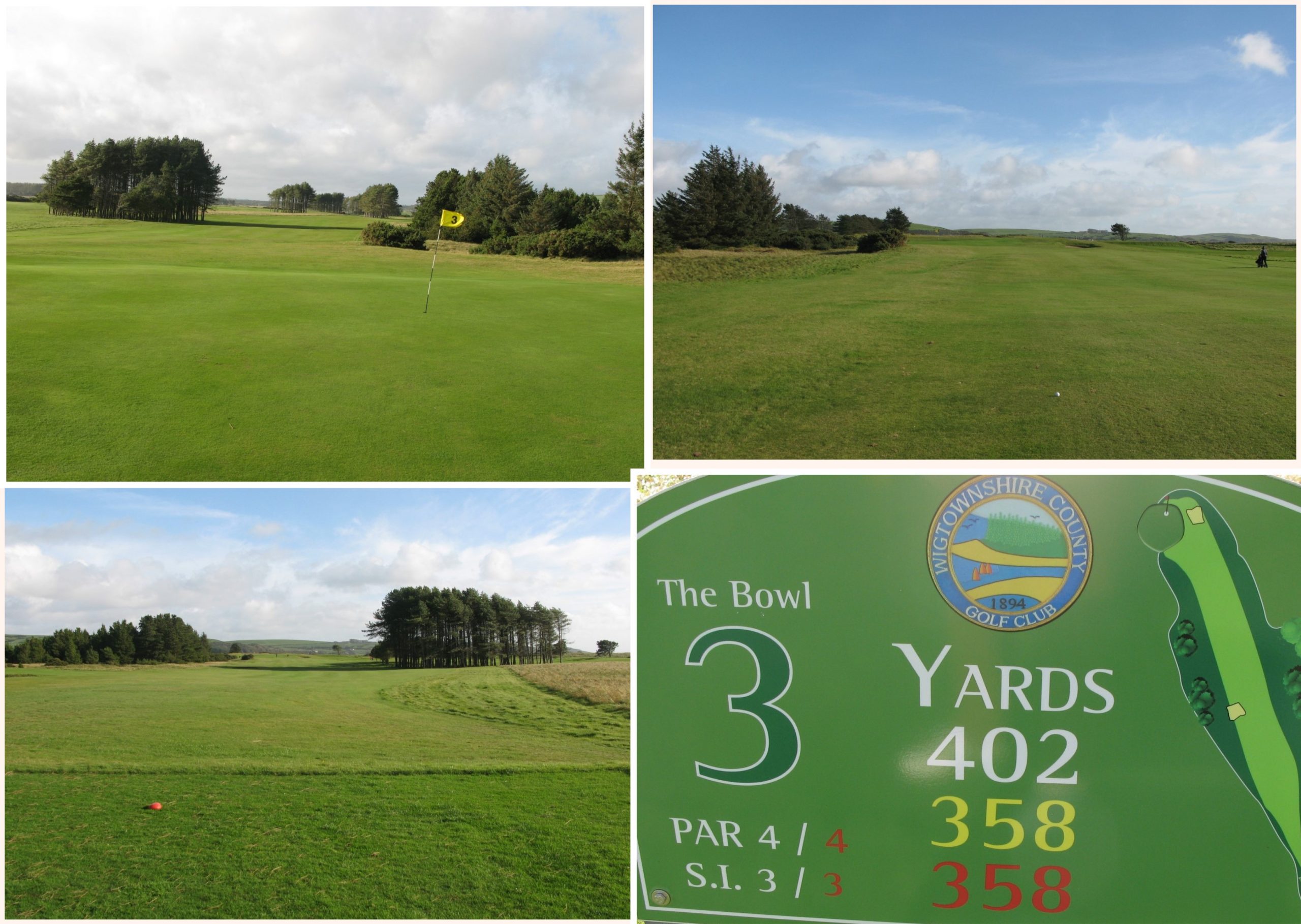
The 3rd at Wigtownshire, a decent par 4, one of the original 9 holes. This is a typical hole here.

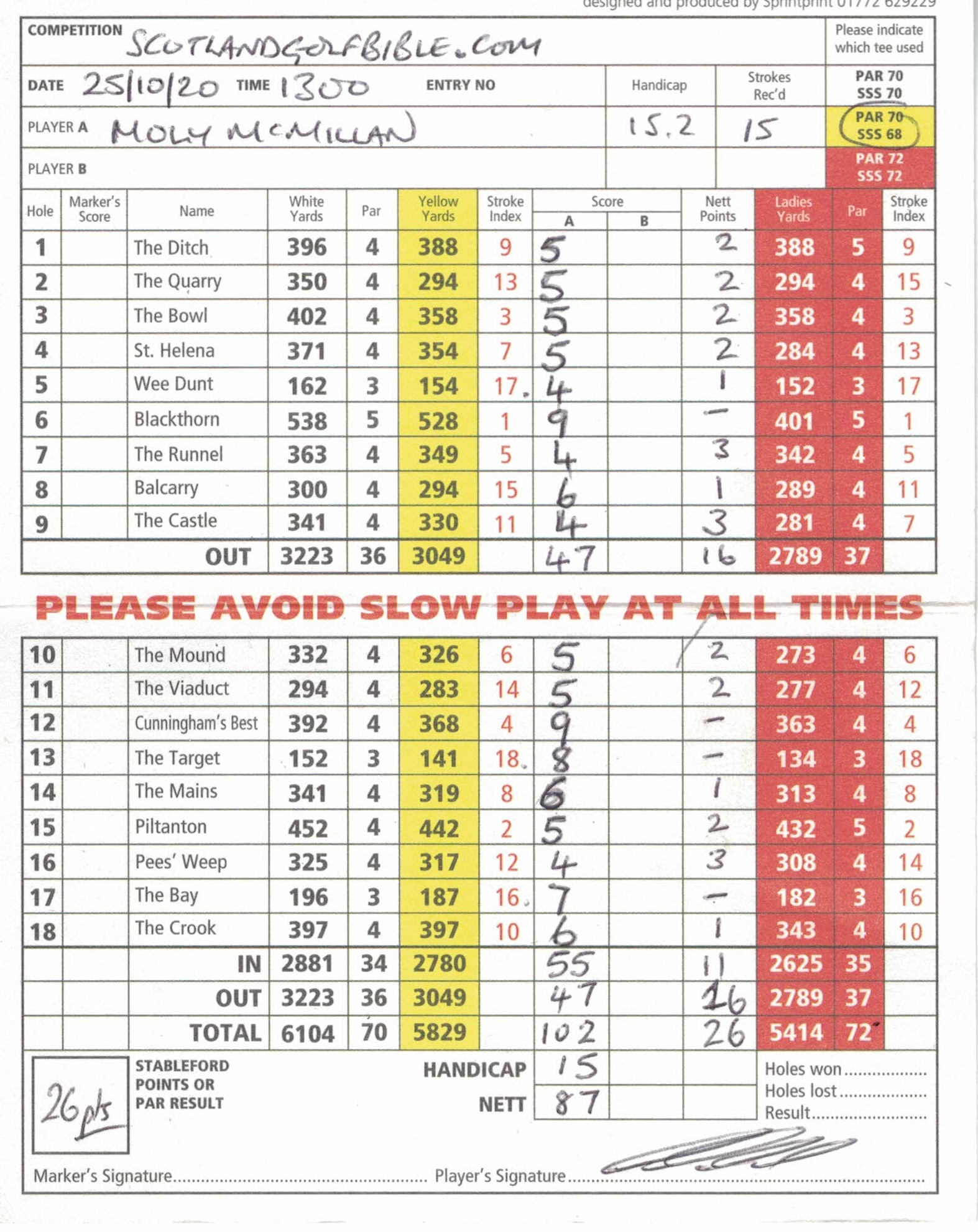
Given the open aspect of the design and its coastal location, weather is going to dominate your experience here. I played in very high winds, with gusts up to 40mph, didn’t break 100, and racked up 4 triple bogies or worse. I suspect the wide fairways and relatively open approaches as well, would see very low scoring in benign conditions. Weather notwithstanding, the would be a great society day out. Good greens, no impossible challenges, 2 nice coastal holes and generally good course conditions.

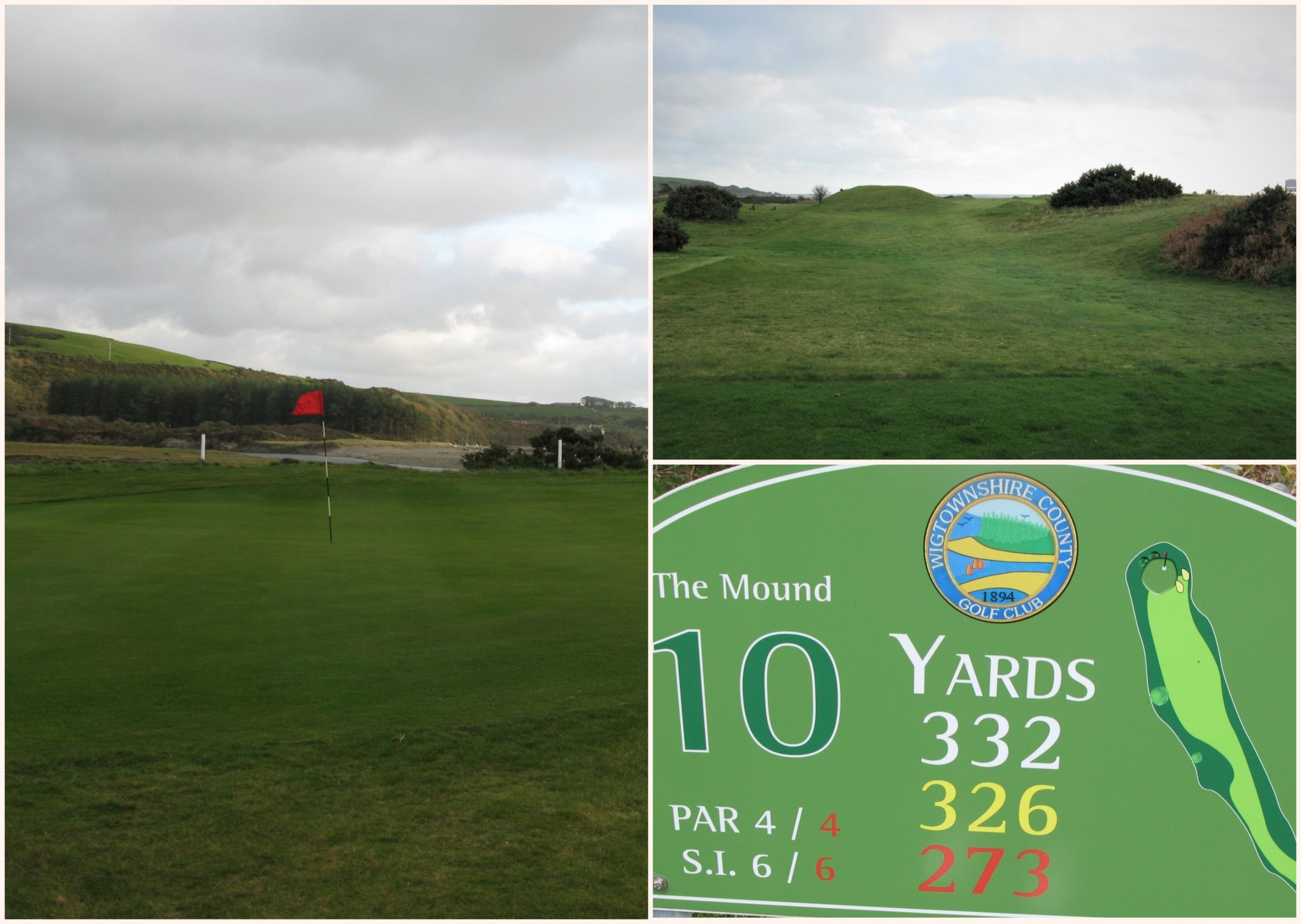
The par four 10th, one of the very few undulating holes at Wigtownshire County. This was one of the new holes laid down in 1997.

If you’re a lover of links golf and like the historic feel of a basic layout, it’s worth going out of your way to play here, especially as the price represents excellent value and great natural drainage guarantees all year round golf.

Facts:

Course Type: Links

Par 70 (1 par 5, 14 par 4s, 3 par 3s)

Distance: 5829

Moly’s Gross score102

Moly’s Wigtownshire County Scorecard – a 102 in very high winds
« Older posts Newer posts »

© 2026 Scotland Golf Bible

Theme by Anders NorenUp ↑