A guide to green fee value for money

Category: 1851 – 1900 (Page 3 of 14)

152. Forfar. 9 July 22.

Incredible and possibly unique golf course.

Round £50. Par 69. Course Rating / Slope Rating (yellow) 67.2/119. Value (out of 5) – 5

Forfar is an incredible golf course. Although I’m a native Dundonian and played football in nearby Forfar many times, I had never actually played the golf course – I had no idea what I’d been missing all those years. Whenever I’ve mentioned Forfar to my non-Scots friends, I always get “Forfar four, East Fife five!”. It should be famous for its golf course.
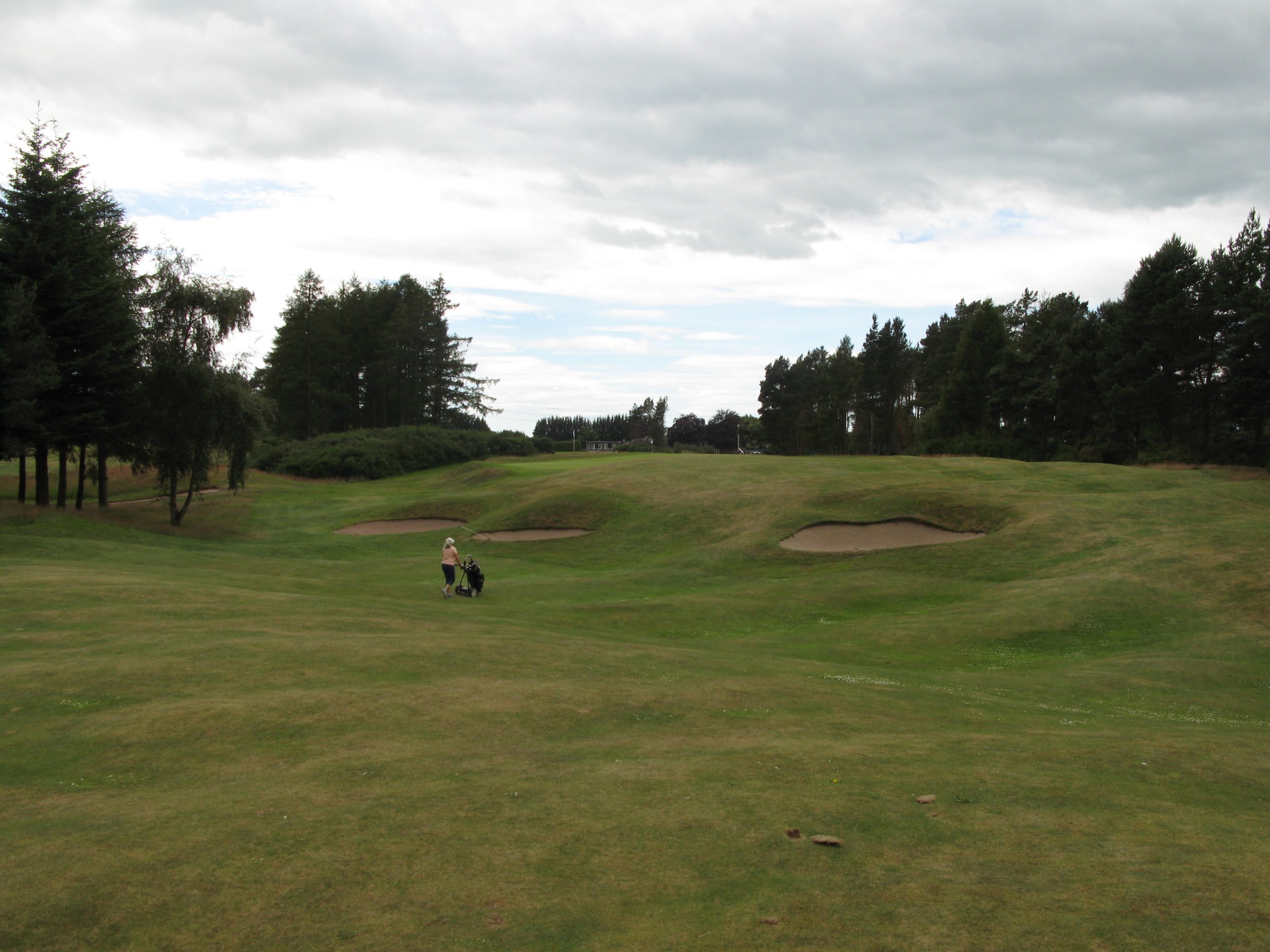
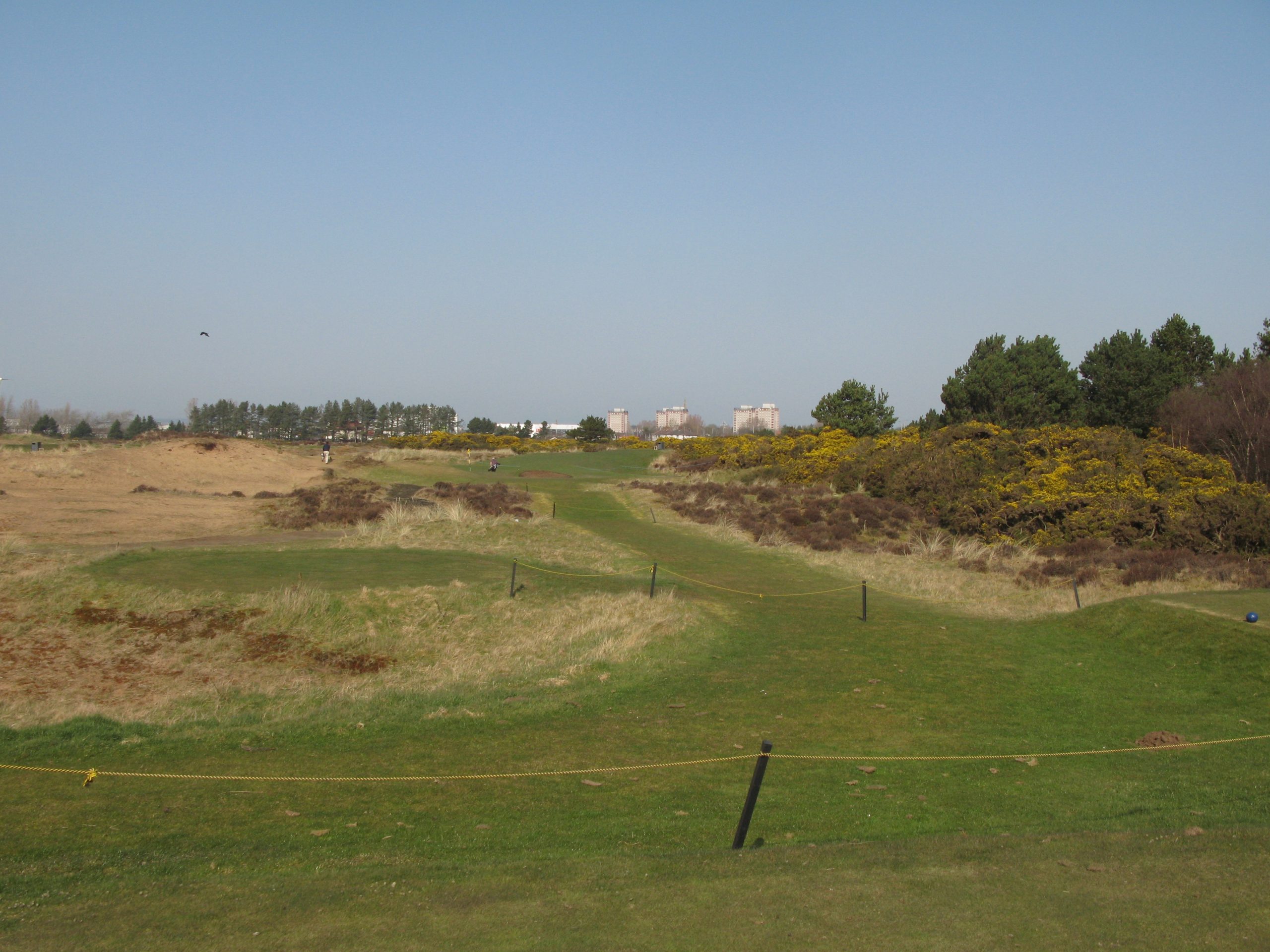
The 4th, ‘Cat Law, a tough par four, with Forfar’s terrain on show.

Having read many reviews of Forfar golf course, I was struck by the number of writers commenting on the unusual terrain – “it’s an ‘inland links'” said many.
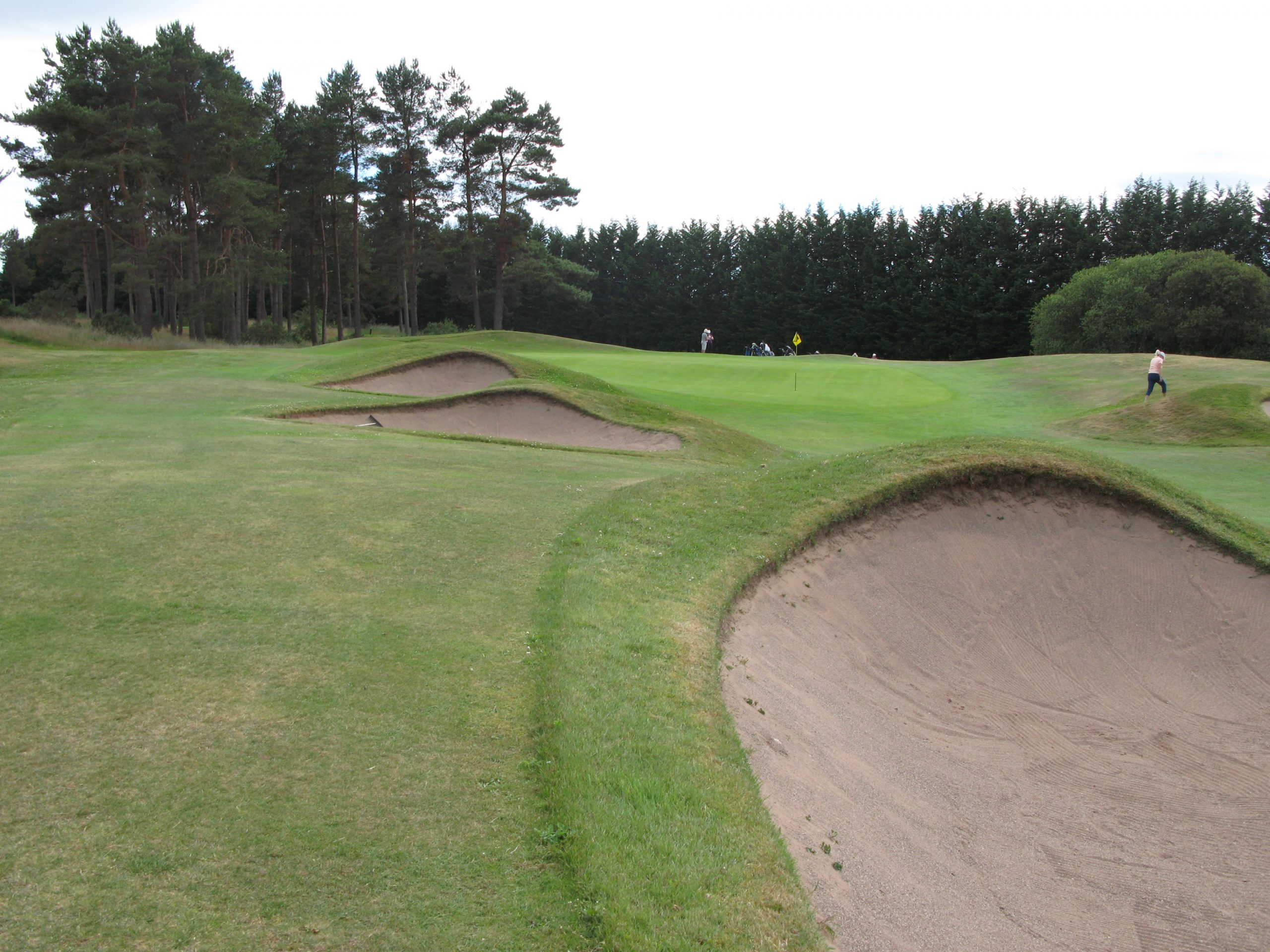
The majestically bunkered 17th hole – this is typical of the views playing Forfar.

The geology is very marked. It has hummocks and undulations with so much similarity to a links. Look at the fairways, and it could be Scotscraig, near St Andrews. Look at the numerous Scots Pine, with the hilly surrounds, and it could be Boat of Garten in the Highlands. The wonderful heather and bunkered green surrounds, would make their way easily onto Lanark, Edzell or any number of the great heathland courses.
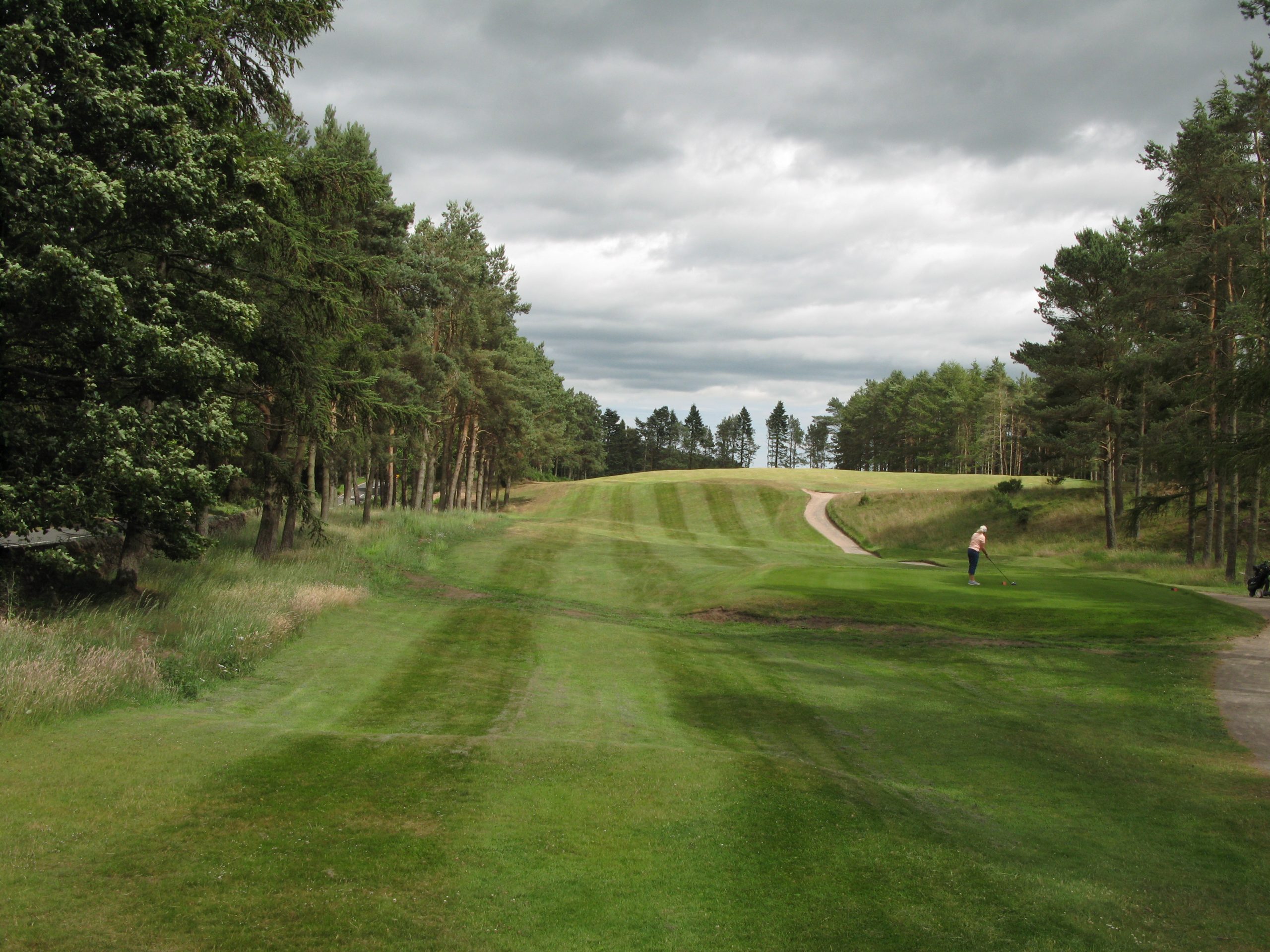
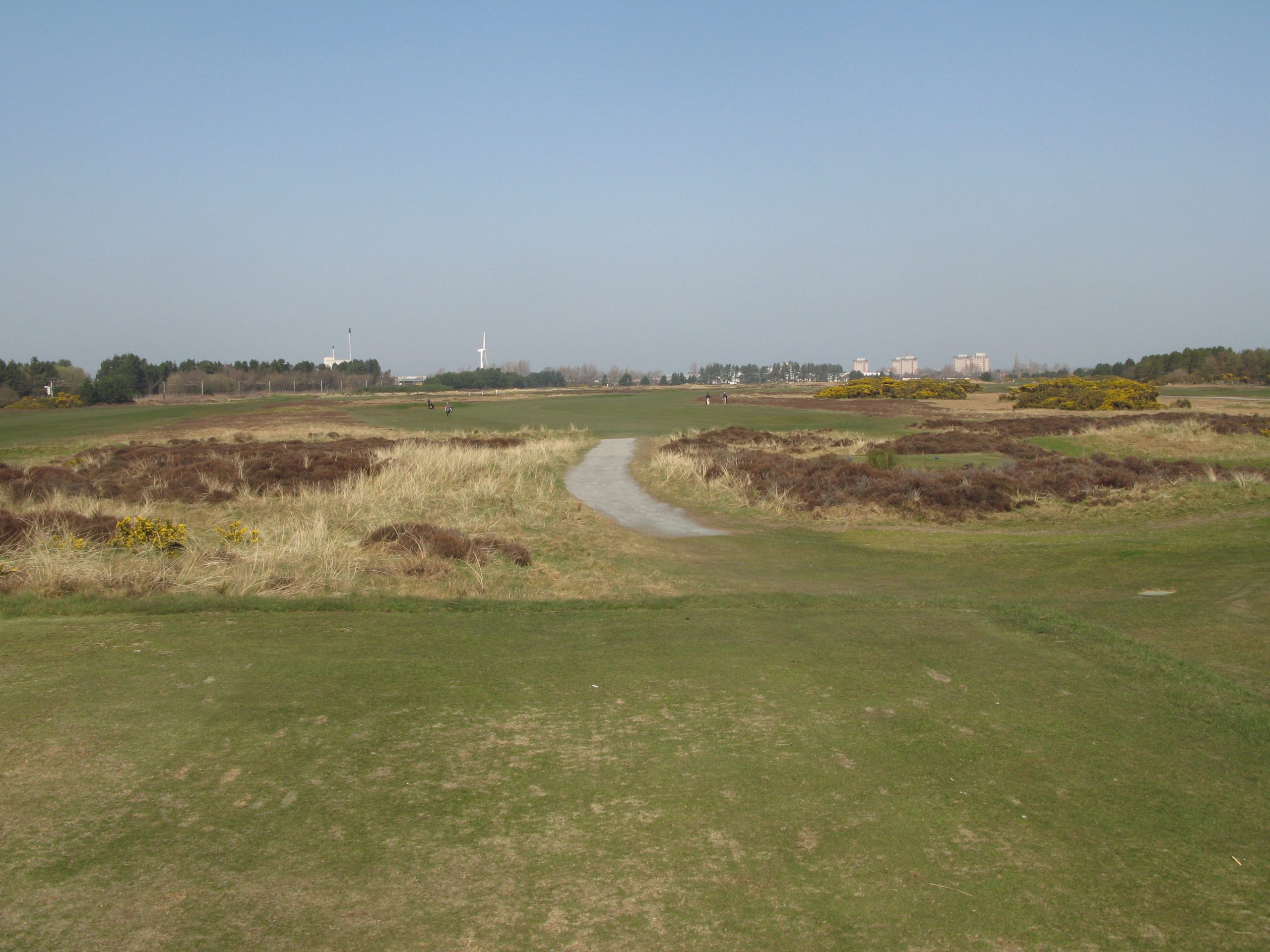
The blind tee shot at the par four 2nd hole.

I’ve played over 200 golf courses throughout the world, from the Monteray Peninsular, through the championship layouts of South Africa and Australia. Ryder Cup parkland courses and Open Championship links. Asian tour venues. Forfar is both like none of them and yet like all of them, simultaneously.
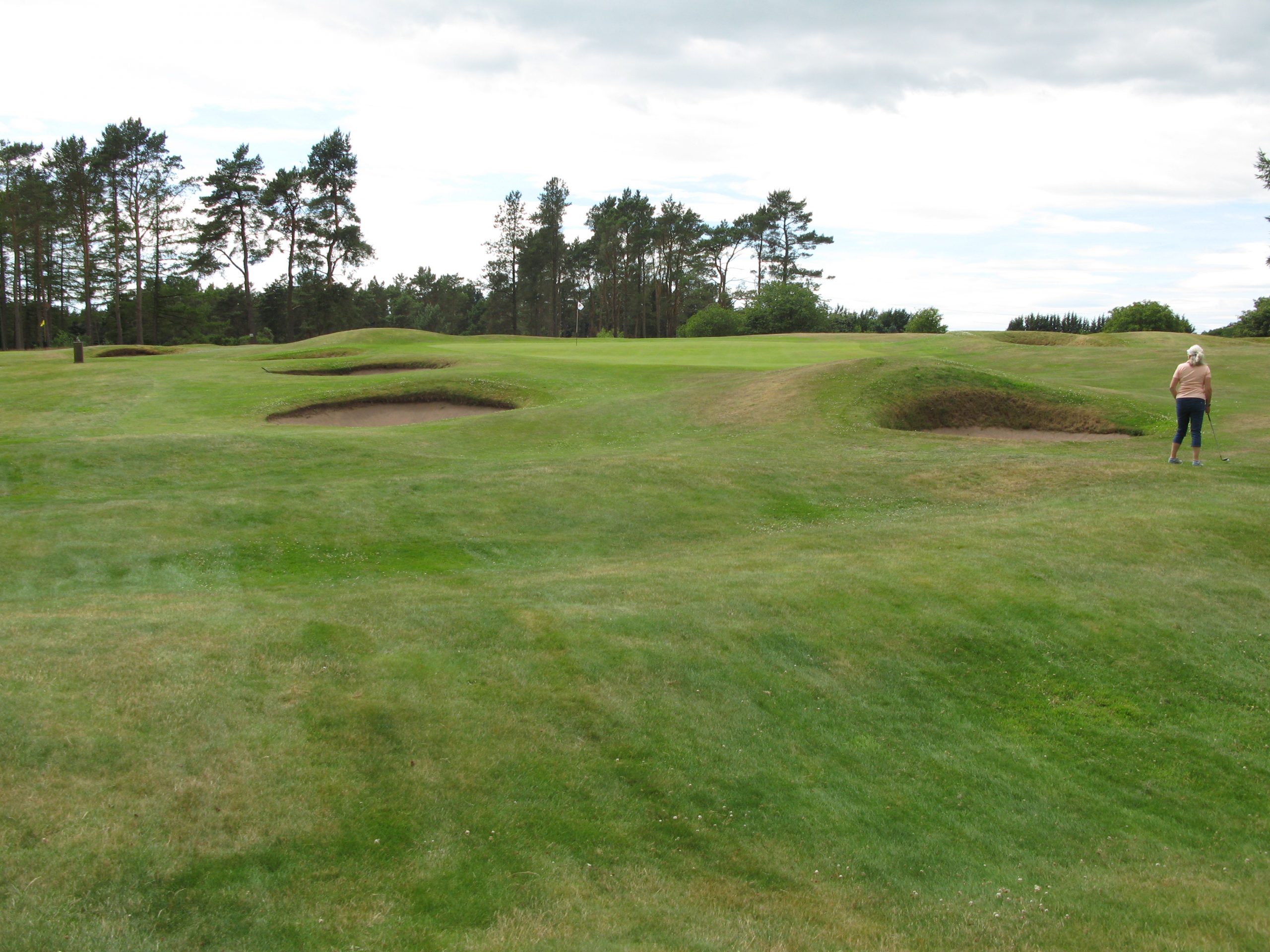
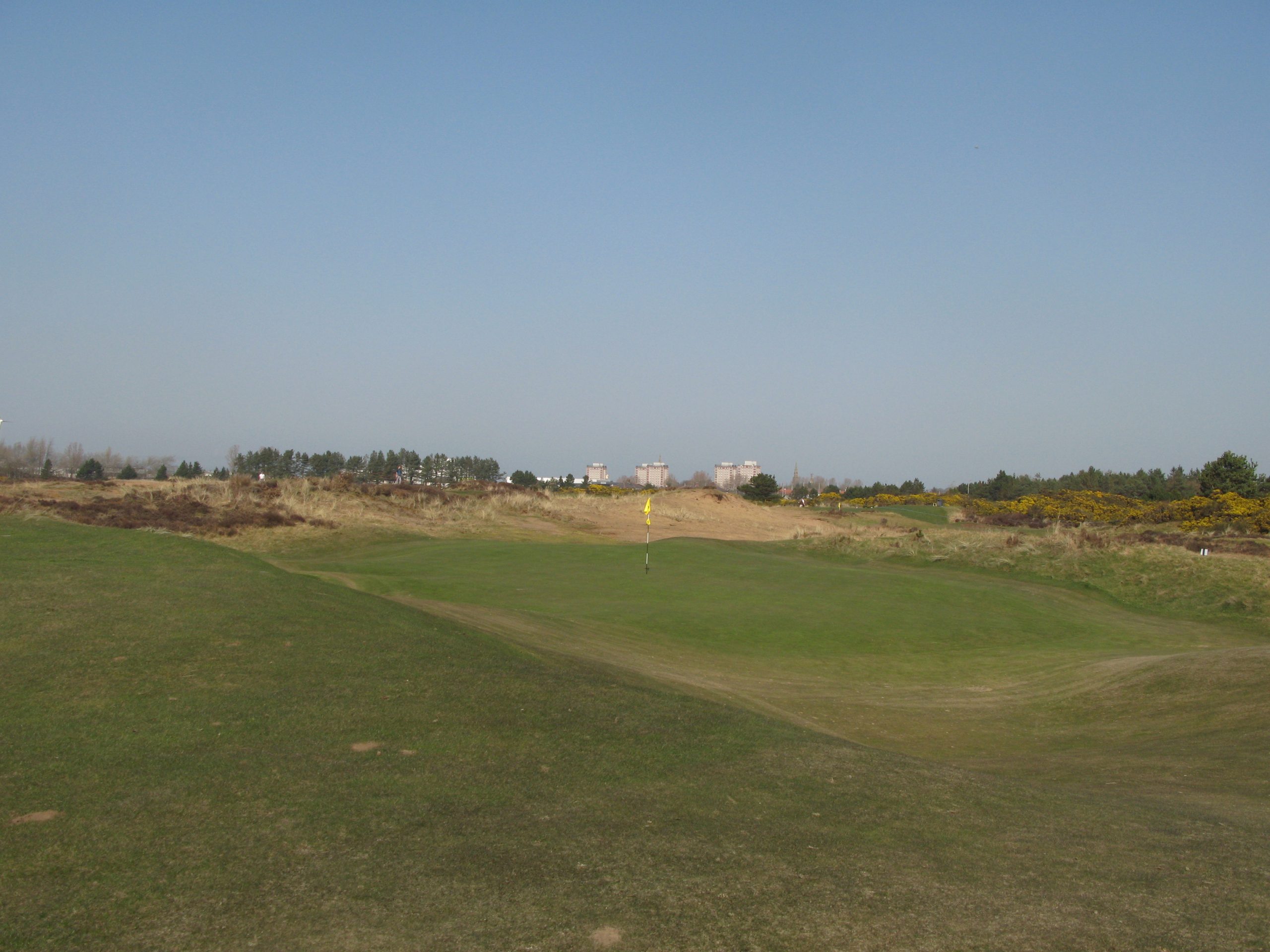
The green complex at the fifth, a challenging long par 3.

On land influenced by the remnant boulders of the last ice age, Forfar sits only 15 miles north of Carnoustie and 15 miles south of Glen Clova in the Angus Glens. The golf course has a lengthy history, claiming to be “the 4th oldest 18 hole course in the world and is the very first Club to have an 18 hole course from inception and inauguration”.  This latter comment is carefully contructed, since there are many earlier 18 hole courses, for example the Lundin/Leven Links (blog here) 18 holes dates to 1868, 3 years before the creation of Forfar.
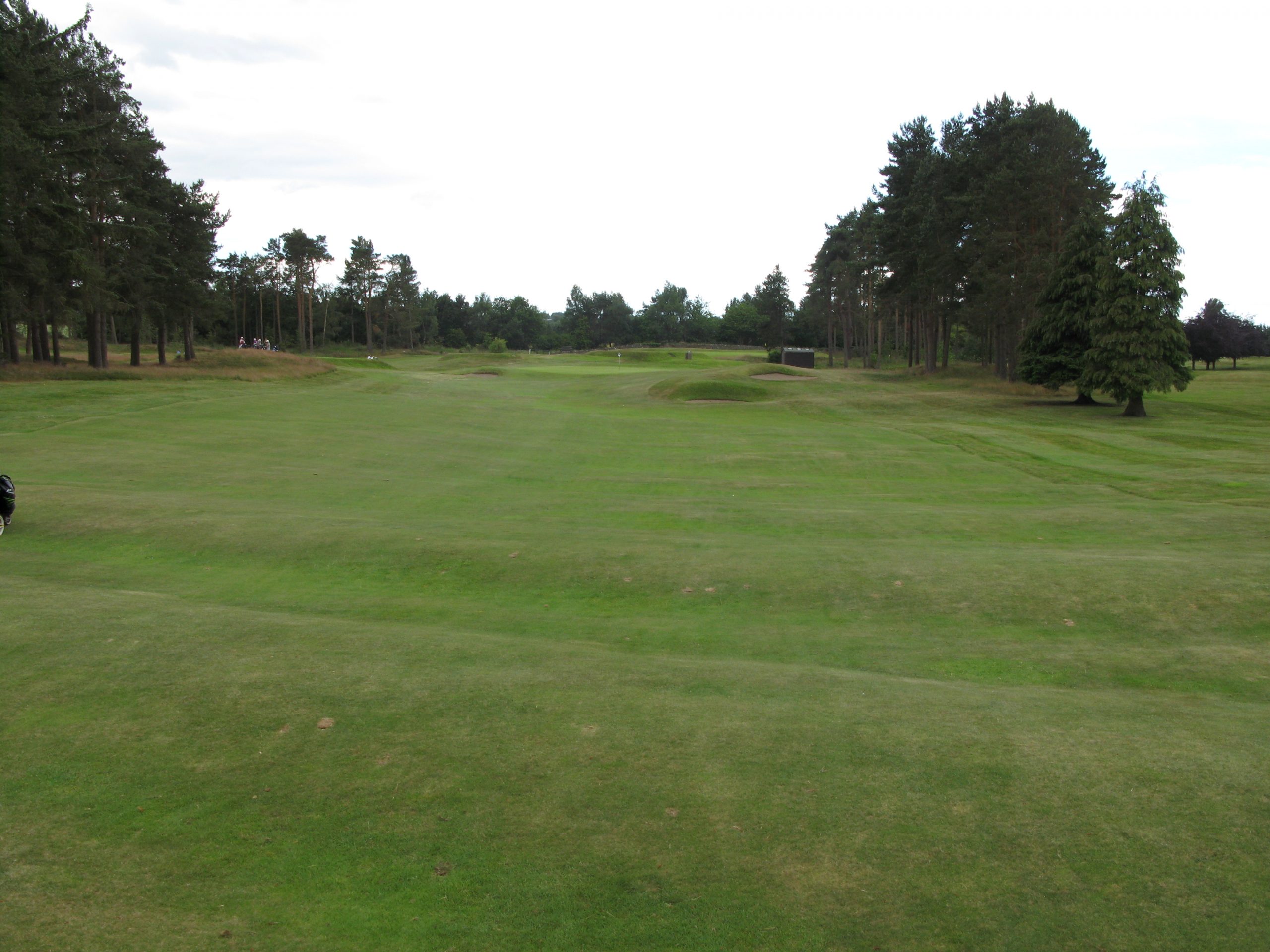
The approach to the seventh, the par four, ‘Quarry’, SI 2 hole. Play long and right, if you can hit the green in 2.

The course was designed by Old Tom Morris, at a time when no major earth moving was done in course construction. So all that you walk on is natural. The green surrounds are at times genius, which makes sense since James Braid carried out a redesign in 1926, but the majority of the holes remained the same. Overall, its a beautiful golfing challenge.
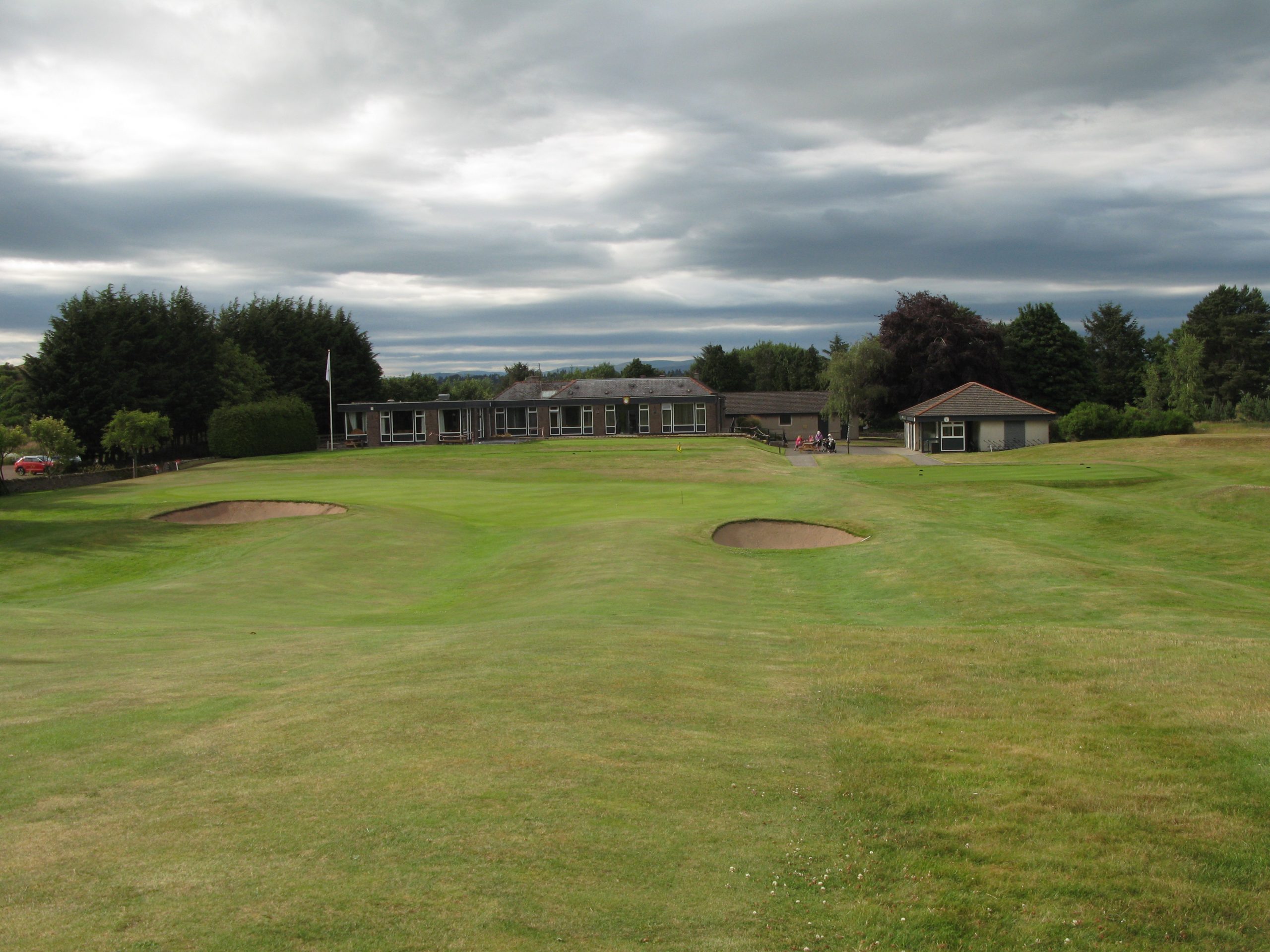
The tricky 18th green to find from a blind approach shot. I was lucky to choose the right club, to get my 3rd birdie of the day. Very unusual for me!

Despite having a few weaker holes, notably the par three ninth, there are many that are memorable. When we played on a calm, July day, the course was in great condition. The fairways were dry and fast running, the turf was firm, the greens slick, the bunkers consistently first class and the teeing grounds all excellent.
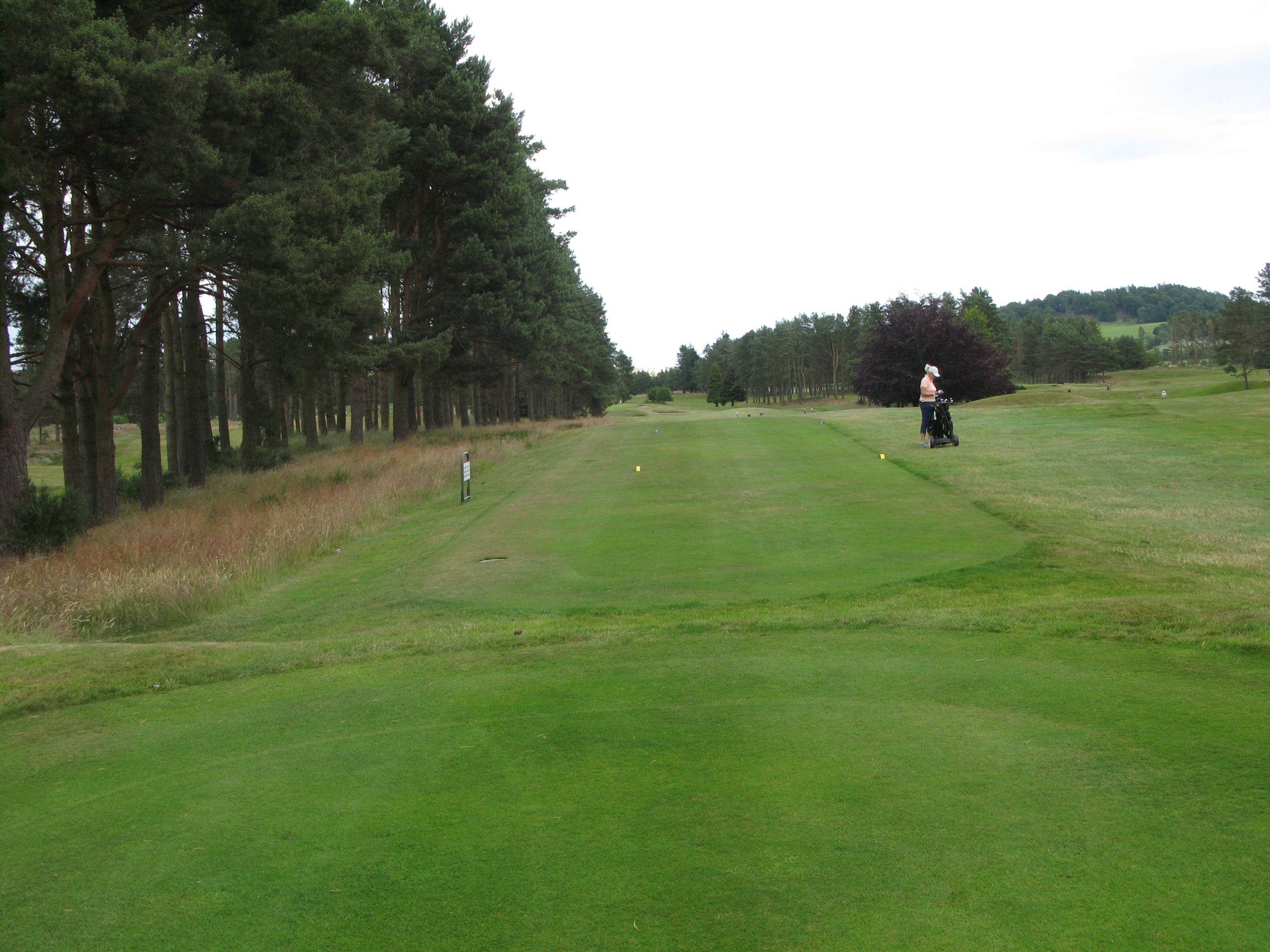
The wonderful 12th hole, the SI 1 hole on the course. A par four of 422 yards (yellow).

Value for money is undoubtedly 5 star, at the £50 mid-week rate; we paid only £20 through a Golfnow ‘hot deal’ for a Saturday twilight time. In fact, unbeatable golfing value.
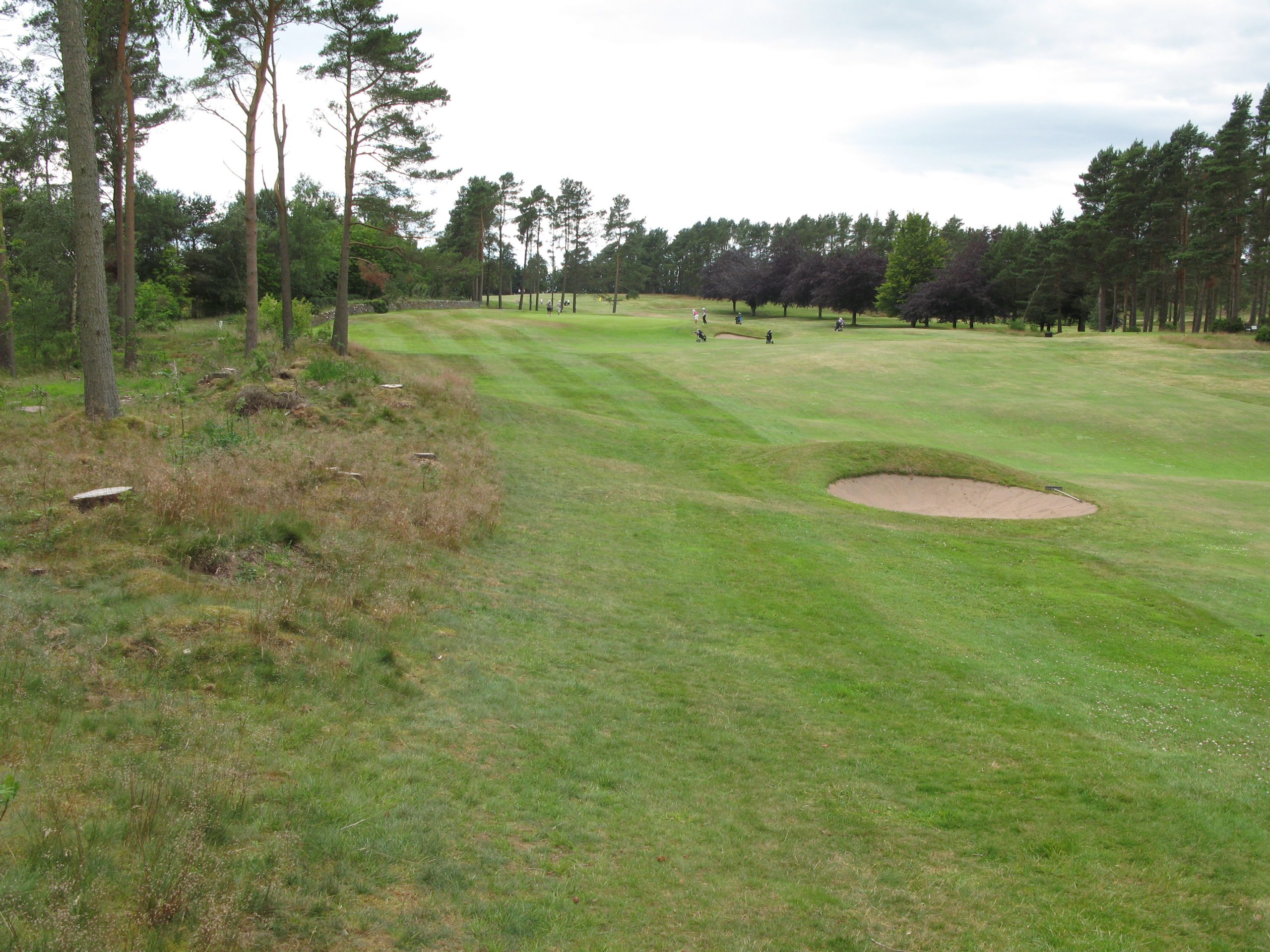
The 10th, a mid length par 4, where storms had left their mark with a loss of trees.

If I had to select only 10 courses that collectively represented the range of golf in Scotland, Forfar might just be be my number one pick, it is that unique. As to its overall ranking, it regularly appears in the “Top 100” Scotland courses, typically around 70th place. This doesn’t do it justice for me, I think it’s easy to justify a top 50 placing.

I can’t recommend Forfar high enough.

Facts:

Course Type: “Inland Links?”

Par 67  (1 par 5s, 13 par 4s, 4 par 3s)

Distance (yellow): 5754 yards

Moly’s Gross score: 84
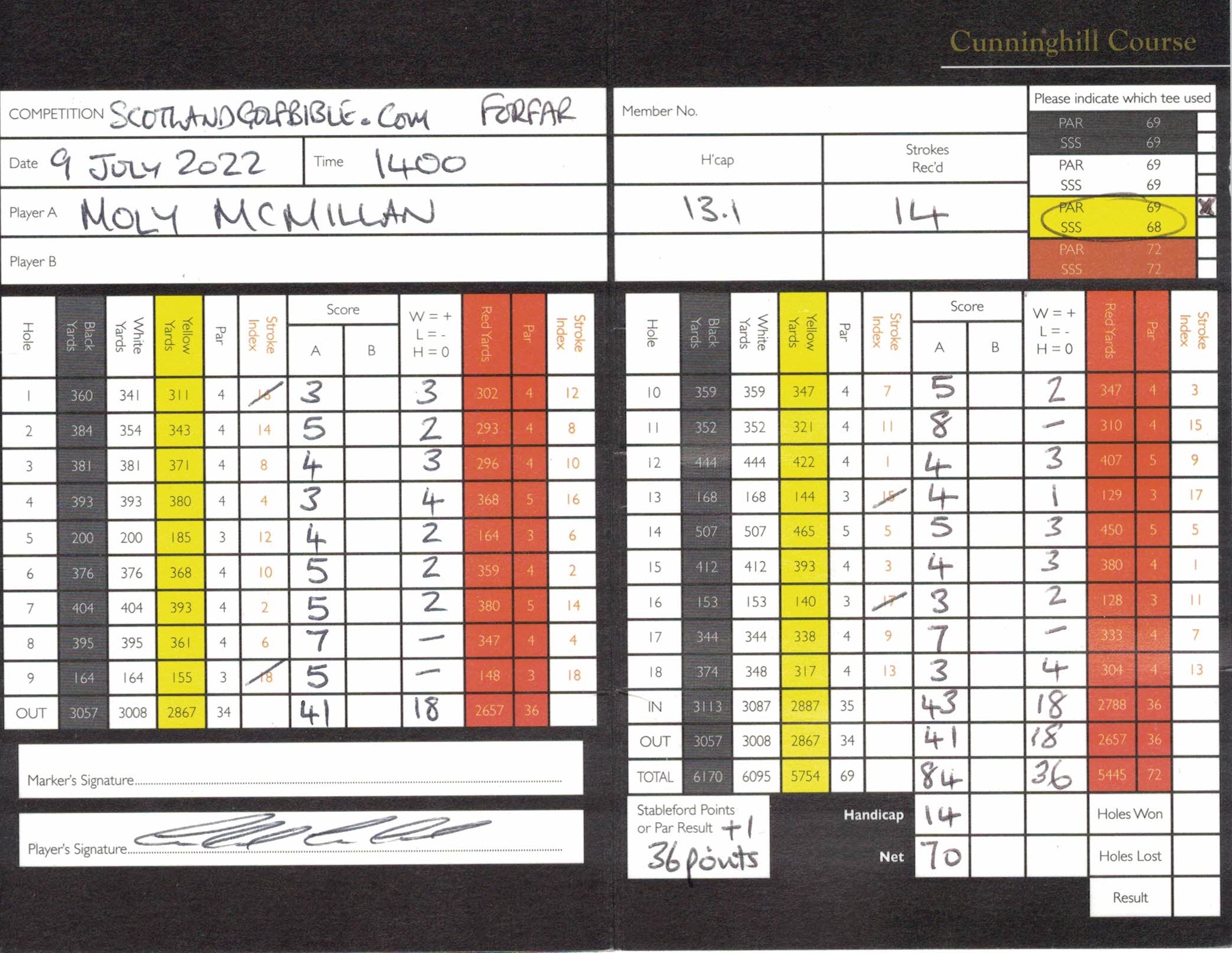
Moly’s Forfar scorecard – a commendable 84. 3 birdies and 3 triple bogies!

143. Gullane Number 1. 24 May 2022.

Arguably the epi-centric viewpoint of world links golf

Round £195. Par 71. Course Rating / Slope Rating (yellow) 70.4/122. Value (out of 5) – 5

In Michael Murphy’s great book, “Golf in The Kingdom”, golf is eulogised in metaphysical or spiritual terms. In starting to write about Gullane, I can’t do better than Murphy’s epigraph, the Scottish golf saying:

“Golf was invented a billion years ago; don’t you remember?”

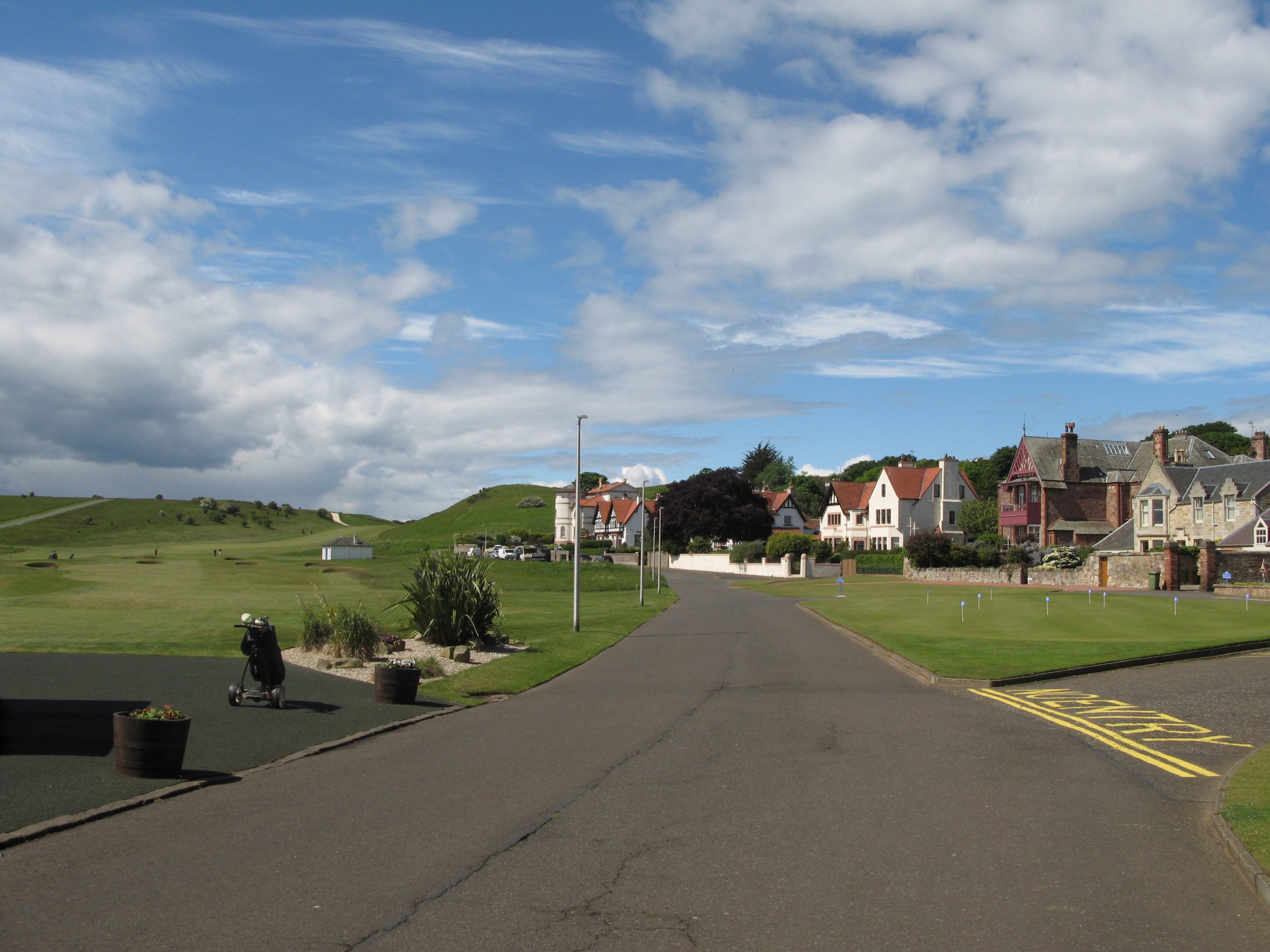
Oh, to win the lottery and live next to Gullane Number 1’s first tee.

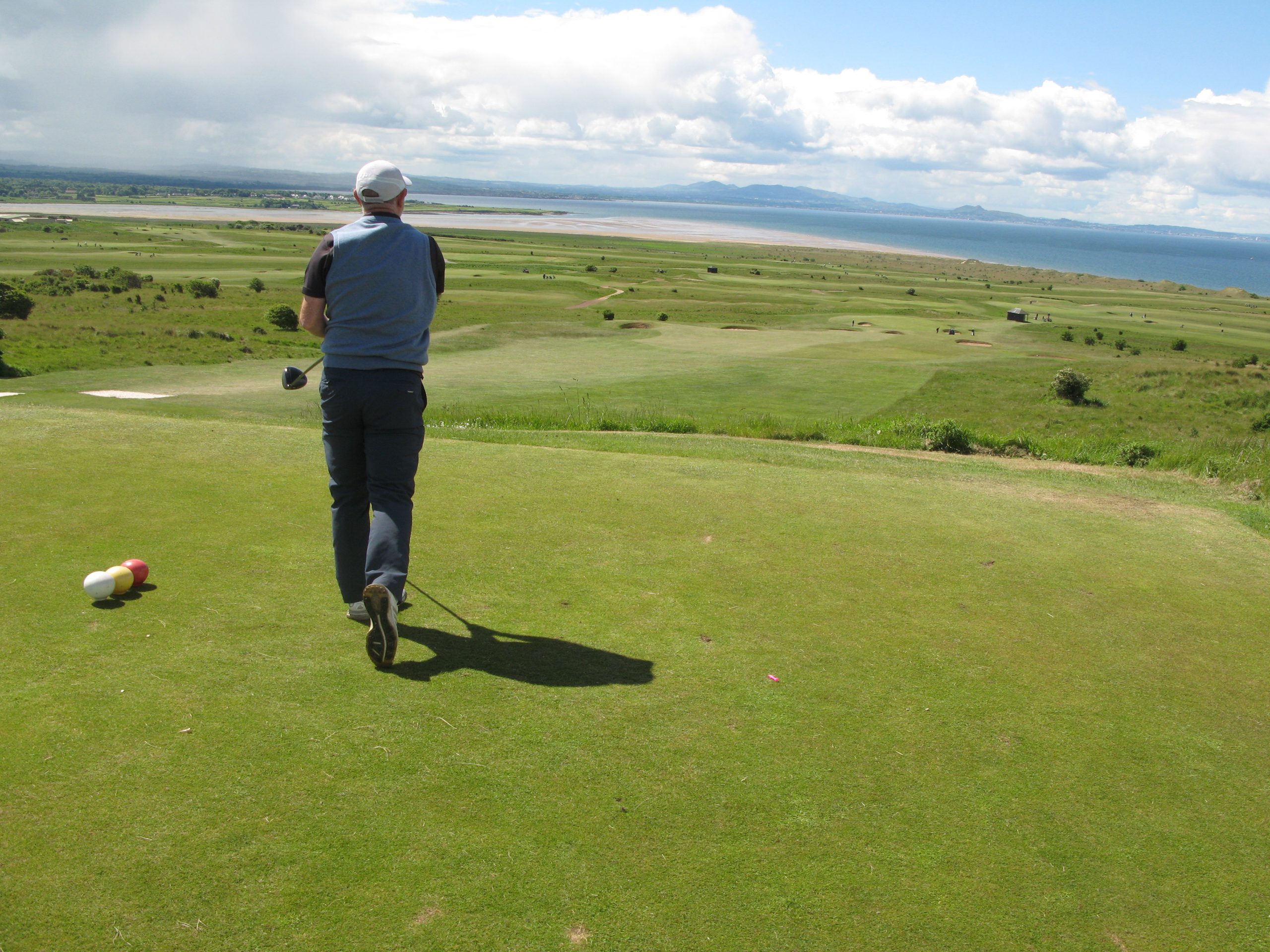
That epigraph made complete sense as I walked onto the 7th tee at Gullane Number 1 for the first time. Set on the small Gullane Hill, it is said on a clear day you can see fourteen counties. What is without debate, I think, is that you have the greatest links land view on earth. Perched there, you are at the mid point of the East Lothian ‘golf coast’ stretching from Dunbar to the east and Musselburgh to the west, with names synonymous with world golf – Dunbar, North Berwick, Archerfield, Renaissance, Muirfield, Luffness, Kilspindie, Craigie Law and Longniddry.

Moly on the epi-centric viewpoint of world golf – the 7th tee at Gullane No 1.

Look north across the Firth of Forth towards the Kingdom of Fife, with Leven, Crail, Elie and St Andrews; see past the Tentsmuir Forrest towards the links of Carnoustie, Montrose, Royal Aberdeen and Cruden Bay. Golf has been played on the East Coast of Scotland for hundreds of years, perhaps indeed ‘billions’. This 7th tee on Gullane Number 1 could be the epi-centric viewpoint of world golf; the Old Course is undoubtedly the “home”, but Gullane’s viewpoint is unparalleled.

The second hole at Gullane No 1, a par four “carved into the Ancient Links”

So much has been written about Gullane, including the crafted explanation of posh ‘Gillin’ versus humble ‘Gullan’ in his book, “Playing Through”, by Curtis Gillespie, that I decided to more or less tell this story mainly through pictures.

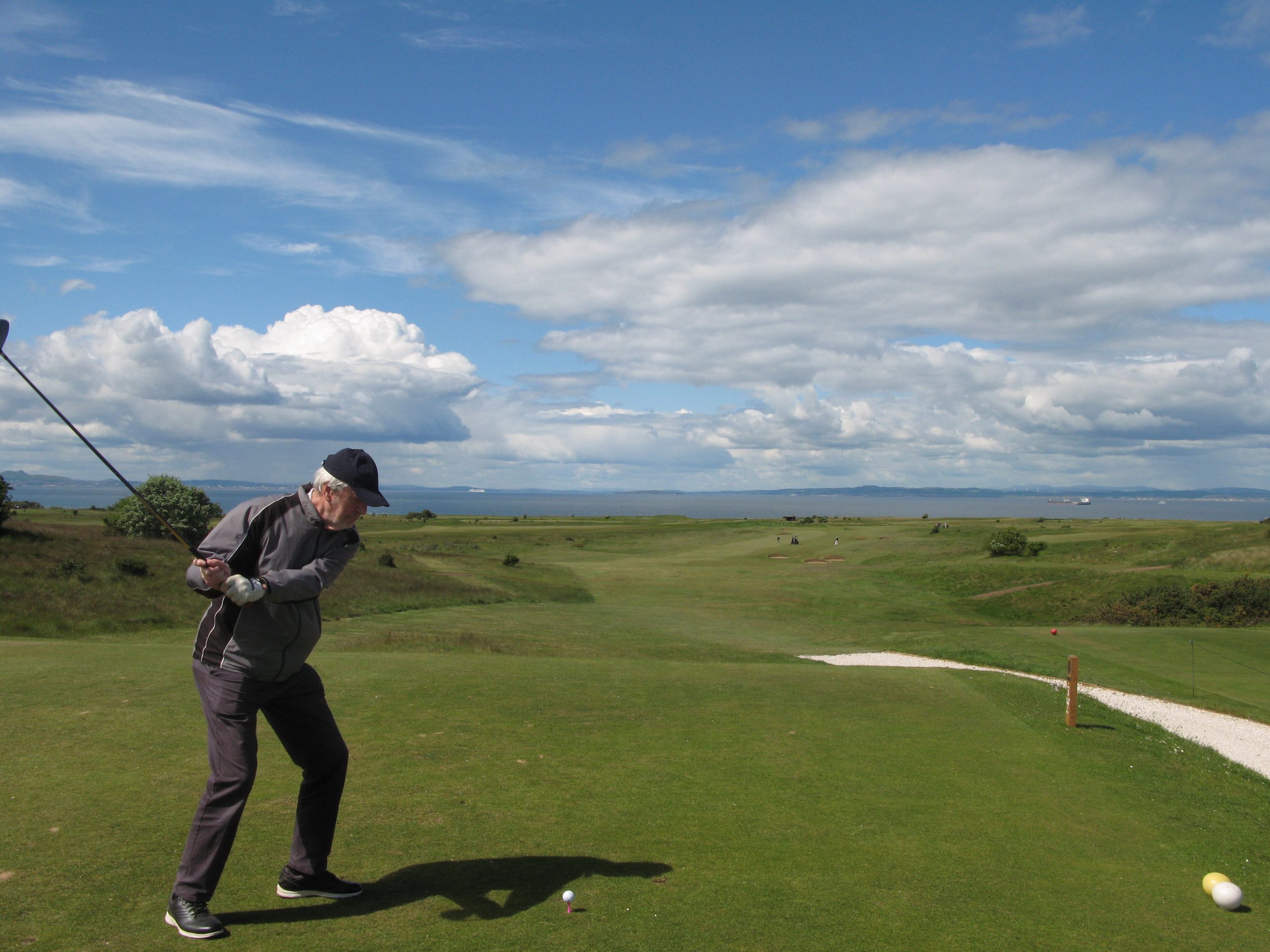
Alastair Allanach plays his low top spin drawing drive, which galloped down the “Racecourse” third; a swing honed and bartered over many years of tutelage by a South African pro. The Hill was used in bygone days by racehorses.

Accompanied by Gullane member, Alastair Allanach, a man who has played more golf courses than anyone I know, we had an absolute blast, waxing lyrical about Gullane and its history. Alastair, a great all round sportsman, and now well into his 70s, was keen to get in at least two of the three Gullane courses on the day, as he struggles to “carry my bag for three rounds nowadays!”

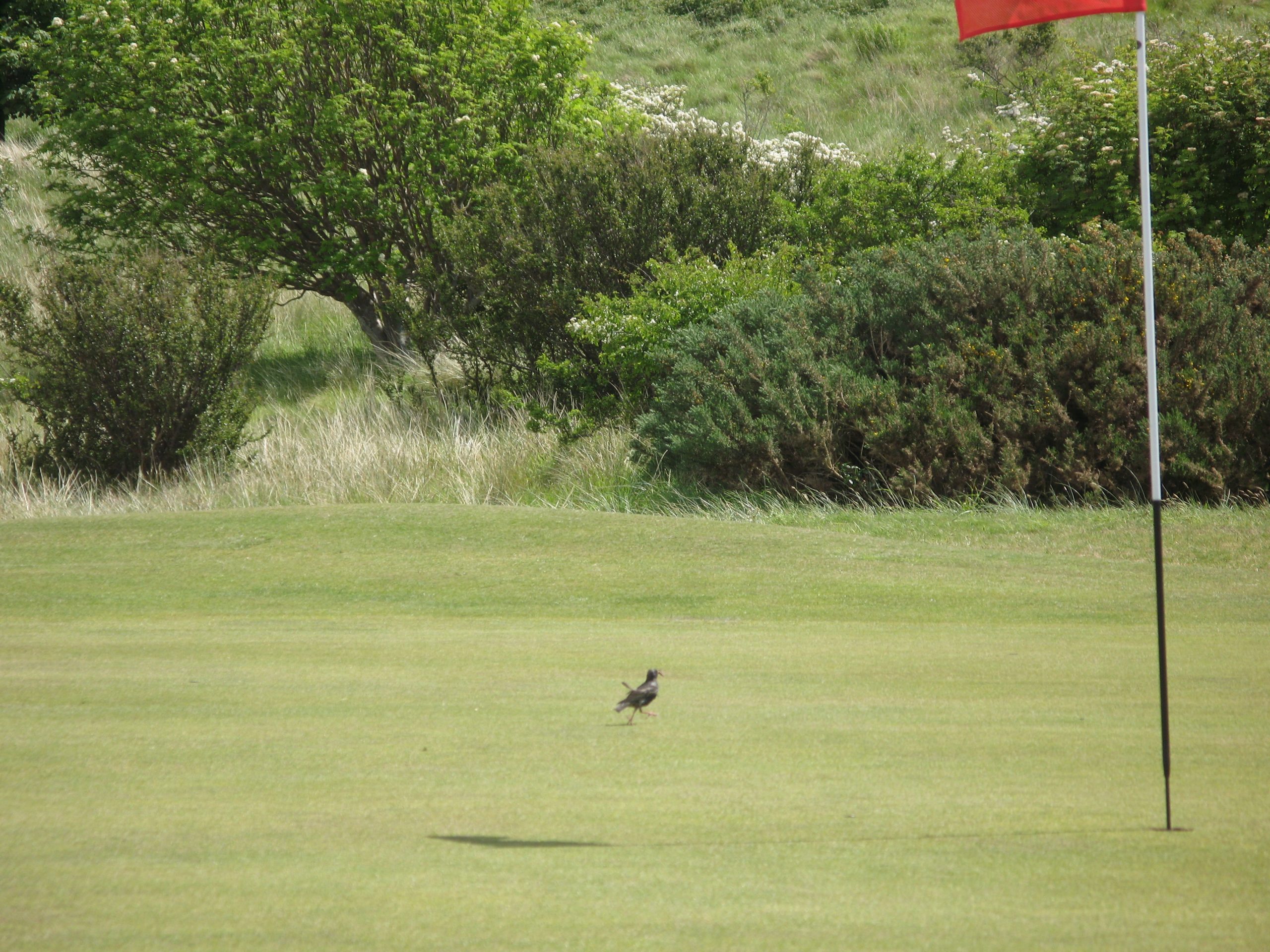
Gullane is one of a few nesting grounds where Larks abound, here encountered at the 8th green.

I met Alasdair a few years ago, when I helped a tiny bit in his editing of the golf book, “The Golfing Life of Jock Kirkcaldy“, the alter ego of our mutual great friend Frank Crowe. The book was forwarded by Gary Player, a friend of Alastair’s – of course!

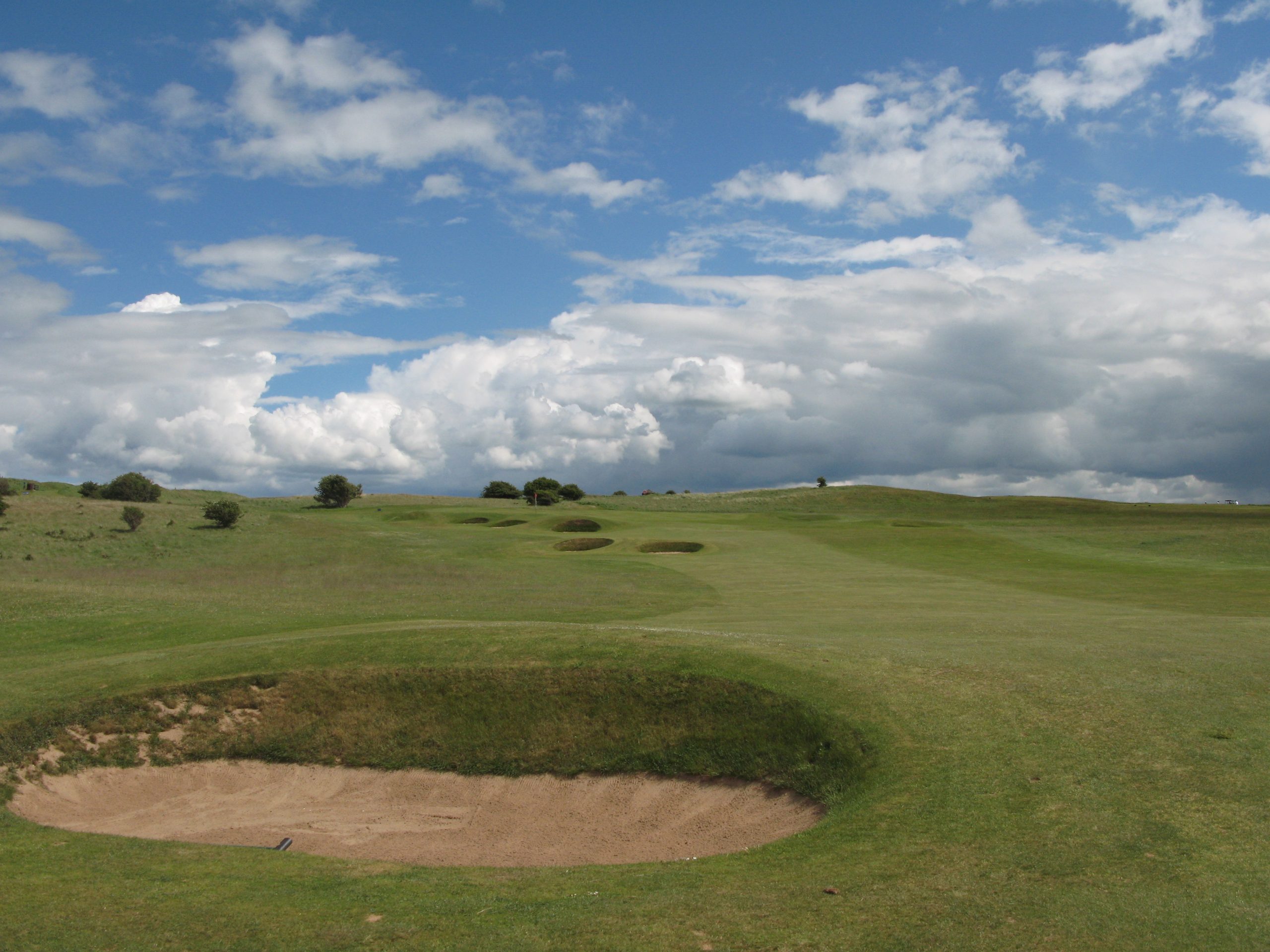
The brilliant bunkering at the par 3, ninth hole. Although not “the turn”, as with constant directional changes on the interweaving course, it’s unlike the many “out and back” links in Scotland.

This Championship course, the first of the three Gullane courses, dates back to 1882, (the others being innovatively named Gullane 2 and Gullane 3) and it was in brilliant condition. It could have immediately held another Scottish Open without any adjustment. The greens had a little more grass than a professional tournament would have, in order to ensure they didn’t become unplayable in the wind. We had a relatively still day on the links – only a 10mph breeze. Whilst Gullane 2 and 3 were both designed by golfing royalty, Willie Park Jr, the designer of Gullane 1 remains a mystery, which seems so apt.

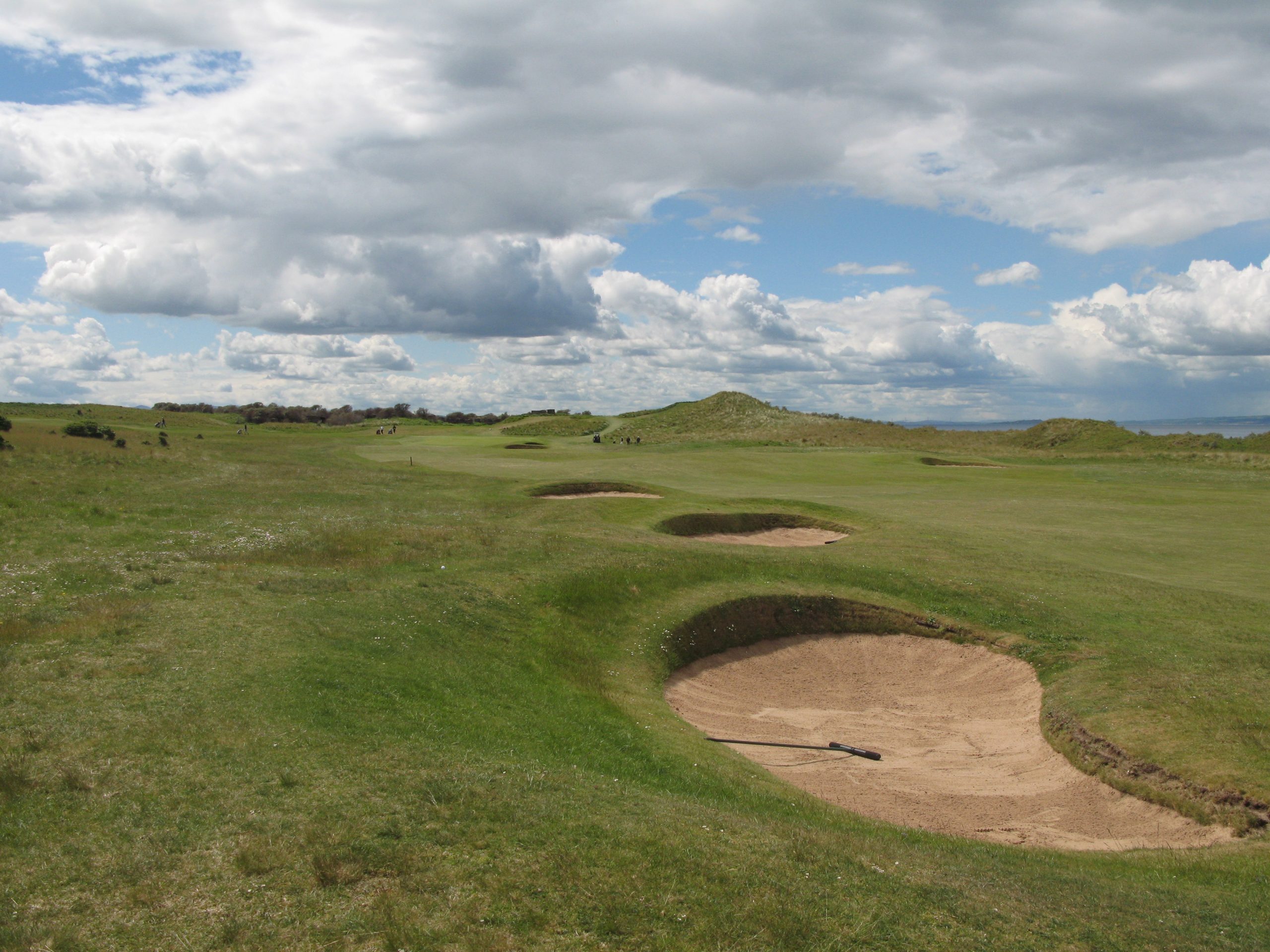
The bunkers at the left of the 12th fairway, a short par 5, but played slightly uphill and into the prevailing wind – a challenge. Moly’s birdie 4, was witnessed by a group of Swedish golfers, among the many international visitors Gullane gets each year.

The bunkering was exceptional. Strategically placed, penal, but not impossible, many of the new US style courses could learn from a Gullane recce. I recently played on the Ryder Cup course at the K Club and found that almost all the bunkers required a shot height and carry I no longer had in my bag. Gullane bunkers give you a chance.

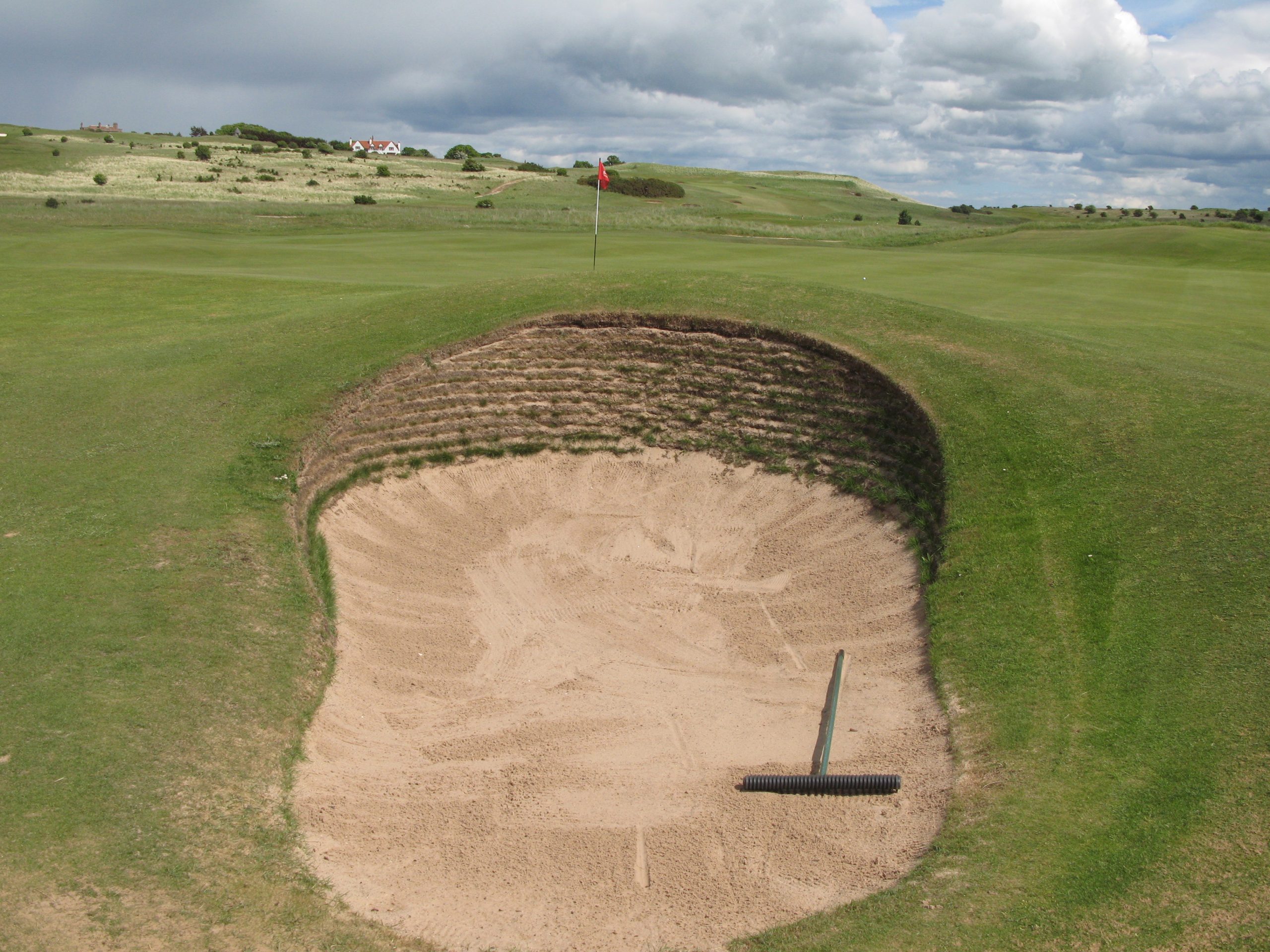
The immaculate bunker at the 14th green – penal but not impossible.

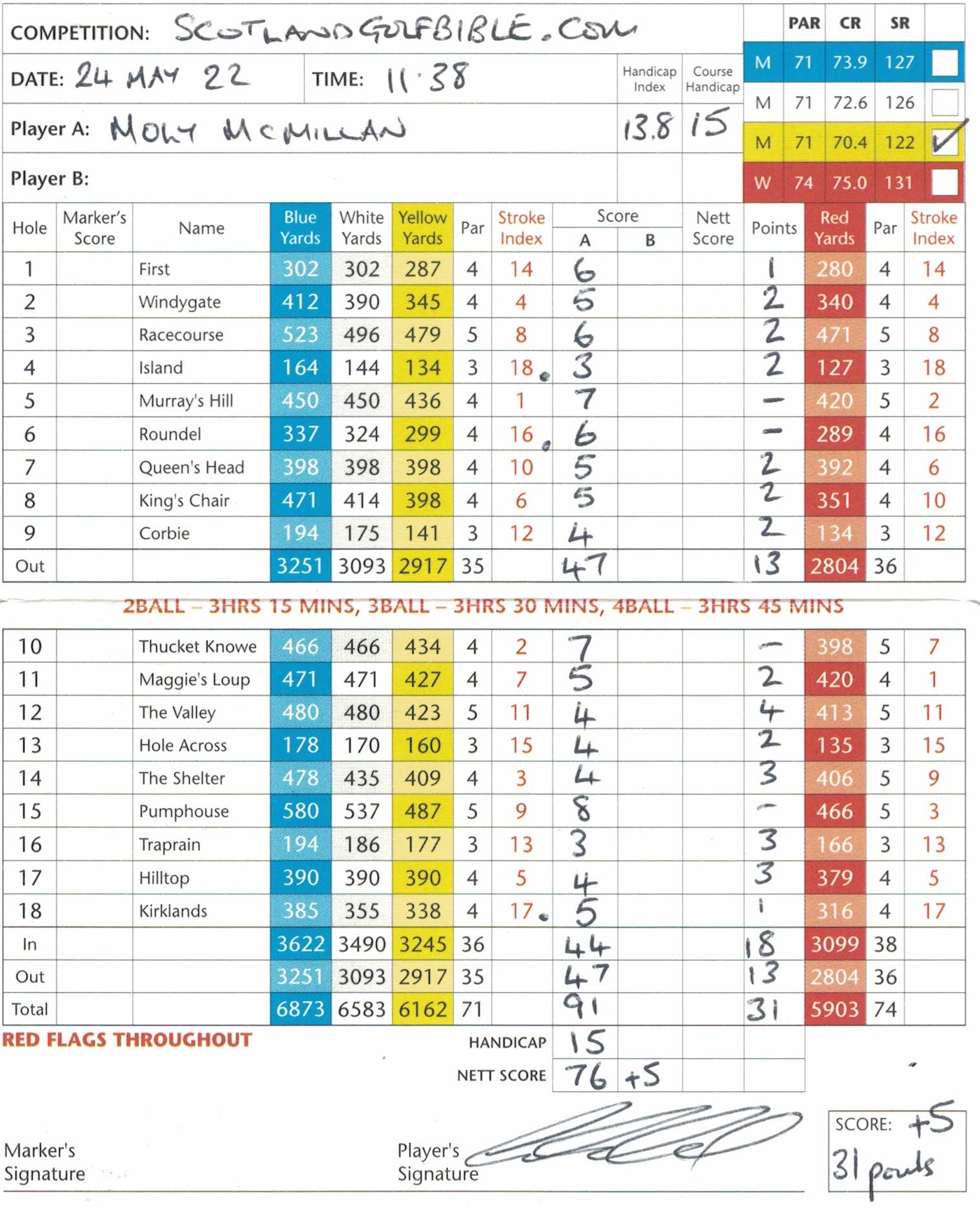
I was very pleased with my 91, despite 3 triple bogies, including at the stroke indexes 1 and 2 holes, the 5th and 10th respectively. I played off the yellow tees at 6162 yards, plenty enough distance for me. I had such a great time playing Gullane. I only hope all of the very fortunate 1200 members feel as blessed as Alastair does, who was a joy to play with on a memorable day for me.

The approach at the long par 5 15th hole.

The course sits on a vast area, so expect to 3 putt some of the monstrous greens. Despite being a busy day with all tee slots taken, I was amazed to only hear one shout of “fore”, a measure of the space here.

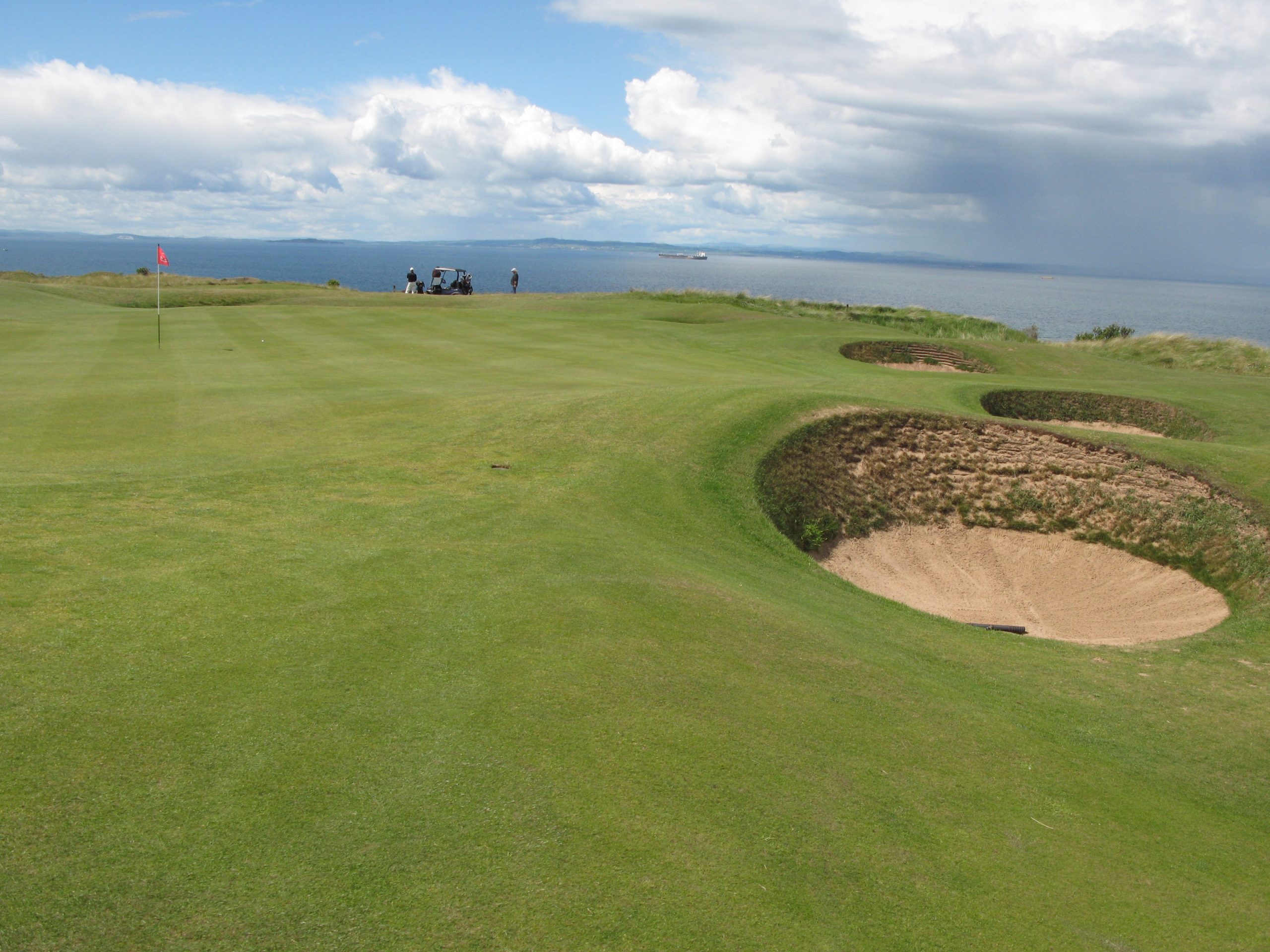
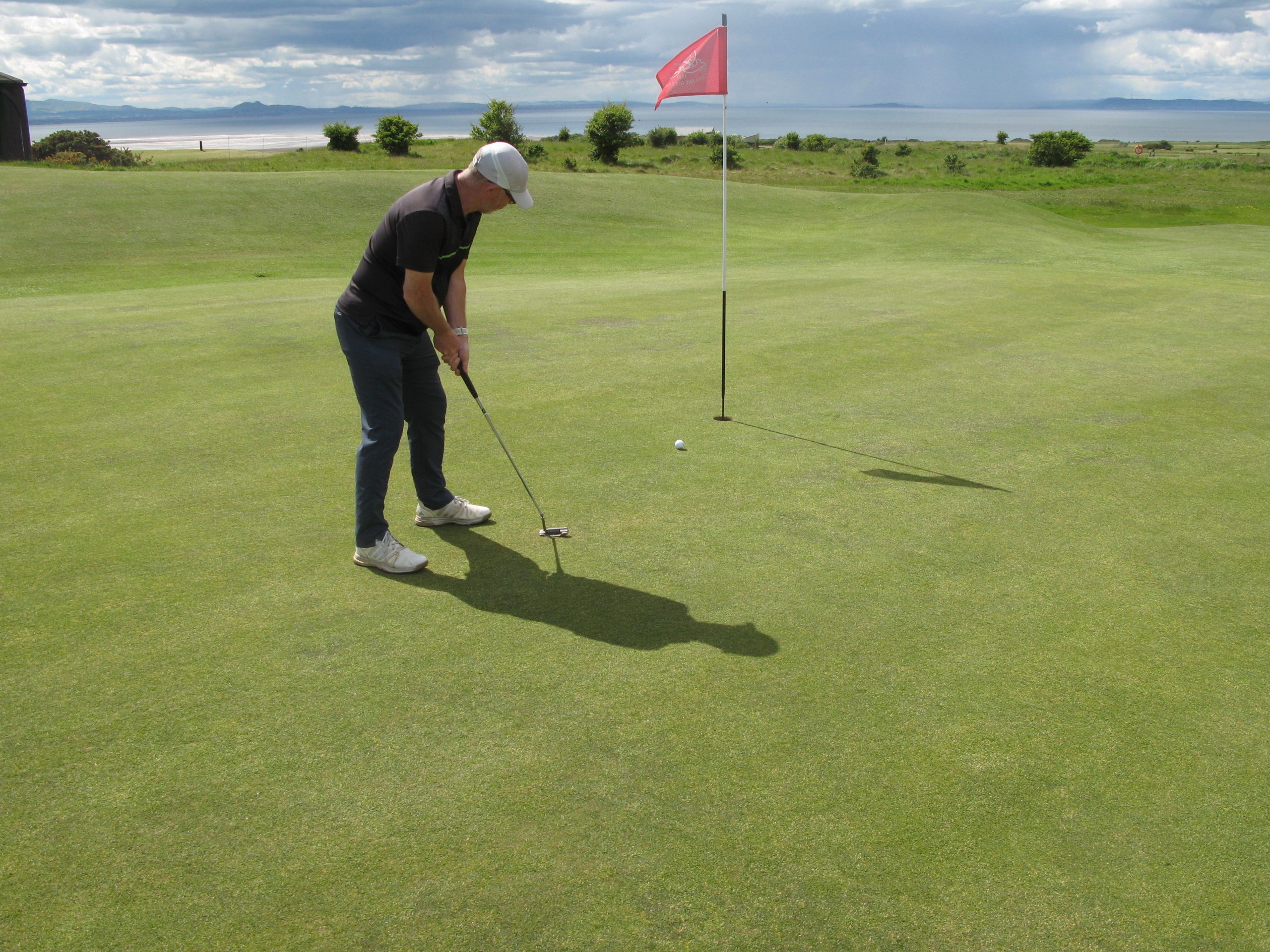
Moly has a rare birdie chance at the uphill par 3, 17th. Note the rain in the Firth of Forth, which never arrived on the course.

Now for the assessment of value. Golfing visitor fee inflation has really impacted Scottish golf. In 2018, in my St Andrews Old Course blog, I said anything higher priced than the old course can’t be worth the money. At the time the Old Course was £180 for a high season round, this year it is £270, a compound annual rise of over 10% per year, or more than three times the retail price index over the same period. Put another way, using 2018 as the datum, the Old Course should be £205.

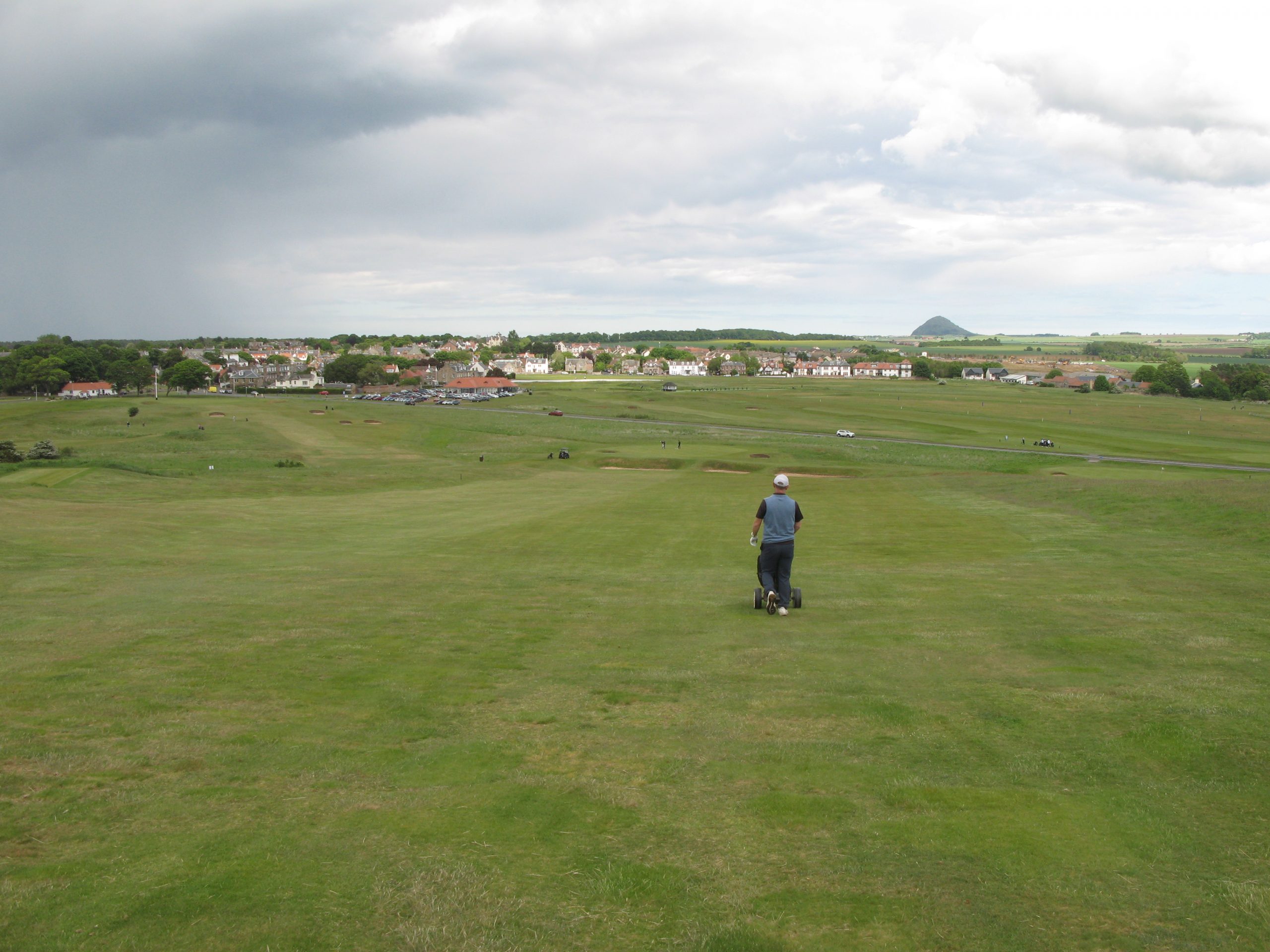
All good things come to an end – here Moly walks towards the 17th green, a deceptive par four, with the town of Gullane awaiting, watched over by Berwick Law.

No matter how much might have wanted to, in the end I couldn’t give this course anything less than 5 out of 5 for value, despite the price tag of £195. It’s a must play links golf course with unbeatable turf, bunkering, green surrounds, sea breeze, wispy rough.

Play, if for nothing else, to stand on the exact epi-centric viewpoint of world links golf. If such a thing could exist.

Facts:

Course Type: Links

Par 71 (3 par 5s, 11 par 4s,  4 par 3s)

Distance (yellow): 6162 yards

Moly’s Gross score: 91

Moly’s Gullane Number 1 scorecard – 91

138. Cupar. 18 May 22.

Don’t get confused by historic rhetoric – you play the course, not the ‘club’.

Round £16. Par 33. Course Rating / Slope Rating (yellow) 31.9/114. Value (out of 5) – 3.5

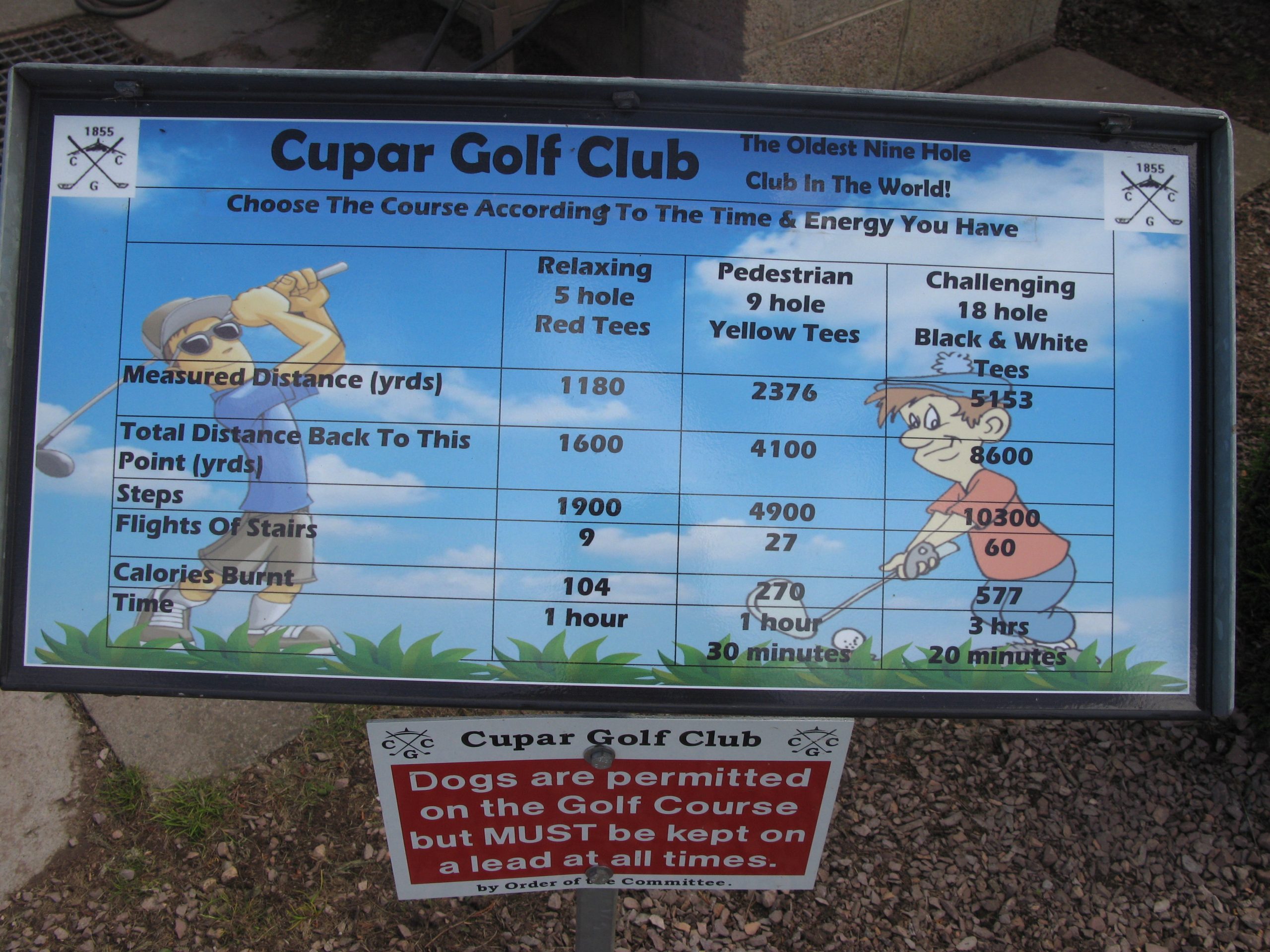
Cupar is a quaint 9 hole course in the town of the same name, only 10 miles to the west of St Andrews.

The web site and a sign at the first hole declare you’re playing at “the oldest 9 hole golf club in the world”. Dig just a little under the surface and you realise this is just a trifle disingenuous.

The delightful and fun sign on near the first at Cupar.

Firstly, you play on a golf course, not on a golf club. So whilst Cupar Golf Club was founded in 1855, it was at a 6 hole course (note not 9) some distance from the current location, which is in the Hilltarvit area of Cupar.

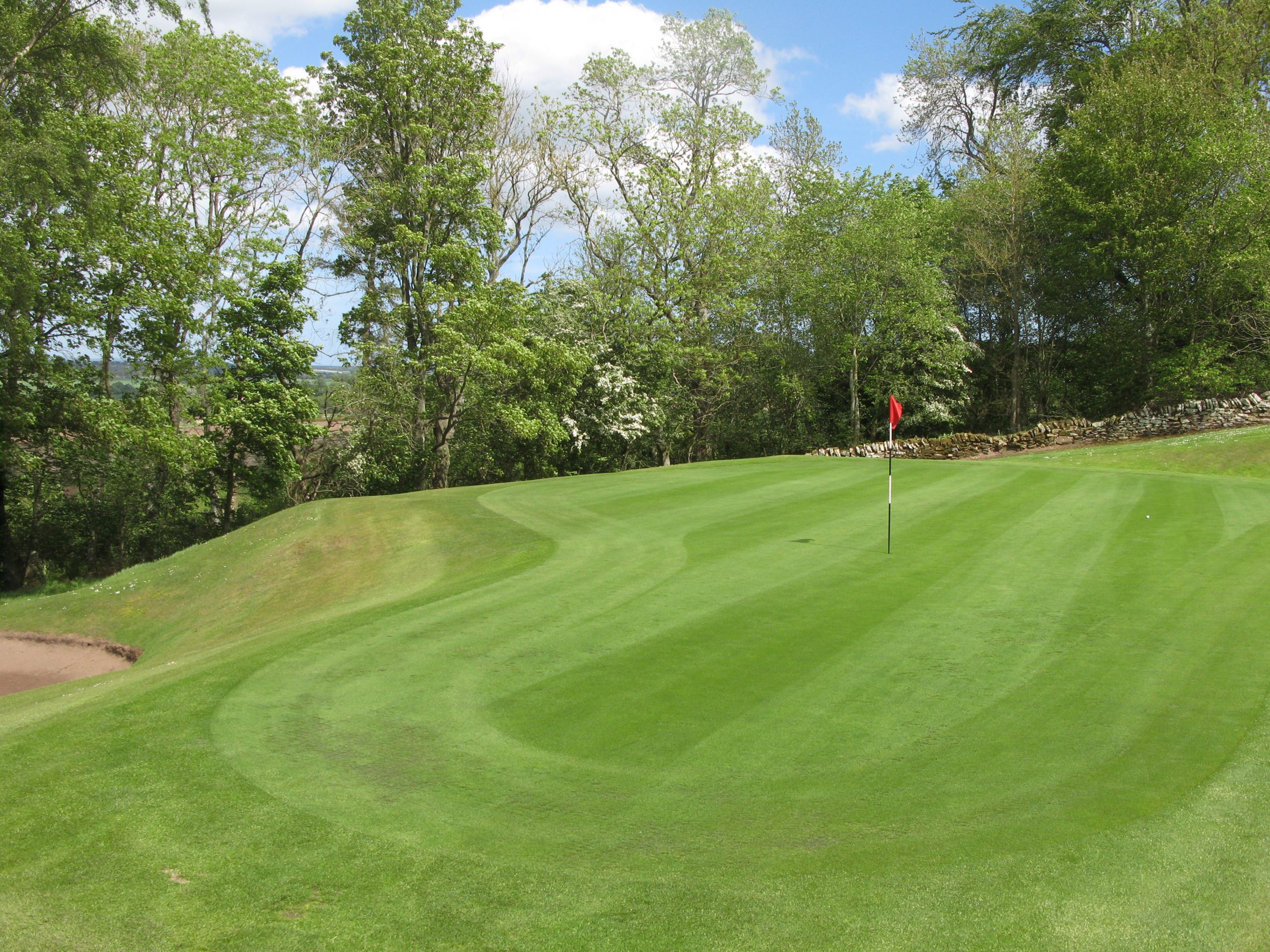
The green at the short 6th, which plays much longer that the yardage, perhaps 3 clubs longer. Try and look closely you’ll note the greens could have been better.

After an interesting first 40 years of existence, during which the Cupar Golf Club located and played at Ladybank golf course, this current 9 hole layout which plays across the slope of Tarvit Hill was laid out in 1896, after a few years of a more “up and down” layout.

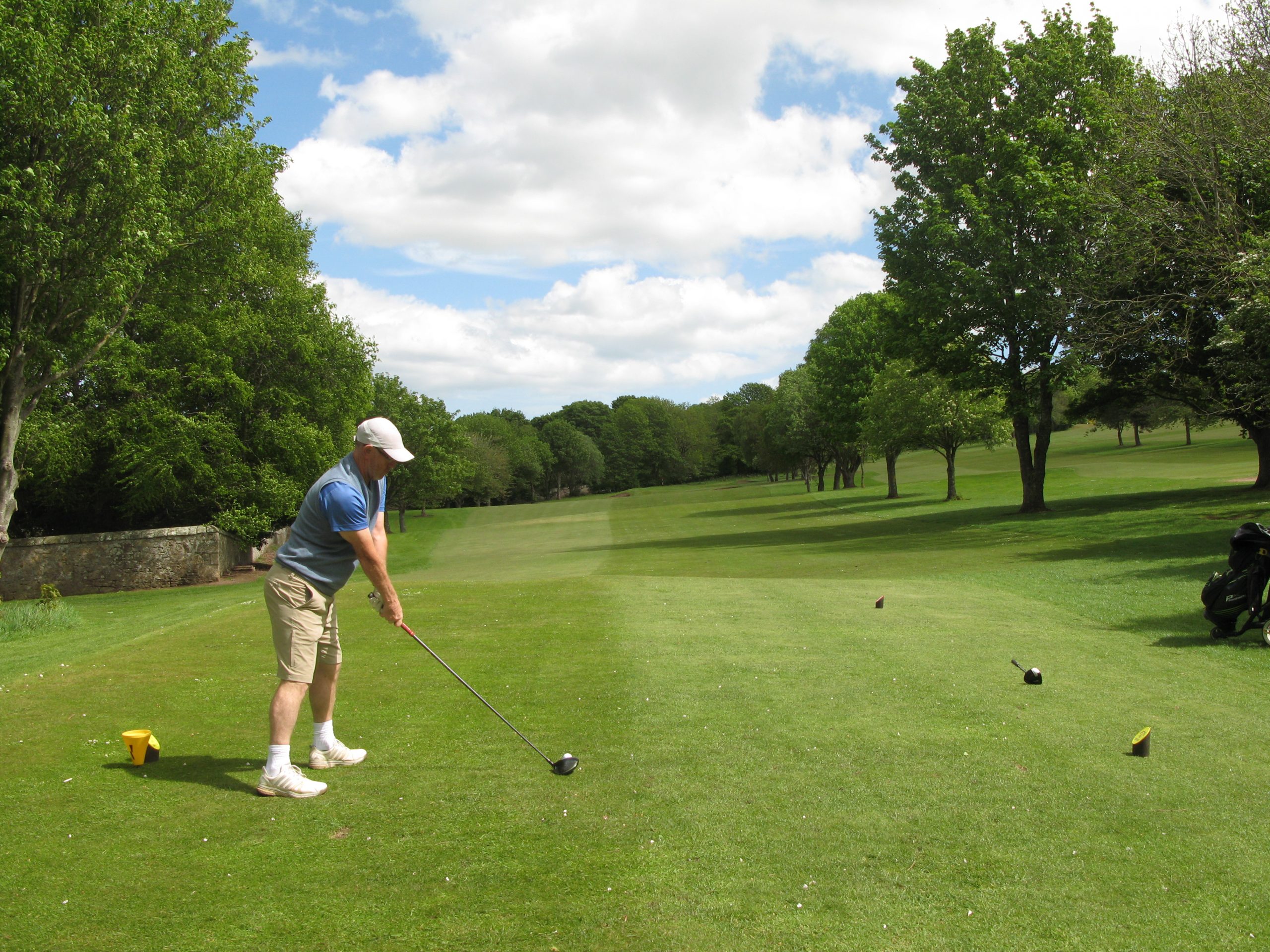
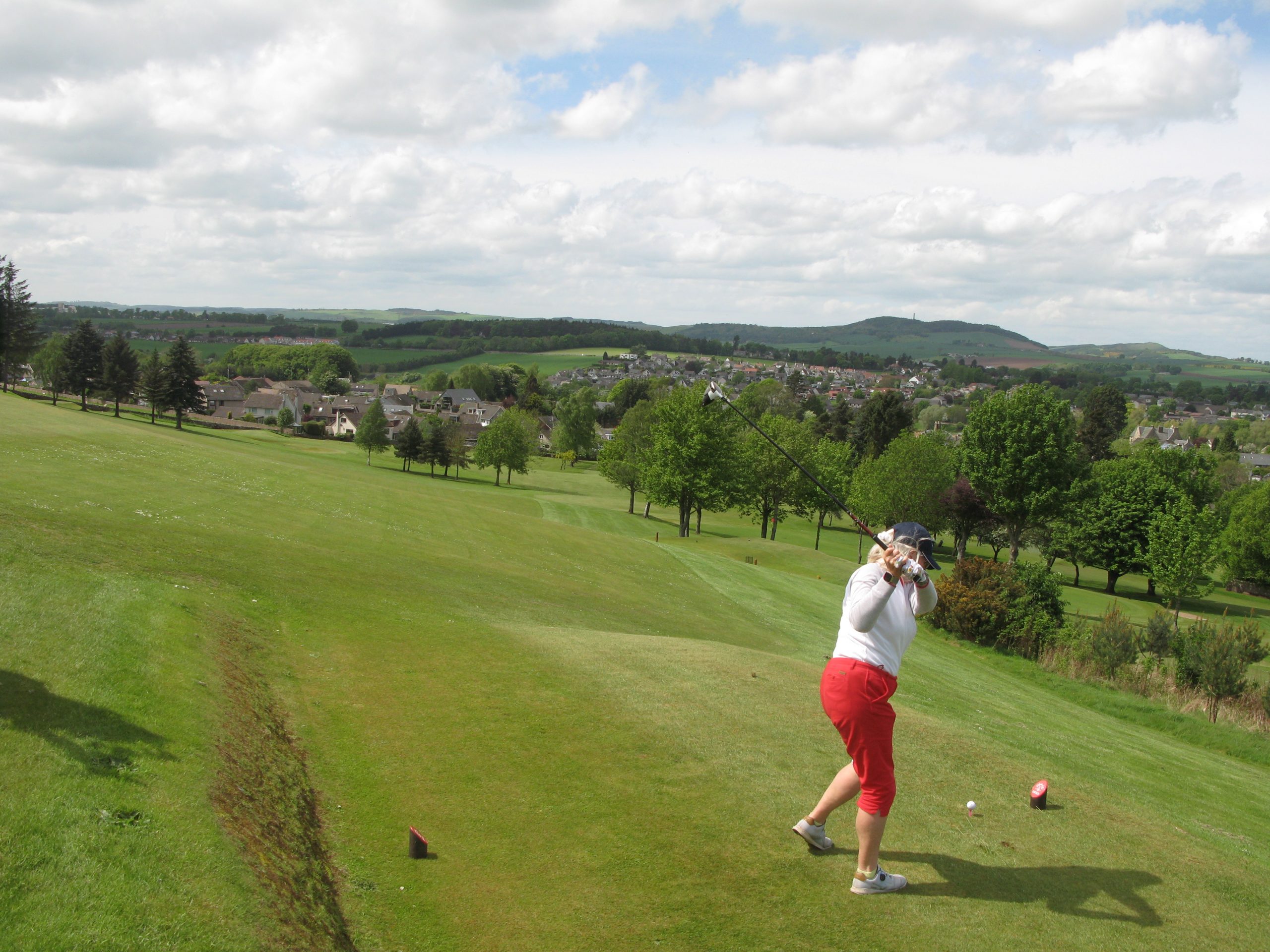
Moly at the 255 yard par 4 third hole from the well prepared teeing ground

Do some research and you uncover there are a number of 9 hole courses still in play from the early 1890s, with nearby Anstruther (click for my blog), being a good example.

Set aside the longevity, and you do have a delightful little fun course to play, along with its nice wooden clubhouse.

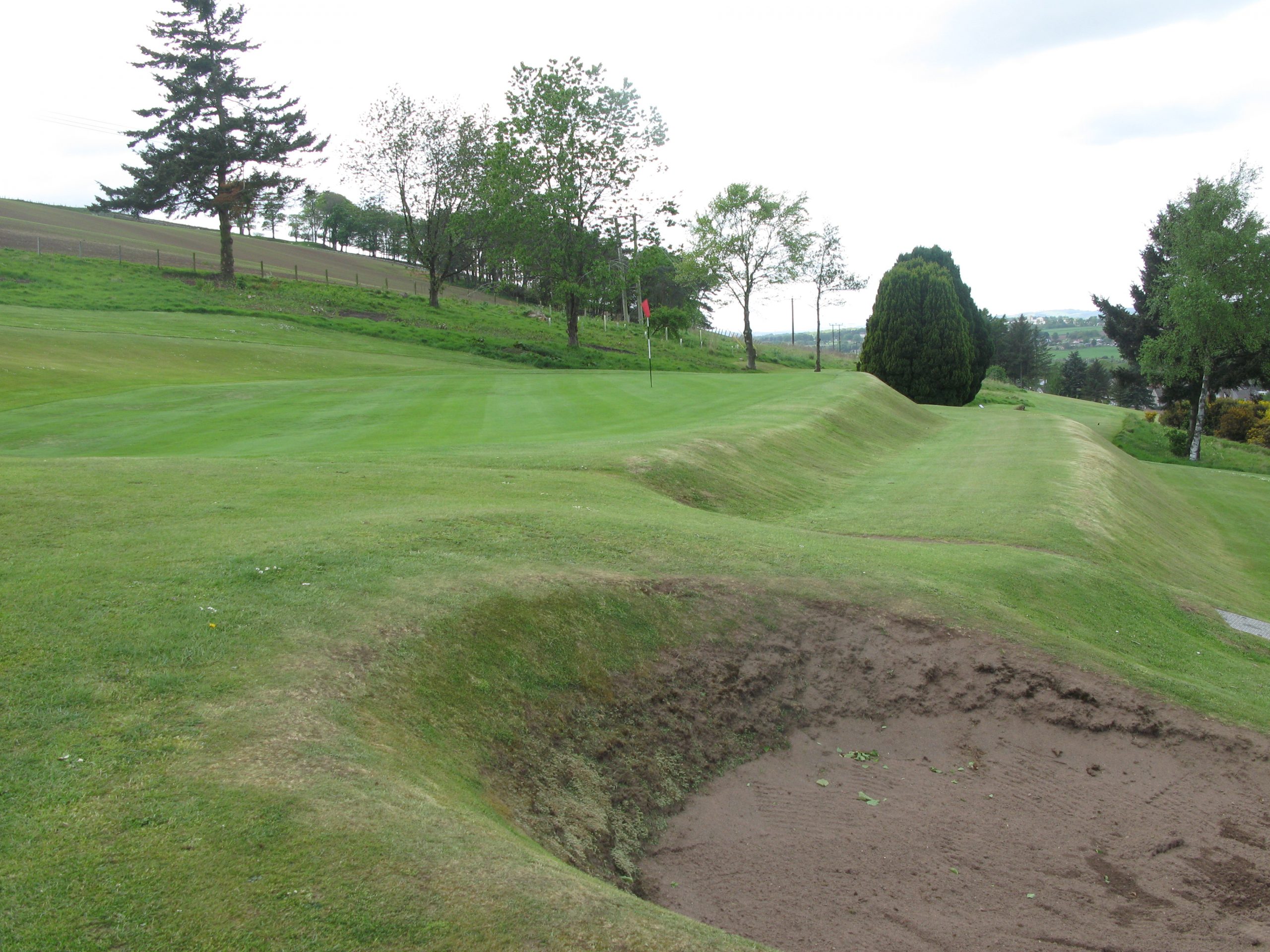
The tricky surrounds of the green at the 7th, a par 4 of 344 yards.

The course was in pretty good condition, although the greens were soft in places and many pitch marks had not been repaired, which was a shame.

Fran at the 8th, with long reaching views and showing the sloping fairways that await you at Cupar.

Although set on a hill, with great views over the town and surrounding countryside, many of the holes played across the slopes so it was a much easier walk that we had envisioned.

The last hole!

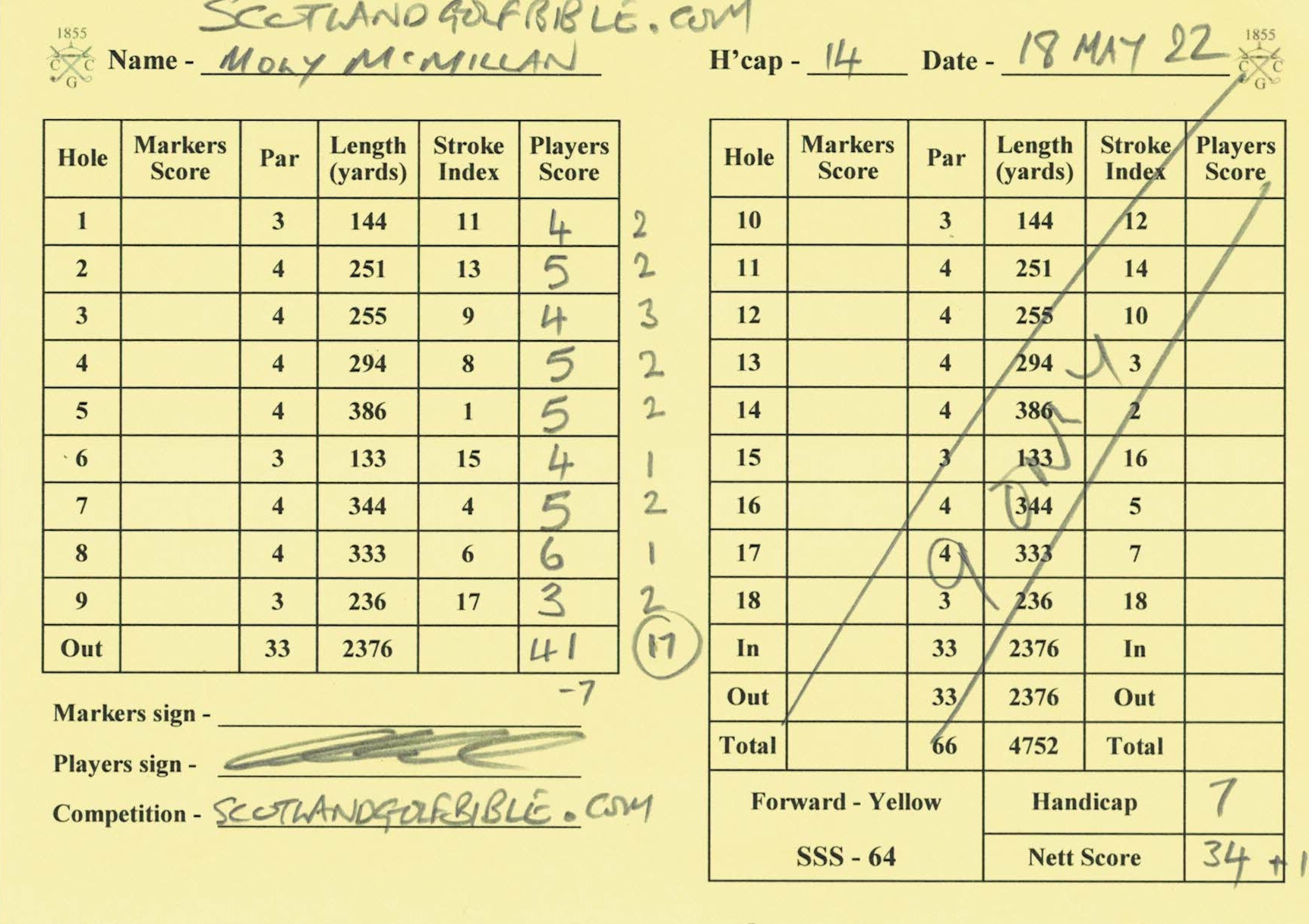
I played very well, in blustery conditions, for a 41, 7 over, which was about to handicap for the 9 holes. I drove to 4 feet at the last (see photo above) but missed my birdie putt.

It’s well worth playing Cupar, but don’t buy any of the “oldest” stuff, is my steer. But don’t take my word for it – check out the nice history overview on the web site here and make your own mind up.

Cupar GC allow bookings direct on their BRS system, where I got a decent discount and paid only £13 for 9 holes. Good value.

Lastly, don’t put Hill of Tarvit into your sat nav, as you’ll end up a few miles south at Kingarrock Hickory golf course, another place well worth a visit.

Course Type: Parkland

Par 33 (0 par 5s, 6 par 4s, 3 par 3s)

Distance: 2376 (white)

Moly’s Gross score41

Moly’s Cupar 9 hole scorecard – 41, net 34, 1 over par. A good day in blustery conditions.

131. (Glasgow) Gailes Links. 23 Mar 22.

I wonder how many visitors drive to Killermont to uncover this true links test?

Round £110. Par 71. Course Rating / Slope Rating (yellow) 71.5/130. Value (out of 5) – 3

I probably know more than most about Scotland’s golf courses, plus I also lived in Glasgow; one of my son’s attended school in Killermont. Despite this, I find a geography lesson is needed for ‘Glasgow’ Gailes as I almost ended up back in Glasgow to play at the Gailes Links. That would have been a big mistake!

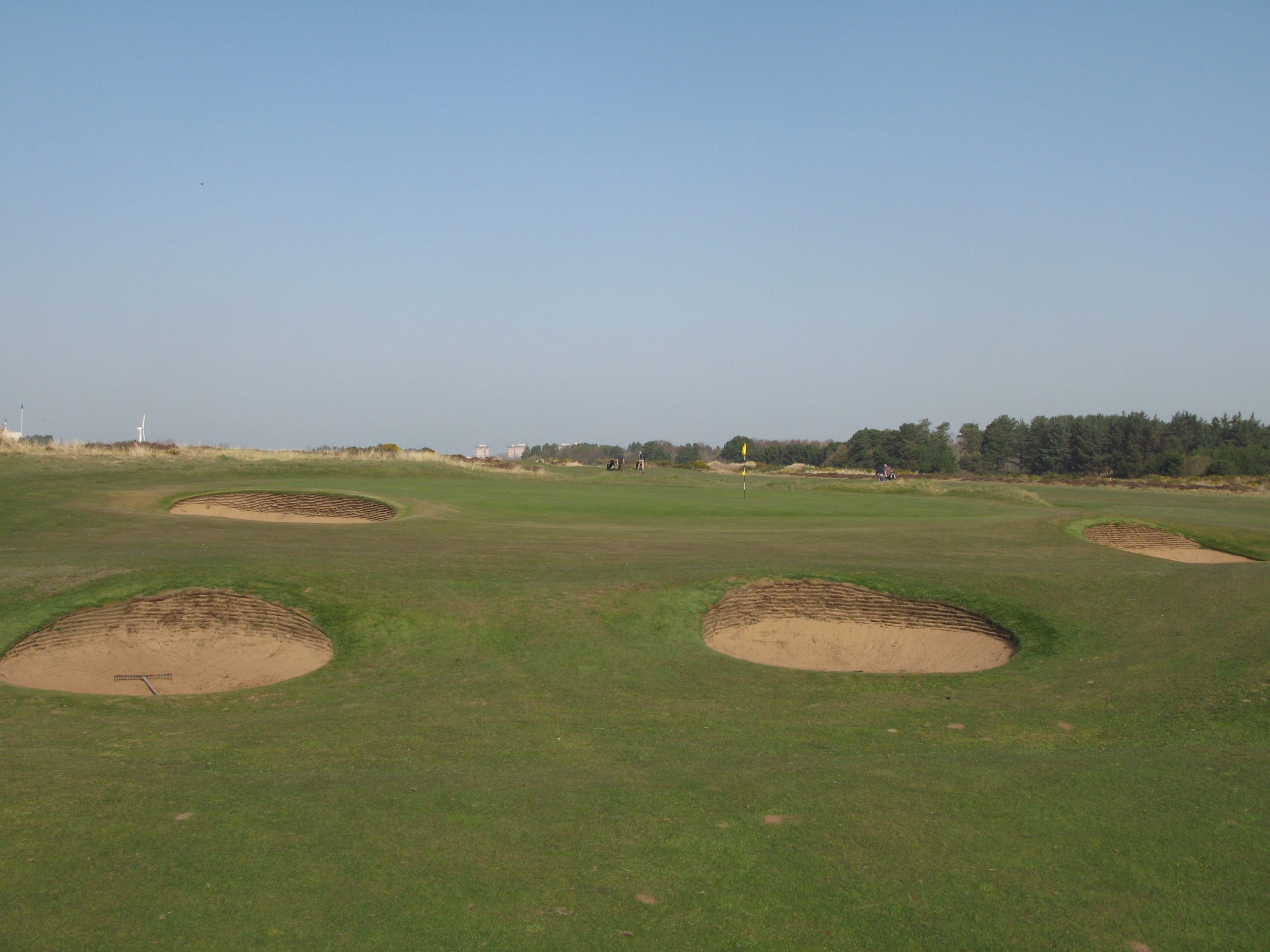
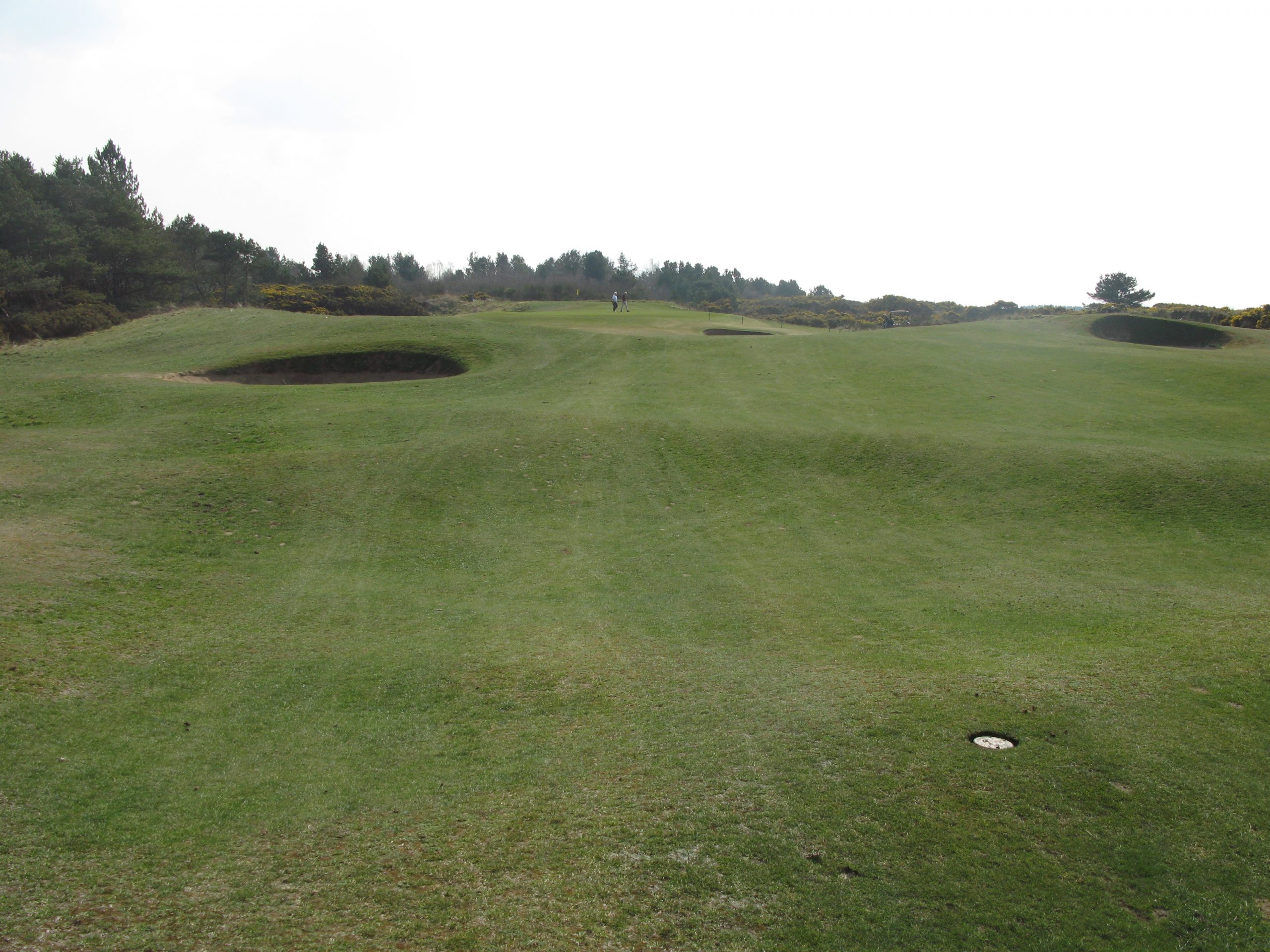
The bunkers at the first hole, a par four of 341 yards, serves notice of what lies ahead at Gailes Links.

Glasgow Golf Club was established in 1787 by the wealthy men of Glasgow making it the first club in the West of Scotland, and the ‘9th oldest club in the world’. It retains an exclusive air and its main headquarter club, based in Killermont in Glasgow, is not open for visitors, other than as a members’ guest. In 1892, the club built the Gailes Links course, initially designed by Willie Fernie, just south of the town of Irvine on the North Ayrshire coast. It is the most northerly of the great set of Ayrshire links courses, starting from Turnberry about 30 miles south. Since its inauguration the Gailes Links has been called ‘Glasgow’ Gailes, in part to distinguish itself from Western Gailes which it adjoins. Hence the confusion about its location. The Glasgow Golf Club might hold the record for the biggest distance between two club courses.

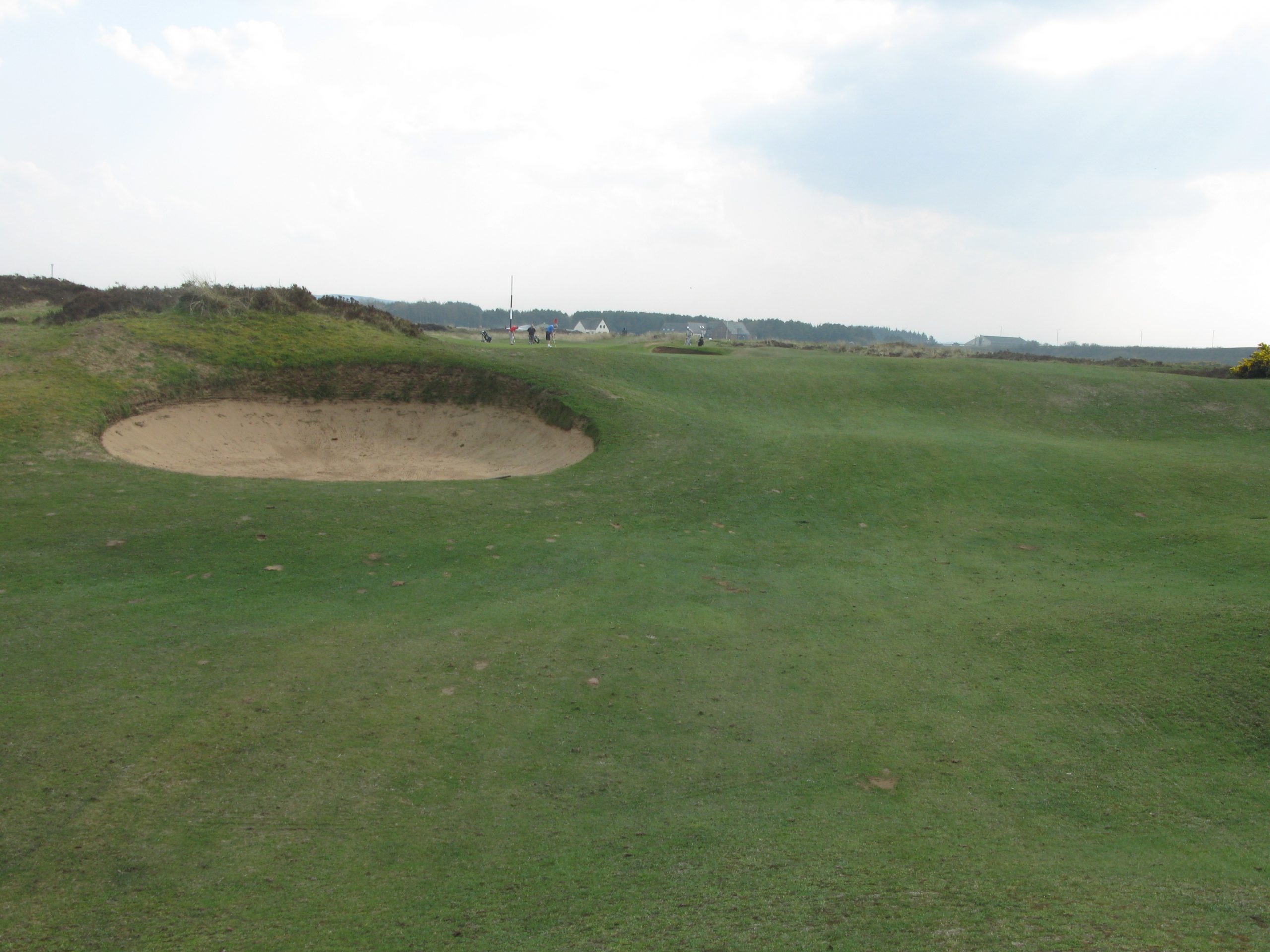
The ‘gorsy’ remains, where trees used to be, on full display at the 3rd, the challenging par 4, stroke index 1 hole, at Gailes Links.

The layout as it exists today, required a redesign by Willie Park Junior in 1912. Furthermore, and controversially, the course has undergone a complete transformation in the last few years, having uprooted tens of thousands of trees. I got mixed feedback from some members about the ‘carnage’ of the trees, which I understand is the reason that the Gailes Links course has been removed from the Open Qualifying rota.

The delightful fifth green complex at Gailes Links, with the social housing of Irvine in the background. A beautiful contrast.

One of the members said the resulting treeless course is much easier, as it has become a wide open links course. On at least two occasions I played from where trees would have been, likely saving me 4 shots. The courses main defense is now through clever and some severe bunkering – other than the westerly prevailing wind of course! This bunkering became sharply evident to me when, after a sound opening 5 holes, being called through by a 4 ball grouping, who then witnessed my 6, including 4 bunker shots, at a short par 3!

The 6th, the first of only three par 3 holes at ‘Glasgow’ Gailes.

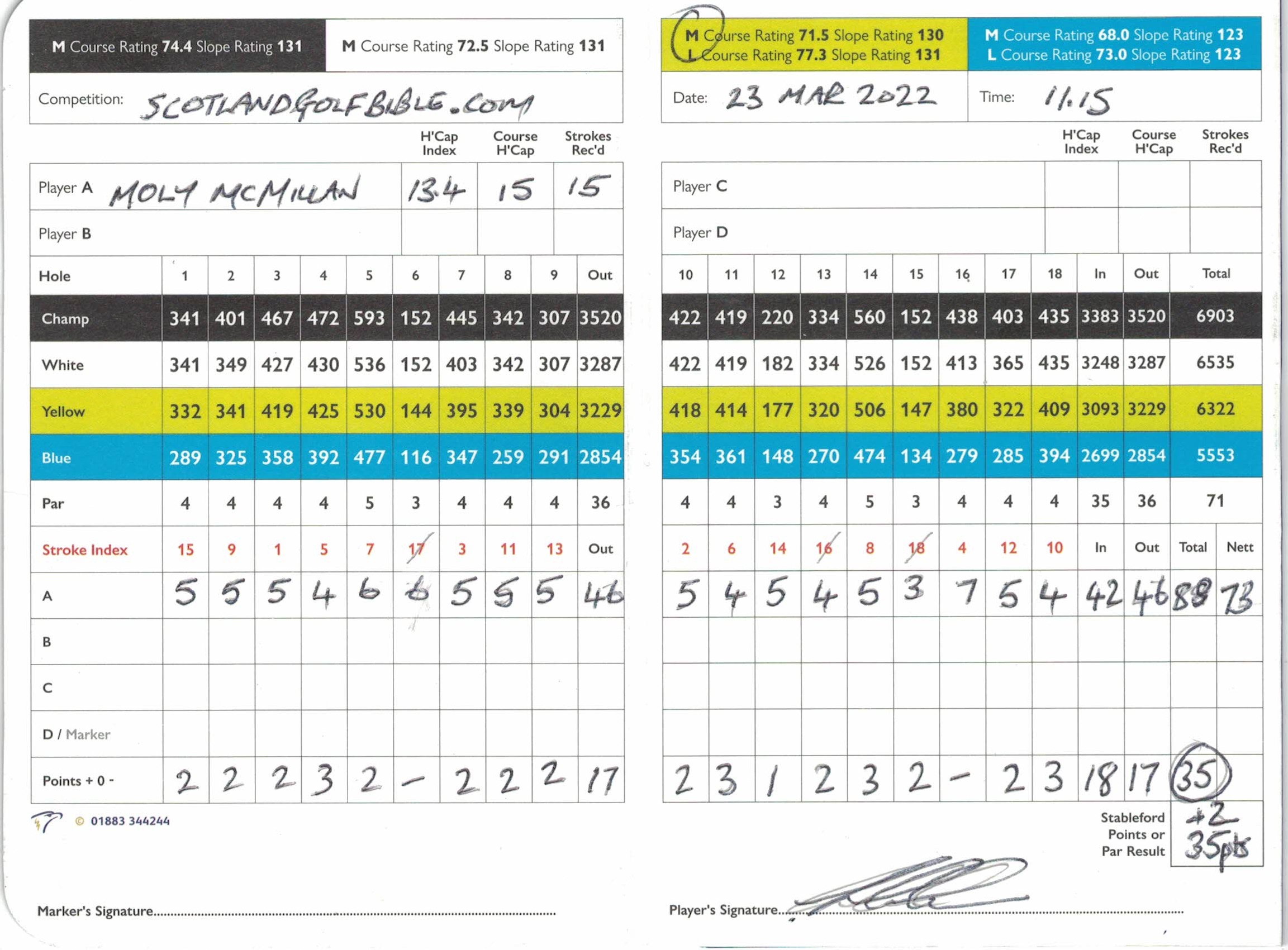
My six at the 6th, provides a lesson how to score well at Gailes. Study the course guide and stay away from the bunkers, some of which are out of sight. I actually played well for my gross 88, albeit the course was playing short due to the very dry March weather. Along with no wind and sunny weather it felt more like the Algarve for the time of year.

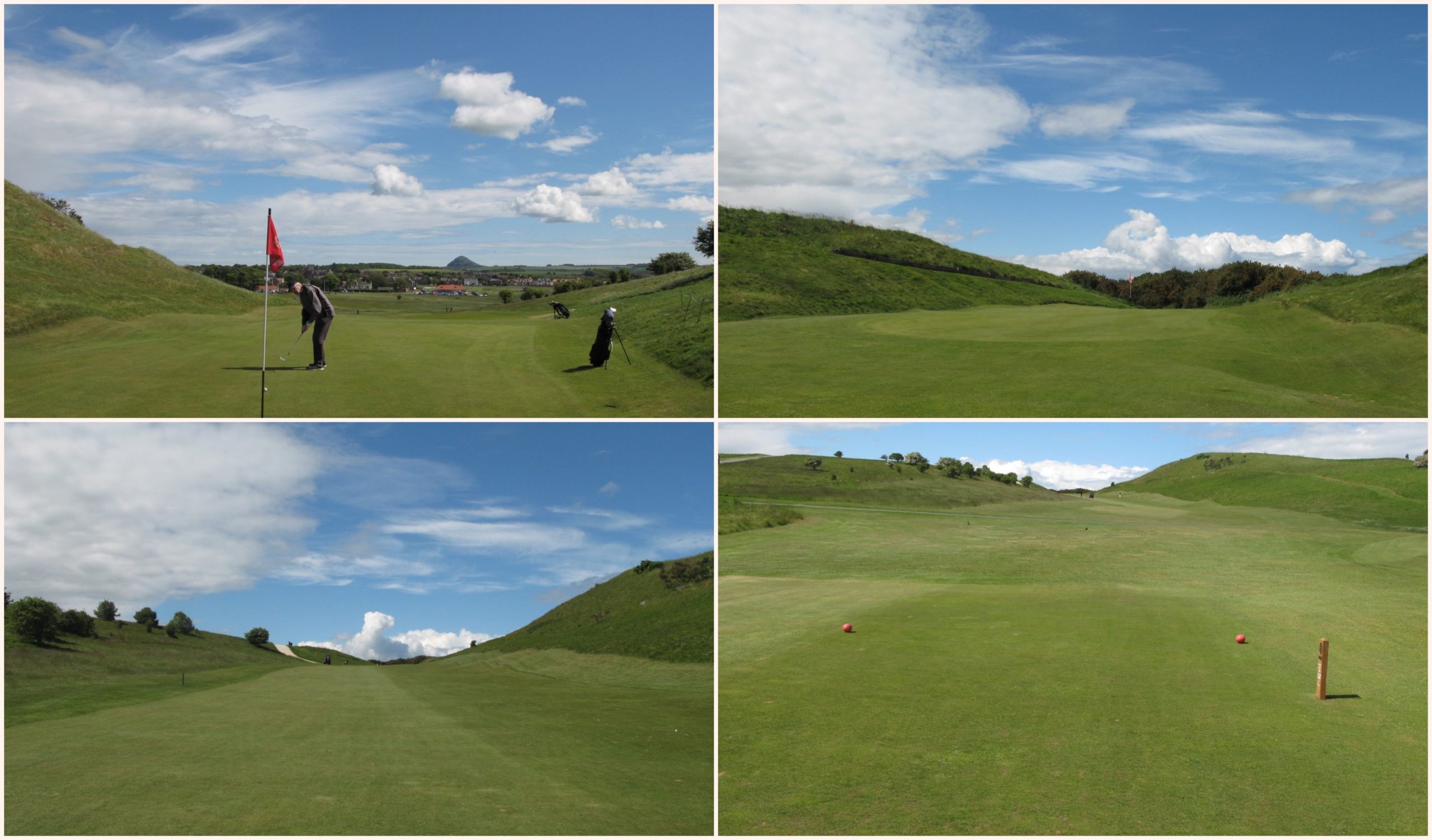
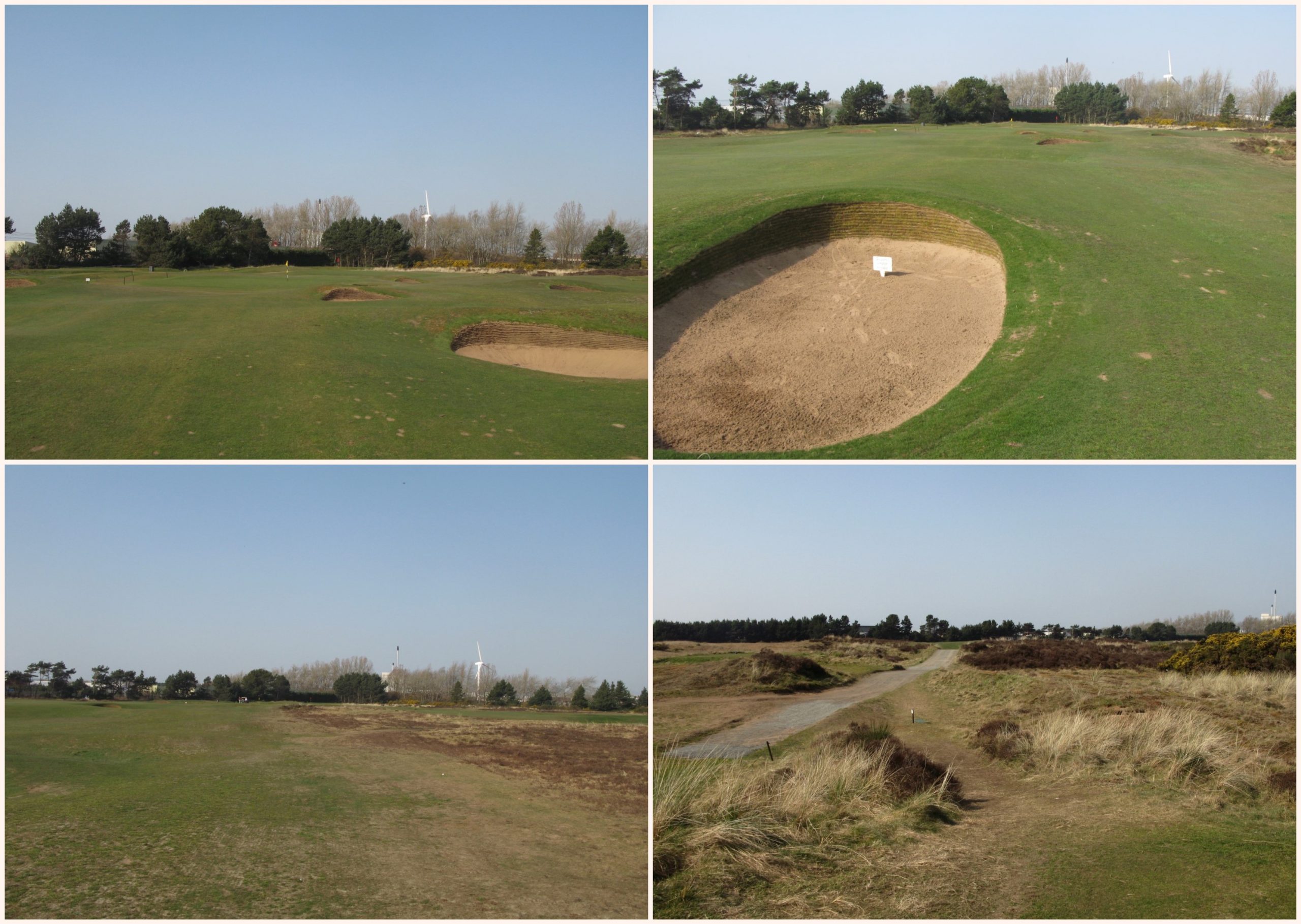
The only blind tee shot at Gailes Links is at the 7th (bottom right of the collage). There is much more space right of the ‘eye’ line, especially with the large scale tree removal.

The course is long at over 6300 yards from the yellow tees, and comprises a zig-zagged ‘north/south out and back’ layout, with about 4 transverse holes. The resulting layout provides a great many subtle changes of direction, which must be very challenging when the wind gets up.

The 9th is the shortest par 4 at Gailes Links, at 304 yards, but well bunkered at a typical driving length for most players, who might be best to play a longish iron off the tee, to avoid the sand.

Without the trees, being wayward off the tees is not penalised, especially as there is only one ‘blind’ tee shot (par four 7th), and only one ‘blind’ approach, at the 14th, one of only two par 5s on the course. Along with only three par 3s, this makes the main challenge to score well, being your long iron/hybrid game being up to the challenge of the several par 4s over 400 yards. The resulting par is 71, although the yellow course rating is 71.5, with white being one more.

The approach at the 14th, a short but good par 5, where the long hitters will be tempted to reach the green in two, but will require to avoid a narrow bunker filled gap (above) about 100 yards short of the putting surface.

On the day I played, several of the bunkers were GUR, although not the ones I found at the 6th (my only bunkers of the day). I felt the winter rate I paid of £60 a little steep, with a few winter tees still in play, and despite the dry weather there was surprising indications of muddy locations – I wondered if that was a legacy of the tree removal, and impact on the drainage?

The local pro “Arthur” was really friendly and very welcoming, and therefore worth a mention.

If you get lucky with a winter rate in dry conditions, its fairish value, but the main fee of £110 for a mid week summer round, is not great value and getting out of range of affordability for most.

Course Type: Links

Par 72 (2 par 5s, 13 par 4s, 3 par 3s)

Distance: 6322 (yellow)

Moly’s Gross score88

Moly’s Gailes Links scorecard – 88, best round in a while.
« Older posts Newer posts »

© 2026 Scotland Golf Bible

Theme by Anders NorenUp ↑