A guide to green fee value for money

Category: 1851 – 1900 (Page 11 of 14)

61. Ballater. 2nd Aug 2017.

Ballater seemed a good choice to return to golf blogging after several months absence due mainly to my sojourn to watch the British Lions take on the All Blacks. Ballater is 40 miles east of Aberdeen, in the heart of Royal Deeside, an area I spent many happy years hill walking in during my teens.  The “royal” tag comes as Balmoral Castle, The Queen’s summer residence, is only a few miles away.
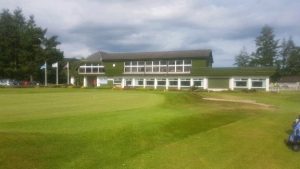
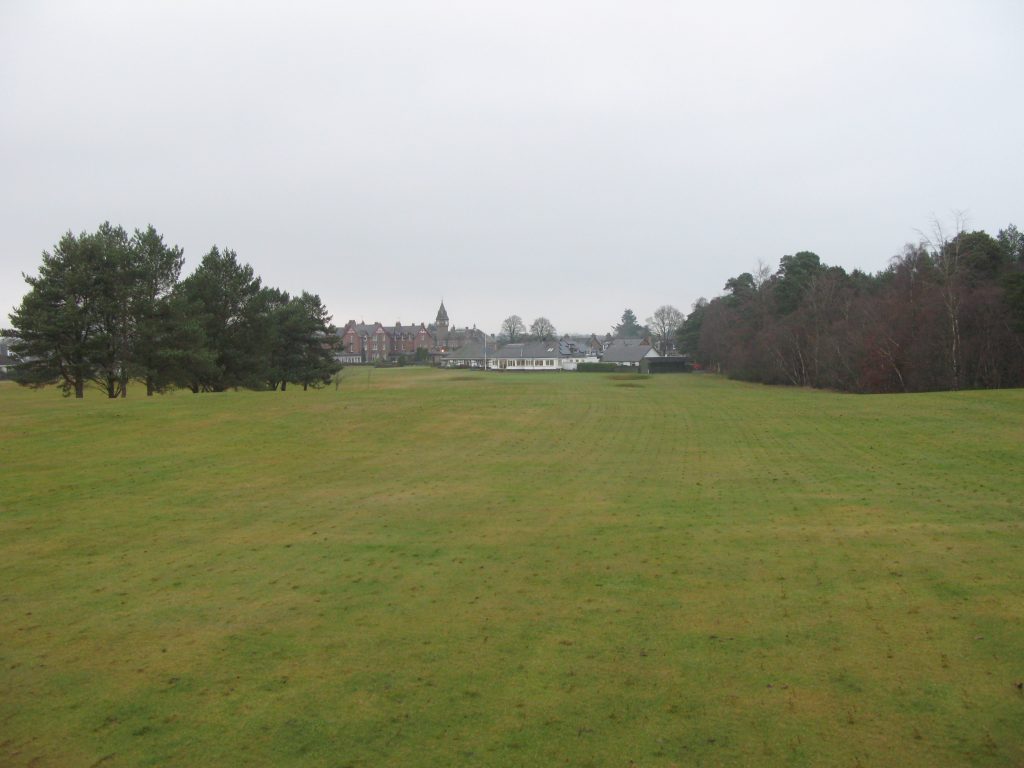
18th green and large clubhouse at Ballater

A nine hole golf course was founded in Ballater in 1892, and extended to 18 in 1905, the pedigree of the course demonstrated by an exhibition match between James Braid and Harry Vardon in 1906.

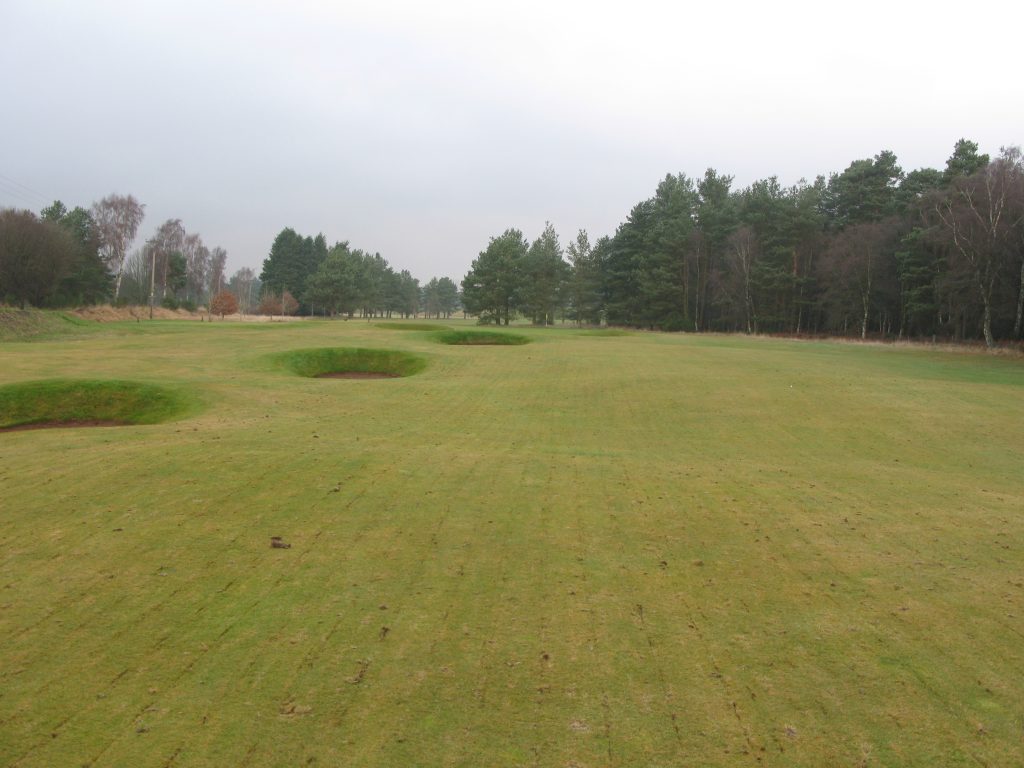
Although the course is described on it’s web site as mainly heathland with parkland characteristics, I beg to differ and say it’s actually the other way round, and felt much more parkland to me.  Although surrounded by hills and forest, the course is surprisingly flat and offers an easy walk.  With many fairways adjacent to each other, with only light rough in between, it offers regular opportunity to be wild off the tee and still easily find your ball – something I unfortunately took advantage of often!  However, overall this is not an easy course with some very tricky greenside bunkers (some of which are blind to your approach shots) and some very penal rough.
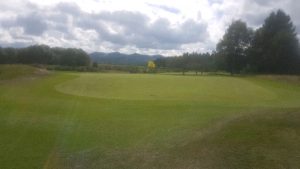
The very large 1st green at Ballater

Although the course lies close to the River Dee the river does not come into play as often, by comparison, as Braemar (further along the Dee).  These open fairways and lack of water in play, means the course is quite good for holiday golfers.  However, the course is quite busy and I would recommend booking, especially during the Summer months.

The course has some challenges in particular the opening six holes are very tough – I double bogied the first 5 holes, and actually felt I struck the ball well!   The 3 par 3s on the opening 9 holes are particularly tough, culminating with the 9th hole which has a semi blind small green.
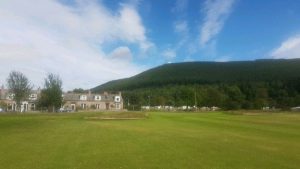
The typically Scottish 2nd green at Ballater with the town houses in background

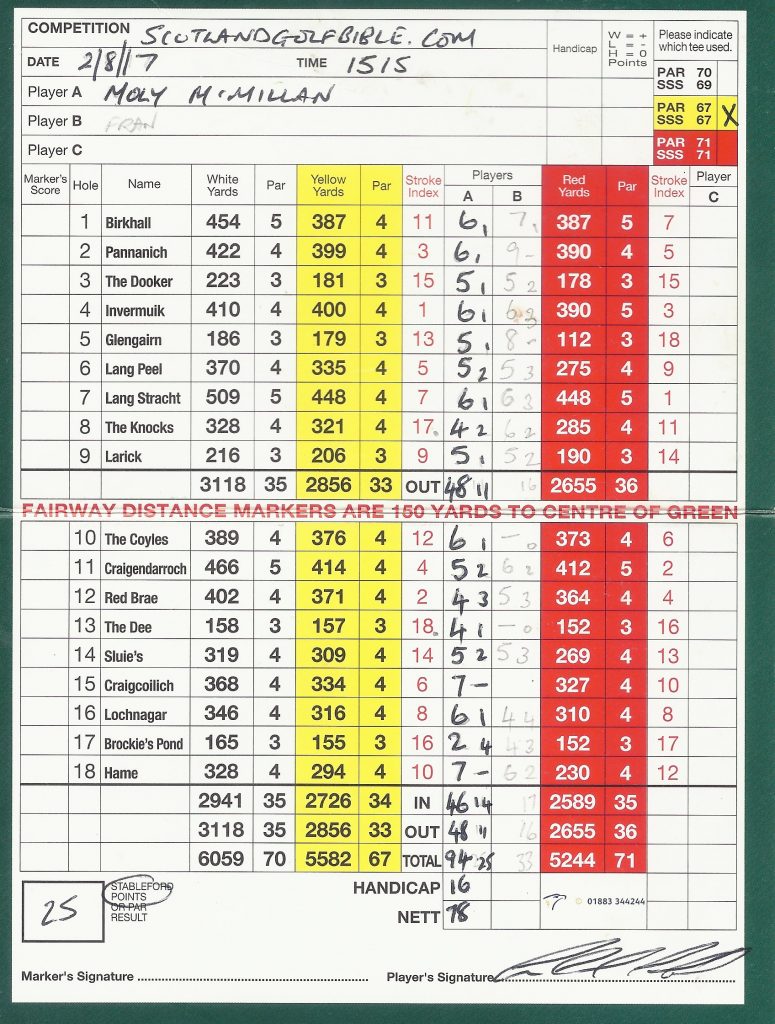
The course was in all round good condition when I played, with good greens and lush but firm fairways.   I played better than my scorecard would suggest.  It felt like a 30 point day, but with 3 balls lost, for 6 penalties, made it only 25 points.  I had a nice birdie 2 on the par 3 17th though.

I played having booked through the teeofftimes.co.uk website and paid £22.50 versus the course published price of £35 for a midweek round.  At £22.50 it would be worth 4/5 for value but only 3/5 using its rack rate.

It’s worth playing this nice course, which also has a big bar and good value restaurant food.
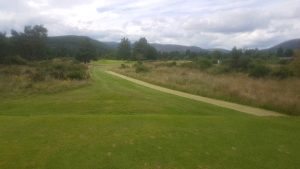
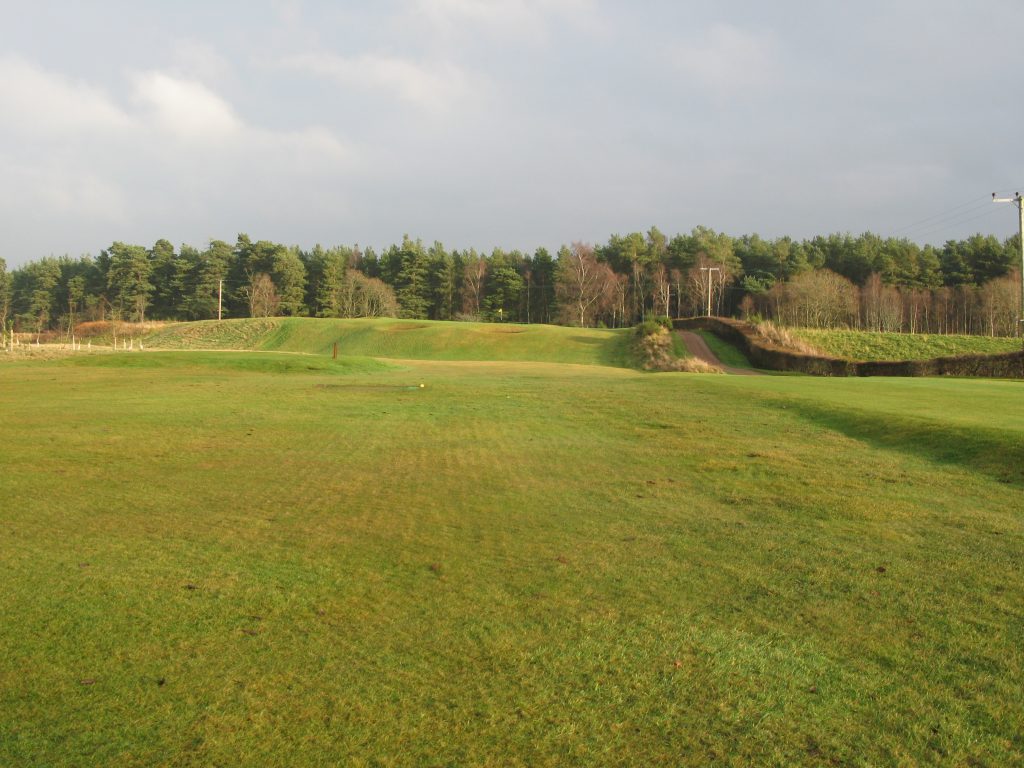
Tricky Par 3 5th at Ballater

Note: I had to use my phone for pictures, which are not the usual standard….sorry!

Key Facts

Course Type: Parkland

Par 67 (0 par 5s, 13 par 4s, 5 par 3s)

Distance (yellow): 5582

Moly’s Gross score94.

Moly’s Ballater scorecard – 94 for only 25 Stableford points:(
59. Edzell. 15th Dec 2016.

Great course worth playing, but only good value with discounted green fee

Round £60.  Par 71.  Value (out of 5) 3.

Edzell Golf Course, in the nice village of Edzell close to the Angus Glens, was established in 1895.  It is located close to the main A90 between Dundee and Aberdeen so is very easily accessed and well worth playing.

The course was designed by Bob Simpson, with further input from James Braid in the 1930s and recently in 2015 was upgraded by Martin Ebert of Mackenzie & Ebert a company with a growing and prestigious global catalogue.  The current course lays testimony to golfing architecture at its best; the course fits naturally to its surroundings with, in particular, a great array of fairway bunkers which will especially challenge the longer hitters.

The dangerous 9th hole approach – keep it left!

The course is part heathland part parkland but the fairways are generous.  The greens are very large, with some subtle fairway hollows, making it important to check your yardage.  Some of the front flag locations are very tricky when coupled to the tight greenside bunkering.

The par 3 14th at Edzell emblazed with Winter sun

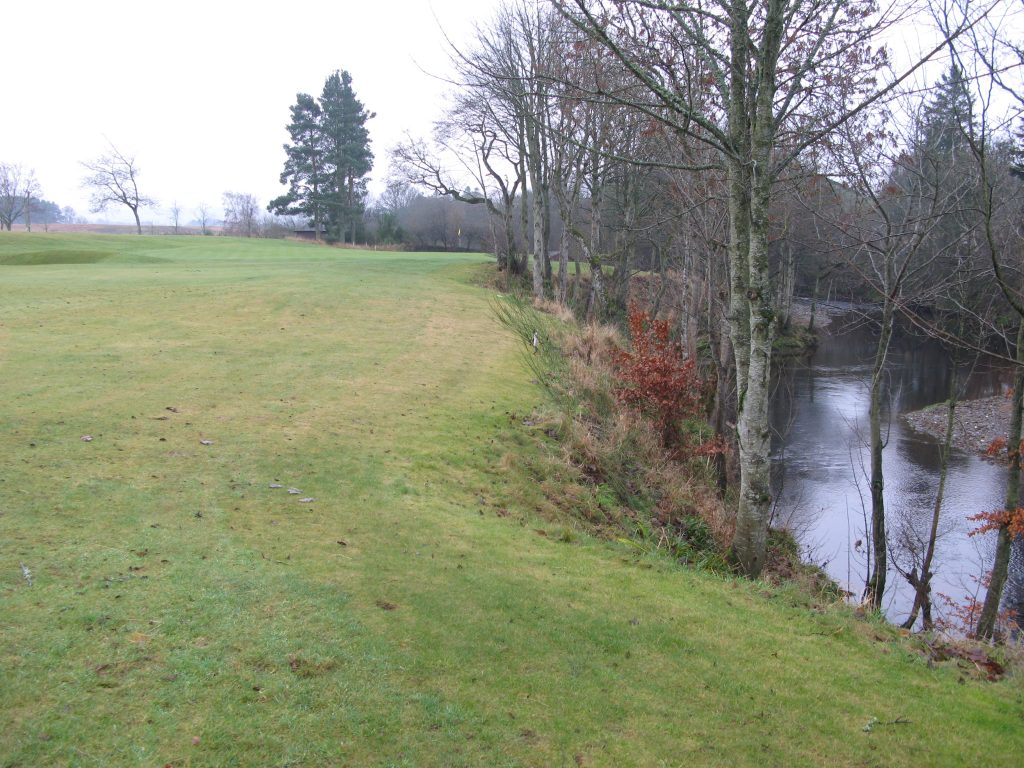
After a relatively straight forward par 4 first, the 2nd, 4th and 5th are all long par 4s, at well over 400 yards.   The 6th is also a tricky par 3 with 5 green side bunkers, where most golfers will be using a hybrid or fairway wood.  After a bit of respite at 7 and 8, the par 5 9th presents a hazardous approach with a steep river bank close to the right of the green. Play well left with your second and third shots, in my advice.

The 15th, with a typical array of dangerous fairway bunkers

To score well at Edzell you need to get through the first 9 without disaster (I didn’t!). I suspect many cards are deposited in a waste bin before the 10th tee!

Of the many highlights on the back 9, my favourite was the aptly named 16th, the “Spion Kop”, with 2 very large green side bunkers on a devilishly sloping bank.  Don’t take on a front pin here.

The relatively straight forward par 5 18th, with the fine clubhouse and Edzell village in the background

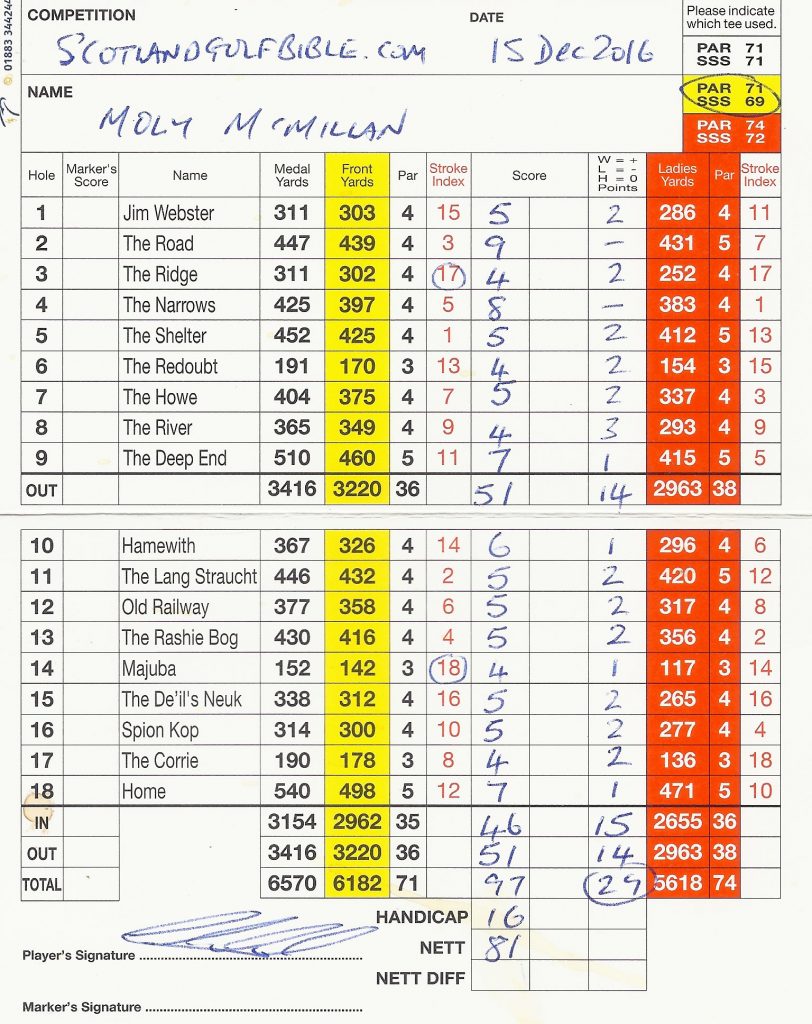
The course was playing winter tees but full greens when I played and in excellent condition, although several of the bunkers were undergoing re-construction; this didn’t dilute my enjoyment though.   I played pretty well for a 97, or 29 stableford points, including the front 9 disasters.

My only gripe is I think the headline green fee, at £60 in summer, is slightly high, no doubt subsidising the £550 membership fees.  However, I played using teeofftimes and got a good deal.

Some Facts

Course Type: Parkland/heathland

Par 71 (2 par 5, 13 par 4s, 3 par 3s)

Distance yards:  6182

Moly’s Gross Score: 97

Moly’s Edzell Scorecard – played better than the score of 97 suggests, for 29 points (16 hcp)

57. Stonehaven. 1st Dec 2016

A curate’s egg of a course with great views and some excellent par 3s 

Round £37.  Par 66.  Value (out of 5) 2.5

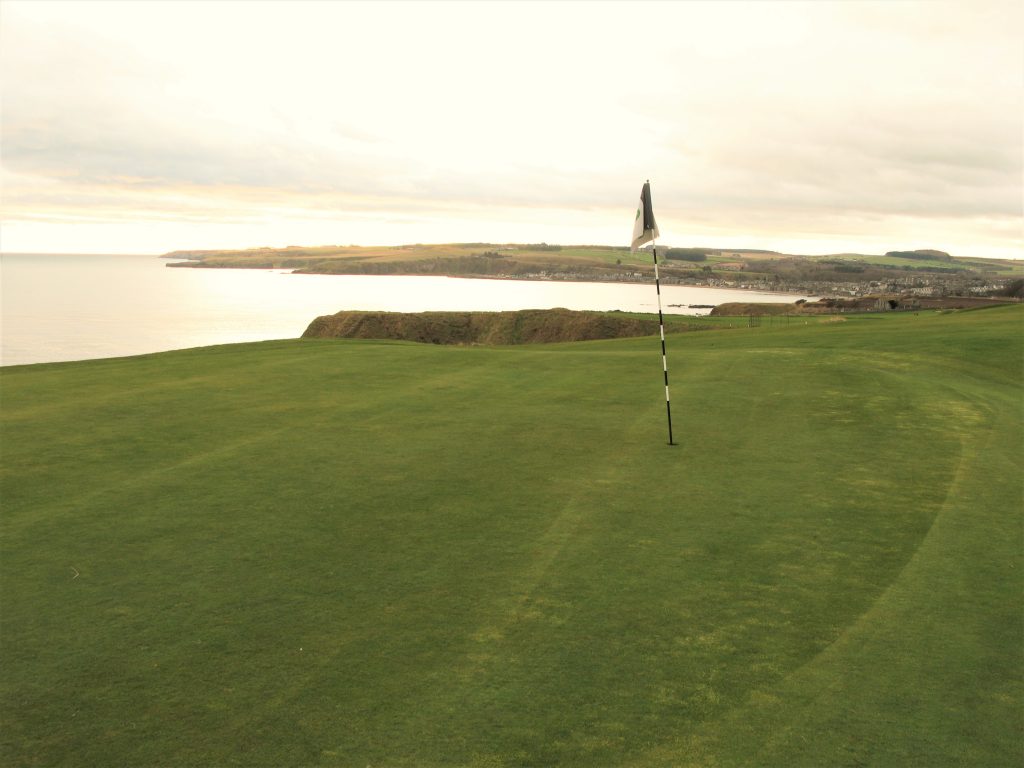
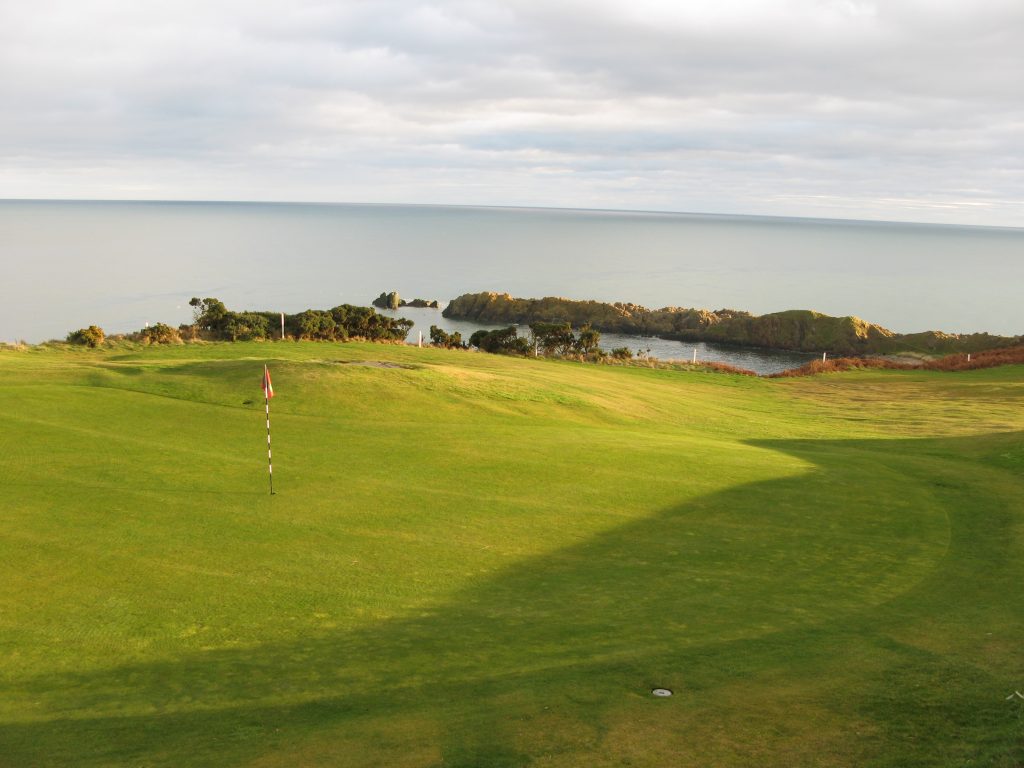
Stonehaven golf course in Aberdeenshire sits atop a cliff on land called the Braes of Cowie just to the north of the seaside town of Stonehaven.  The cliff top vantage provides for some outstanding views of the coastline, North sea and the town.

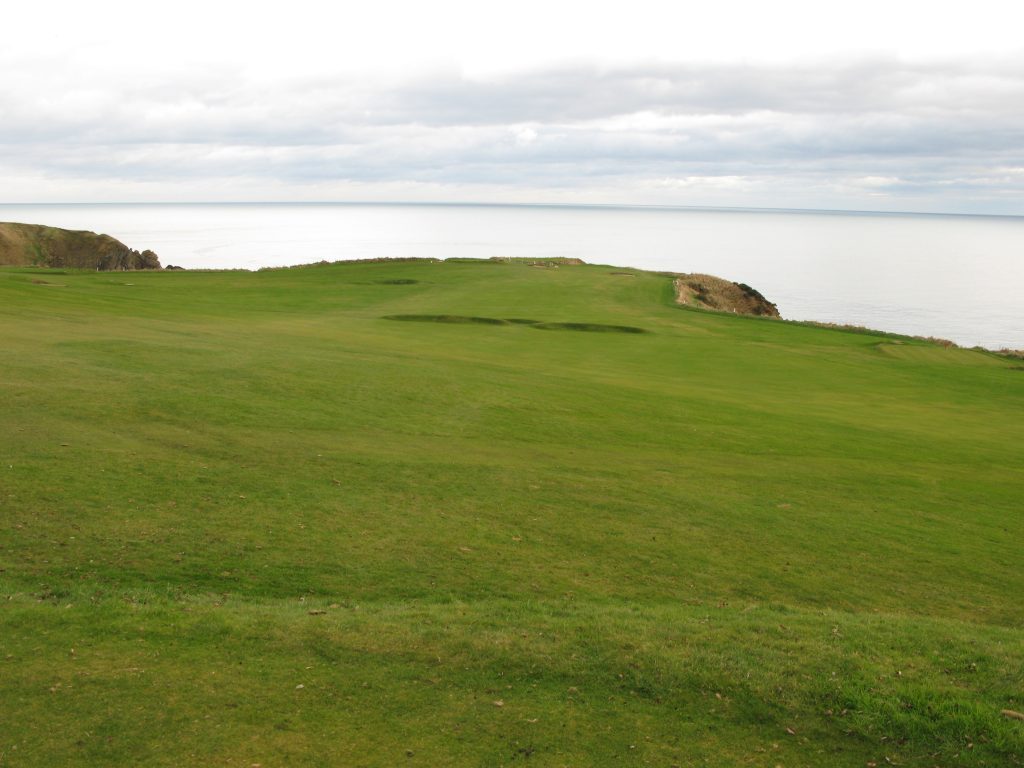
The 1st at Stonehaven.

The open 1st hole at Stonehaven.

The course, founded in 1888, has a convoluted architecture influenced by 2 distinct lines;  the east coast train line which goes directly through the course and the Highland Fault line (dividing Scotland from east to west).  The Fault Line forms “The Gully” feature which dominates play on holes 13 and 15 where it has to be carried.

3rd green at Stonehave looking south towards the town.

3rd green at Stonehave looking south towards the town.

The course is played on arable land and to the east of the train line, with 14 holes, it has no trees, whereas the 4 holes on the west of the train line has trees;  the overall course feels typically parkland, with pretty generous fairways.   On the east of the line, the major hazards are the cliff tops and the gully, which collectively impact about 6 holes, and these are the real challenge here.  The remaining holes are fairly bland, with only few fairway bunkers.

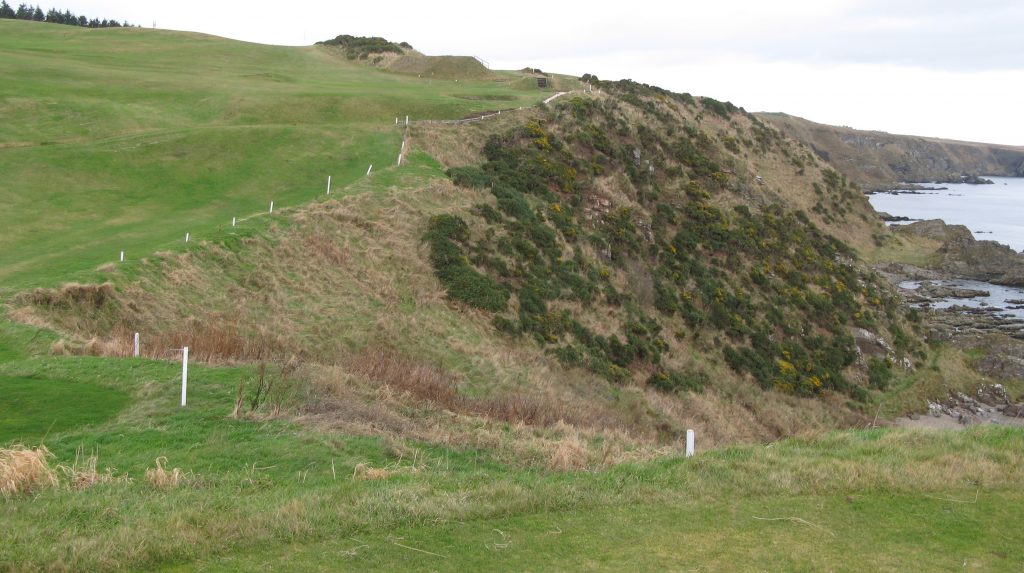
The tough mid-iron par 3 14th, with green beside the cliff!

The tough mid-iron par 3 7th, with green beside the cliff!

Although the major design work was completed by 1897, the course is a designated James Braid “design”, as he and Archie Simpson, the Royal Aberdeen professional, are deemed to have planned improvements to the course, although I couldn’t find out what they are.  An interesting design note, is the presence of “Hitler’s bunker” a crater hole between the first and second fairways, caused by, you’ve guessed it, a bomb during WWII.

8th at Stonehaven with Winter sun

8th at Stonehaven with Winter sun

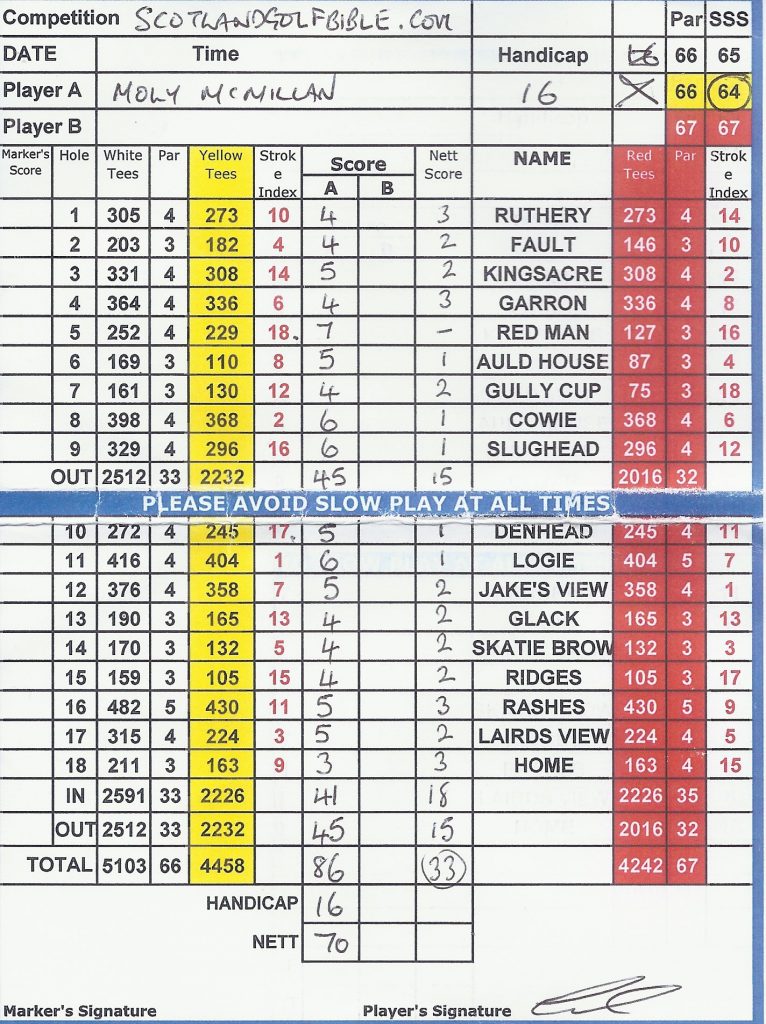
The course is around 5000 yards, so distance is not the issue here.  The feature holes are those where the cliffs and gully are in play.  In particular the mid to long iron par 3 7th hole, requires a cool head to go to the heart of the green, and the long par 13th at 220 yards uphill over “The Gully” will need driver for all bar the long hitters.  Note these were played as holes 14th and 5th on the winter card (see below).

Overall, play to keep the ball away from the cliffs and you’ll be rewarded.  I did so, but my putting let me down on the day, although the greens were in excellent condition for the time of year.  In fact the course was in all round good condition.

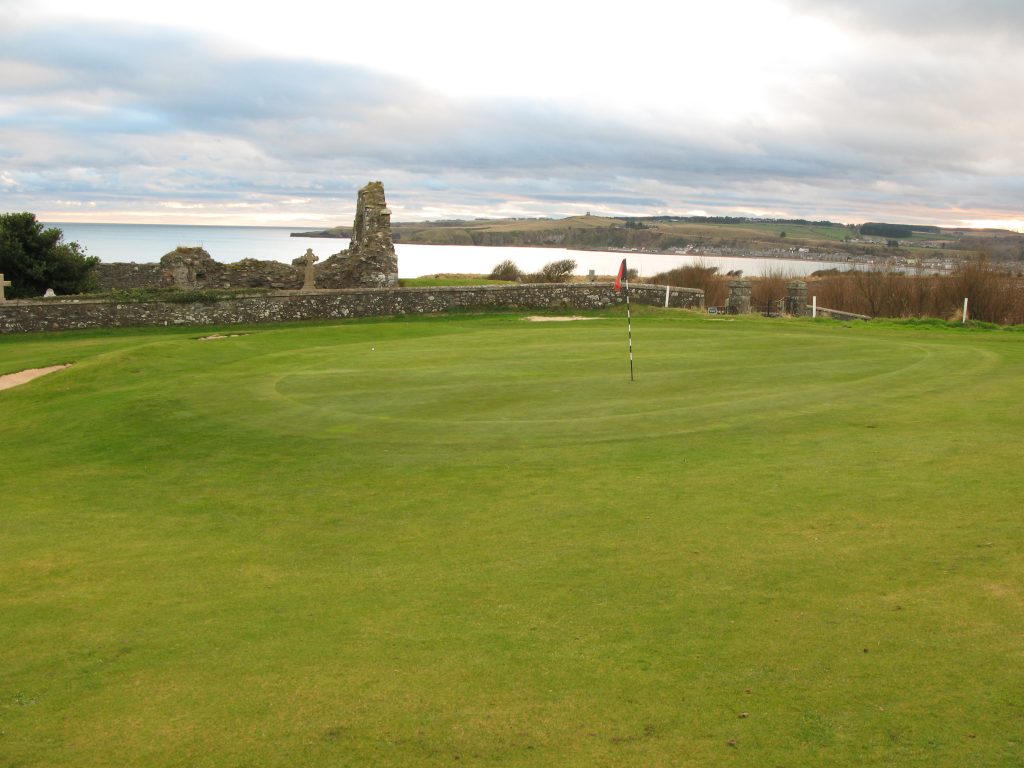
18th green with church ruin and graveyard...perhaps an apt epitaph for some rounds here!

The typically small 18th green with church ruin and graveyard…perhaps an apt epitaph for some rounds here!

My only gripe with Stonehaven was how the website oversells the course as “The best value golf in the North-East of Scotland”.  It is a really nice golf course, with great views, and is worth playing, but this self-declared “value” is a exaggeration in my opinion, which is a shame.

Some Facts

Course Type: Parkland

Par 66 (1 par 5, 10 par 4s, 7 par 3s)

Distance yards:  4458

Moly’s Gross Score: 86

Moly's Stonehaven scorecard, 86 - note this is the winter card, which has a different layout.

Moly’s Stonehaven scorecard, 86 – note this is the winter card, which has a different layout.

53. Stirling. 19th Sep 2016.

“Camera’s Please” at this historically located parkland course with  outstanding views.

Round £45.  Par 72.  Value (out of 5) 4 

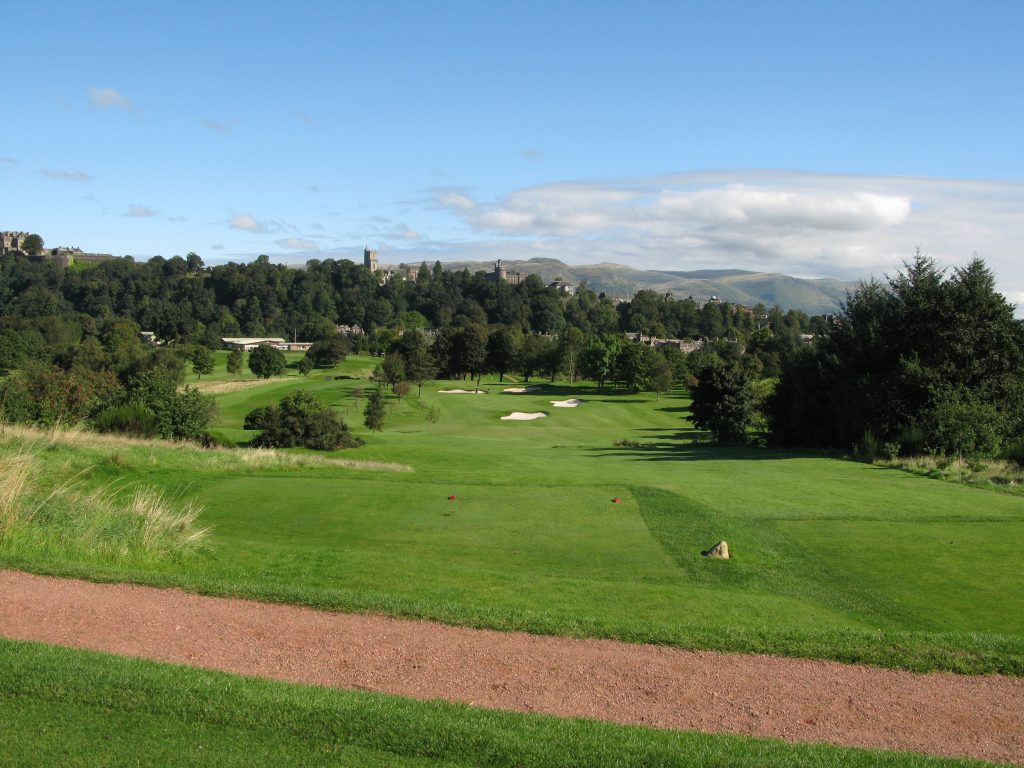
If you play at Stirling remember to take a camera.  There are spectacular views of Stirling, it’s castle and other historic buildings and of the Trossachs, Ochill and Lomond Hills, even the Southern Highlands (in clear weather!).

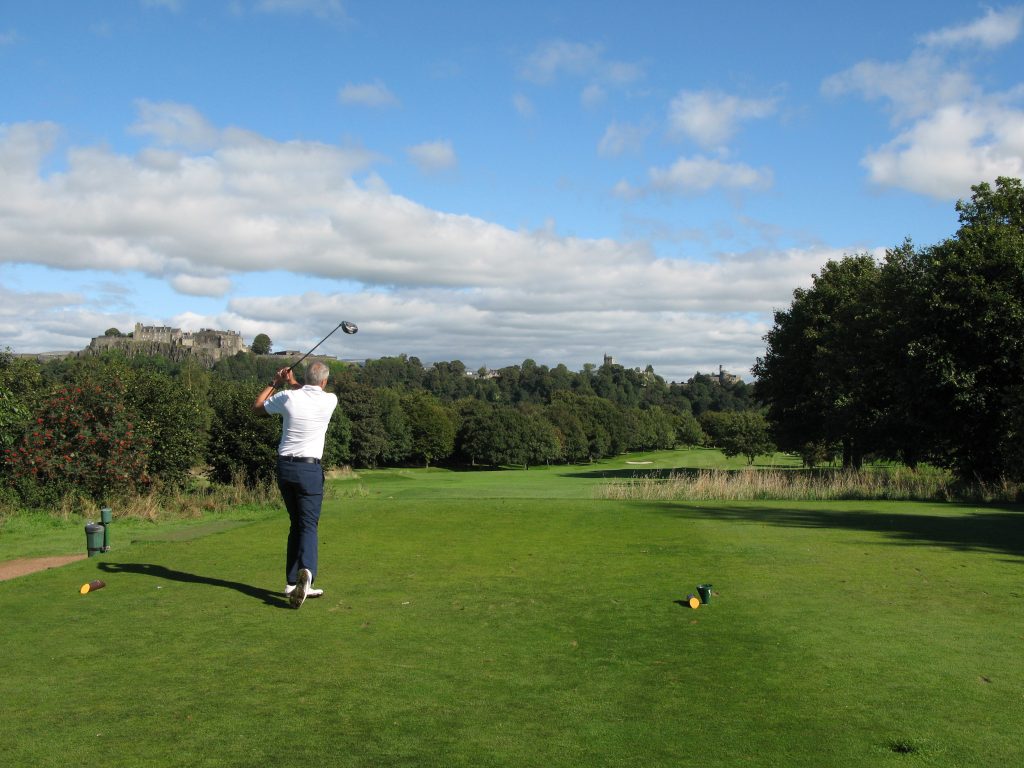
2nd tee at Stirling with views towards the historic town - the rounded turret of the gaol is evident.

2nd tee at Stirling with views towards the historic town – the rounded turret of the gaol is evident.

Given Stirling’s strategic and historic location, it’s not surprising that golf was played in the area currently occupied by Stirling golf course, by King James IV, King of Scots, in 1505.  There was no golf course as such, on what was historically a “Royal Park” dating back to 1200 and used for Hunting – perhaps worth reflecting on when you hunt for golf balls here:)

3rd at Stirling, a typical well defined hole

3rd at Stirling, a typical well defined hole on this course

The current course was established in 1869, and has been subsequently developed by some of golf’s aristocracy – in 1892 Tom Morris Junior designed a 9 hole layout; in 1904 Willie Fernie of Troon extended it to 18 holes; and in 1967 Sir Henry Cotton redesigned the course with significant tree re-planting which is now bearing full fruit.

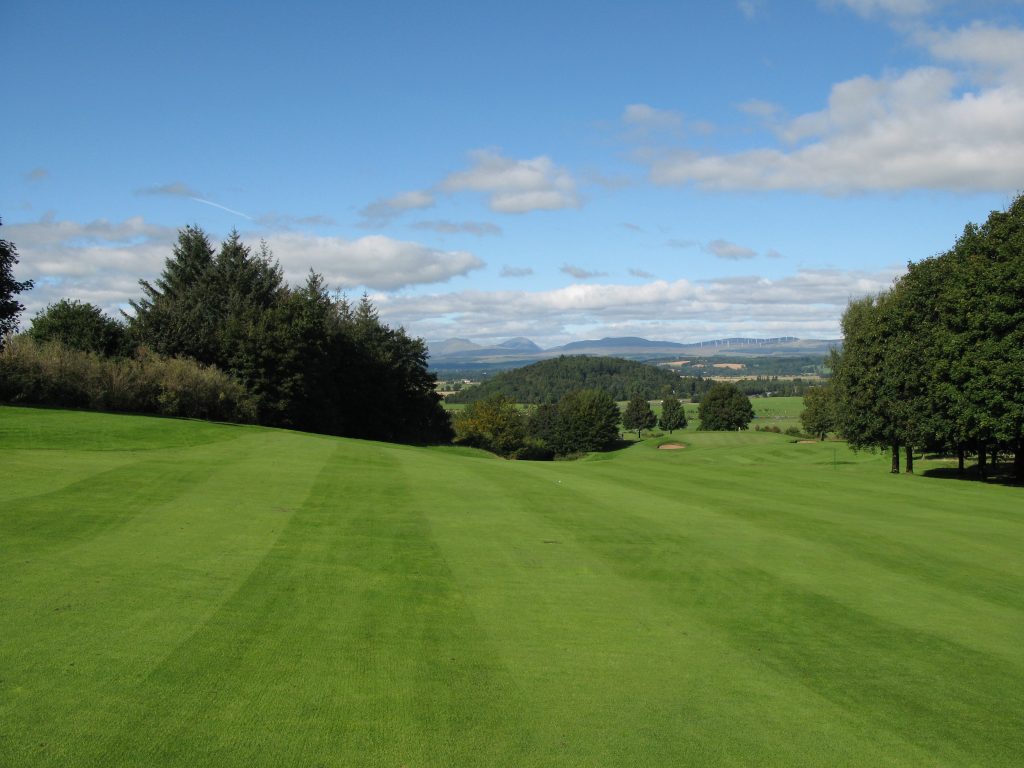
The Apex of the dog leg on the 9th, with fine hill views

The apex of the dog leg on the 9th, with fine hill views

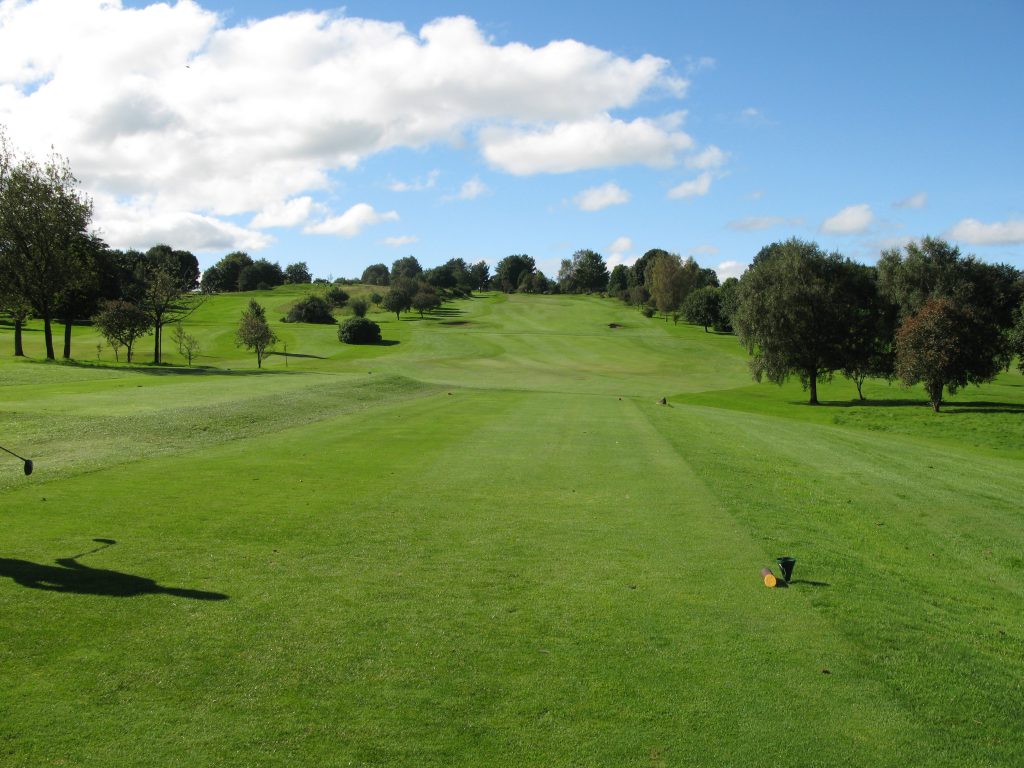
The resulting golf course does justice to the views on offer and at well over 6000 yards, even from the yellow tees, will challenge your handicap to the full (see Moly’s card below for evidence!).  Stirling is a classic layout, with both front and back 9s, each having a par of 36 with 2 par 3s and par 5s.  There is also a really good level of architectural variety, in terms of uphill, downhill, dog-legs right and left.  The course sits on a hill and this is therefore no easy walk, but it’s worth it.

One of my playing partners, Gordon, plays at the 11th with Stirling Castle in the background

One of my playing partners, Gordon, plays at the 11th with Stirling Castle in the background

The highlight holes for me were the dog-legs:  the par 5 1st is a tough start, the 9th offers great hill views from the dog leg apex, and the par 4 15th, which is SI2, is the best hole on the course in my opinion requiring a 220+ yard uphill drive to give access to the plateau green.   The only omission in the design for me is the lack of a 200+ yard par 3, although the par 3 8th, at 180 yards uphill, required a recovery or long iron.

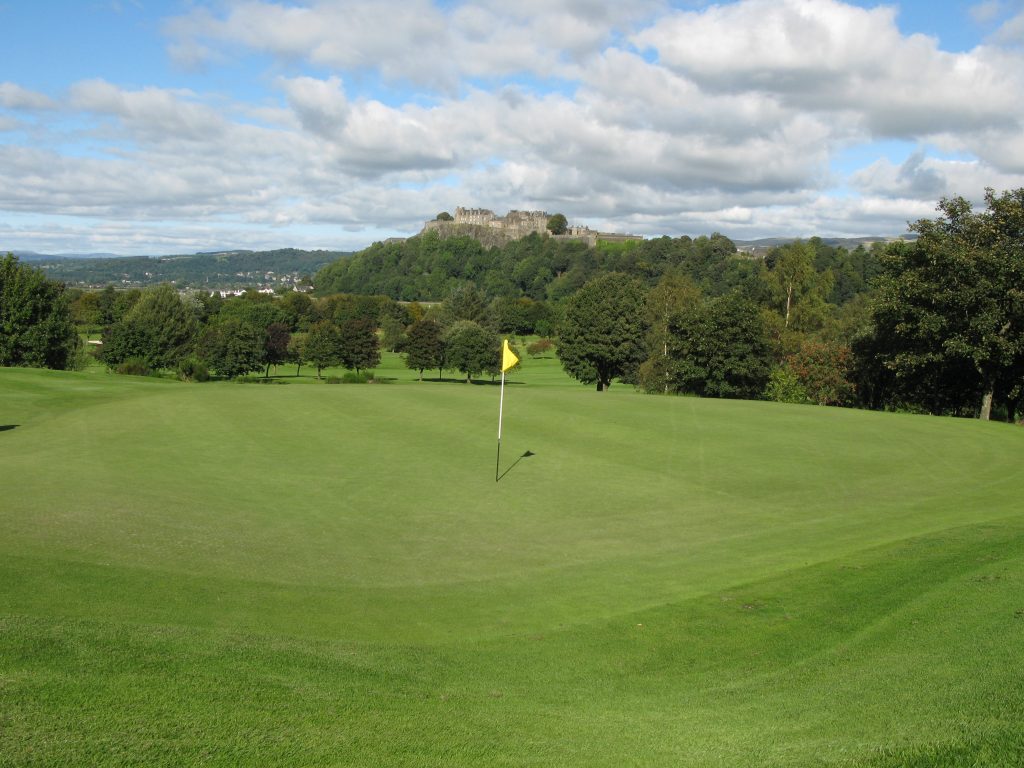
The 15th at Stirling with the Castle in the background

The 15th at Stirling with the Castle in the background

The course was also in great condition when I played along with some former colleagues of the charity Apex (Scotland), which does so much good work helping people rebuild their lives after offending.  Only downside was that the greens had been treated with sand, making putting very slow and different compared with my local links greens.

Stirling also has a nice club house, serving good food.  Its well worth playing Stirling.

Some Facts

Course Type: Parkland

Par 72 (4 par 5s, 10 par 4s, 4 par 3s)

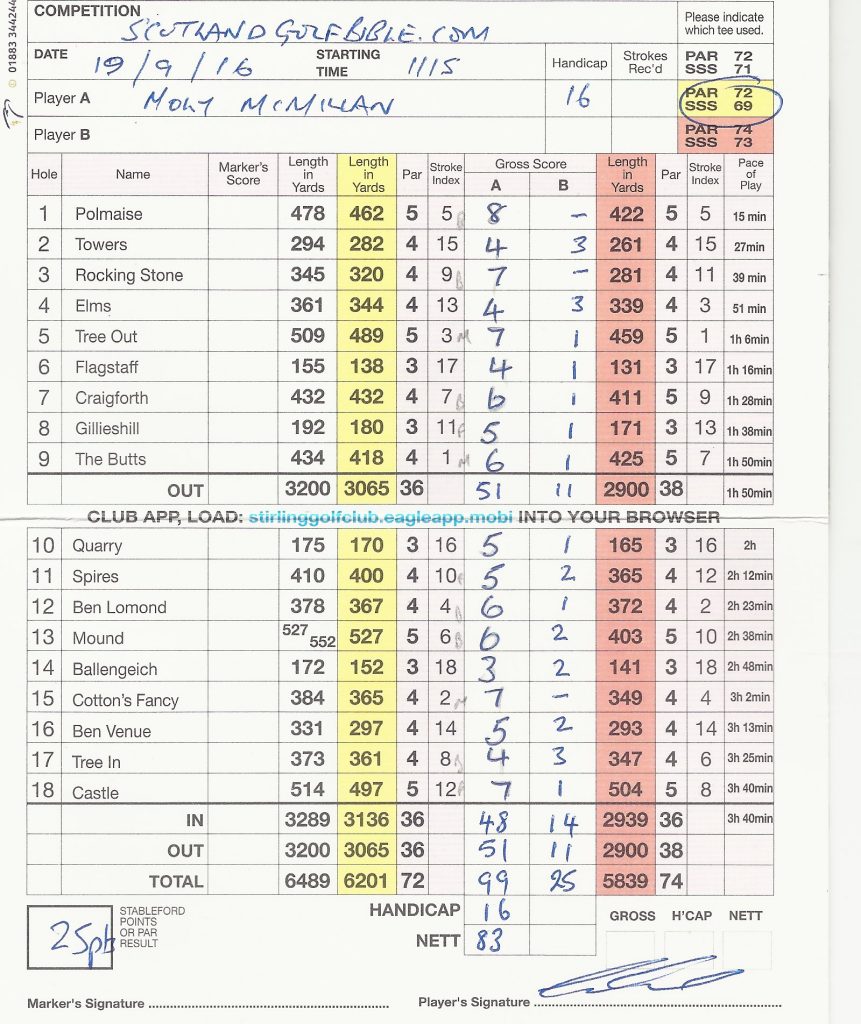
Distance yards:  6201 (yellow)

Moly’s Gross Score: 99

Moly's Stirling scorecard - 99

Moly’s Stirling scorecard – 99


« Older posts Newer posts »

© 2026 Scotland Golf Bible

Theme by Anders NorenUp ↑