A guide to green fee value for money

Category: 18 holes (Page 7 of 34)

157. Balfron Shian. 18 Aug 22.

Quintessentially Scottish

Round £25. Par 72. Course Rating / Slope Rating (yellow) 68.5/124. Value (out of 5) – 5

Moly’s Score – 92

Balfron is a substantial village of over 2000 people in West Stirlingshire, only 16 miles north of Glasgow. Surrounded by the Campsie Hills and the Trossachs, I can’t sum up the golf course better than the clubs own promotional video;

Scenic, secluded, special“.

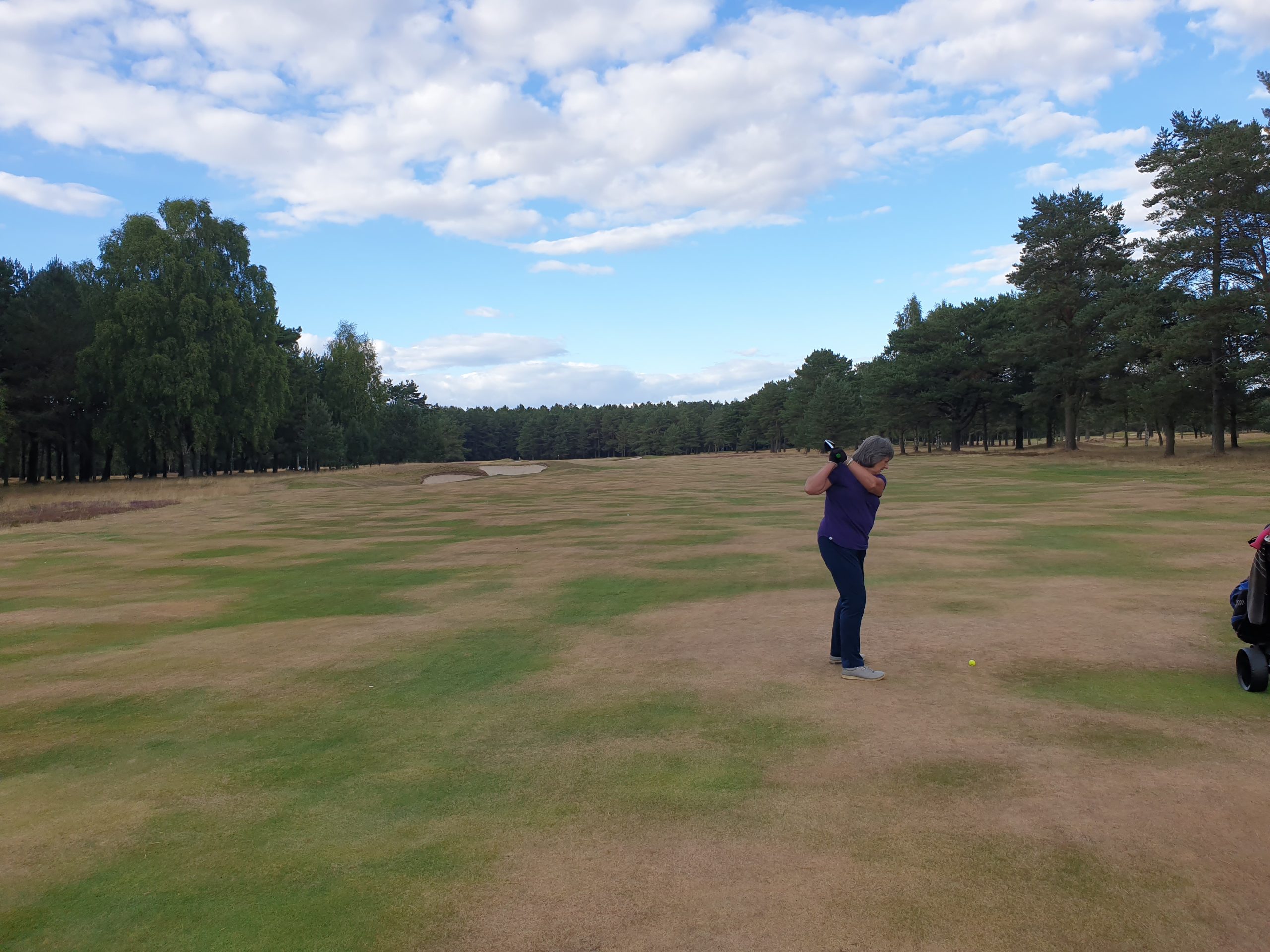
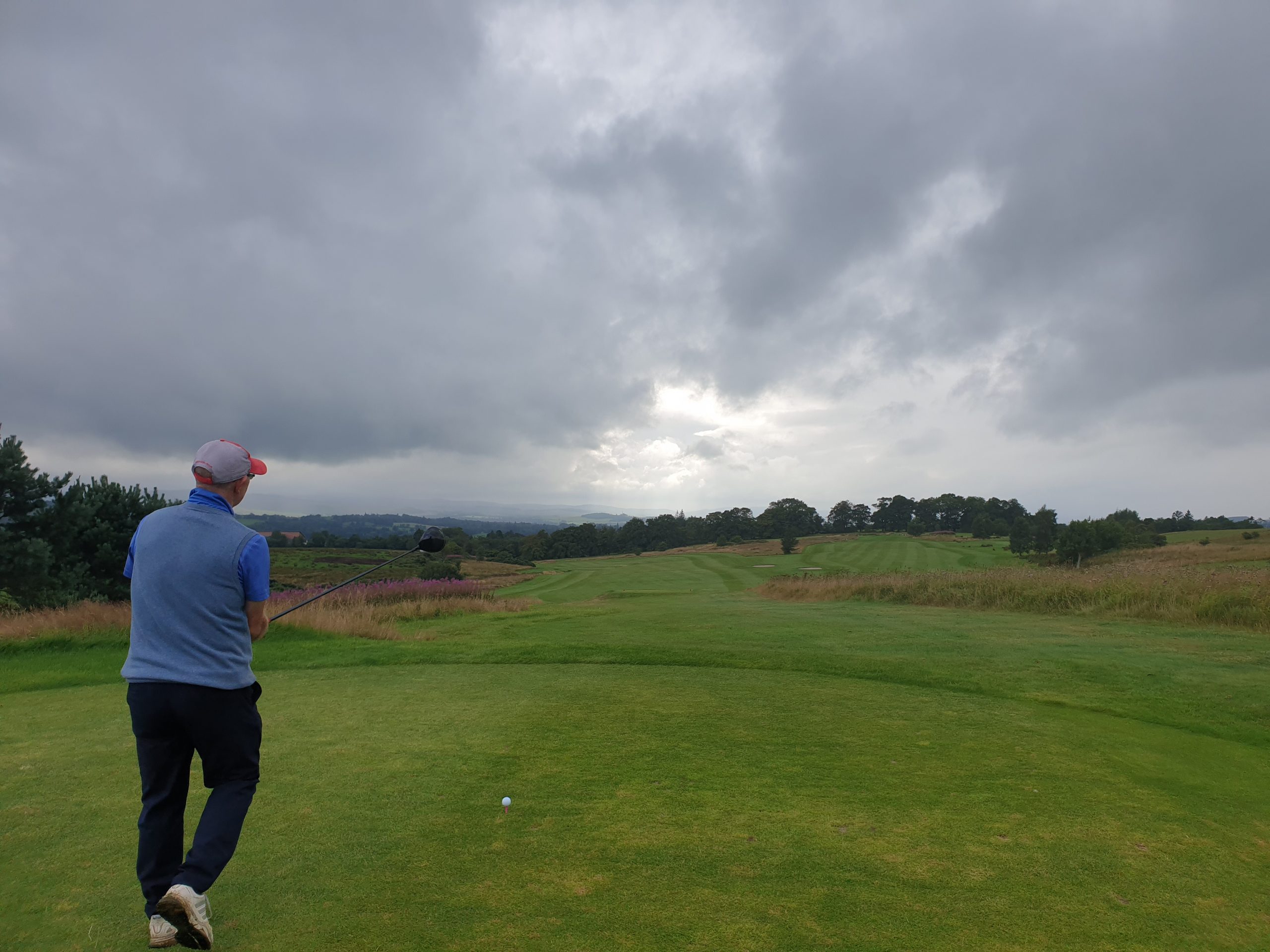
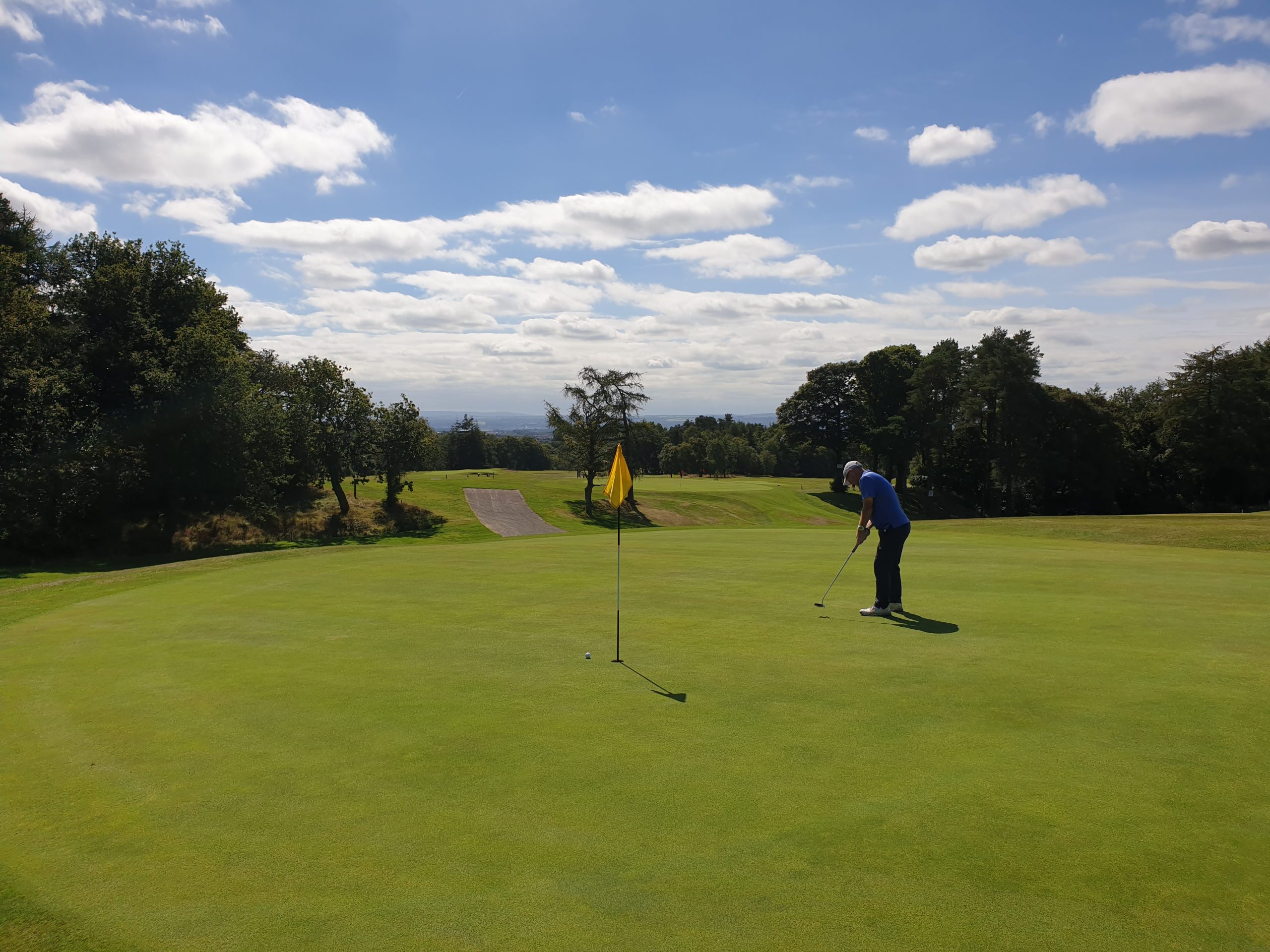
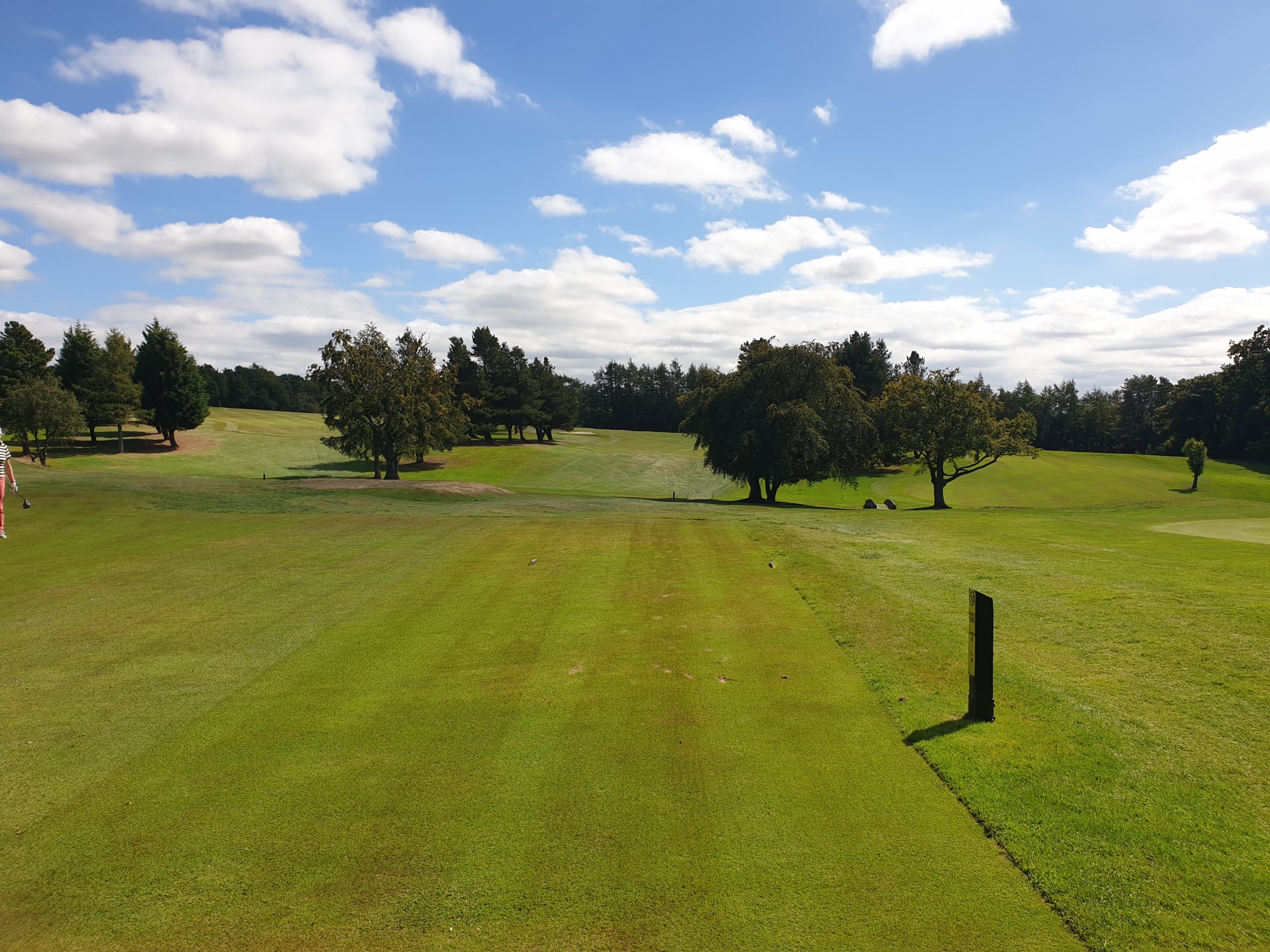
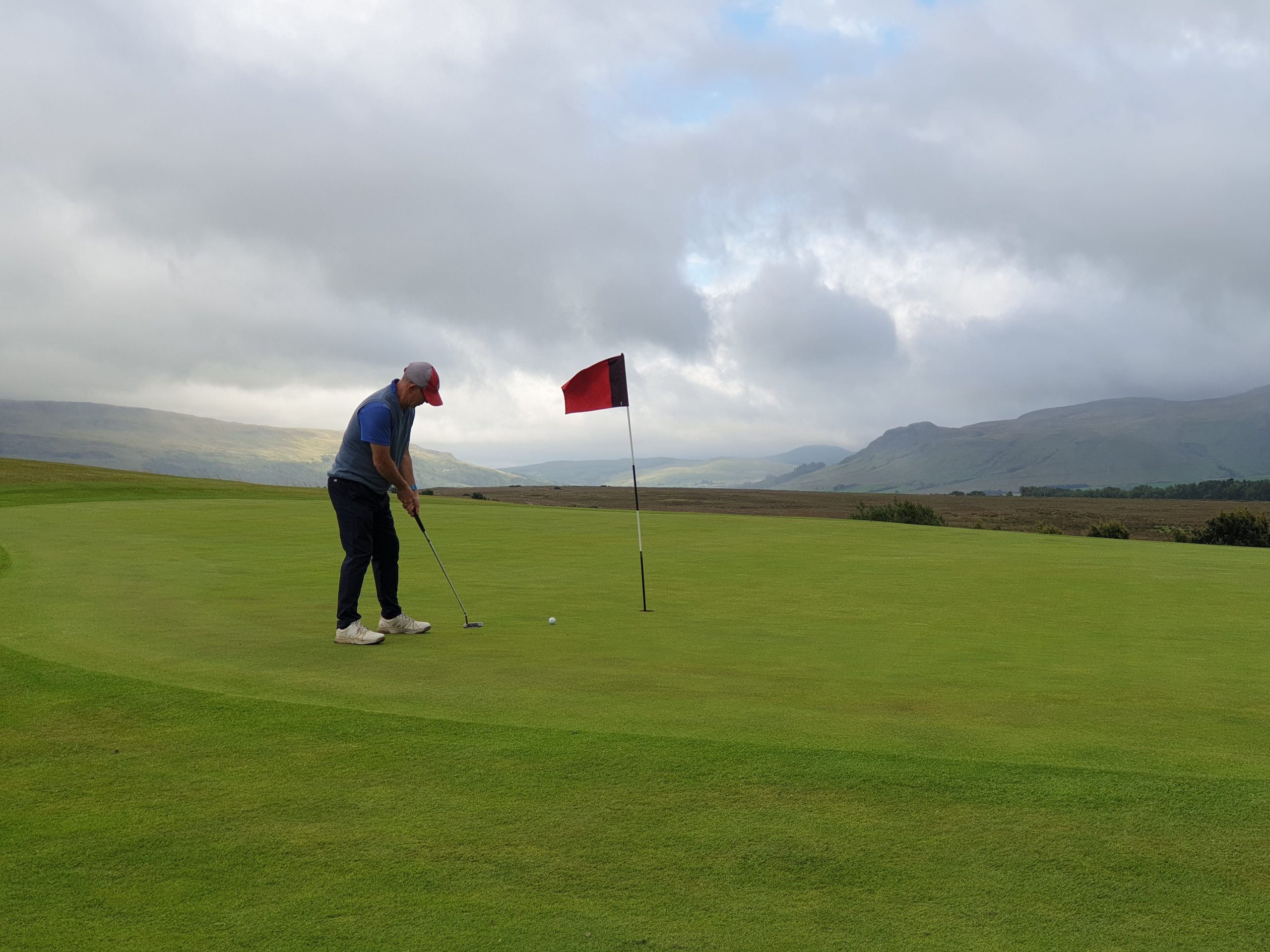
Typical August day in Scotland? Moly putts out on the 12th one of the easier par four holes at Balfron’s Shian course.

The first Balfron golf course was established in 1905, but returned to agricultural use in 1939 to support the war effort. In 1991 a group of villagers founded the Balfron Golfing Society and a 9 hole course was finally established in 1994, no doubt after a great deal of hard work. The course was extended to 18 holes in 2001. The Balfron Society named the course “Shian”, which in Gaelic means peaceful.

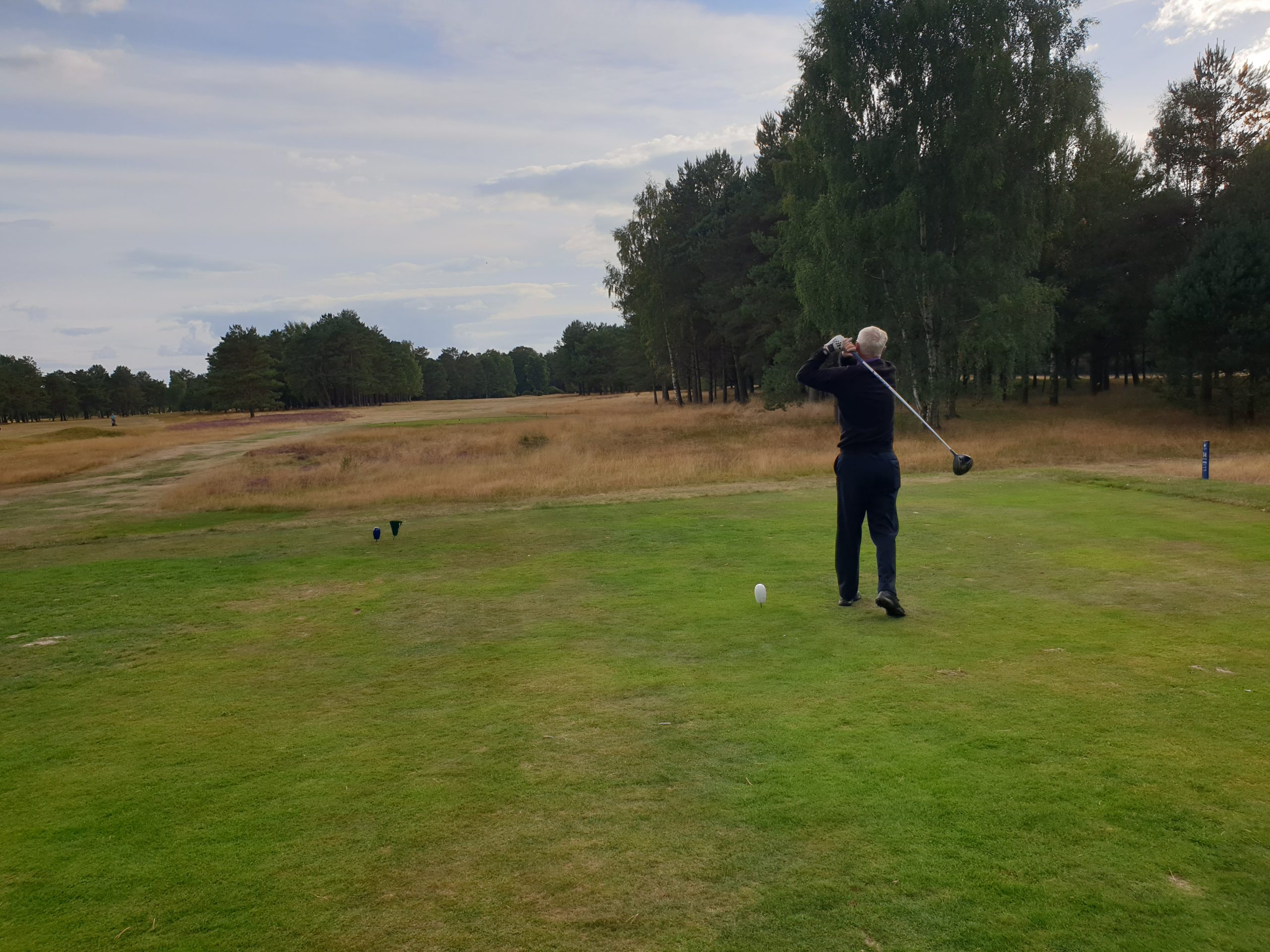
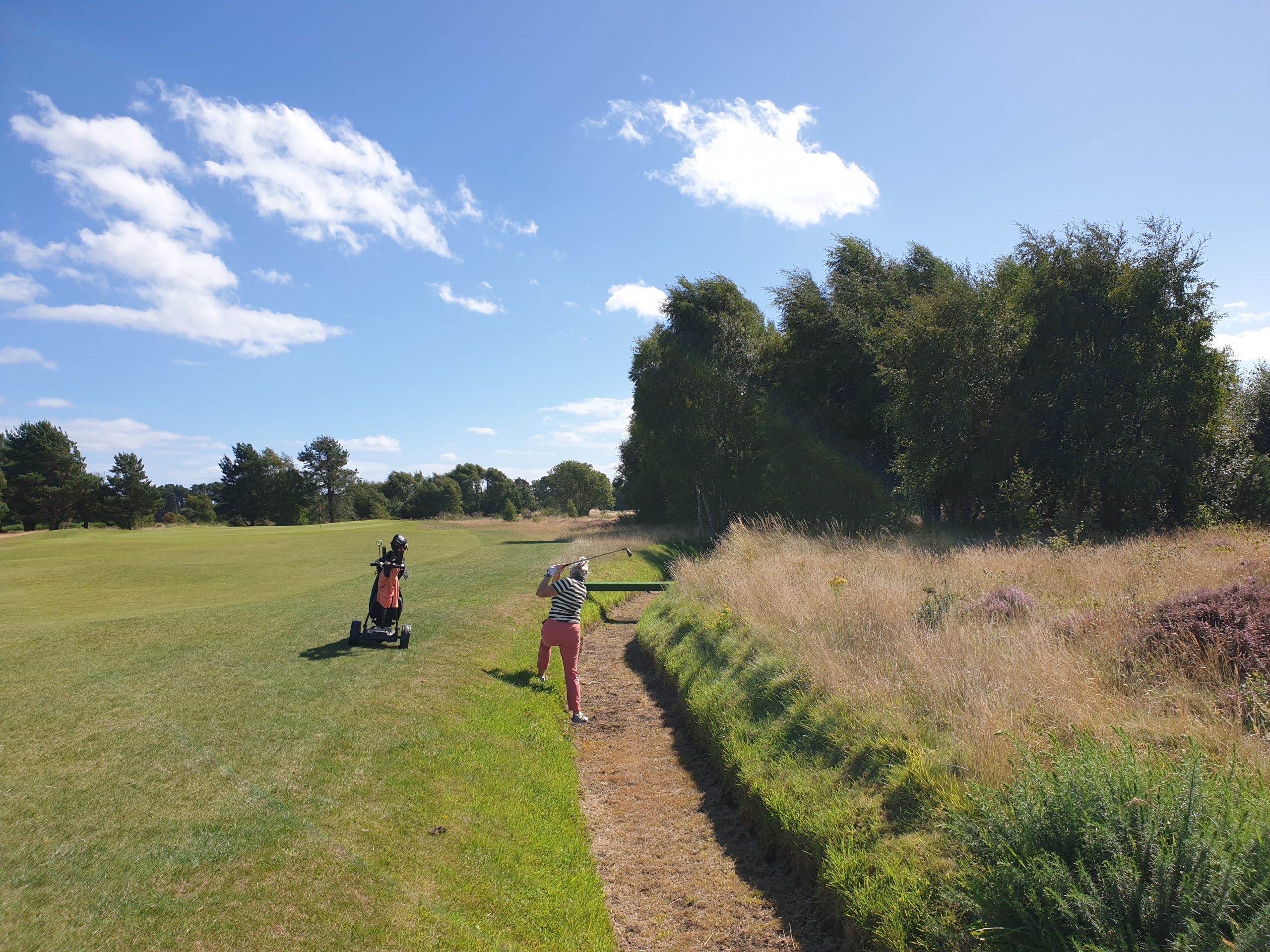
Moly gets ready to tackle the par five 15th, his only birdie of the day.

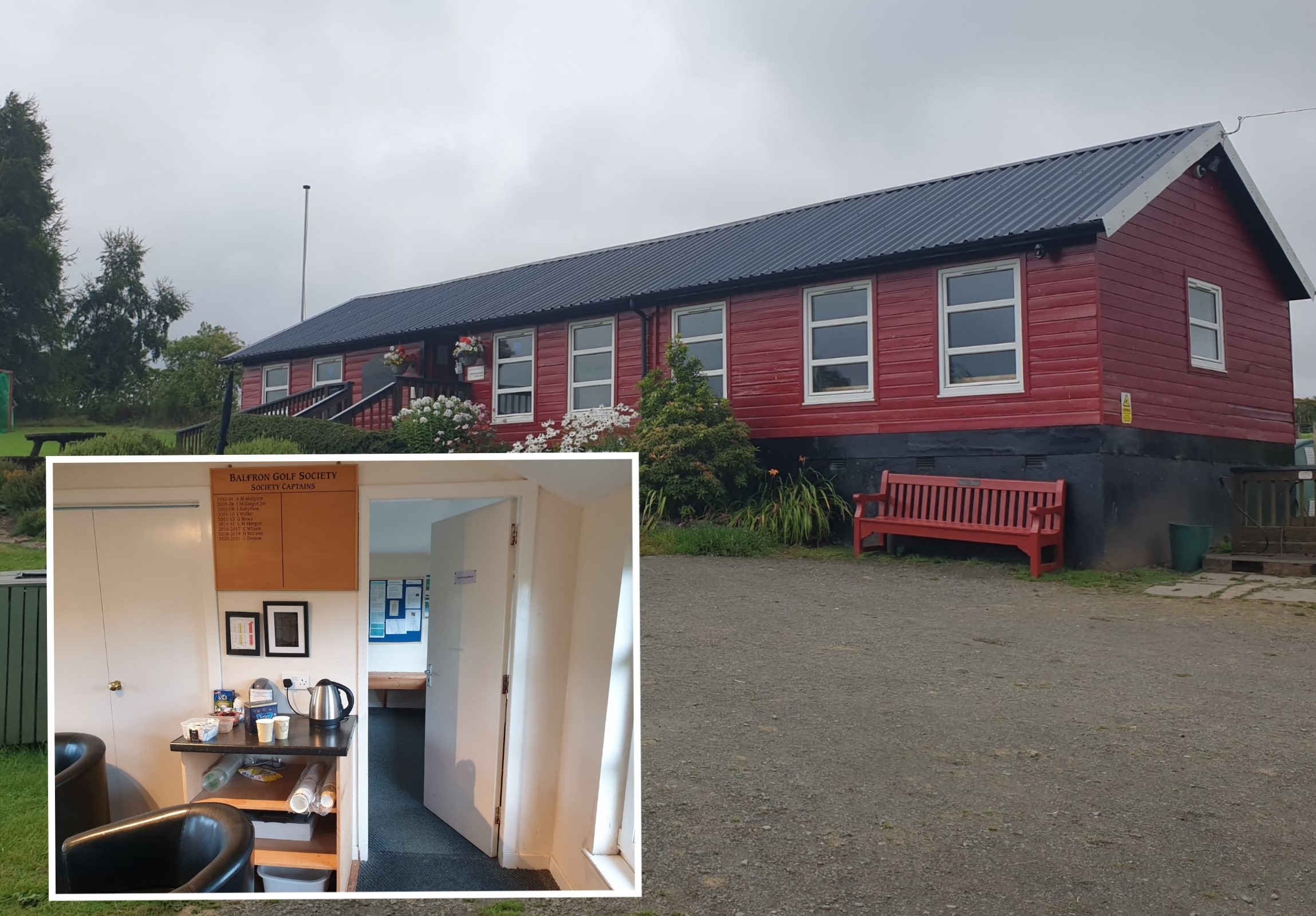
The herculean efforts of the society has resulted in a really fine golf course, which feels more mature than it is. With outstanding views, lush moorland and the “honesty box” wooden clubhouse this is quintessential Highland Scottish golf.

The quaint clubhouse where Fran and Moly enjoyed an ‘honesty’ cuppa and chocolate bar.

When Fran and I played on a cloudy day in mid August, there was only one other two ball game on the course. It was certainly ‘secluded’ and we, in turn, felt ‘special’, playing that beautiful game of ‘millionaires’ golf that occasionally comes your way.

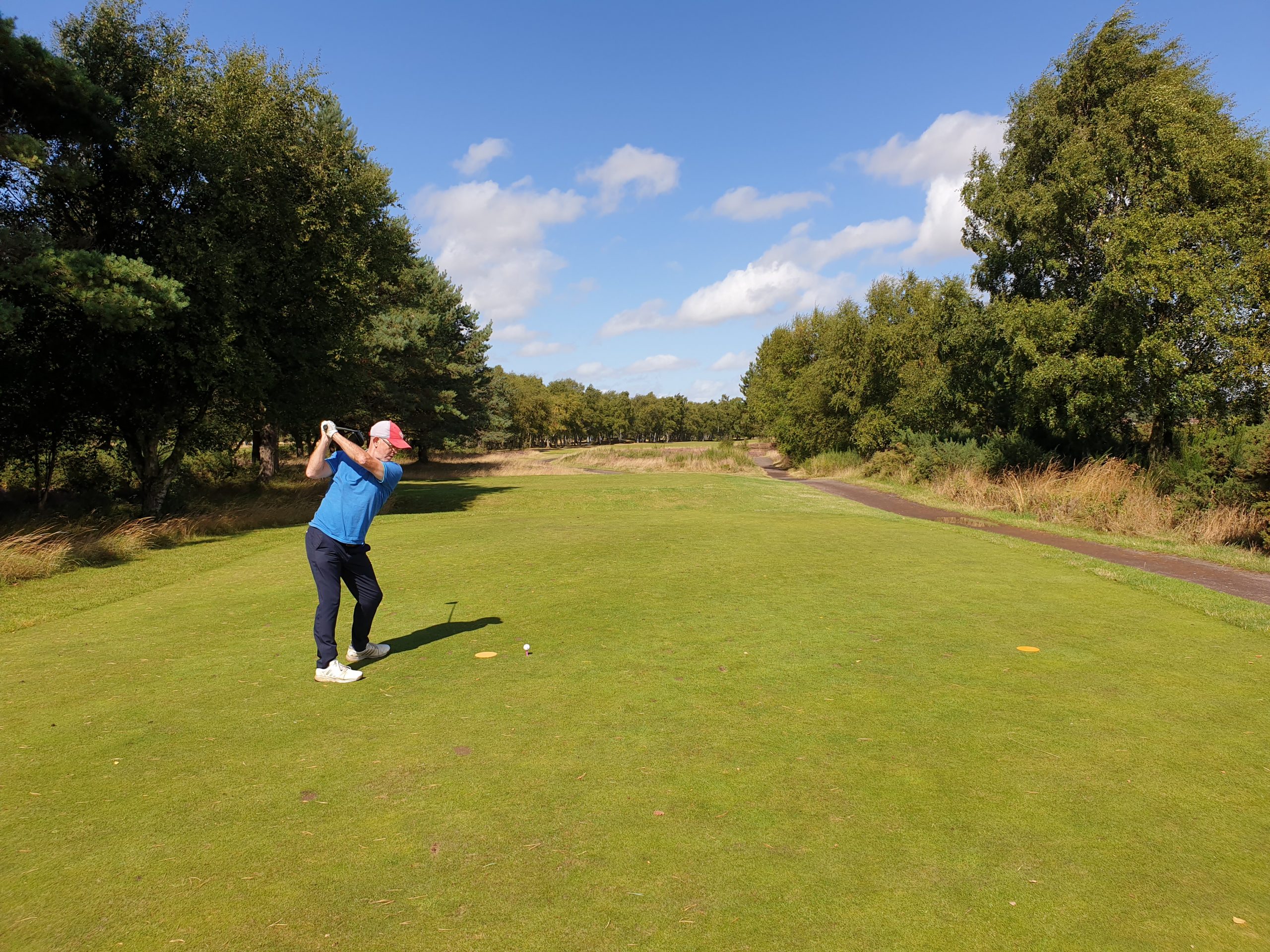
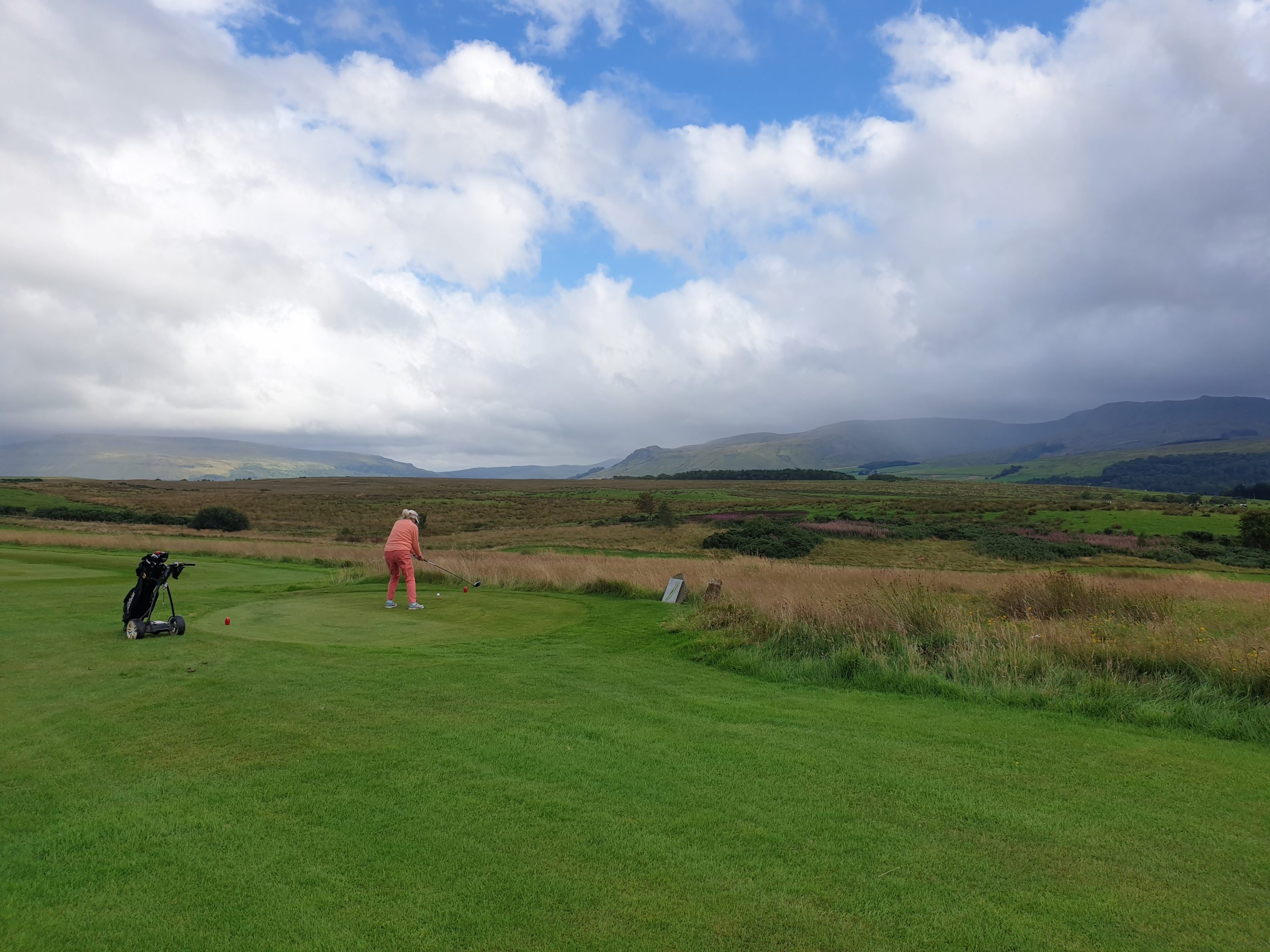
Fran tees at the 9th, amidst the scenic ‘blooming heather’ West Stirlingshire surroundings.

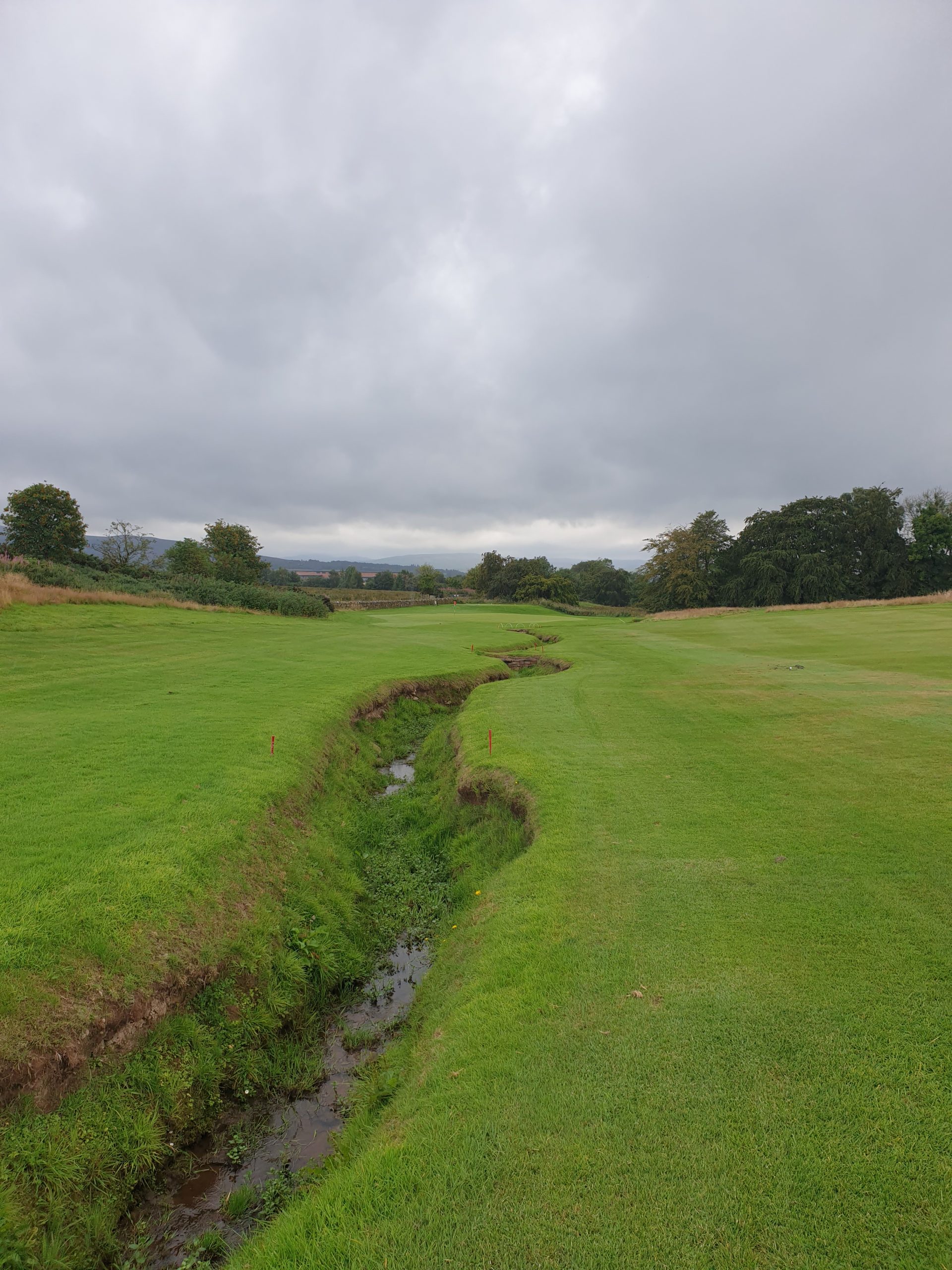
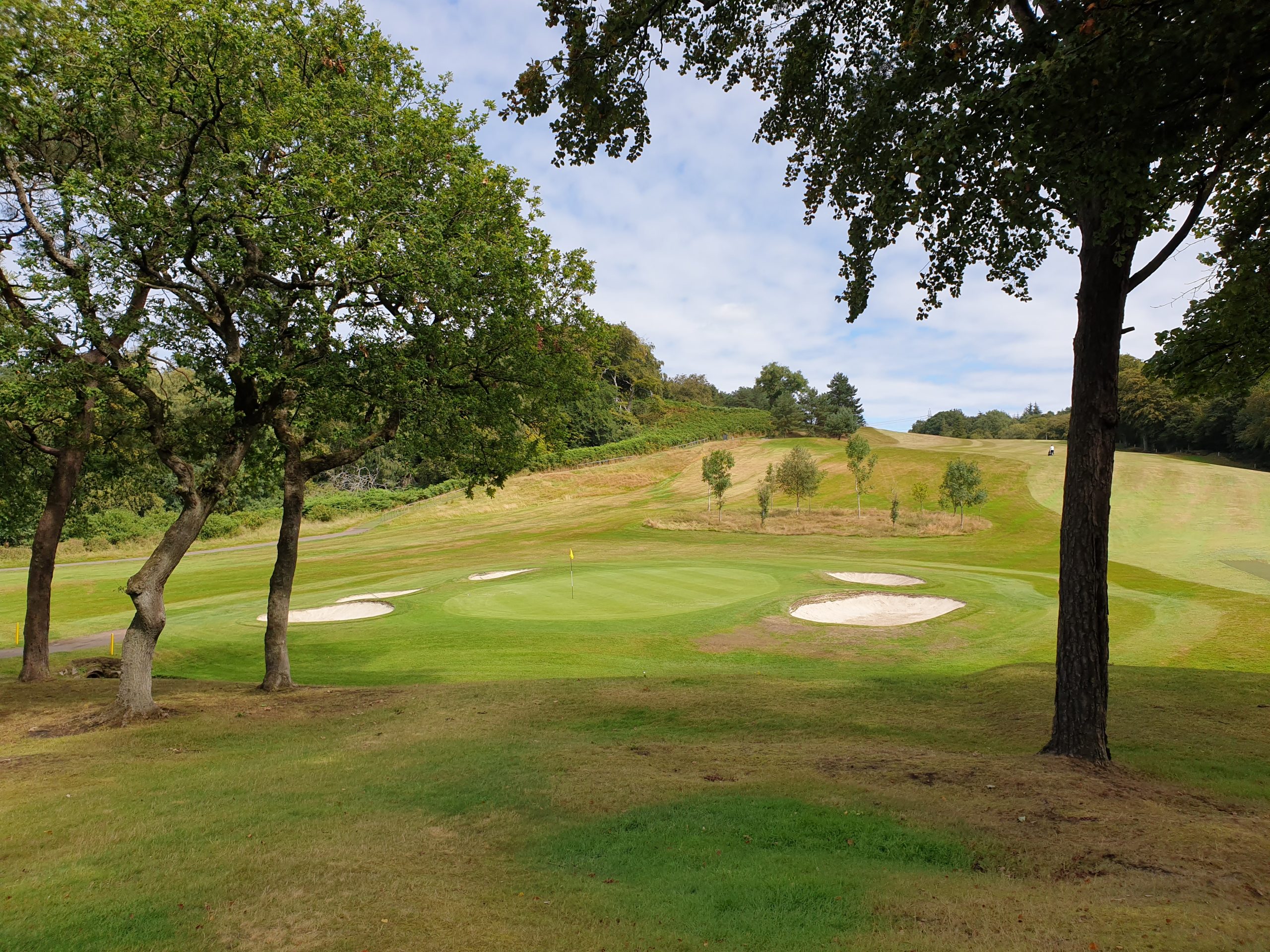
It’s certainly worth going out of your way to play The Shian course. At only £25, it is excellent value, since the course in no way feels a “self help’ set up. The greenkeeper Kevin Wilkie and his small team are doing a great job, with teeing grounds and greens both first class. There is excellent use of the natural surroundings and good use of the burn that runs through the 15th and 17th holes, these two holes being the stand out architecture, reminiscent of the great architectures of Braid or Alastair McKenzie.

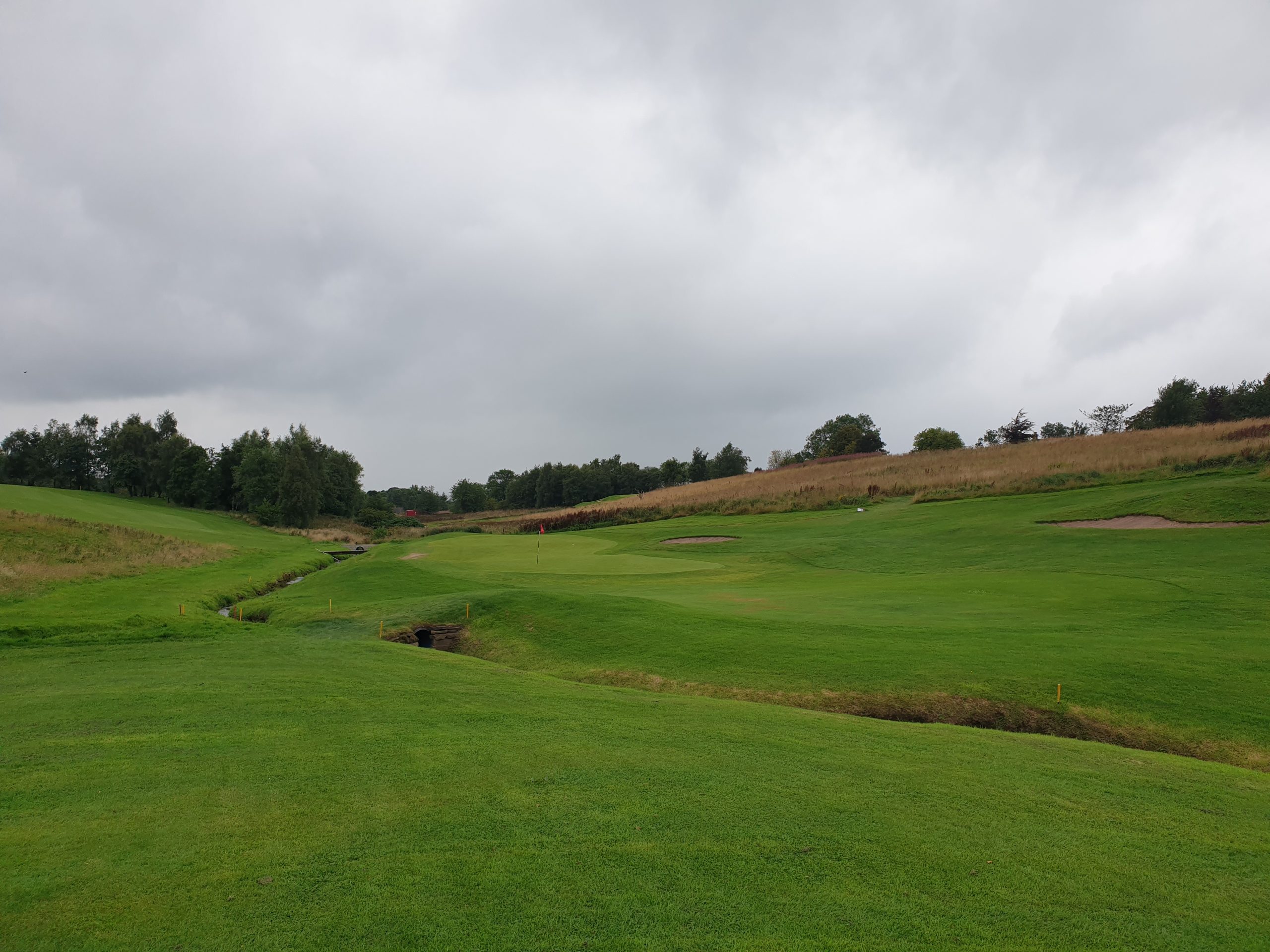
The burn running towards the 15th green, the par 5 of 513 yards.

The course designer has done well to seamlessly join the original nine and the newer holes. Plus, the greens are worthy of note, being both undulating and at times bemusing. Thankfully, it’s also an open driving course, with almost no fairway bunkers, therefore the slope rating of 124 reinforces the trickiness of the remaining features.

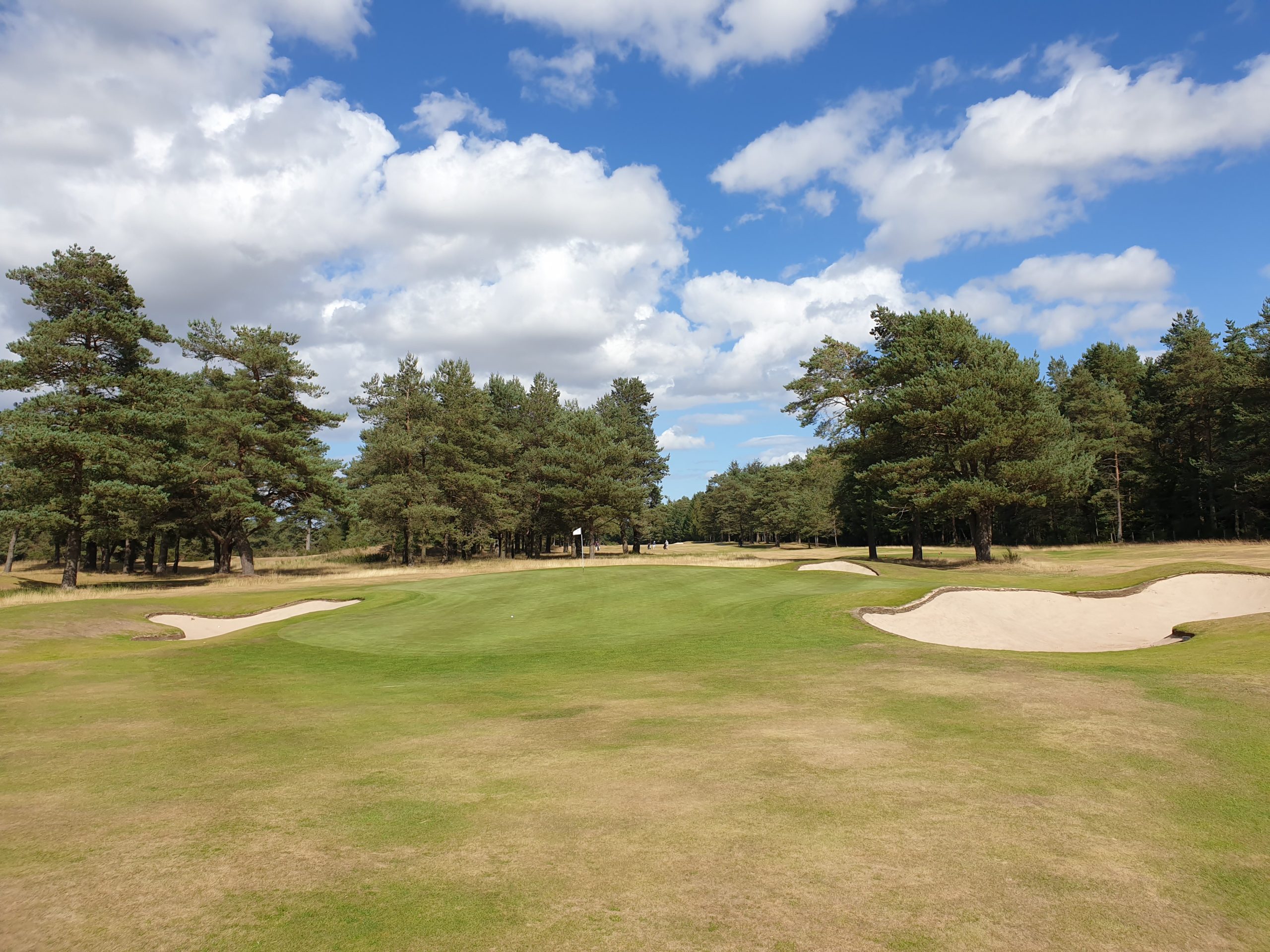
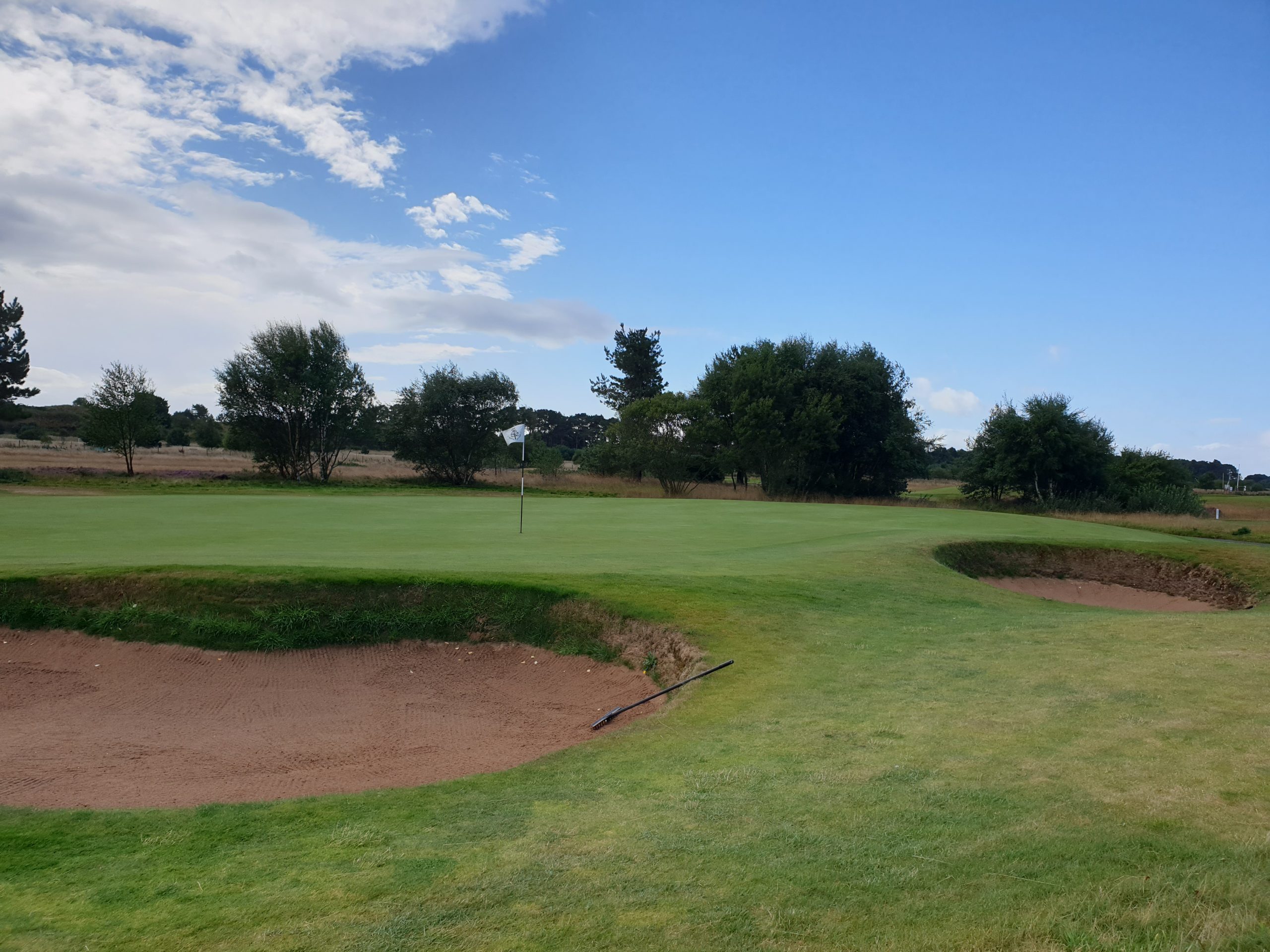
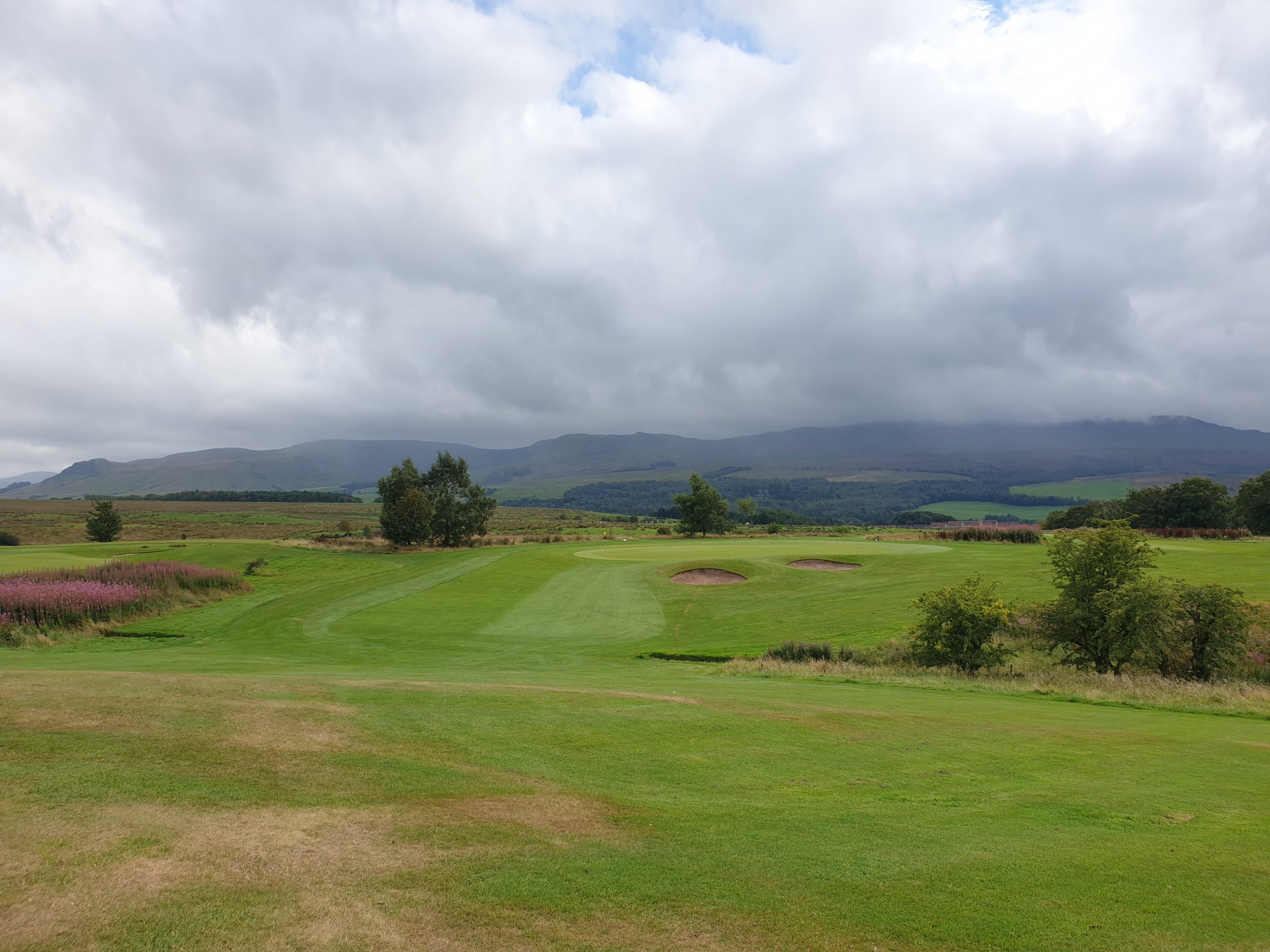
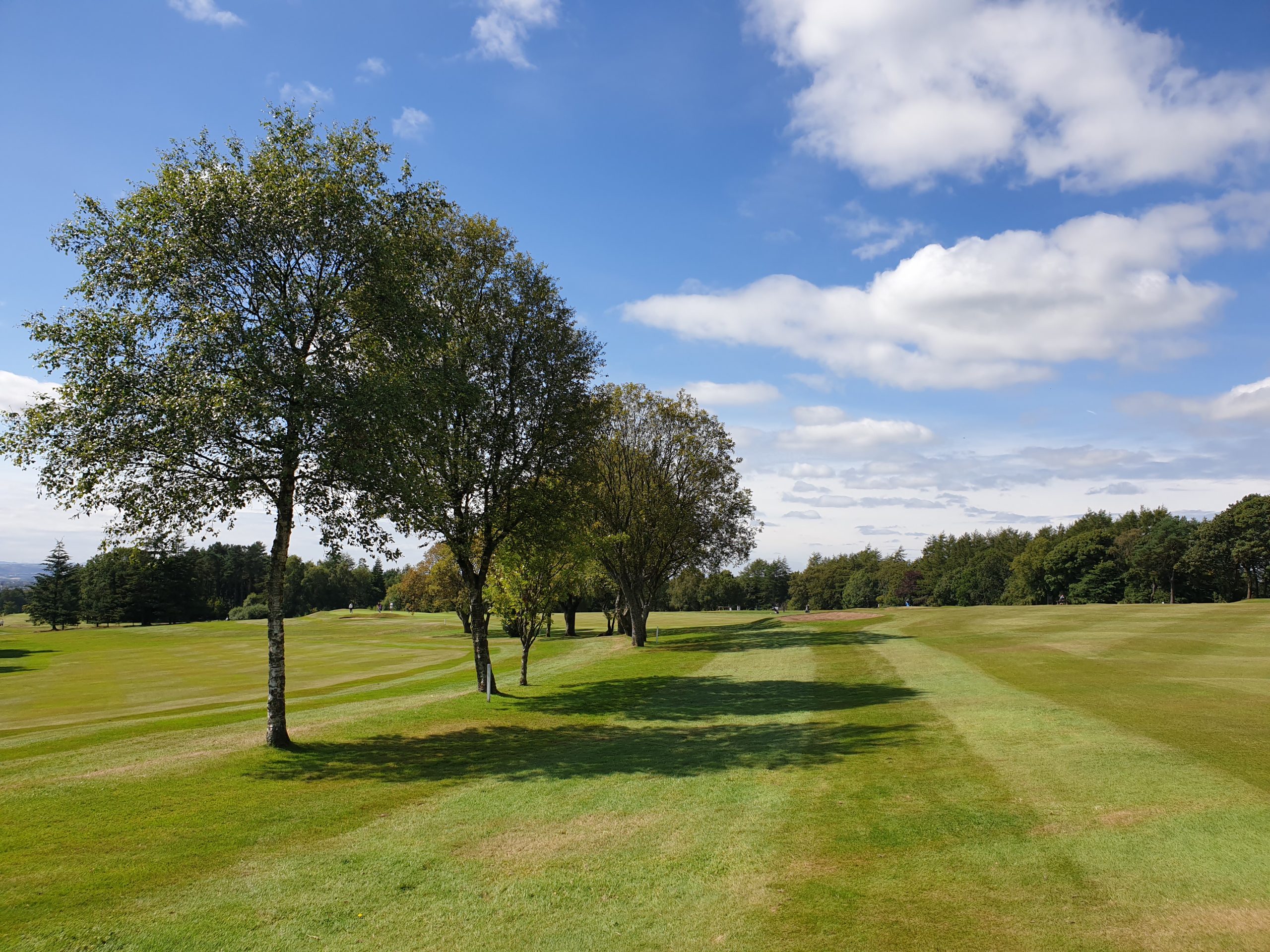
A typical aesthetically pleasing hole at Balfron Golf Society’s Shian course. The approach to the par four 8th hole.

All in all, this is great fun golf. To top it off, do plan to have an ‘honesty” tea and snack in the delightful clubhouse. This is the sort of course that visiting tourists playing the established courses should take time to discover.

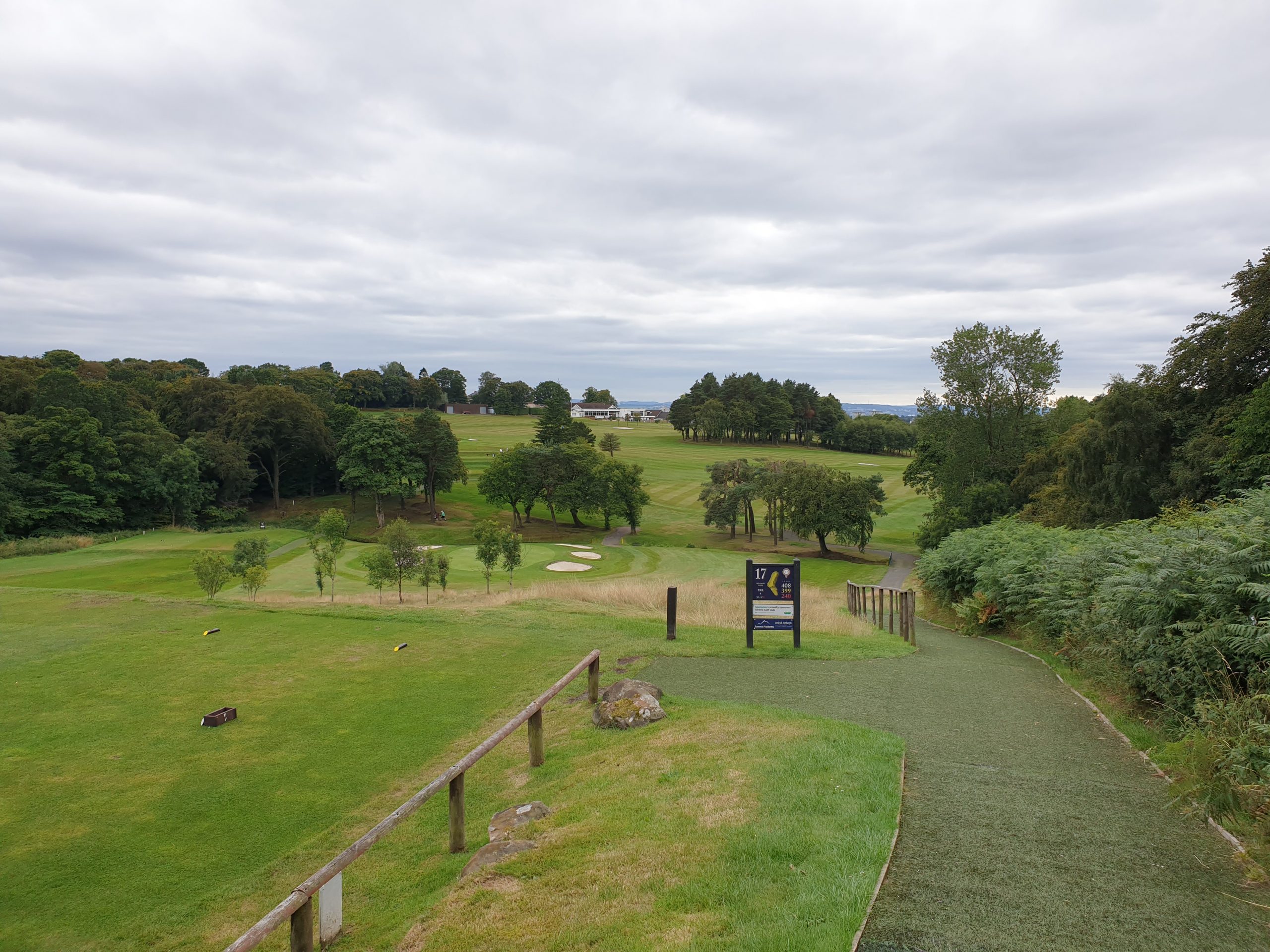
The long par 4, 17th hole, a challenging hole. Don’t you just hate when you reach a long par 4 in two to then 3 putt for a bogie.

With only around 300 or so members paying under £400, its critical for visitor income to ensure courses like The Shian survive.

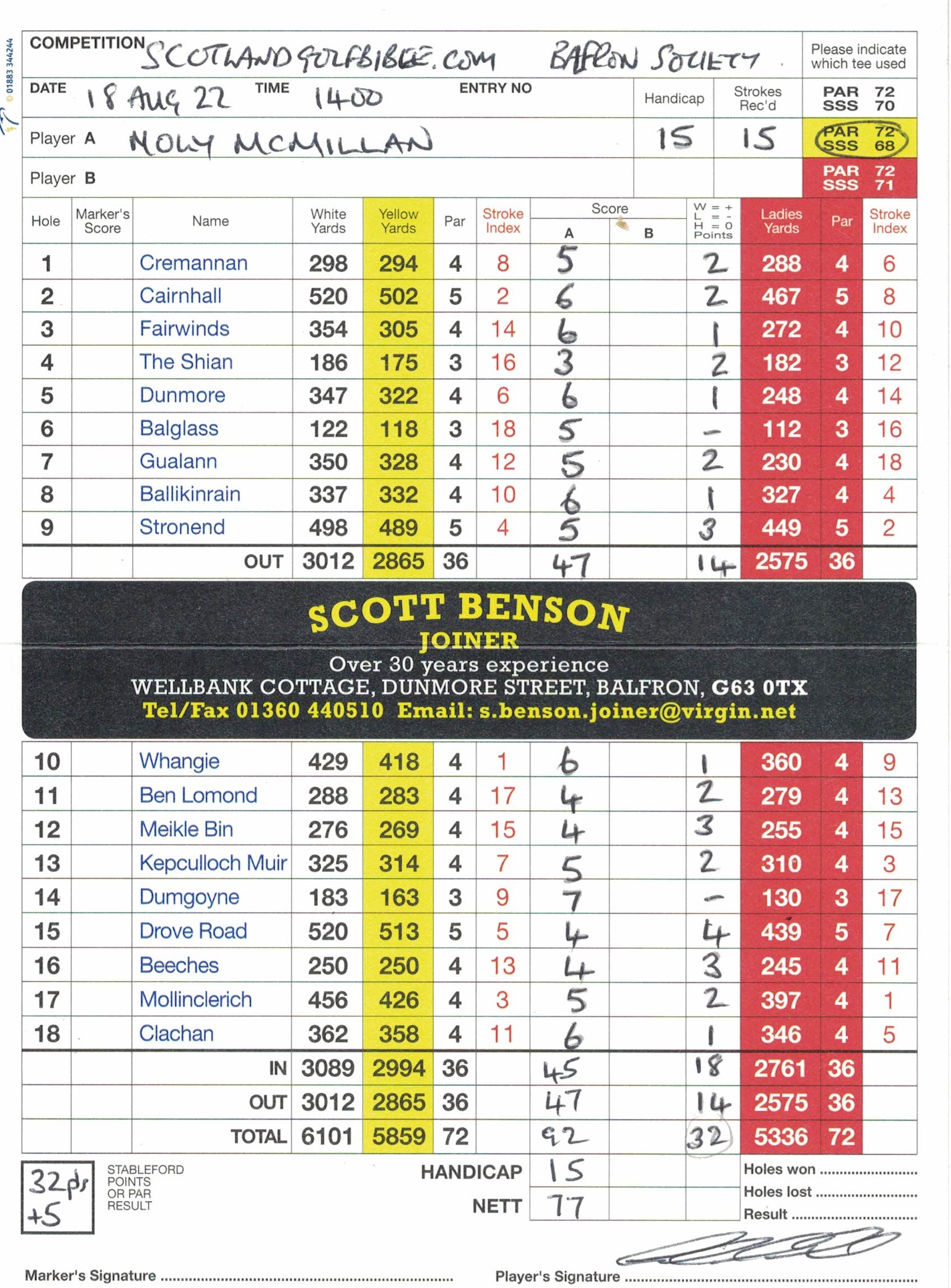
On the day, I played solidly for a 92 and 32 stableford points.

Facts:

Course Type: Heathland

Par 72  (3 par 5s, 12 par 4s, 3 par 3s)

Distance (yellow): 5859 yards

Moly’s Gross score: 92

Moly’s 92, a decent round on this delightful course

156. Airdrie. 17 Aug 22.

This true “Hidden Gem” is an absolute joy.

Round £30. Par 69. Course Rating / Slope Rating (yellow) 67.5/118. Value (out of 5) – 5

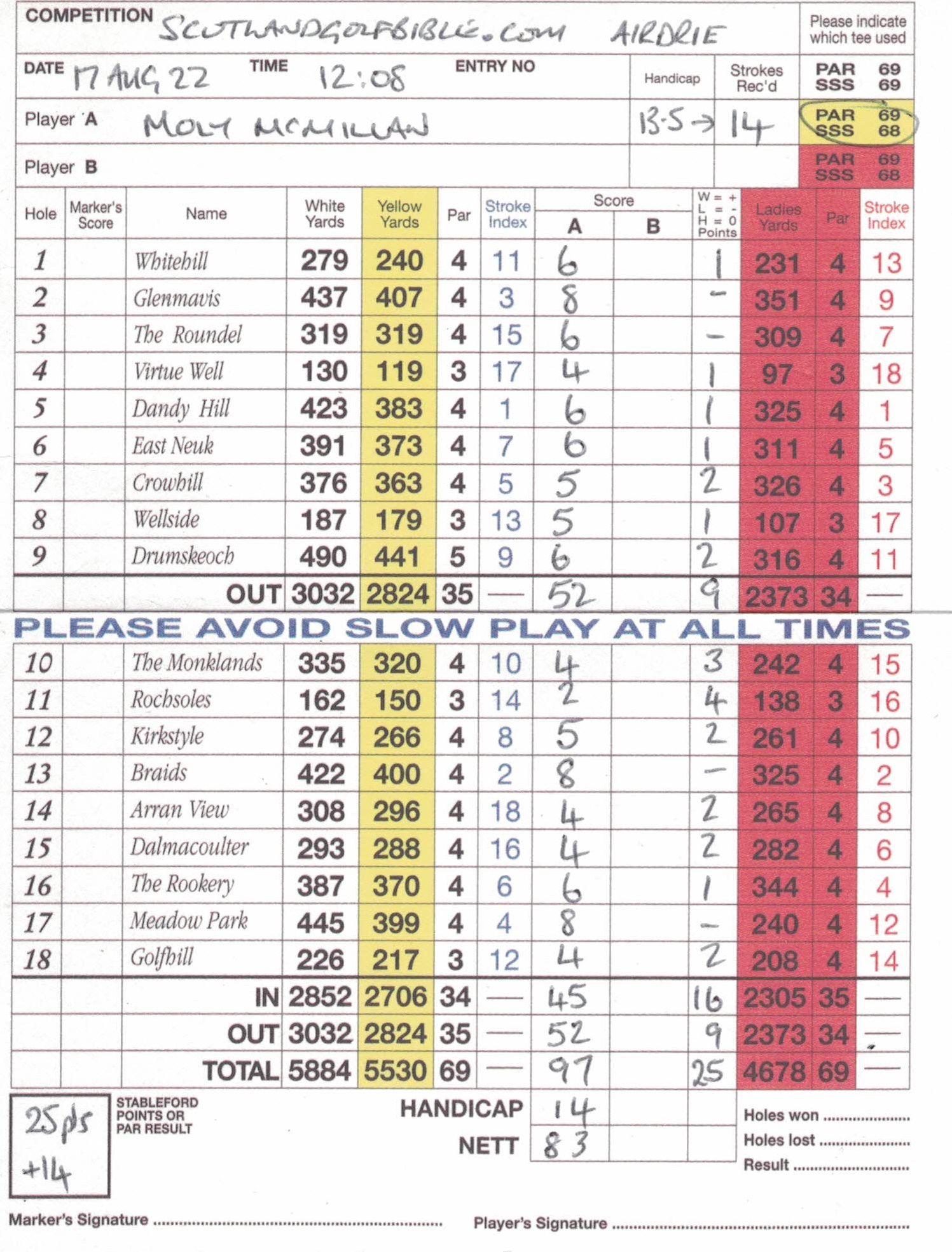
Moly’s Score – 97

When deciding to play all Scotland’s golf courses, I had no idea of the joy I would find from learning about Scotland’s geography and local histories, plus on the few occasions I would find a course that overwhelmingly surpassed my expectations. Airdrie is such a course.

Airdrie’s far reaching views, on show here at the 8th, a difficult par 3, played slightly uphill.

Scottish football fans are well aware of Airdrieonians, the club with the distinctive red ‘V’ embossed on its white football top. However, I would never have played golf in Airdrie, a town of some 40,000 people in the central part of Scotland, had it not been for my golfing ambition.

The pristine 10th tee at Airdrie, a 320 yard par four.

Along with neighbouring Coatbridge, this collective municipal ‘working class’ area is called “The Monklands”. As the name suggests, this land was used by the monks of Newbattle Abbey in West Lothian, who were granted charter over the land by King Malcolm in 1160.

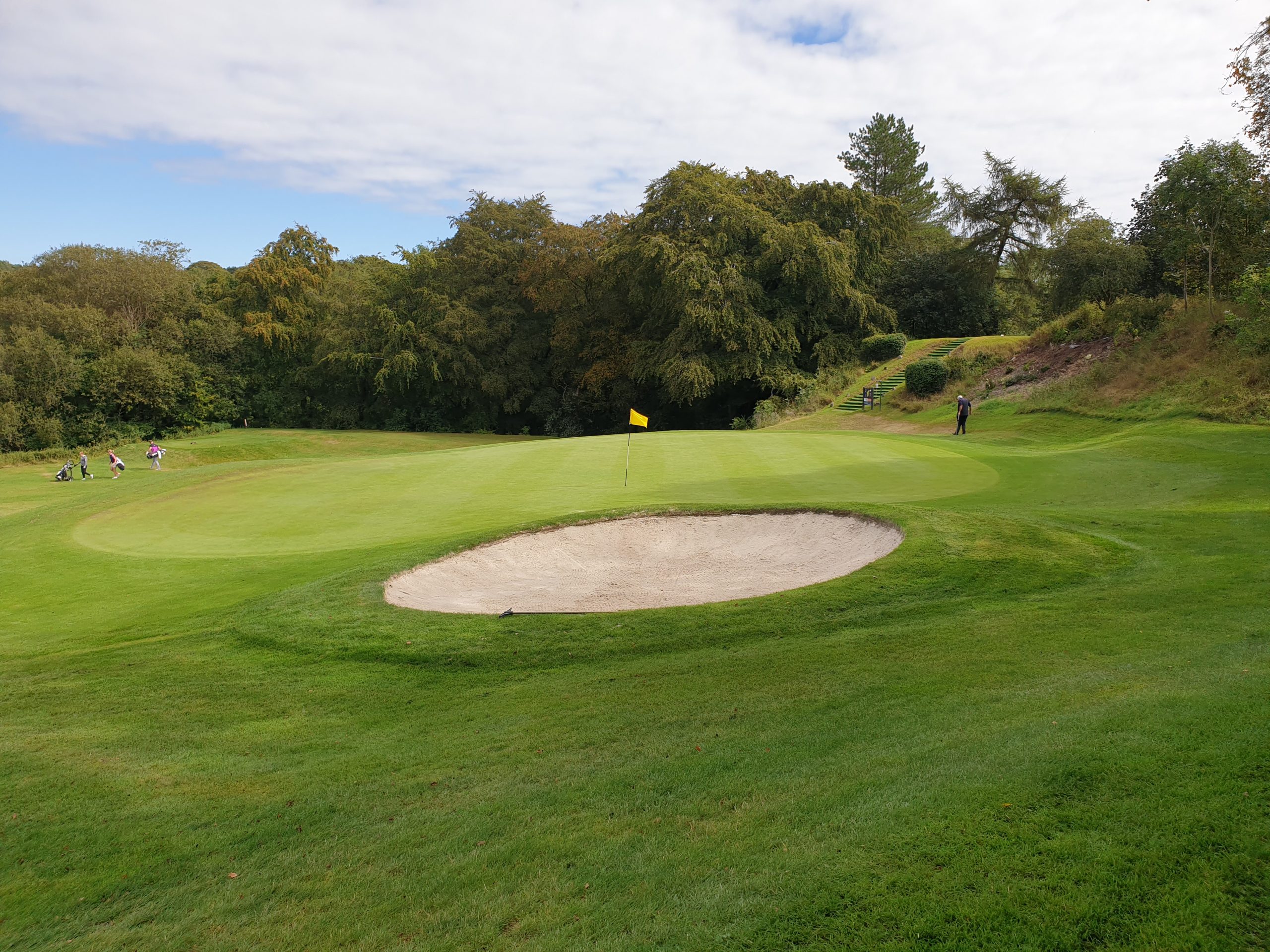
The beautiful short third, “Virtue Well”, at only 130 yards, requires enough club, despite the drop from the tee, to avoid the visually hidden front burn. Clever design.

Dates can be both clues and conundrums. Airdrie is regarded as one of James Braid’s courses, albeit it was founded in 1877 when James was only 7 years old; no record could be found who laid out the original course.

Good use of internal OOB at the seventh, to the left of this dog leg left hole of 363 yards. The green is visible through the trees.

The golf course sits high over Airdrie which already lies 400 feet above sea level. The 14th, “Arran View”, tells its own story – Arran is 50 miles away to the east. Despite the altitude, there is surprisingly no “heathland” feel to the course, which I consider a “parkland” venue, albeit the club describe it as “woodland”.

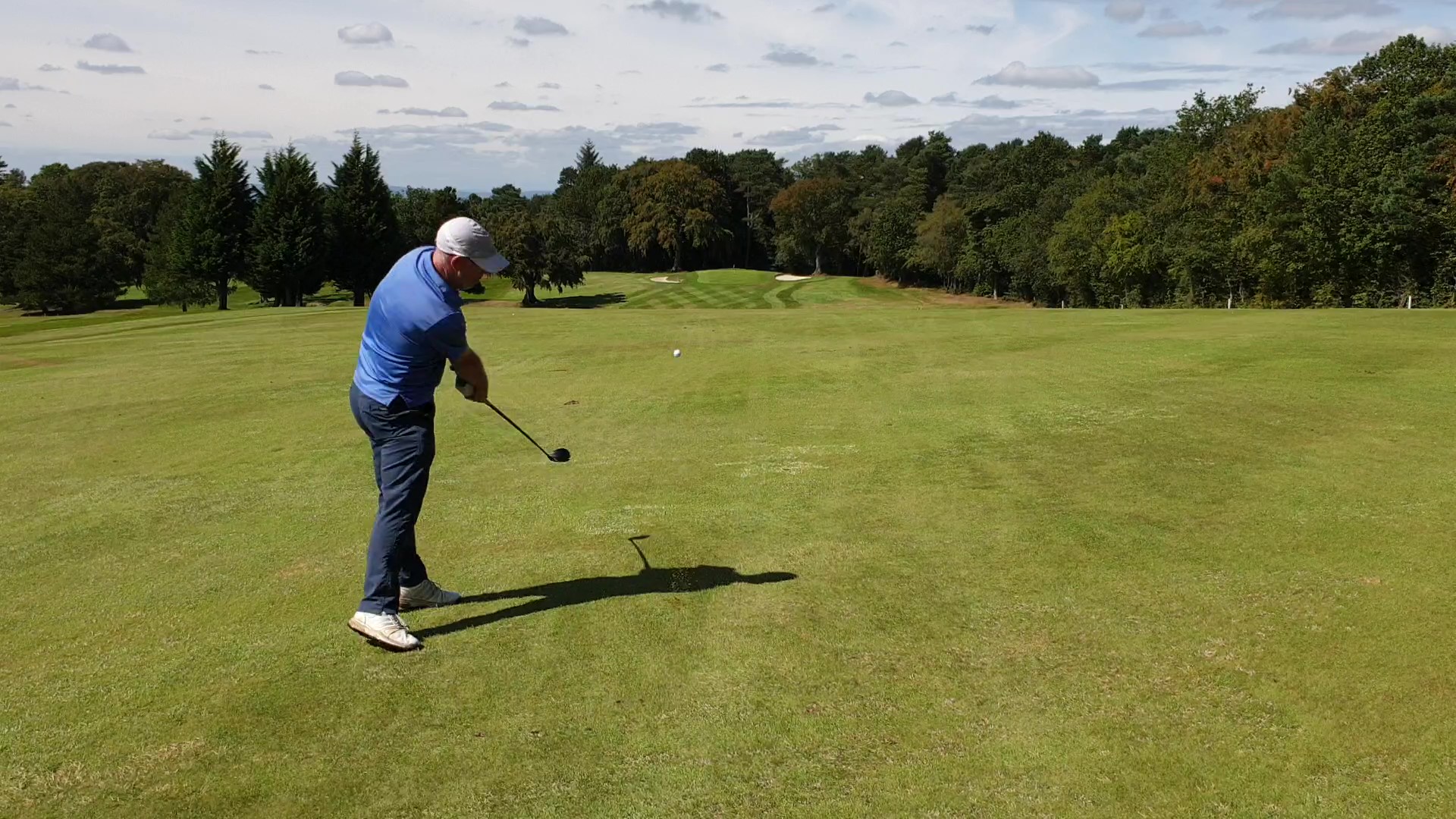
The dog leg right 17th, at around 400 yards, presents a tough driving challenge – keep the ball left, to avoid the left to right sloping fairway taking the ball OOB.

The course is relatively short – it has one par 5 (the 9th) and four par 3s, but still has variety in abundance through the undulating layout, a number of dog legs (both right and left) and deceiving gullies. This course suits a player who understand their yardages. My gross 97, for 25 stableford points, suggests I need to get back on the driving range to assess my distances!

Moly playing into the par five 9th hole at Airdrie, which the club considers a “woodland” layout. Regardless of classification, this course is a beauty.

With brilliantly named holes, the course was in superb condition, especially the teeing grounds that made it feel higher quality. The greenkeeping staff are doing a great job.

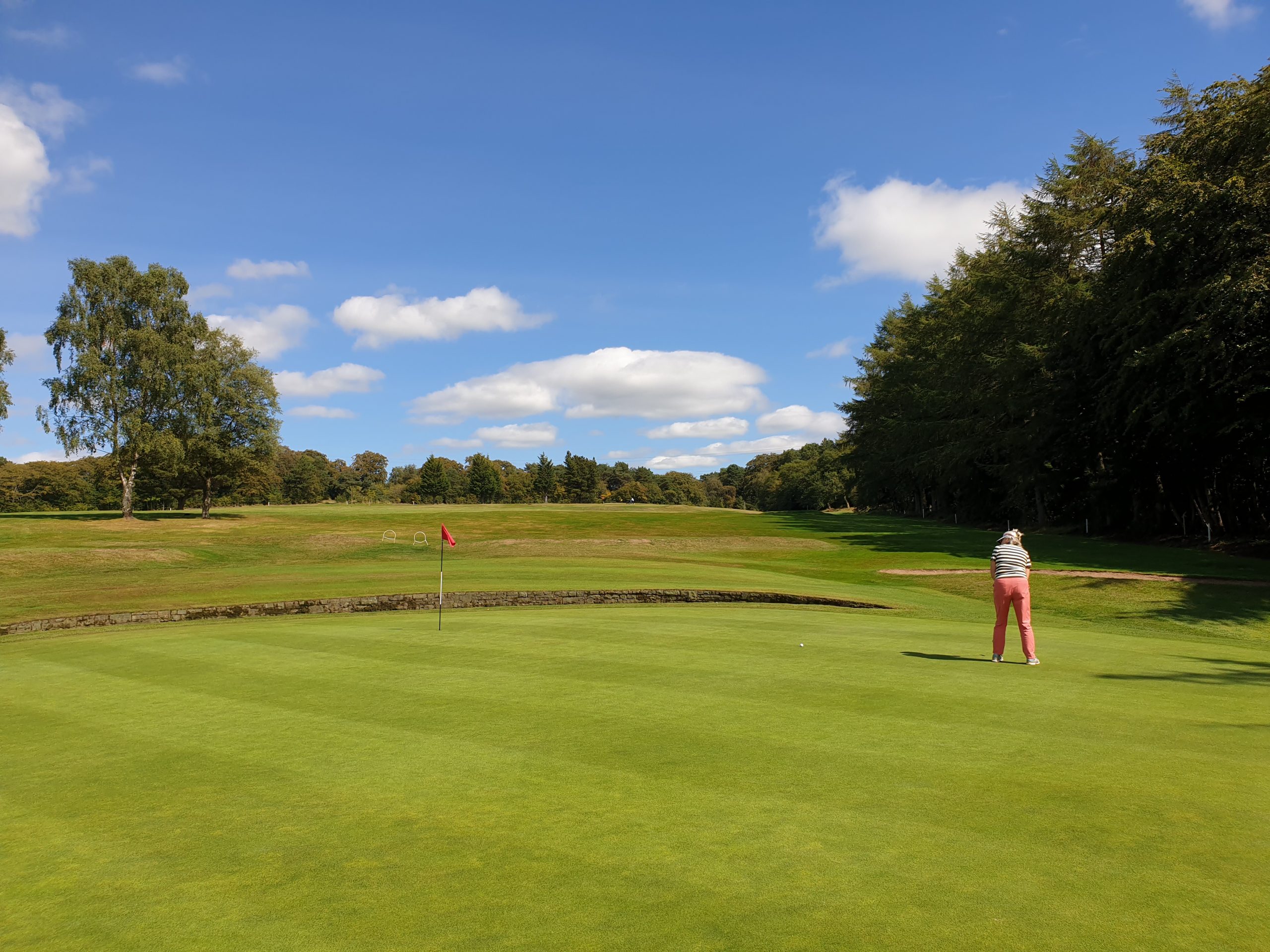
Fran putts at the 11th, a par three, played downhill, with a “haa haa” fronted green. The beatiful greens on show.

Airdrie is a delightful golf course and, at £30, almost defines 5 star value. I paid only £20 through a Golfnow discount. There is something for everyone at this course, that is worth travelling to Airdrie for other than football.

Airdrie was in excellent condition, that this view of the 1st green and 2nd teeing ground shows.

Facts:

Course Type: Parkland/Heathland/Woodland?

Par 69  (1 par 5s, 13 par 4s, 4 par 3s)

Distance (yellow): 5530 yards

Moly’s Gross score: 97
Moly’s 97 at Airdrie, wasn’t great, but his enjoyment gained despite this score, is perhaps the greatest testament to Airdrie’s “Hidden Gem” status.

155. Hirsel. 12 July 22.

Missed opportunity as the “First and Last” in Scotland.

Round £32. Par 70. Course Rating / Slope Rating (yellow) 68.8/124. Value (out of 5) – 3

Moly’s Score – 98

How many fuel stations or pubs on borders proclaim “First and Last”? Like many people, I suspect, I had no idea exactly where Hirsel Golf Club was. Conversely, ask Scots where Coldstream is and most would know the border town famed for the Coldstream Guards, the regiment formed in 1650 making it the oldest continuous serving unit of the British Army.

The picturesque 10th hole at only 93 yards.

Hirsel Golf club, sits on the Hirsel Estate in Coldstream, the home of the son of the former Prime Minister, Sir Alec Douglas-Home. A 9 hole course was designed and built by members in 1948, after the original course in Coldstream, called Lennel Golf Club, founded 1879, fell into some disrepair, a story covered in the website Forgotten Links.

The interweaving layout is evident, with the first green on show here from the 2nd tee.

Hirsel GC remained a 9 hole course until extended to 18 in 1996. The resulting layout is a rather jumbled affair, with a number of tee/green cross overs, which must make Open events a potentially hazardous affair. There is also a significant range of hole design quality, which comes I suspect from the extension. I find the club’s website banner headline “Arguably one of Scotland’s best kept secrets” true in the sense that it’s “unknown”, but the inference of it being a “Hidden Gem” is not what I found.

The very disappointing bunkers on show, despite the rakes fully in use, here at the difficult 5th hole, a 369 yard par four.

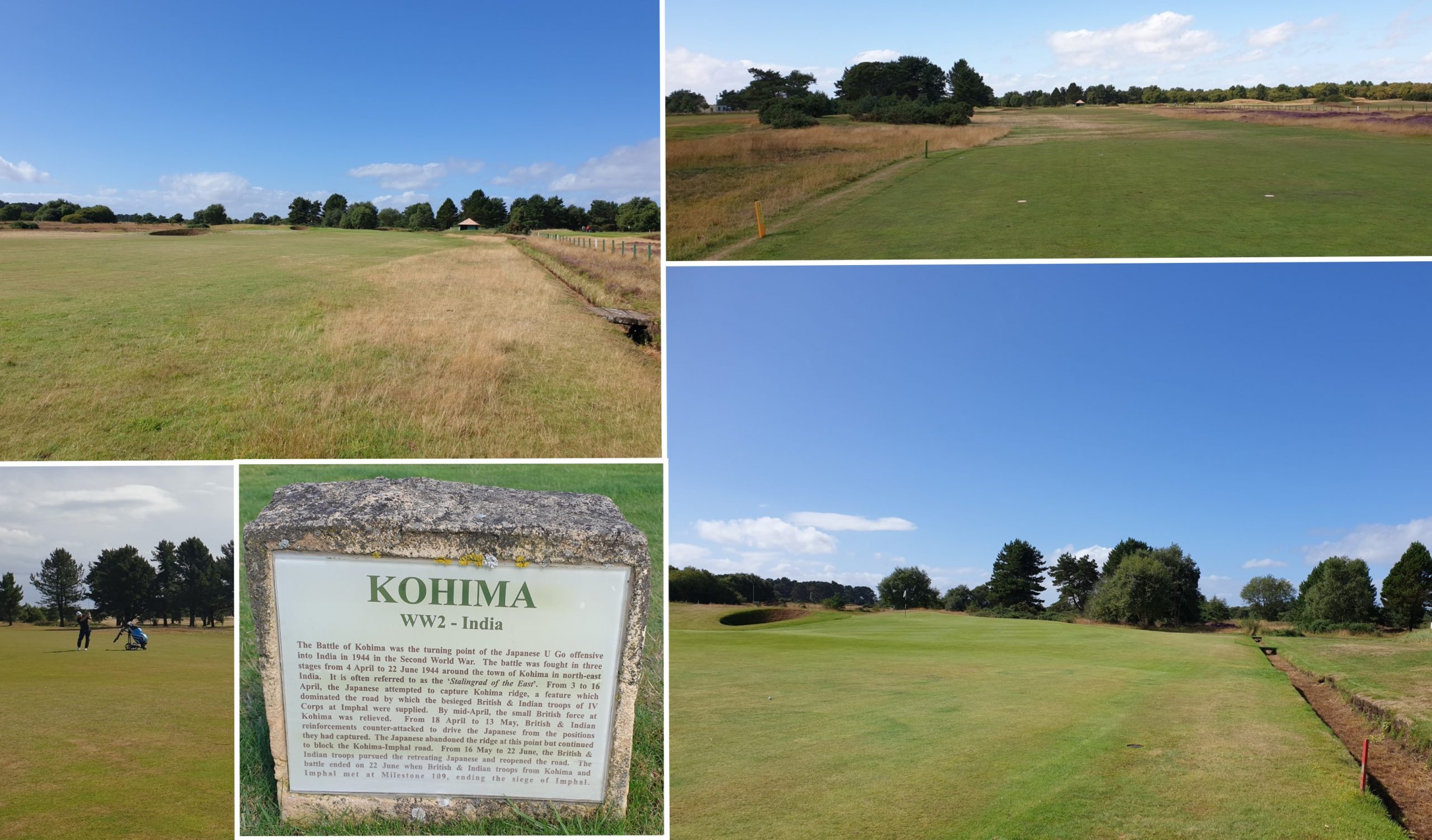
Despite the main Covid-19 pandemic lockdowns being over, I found a course in poor condition, with some bunkers appearing to imitate 19th century photos featuring Old Tom Morris himself. Nevertheless, with perhaps half dozen really good holes, I can see why it is a popular society day out, especially with the substantial club house overlooking the final green.

The tough par three 7th, with “Leet Water” in play for one of the few times.

It does indeed have some tricky holes, notably the tough uphill par 3 third, played with a blind tee shot at well over 200 yards; it will play as a par four for most. The fairways are generous but miss them and card wrecking is the order of the day, as there are OOB on more than half the holes. As a testimony, I amassed 15 over par on only 3 holes, including a 10 on the 363 yard par four 17th.

The stroke index 2, ninth hole, a long par four, the longest hole on the front nine, with both par fives coming after the turn.

Despite several holes being routed around “Leet Water”, a tributary of the Tweed, the river doesn’t come into play much. The best aspect of the course was the variety in hole lengths, the use of dog legs (on 5 holes) and the use of quite small greens often sloping front to back. Collectively the slope rating of 124 felt spot on for me.

The par 5 18th hole, played downhill it gives a good birdie chance to finish.

At only £32 for a round, with discounts on offer though Golfnow (we paid only £22) it’s okay value, but with a bit of work, especially to the bunkers, it would be really worth playing at that price point.

As to the course name, here’s a suggestion. “Coldstream Golf Club – The First and Last in Scotland”. That would remove the secrecy.

Facts:

Course Type: Parkland

Par 70  (2 par 5s, 12 par 4s, 4 par 3s)

Distance (yellow): 5820 yards

Moly’s Gross score: 98

Moly’s 29 points despite his 98 including 15 over collectively on holes 5, 13 and 17. Golf!

154. Montrose 1562. 11 July 22.

Spectacular natural links, but undermined by misleading branding.

Round £100. Par 70. Course Rating / Slope Rating (yellow) 70.3/126. Value (out of 5) – 3

Moly’s score – 91

Golfers often stand on a tee and ask “Where’s the green?”. On Montrose’s first tee, I can imagine a newcomer to links golf asking “Where’s the course?”.

The expanse of links land on view from the Montrose 1562 first tee, albeit in 1562 there would have been no course in this view!

Montrose’s 1562 layout is one of the most natural of all links courses, and as such should be a priority for those wanting to experience this form of the game at its most basic.

Bear in mind the prevailing wind is left to right at this very formidable tee shot at the second on Montrose. Like many, I suspect, I found the brilliantly positioned left hand fairway bunker. I don’t think there can be many holes where the right hand side OOB starts to your left?

Formerly named the Montrose Medal, the ‘1562’ label has only been used since 2018; ‘1562’ derived from the claim that golf has been played on the land from that year. The current course’s story and location actually begins in the 1860s, and evolved over a 50 year period during which a number of legends, starting with Old Tom Morris and ending with Harry Colt who designed the existing course in 1913. Colt had laid out the Montrose Broomfield course a few years earlier (My earlier blog here). So in fact, the more ‘junior’ of the two Montrose courses, ‘Broomfield’, actually pre-dates the ‘1562’ course!

Frank Crowe playing a typical links shot with the putter from well off the 6th green, with the poor fairway condition on show.

Like a number of Scottish Links, there were several different golf clubs that played on the same course, often in club matches versus each other, but sadly only two of them – Royal Montrose Mercantile and Montrose Caledonia – still exist and can be used by visiting golfers.

Brian Fearon putts onto the par three 12th green, one of the holes on the east-west spur away from the coast. Looked over by Gordon Samson

The course is a really honest test of links golf, set on the robust and fast running links land of the Angus coastline. There are six northbound coastal holes, starting from the daunting 2nd, then turning back south for a couple of holes, before an east to west and back gorse-laden spur from holes 10 through 15.

The par three 16th, a very difficult hole. Arguably plays like a par 4, in the prevailing wind.

The par three 16th and par four 17th are then two holes that are good enough for the Championship course of Carnoustie; fitting, as Montrose has been used as a Final Open Qualifying venue. Many a good round will have been destroyed on those late holes.

The characteristic feel of the Montrose 1562 course, here at the “Valley” 8th hole.

Unfortunately, when I played alongside 3 of my former Apex trustees, for the inaugural “Apex Trophy”, the course was not in great condition. We encountered the ‘choice’, but very accurate, language of a few local members of this hardy Angus town, mid way between the cities of Dundee and Aberdeen. I was ‘telt’ by an old guy (in his 80s, fully adorned in football colours) that “Son, the course is in its worst …… state I’ve ever seen and I’ve been a member for more than 50 years!”. It was certainly not conditioned good enough for the £65 twilight round fee, never mind the £100 daytime fee.

Moly teeing it at the final hole, one of the easier holes at Montrose. The original course was off to the left of this hole.

Nevertheless, the bunkers and greens were decent, and the quality of the layout and challenge was never in doubt, with the yellow tees still presenting 6137 yards in length. A strong wind would undo any golfer here.

I played pretty well for 91, but this was nowhere near good enough for the trophy with Gordon Samson shooting an excellent 83 (40 points), and will be severely cut for the next trophy outing!

Facts:

Course Type: Links

Par 70  (1 par 5s, 14 par 4s, 3 par 3s)

Distance (yellow): 6137 yards

Moly’s Gross score: 91

Moly’s Montrose 1562 scorecard – 91
« Older posts Newer posts »

© 2026 Scotland Golf Bible

Theme by Anders NorenUp ↑