A guide to green fee value for money

Category: 18 holes (Page 5 of 34)

166. Torrance Park. 14 Oct 22.

Electrifying, but not in a way you would want.

Moly’s Score – 89

Round £25. Par 71. Course/Slope Rating (yellow) 68.9/124. Value (out of 5) – 2.5

Torrance Park golf course started off as an ambitious project. Owned by David Murray, the Scottish businessman and former owner of Glasgow Rangers FC, it was designed by Dave Thomas (The Belfry, Spey Valley) as an impressive PGA style 18 holes course and opened as recently as 2008. It had plans also for a driving range. Sited close to the M8 motorway and adjacent to the town of Holytown, an area with rapid housing development, it was ideally located.

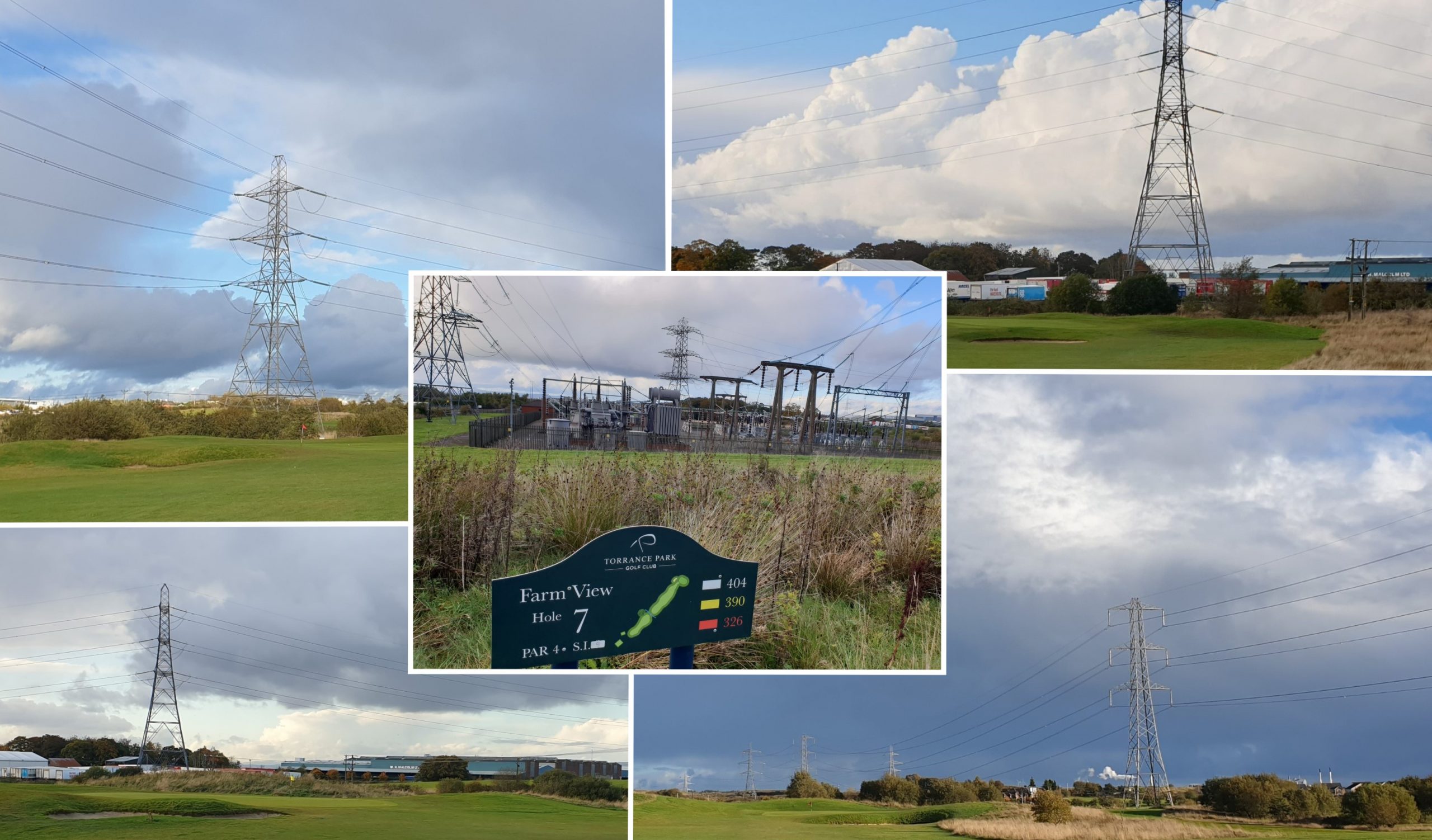
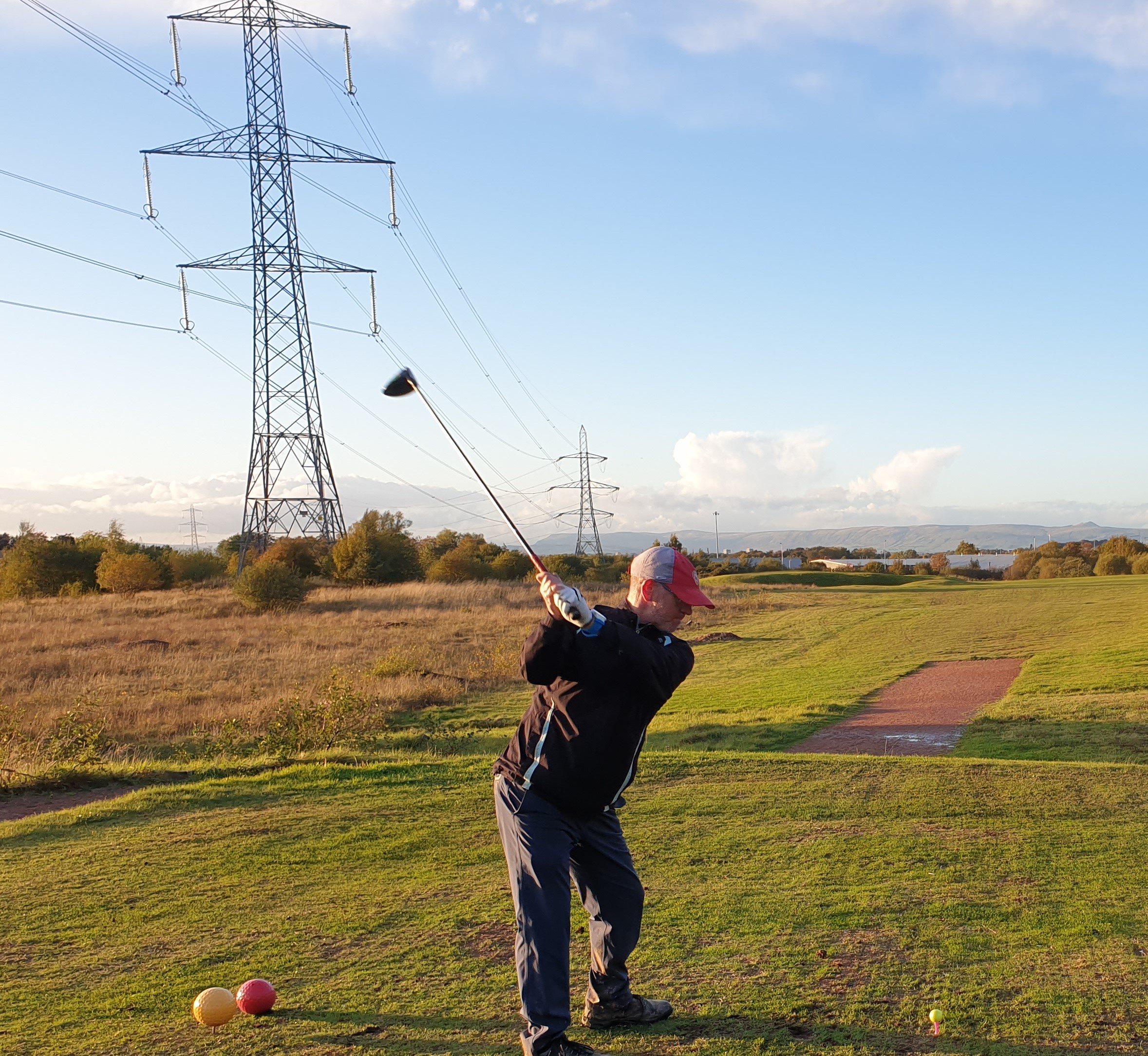
Torrance Park, adjacent to a major power distribution hub, might have the most pylons in Scotland.

However, jump forward 15 years, and the course was rather forlorn when I played, during which I also found out that from 2023, the course was to be 9 holes only. The land to the west of Legbrannock Road, was to be a housing development, leaving 9 holes currently the nearest around the modern clubhouse.

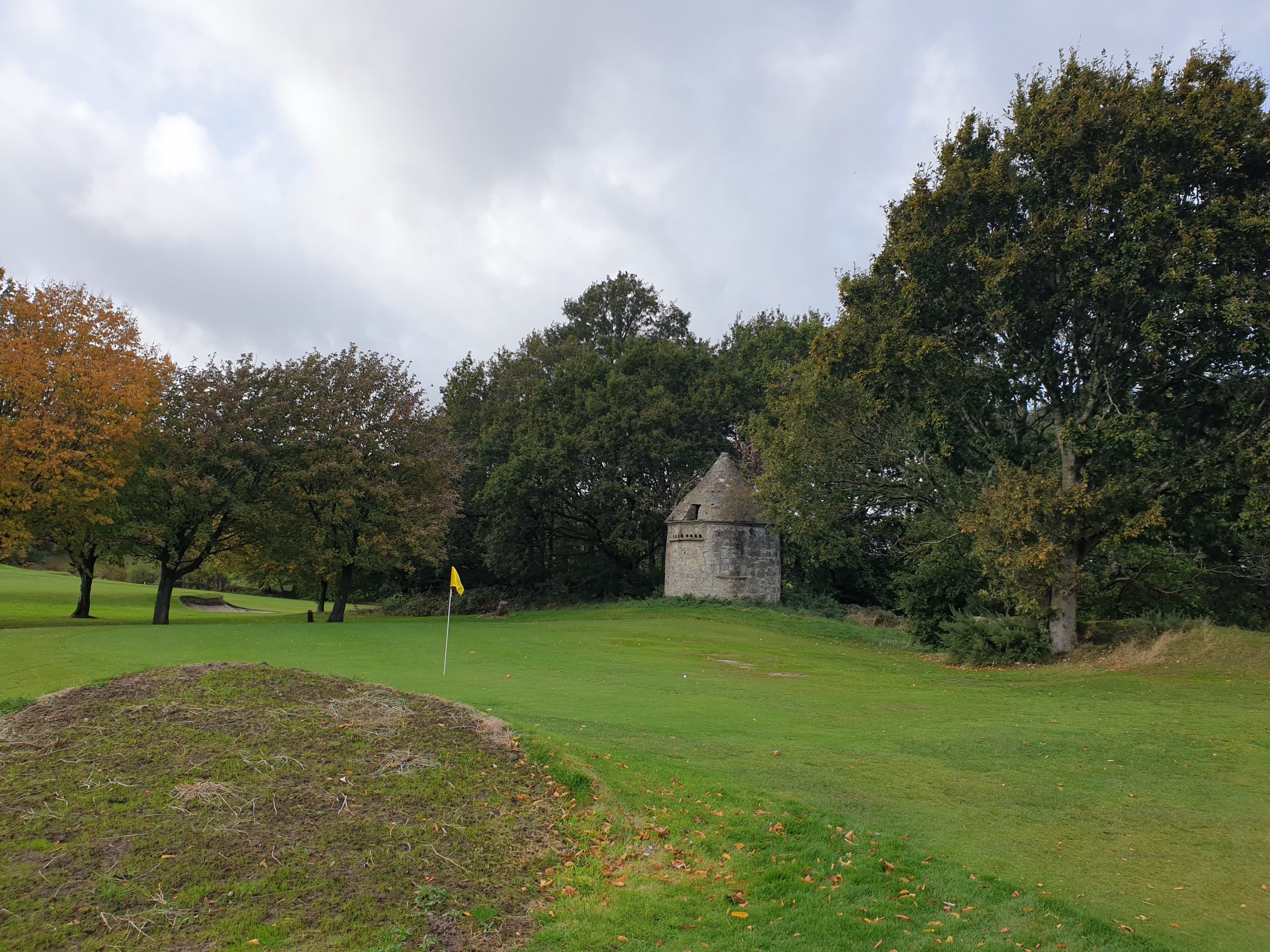
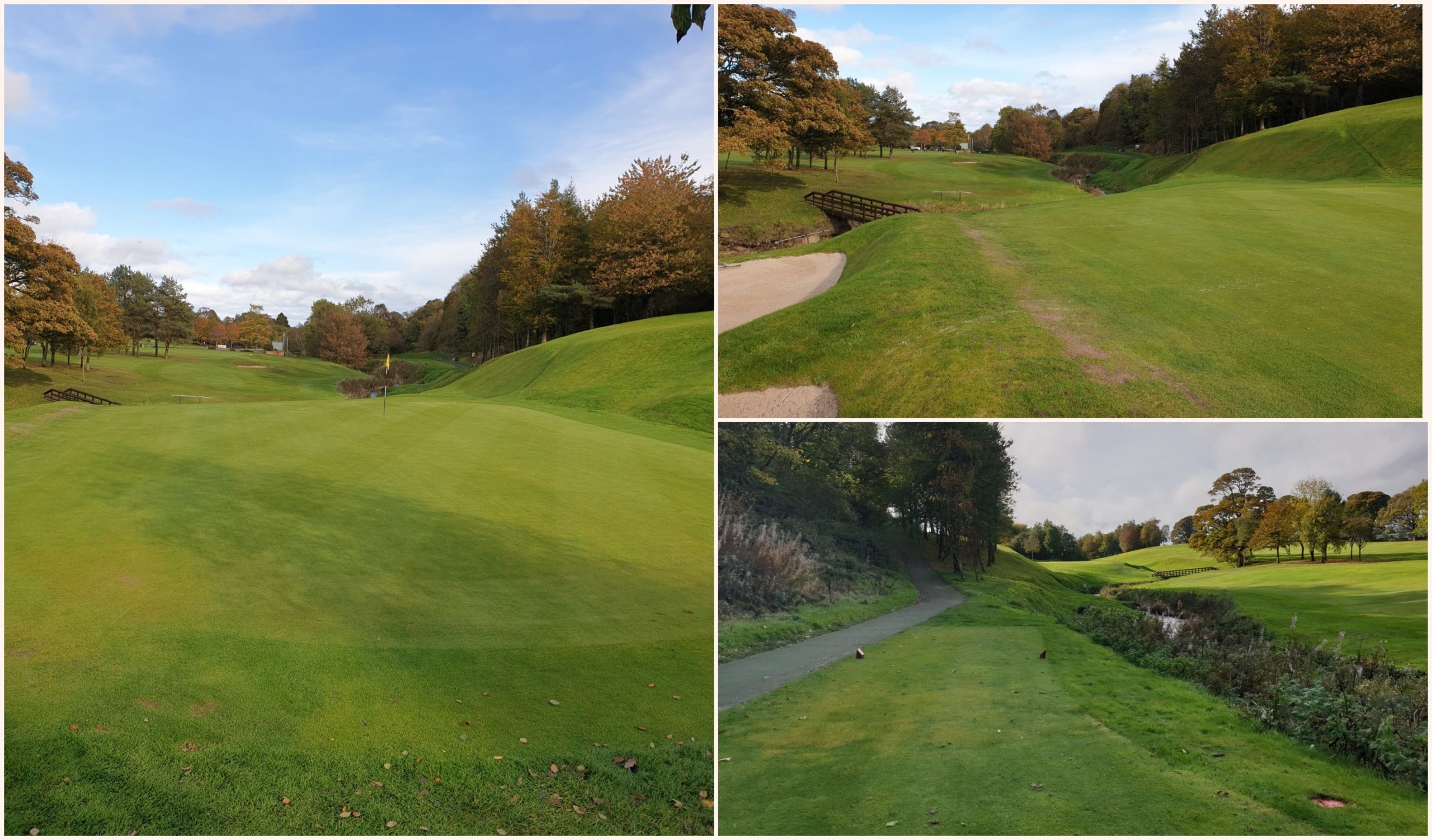
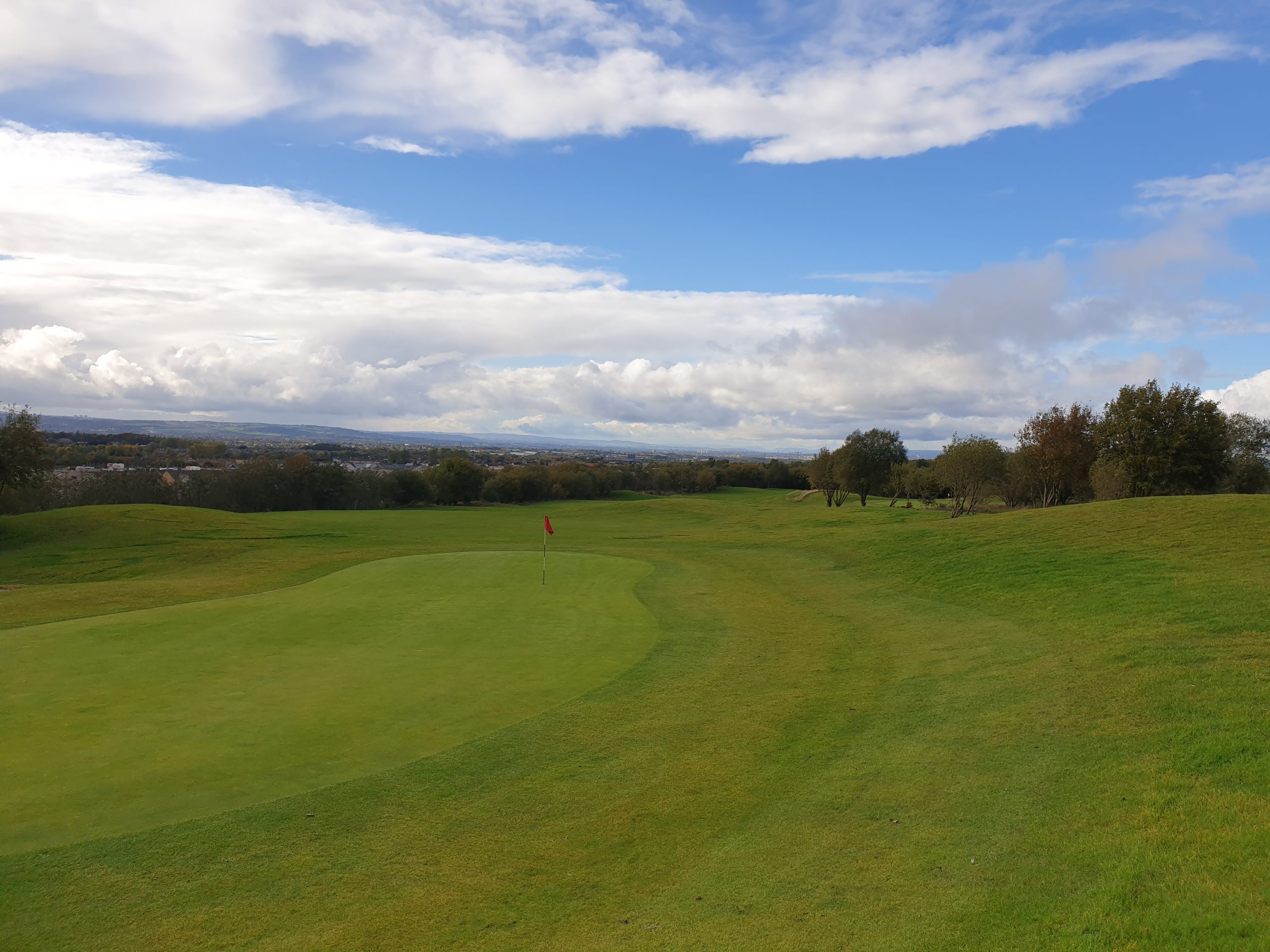
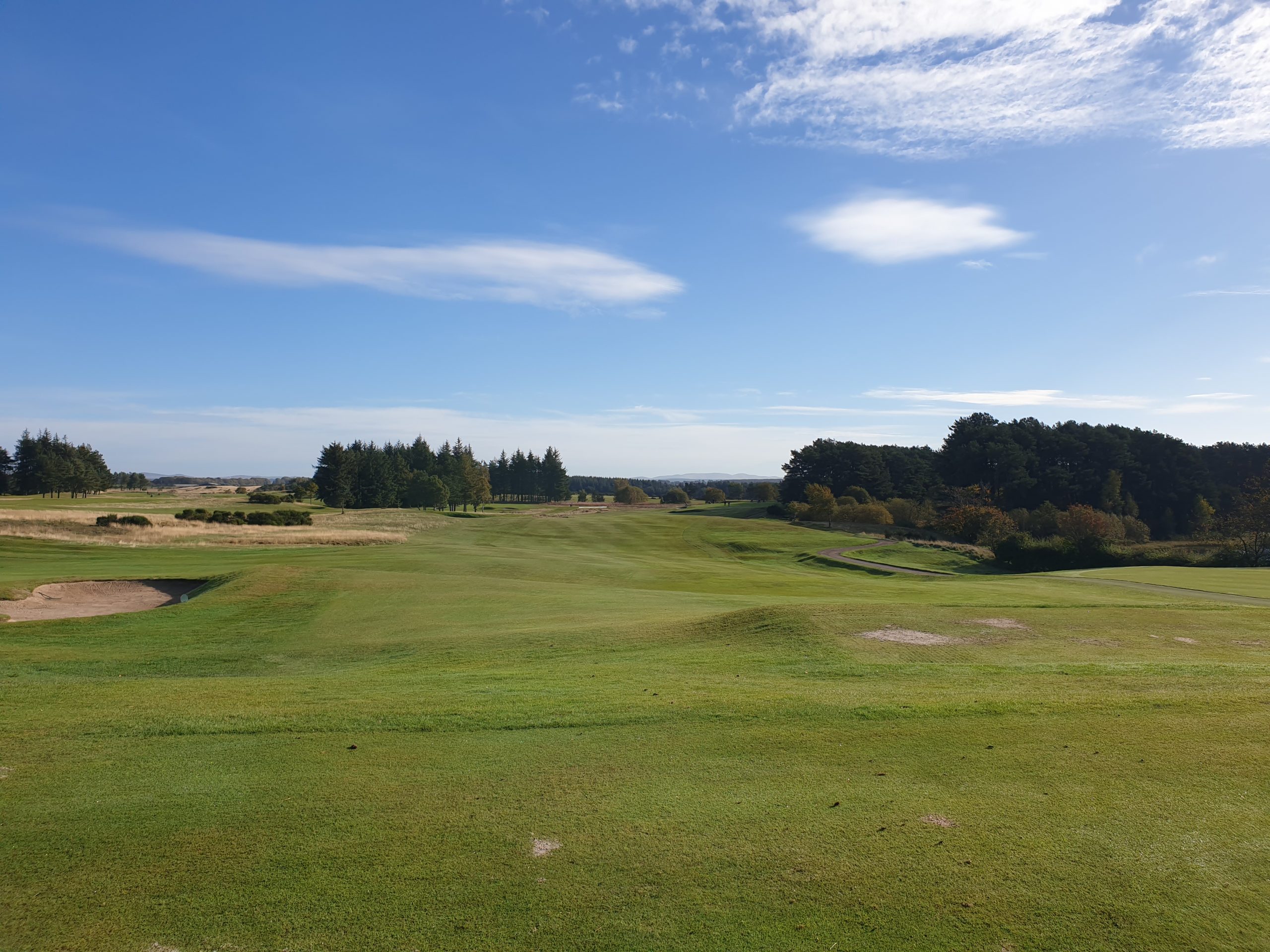
The greens, the 1st shown here, are well designed and well maintained, and the best feature of this otherwise uninspiring course.

When I played I met up with a local member, who was angry that he and many other members had paid their annual membership fees, before shortly thereafter being advised by email of the course reduction plans, but without an option to cancel their membership.

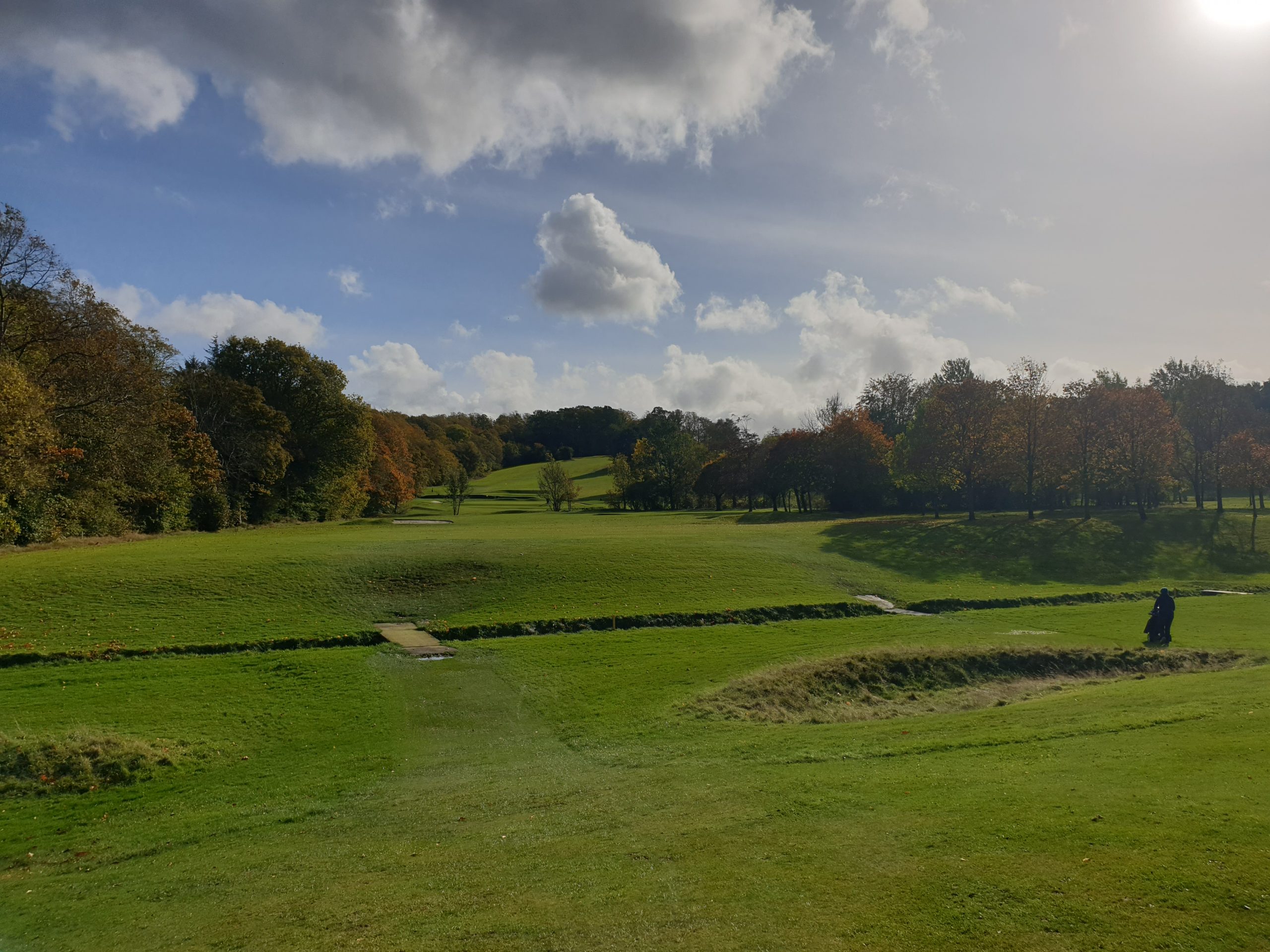
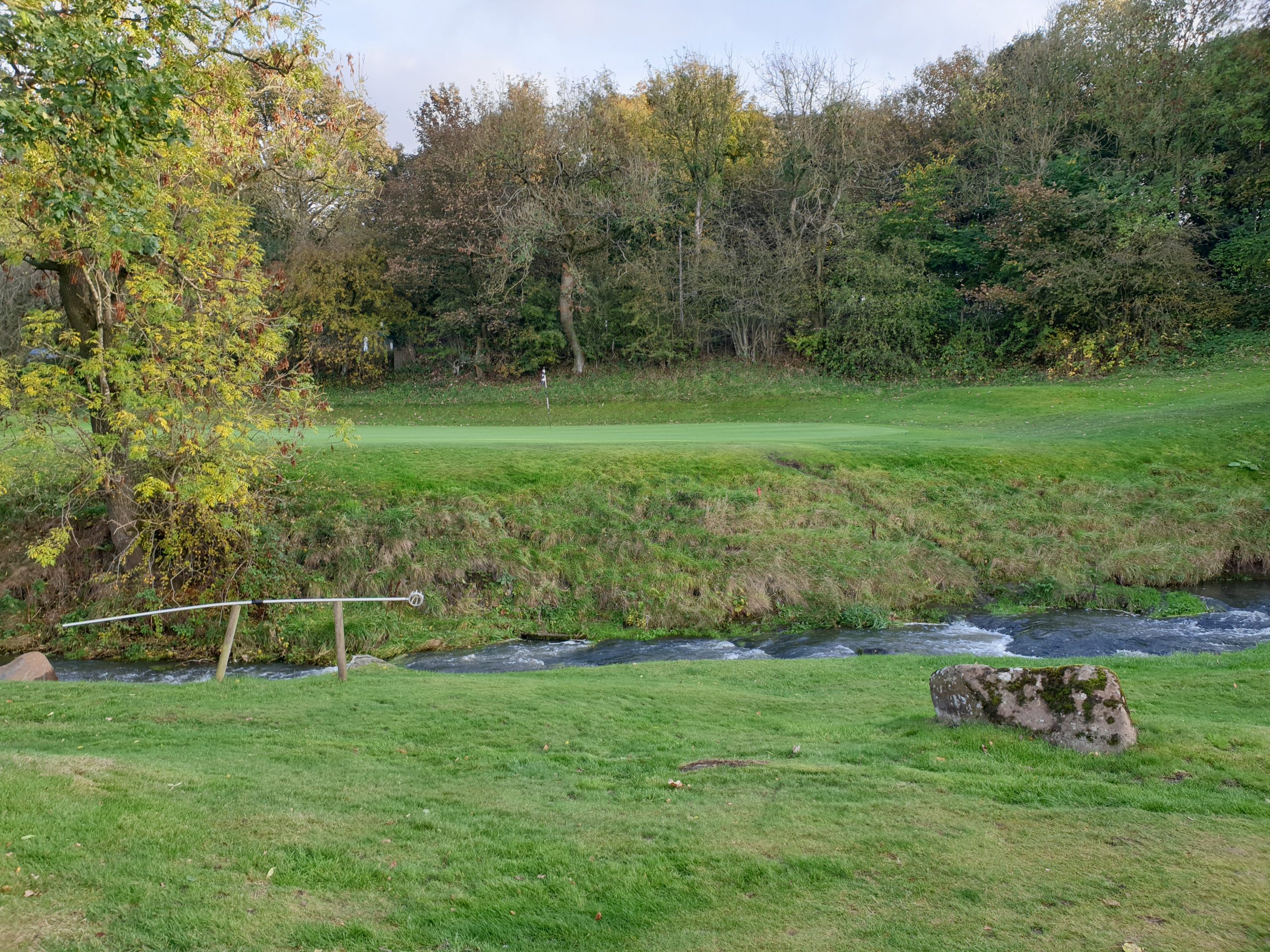
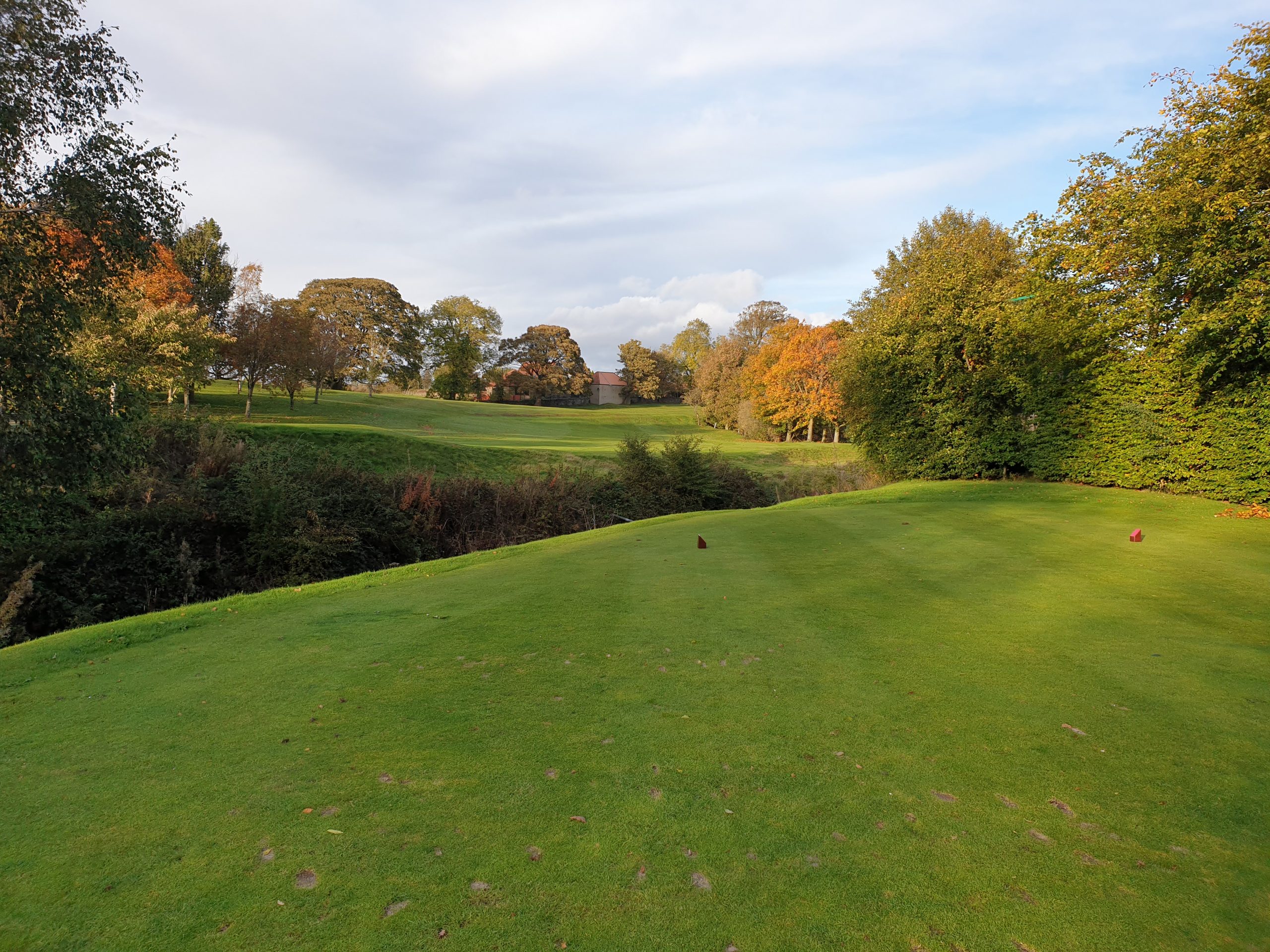
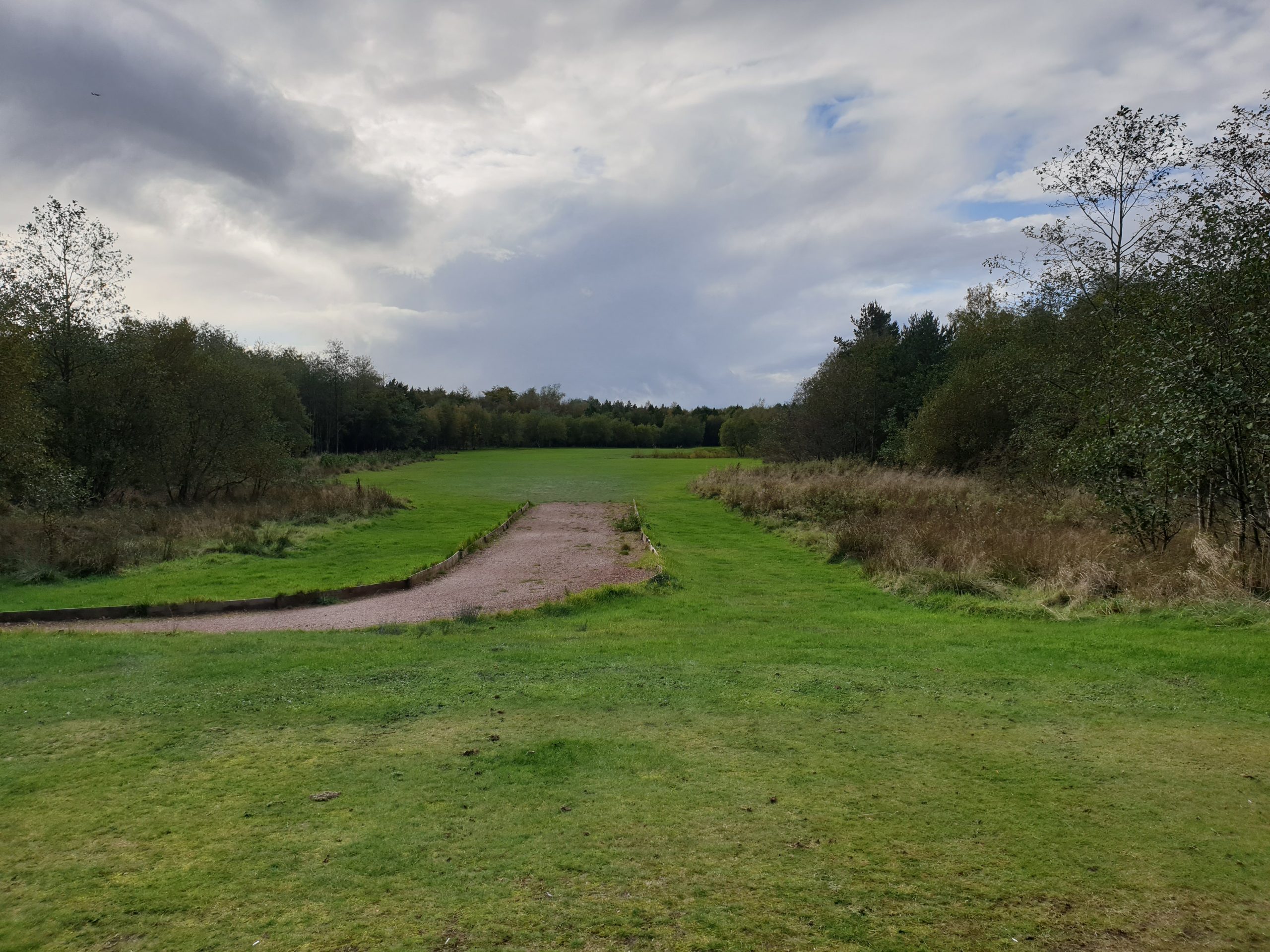
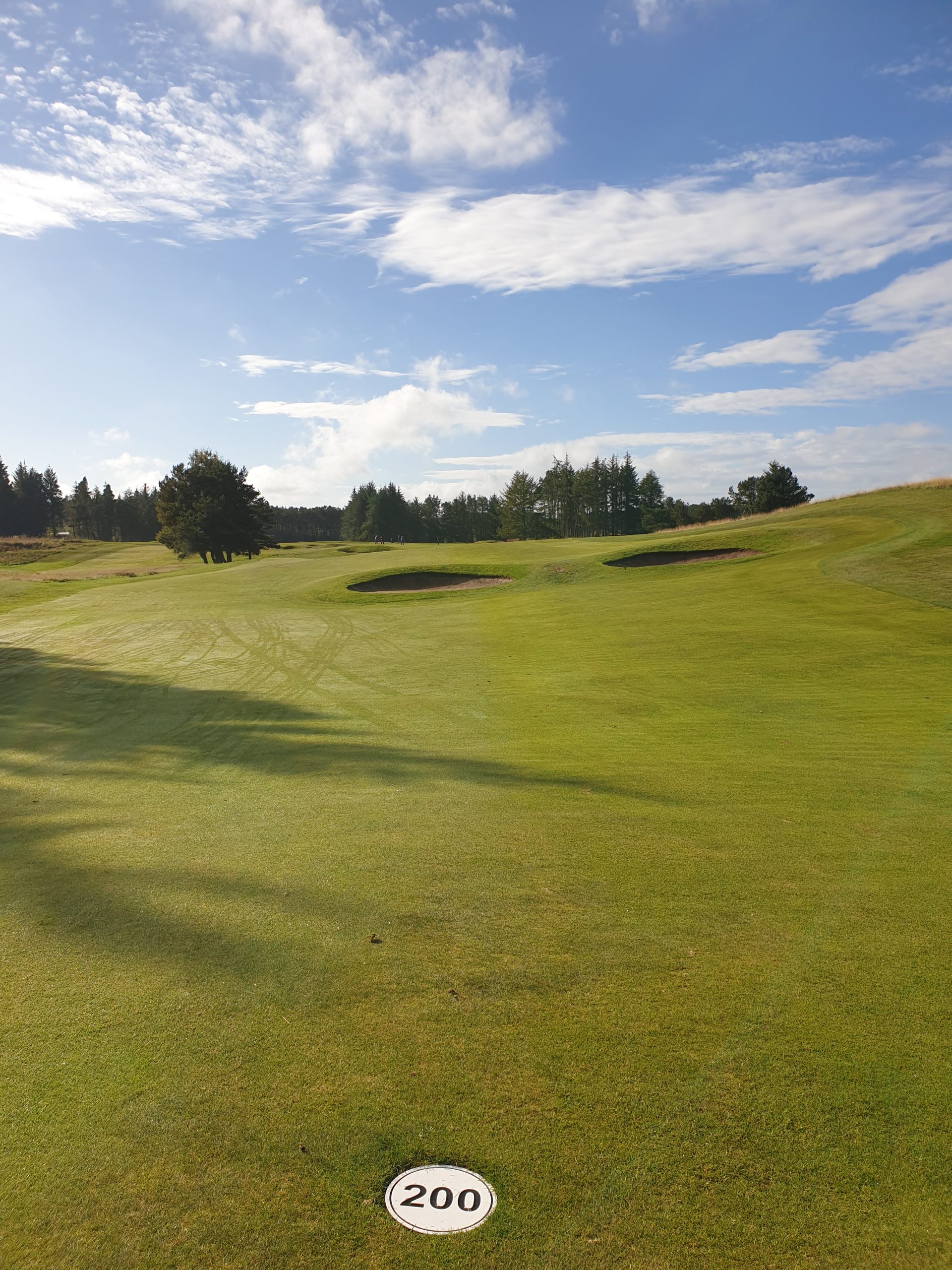
The par four 4th at Torrance Park, worthy of being the stroke index 1. A water feature ready to capture any right handed slice from the tee.

This parkland course feels rather odd. Fairways are wide, with disproportionally huge bunkers – it’s as if an innocuous municipal course had a few bunkers that would be at home in Valderrama! The greens are nonetheless pretty good, but again they feel better than the surrounding landscape and course conditioning.

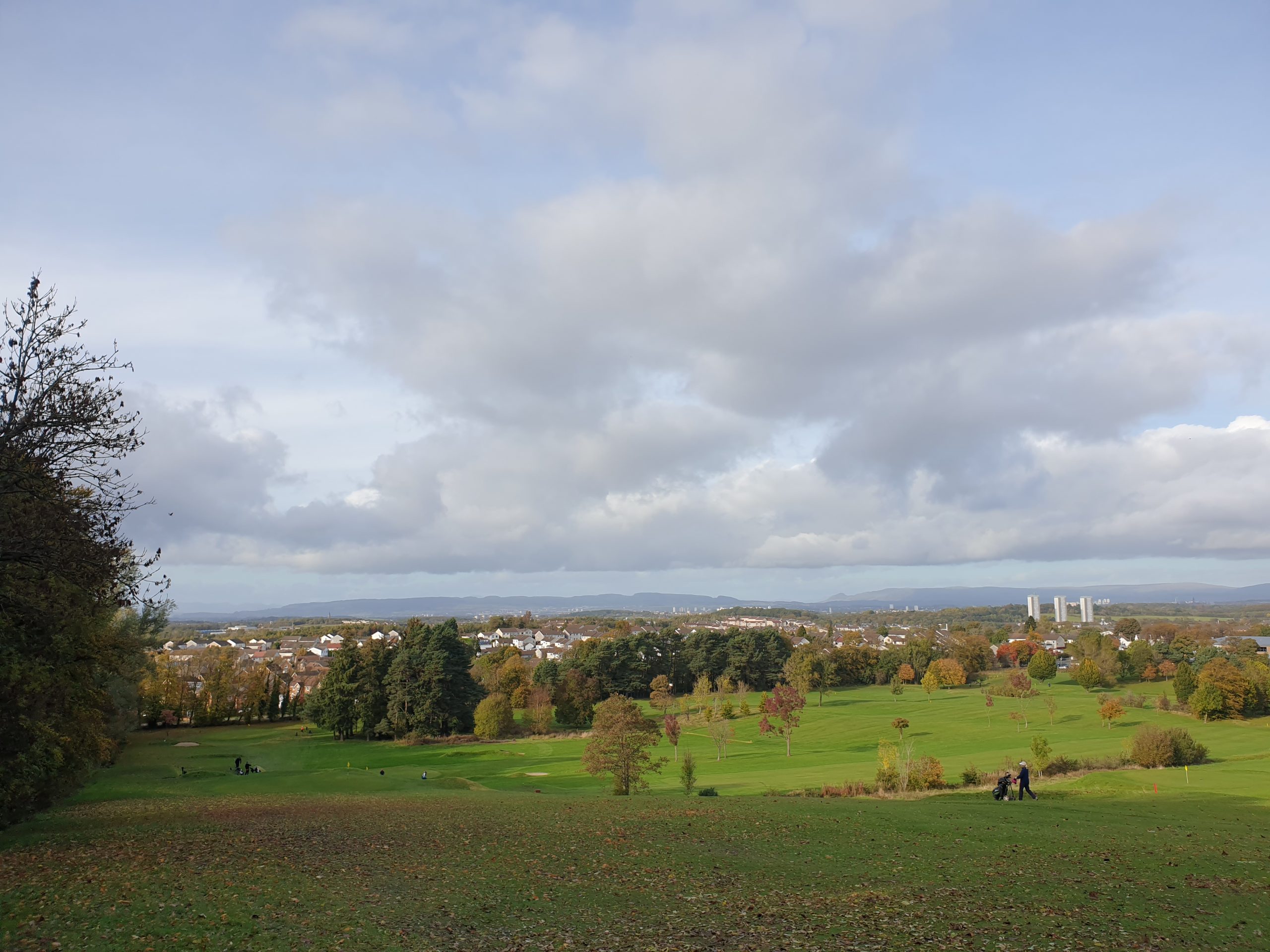
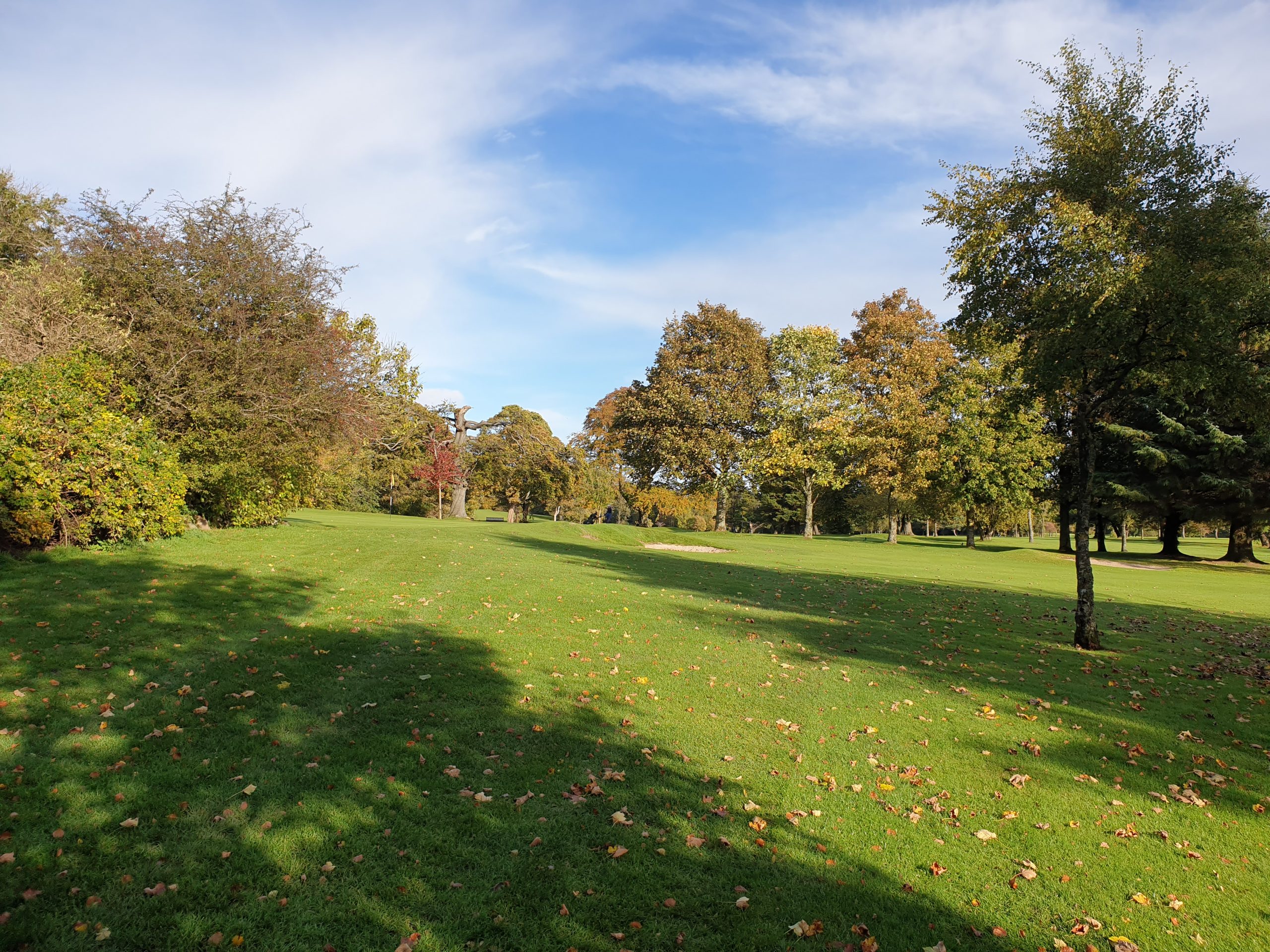
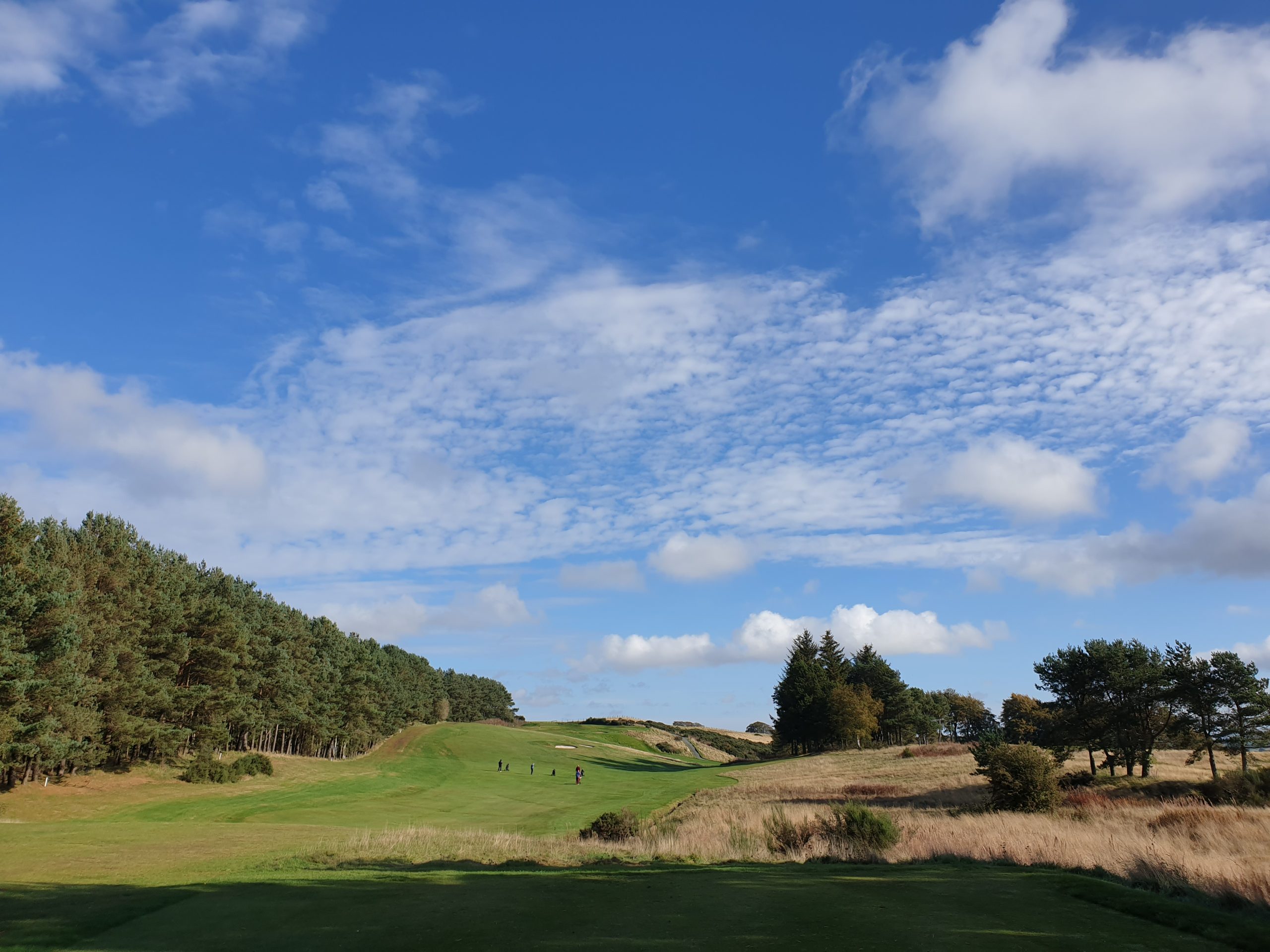
The par four 17th (likely the new 8th), with views north towards the Campsie Hills. With another pylon to view!

When I played the course was very wet, although the greens had held up well. The new clubhouse had very friendly staff, and the building seems to be used as a ‘local’ for the adjacent housing estate. The food was good.

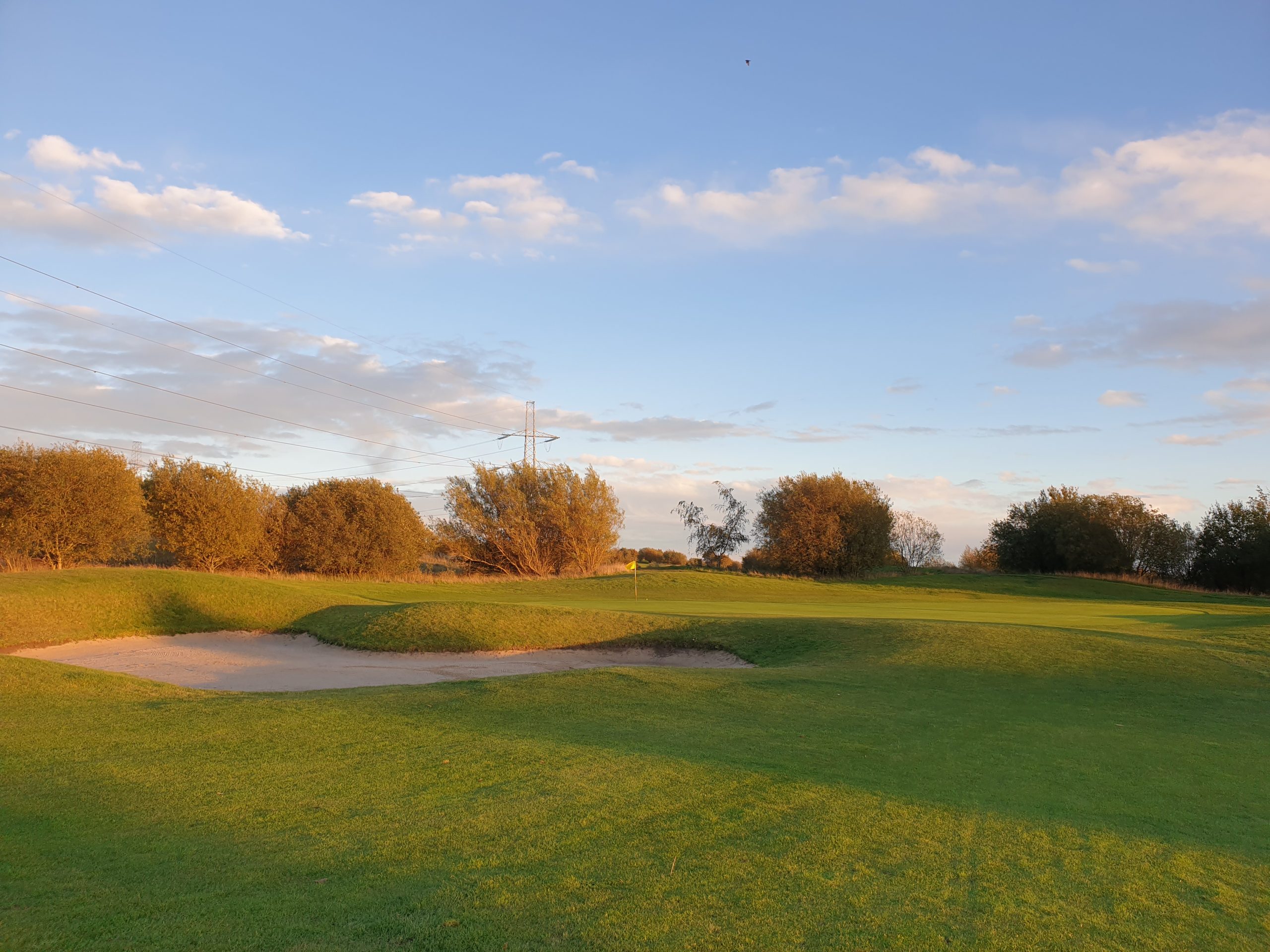
The par four 18th (which I would think is the 9th now) is a decent finishing hole – stroke index 4, with large front bunker, typical of the design here. I would recommend considering a shot to the front right of the green to leave a straight forward chip.

As for value, I struggle to think more than 2.5/5 is justified, using £25 as the stated amount. It’s convenient to the M8 if you want a quick knock about, but not worth going out of your way for, in my opinion.

Facts (pre 2022):

Course Type: Parkland

Par 71  (3 par 5s, 11 par 4s, 4 par 3s)

Distance (yellow): 5916 yards

Moly’s Gross score: 89

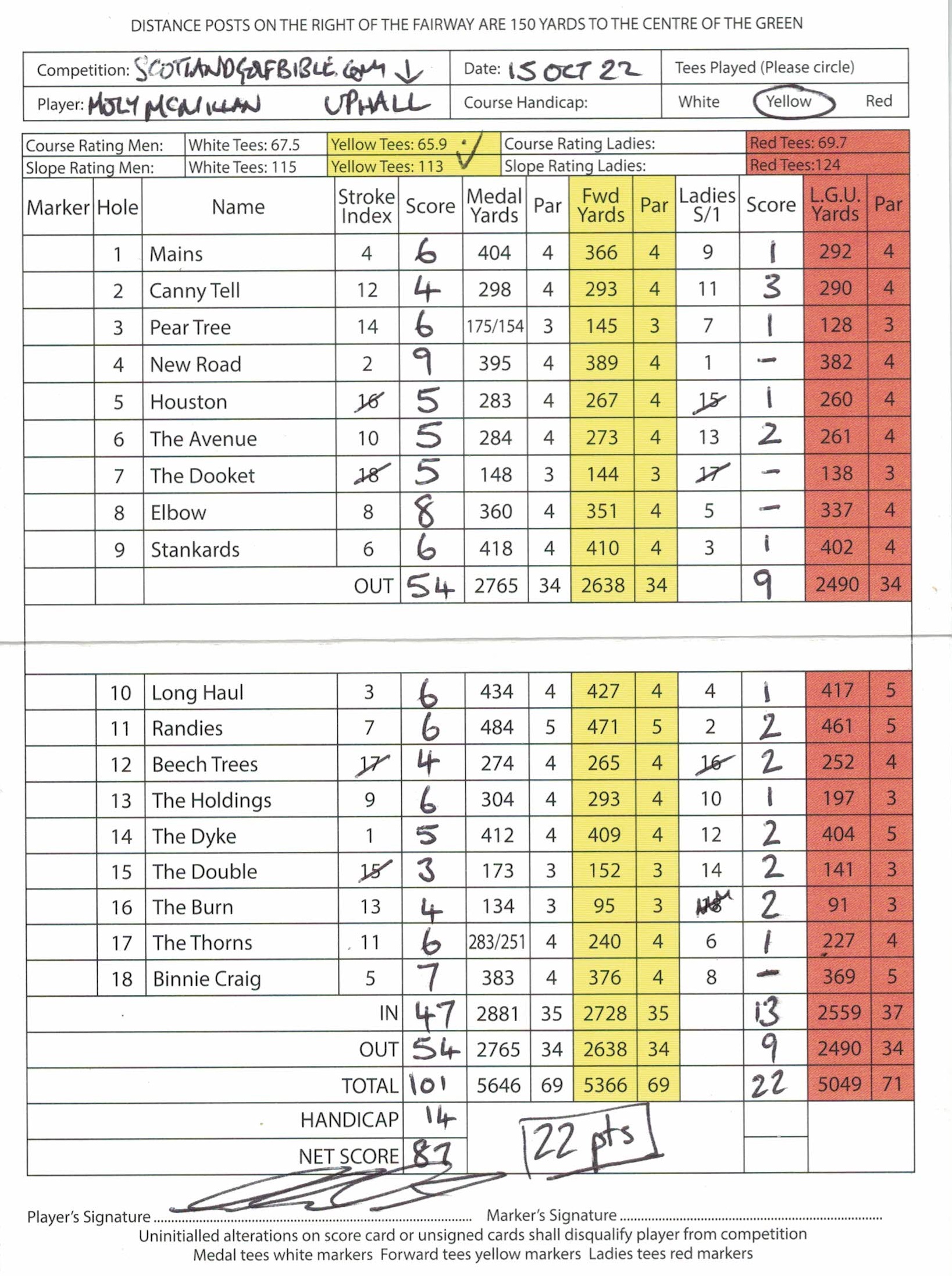
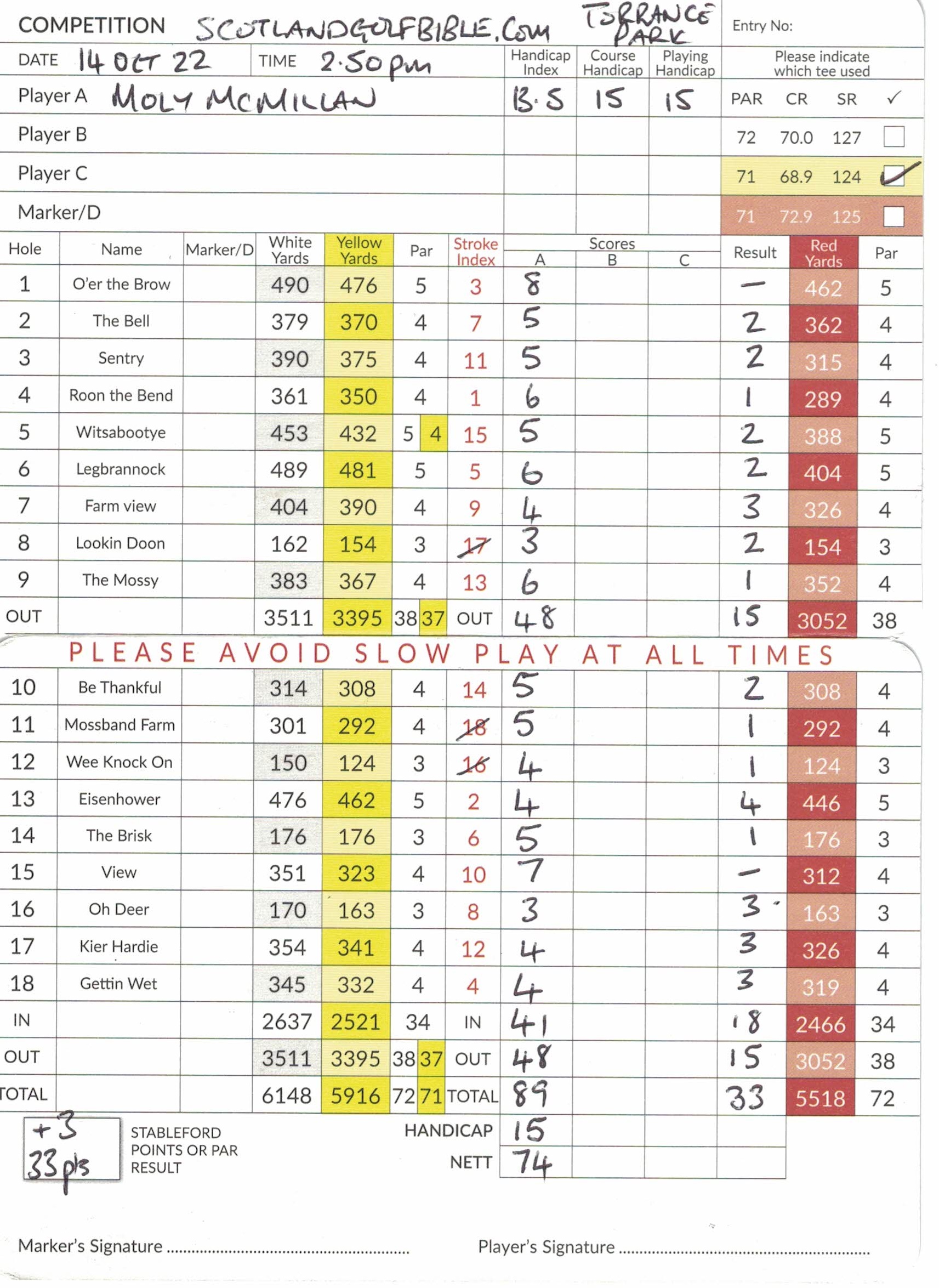
Moly’s Torrance Park scorecard – great finish meant decent score

165. Lanark. 13 Oct 22.

Gleneagles – “The Lanark of the North”?

Round £65. Par 70. Course/Slope Rating (yellow) 70.1/124. Value (out of 5) – 5

Moly’s score – 96

In immaculate condition, I still found a rabbit hole at Lanark and one which didn’t afford a free drop. Lanark’s website claimed a brilliant story; “In 1920 the LSM Railway Company decided, only on the casting vote of its chairman, to build its hotel at Gleneagles rather than Lanark.”

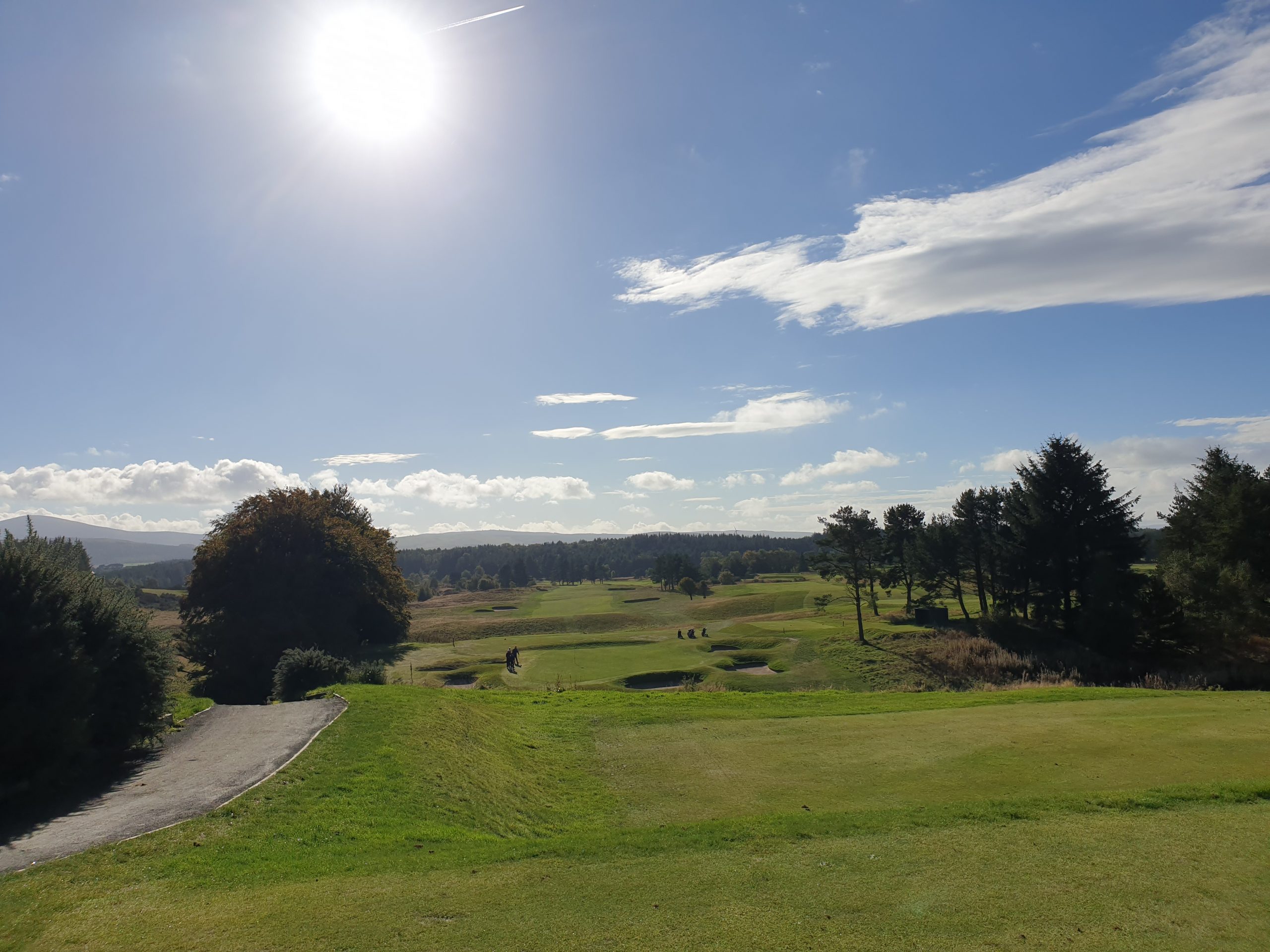
The beautifully stunning Lanark golf course evident from the first tee, a 350 yard par four.

Disappointingly, I couldn’t find corroboration for Lanark’s story; for example, the excellent 1951 club’s centenary history makes no mention of the ‘Gleneagles’ decision. Jamie Darling, of Lanark GC, was very helpful in my enquiries, but he too found evidence elusive.

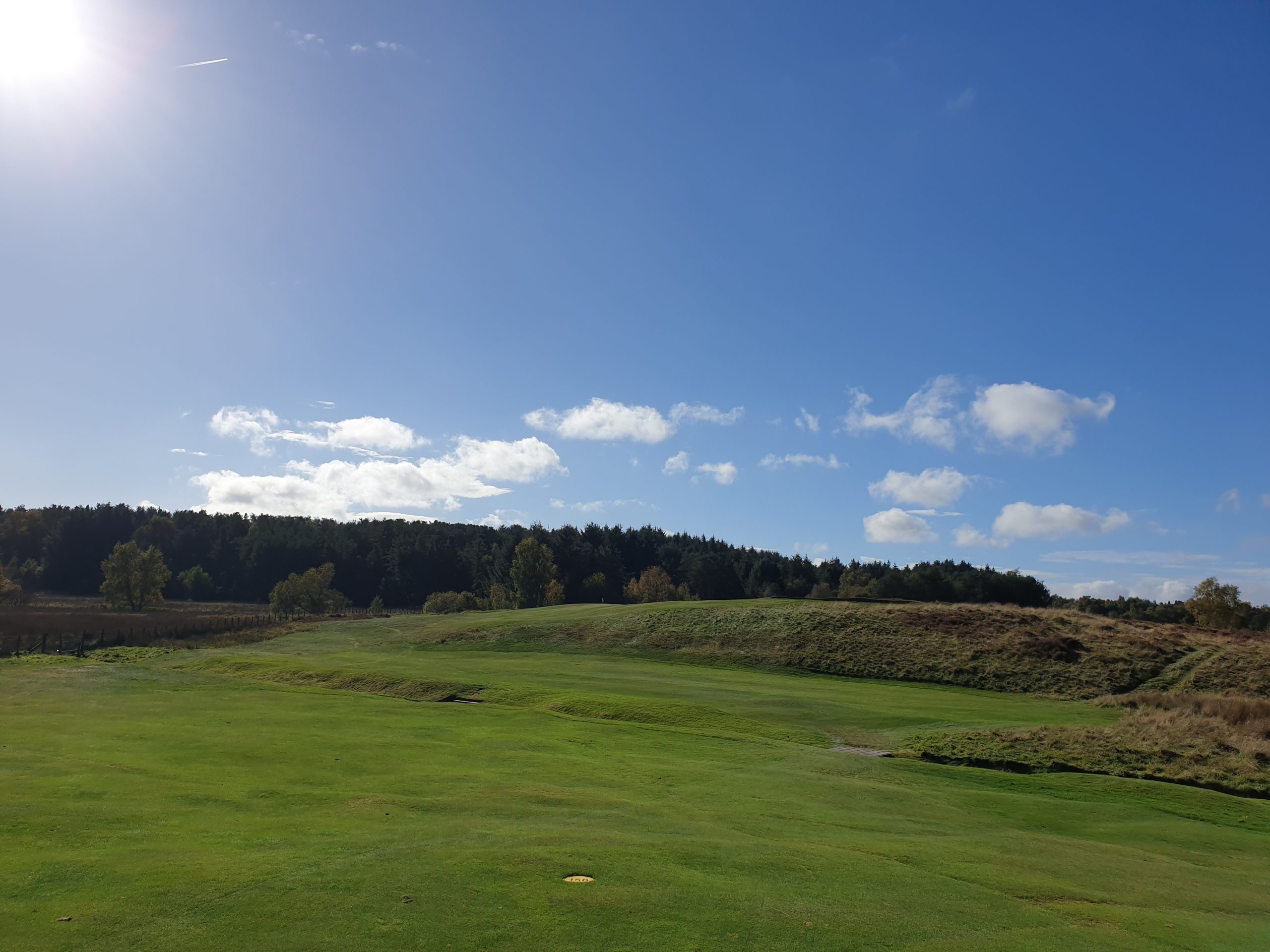
The challenging 4th, here the view from 200 yards, at this 430 yard par four stroke index 1 hole.

The more I researched, the more convinced I am The Gleneagles resort vision existed long before 1920; in fact as early as 1910 by Perthshire born Donald Matheson, the Chief Engineer with Caledonian Railways.    The Kings course opened in 1919, with the final hotel site decided around 1920. Matheson later became the GM of Caledonian Railways, then Dep GM in Scotland for LMS, and seems likely the driving force.

The sixth requires two “Sunday best” shots to get close to the green at this uphill par four.

Lanark, unlike Gleneagles, is one of the UK’s best kept golfing secrets – a quite beautiful moorland course, nestled 600 feet up in the Clyde Valley of South Lanarkshire, only 25 miles from Glasgow’s city centre. The town is an ancient burgh and historically important, evidenced by the golf course being one of the oldest “inland” courses in the world. A full 18 holes was designed by Old Tom Morris in 1897, although some holes are traced back to 1851.

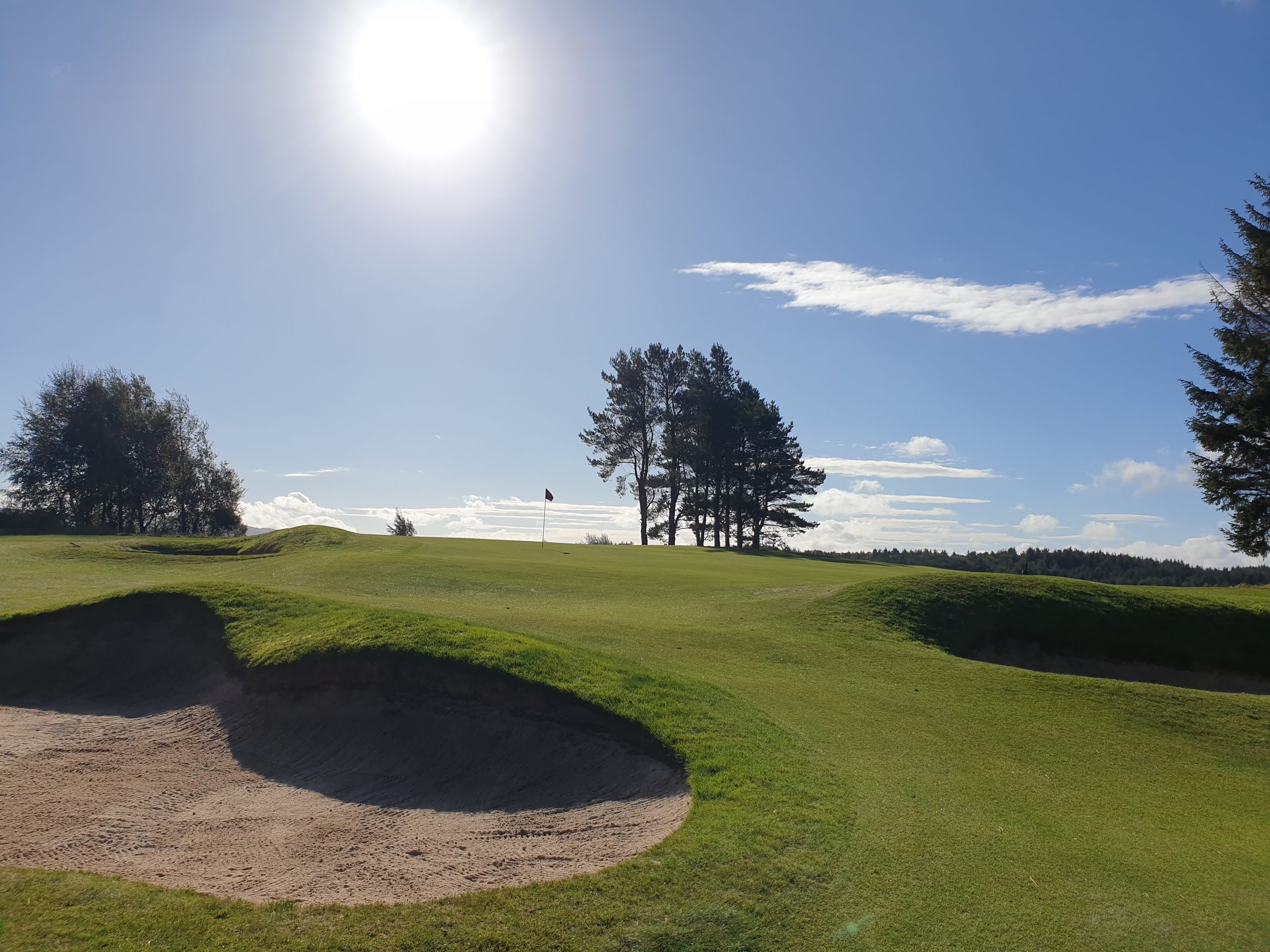
The delightful 125 yard seventh – played downhill to a web of bunkers. The 8th is seen beyond and is the only hole playing the same direction as its predecessor.

This tough course was in majestic condition when I played in good playing conditions yet still struggled to break 100 – I had one of those rounds where you play better than you score. The turf is very firm and certainly played like a links. With beautifully crafted greens and surrounds, I suspect anyone playing to handicap will have made several single putts.

The exquisite condition of the course, seen here at the uphill par three 10th at 147 yards, adorned in Autumn sunshine.

The course is well laid out with constant changes in direction (except the 7th and 8th), so wind is always a strong consideration, especially as the course sits high up in exposed countryside. My only (very slight) criticism is that the approach to the second can be confusing; I hit into the 14th green, to be met by some members telling me “loads of visitors do that!”; later in my round I was advising other visitors the same!

Approach to the 11th, with OOB getting closer at the greenside.

The fairways are pretty generous, but miss these and the rough is at times very brutal. With discounts available through golfnow.com, I paid only £32, which was outstanding value.

I would really love to be able to confirm that Gleneagles is “The Lanark of the North”.  It would be nice if anyone could point me to evidence of the chairman’s decision to validate the club’s great story. For the record, Henry Allan, was Caledonian Railway chairman between 1918-23, are would be the “Chairman” in Lanark’s claim.

It’s worth going out of your way to play Lanark, a wonderful moorland course, arguably one of Scotland’s very best.

Facts:

Course Type: Heathland

Par 70  (1 par 5s, 14 par 4s, 3 par 3s)

Distance (yellow): 6107 yards

Moly’s Gross score: 96

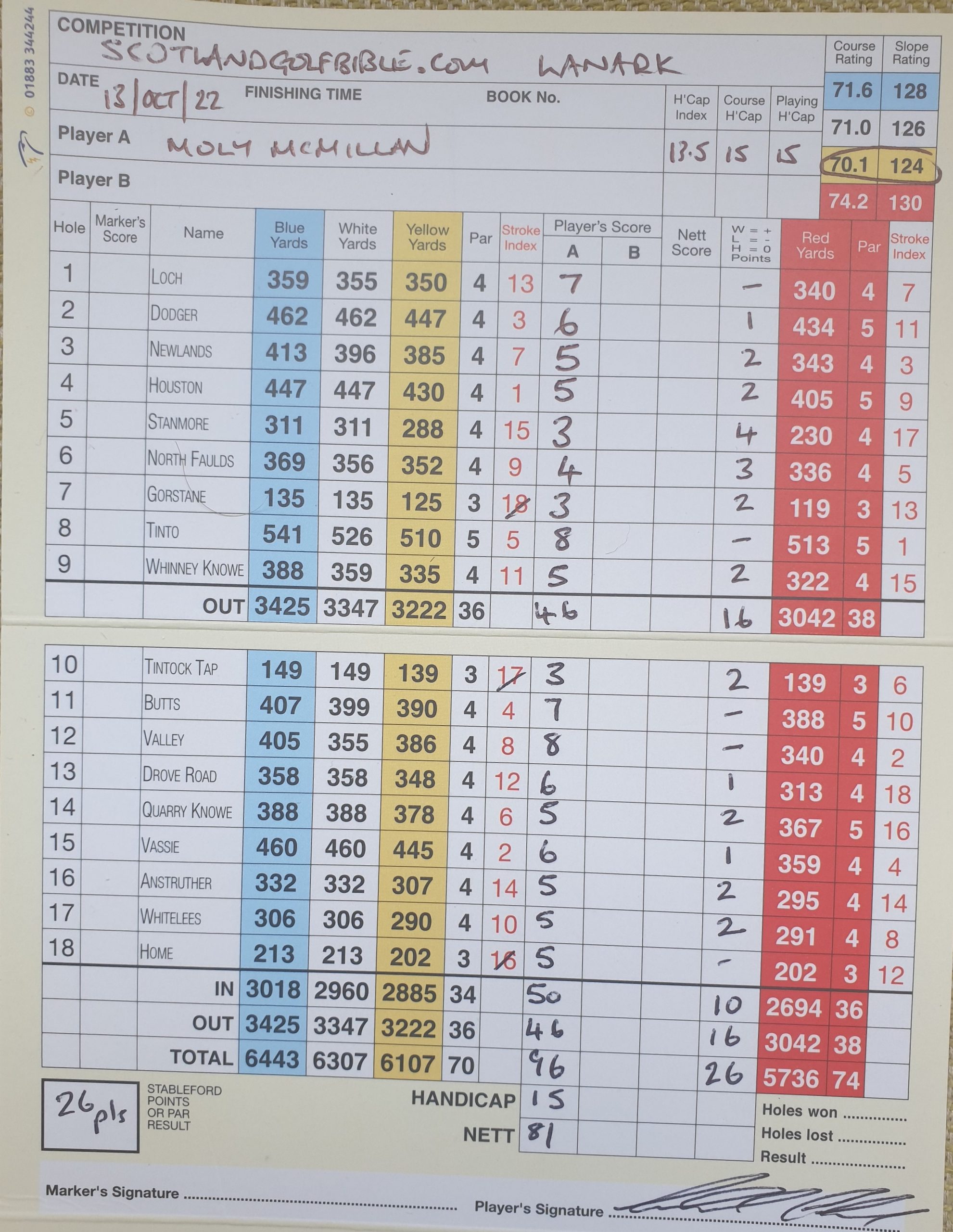
Moly’s Lanark Scorecard – 96

164. Southerness. 26 Aug 2022.

Arguably Scotland’s best value golf course.

Round £80. Par 69. Course/Slope Rating (yellow) 70.6/127. Value (out of 5) – 5

Moly’s Score – 98

Southerness, pronounced ‘Sutherness’, is a beautifully deceptive and top quality golf course. But, had it not been for an unsuccessful search for coal, it may not exist.

The par four 14th, the original 1st hole, with the abundant ‘blooming’ heather.

Southern Scotland’s bloody history of struggle amongst noblemen jockeying between the warring Scots and English, meant choosing the right marriage or alliance determined life or death and, invariably, who came to own the land.

In Tudor fallout, James Douglas, Earl of Morton, was executed under the rule of James VI, by means of a Maiden (a pre-cursor to the Guillotine) in 1581, and his land in the Southerness area resorted to the Maxwell clan.

The second, a 400+ yard par 4, and stroke index 3. A characteristic hole at Southerness.

The land was then sold to Richard Oswald, a successful Scottish merchant and friend of US Founding Father, Benjamin Franklin, in the 1700s, with an intent to mine for coal. This instigated the building of the small village of Southerness and one of the world’s first lighthouses. No coal was ever found and the land lay largely undisturbed.

The beautiful approach view to the par four 3rd. The tree says it all about the prevailing wind.

One of Richard Oswald’s name sake descendants, on returning from fighting in the second world war, mercifully decided to build a golf course, which opened in 1947. Presumably as an antidote to the horrors of his war.

This history puts our golfing and life woes in context. As you play Southerness, on its serene and beautiful landscape, perhaps feel blessed that most of our lives have not shed or witnessed the blood compared with those who went before us.

The 12th green has been shored up over the years by the club. Another tough par four.

Set on the north bank of the Solway Firth, with outstanding views towards the Lake District, Oswald had the foresight to engage one of the great architects of his generation, Philip MacKenzie Ross. Often referred to just as ‘MacKenzie Ross’, a name seemingly destined to be a course designer, Southerness is his masterpiece.

The sixth hole, at 367 yards, here showing the exceptional conditioning of the course.

The golf course is a little off the beaten track, and without other world class courses in the immediate area, the pricing reflects that needed detour. I paid only £50 for a late August twilight and, starting at 3pm, had the course virtually to myself. The sun was out, it was warm, but the breeze was up – it was heavenly links golf weather. With the heather starting to bloom along with the Scottish light of late summer, it was aesthetically stunning.

The 4th, one of the five par 3s, has brilliant bunkering. Here showing views towards the “marilyn” Criffel. 

In immaculate condition, the course was scheduled to host a Scottish Seniors matchplay championship the following week, and is clearly a worthy championship venue. Albeit it’s a deceptive course on the eye.

From the tee it looks very generous. However, unlike many great Scottish links, which have rough solely of fescue and bent grasses, Southerness is surrounded by heather; find this and you’re doing well to get double bogie. The heather wraps round the club head, meaning your next shot is often still from the heather.

The approach to the par four 8th, displaying one of the features of MacKenzie Ross’s design – the use of deceptive bunkers about 50 yards short of the green.

Having racked up six triple bogies, by missing fairways, my advice would be to consider a penalty drop from the heather if it results in a decent lie, especially if two club lengths reaches the fairway. Had I taken 6 penalty drops my score would have been lower.

The course starts with three very difficult holes, although this is not MacKenzie Ross’s original layout. In 1974, the building of the current clubhouse, changed the order of the holes. The original 6th hole became the new opening hole, and all others follow the same designed order of play. The club’s website has an excellent history of the course here.

The stroke index 1 hole – the 9th, a par four of 404 yards – again showing the immaculate course condition. One of my triple bogie holes.

The club’s website also says ” a course for all abilities”. Whilst I normally loathe such ‘sound bites’, I think they have a point, since there are no long carries, little water other than the odd ditch, and pot bunkers that are penal but not impossible. The construction of the greens and surrounds, coupled with pin positions, could make this course almost unplayable in certain wind conditions. With centrally placed pins and benign conditions, high handicappers could score well – not always the case in new design – as long as you miss the heather! It’s a wonderfully crafted course.

The approach to the 13th was the original finishing hole at Southerness, fittingly with the club’s emblematic lighthouse in the background. With the small village of Southerness on show, looking towards the Lake District over the Solway Firth.

Southerness is well worth a detour for any visiting golfer, it’s the best isolated course in Scotland for me. Despite my poor 98, I still had as much enjoyment as I’ve ever had on a golf course.

If you found the history pre-amble interesting, I would recommend The Lymond Chronicles, by Dorothy Dunnett, one of Scotland’s greatest writers, which tells the warring stories in 16th century Scotland, including many Douglas’ and Maxwell’s.

Facts:

Course Type: Links

Par 69  (2 par 5s, 11 par 4s, 5 par 3s)

Distance (yellow): 6110 yards

Moly’s Gross score: 98

Moly’s Southerness Scorecard – 98

163. Carnwath. 25 Aug 2022.

Set on Gallow Hill, this course has both outstanding and infamous views.

Round £35. Par 70. Course/Slope Rating (blue) 67.7/120. Value (out of 5) – 4.5

Moly’s score – 88

Reaching the sixth tee at Carnwath, I thought about Alexander McGregor’s book “The Law Killers“, the dark history of murder in the area of Dundee where I was brought up. Some of the book’s killers look out upon Carnwath golf course, from neighbouring ‘Carstairs’, the State Mental Hospital. I wondered if any ‘patients’, had been golfers and, if so, whether seeing a course through their barred windows improved or worsened their existence.

The par four 6th tee at Carnwath, with The State Hospital ‘Carstairs’ on the right. Fittingly SI 1.

Carstairs was completed in 1939, more than 30 years after the golf course opened in 1907, designed as a 9 hole layout by Willie Auchterlonie of St Andrews. This South Lanarkshire heathland course is great fun with outstanding views all around. It’s easily accessible being about about 30 miles from both Edinburgh and Glasgow.

The tough par 3 uphill opening hole, ‘Roundell’ will need a hybrid or wood for most golfers. The brown coloured ‘Roundell’ can be seen, behind the green, and was a look out point in medieval times

The course, now much changed from the initial layout, became 18 holes in 1963. It was in beautiful condition when I played in fine weather. The tees and fairways were excellent, the bunkers well raked and the greens true and fast, but not too sloping.

The par four 5th hole, “Railway”, the first of a number of strong dog leg holes at Carnwath.

The layout is unusual, with three of its four par 3s, being in the first four holes. With only two par 5s, the course’s variety is added to with dog legs, blind shots and some treacherous and well bunkered plateau greens.

The par four stroke index 3, 8th hole, the approach played steeply uphill, with only the longest hitters reaching in regulation I suspect.

The course sits astride the busy A70, which is quite hazardous to cross over. It is also a tough undulating walk, and plays all of its length, of 5632 yards from the blue (middle) tees, which would normally be coloured yellow.

The quality greens make for an enjoyable visitor experience, here shown at the tricky par four 15th hole. One of many plateau type greens.

At only £35 for a round it represents excellent value. With wide fairways, it’s no surprise this is a popular society venue, especially given the outstanding borders views and abundant wildlife. I found the staff in the shop and bar very welcoming.

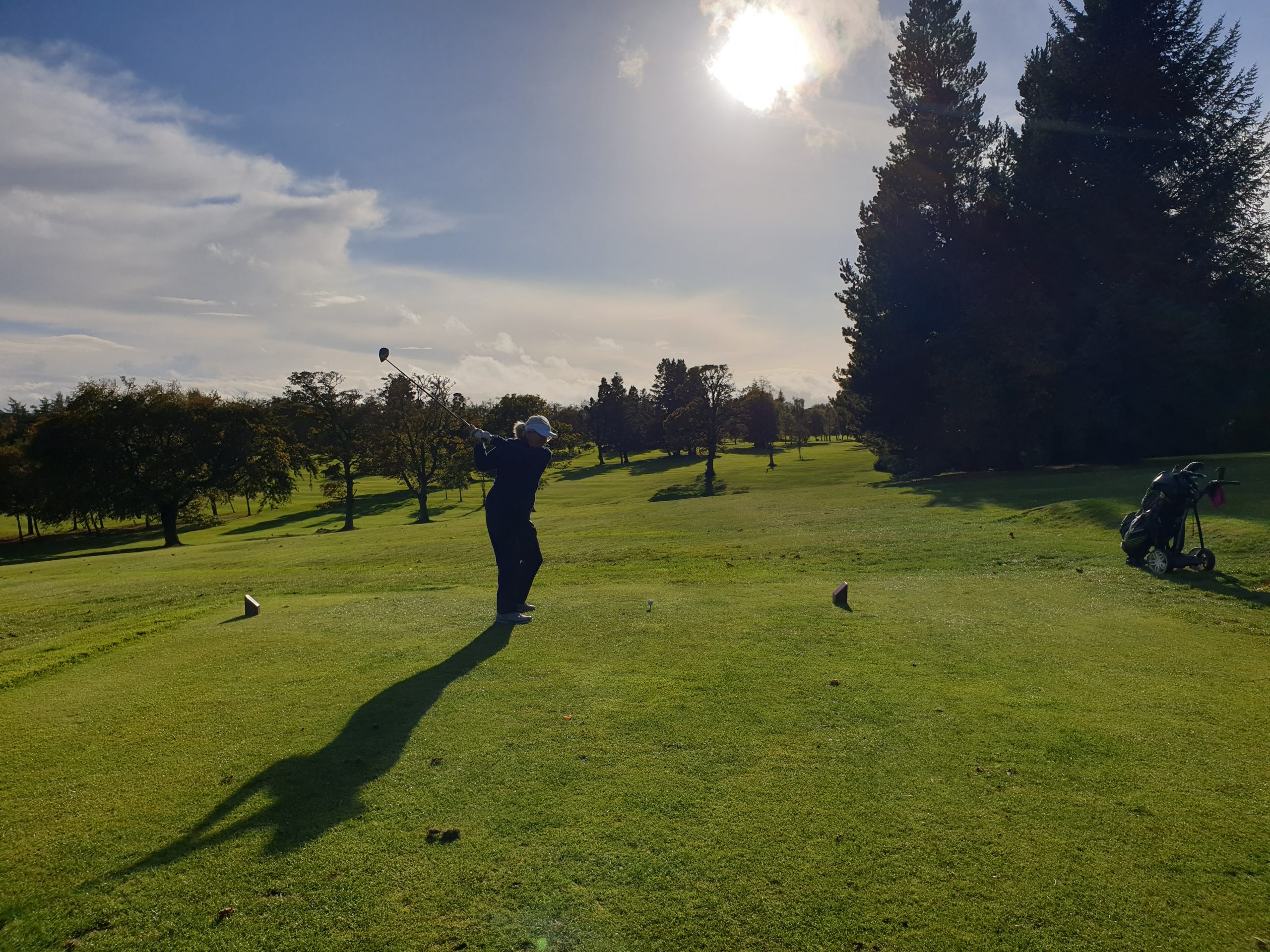
Moly at the dog leg right 9th hole, “Winterlaw”, at 359 yards. Sadly, Moly’s sliced shot resulted in his only blob of the day.

Returning to The Law Killers; the stories of the headless human corpse found in my Dad’s allotment on The Dundee Law, or the murder of three women in my street, is not appropriate here. But the irony of the golf course and State Hospital being built on Gallow Hill can’t go unstated, since in bygone days, patients in Carstairs would have looked upon a Gallow of rather different construction.

Carnwath’s 6th green with The State Hospital looking on.

Facts:

Course Type: Heathland

Par 70  (2 par 5s, 12 par 4s, 4 par 3s)

Distance (blue): 5632 yards

Moly’s Gross score: 88

Moly’s Carnwath scorecard – 88, a solid round
« Older posts Newer posts »

© 2026 Scotland Golf Bible

Theme by Anders NorenUp ↑