A guide to green fee value for money

Category: Braid Association

198. Lockerbie. 3 May 23.

Lockerbie: a good course in ‘Chapter 11’. I hope it finds a way out.

Price Paid: c. £17 (GolfNow)
Current Price (2026): £30 weekdays / £35 weekends list (Apr-Oct), £20 Nov-Mar; GolfNow £18–20
Value: 3.5/5 at price paid and current GolfNow / 3/5 at current list
Moly’s Score: 87 gross, net 74, 30 Stableford points

The 8th, Little Ponds: 118 yards over water to a green backed by conifers. The prettiest hole on the course and, for once, a par.

Lockerbie Golf Club’s website says the original nine holes, laid out when the club was founded in 1889, were designed by “the legendary James Braid”. Braid was 19 in 1889. He was a joiner in Earlsferry and didn’t turn professional until 1896. Unless the club hired a teenage Fife joiner to lay out a course 150 miles from home, two dates have been merged into one sentence. One directory puts Braid’s involvement at 1927, as a redesign, which would at least fit his career. I couldn’t find a primary source for it. The 4th is called “Braids Special”, which looks like the Brechin pattern (Blog 28): one visit, a few suggestions, then a century of creep. Lockerbie is nonetheless a member of the Association of James Braid Courses. So is Lochmaben, four miles down the road.
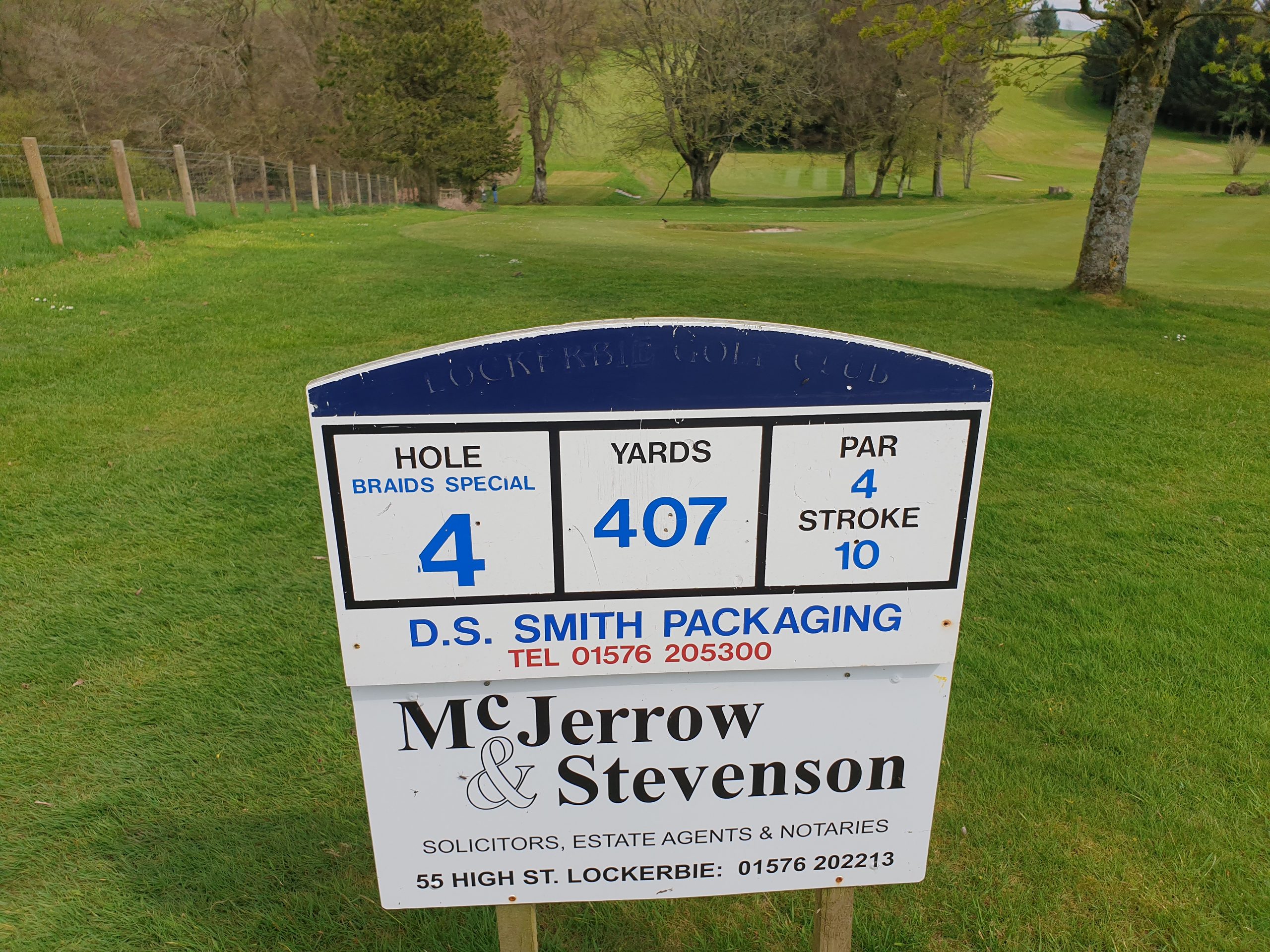
The 4th, “Braids Special”, sponsored by a packaging firm and a High Street solicitor. Whatever Braid did here, local businesses are doing the lifting now.

Whoever designed it, the course makes good use of its ground. It sits on a rise above the town, with views over Annandale and, on a clear day, to the Lake District. The holes have real variety: a pond carry at the 8th, a long par 3 at the 5th, and my favourite, the par 3 16th, Queensberry View. It isn’t too tough, which is exactly what a society course should be, and for years that’s what Lockerbie was.
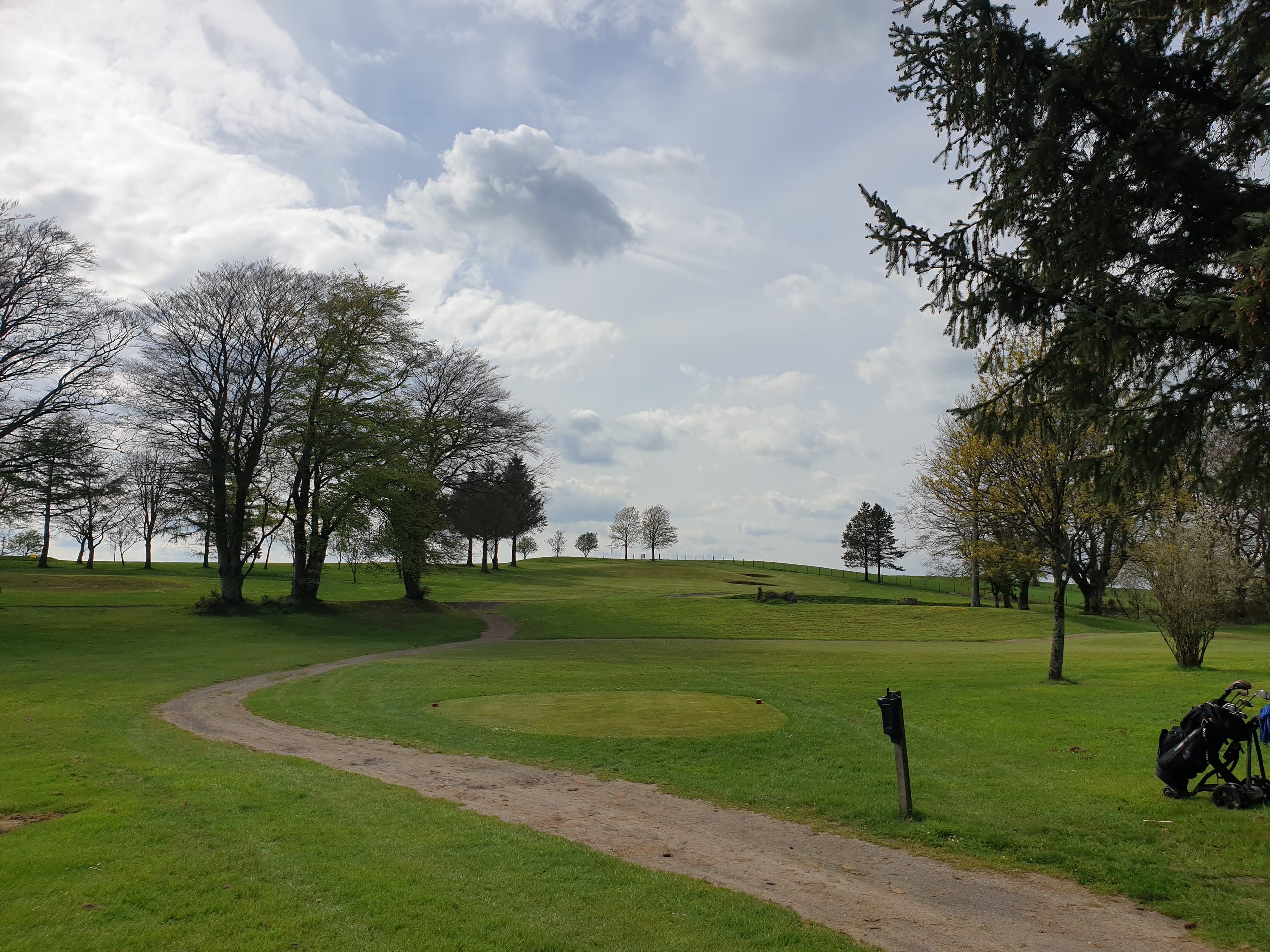
The best hole on the course for me, the Stroke Index 5, par 3 16th hole.

The routing is the weak point. Nine holes were added in 1986, and the parallel fairways running up and down the slope look like the product of several reshuffles, well that’s my hunch.
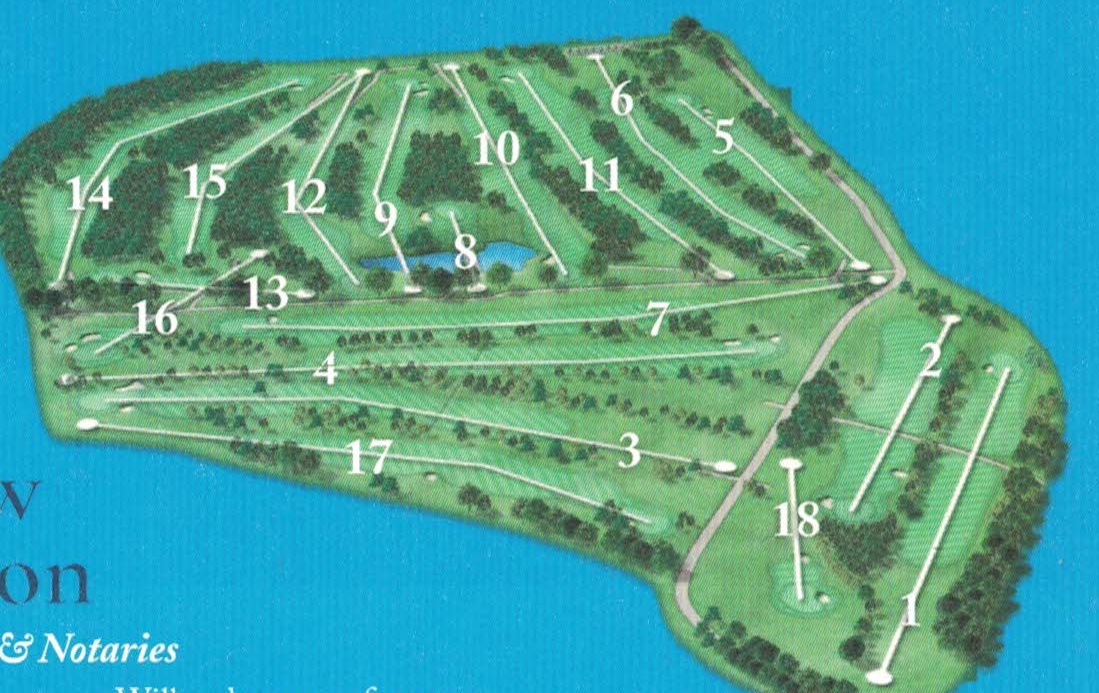
The routing around Lockerbie. It must have changed over the years?

Condition, on the day, was poor. The fairways were freckled with daisies, the bunkers were compacted and weedy, and rakes were scarce. The 18th green was patchy. In fairness, I played in early May with the course still shaking off a wet winter, and the tees were excellent: flat, firm and well cut. A summer visit would be a fairer measure.
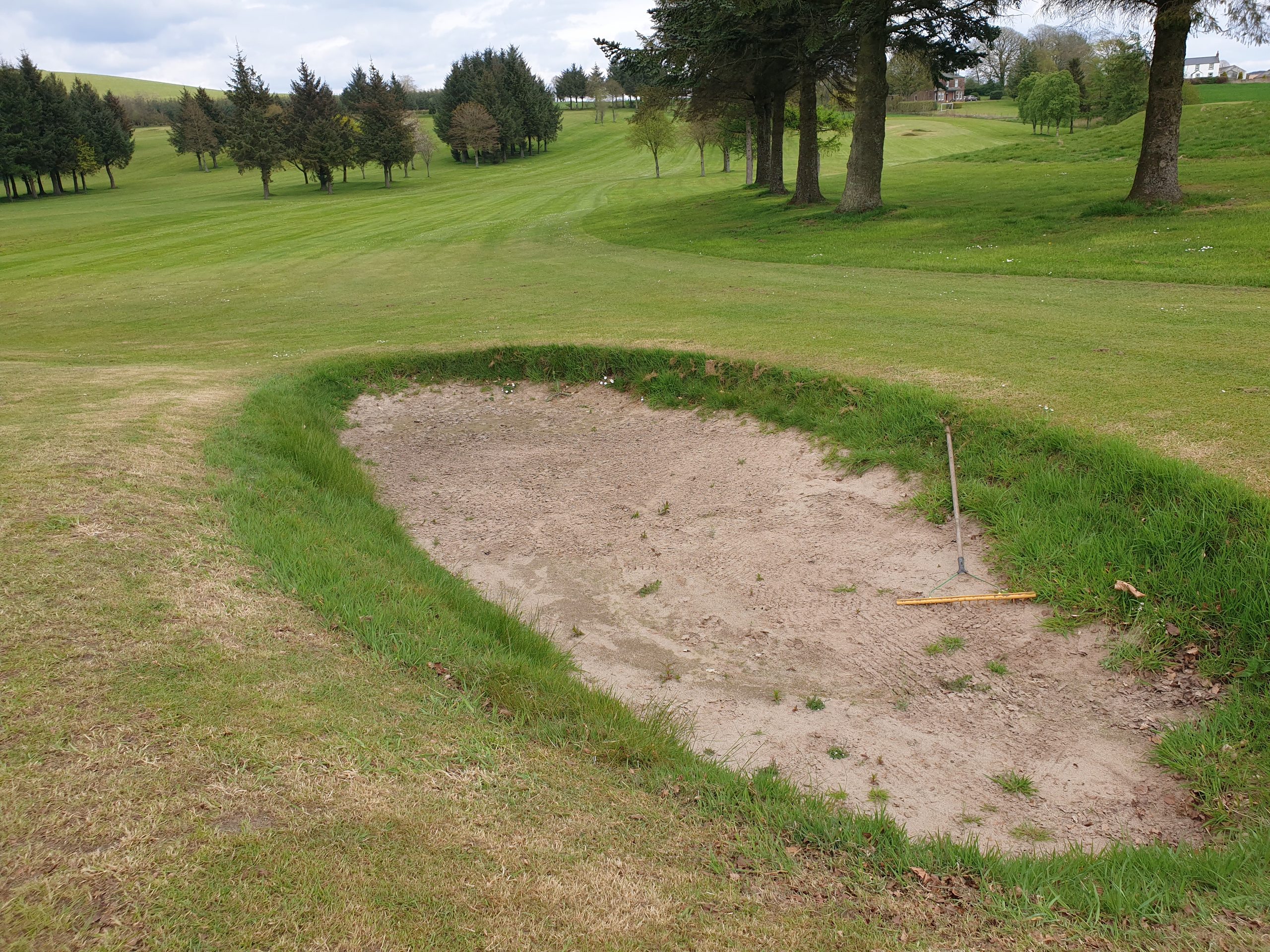
The bunker on the par four 6th, The Beeches: compacted sand, weeds and a lone rake. Volunteers can only be in so many places at once.

The clubhouse was the saddest part. It was tired and run down, and the locals told me food was now a rarity. They put the membership at under 200, paying around £450 a year, with much of the maintenance supported by volunteers. The public record backs up the gist. In 2016 the club asked its landlord, the Lockerbie and Lochmaben Common Good Fund, for a rent cut. In 2018 it lost 24 members in a year and needed £60,000 for drainage. In late 2020 the council served notice to end its lease. Covid brought a membership bounce and a reprieve, and a five-year deal with a local wind farm company is worth £10,000 a year, roughly the subscriptions of 22 members. Add the sponsors’ boards on every tee and you have a club the town clearly still wants.
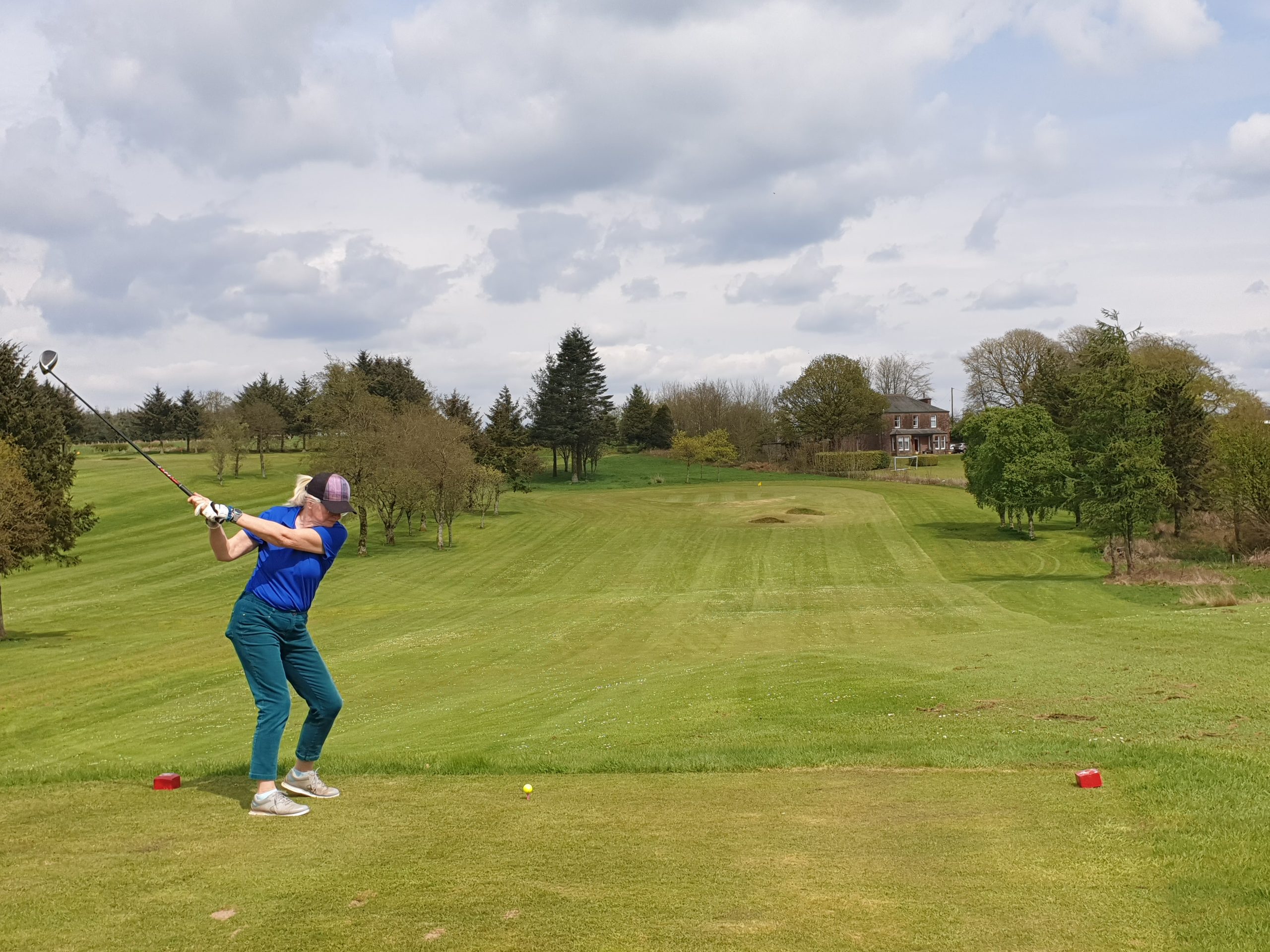
Fran teeing on the par three 5th, the longest of the five par 3s at 196 yards from red.

So has the town outgrown its club? No. Lockerbie had 2,029 people in 1881 and has around 4,200 today. What has changed is the car. A Victorian town course was built for golfers who walked to it. Today’s golfer can just as easily drive four miles to Lochmaben. As with Maybole (Blog 193), what decides survival at this end of Scottish golf isn’t the size of the town. It’s whether you’re the course people choose within a fifteen-minute drive.
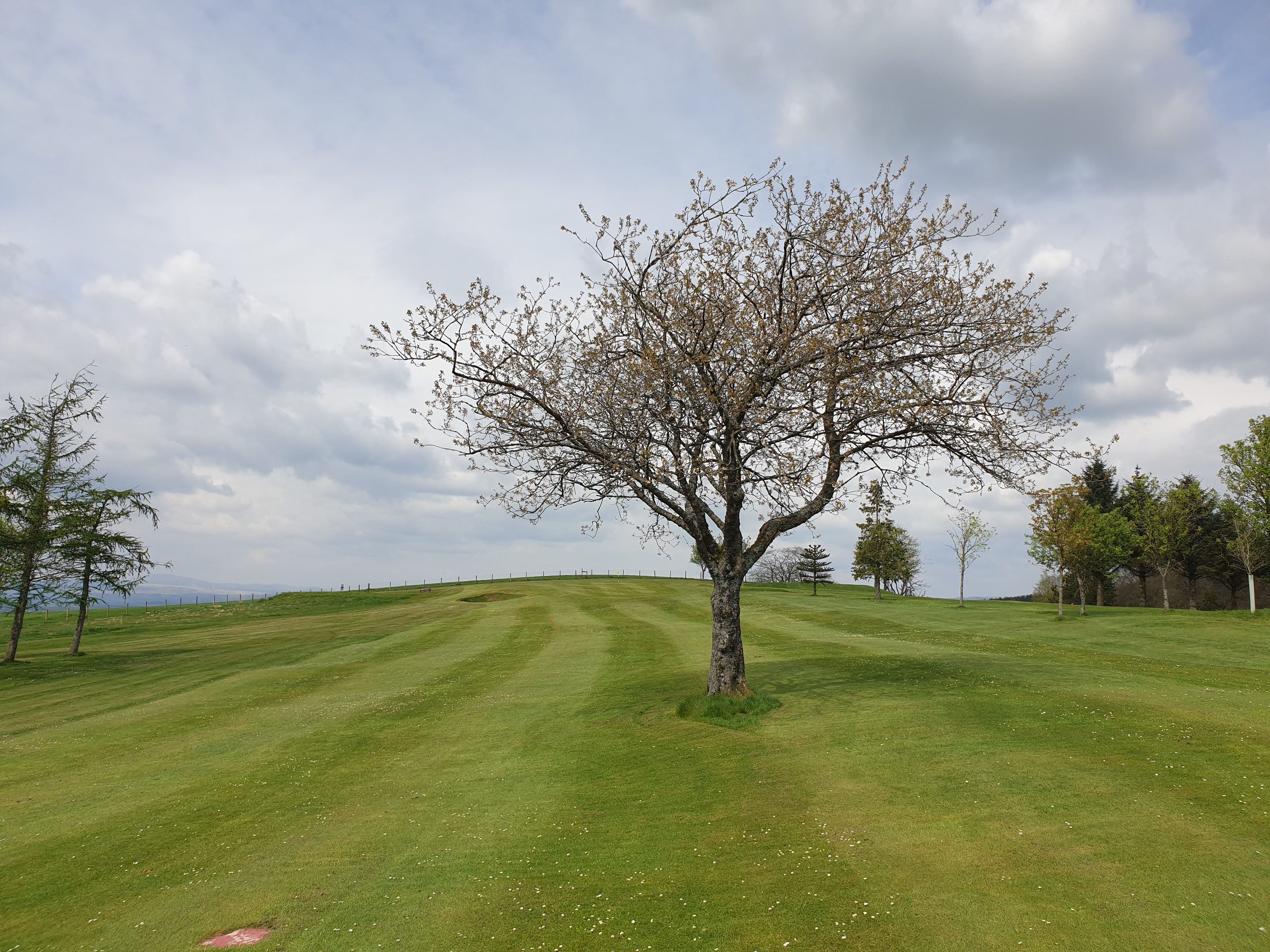
Drove Road, the par four 3rd: a lone tree in mid-fairway, daisies underfoot and the hills beyond. Pretty, as long as you don’t look down.

On the night of 21 December 1988, Pan Am Flight 103 was destroyed by a terrorist bomb over the town. All 259 people on board and 11 residents of Lockerbie were killed. The victims fell across a wide area, including this golf course and the fields beside it. TIME reported at the time that sixty were recovered from the course. I played it on an ordinary spring afternoon nearly 35 years later, and it felt like an ordinary town course. It isn’t, quite, and the history of the course can’t escape that dreadful night. The town’s memorial garden is at Dryfesdale Cemetery, on the other side of Lockerbie, and worth a prayer.
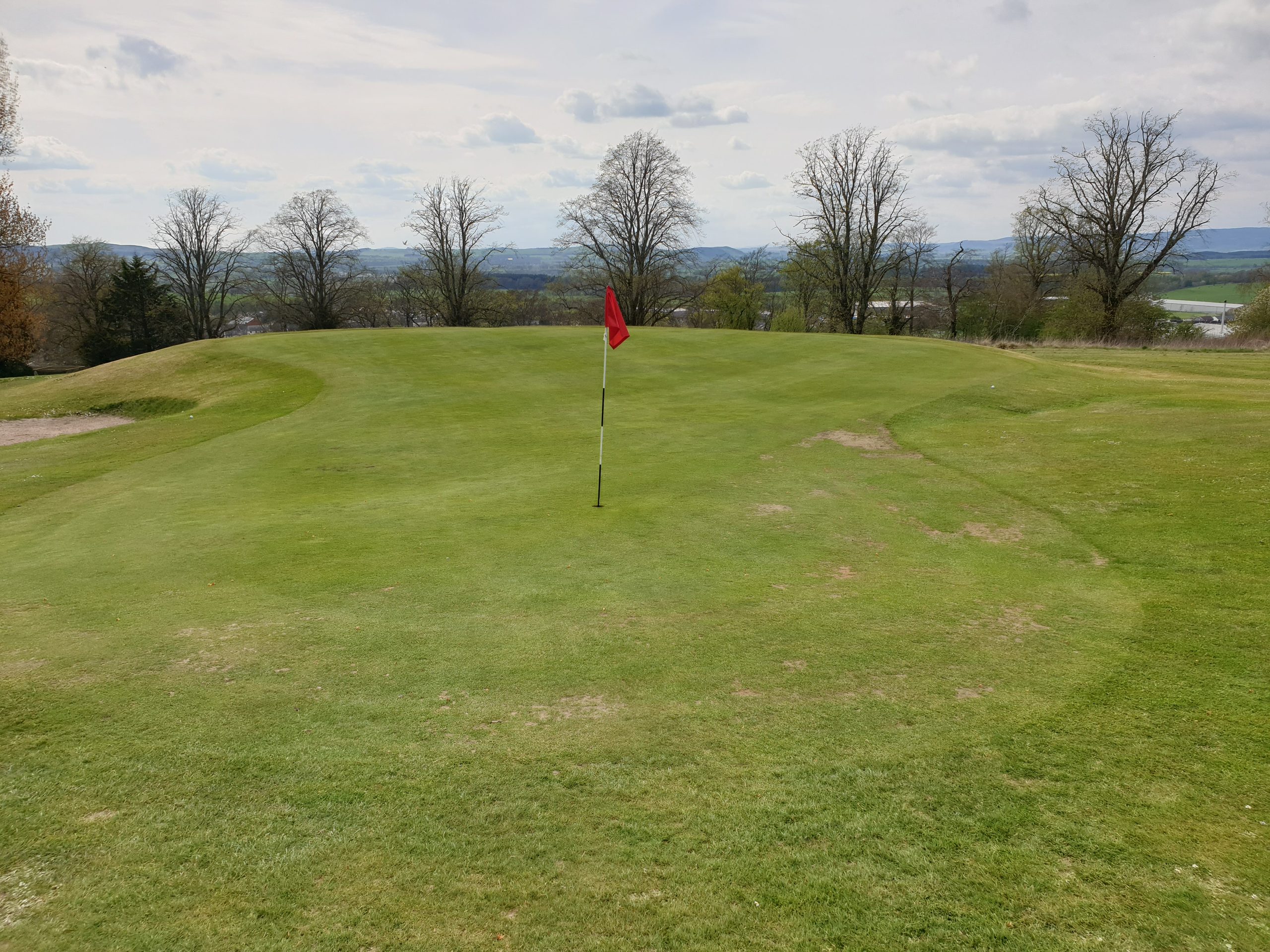
The 18th green, Home, looking out over Lockerbie and the Annandale valley.

I came away harsher than Lockerbie deserves, and I think the clubhouse did most of the talking. A golf course is like a set of accounts: a snapshot, not a verdict. Lockerbie is in ‘Chapter 11’. Companies come out of Chapter 11, and the bones here are good. At around £17 through GolfNow it’s 3.5/5, and 3/5 at the £30 list price. Get the greens and bunkers right, and both numbers go up. I’m not convinced it will make it. I’d very much like to be wrong, and I’d like to go back in summer to find out.
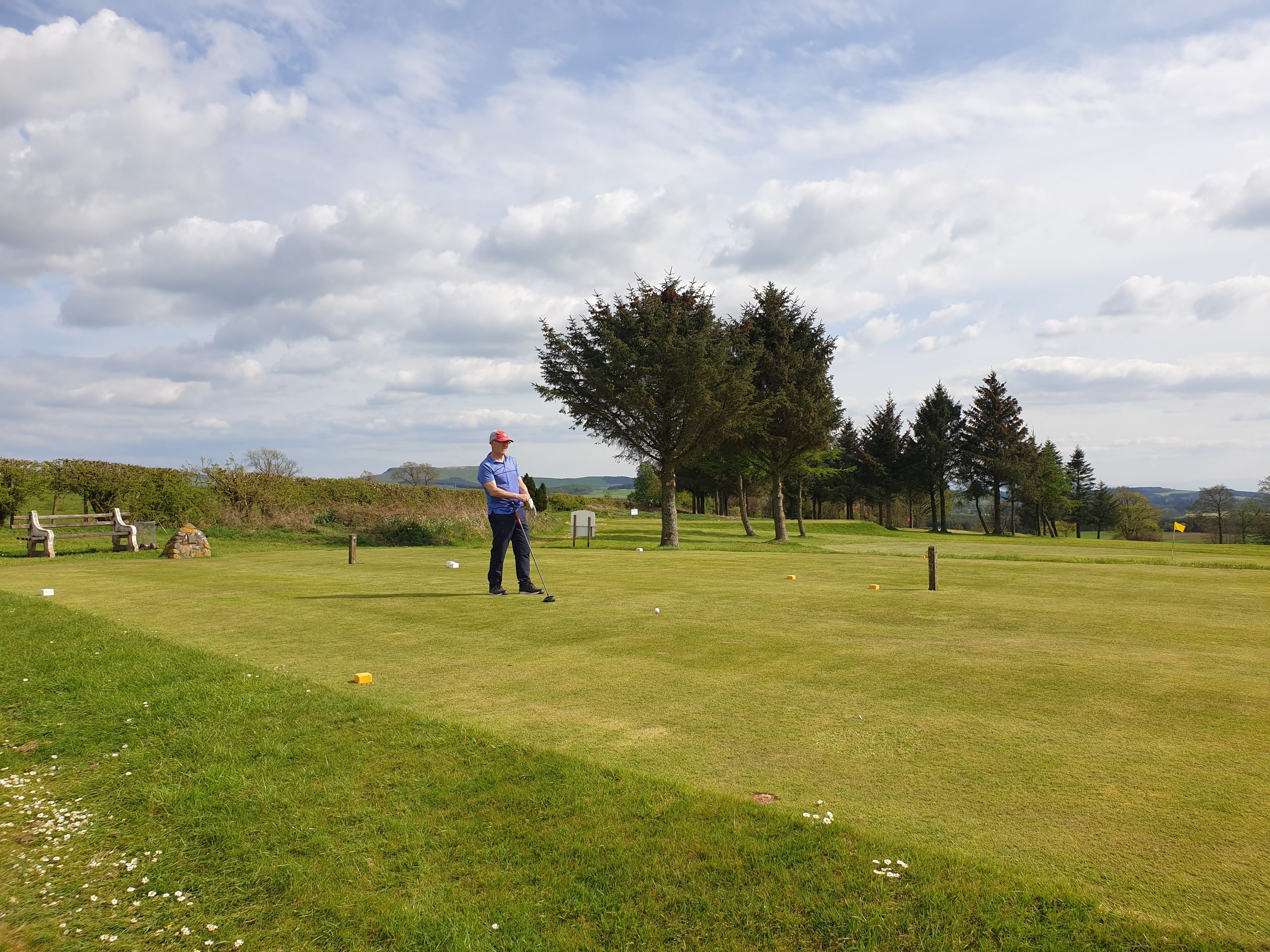
Me on the 15th tee, St Blane’s. The tees were the best-kept thing on the course.

Facts:
Course Type: Parkland
Par: 67 (0 par 5s, 13 par 4s, 5 par 3s)
Distance (yellow): 5,334 yards
Course Rating/Slope: 65.9 / 115 (yellow)
Course Quality: 3/5
Moly’s Gross Score: 87
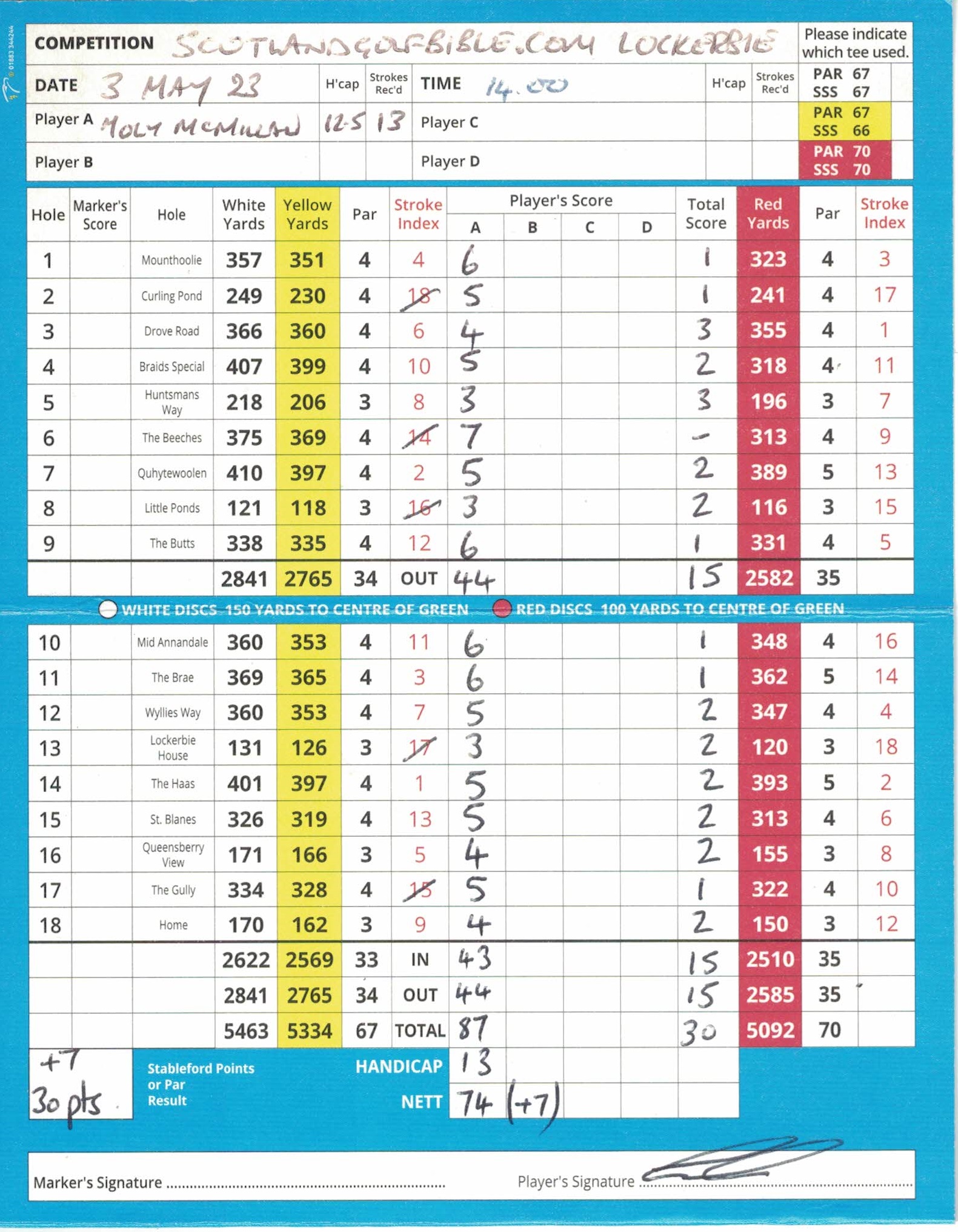
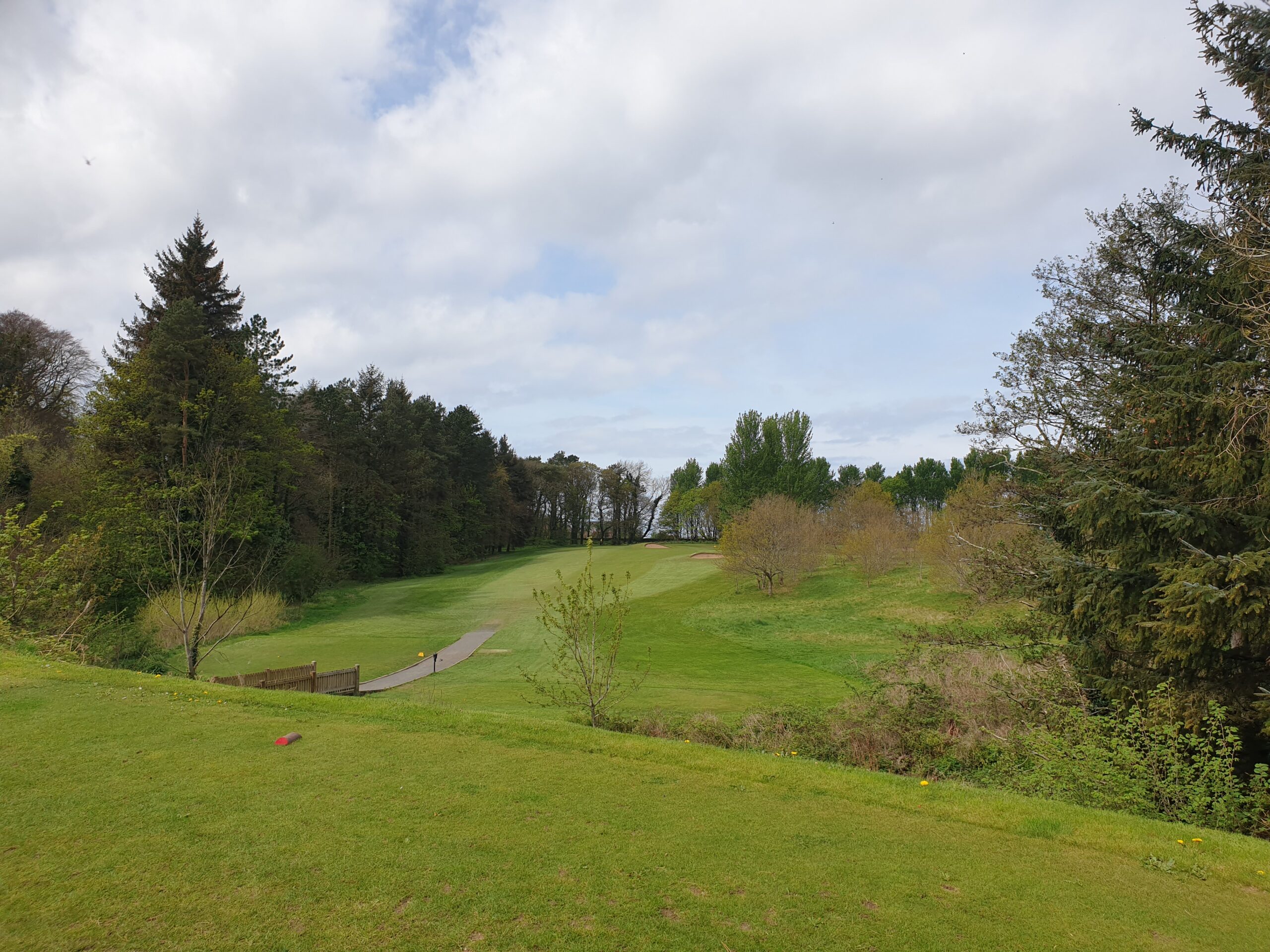
Moly’s 87 at Lockerbie, included only 2 over par on the five par 3s.

197. Seafield. 2 May 23.

Belleisle’s little sister. Born on a racecourse, raised in the shadow of a more renowned sibling.

Price Paid: £19.99 (GolfNow)
Current Price (2026): £32 list; £32 GolfNow, with hot deals from £21
Value: 4/5 at £19.99 / 3/5 at £32 / 4/5 at £21
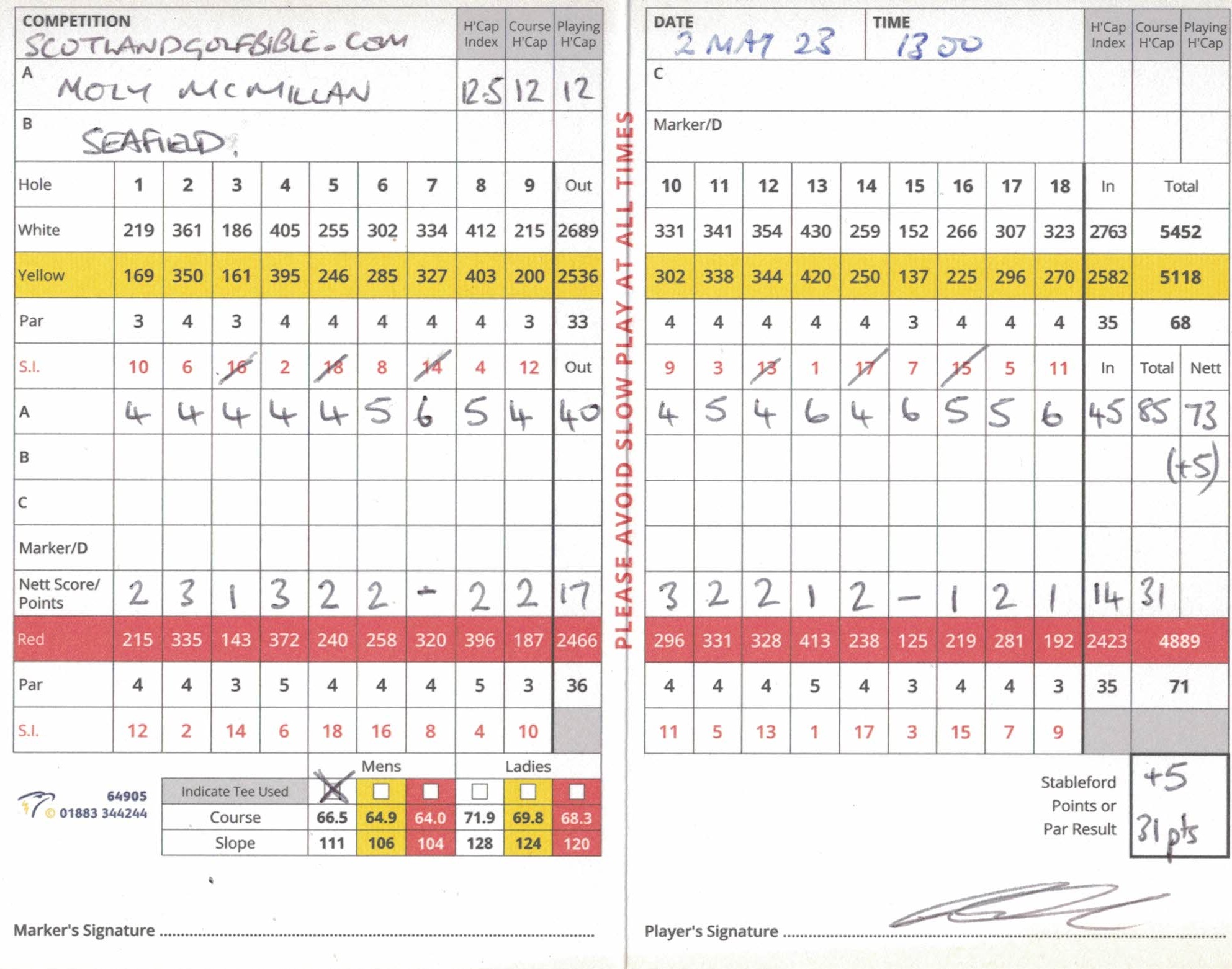
Moly’s Score: 85 gross, nett 73, 31 Stableford points (off 12)

Fran with her approach on the 17th. This is not typical of what Seafield looks like, most is flat and easy walking.

My final South Ayrshire council course, and the smaller of the two within Belleisle Park. Seafield shares its estate, pro shop and car park with Belleisle (Blog 189), and GolfNow calls it “Belleisle’s Little Sister.” That’s fair, but the family history is more interesting than the nickname.

Long before golf, there were horses. Ayr races were run at Seafield from 1771 on an oval with bends likely to unseat a jockey. Its patrons included the Earl of Eglinton, the Duke of Portland and the Caledonian Hunt, to whom Burns dedicated his Edinburgh edition in 1787. The Ayr Gold Cup, one of the UK’s richest sprint handicaps, was raced here. In 1907 the track was judged too small for racing which moved to Craigie. Part of the old oval became part of Seafield golf course.

The 1st, from the elevated tee down into the burn valley. It’s a fine opening view, and one of only a handful of holes with any real change in height.

When golf started here is less clear. A 1988 greenkeeping article says nine holes were laid out inside the racecourse in 1904, which would have meant golfers dodging racehorses for three years. GolfNow says 1907, then “redesigned by James Braid in 1927.” A long-standing course list says 1930. Braid certainly designed Belleisle in 1927. For Seafield, I couldn’t find an independent source that names him, and the 1988 article calls it the “poor relation.” I suspect the Braid credit came across from big sister along with the shared car park. Until someone shows me a plan with his name on it, it’s unproven.

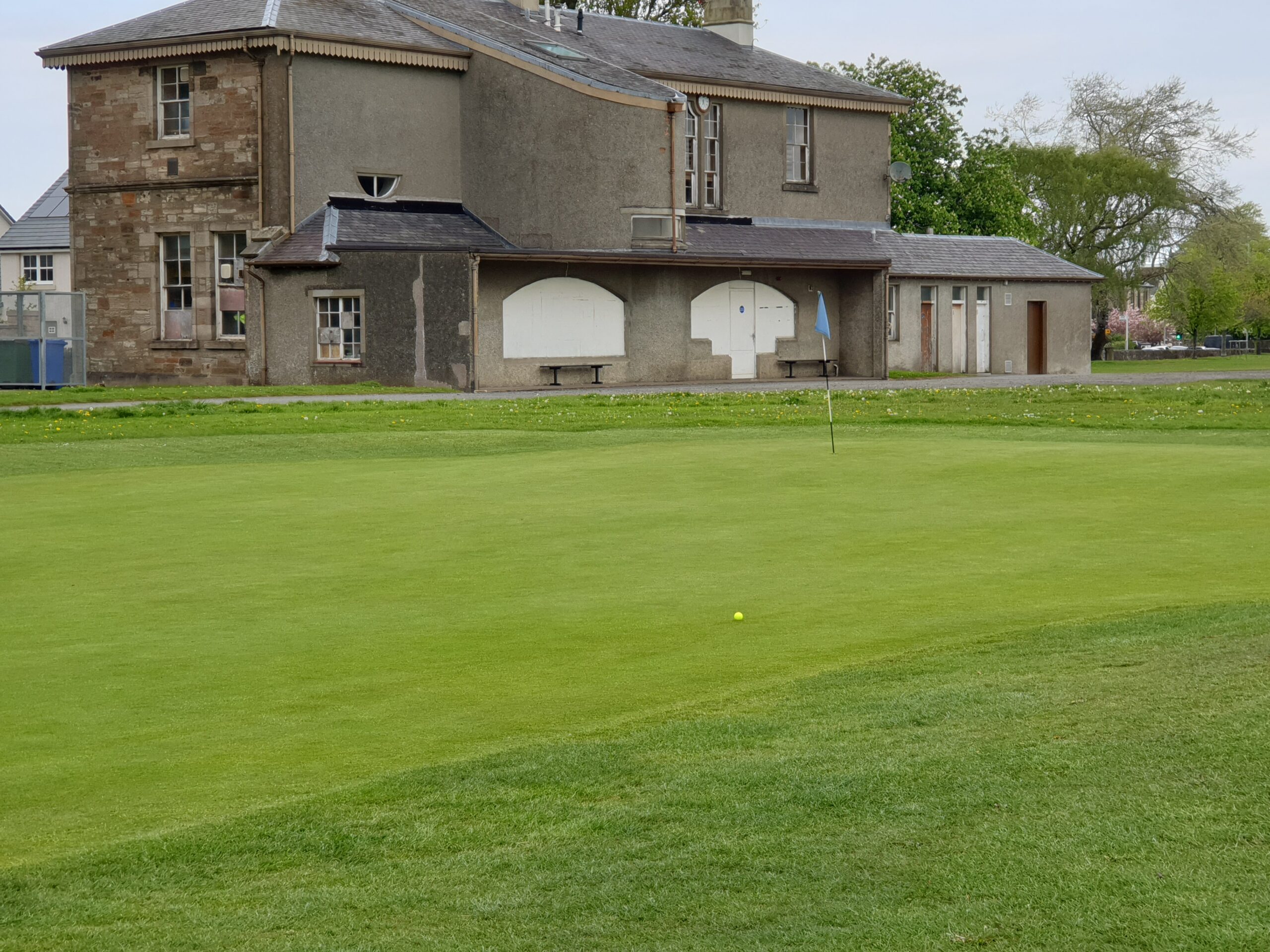
Behind the 12th green: View House, once the racecourse grandstand. Today it’s boarded-up arches and a toilet block.

The racing connection still stands. View House, built in 1867 by the Ayr architect James McDerment, provided changing rooms and viewing terraces for the Western Meeting and by 1957 was a golf clubhouse. It isn’t anyone’s clubhouse now. Belleisle got the smart new building. Seafield got the leftovers of the racecourse.

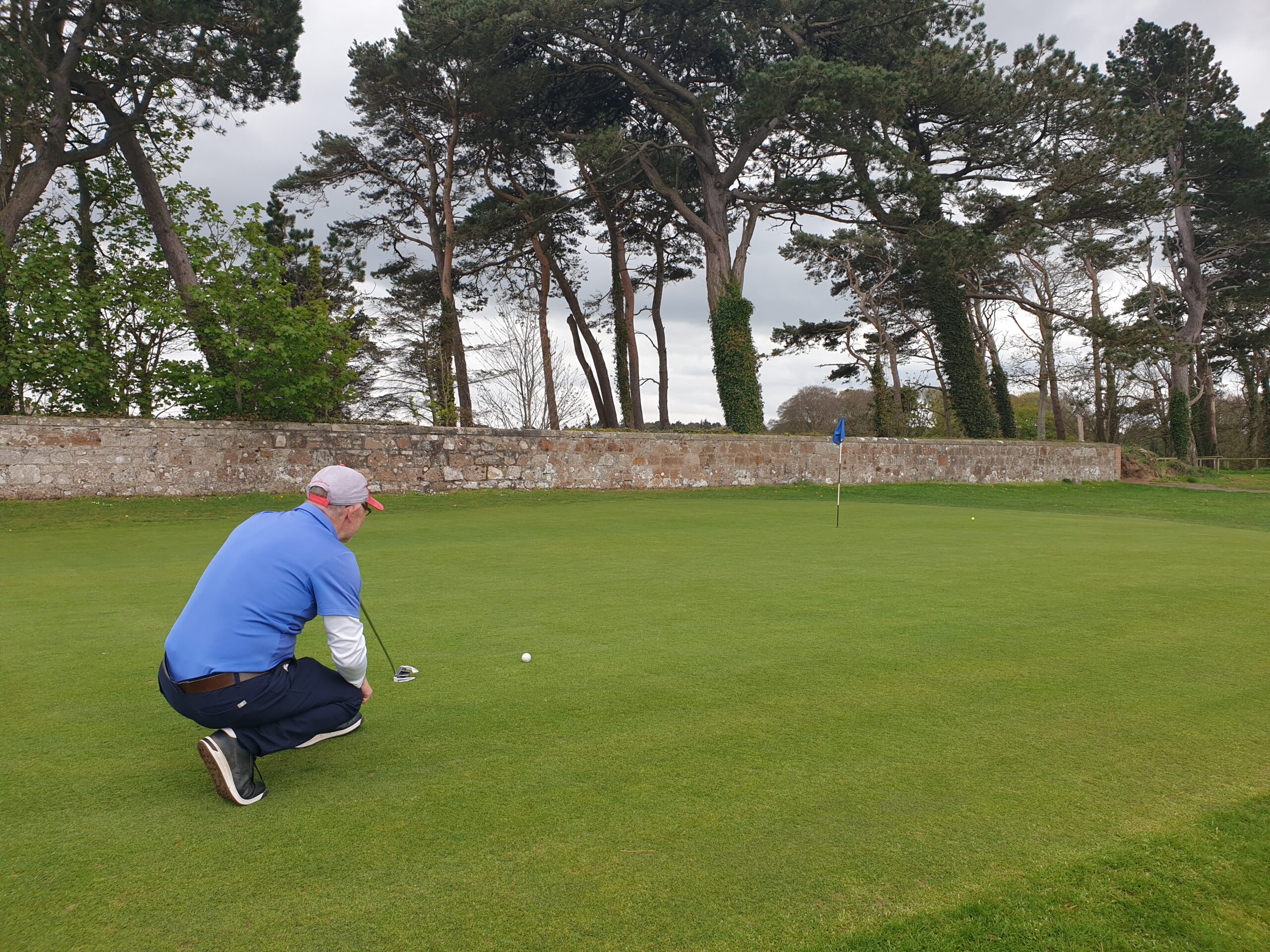
Moly lining up a putt on the 13th beneath ivy-clad Scots pines and the old estate wall. The greens were in good order, with the wall in play on a few holes.

The golf is pleasant. At 5,452 yards off the whites, par 68 with no par 5s, it’s short but not trivial. Fourteen par 4s give it a steady rhythm, and the four par 3s ask enough questions. It sits in a more salubrious part of Ayr than Dalmilling (Blog 192), and it feels like it. The turf and greens were good, and most of the course is flat parkland. The burn valley only comes into play on the 1st and 16th, which are the holes people photograph. I went out in 40 and came home in 45 for 31 points, respectable rather than memorable.

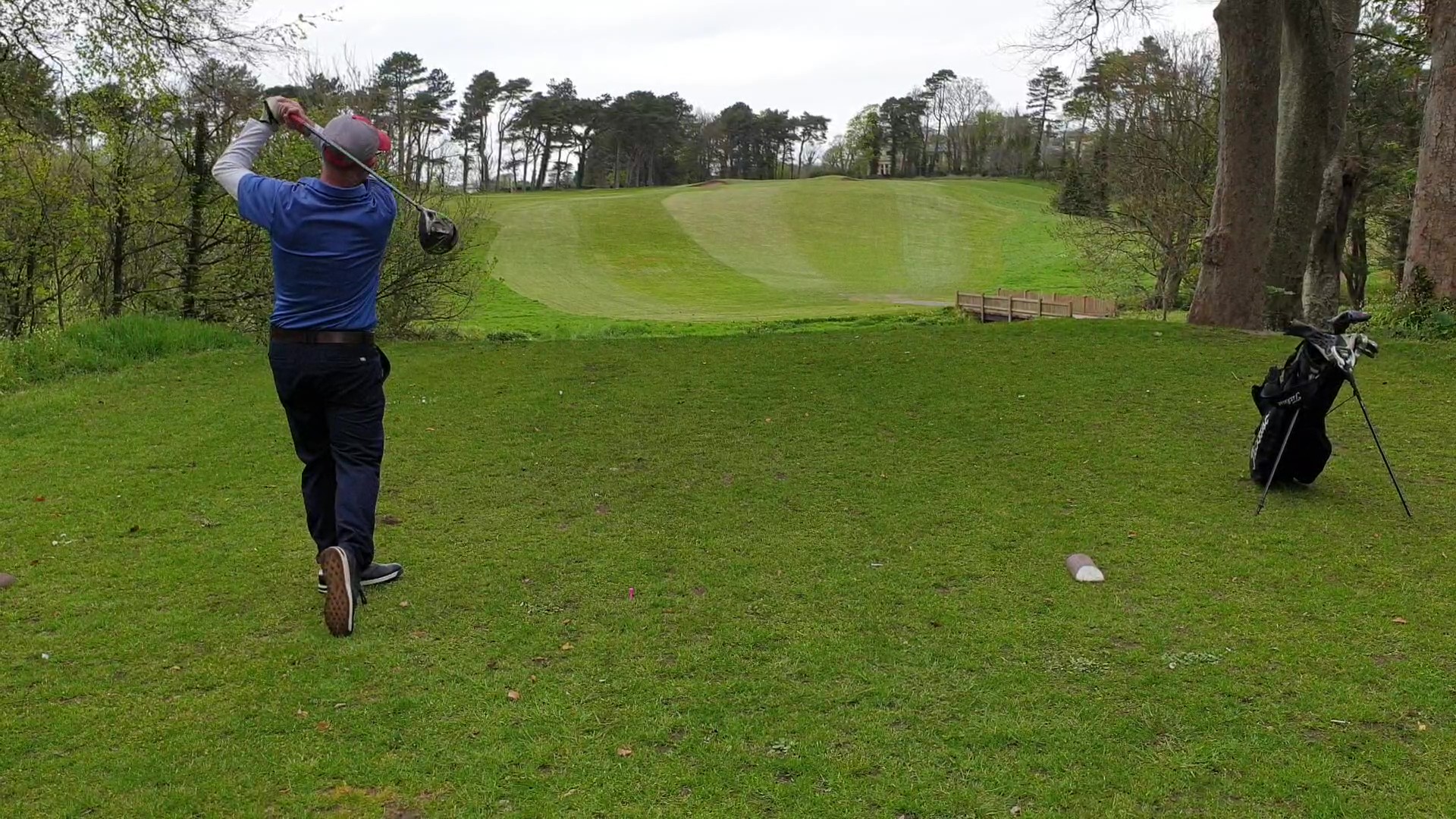
Moly driving off the 16th across the burn and footbridge, with the fairway climbing to the bunkers. This is Seafield at its most dramatic, so enjoy it while it lasts.

Two gripes. There were too few rakes for the number of bunkers. And the café was shut by 3.30pm on a spring afternoon. South Ayrshire markets this place to the world as part of its golf coast. I’m not sure what an American visitor makes of finishing 18 holes in Burns country and finding nowhere to buy a cup of tea.

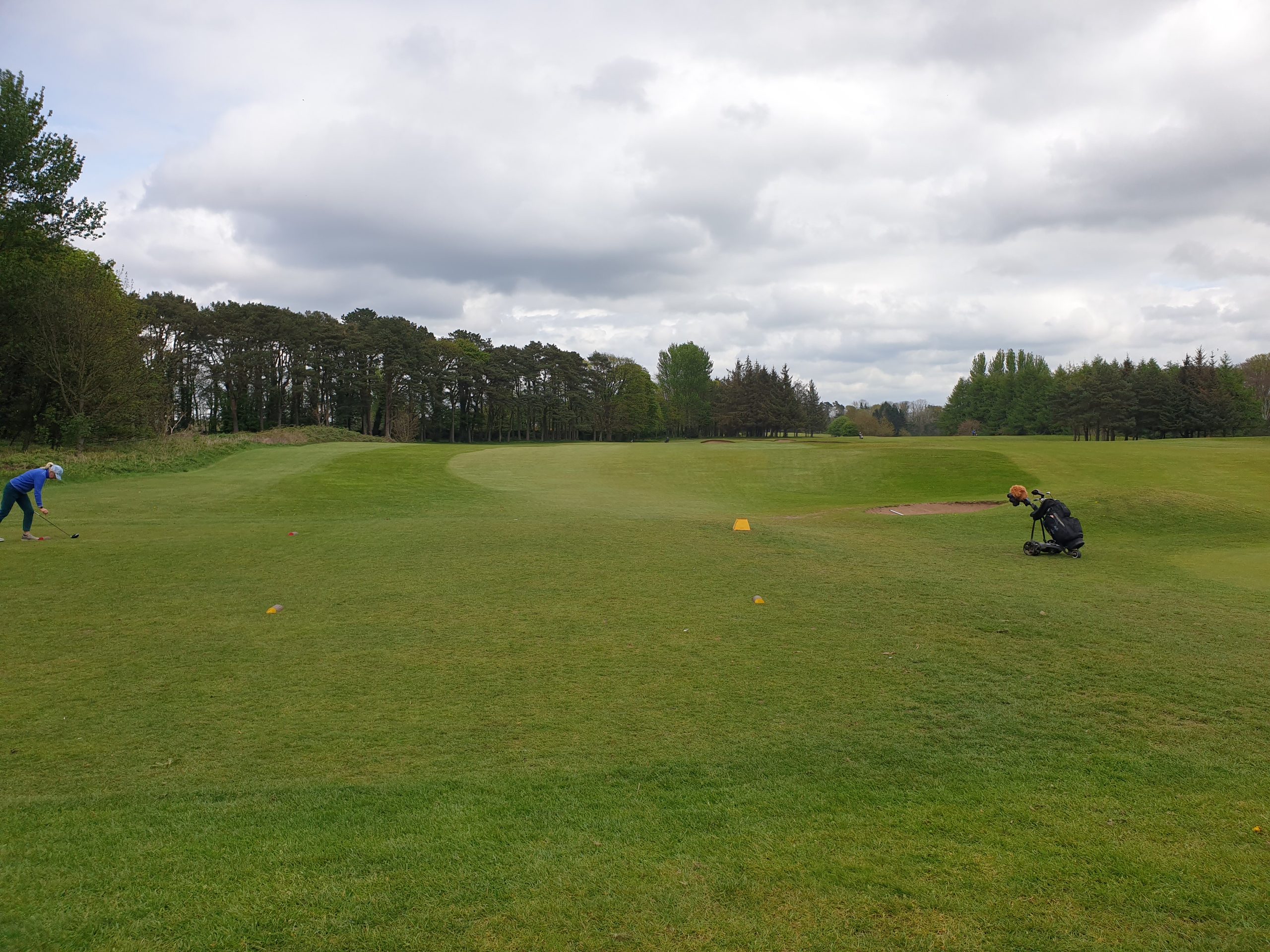
The 14th, a very typical hole at Seafield

At £19.99 on GolfNow, Seafield is a well-kept, enjoyable 18 holes for less than a round of drinks in the clubhouse it doesn’t have. That’s 4/5. At £32 list you’re paying a full municipal fee for the lesser course, with Belleisle next door. That’s 3/5. The £21 hot deals bring it back to 4/5. It’s a minor course, honestly priced when discounted, and its history is more interesting than its golf.

Facts:
Course Type: Parkland
Par: 68 (0 par 5s, 14 par 4s, 4 par 3s)
Distance: 5,452 yards (whites)
Course Rating / Slope: 66.5 / 111
Course Quality: 3/5
Moly’s Gross Score: 85

Steady round of 85, with all 4s, 5s or 6s.

© 2026 Scotland Golf Bible

Theme by Anders Noren — Up ↑