A guide to green fee value for money

Category: Original Member(s)

187. Greenburn. 26 Mar 2023.

The Golf Club and the Viaduct – which will last longest?

Green Fee: £15 (winter rate). Par 71. Course Rating/Slope: 71/128 (yellow tees). Value: 4/5.

Moly’s Gross Score: 89

Playing Greenburn, I found myself thinking not just about where the course sits geographically – deep in Scotland’s central belt between Glasgow and Edinburgh – but where it sits economically. Scotland has around 575 golf courses and almost certainly cannot sustain all of them. I pondered which side of that financial reckoning Greenburn would end up on. Let’s park that for now.
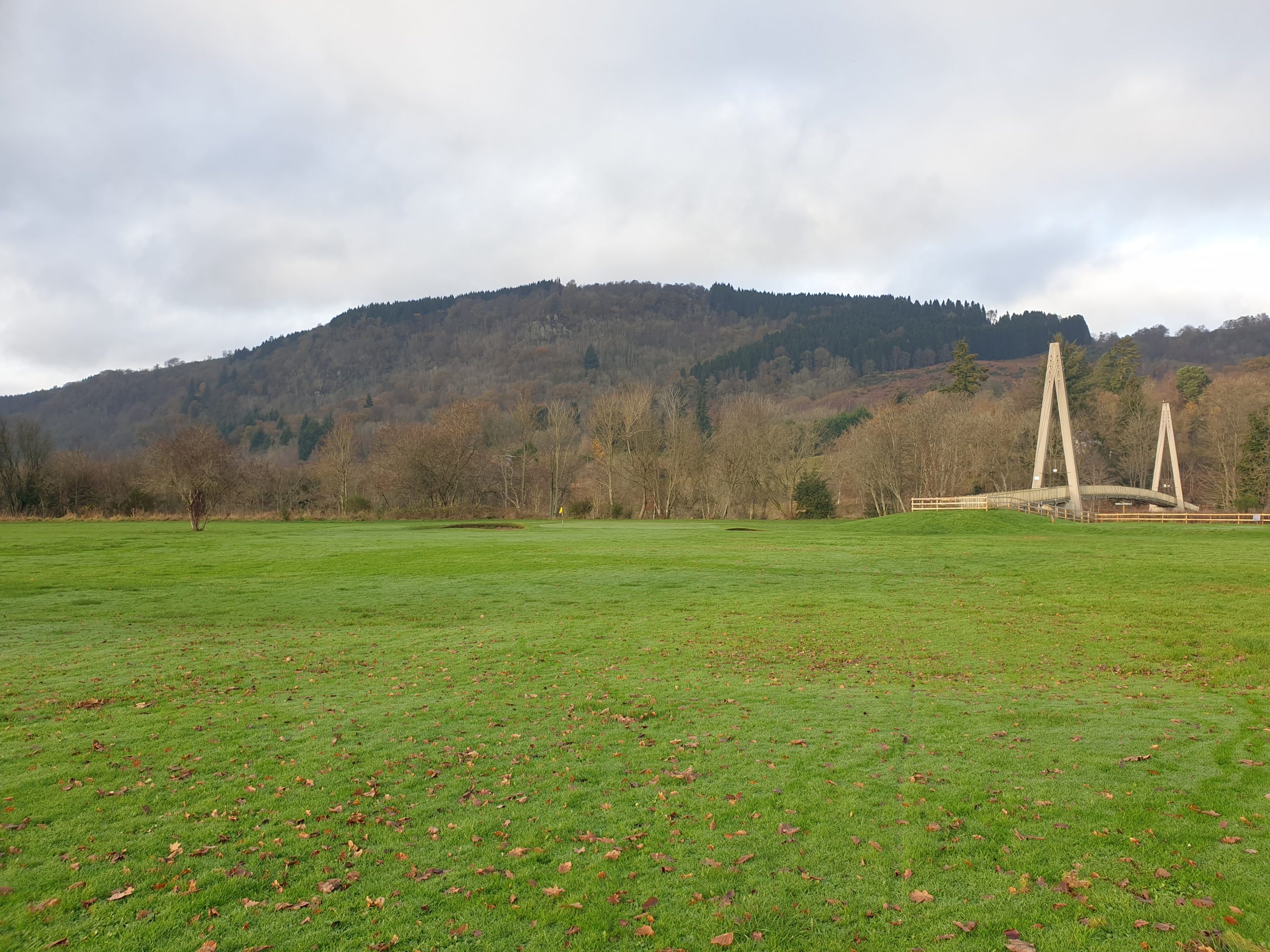
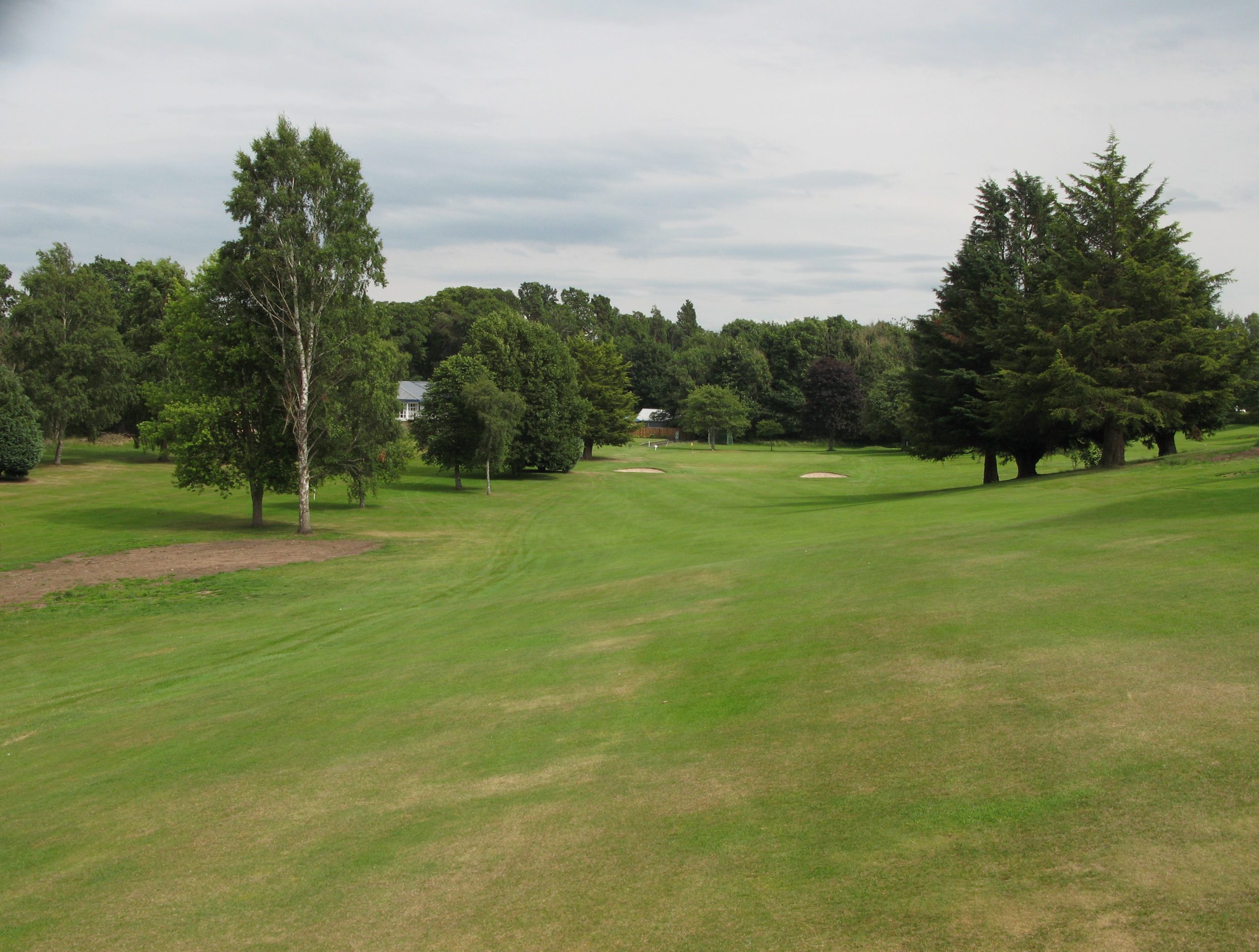
Hole 4 – a long Par 5, with the first start view of the viaduct

Greenburn Golf Club traces its roots to 1894, when the working people of Fauldhouse built a course near their village. The present course, voluntarily built by the members in 1953, relocated to the Breichwater Valley. The club motto, Per Nostra Opera (“By our own endeavors”), says what it does on the tin.

I played at a winter rate of £15, off temporary mats but normal greens. I met recent retiree and local member Gordon Cleland, a decent golfer and clearly very much at home.
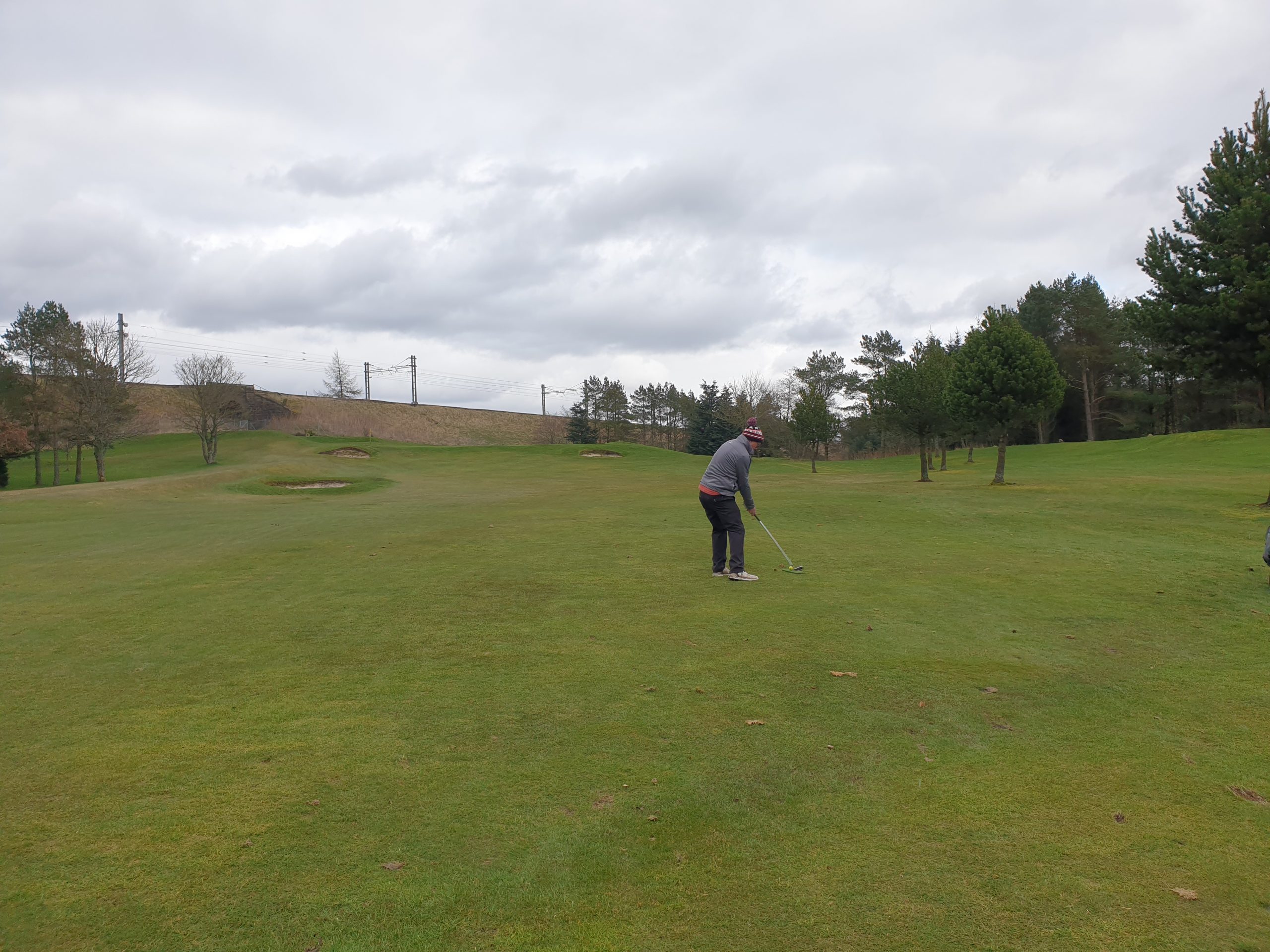
Local Member Gordon Cleland, local member, playing his approach at the par 5 13th.

After a welcoming opening hole, Greenburn becomes a narrow course, surrounded by industrial landmarks, most notably the electrified Glasgow to Edinburgh railway line. Pylons and overhead wires run over some holes.

The sometimes very large and sloping greens were in good condition for the end of winter. I got the feel they would be fast and very difficult in Summer.
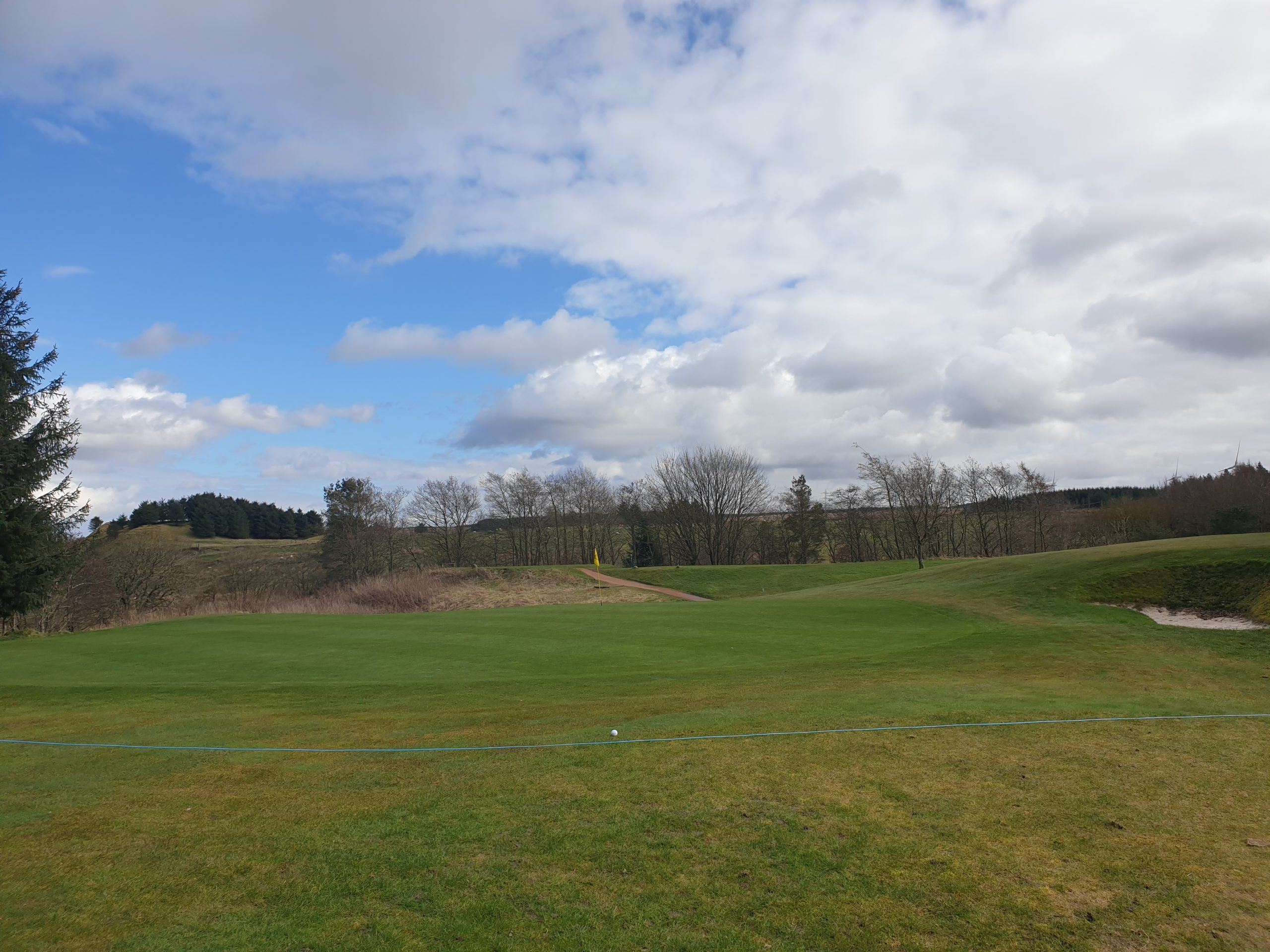
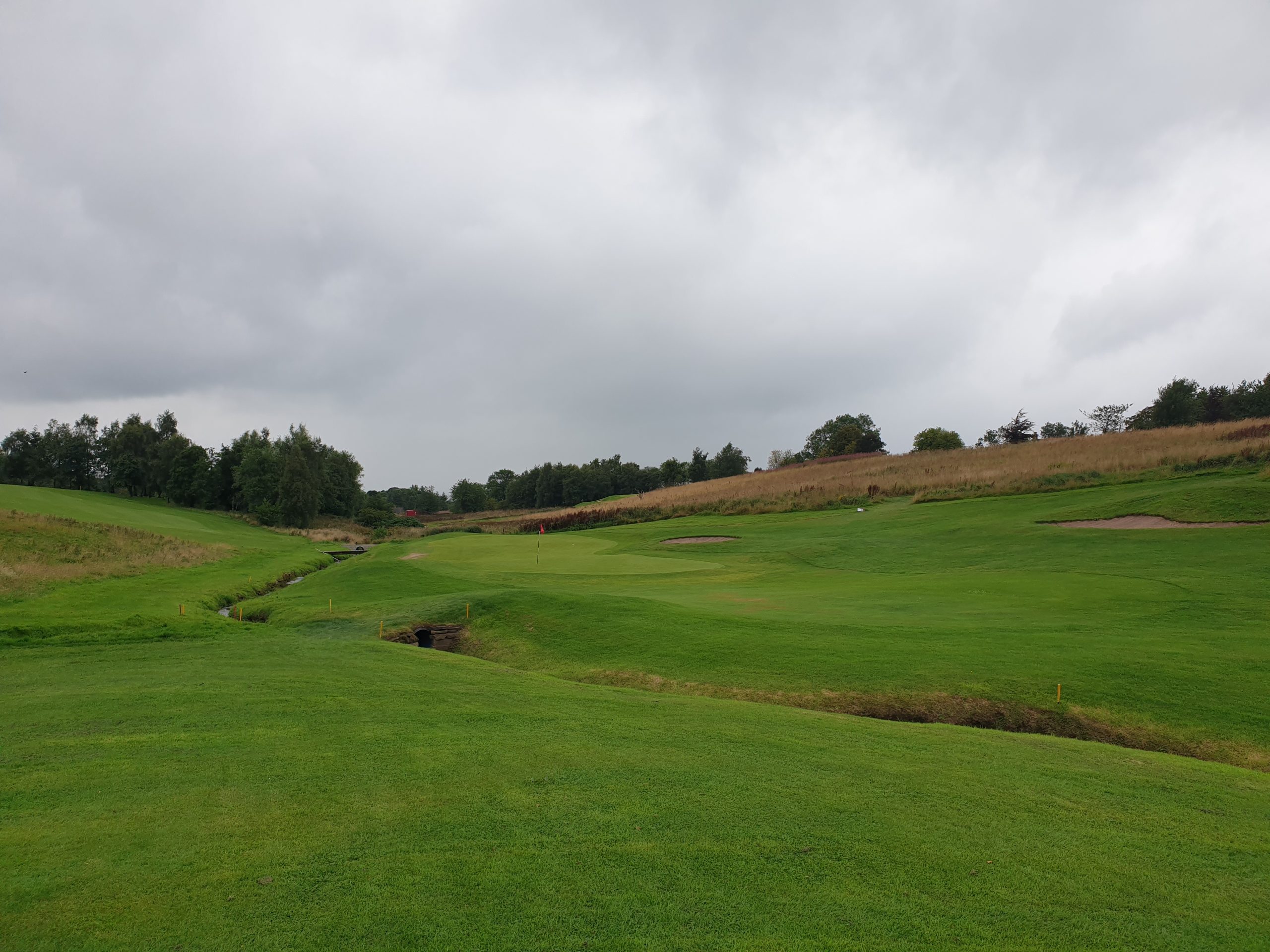
The first, with characteristic large green, the rope marking the winter ground boundary

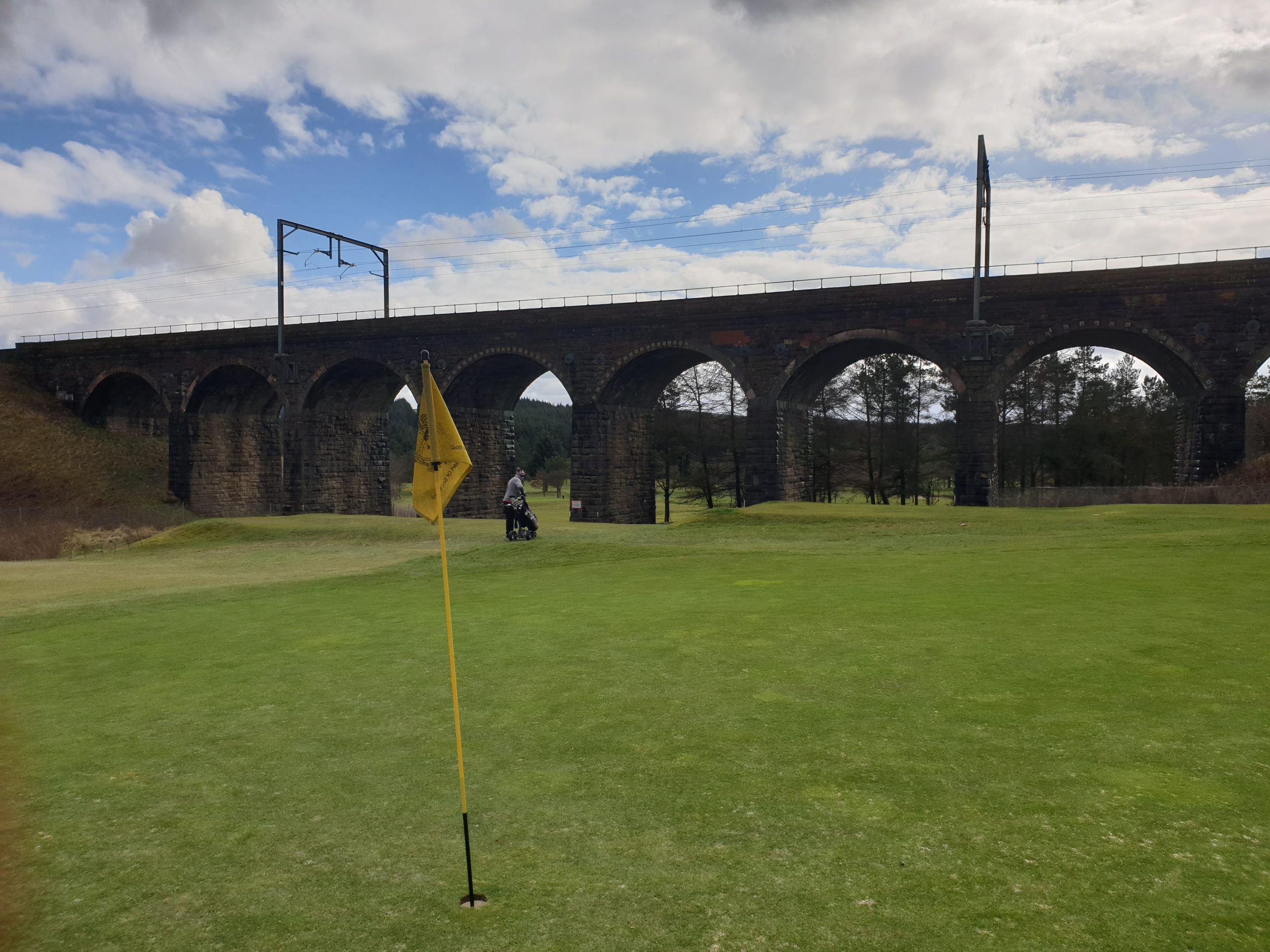
As you play toward the 4th green, a massive stone railway viaduct dominates – dark and monumental, it represents the ambition of the Victorian age, as does the existence of clubs like Greenburn. Nobody designs viaducts anymore, they’d be too expensive, but were they built to disturbingly outlast their surroundings.
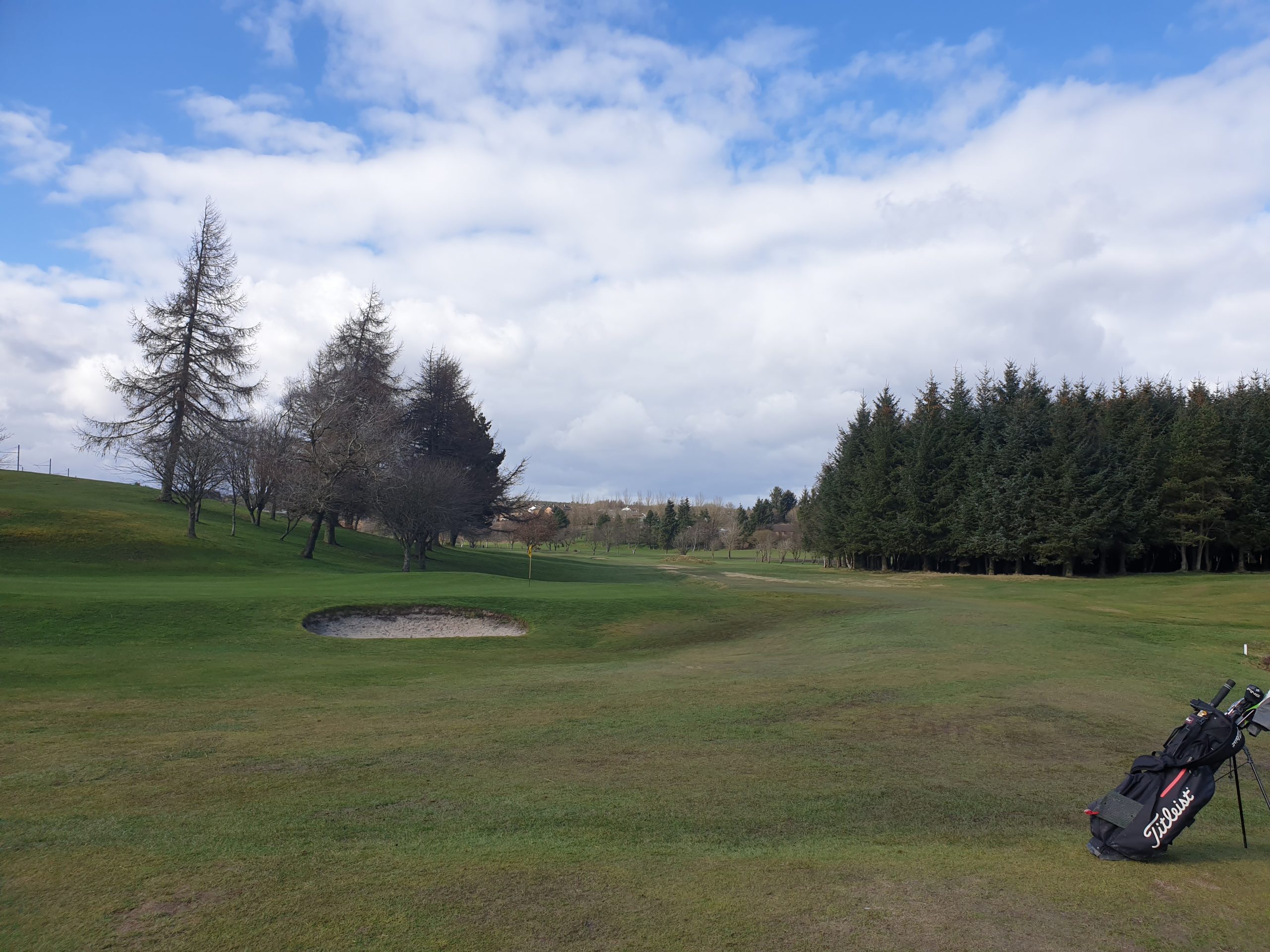
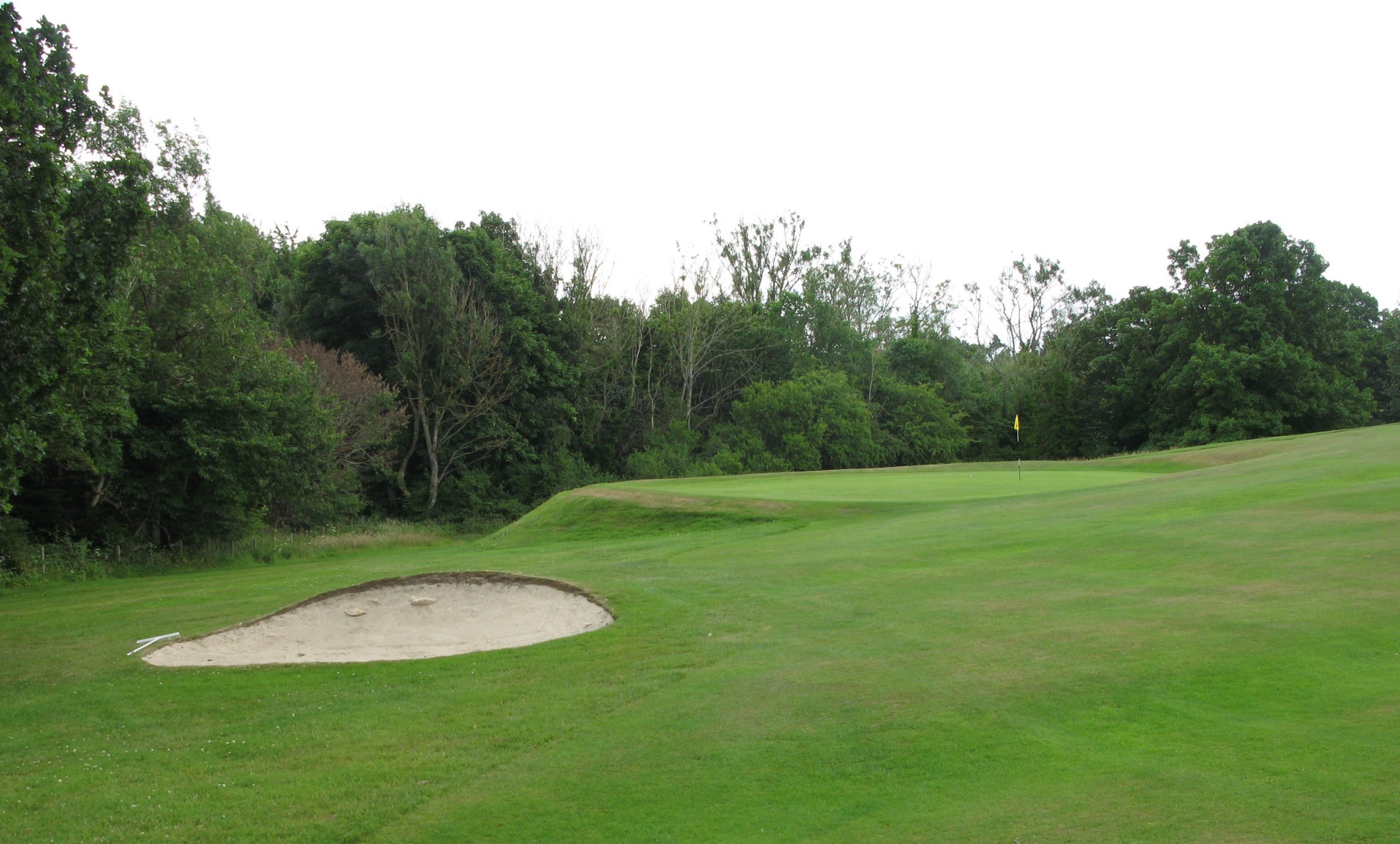
Hole 3, one of the birdieable par 4 holes, with wide narrow green

The highlight of the course are a quartet of difficult par threes, a truism brought to life by Gordon’s tale of the Greenburn “secret 2s pot”. Most clubs have a small stake side comp along side the weekly medal, the “pot” shared by players getting a 2 on their card. At Greenburn this side sweep is on only one of the par 3s, but secretly chosen. Given the difficulty of the par 3s, the pot can accumulate. On one occasion, Gordon took home £340 for a birdie two at the 10th, the stroke index 5, ‘Muldron’ .
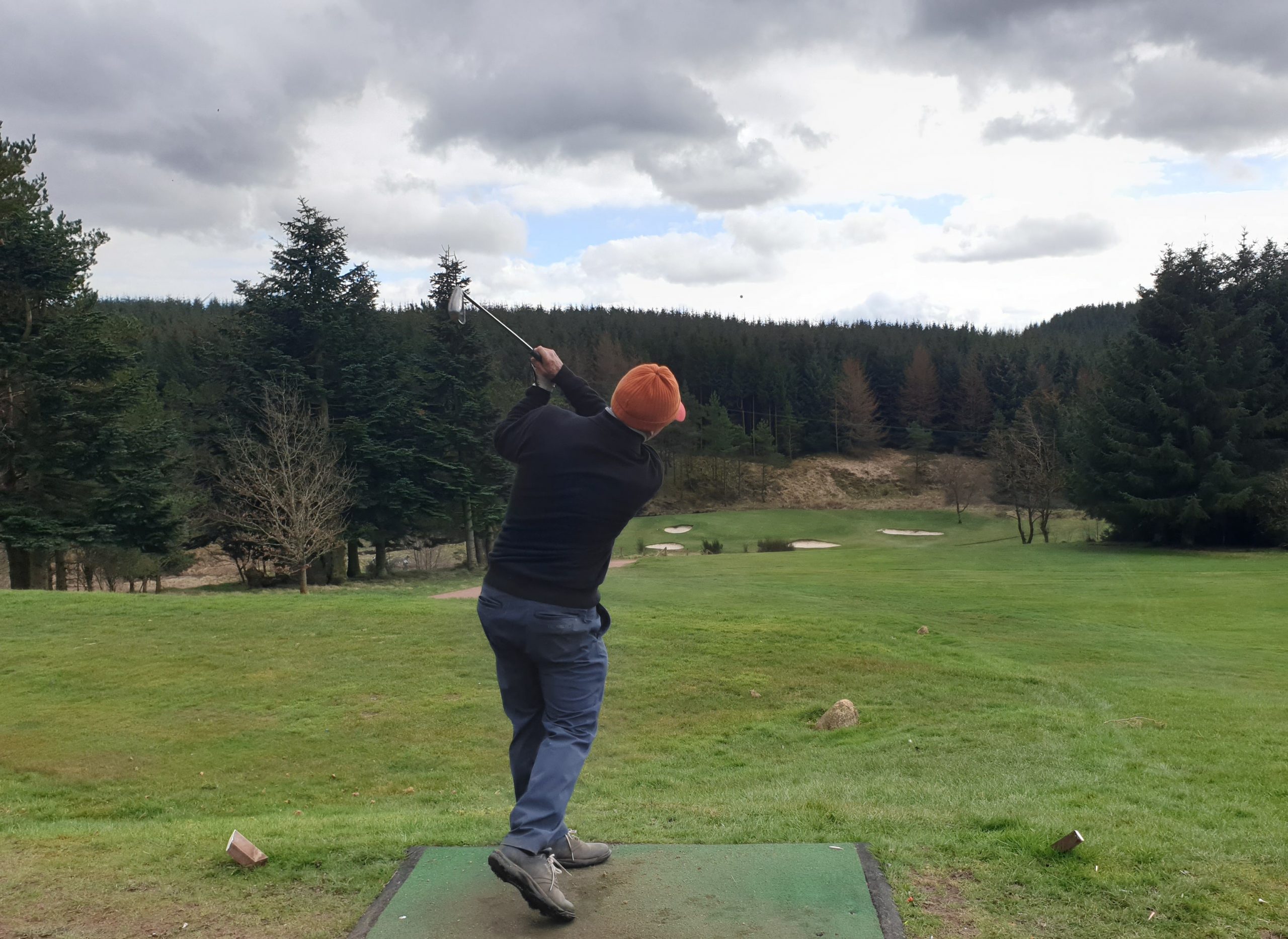
The 6th, at 171 yards, is the shortest of a quartet of great par threes at Greenburn

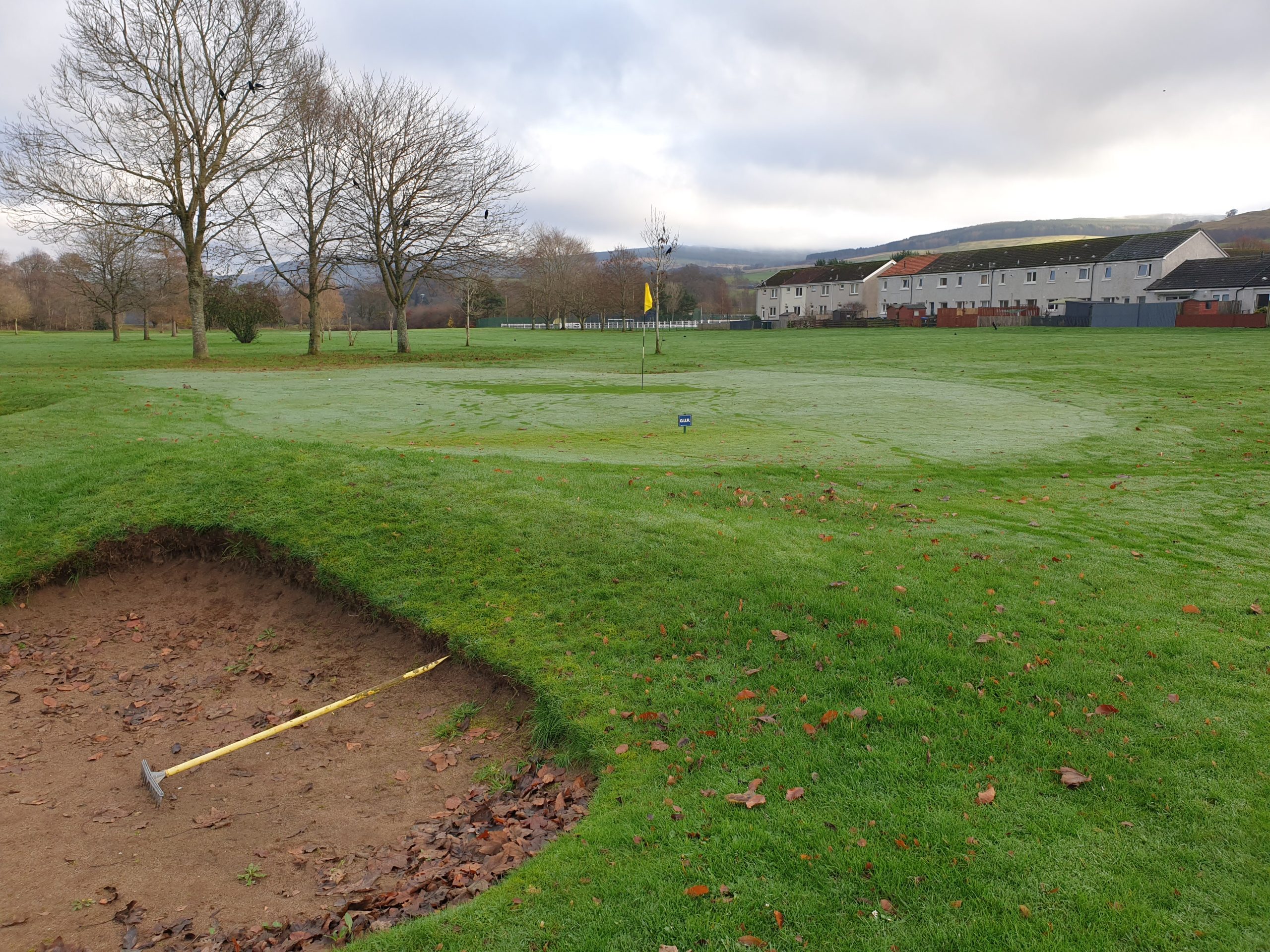
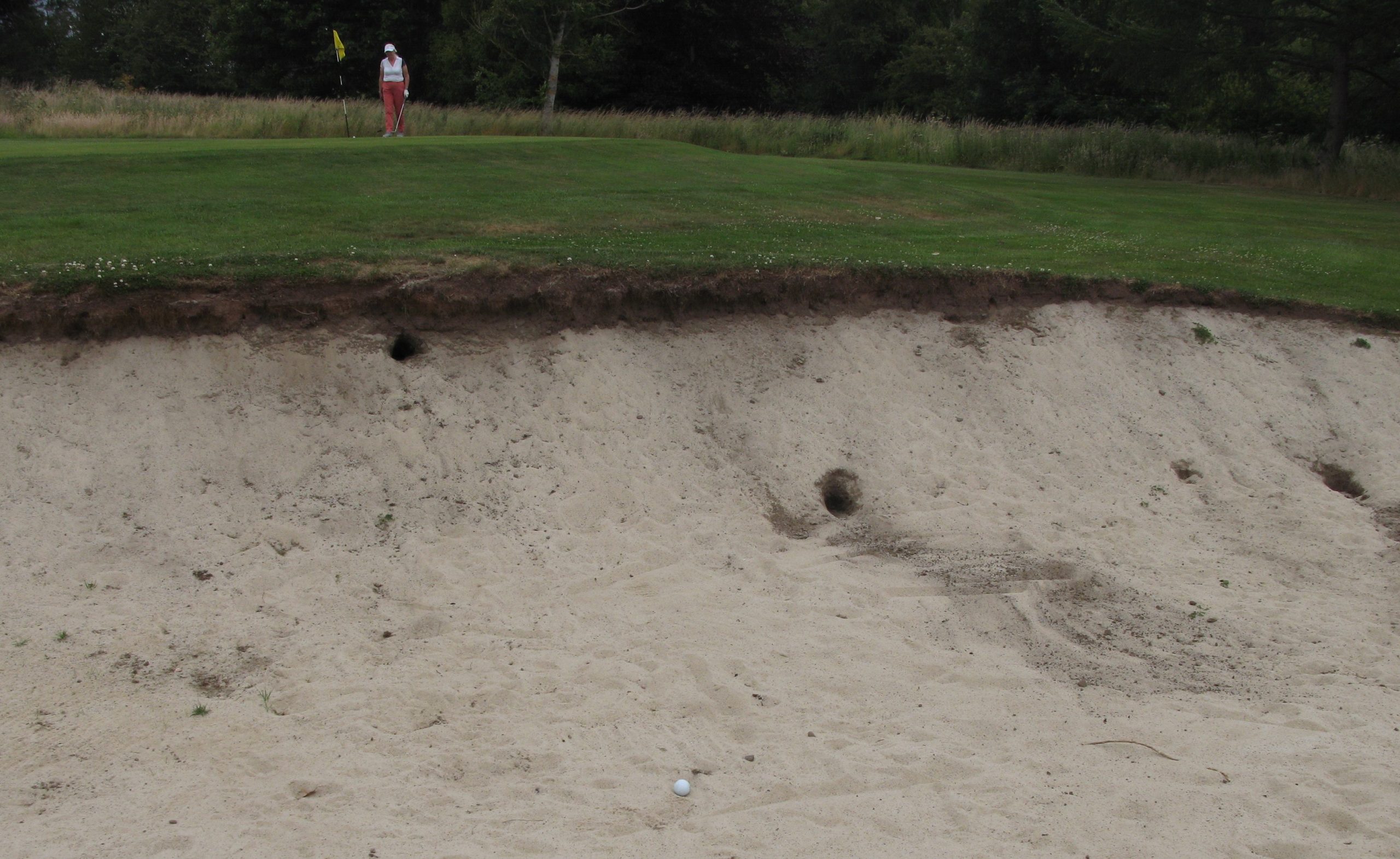
One disappointment was almost every bunker was marked GUR. Well-shaped, properly positioned, but out of play. Hopefully seasonal rather than structural.
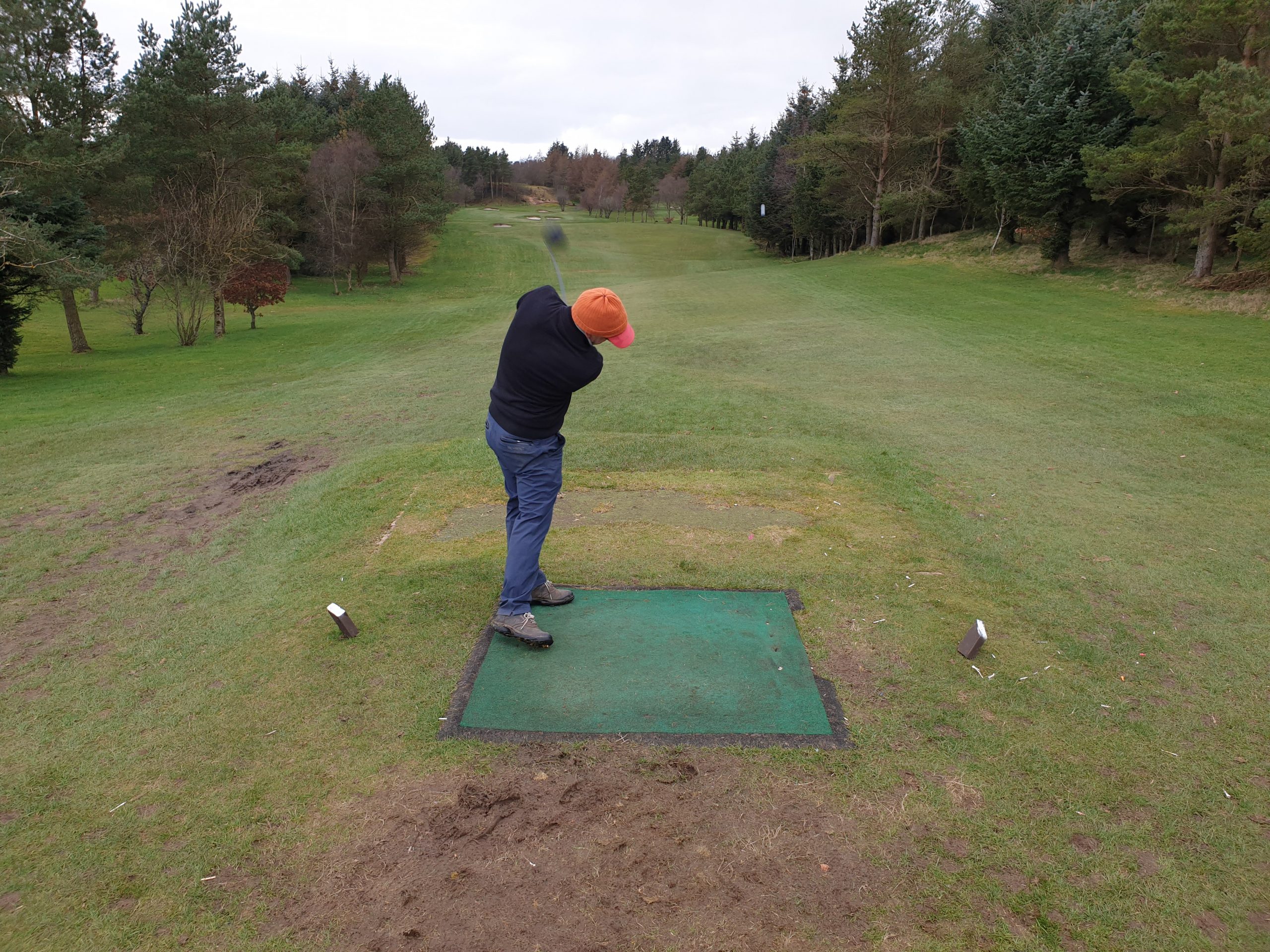
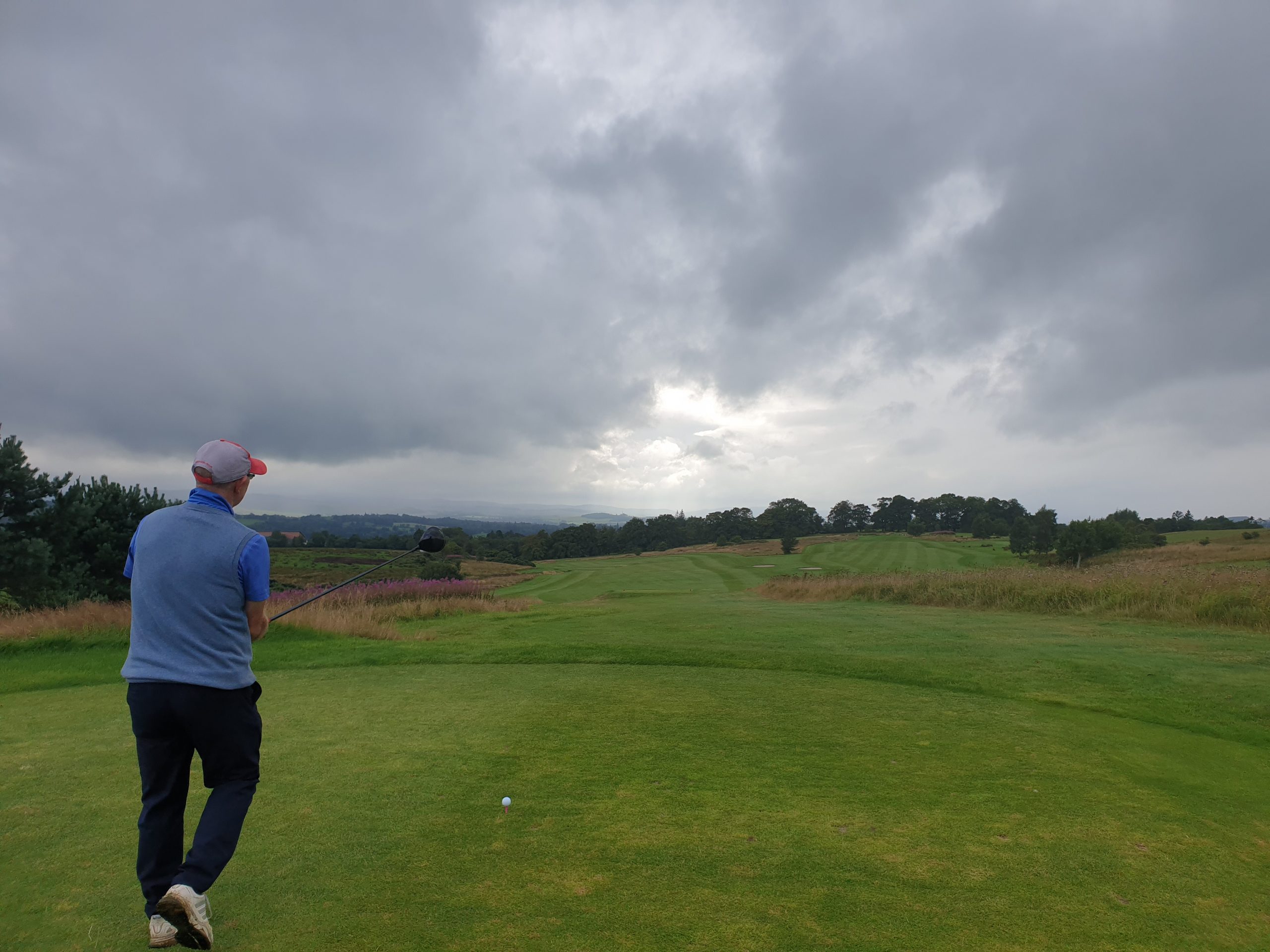
Moly playing his ‘normal’ draw off the winter tee at the 14th, a tough par 4.

Greenburn is a good course, around mid-table in my ranking of Scotland’s courses that I’ve played. It sits in a central belt that offers a car-owning golfer several credible alternatives within thirty minutes. Membership at £738 a year is deliberately affordable — the club keeping itself within reach of its community. The £30 summer visitor is excellent value.
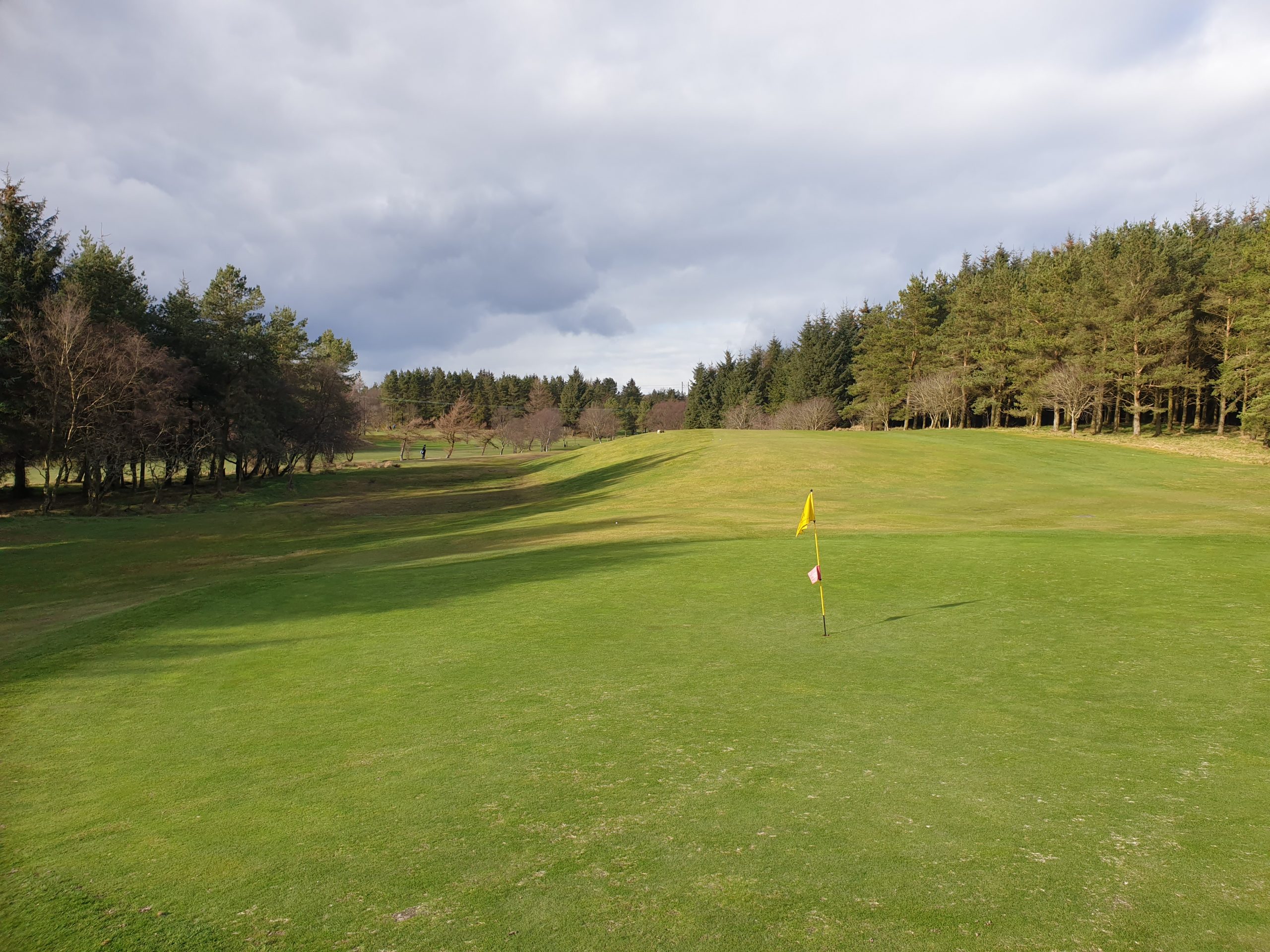
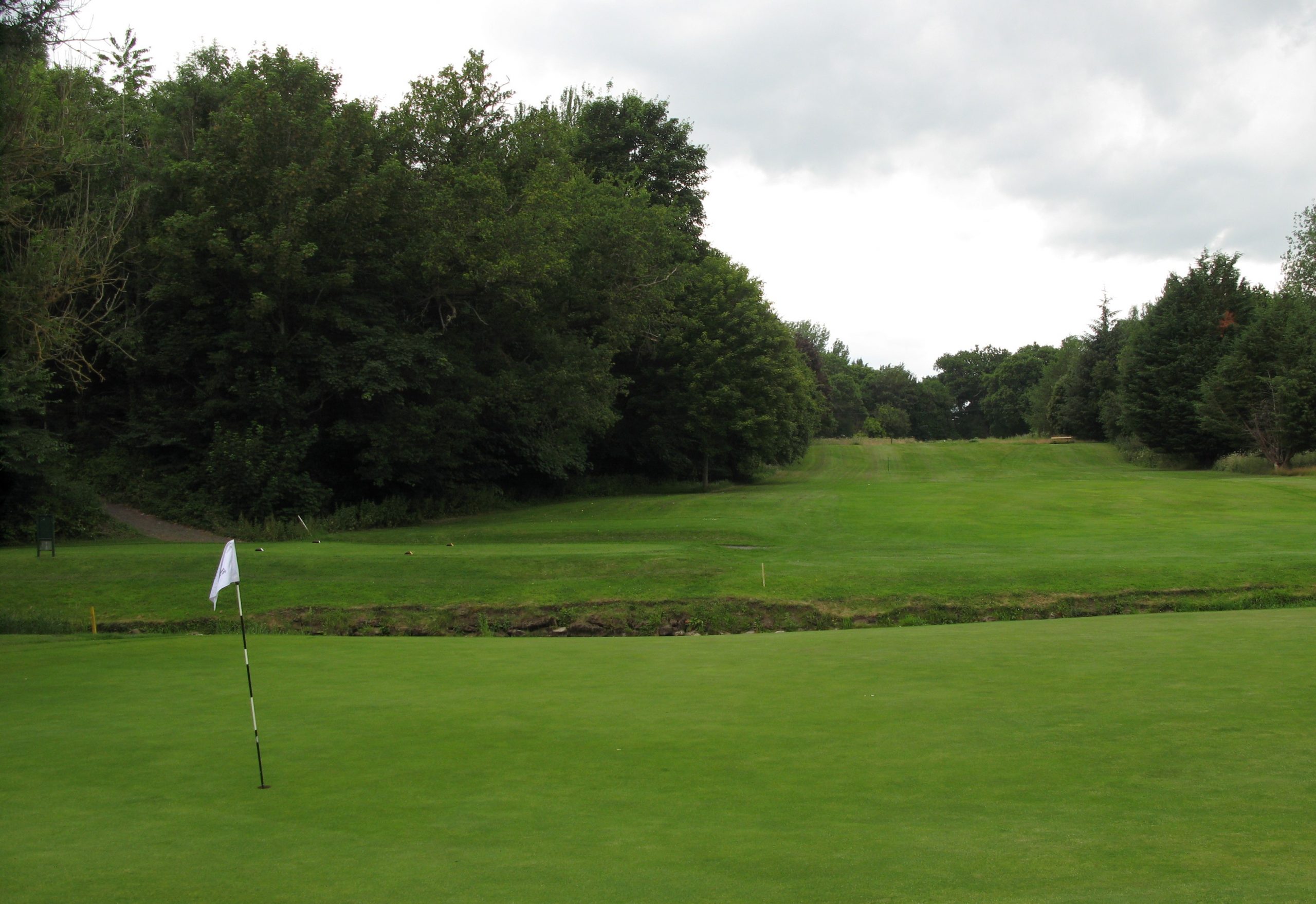
Shades of East Renfrewshire come to mind looking back from the 10th Green

So to the viaduct or course question.

The viaduct was built in an era when Fauldhouse had the population, the industry, and the collective will to anchor infrastructure for generations. The golf club was founded in the same spirit, by the same kind of people, in the same era. Both have lasted. But the economic conditions that created them, dense local population, limited mobility, a working community that played its local course because there was no other, have long since dissolved.
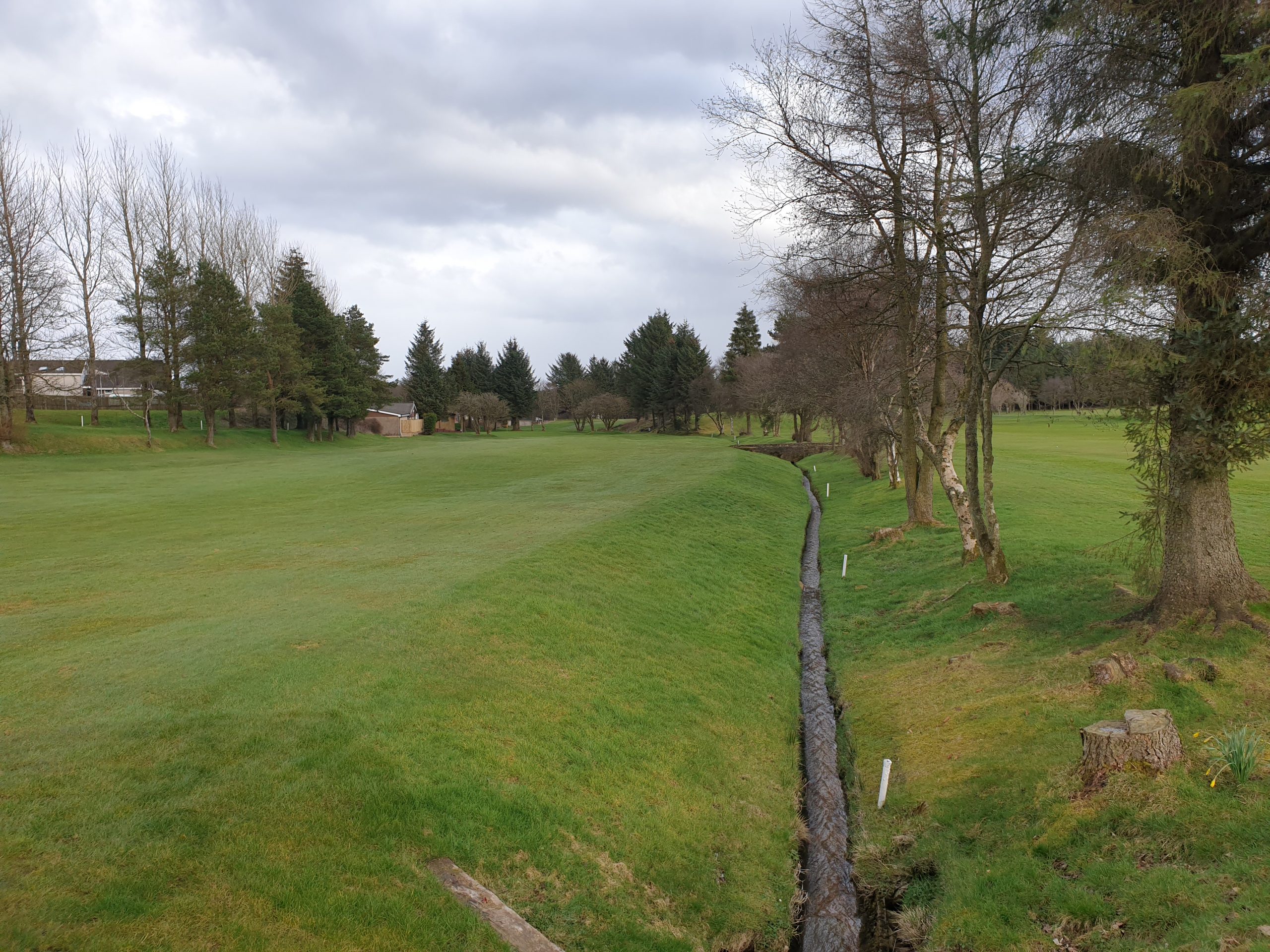
OOB down both sides of the fine 18th hole at Greenburn, likely ruin many a card.

Scotland probably cannot sustain 575 golf courses indefinitely. The adjustment will be slow and uneven, shaped by club type, geography, land ownership and sheer stubbornness. Members’ clubs built by communities like this one don’t close easily – they endure through loyalty, deferred maintenance, and people like Gordon who simply keep turning up. But the structural pressure is real, and it falls unevenly. A course in the middle of the quality distribution, in the middle of the country, with several competitors nearby and no obvious distinguishing draw for the visitor market, faces a particular kind of exposure that a municipal course or a well-capitalised commercial operation simply does not.

The viaduct will almost certainly outlast us all. The golf club? I genuinely hope it does too. But the question in the title isn’t rhetorical.

More on Scotland’s golfing landscape — and what the economics might mean for courses like this one — in a future post.

I scored 89. The course reminded me a little of East Ren (Blog 169).

Facts:

Course Type: Parkland/Moorland
Par: 71 (3 par 5s, 11 par 4s, 4 par 3s)
Distance: 5,659 yards (yellow tees)
Course Rating/Slope: 71/128 (yellow tees)
Moly’s Gross Score: 89
Green Fee: £15 (winter rate)
Value: 4/5
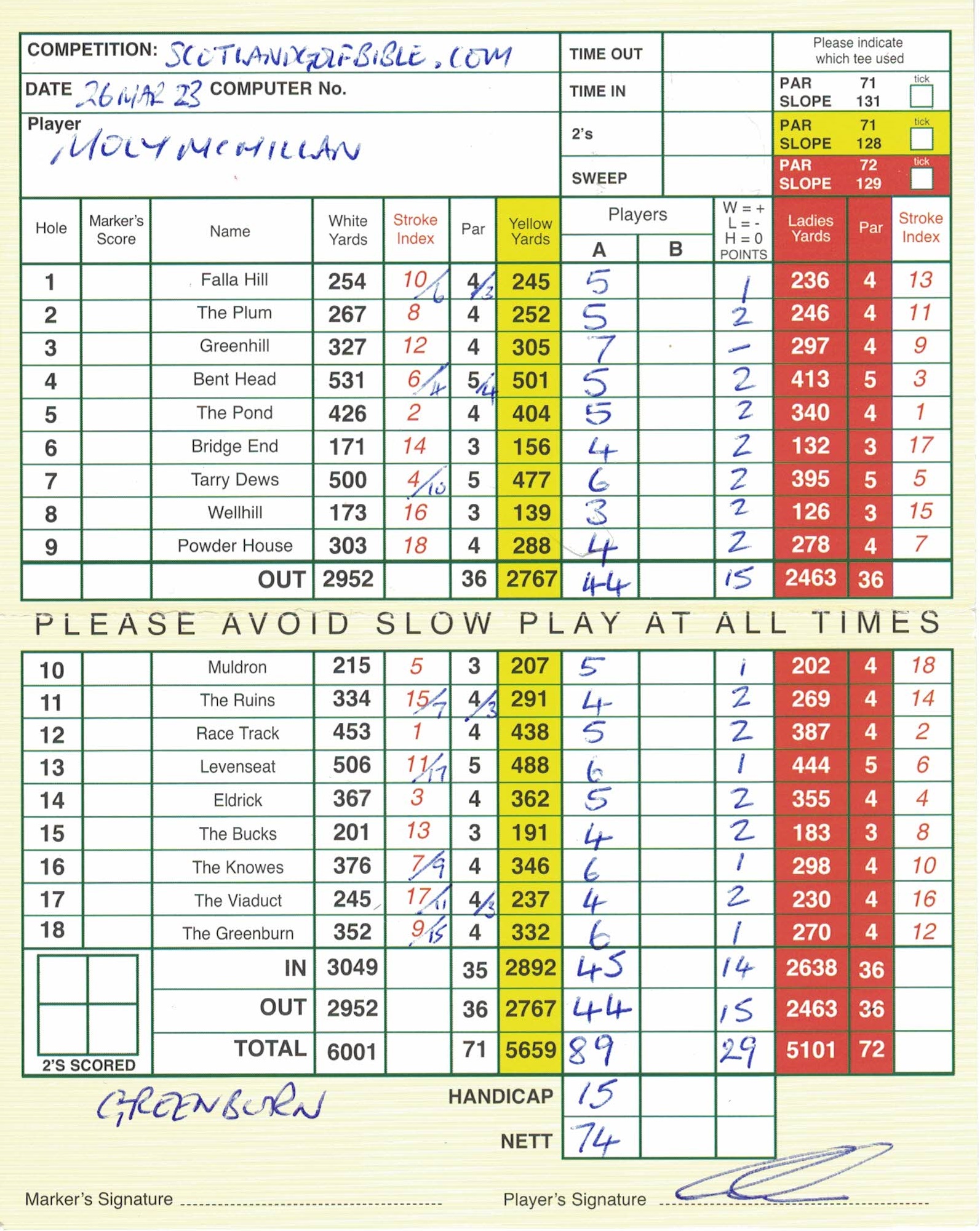
Moly’s 89, was a decent game.

174. Aberfeldy. 30 Nov 2022.

Better Days

Value 1/5

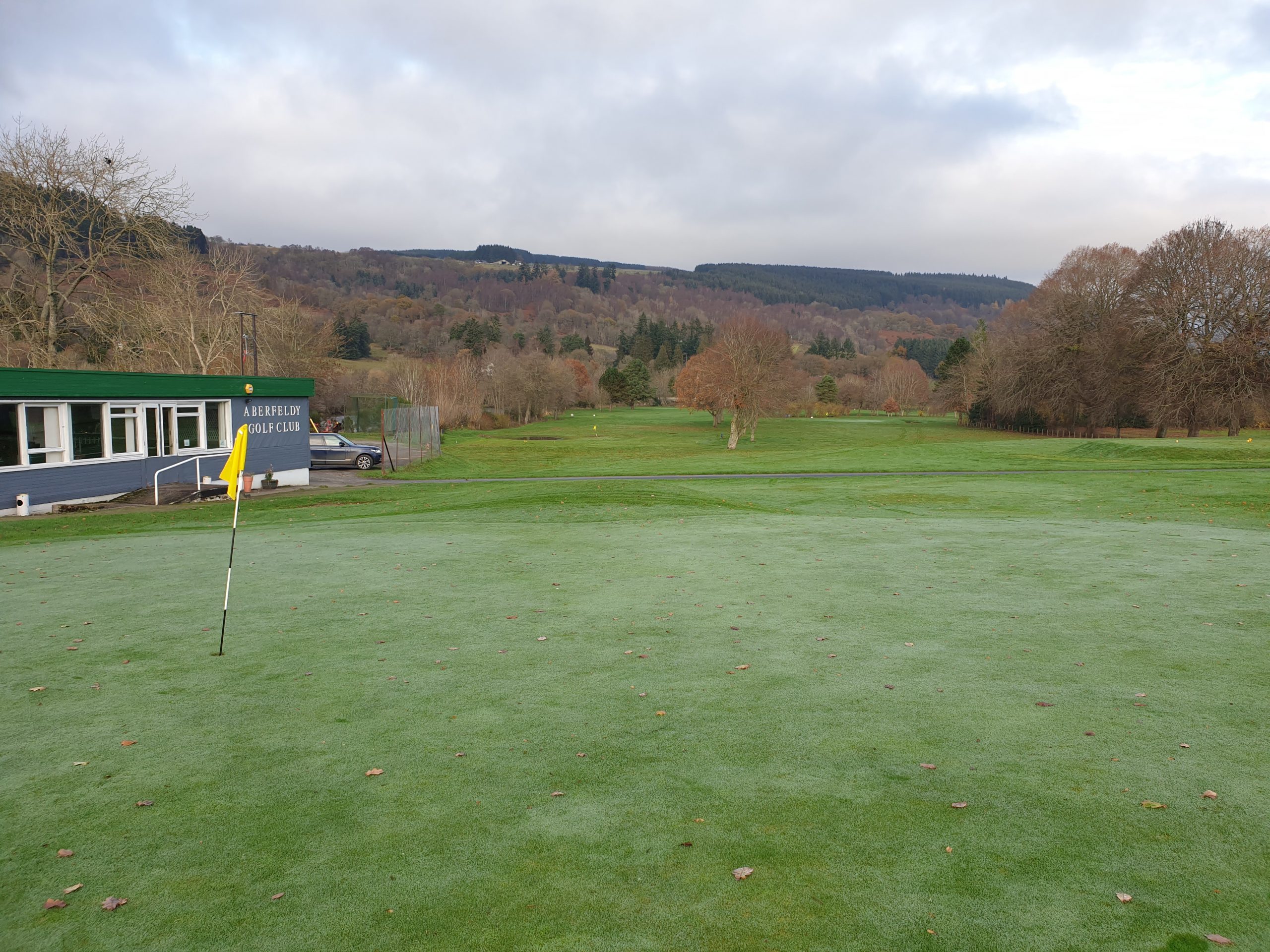
I played the three 9-hole courses of Aberfeldy, Mains of Taymouth and Strathtay on the same wet Highland Perthshire day. This is important context, because whereas Mains of Taymouth and Strathtay were well presented, Aberfeldy was in awful condition.

The 8th green at Aberfeldy, on a day the course should have been closed.

All three courses sit along a 12 mile stretch of the River Tay, between Kenmore and Grantully, and experience the same climate. It’s evident Aberfeldy GC is struggling to maintain the course with its small membership, with volunteering a critical resource.

The length of fairway meant Moly lost 3 balls from shots hit into the “fairway”.

Finding the course in such a bad state, especially from the 2nd hole onwards, leaves me somewhat uncomfortable in writing a review, as I’m sure there will be reasons why the course was effectively unplayable. Nonetheless, I’m committed to writing what I found on the day; all it would have taken by the club was a “course closed” sign on the first tee.

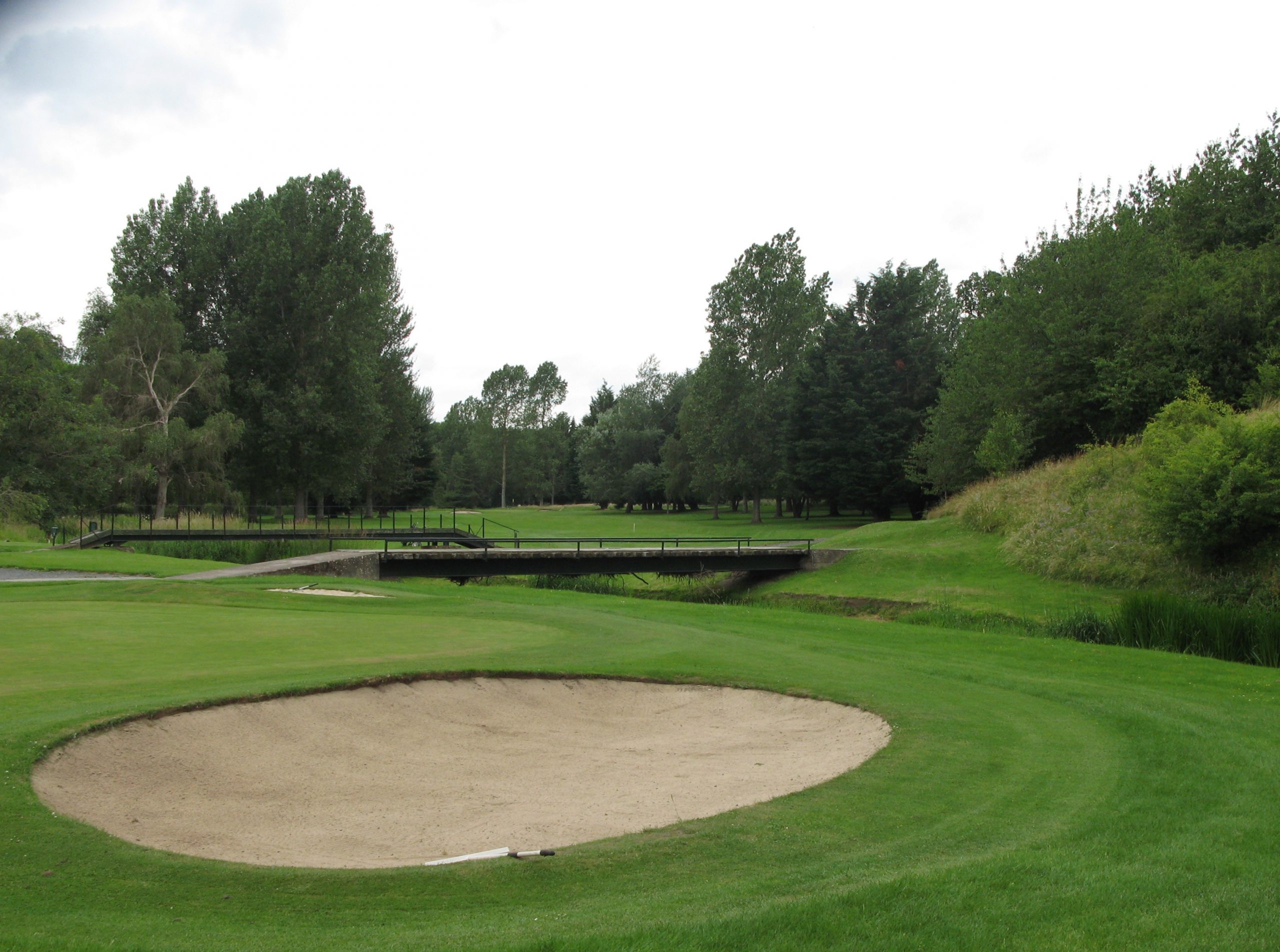
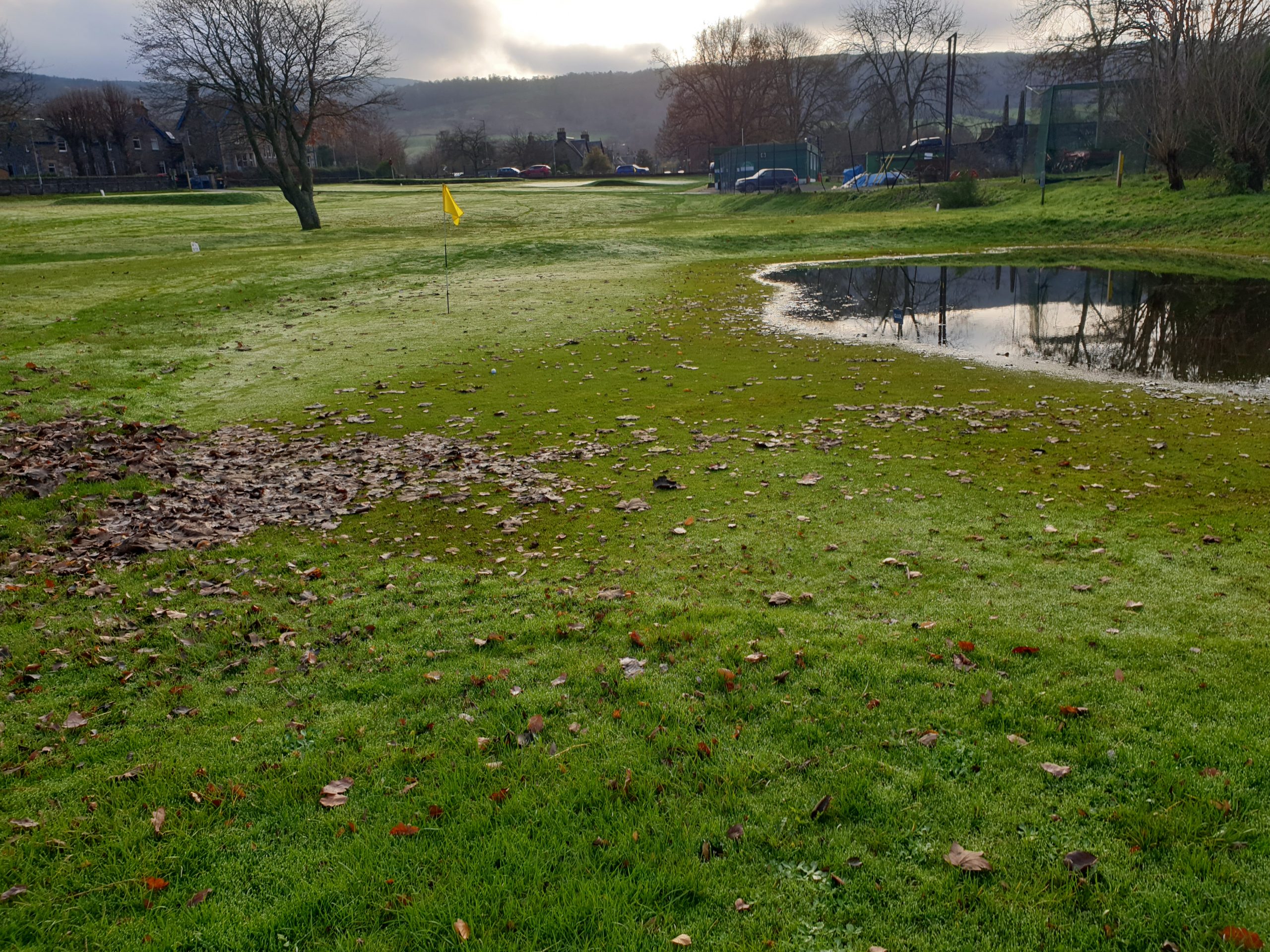
The Moness Burn, which feeds the Tay, is the key feature and hazard, which has to be crossed several times, here shown on the approach shot to the par 4, 7th hole, one of the more difficult holes. Beware the dog walkers, as the burn seemed a well used route.

Golf in Aberfeldy, much like in Scotland overall, is a story of expansion and contraction; the websites Missing Links and Breadalbane Heritage collectively tell Aberfeldy’s story, but there are gaps likely created by the old matter of ‘club’ versus ‘course’. There is also a book, intriguingly “Never an Old Tin Hut”, by local historian Jack Rees, published to mark Aberfeldy’s centenary in 1995.

The 2nd green was GUR. It wasn’t the worst!

In summary, Breadalbane GC and course, was founded in 1895 at its current location and would later be renamed Aberfeldy GC. But there are records of 2 other courses as early as 1891, in nearby Weem and in a place called Welar, the latter course can still be made out on Google Maps just north-east of Camernay. The current very flat course was characterised by sharing its ground with cows for many years.

The course expanded to 18 holes in 1995 including 6 holes north of the river, but was returned to 9 holes in 2016, due to the drop off in demand.

The “advanced composite footbridge” over the Tay, shown here from the 5th hole, made accessible 6 holes on the north of the river between 1995 and 2016.

The pictures tell their own story about the course condition. With much better courses nearby, one can’t see the long term survival of Aberfeldy GC. The local interest in golf can also be gauged in the lack of business sponsorship, even although Aberfeldy is base to one of the great whiskey distillers, Dewars. Plus, Breadalbane Academy, Highland Perthshire’s main school, is only 500 yards away, yet sadly has no mention of golf within its sporting curriculum.

The 9th green, adjacent the main road and clubhouse, was the most manicured.

This was a sad day for me, but I’m sure many people have fond memories of Summer golf in Aberfeldy. I thought the course condition when I played might be reminiscent of the course in the late 1890 – ever an optimist.

Round List Price £15. Actual Paid £10 (Winter rate).

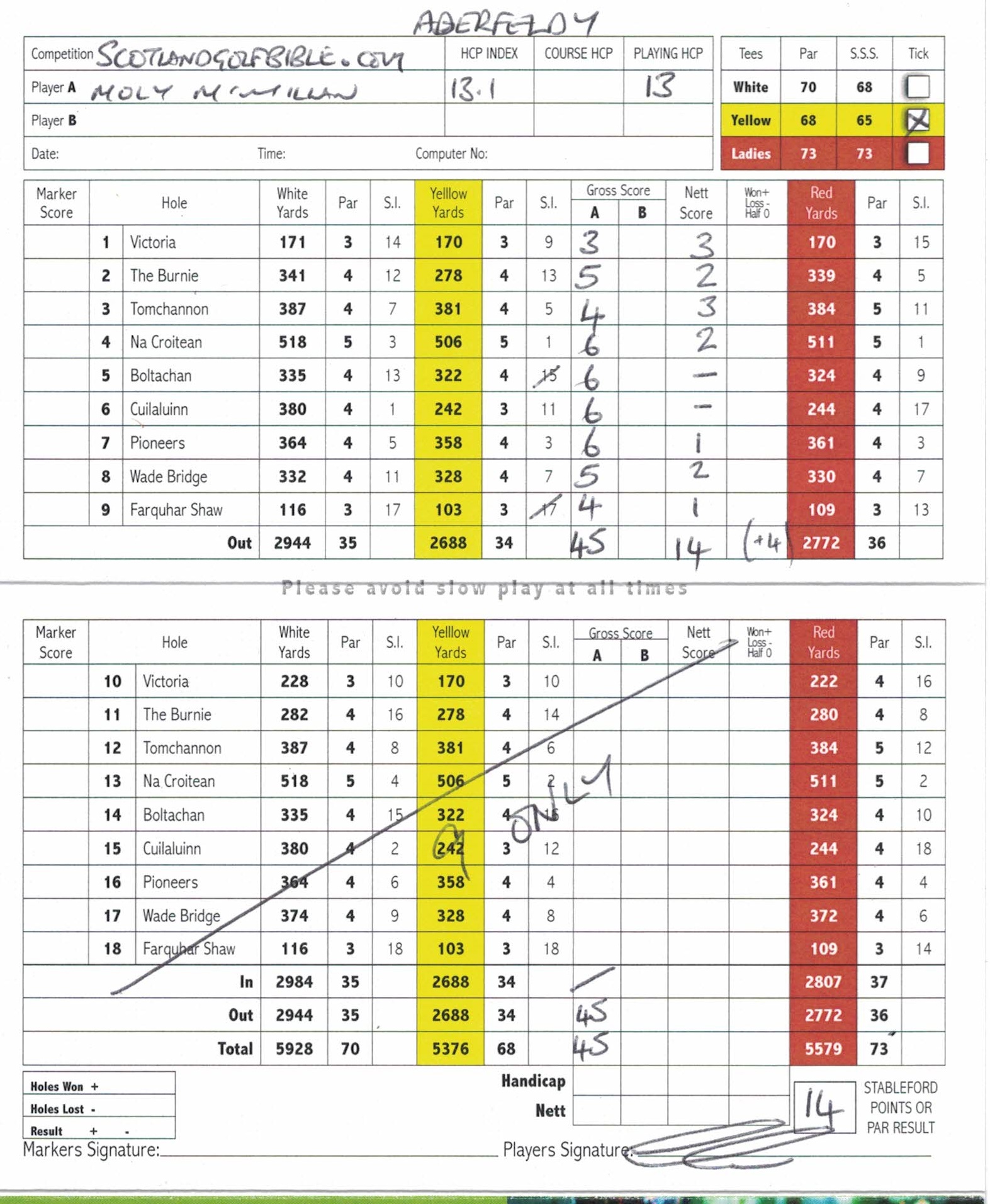
Moly’s Score – 45 for 14 points (off 13)

Course/Slope Rating (yellow) nk/~65

Course Type: Parkland

Par 35  ( 1 par 5s, 5 par 4s, 3 par 3s)

Distance (yellow): 2688 yards

Moly’s score of 45 included losing 3 balls on fairways doubling as rough!

157. Balfron Shian. 18 Aug 22.

Quintessentially Scottish

Round £25. Par 72. Course Rating / Slope Rating (yellow) 68.5/124. Value (out of 5) – 5

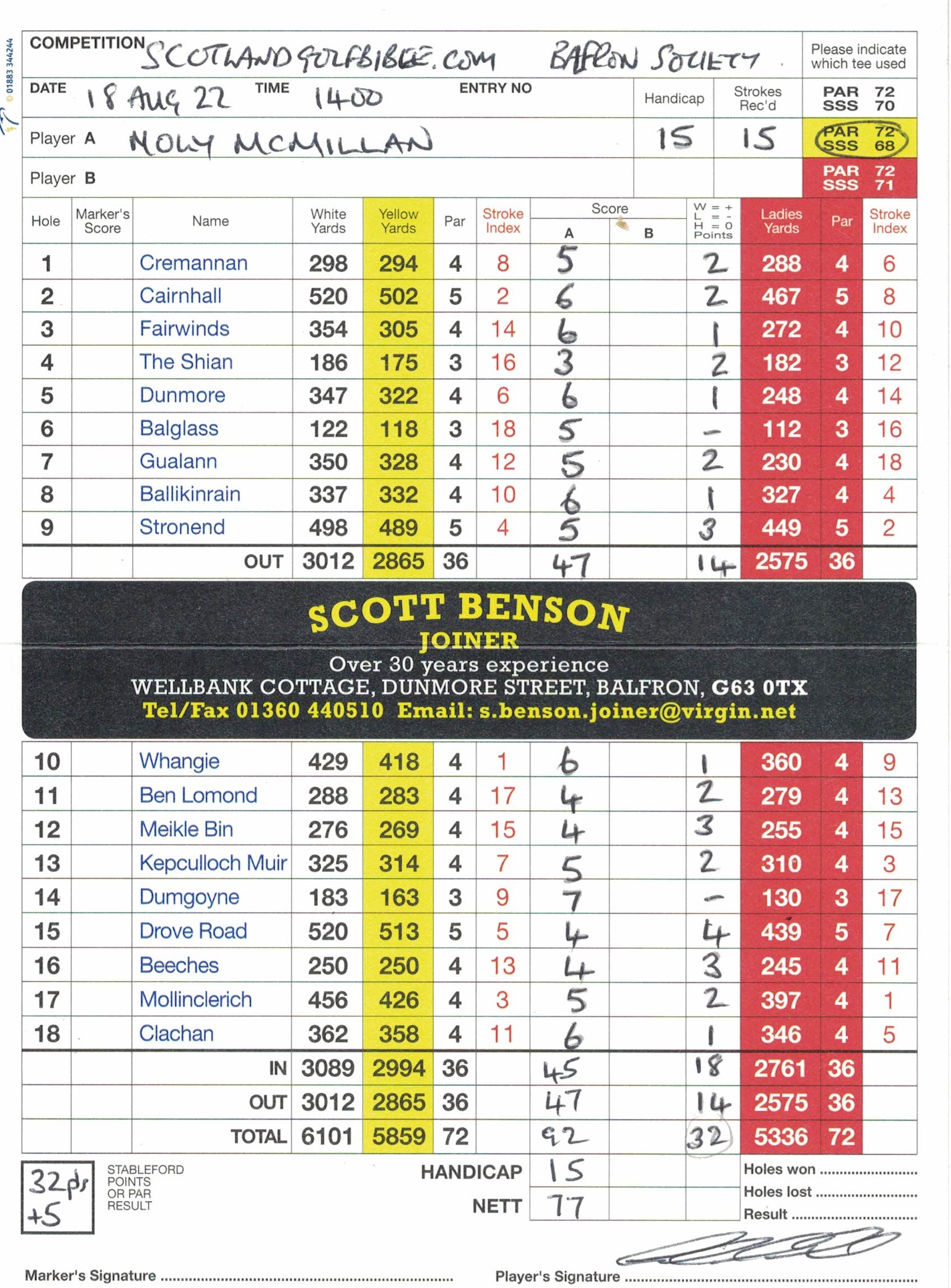
Moly’s Score – 92

Balfron is a substantial village of over 2000 people in West Stirlingshire, only 16 miles north of Glasgow. Surrounded by the Campsie Hills and the Trossachs, I can’t sum up the golf course better than the clubs own promotional video;

Scenic, secluded, special“.

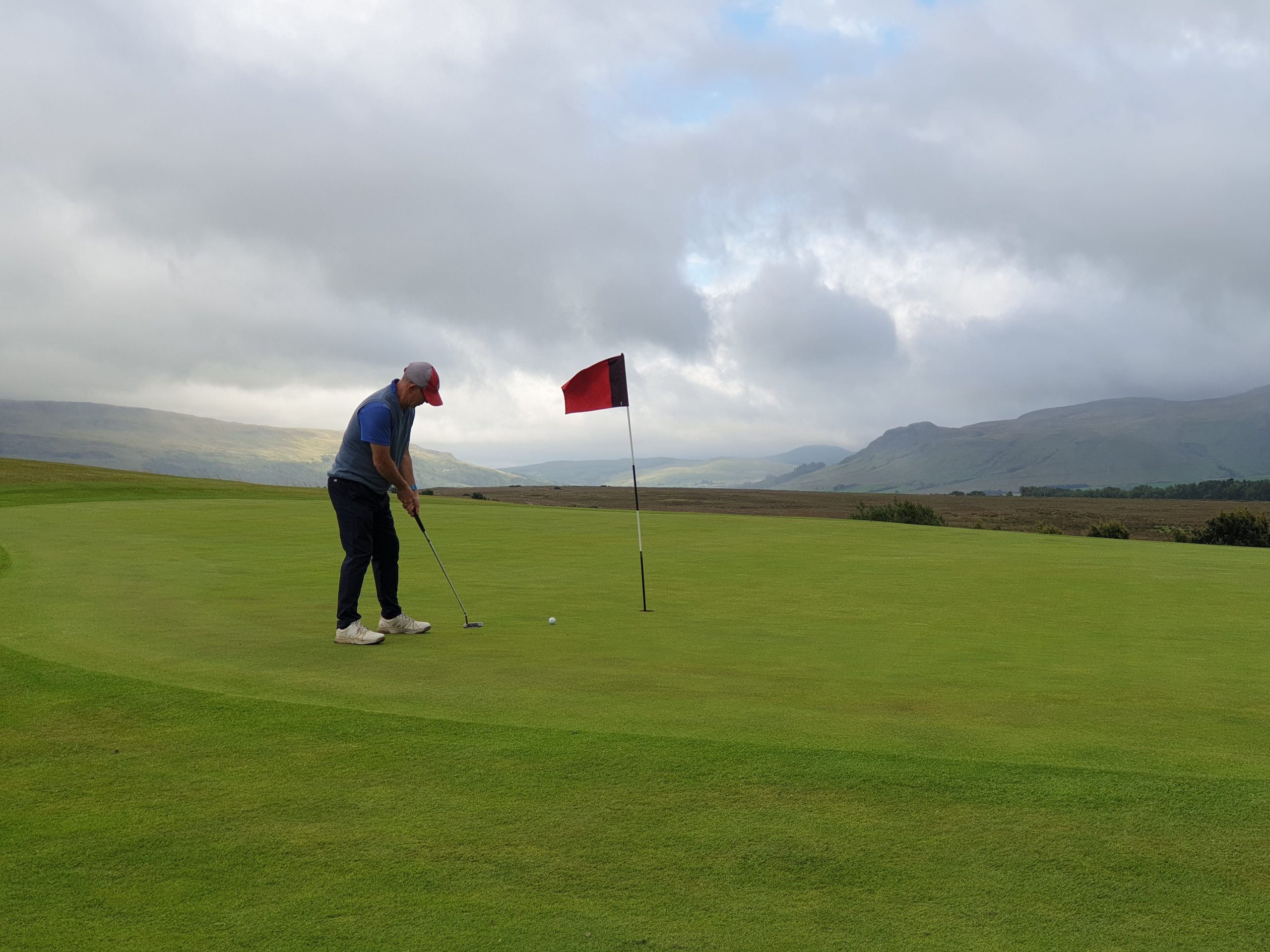
Typical August day in Scotland? Moly putts out on the 12th one of the easier par four holes at Balfron’s Shian course.

The first Balfron golf course was established in 1905, but returned to agricultural use in 1939 to support the war effort. In 1991 a group of villagers founded the Balfron Golfing Society and a 9 hole course was finally established in 1994, no doubt after a great deal of hard work. The course was extended to 18 holes in 2001. The Balfron Society named the course “Shian”, which in Gaelic means peaceful.

Moly gets ready to tackle the par five 15th, his only birdie of the day.

The herculean efforts of the society has resulted in a really fine golf course, which feels more mature than it is. With outstanding views, lush moorland and the “honesty box” wooden clubhouse this is quintessential Highland Scottish golf.

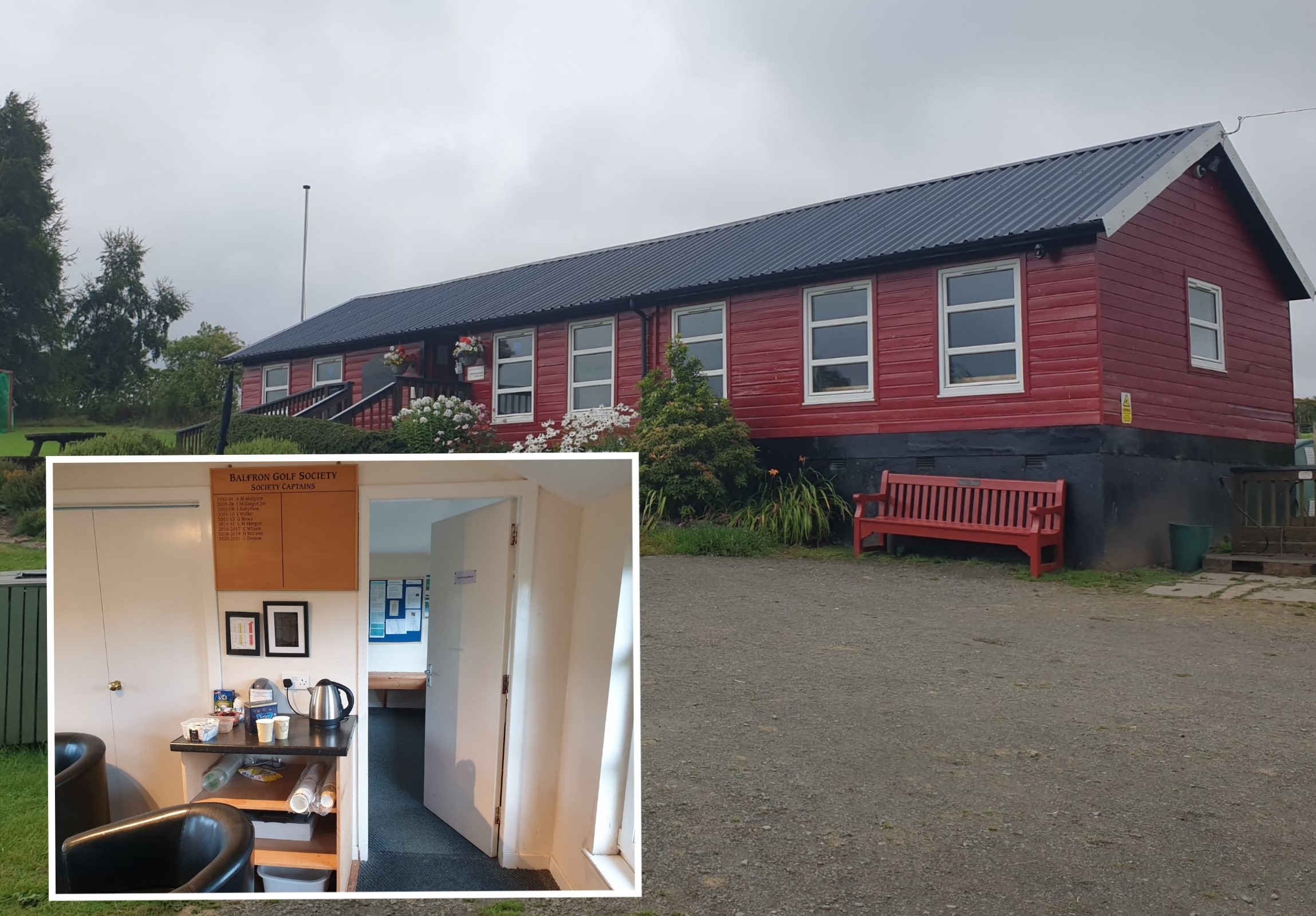
The quaint clubhouse where Fran and Moly enjoyed an ‘honesty’ cuppa and chocolate bar.

When Fran and I played on a cloudy day in mid August, there was only one other two ball game on the course. It was certainly ‘secluded’ and we, in turn, felt ‘special’, playing that beautiful game of ‘millionaires’ golf that occasionally comes your way.

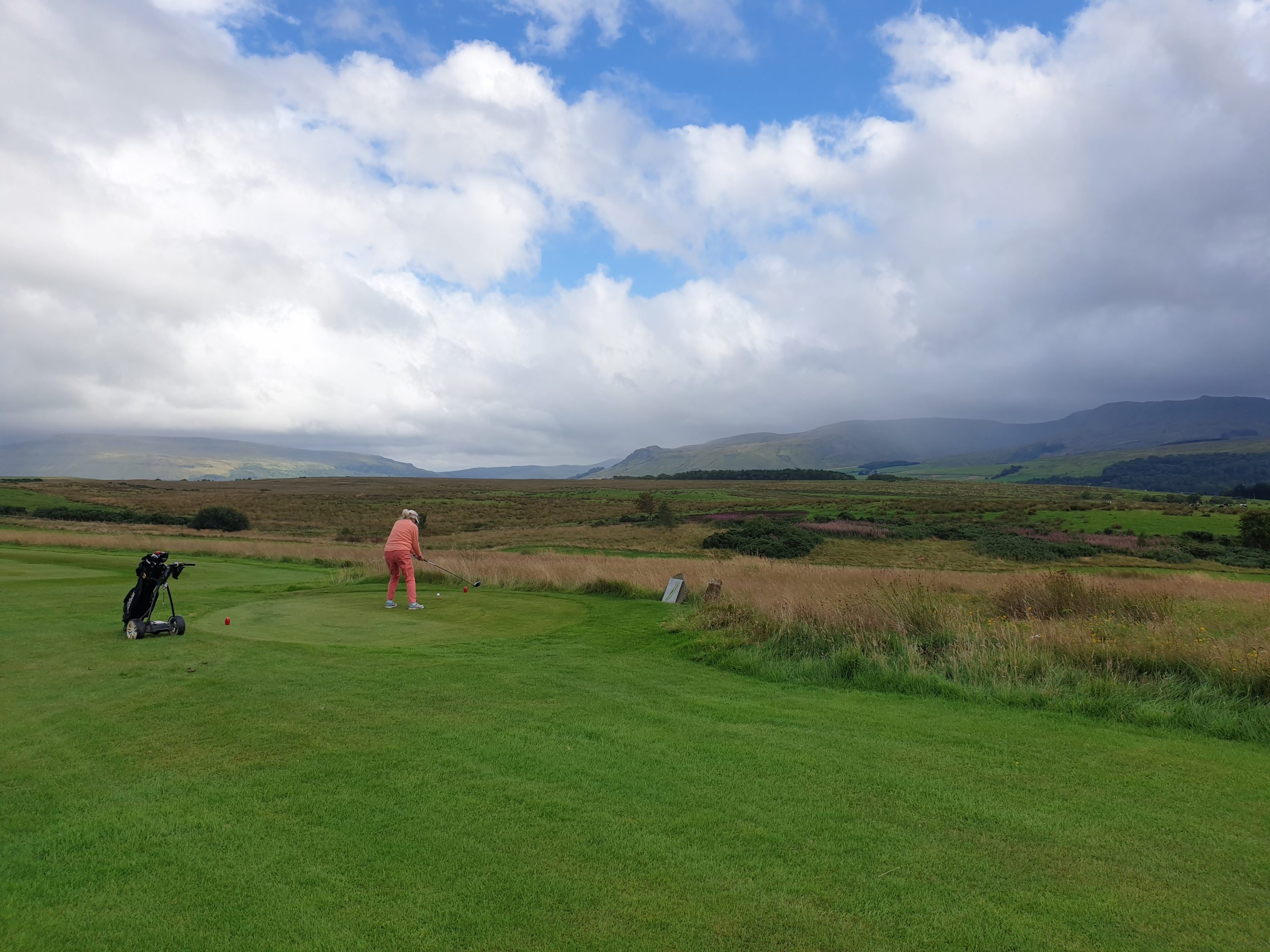
Fran tees at the 9th, amidst the scenic ‘blooming heather’ West Stirlingshire surroundings.

It’s certainly worth going out of your way to play The Shian course. At only £25, it is excellent value, since the course in no way feels a “self help’ set up. The greenkeeper Kevin Wilkie and his small team are doing a great job, with teeing grounds and greens both first class. There is excellent use of the natural surroundings and good use of the burn that runs through the 15th and 17th holes, these two holes being the stand out architecture, reminiscent of the great architectures of Braid or Alastair McKenzie.

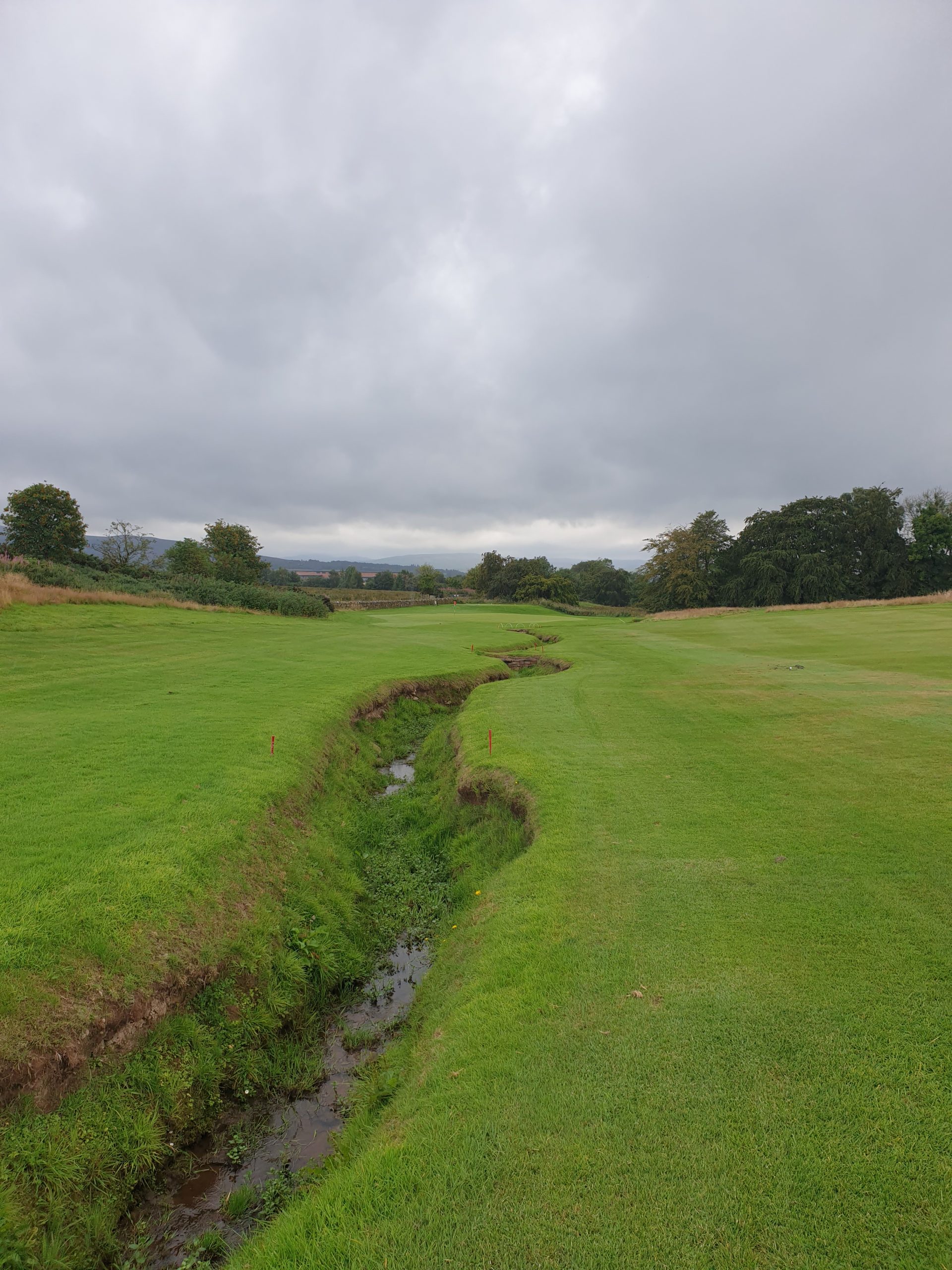
The burn running towards the 15th green, the par 5 of 513 yards.

The course designer has done well to seamlessly join the original nine and the newer holes. Plus, the greens are worthy of note, being both undulating and at times bemusing. Thankfully, it’s also an open driving course, with almost no fairway bunkers, therefore the slope rating of 124 reinforces the trickiness of the remaining features.

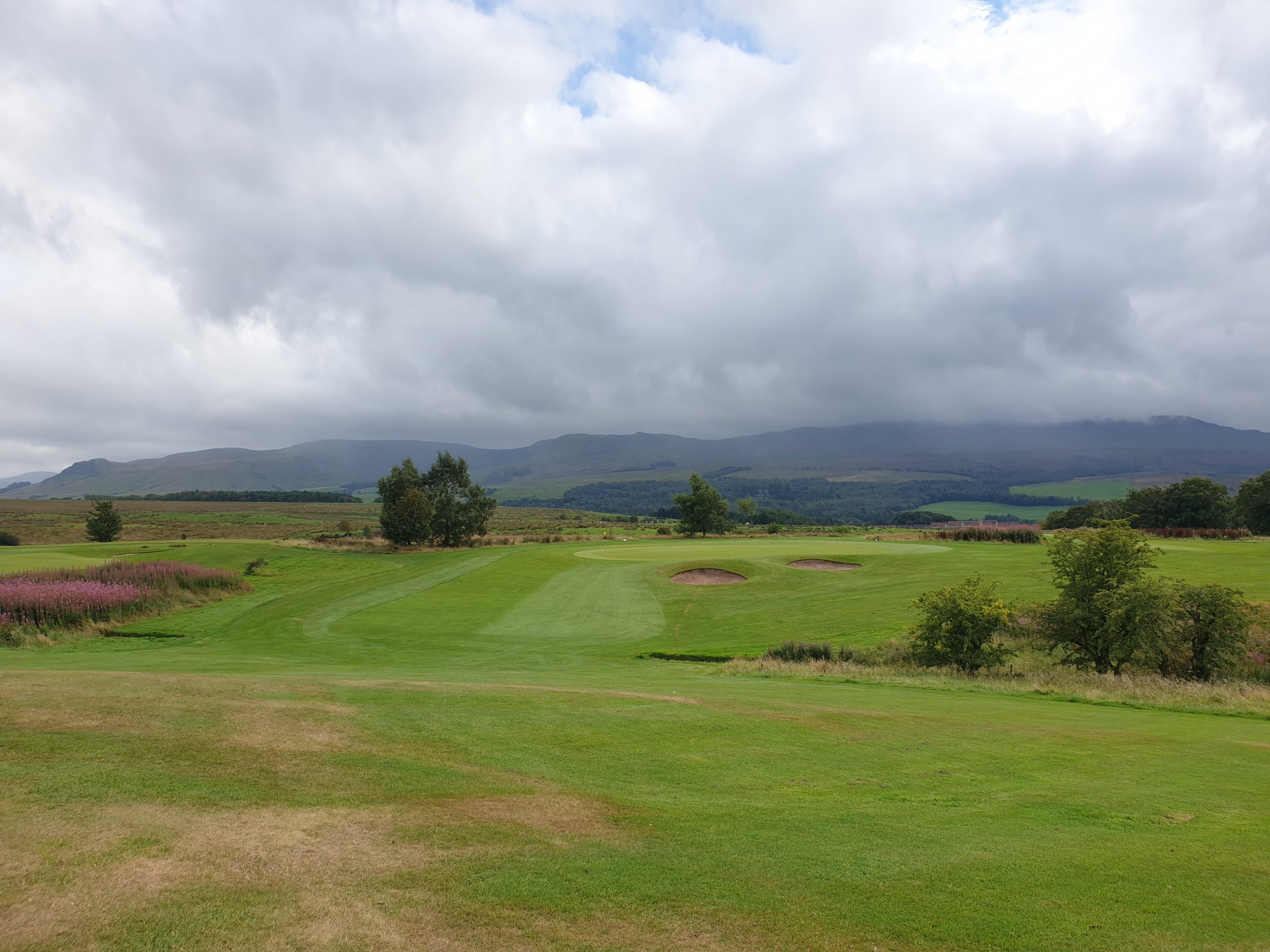
A typical aesthetically pleasing hole at Balfron Golf Society’s Shian course. The approach to the par four 8th hole.

All in all, this is great fun golf. To top it off, do plan to have an ‘honesty” tea and snack in the delightful clubhouse. This is the sort of course that visiting tourists playing the established courses should take time to discover.

The long par 4, 17th hole, a challenging hole. Don’t you just hate when you reach a long par 4 in two to then 3 putt for a bogie.

With only around 300 or so members paying under £400, its critical for visitor income to ensure courses like The Shian survive.

On the day, I played solidly for a 92 and 32 stableford points.

Facts:

Course Type: Heathland

Par 72  (3 par 5s, 12 par 4s, 3 par 3s)

Distance (yellow): 5859 yards

Moly’s Gross score: 92

Moly’s 92, a decent round on this delightful course

155. Hirsel. 12 July 22.

Missed opportunity as the “First and Last” in Scotland.

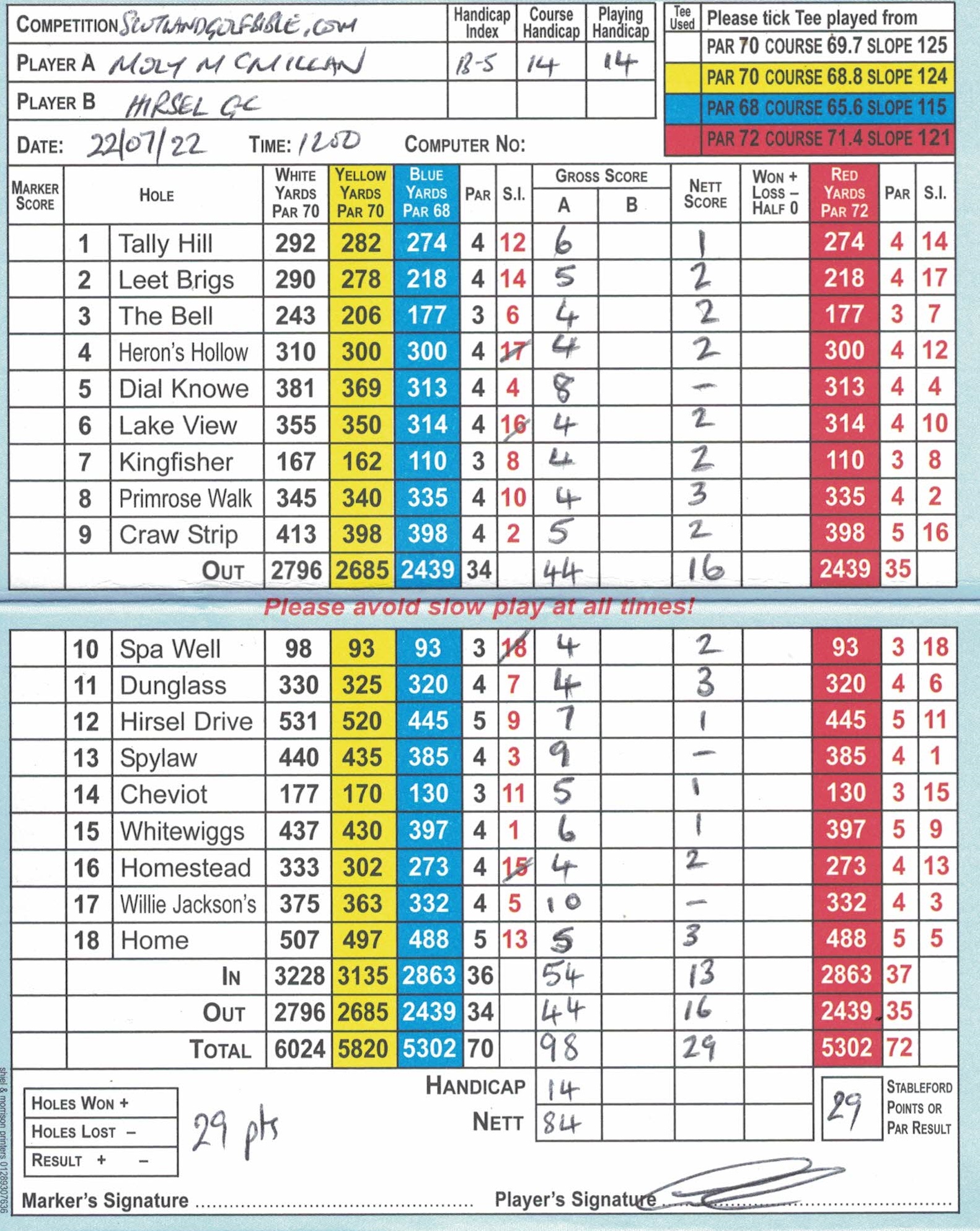
Round £32. Par 70. Course Rating / Slope Rating (yellow) 68.8/124. Value (out of 5) – 3

Moly’s Score – 98

How many fuel stations or pubs on borders proclaim “First and Last”? Like many people, I suspect, I had no idea exactly where Hirsel Golf Club was. Conversely, ask Scots where Coldstream is and most would know the border town famed for the Coldstream Guards, the regiment formed in 1650 making it the oldest continuous serving unit of the British Army.

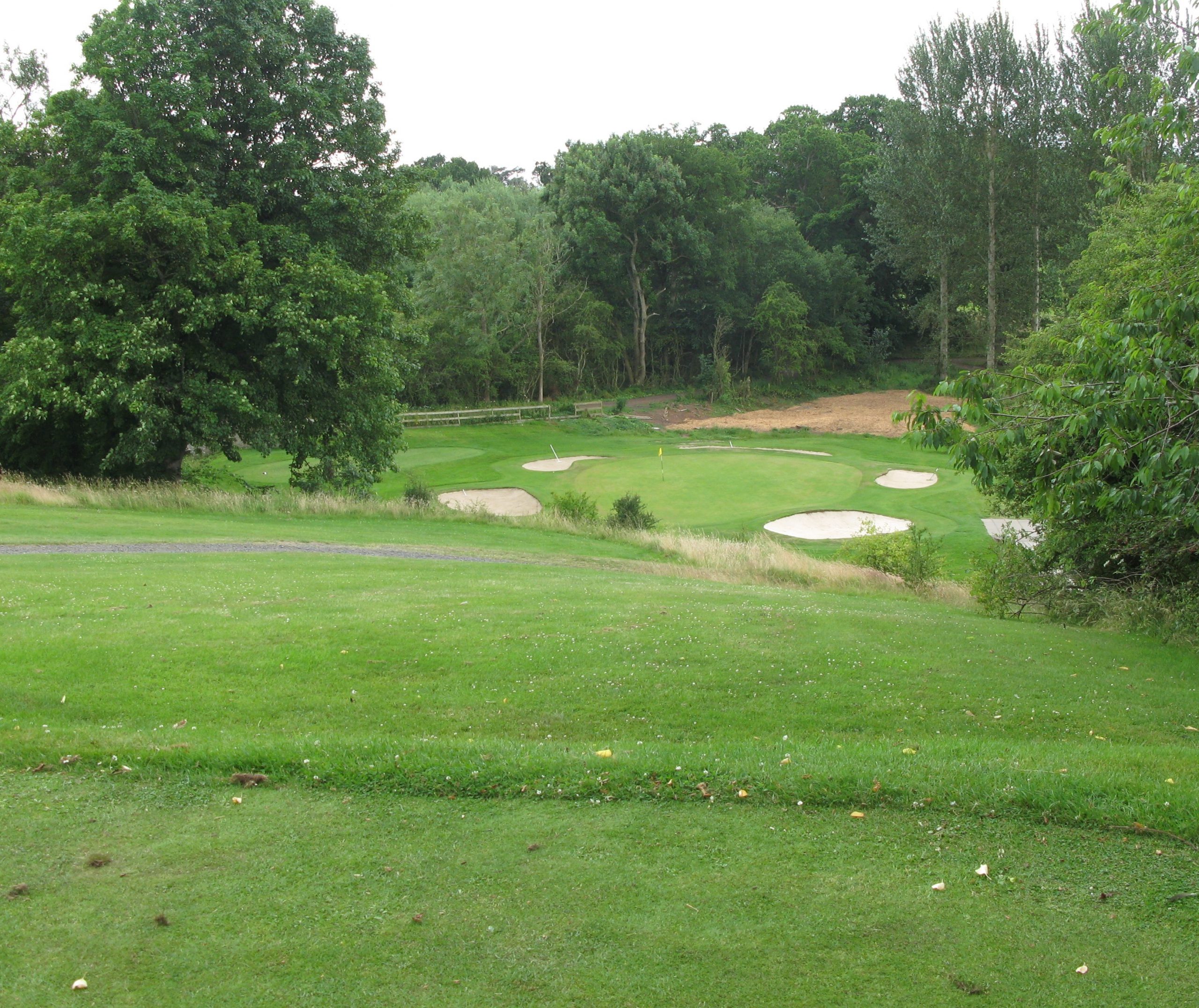
The picturesque 10th hole at only 93 yards.

Hirsel Golf club, sits on the Hirsel Estate in Coldstream, the home of the son of the former Prime Minister, Sir Alec Douglas-Home. A 9 hole course was designed and built by members in 1948, after the original course in Coldstream, called Lennel Golf Club, founded 1879, fell into some disrepair, a story covered in the website Forgotten Links.

The interweaving layout is evident, with the first green on show here from the 2nd tee.

Hirsel GC remained a 9 hole course until extended to 18 in 1996. The resulting layout is a rather jumbled affair, with a number of tee/green cross overs, which must make Open events a potentially hazardous affair. There is also a significant range of hole design quality, which comes I suspect from the extension. I find the club’s website banner headline “Arguably one of Scotland’s best kept secrets” true in the sense that it’s “unknown”, but the inference of it being a “Hidden Gem” is not what I found.

The very disappointing bunkers on show, despite the rakes fully in use, here at the difficult 5th hole, a 369 yard par four.

Despite the main Covid-19 pandemic lockdowns being over, I found a course in poor condition, with some bunkers appearing to imitate 19th century photos featuring Old Tom Morris himself. Nevertheless, with perhaps half dozen really good holes, I can see why it is a popular society day out, especially with the substantial club house overlooking the final green.

The tough par three 7th, with “Leet Water” in play for one of the few times.

It does indeed have some tricky holes, notably the tough uphill par 3 third, played with a blind tee shot at well over 200 yards; it will play as a par four for most. The fairways are generous but miss them and card wrecking is the order of the day, as there are OOB on more than half the holes. As a testimony, I amassed 15 over par on only 3 holes, including a 10 on the 363 yard par four 17th.

The stroke index 2, ninth hole, a long par four, the longest hole on the front nine, with both par fives coming after the turn.

Despite several holes being routed around “Leet Water”, a tributary of the Tweed, the river doesn’t come into play much. The best aspect of the course was the variety in hole lengths, the use of dog legs (on 5 holes) and the use of quite small greens often sloping front to back. Collectively the slope rating of 124 felt spot on for me.

The par 5 18th hole, played downhill it gives a good birdie chance to finish.

At only £32 for a round, with discounts on offer though Golfnow (we paid only £22) it’s okay value, but with a bit of work, especially to the bunkers, it would be really worth playing at that price point.

As to the course name, here’s a suggestion. “Coldstream Golf Club – The First and Last in Scotland”. That would remove the secrecy.

Facts:

Course Type: Parkland

Par 70  (2 par 5s, 12 par 4s, 4 par 3s)

Distance (yellow): 5820 yards

Moly’s Gross score: 98

Moly’s 29 points despite his 98 including 15 over collectively on holes 5, 13 and 17. Golf!

© 2026 Scotland Golf Bible

Theme by Anders NorenUp ↑