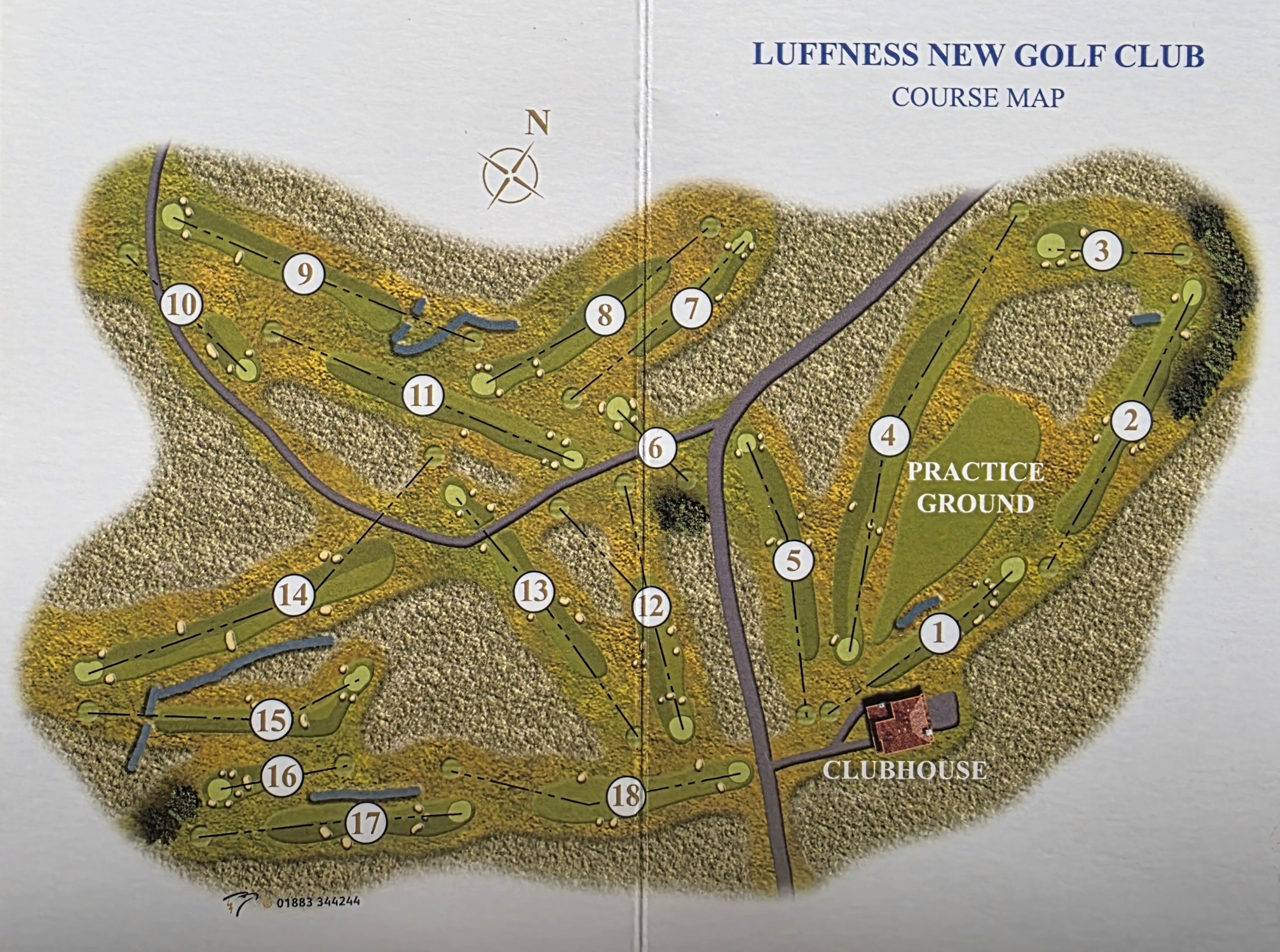
Shifting sands: the old club plays a new course, and the “New” club keeps the old one’s heirlooms.
Price Paid: Nil, as guests of member David Macaulay
Current Price (2026): £210 a round summer (March–October); £110 winter (November–February); not on GolfNow
Value Rating: Price paid n/a / GolfNow n/a / Current list: summer 3.5/5, winter 4/5
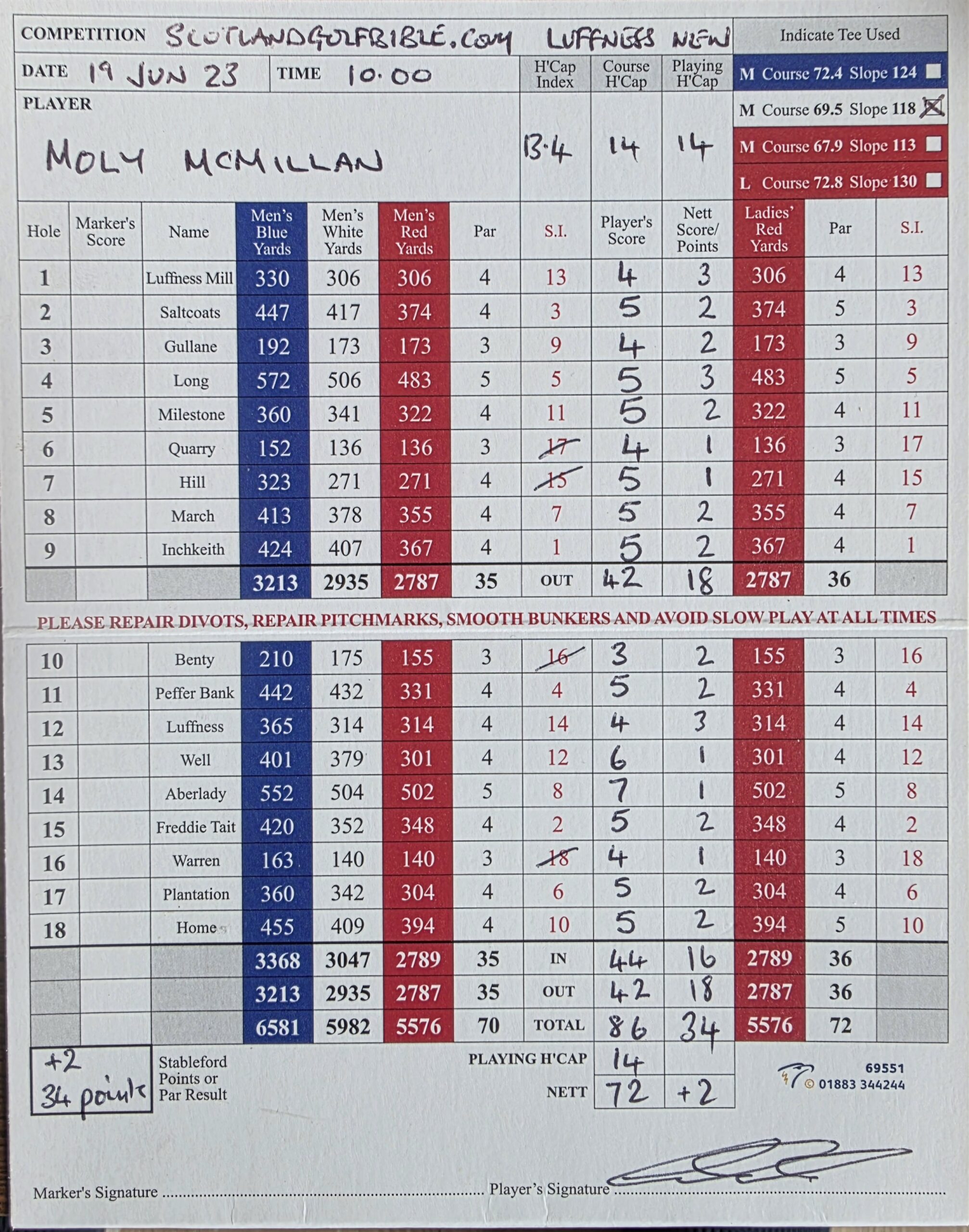
Moly’s Score: 86 gross, 34 Stableford points, 32 putts
Top100 Golf Courses ranks Luffness New 45th in Scotland, and recently asked whether an expensive green fee means a better course. Its own figures say not necessarily: the median 2026 summer fee across 94 ranked Scottish courses is £140. The course sits on the A198 between Aberlady and Gullane in East Lothian (historic Haddingtonshire), about 18 miles east of Edinburgh. It’s a private members’ club, and Neil Hardman and I were the guests of David Macaulay, a member of long standing. What a treat. It also meant I paid nothing, so I’ve said so up front, and the ratings reflect it.
Top100 says Luffness New is “probably the oldest ‘new’ golf course in the world, dating back to 1867.” The club’s crest says “18 94”. Both are right, and that’s where it gets interesting.
Most Scottish clubs borrow age. Montrose renamed its championship course “1562” in 2018 (Blog 154), though in 1562 there was no course in that view. Luffness does the opposite. It calls itself New and sits on more history than it lets on.
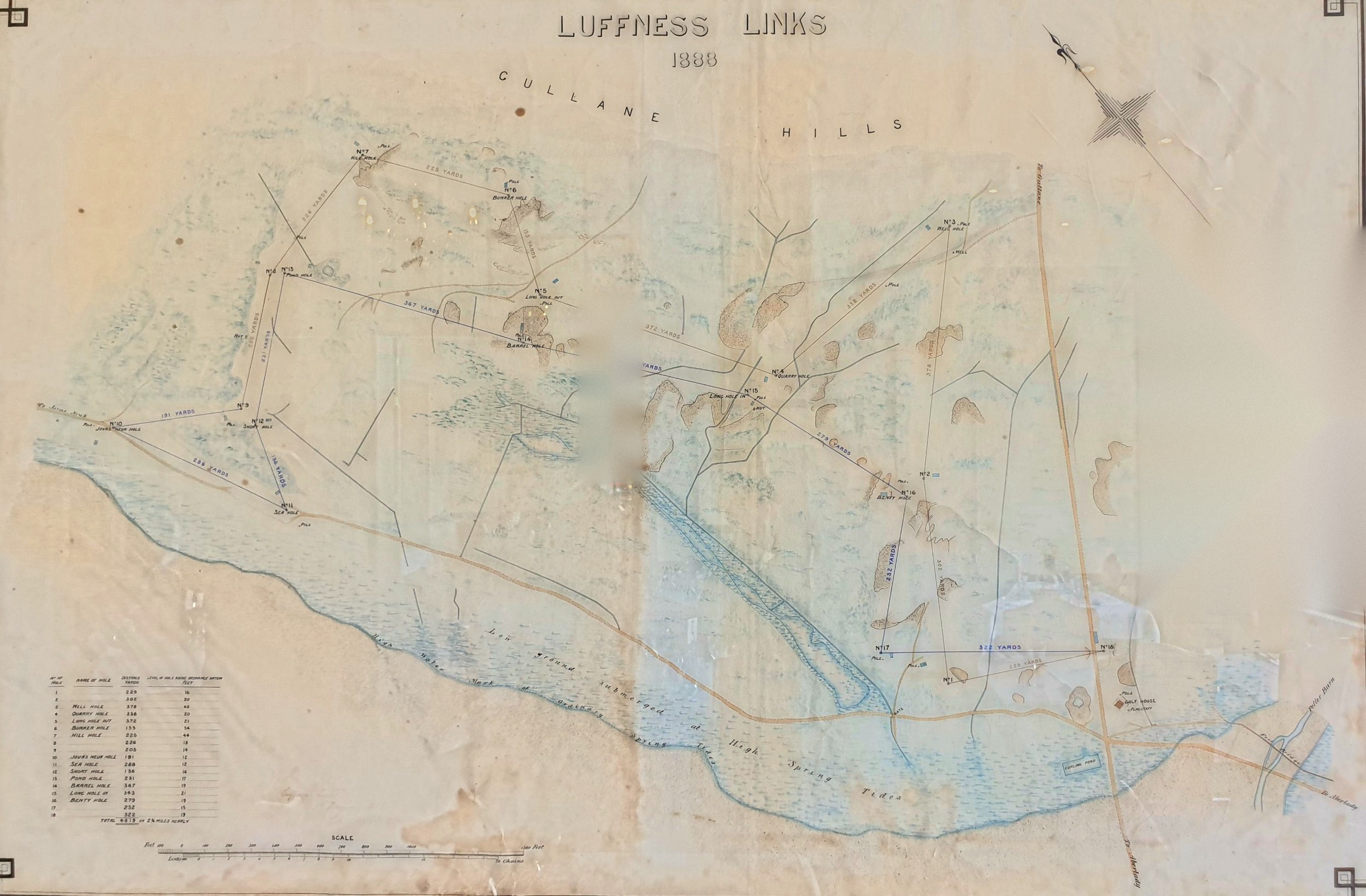
The 1867 club was Luffness Golf Club, motto “Far and Sure”. That year Henry Walter Hope of Luffness gave Aberlady’s golfers land on the seaward side of the Peffer Burn, and Old Tom Morris laid out 17 holes within a month; an 18th followed in 1872. Maps of that course from 1870 and 1888 hang in Luffness New’s clubhouse.
In 1893 the northern holes turned out to be on Gullane land, and Gullane’s owners wanted rent. Hope told the club not to pay and had Morris lay out a new course on his own ground. He called it Luffness Mill, still the name of the 1st hole. In 1894 about half the members went with it, as Luffness New. The rest stayed until the lease ran out in 1898, then accepted the Earl of Wemyss’s offer of land across the bay, and in 1899 became Kilspindie.
That leaves a paradox. The old club, founded in 1867, gave up the Luffness name and moved to a new course. The new club kept the name, part of Old Tom’s ground, the maps, the members’ board and even the hole names. The 1888 map has a Quarry Hole, a Hill Hole, a Well Hole and a Benty Hole. Today’s card has Quarry (6th), Hill (7th), Benty (10th) and Well (13th). Most of the rest of the old links is now the Aberlady Bay Local Nature Reserve, with fragments under Gullane No.2 (Blog 205). And one last twist: Kilspindie’s “new” course takes in the Wanster ground, where Aberlady’s golfers played before 1867, perhaps the oldest golfing ground of the lot.
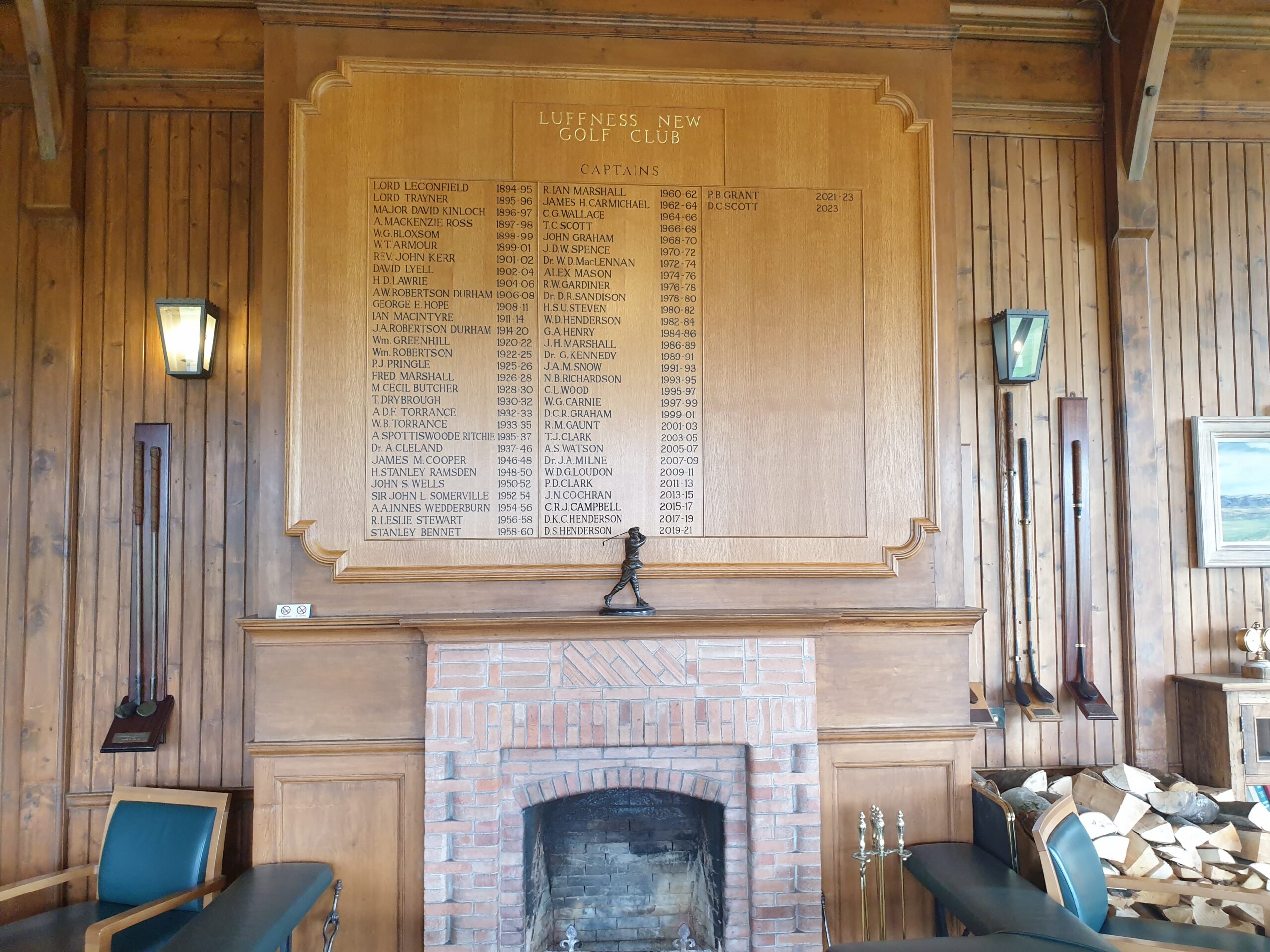
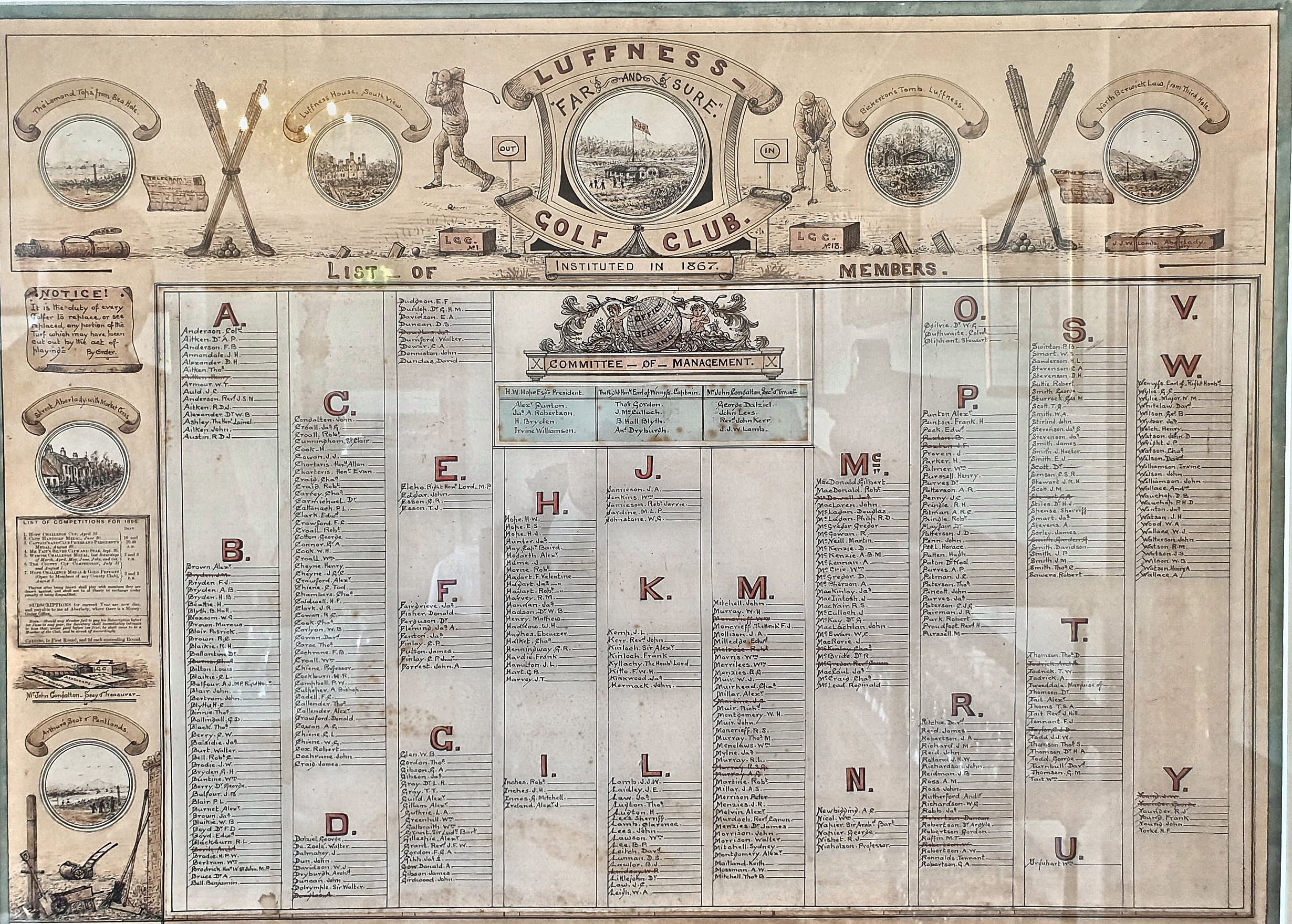
So Kilspindie kept the club, and Luffness New kept the heirlooms. Montrose borrows a date it can’t quite justify; Luffness New plays down one it could almost claim. “Custodian” is about the right word. Gullane, Kilspindie and Luffness aren’t three neighbouring stories. They’re one story told on shifting sands, and the landlords have kept them shifting: the Wemyss estate that took in the old club in 1898 built Craigielaw (Blog 182) on land Kilspindie had hoped to use for a second course a century later. The next three blogs tell the rest.
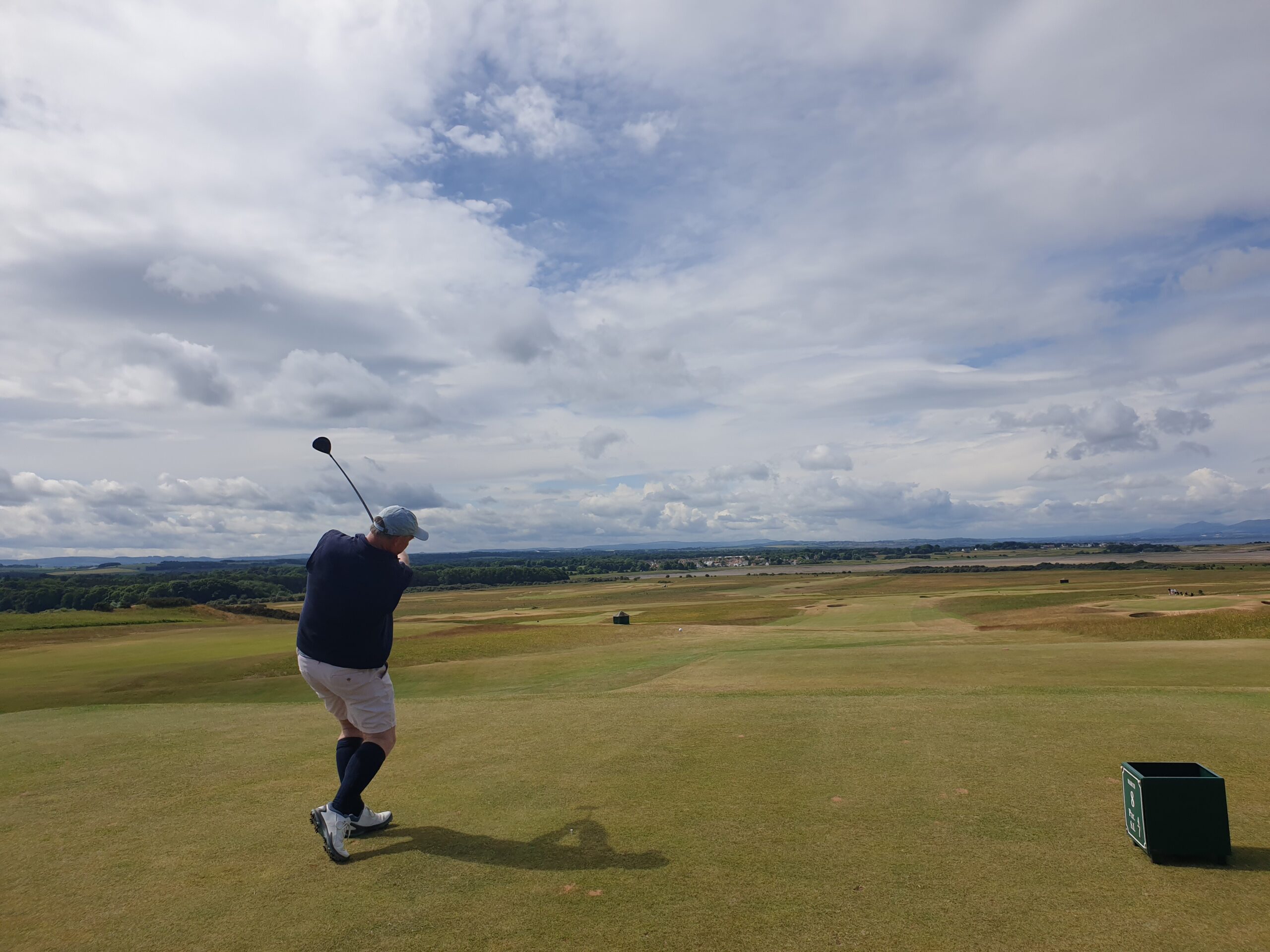
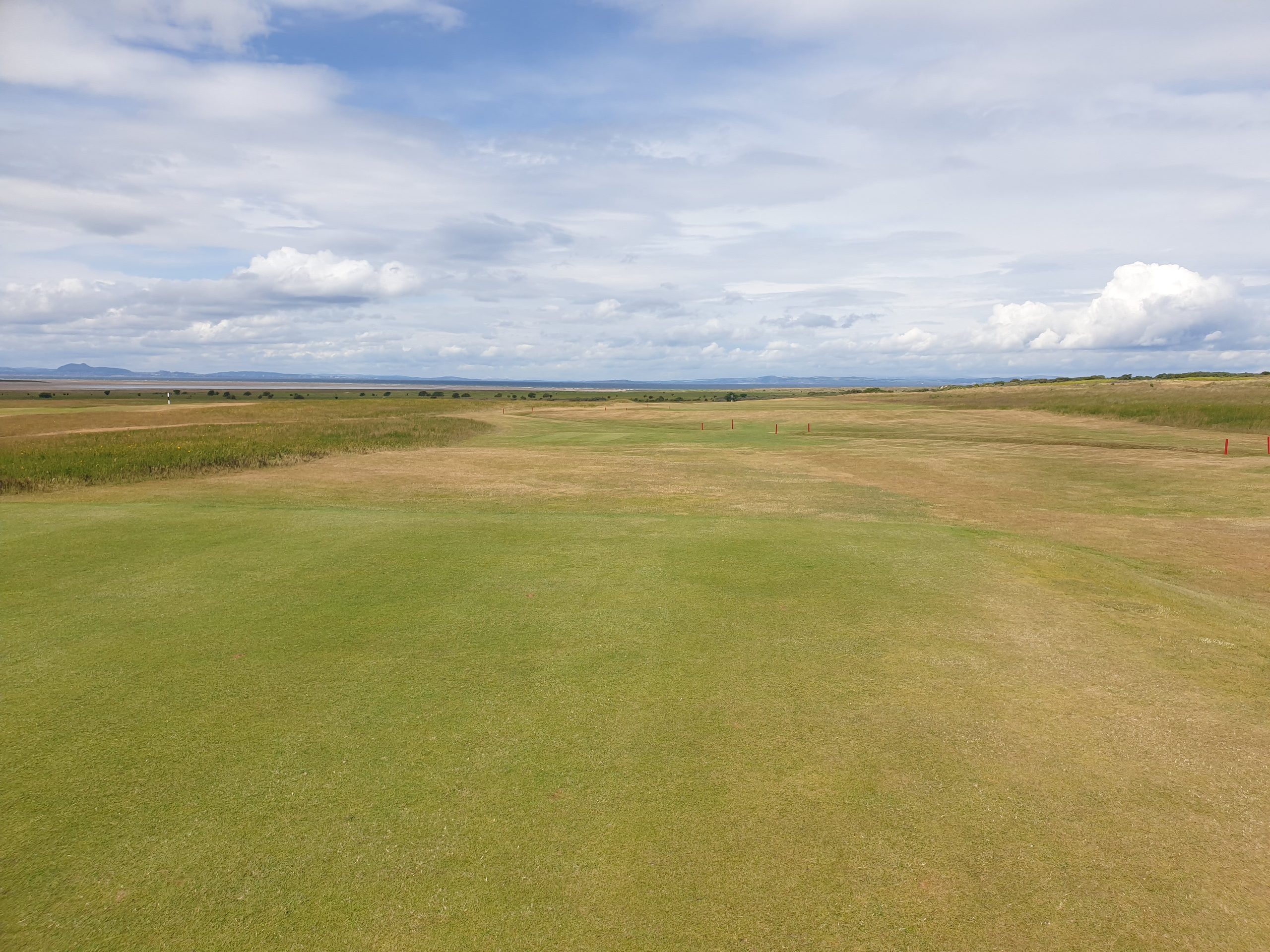
Now the golf. It blew a gale, on a course baked dry. What looks like a vast, open expanse is an illusion: the rough is penal, and the fairways are sometimes little more than a strip. The long par 4s were par 5s for me, and on the 173-yard 3rd David, a low single-figure golfer, took a wood. I spent the day hitting seven- and eight-irons that never rose more than 15 feet. It was honest golf, rewarding thought rather than muscle.
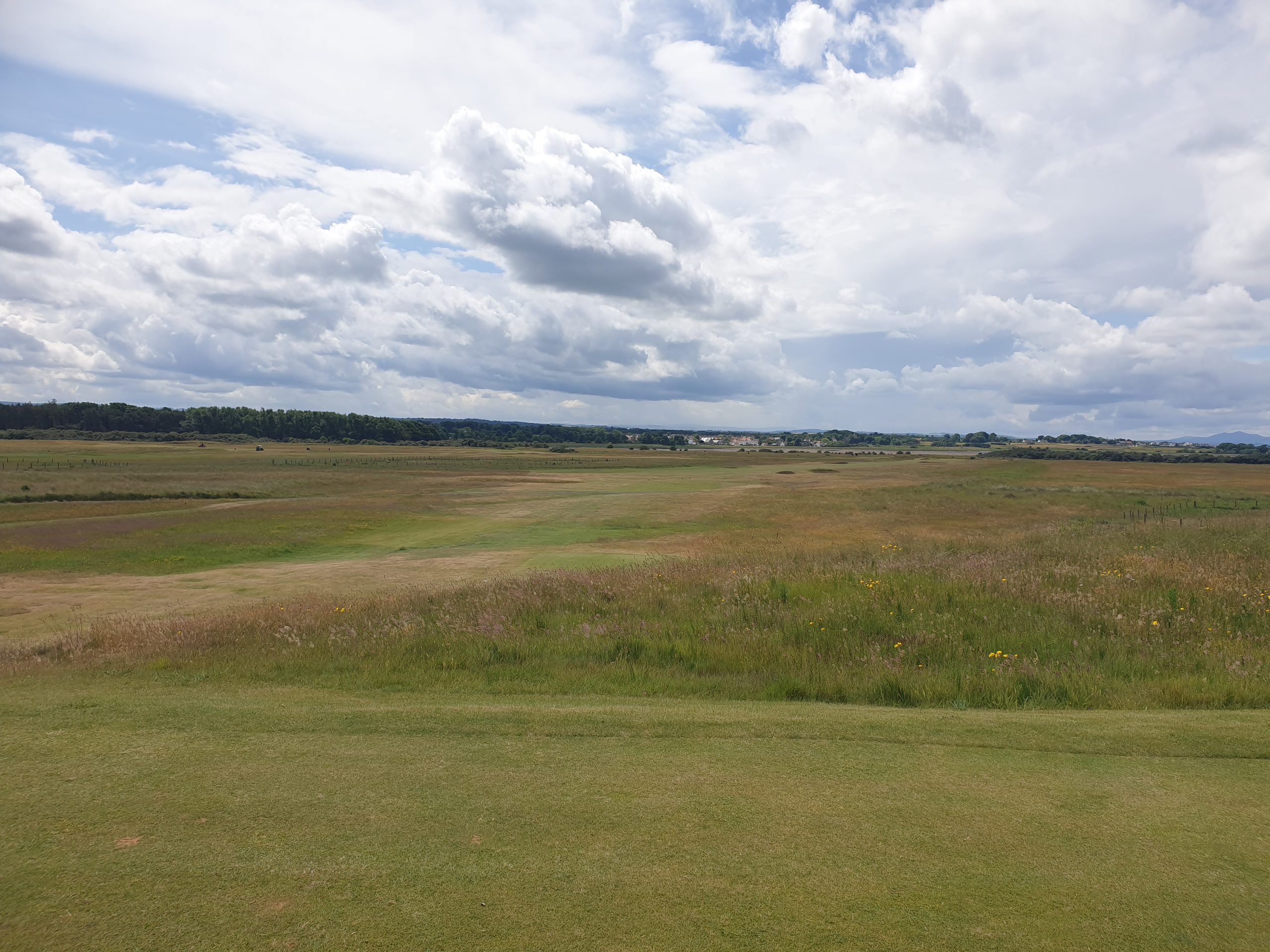
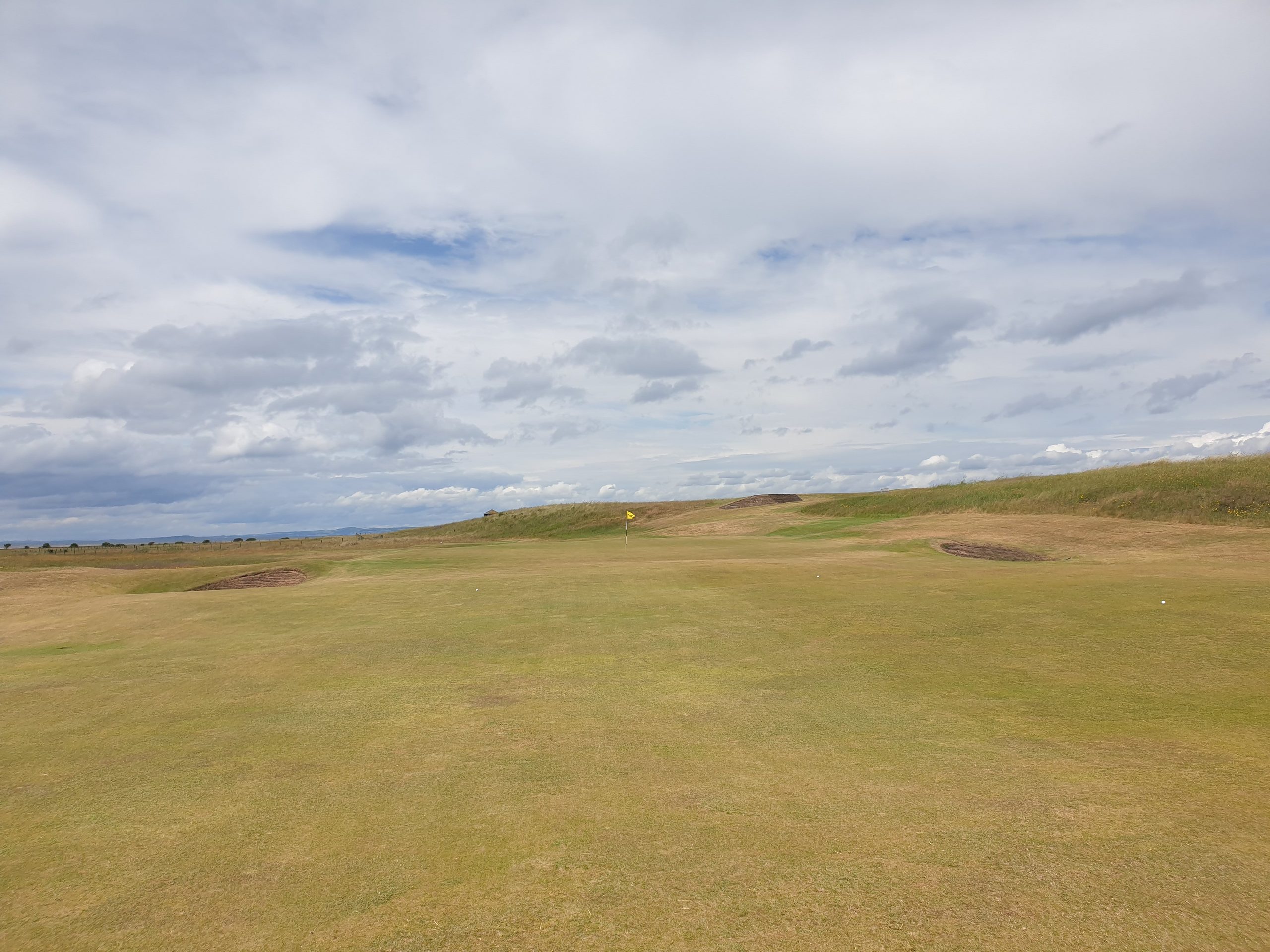
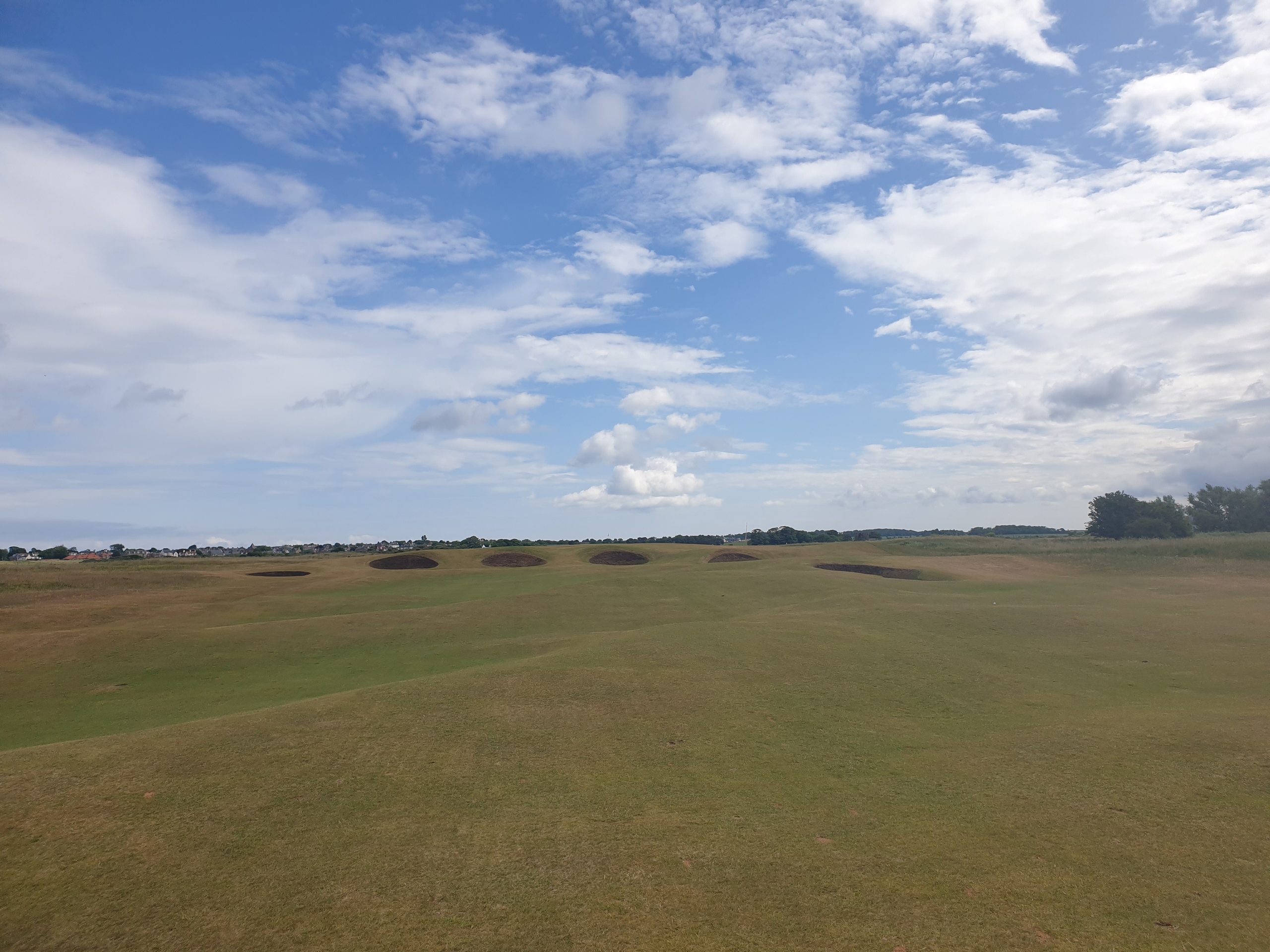
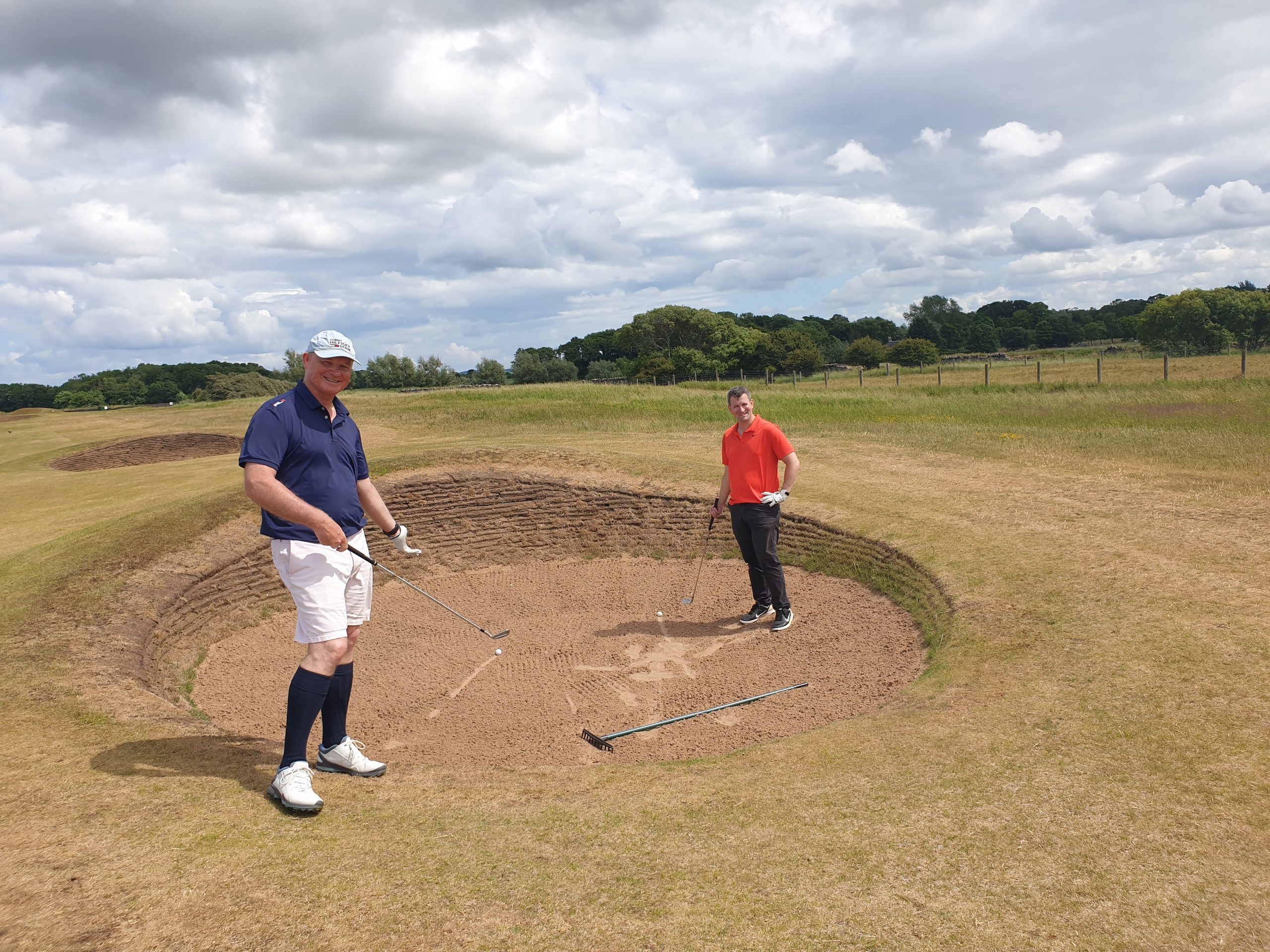
The bunkering is superb. Revetted pots sit exactly where a decent drive wants to finish, and the point is made straight away.
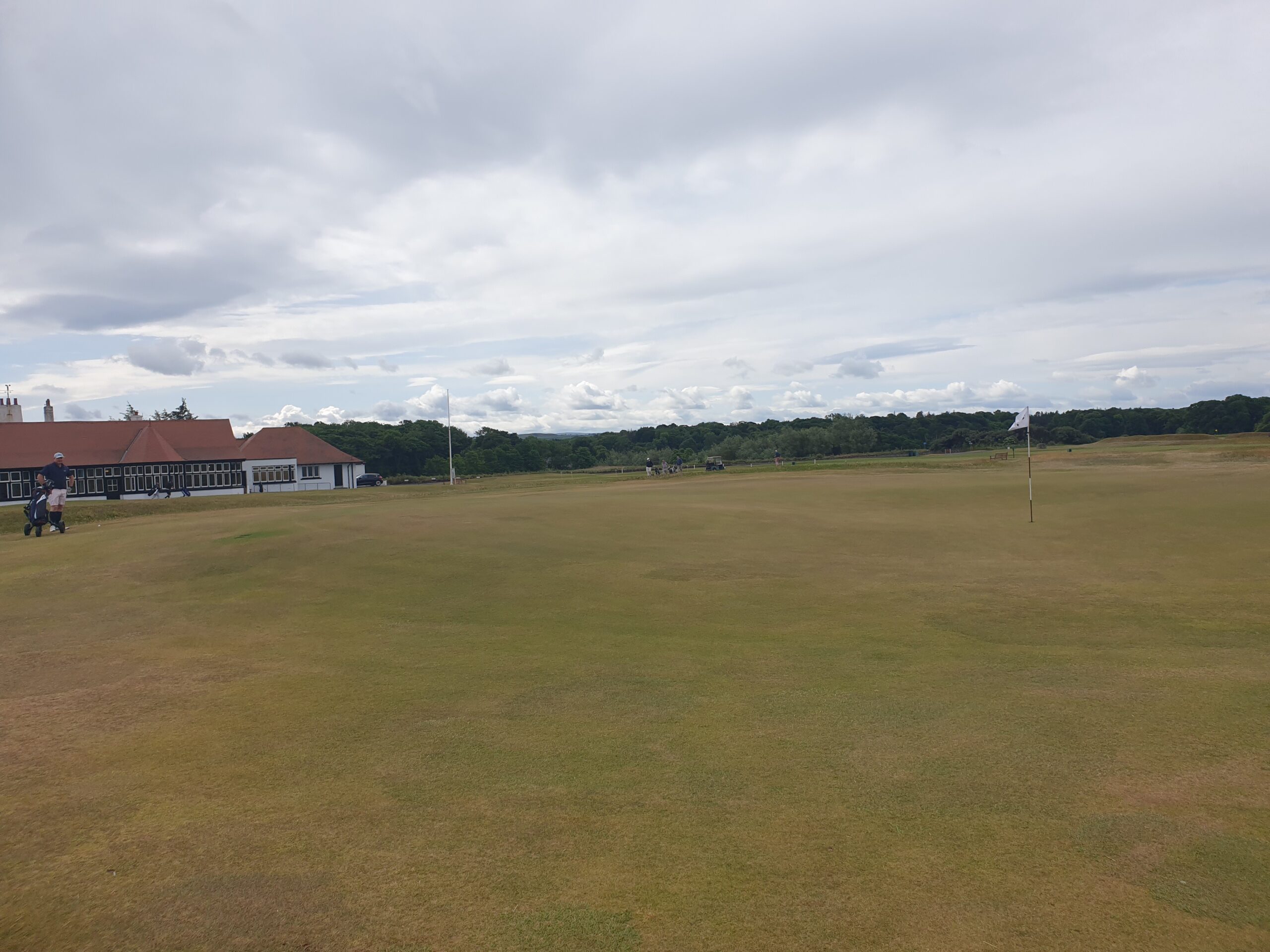
The greens are large, subtle and outstanding, and on surfaces this size pace is everything. I three-putted the 2nd but had five single putts and 32 in all. The course is lightly played, and it shows: fairways and tees were immaculate even with trolleys allowed on the tees, as at most Scottish clubs. It’s the same turf as Gullane No.1 (Blog 143), which I called unbeatable.
The clubhouse is a period piece: wood panelling, a log fire, jacket and tie after 9:45am. Shorts are allowed on the course, but only with knee-length socks. My friend Alastair Allanach told me that on a Monday it would be soup and sandwiches. It was a Monday. It was soup and sandwiches. The place feels like a boarding school, in both the best and the oddest sense. It’s not my everyday cup of tea, but I can see why people want it now and again.
Value. I paid nothing, so there’s no honest rating at price paid. The summer rate is £210 a round: £70 above Top100’s Scottish median and rising to £220 next year, though still £115 less than Gullane No.1’s £325 on the same turf. That’s 3.5/5. The winter rate, from 1 November, is £110, below the median for a top-50 links, and that’s where the value is: 4/5. That’s true right along this coast. Early November is when Scottish links golf offers its best value. Winter rates have arrived and the summer crowds have gone, but the ground is still firm and running, and the course is still the course, before winter sets in properly. Go to Luffness in early November, and price and quality line up rather well.
Facts:
Course Type: Links
Par: 70 (2 par 5s, 12 par 4s, 4 par 3s)
Distance: 5,982 yards (white tees)
Course Rating / Slope: 69.5 / 118
Course Quality: 5/5
Moly’s Gross Score: 86