Friendship has unrivalled value.
Round price: unknown (guest of a member); GolfNow rate at the time £55-£65. Current Fee (2026) £130. Current GolfNow (2026) ~ £65
Value; at current fee, 3/5, at GolfNow 4/5.
Before our game, I’d never met Doug McKinnon, a great friend of my friend Frank Crowe who introduced us. Not only was I heartedly welcomed, Doug waved aside any attempt to pay my guest fee. That kindness is this blog’s message.
It’s not unusual either. Golfers are proud of their golf club and will show it off given an opportunity, especially as they understand how visitor green fees have outstripped the pocket of most golfers. Indeed, allowing Members’ guests is one of the great benefits of club membership. Social media groups now solely exist, not only in Scotland, to provide platforms for reciprocal guest arrangements as it’s often the only way many are able to afford the more expensive courses.
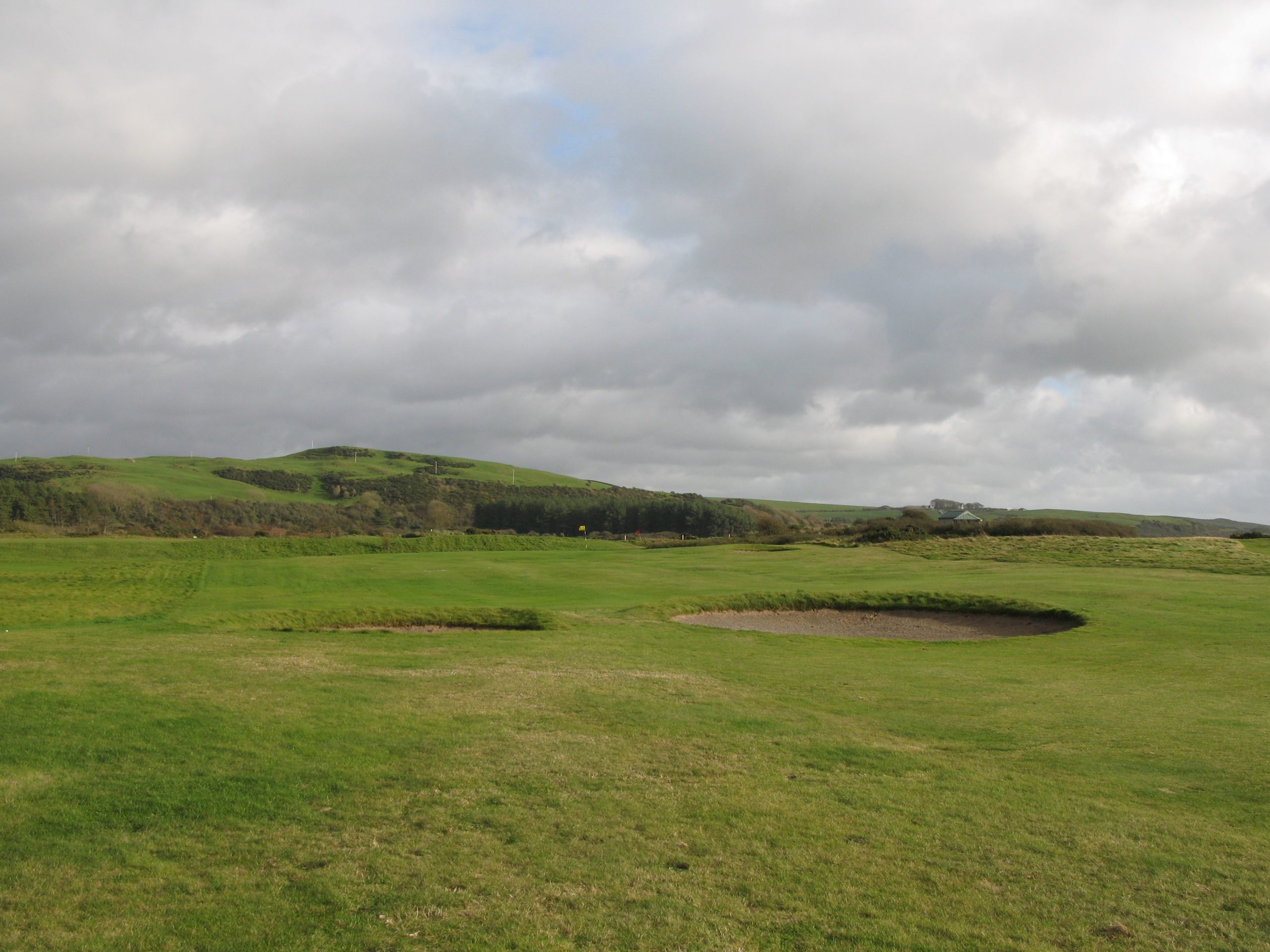
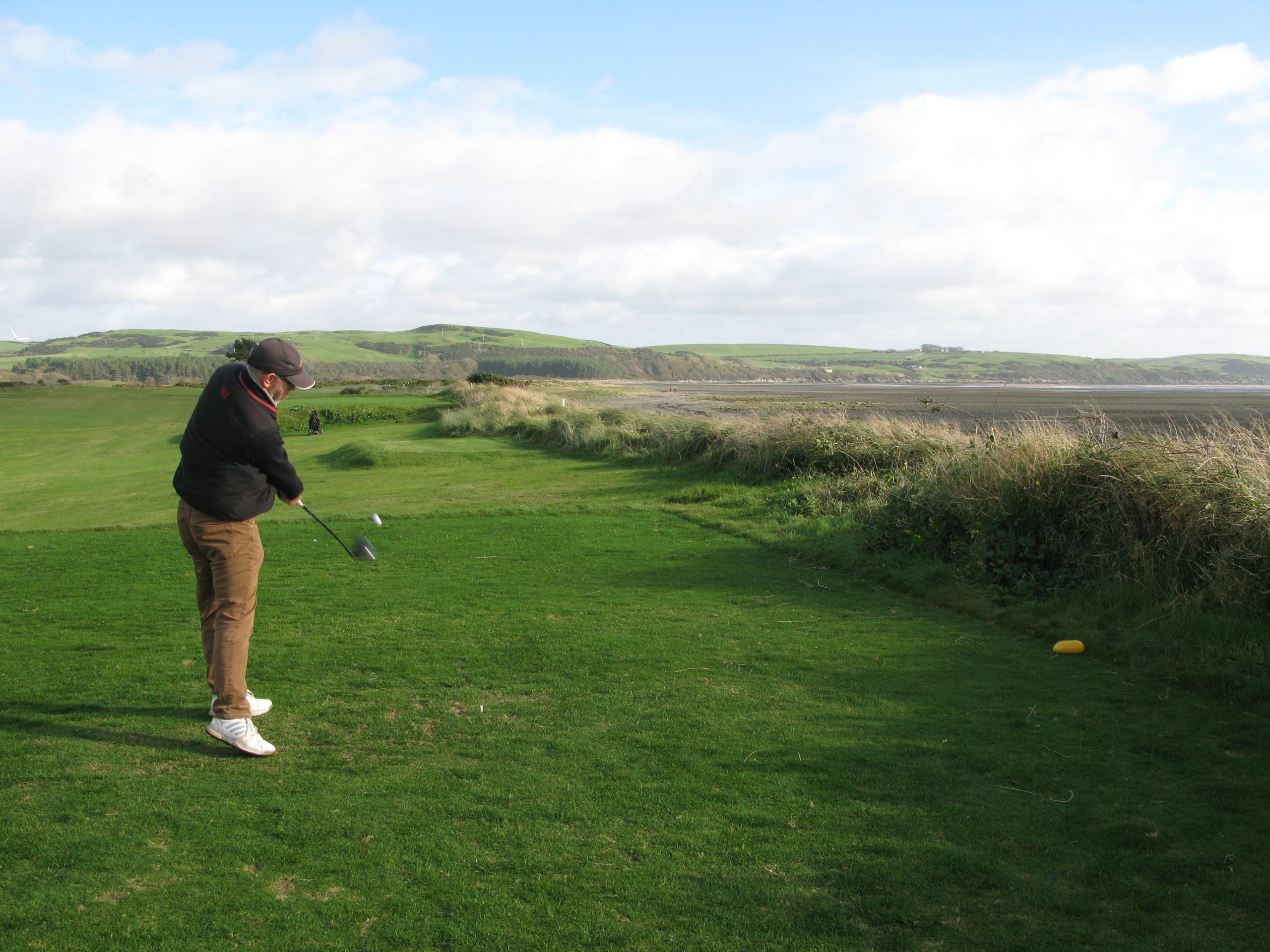
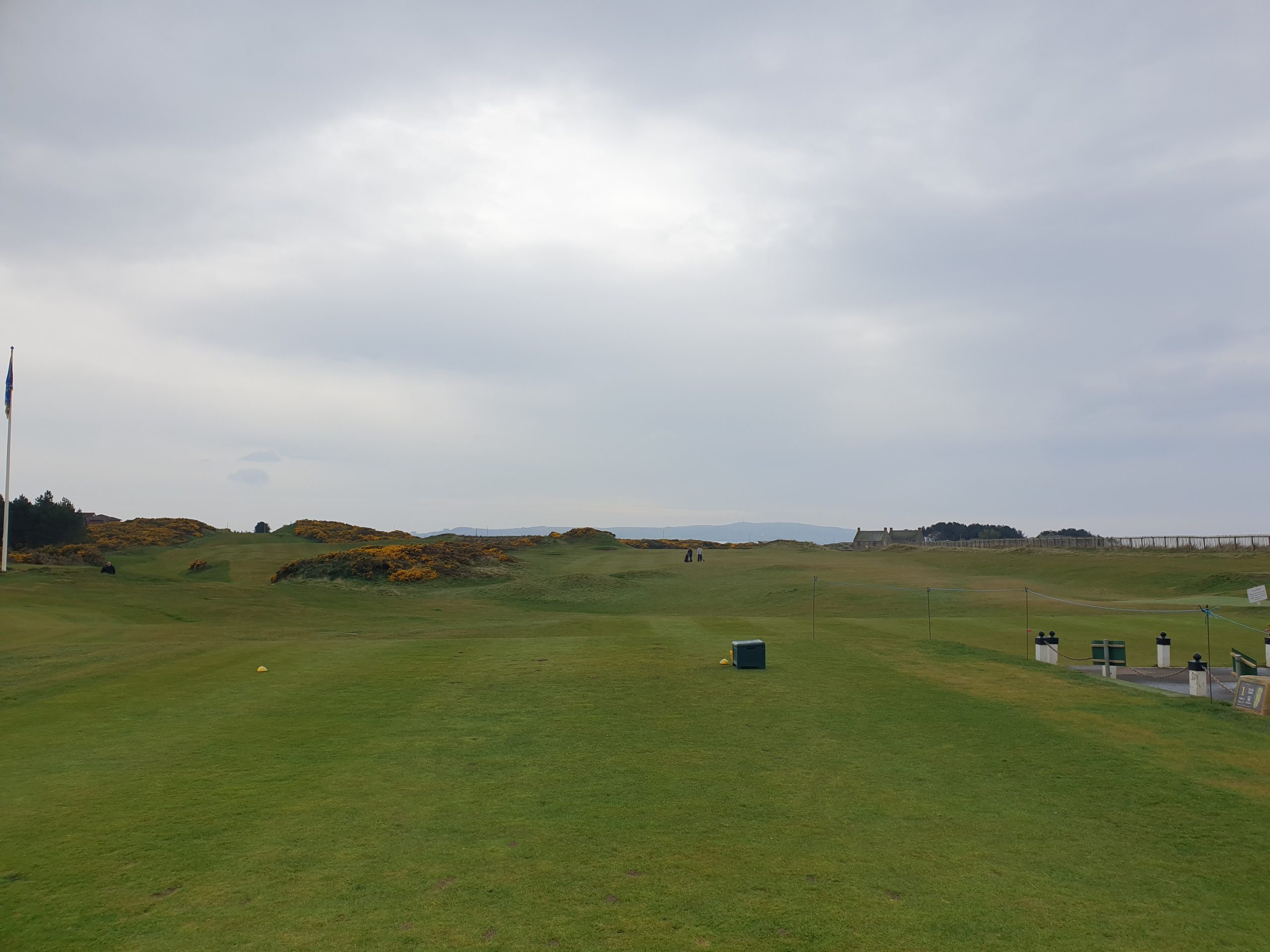
‘St Nicholas’ is proper links land on the north edge of Prestwick. Gorse adorned throughout, with the Firth of Clyde tight along the course and Arran across the water influencing the local weather. We played into a shifting south-easterly, which, on ground this exposed, epitomised links defence.
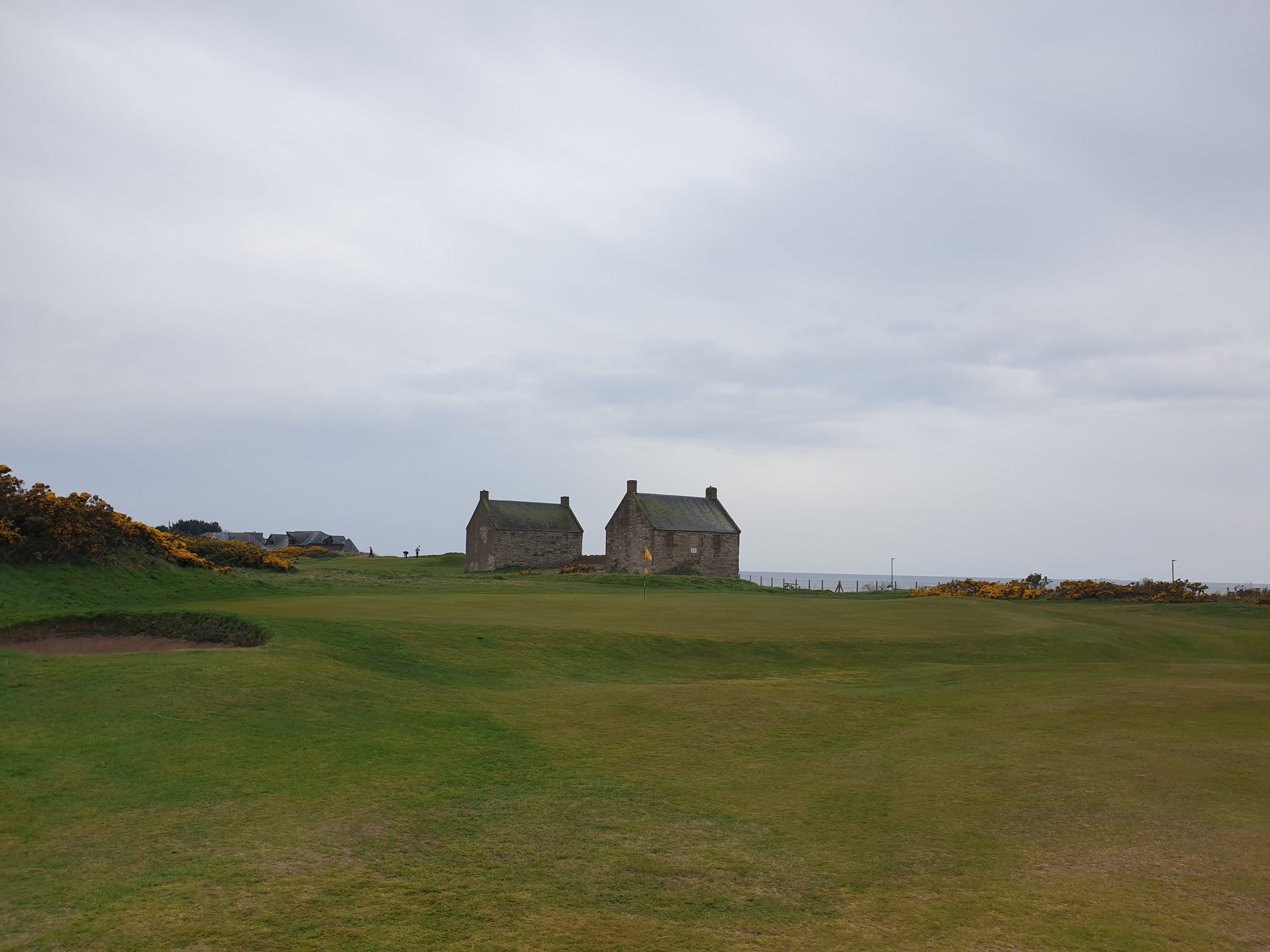
A pair of stone Cat A listed buildings sit behind the 1st green, the Salt Pan Houses, built circa 1760 for the Maryburgh Salt Works. They are regarded as the most complete remains of Scotland’s salt boiling industry. That industry keeps resurfacing: the 3rd is named Maryborough after the works, the 12th is simply “Pans.”
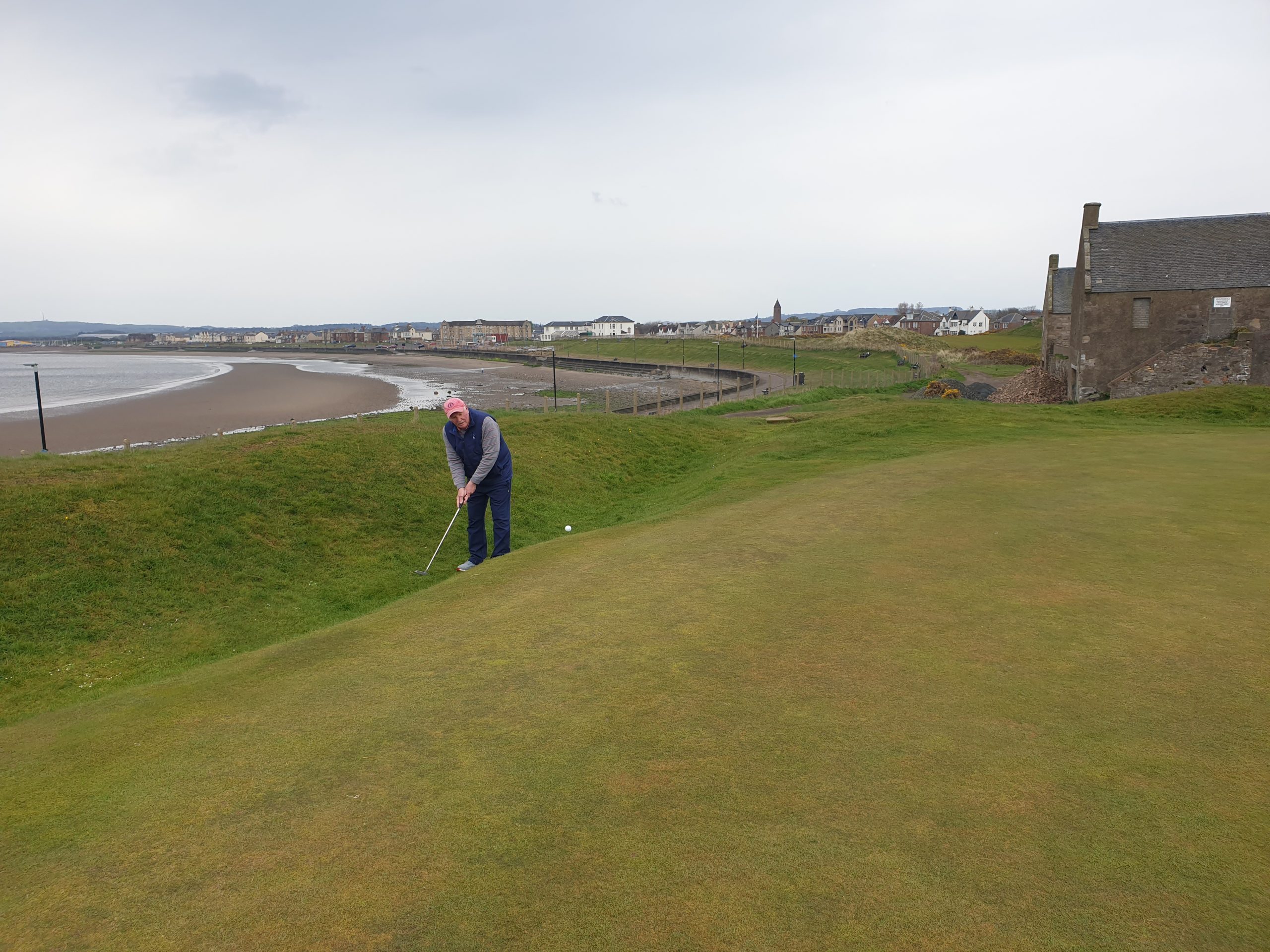
The club’s founding story is worth recording. Its website leads with “Co-Founded by Old Tom Morris in 1851”, the sort of claim that often outruns the archive. However, this time it’s spot on: Morris, then ‘Keeper of the Green’ at nearby Prestwick Golf Club, met working golfers at the Red Lion Inn in 1851 to found the Prestwick Mechanics Club, the tradesmen’s response to the gentlemen’s club next door. It didn’t become “St Nicholas” until 1858, didn’t get its own course until 1877, and didn’t settle at Grangemuir Road until 1892. So the lineage holds, but the turf we played has sadly nothing to do with anything Morris laid out. However, the story of a working man’s club founded in the shadow of a gentlemen’s one, is better suited than the clubhouse plaque.
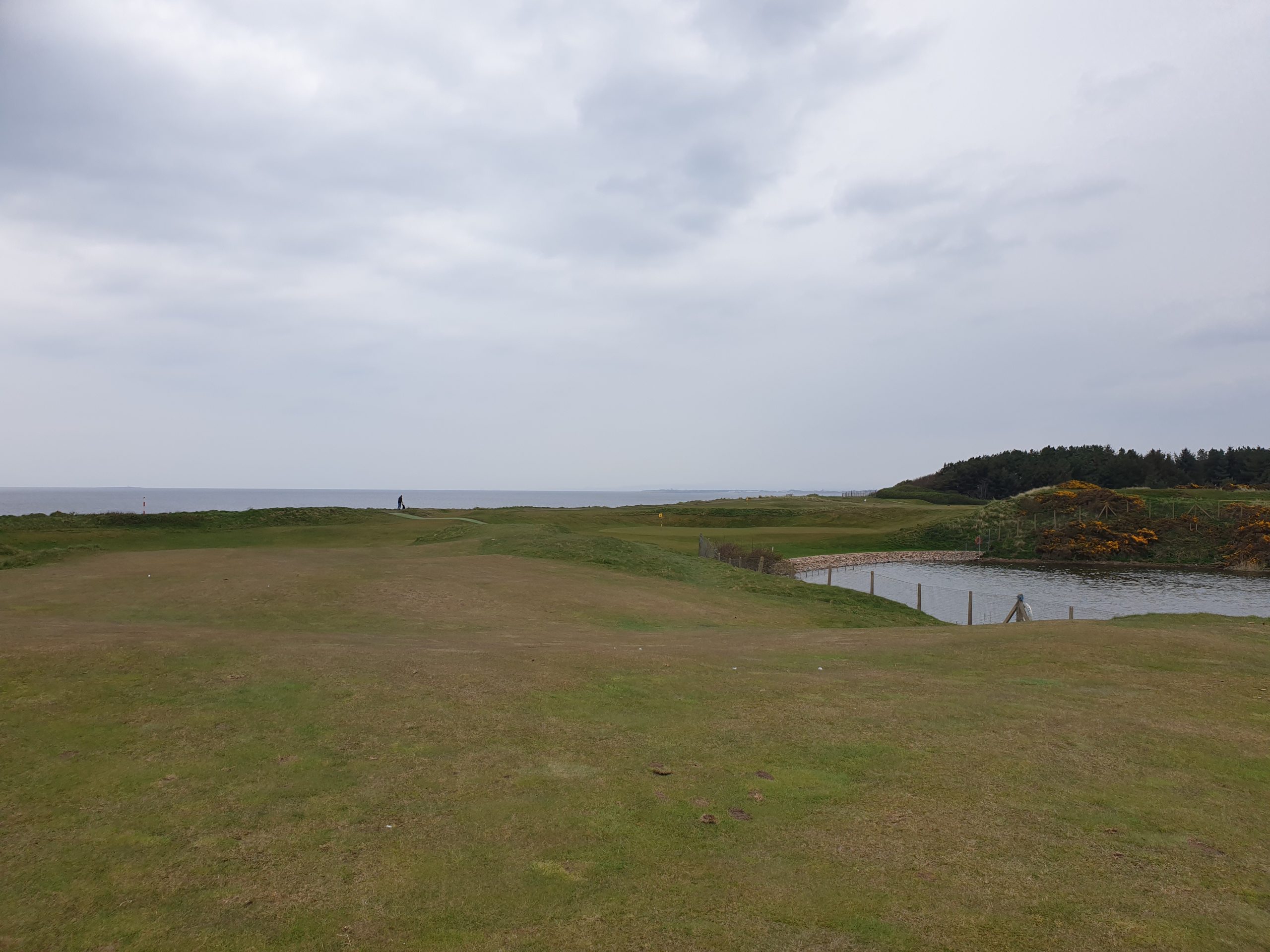
What you actually play has real variety: flat, easy walking in stretches, then holes that turn hard without warning. The 8th, Quarry, with its flooded pit crowding the green, is one. Knowing which holes to attack and which to defend is the whole strategic game here.
The 2nd hole, Bruce, lays a consistent clue to the great underlying story of the land. Along with the 5th (St Ninians) and the 15th (Kingcase) they all point at the same legend: Robert the Bruce, cured of leprosy after striking his spear into the ground at Kingcase, founded St Ninian’s leper hospital there in gratitude. The well and chapel ruins survive behind the modern church, dated to the 13th century. Three holes walk you straight through it.
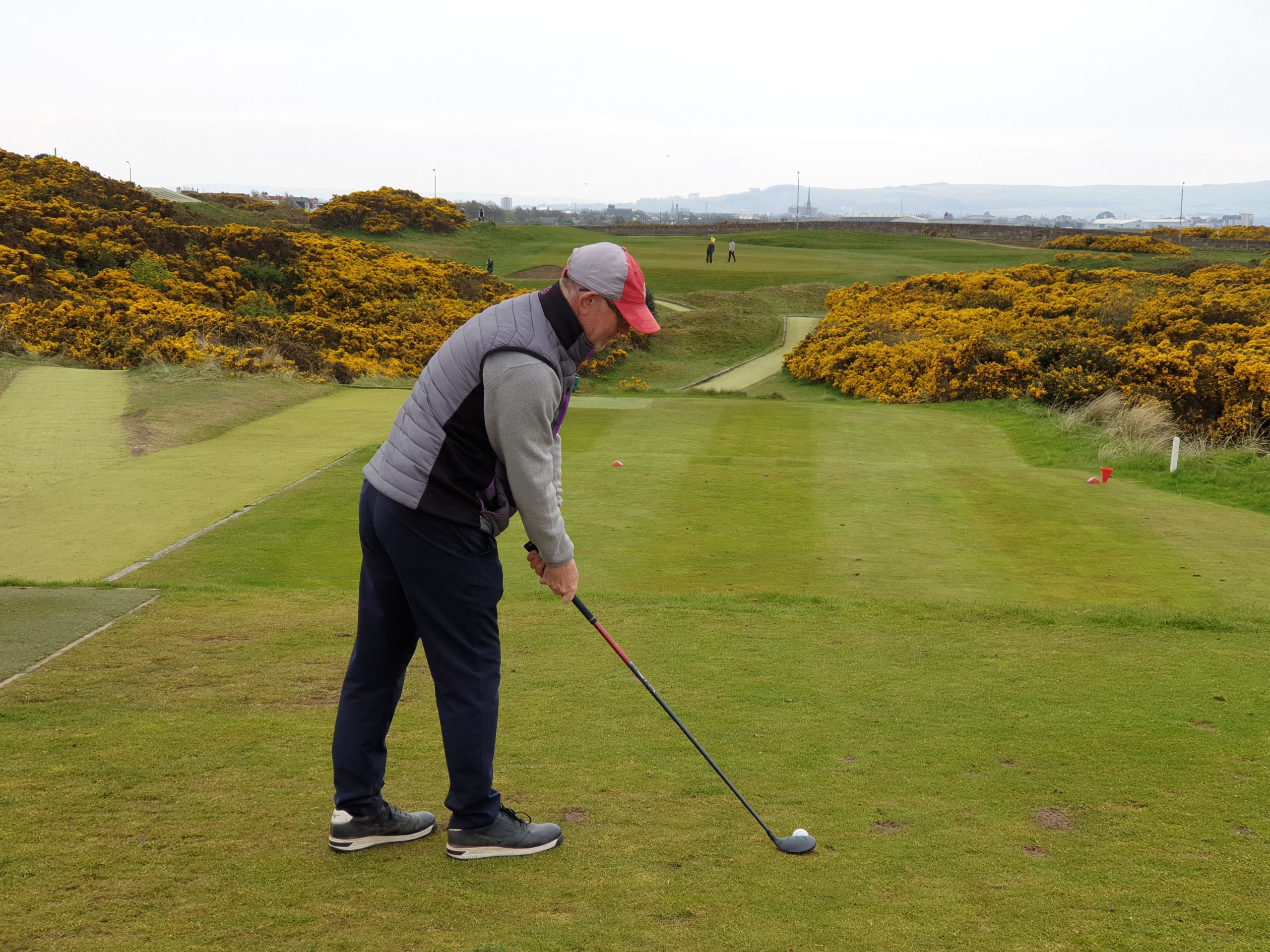
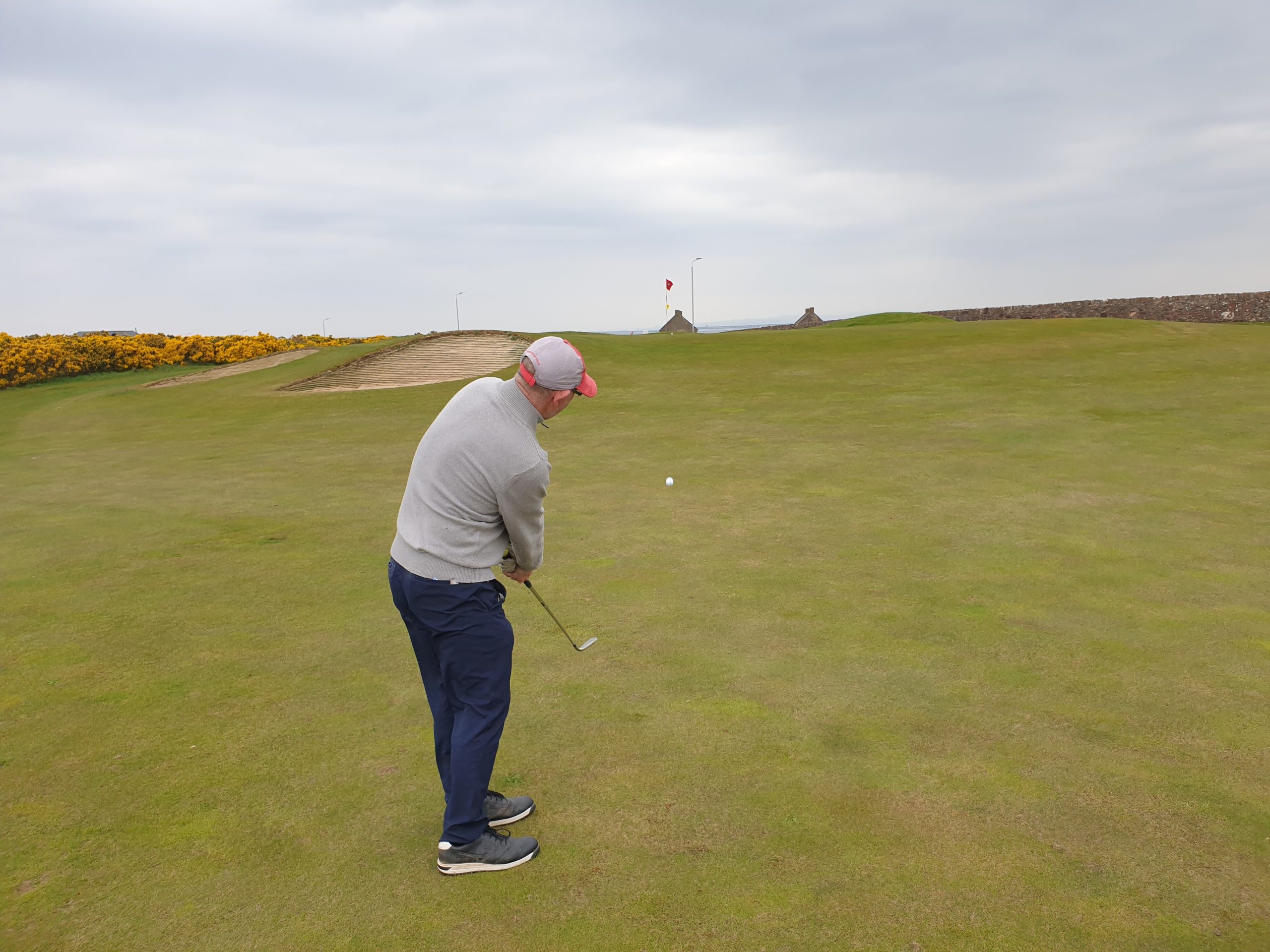
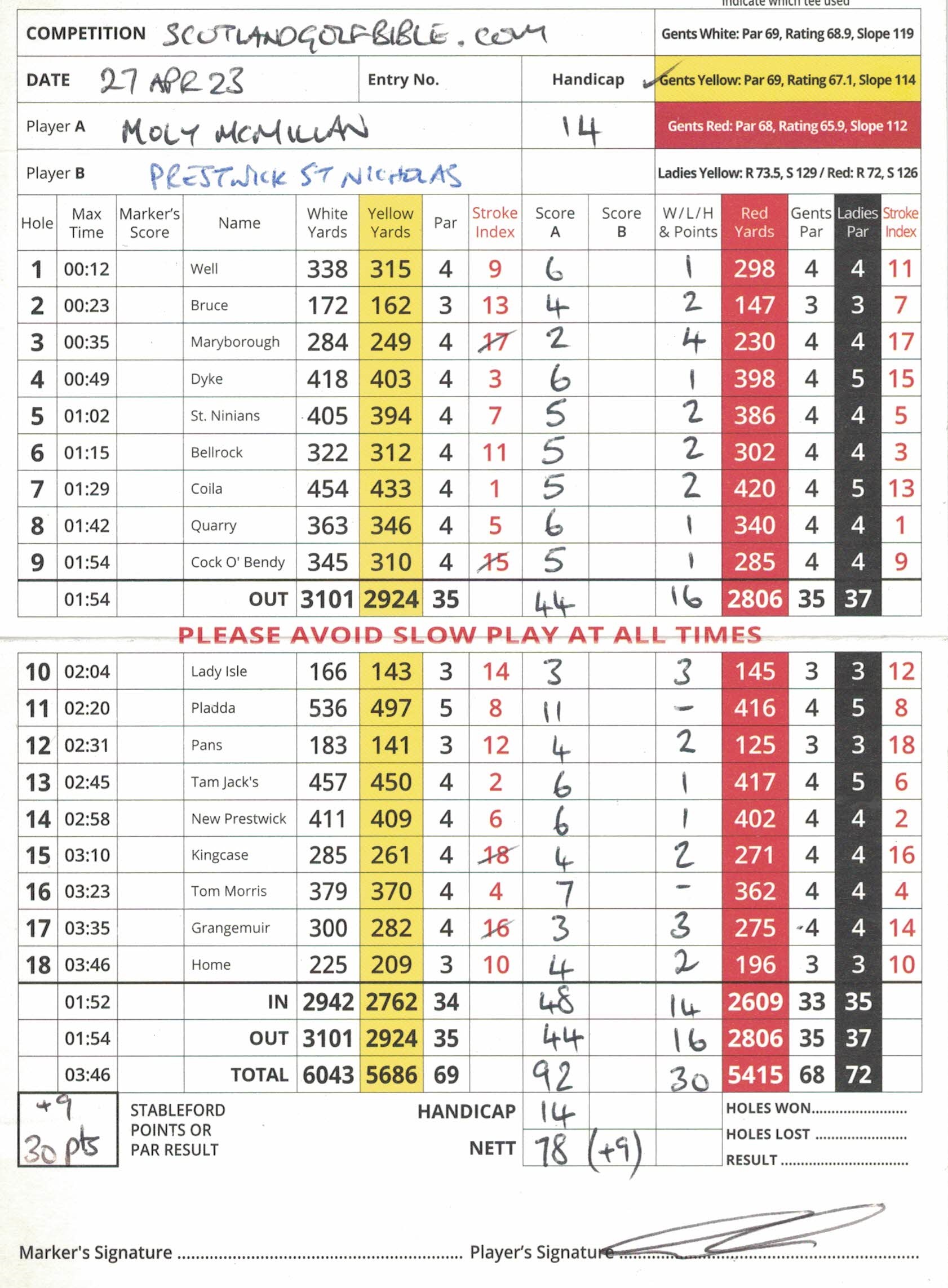
Two names I couldn’t fully uncover. The 9th, Cock O’ Bendy, nobody at the club could explain. The 11th, Pladda, made more sense once worked out: the only par 5, running along the shoreline, named, one imagines for the small island off Arran, visible from the tee. Ayrshire links have form for naming holes after the view rather than the ground. I carded an 11 there.
The 16th, Tom Morris, I imagine is a regular “card wrecker” where I took 7, gorse pressing in both sides back to the clubhouse. The 17th, easy by comparison, brought a birdie. Golf!
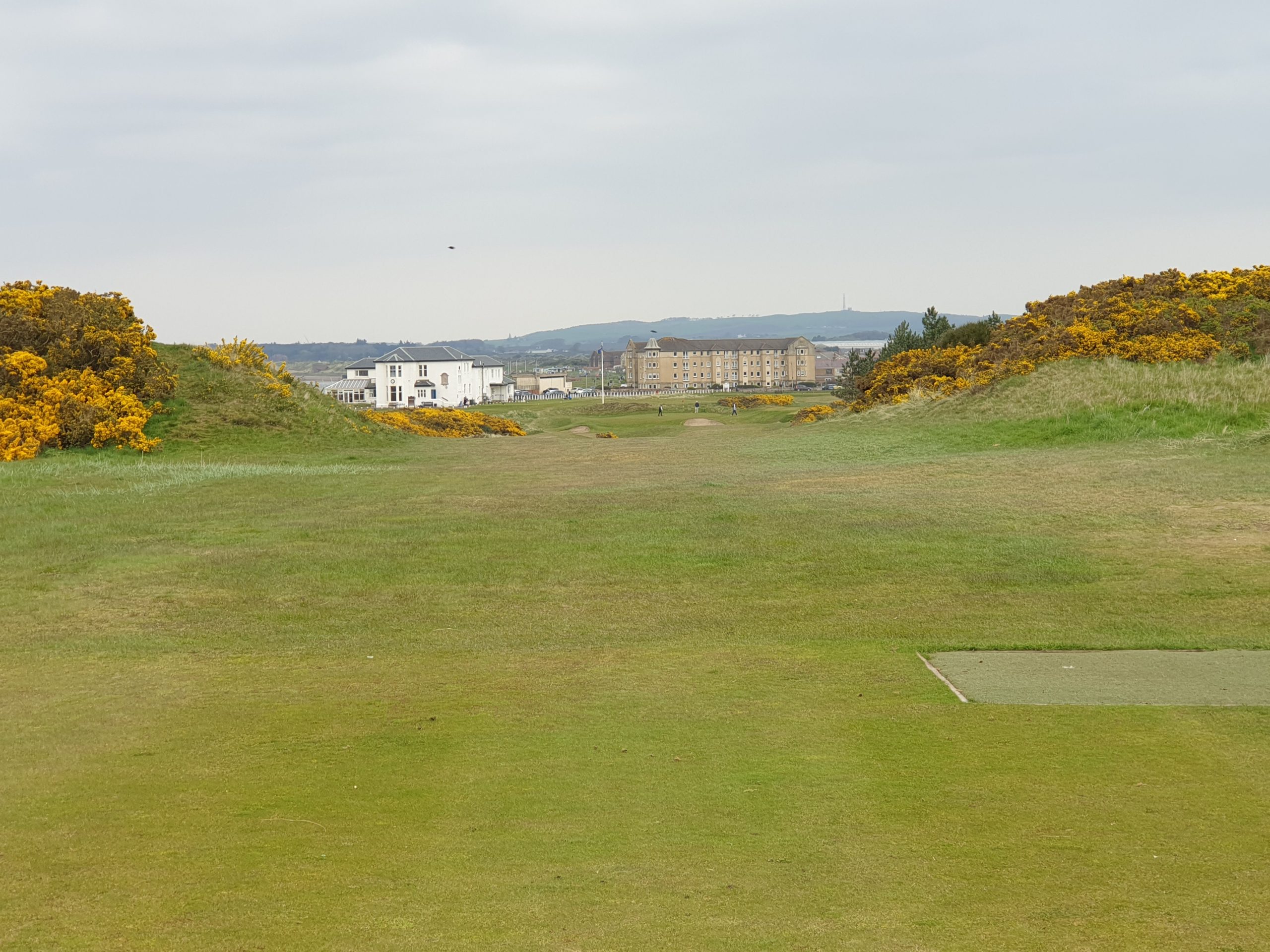
The real teeth are saved for last. The 18th, Home, is 225 yards into the prevailing wind; most golfers won’t reach it with a driver, so it plays as a short par 4 with the wrong club in hand. Doug reckoned Colin Montgomerie once called it the hardest par 3 in Ayrshire; I couldn’t find that written down, so take it as clubhouse lore, but into a stiffening wind I wasn’t arguing.
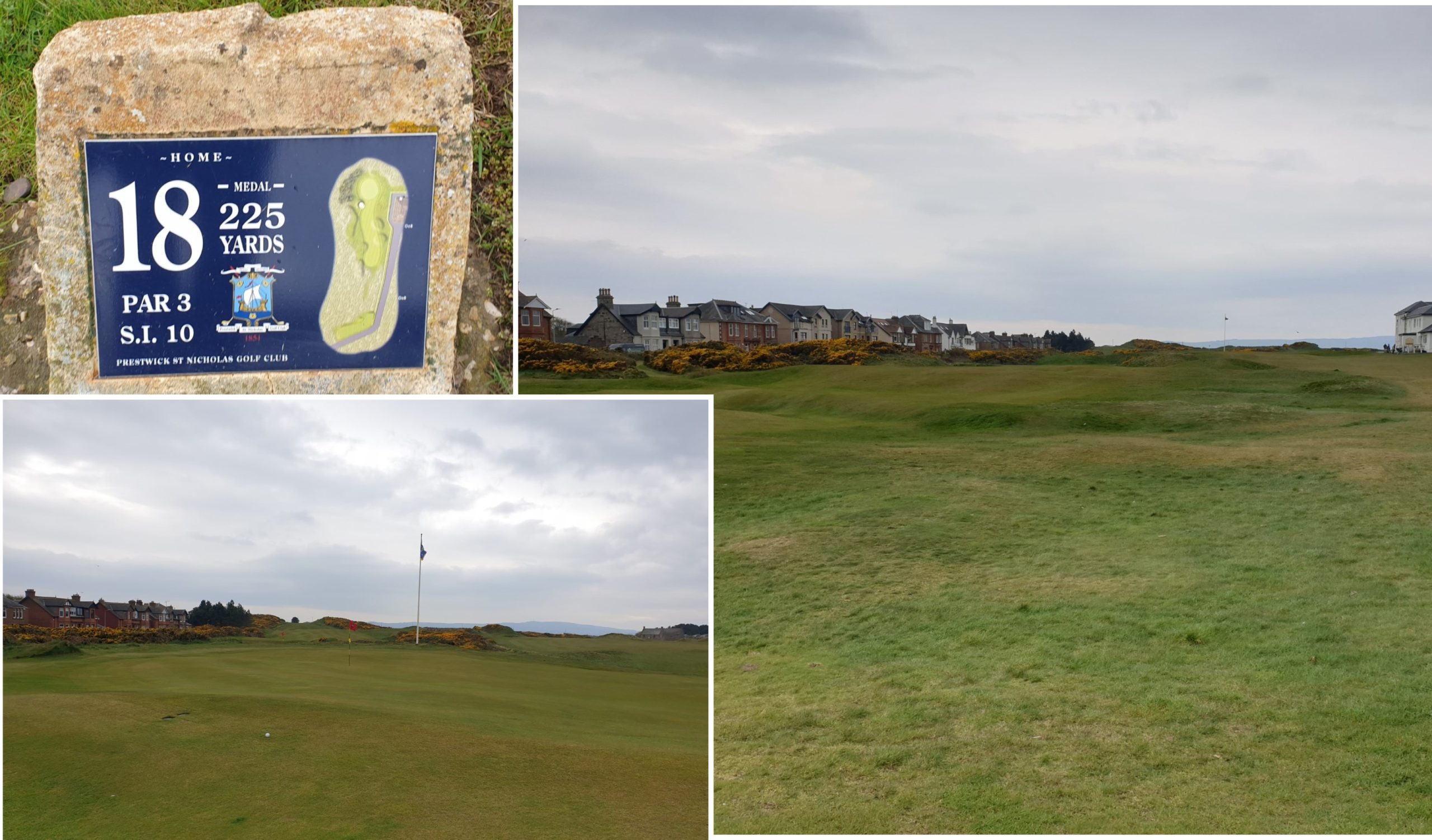
Would I go back? Without hesitation. A fair, strategic links test with real history behind it, and a good place for a first-timer to start on links golf. For the membership, it looks a thoroughly good club to grow old in. At the GolfNow rate, 4 out of 5. As Doug’s guest, worth more than any number I’ve got.
Facts:
Course Type: Links
Par 69 (1 par 5, 13 par 4s, 4 par 3s)
Distance: 5,686 yards (Yellow tees, as played)
Moly’s Gross Score: 92