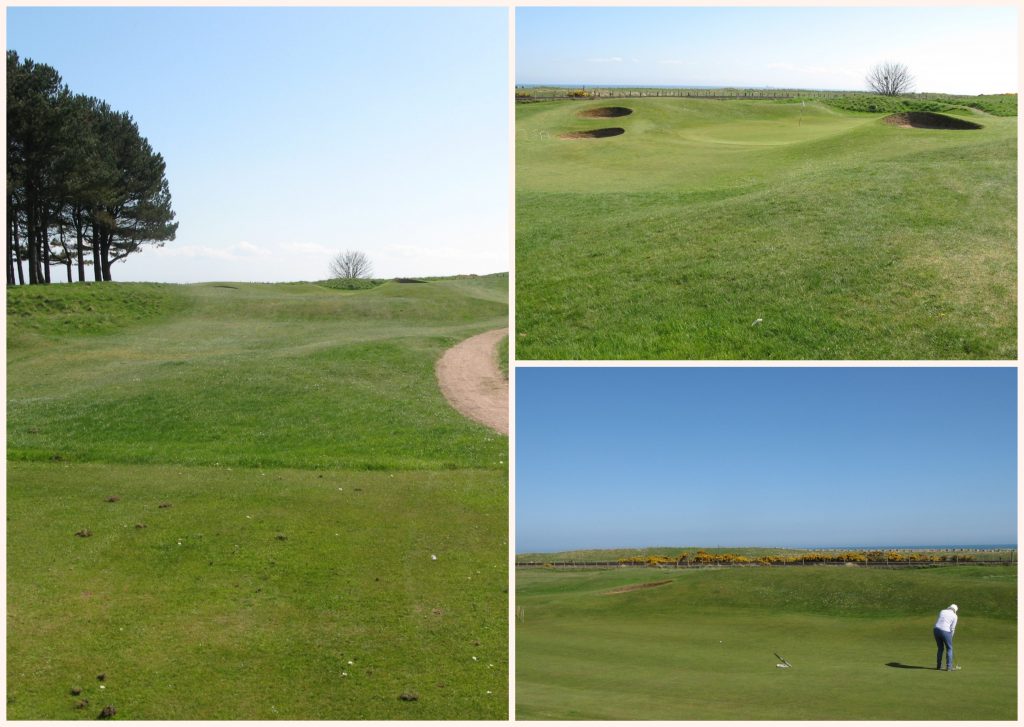
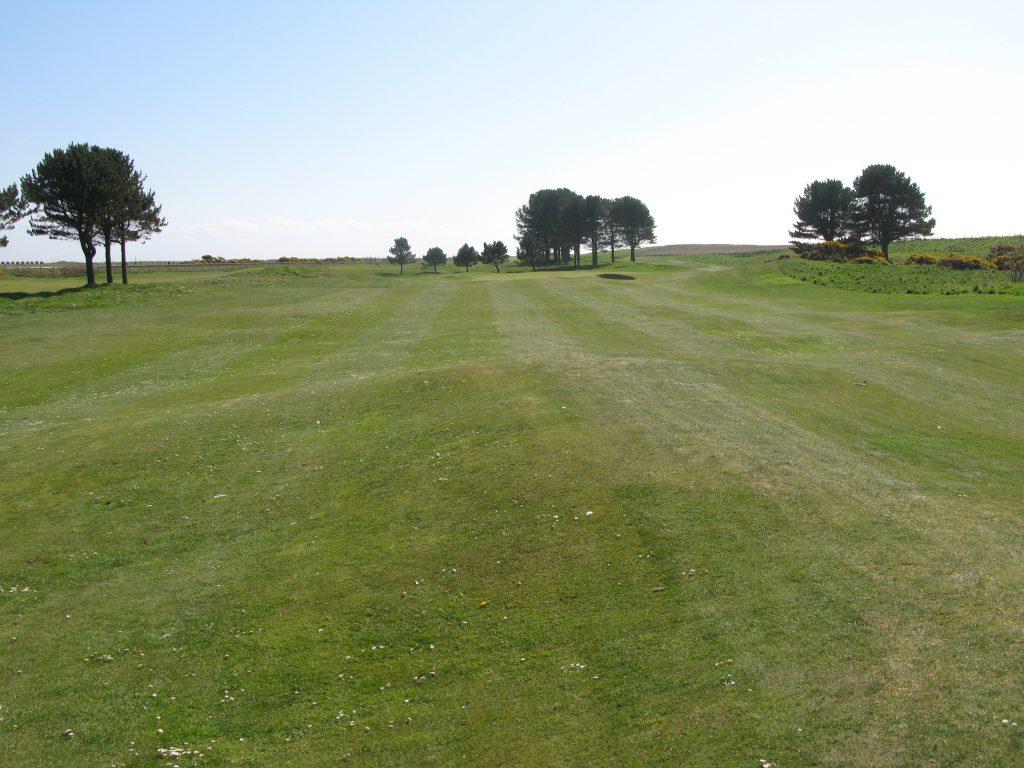
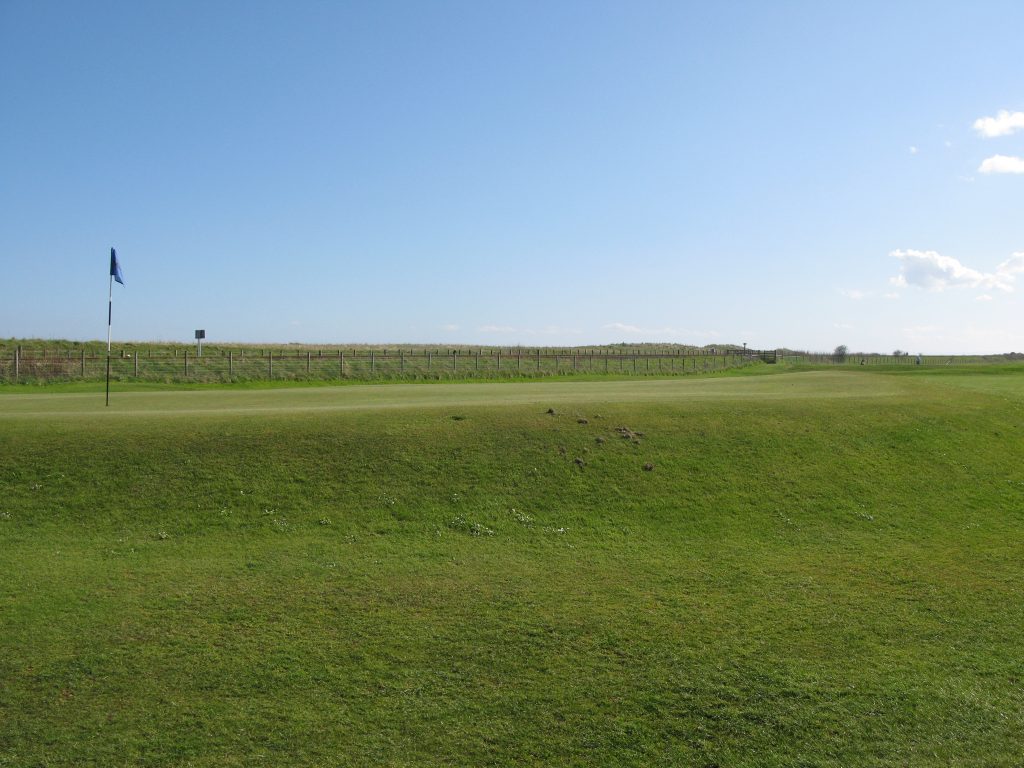
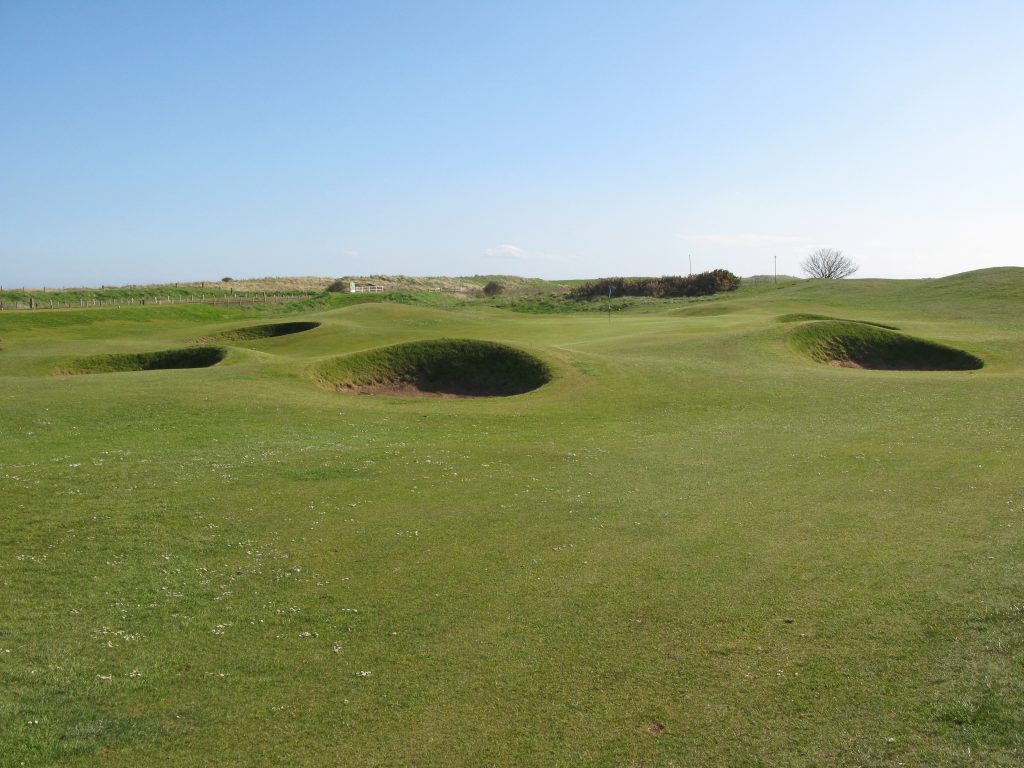
A guide to green fee value for money

Category: Links (Page 7 of 11)

81. St Andrews Old Course. 30 Jul 2018

The Home of Golf – thanks especially to The Champion Golfer of 1995, Mr John Daly! WOW!

Round £180.   Par 72.  Value (out of 5) – 5

A few weeks before playing at The Old Course, I received a surprise call from Richard Rooney of D C Thomson, the Scottish Media conglomerate;  “Congratulations, Moly, you’ve won our St Andrews Memory competition run by The Courier newspaper.  The prize includes joining the D C Thomson 4 ball in the Rolex sponsored “Patrons Day” on the Monday following the Senior Open”.  WOW!

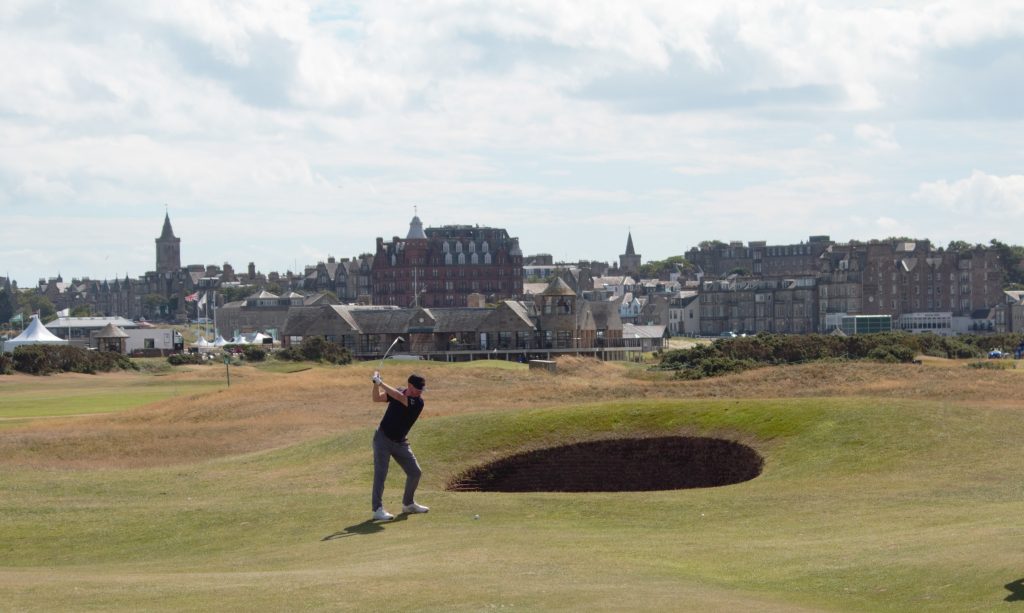
The Auld Toon of St Andrews provides the backdrop to Moly playing at the 16th from just in front of the “Principals Nose” bunker.

I’d actually forgotten I had entered a competition some weeks earlier, but no matter, there I was standing on the Championship 1st tee at 8am on Monday 30th July 2018,  only about 40 yards from where Miguel Angel Jimenez was crowned the Senior Open Champion a little over 12 hours previous. WOW!

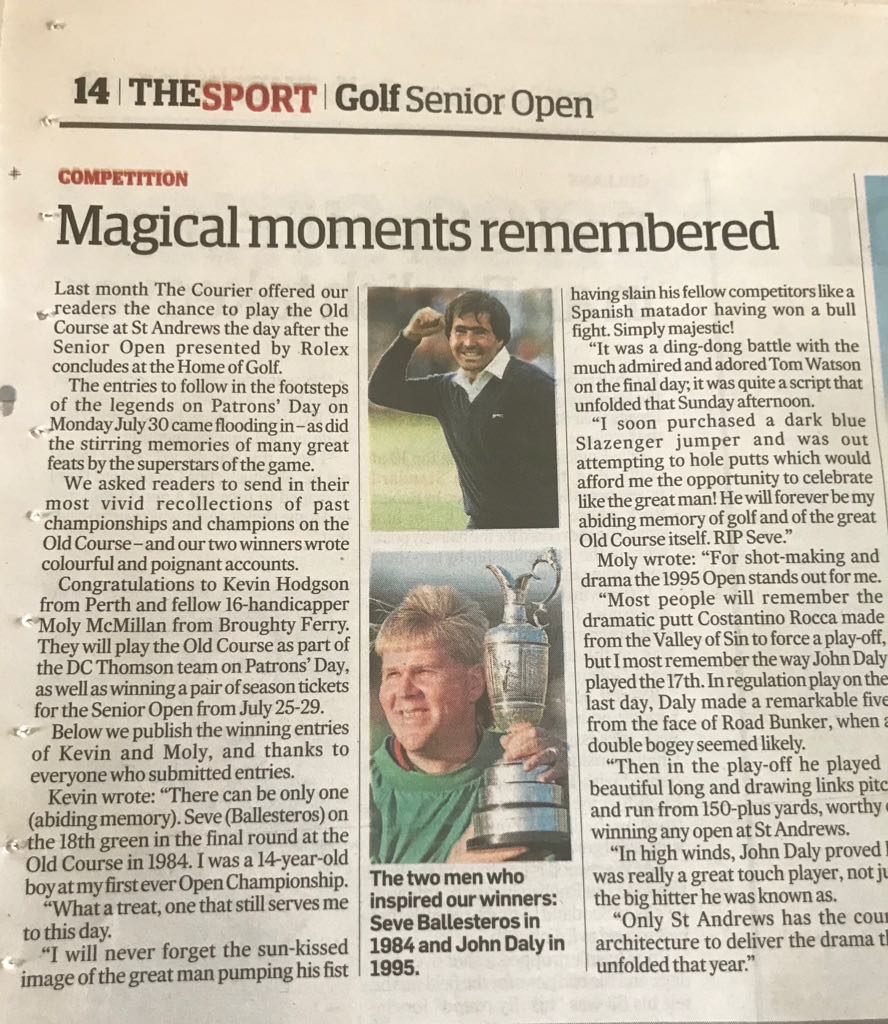
The Courier report of the Competition which won Moly his Old Course round. Thanks John!

Assisted by local caddie, John, from Kingsbarns, and along with Keve Hodgson, fellow winner, and our 2 D C Thomson hosts, conveniently both called Richard, we played The Old Course in beautiful links conditions (a fair westerly breeze), using the Sunday pin positions.  WOW!

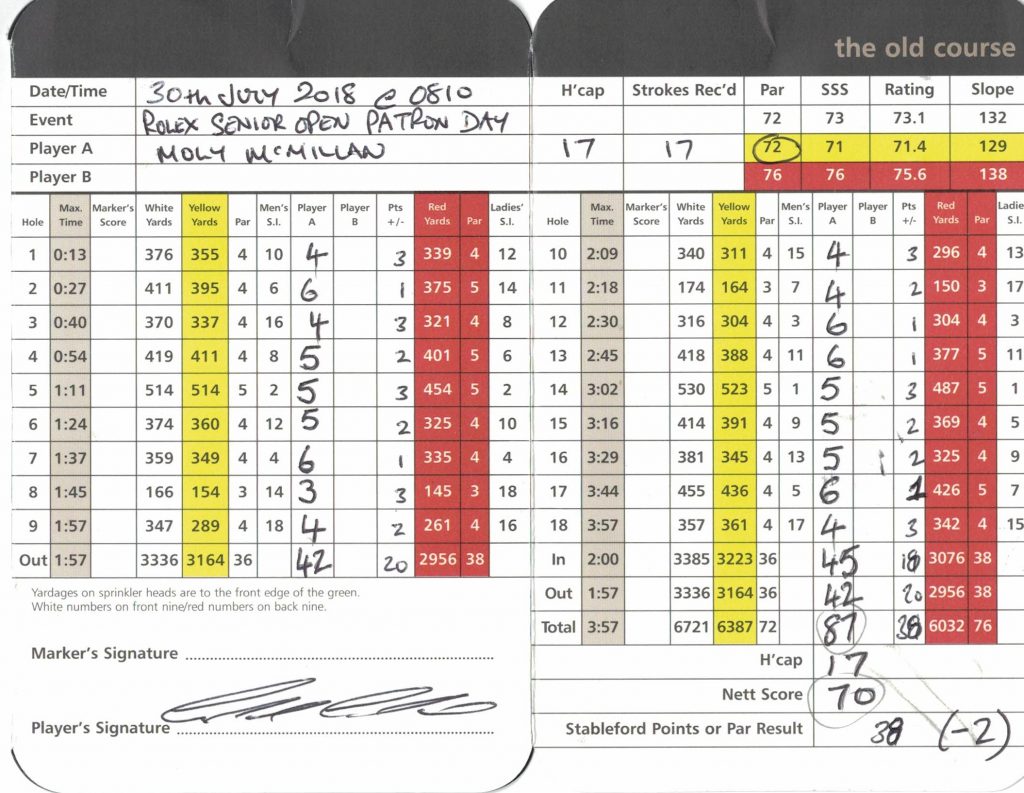
I shot a stroke-play 87, including 8 pars, with the same ball. WOW!

Including par 4s at the 1st and 18th, from the championship tees, the 18th where I played a 150 yard 6 iron into the breeze to only 15 feet, with Caddy John announcing as my ball launched  “its all over it!” and received a round of applause from the 30 or so spectators milling around.  Putter in hand, the walk to the green was “golfing heaven”.  WOW!

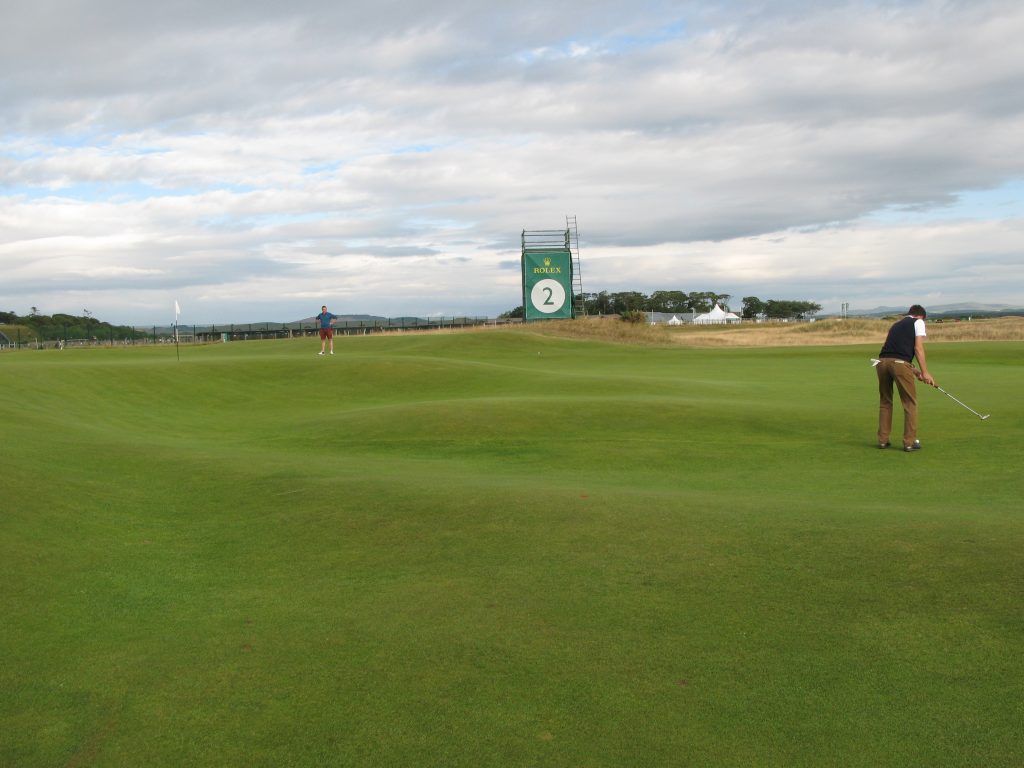
A typically huge and undulating double green – the 2nd and 16th (Keve putting up the green)

If you are reading this blog, you probably don’t need me to tell you much, if anything, about The Old Course, as it’s embedded in the very essence of golf.   So many great players have made so many comments, I’ll just quote my favourite:

“This is the origin of the game. This is golf in its purest form and it’s still played that way on a course seemingly untouched by time. Every time I play here, it reminds me this is still a game.” – Arnold Palmer.

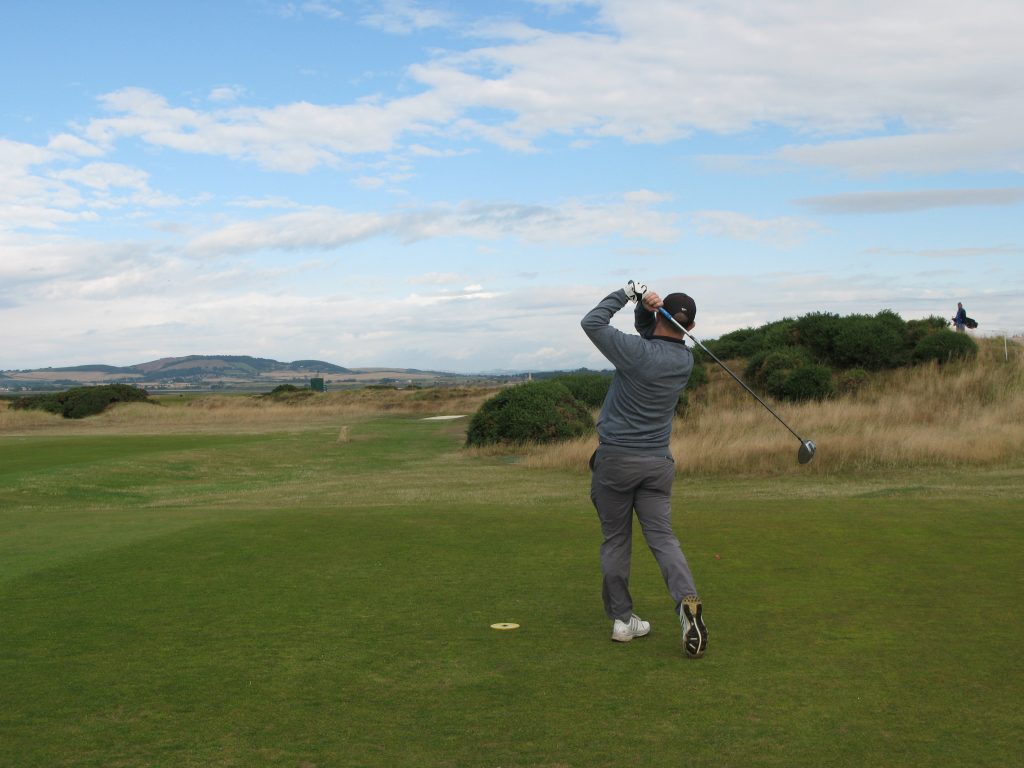
6th tee – a typically bind tee shot, where a Caddy becomes invaluable


I’ll therefore use this blog to discuss the concept of value, the prime measure I make of Scottish golf courses, which takes on an added mystery when applied to the Old Course at St Andrews.  It’s by no means the most difficult course in the world, or anywhere near the most expensive; albeit at £180 its not cheap.  However, it’s arguably the most accessible great sporting location in the world – anyone is free to walk its hallowed turf on Sundays when the course is closed to play.  By all accounts, turn up on Christmas day and play for free (without the flags though!).

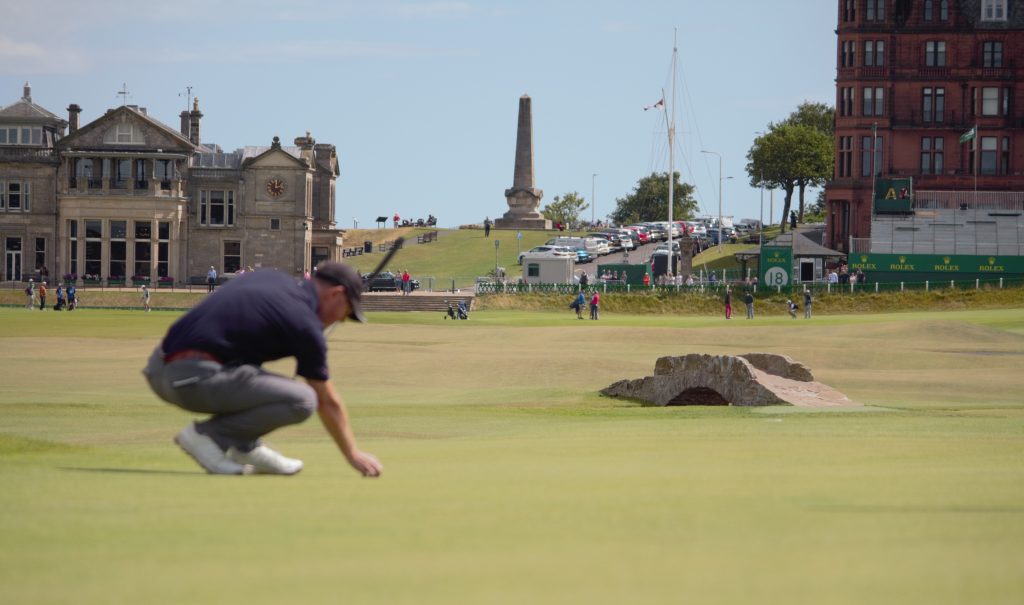
Lining up a putt for bogie at 17, with the iconic backdrop. Oh for the day to go on and on….

In deciding how to assess its value, I came up with this conundrum.  Ask any golfer the world over this question:  “Regardless of price, you can play golf once only in your lifetime at either The Old Course or Course X (name any course) – which would you choose to play?”.  Other than perhaps Augusta, The Old Course would likely come out top every time.  Therefore, for me, this defines the top price one should pay for a round of golf anywhere.  Any course costing more than £180 can’t be worth it, by definition, if you would actually rather play the Old Course anyway instead, regardless of price.

Of course, its only my opinion!

The beautiful par 4 7th hole, short at only 359 yards (white), but a true SI 4 hole.

So, play it once in your lifetime.  Hire a caddy if you can afford to.  Walk the hallowed turf and pray that you hit some nice shots.  Hope for a nice day, but also hope that the wind gets up sufficiently to understand its defence.  Hope for some “Sunday pins” to wrestle with a pro’s dilemma.   Hope you (maybe) find one or two of the almost mythical bunkers that dot the course.   Hope…..for so many things!

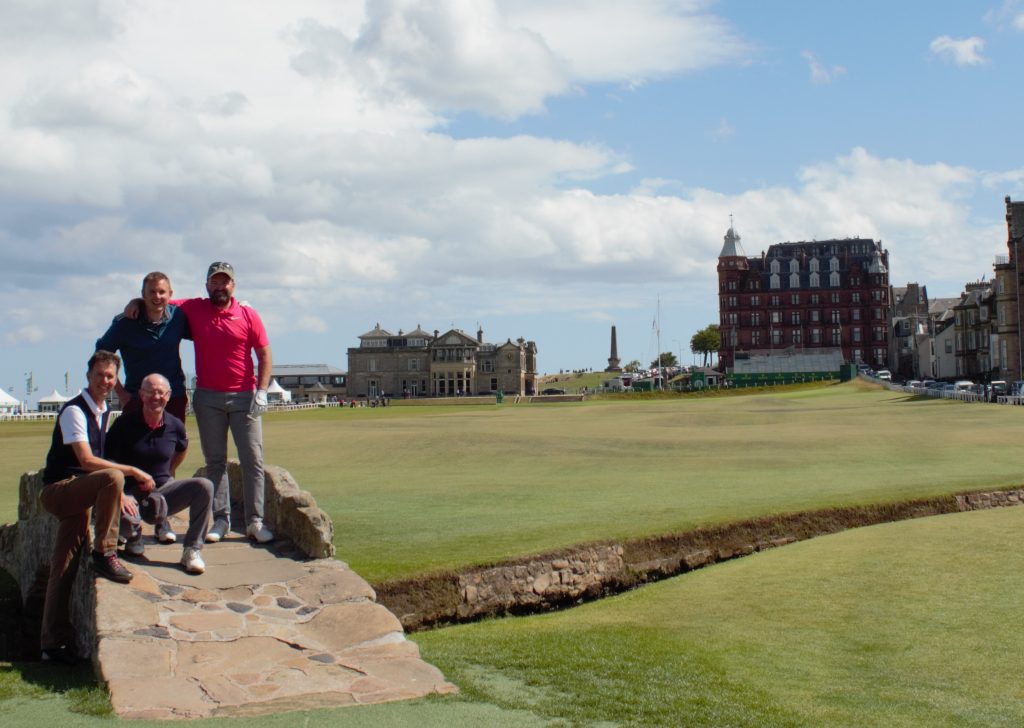
Four very happy golfers – for the record the DC Thompson Richards won the match play game 2 up,

I only found one bunker, Hill, on the par 3 11th …..thank goodness:)   I made a miraculous bogie, which was somehow symmetrical, as it was John Daly’s miraculous bunker shot from “Road” bunker, that won me the round of golf!  WOW!

Facts:

Course Type: Links

Par 72 (yellow:  2 par 5s, 14 par 4s,  2 par 3s)

Distance: 6387 yards

Moly’s Gross score: 87

Moly’s Hope; a well played round of 87 at The Old Course, St Andrews.

79. Fortrose & Rosemarkie. 24 June 2018.

Possibly the best located Scottish golf course, with evidence that James Braid’s bunkering came pretty cheap!      

Round £55.   Par 69.  Value (out of 5) – 4.5

“The Black Isle?”  Well, it’s not an isle and it’s not particularly black!  But it is a 10 mile wide by 20 mile long peninsular just north of Inverness, which also has a further very small peninsular on it’s southern Moray Firth coastline which is the heavenly location of Fortrose & Rosemarkie golf course.

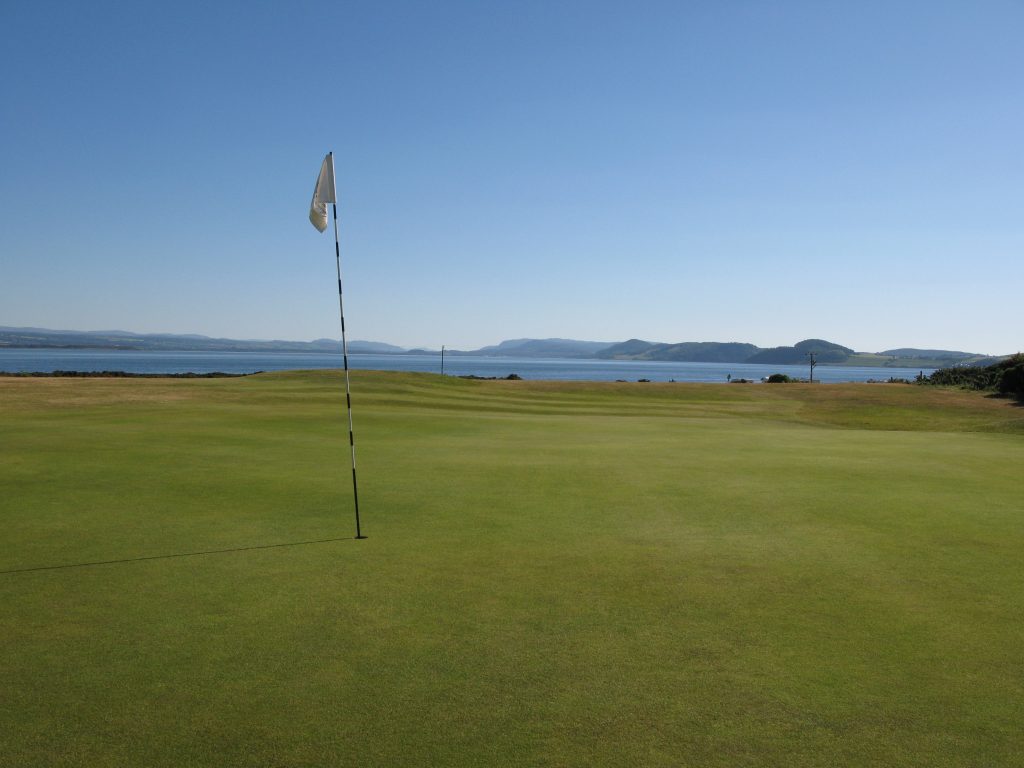
The 9th green looking back to the tee with the Moray and Beauly Firths in the background.

Scots sometimes refer (tongue in cheek) to being “from God’s own country”.  If that were the case, it might just be that God chose the Fortrose & Rosemarkie peninsular for his (or her!) own personal golf course.  I played the course on a wonderfully warm and sunny late midsummer evening for a twilight fee of only £30, shot 39 (4 over) on the back 9, including 2 birdies, and seriously thought that maybe I should just stop played with that golfing memory etched on my brain.  It really can’t get much better…can it?

The Black Isle has recently become a popular destination with the creation of the North Coast 500  but has long been a destination to play some of the cream of Scottish Links, with Royal Dornoch, Nairn and Tain all close by, plus the recent addition of Castle Stuart. Fortrose & Rosemarkie has actually been attracting golfing visitors in high numbers since the expansion of the railways in the late 19th century and golf in the course location is traceable back to 1702.  Established in 1793, is the Club is the 15th oldest in the world, of which they are very proud.

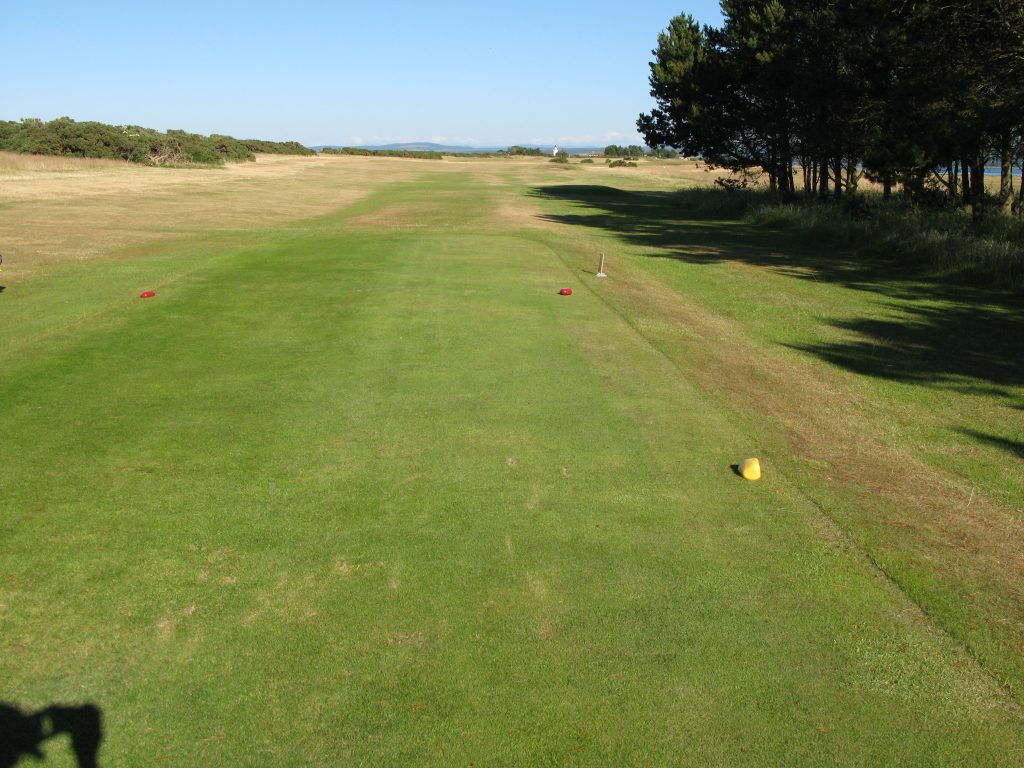
The 11th tee, which is one of several arguably bland holes around the turn at Fortrose and Rosemarkie.

The course is quite short, at only 5893 yards from white tees and 5594 yards from yellow tees which I used.   It is essentially 2 horseshoe loops with the outer loop played clockwise with sea (only in play at a few holes) on your left , then an inner smaller loop played in opposite direction.  The difficulty will be dominated by the weather, but the bunkering and greens are tricky and provide protection when the wind is down.    Originally a 9 hole layout, it was extended to 18 in 1924 and in both 1932 and 1934 James Braid was engaged to advise on layout and bunkering – his 1934 fee was £12.10/  which ended in the course in its current layout.   That is only about  £1000 in current value!

The 17th at Fortrose & Rosemarkie; play left to ensure reaching to the plateau fairway.

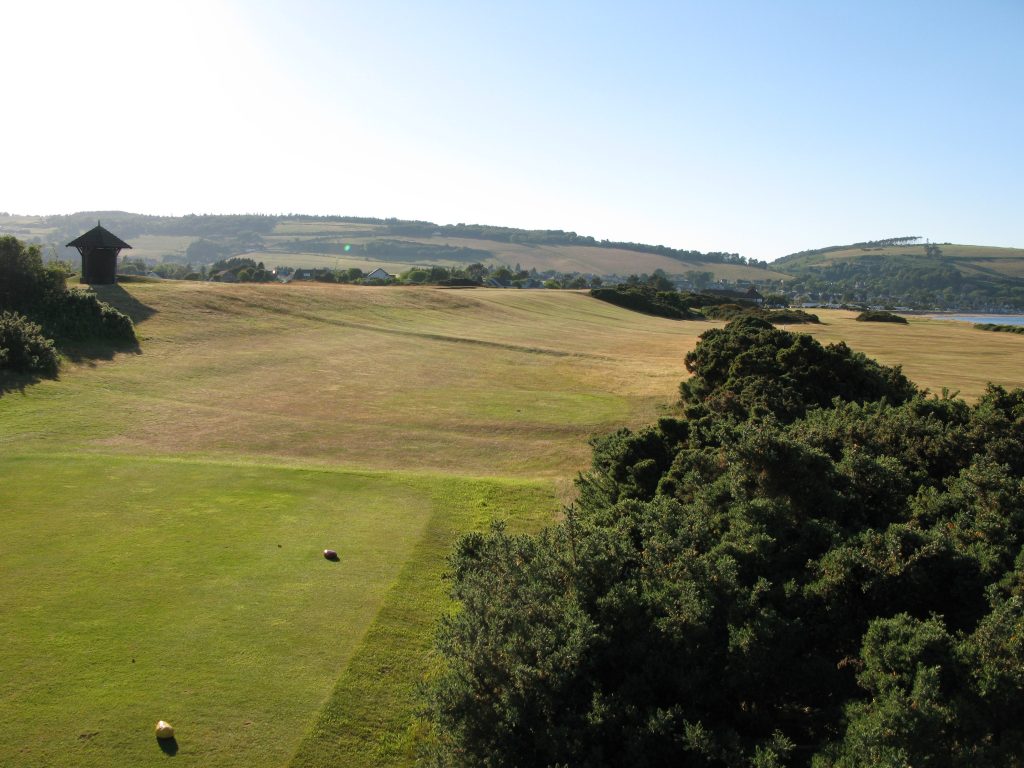
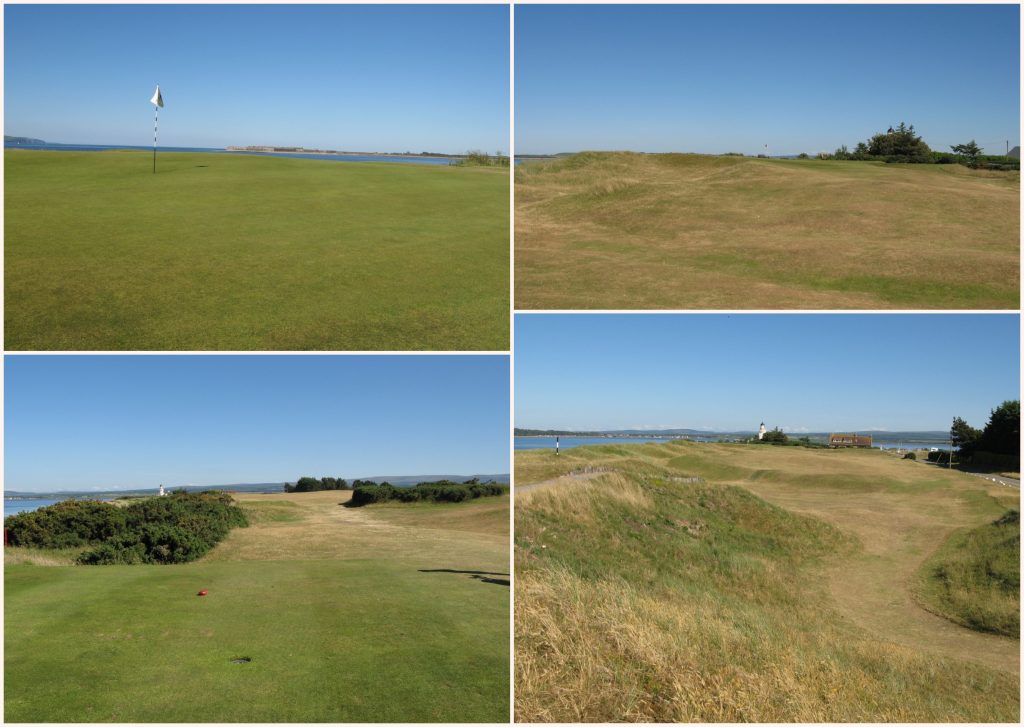
There are some majestic holes, most notably the long par 4 4th, played towards the lighthouse at Chanonry Point, which protects the small channel through the Moray Firth towards Inverness, which is a popular viewpoint to see the many dolphins which inhabit the area.  I have spoken to people who have played the course many times and never parred the 4th.

Mission Impossible – the long par 4 4th hole at Fortrose and Rosemarkie, with Lighthouse and Fort George in view.

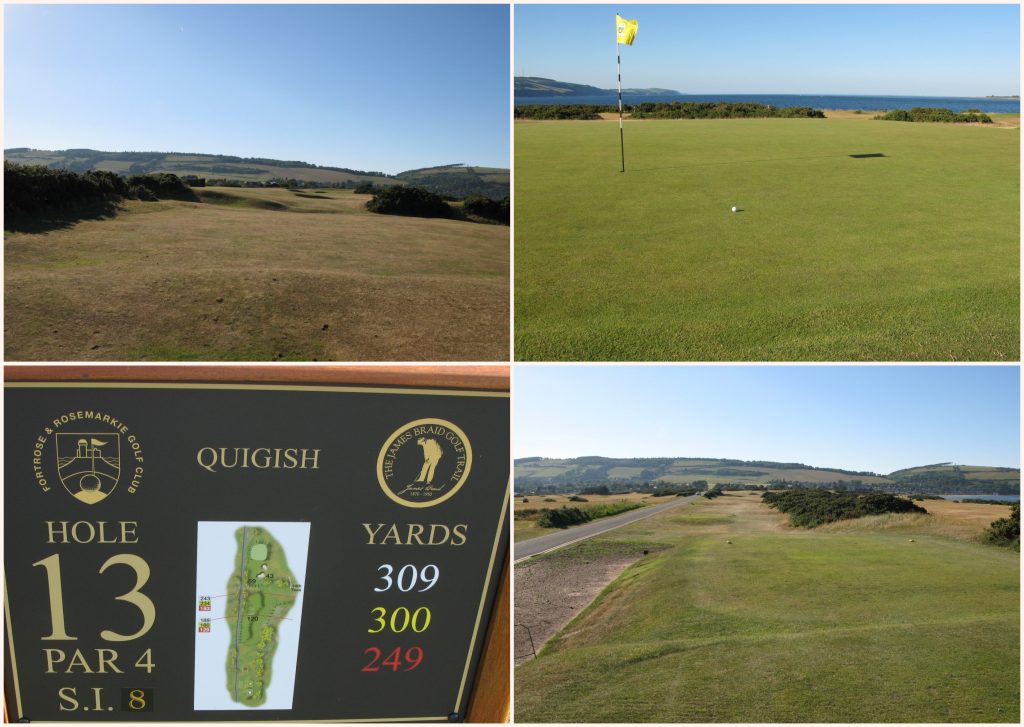
The 13th is also a great example of visible links architecture and Braid’s bunkers.  A hole with many options from the tee box.

The 13th – a magnificent short par 4.

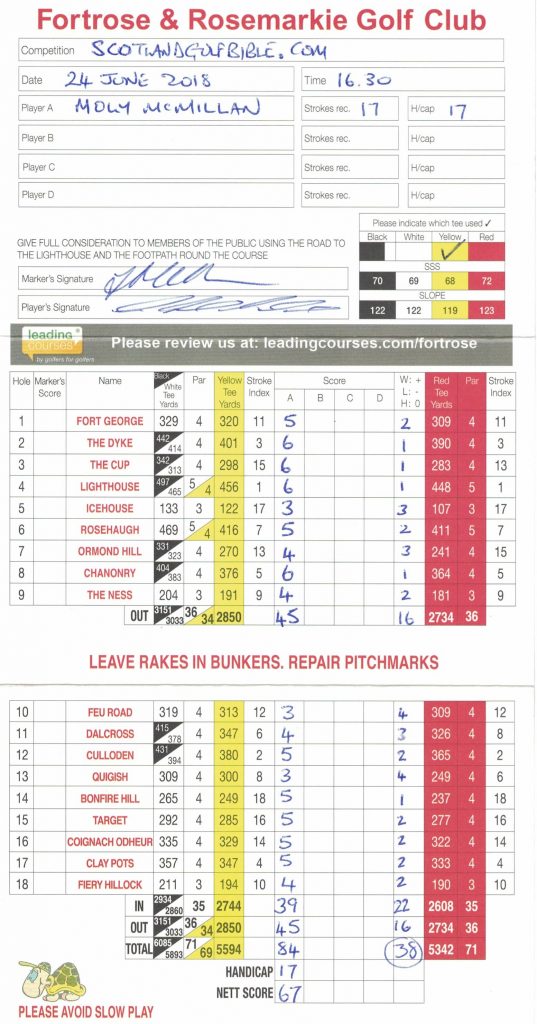
The course was in all round excellent condition when I played and the club are happy for visitors to use any of the tee boxes.    In the benign conditions I shot gross 84 (net 2 under), including 4 double bogies – inevitably one of these was at the 4th!.

This is a must play course, with a twilight fee at only £30 being especially great value.

Facts:

Course Type: Links

Par 69 (yellow; 15 par 4s,  3 par 3s)

Distance: 5594 yards

Moly’s Gross score84

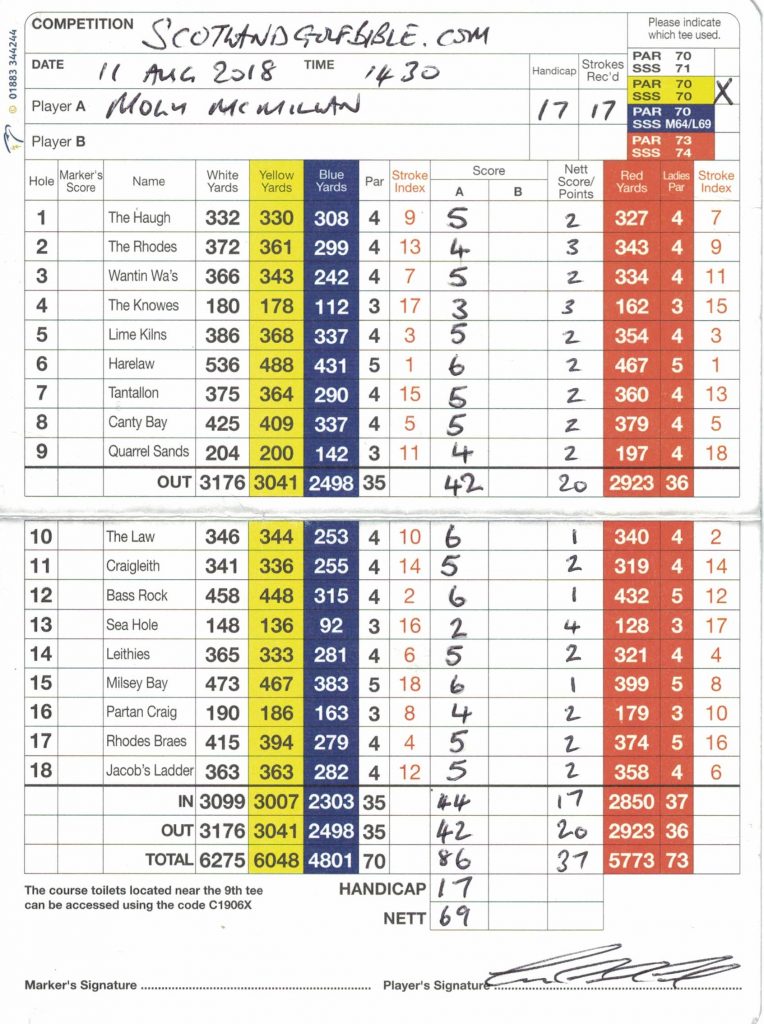
Moly’s scorecard – 84 with only 39 on the back 9.

75. Arbroath. 6 May 2018.

A must visit course for US Historians, fish lovers and record book chasers!       

Round £40.   Par 70.  Value (out of 5) – 4

Arbroath is the largest town in Angus and it’s golf course sits about 2 miles to the east of the town and only 6 miles from Carnoustie.  It probably gets bypassed by many visiting golfers moving north from Carnoustie towards the wonderful links courses in Aberdeenshire – this would be a wasted opportunity.

Arbroath has a remarkable claim for it’s influence on the modern world.  The “Declaration of Arbroath”, a Scottish declaration of independence of 1320, is regarded by several historians as the model for the American Declaration of Independence.

The delightful par 3 7th hole at Arbroath (159 yards)

The golf course can also argue a potentially unrivaled and rich architectural history.  Designed by Old Tom Morris, it opened in 1878,  was redesigned by the Troon professional Willie Fernie about 30 years later, then James Braid remodeled the tees, to add length, and bunkers in 1931.  That’s a strong golfing pedigree.

The course is predominantly an out and back layout.  The first 7 holes are played westward into the, normally very strong and cold, prevailing wind, before turning back for the 8th to 10th;  westward again for the 11th and 12th, then with 5 of the last 6 holes played eastward downwind back to the clubhouse.  Strategically, 11 of the holes have reachable out of bounds to the right, so right handed slicers may wish to consider their options off the tee.

The Stroke Index 7, 375 yard 6th hole at Arbroath, a typically difficult par 4 on the opening stretch of holes.

Viewed from the tees, Arbroath seems at times flat and innocuous, but it has been very cleverly bunkered by Braid, and I’m sure the locals will have many advisory comments on where to miss the greens.  The greens were also very hard when I played and difficult to hold (for all I guess other than very good golfers).  Playing off the yellow tees didn’t give  much respite either, as the 2nd and 17th both played as long par 4s, rather than par 5s from the white tees.  There are also 3 ditches that cross the course, and these need to be carefully considered, especially as the flat terrain makes them invisible to the eye.

I rather suspect first time visitors rarely score much above 30 stableford points.

The very difficult green to find in 2 at the 13th at Arbroath, with the railway OOB on the right

The highlights for me were the par 3s, all of which had good surrounds, with the two on the back 9, the 14th at 200 yards (white at 232) and the 16th, being especially difficult.

It’s a well kept course, with good tees, greens, fairways and bunkers.  The clubhouse has a friendly staff and good food, where you can try the Arbroath Smokie, the local smoked haddock delicacy protected by EU Trade regulations.

The wonderfully bunkered par 3 16th green at Arbroath

The other Arbroath claim to fame is the local Football Club, which holds 2 world records – the highest professional scoring record (winning 36-0), and their ground, Gayfield Park, being the closest to the sea in the world – only 5 and 1/2 yards away!  Apparently, one famous game was abandoned after all balls were “lost at sea!”.

Not a great day for me, I lost 3 balls (6 shots) and 3 putted 7 times!  I suppose that explains completely my 13 over par net!  Oh, and yes, the greens are rather large and difficult!

Well worth a visit.

Facts:

Course Type: Links

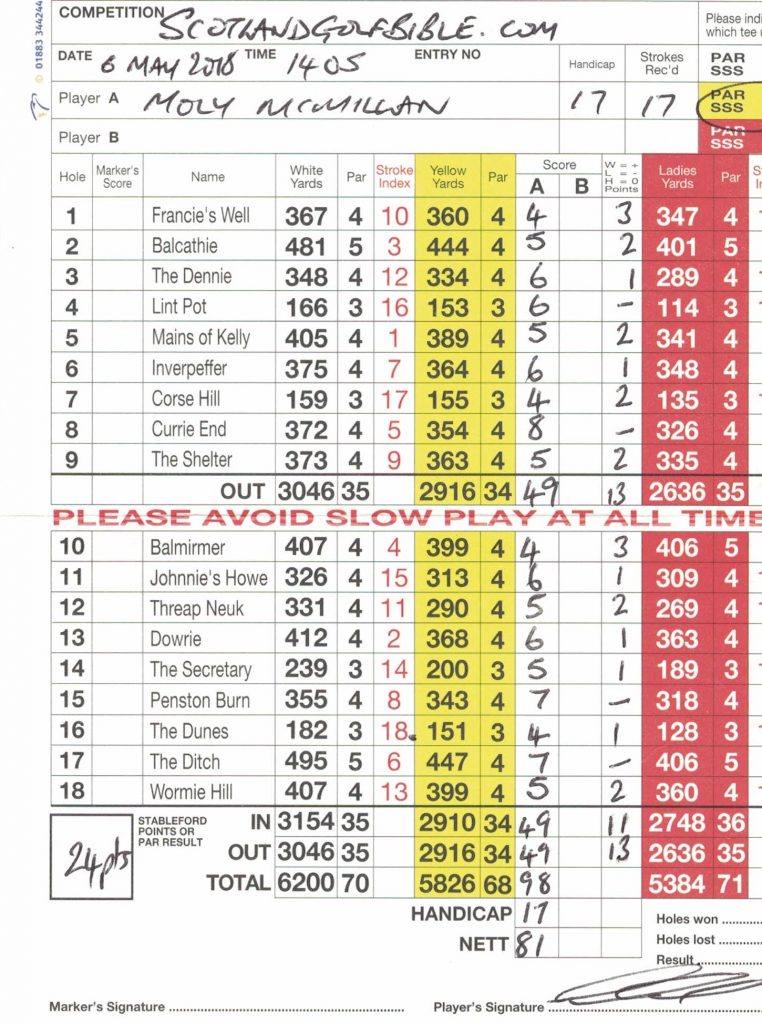
Par 68 (14 par 4s, 4 par 3s)

Distance (yellow): 5826

Moly’s Gross score98

Moly’s Arbroath scorecard – 98

74. Fairmont Kittocks. 20 Dec 2017.

American style resort “Links” 2 miles south east of St Andrews       

Round £95.   Par 71.  Value (out of 5) – 3.5

The Kittocks is one of two courses on the Fairmont hotel complex just outside St Andrews.  The resort was opened as the St Andrews Bay Golf Resort and Spa by the American pharmaceutical entrepreneur Dan Panoz in 2001, but has transferred ownership a number of times since.  The sister course is the Torrance named after its architect Sam Torrance the Scottish golfer.   Both courses are championship venues and have hosted major qualifying and senior events.

The 12th tee at Kittocks shows the well laid our fairways

The Kittocks course was originally called the Devlin after its golfing designer, the Australian Bruce Devlin, who developed the course in partnership with Denis Griffiths, the well known designer and past President of the American Society of Golf Course Architects.  The Kittocks is named after an area of land on the course which is inhabited by a family of deer.

Until recently, both courses had a headline Summer rate of £140, although new management has repriced it at “only” £95.  I say “only” to highlight how crazy, in my opinion, golf prices in Scotland have become at the higher end of the market – Kingsbarns, only a couple of miles away, is £268 for a 2018 summer round!  Assessing “value”, my key course assessment, is inevitably subjective, especially considering the different types of golfers each course targets – Kingsbarns starter box has a toll free American number!  Comparing “value” between Kingsbarns (£268), St Andrews New (£80), Scotscraig (£70), Tain (£60), or the Kittocks at £95, is highly debatable….but good fun!

The signature 7th hole at Fairmont Kittocks, with the North Sea in view

The Kittocks has many original links design attributes, including 2 double greens (the 1st and 13th, and 7th and 10th), deep and revetted bunkers (although slightly oddly built), whispy rough, boundary dykes  and several dune like mounds.  The layout is a mesmerising number of interlinking horseshoes, meaning wind changes direction from hole to hole. The very clever use of contours and rough means each hole feels isolated from the others displaying high level architecture.

The tough long par 4 18th hole at The Kittocks

After a fairly straight forward par 5 opening hole, the very picturesque 2nd hole, with its manufactured lake along the left, lets you know this course is not trying to be a classic links design.   The 4th hole, stroke index 1, is the first of several very difficult holes, where a long second shot is needed over a deep gully into a green surrounded by gorse.  Having hitting my best drive and 5 wood of the day, my ball was never to be found again in the gorse to the left of the green!

The man made lake alongside the beautiful Kittocks 2nd hole gives away this is a modern “links”

The course then winds down to the North Sea, with the dog leg par 5 5th hole presenting one of the few blind tee shots on the course, with its green giving outstanding views back towards the “Toon” of St Andrews.  After the nice par 3 6th hole you then reach the signature par 4 7th hole, which has a great vista showing the unusual bunkers and, finally, the huge double green.

There then follows a range of nicely varied holes, whereby there is no stretch of incredibly difficult back to back holes.  Looking at the stroke indexes on the card you see how balanced the course is.  The 10th presents the first time the combination of the prevailing westerly wind really comes into play along with the sea tight along the right of the fairway.  The highlight for me, both visibly and playing, was the difficult par 3 16th hole, where the yellow tee of the day had been mischievously placed on the championship tees, giving me a slightly uphill shot of almost 200 yards into a 15 mph wind – I didn’t lose my ball!  Its worth noting that there are a range of tee options with big differences between the blue/white/yellow/red tees, suiting all standards.

The Kittocks 10th tee with the Fife coastal path verging the course and St Andrews in the background

The final 2 holes were originally part of the Torrance course, but incorporated into the Kittocks after a redesign in 2009 and present 2 very fine long par 4s to finish.

The course was in great condition for a December, with full tees and greens in play.  The course is quite open with wide fairways and the greens were surprisingly fast.  The greens are generally very large, and I imagine not many amateurs will go without 3 putting the odd green – I did it 7 times….ouch!    Along with 2 lost balls, this was the reason for my gross 101 for 25 stableford points.

If you are looking for a golf resort whilst in St Andrews, the Fairmont offers a great location with the fees for unlimited golf on both courses during your stay being very reasonable and much better value than a single round.   I got a good deal with a winter fee of only £30, but my score of 3.5 represents a value at £95 per round.

Facts:

Course Type: Links

Par 71 (3 par 5, 11 par 4s, 4 par 3s)

Distance (yellow): 6327

Moly’s Gross score: 101

Moly’s Fairmont Kittocks scorecard – 101 for 25 points

« Older posts Newer posts »

© 2026 Scotland Golf Bible

Theme by Anders NorenUp ↑