A guide to green fee value for money

Author: Moly McMillan (Page 2 of 48)

Moly McMillan lives in Somerset. He is a business management consultant helping businesses scale and also devotes time to playing all of Scotland's golf courses, assessing their value for money.

185. Broadlees. 25 Mar 2023.

If a farmer builds a golf course, this is what might be par.

Price: £16. Par 36. CR 69.0, Slope 119.

Value: 3.5 / 5.

Moly’s Score: 45

In 1987, the UK Government launched the Farm Diversification Grant Scheme, to incentivise farmers to diversify; by the early 1990s courses began sprouting at a rate that may have startled Old Tom Morris. My own club, Isle of Wedmore in Somerset, was built in 1992 on Lineage Farm by Ken Abraham, using a standard hymn sheet – rolling agricultural land, modest construction budget, an unfussy layout, and a prayer that golfers would cover the mortgage.
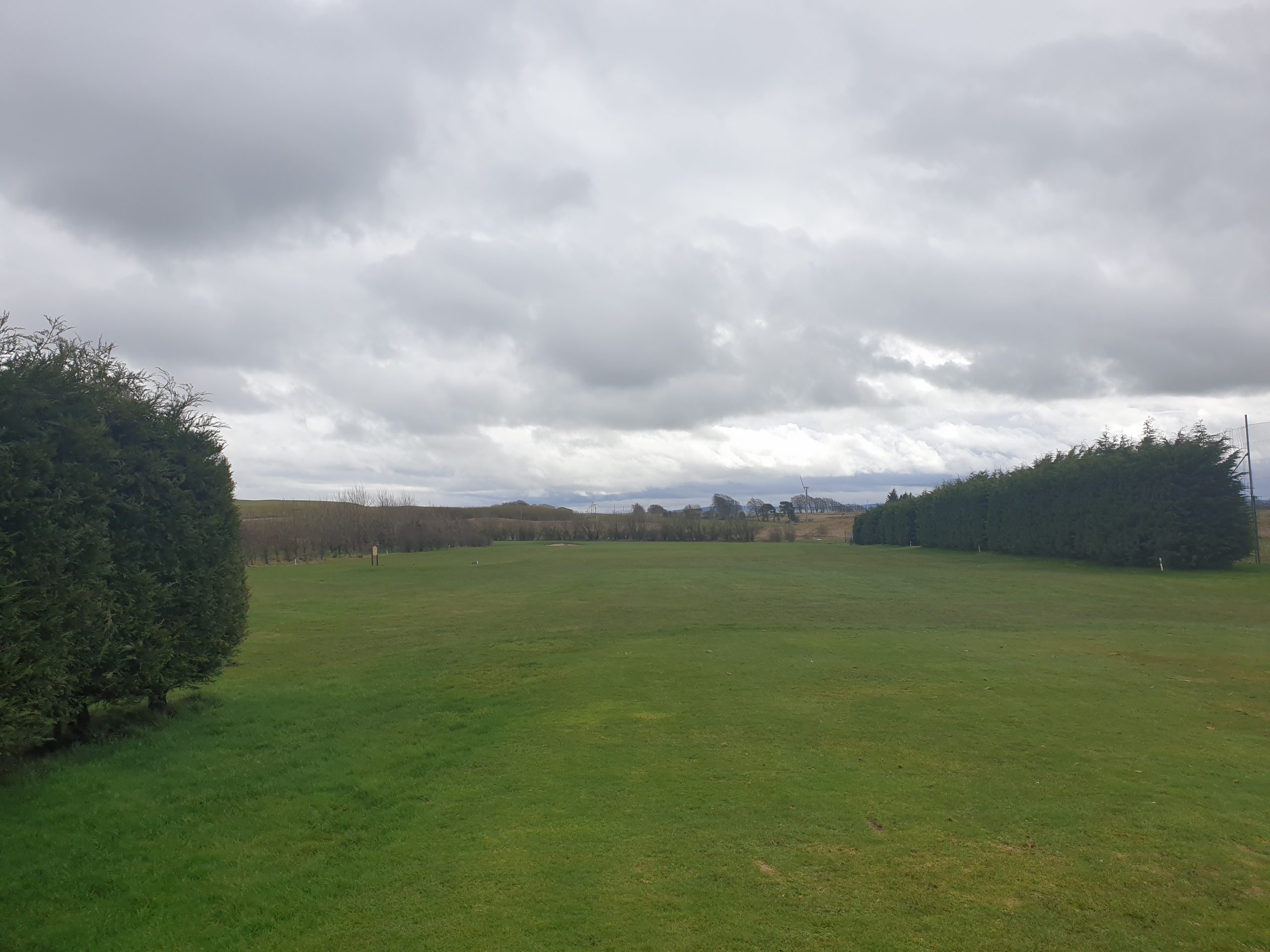
“Anderson’s Garage” the aptly named first hole, par 4, surrounded by Farmer’s fields

Robert and Barbara Anderson did the same in 2004, converting their South Lanarkshire farm into the Broadlees Golf operation; range, 9-hole course, crazy golf, footgolf, academy, cafe and in 2021 a second very unusual addition (covered in Blog 186). They self-confidently named the course’s address “Anderson” Drive, Chapelton, after themselves!

The workmanlike hole names also gives insight to the Andersons; ‘Anderson’s Garage’, ‘Gas Works’, ‘Worker’s Way’, ‘Out the Moss’, ‘Old Road’ and ‘Five Acre’. The ‘Powmillon’ burn (hole 4) runs through well-heeled Strathaven a few miles to the south-east, whose own Golf Club has more bourgeois hole names.
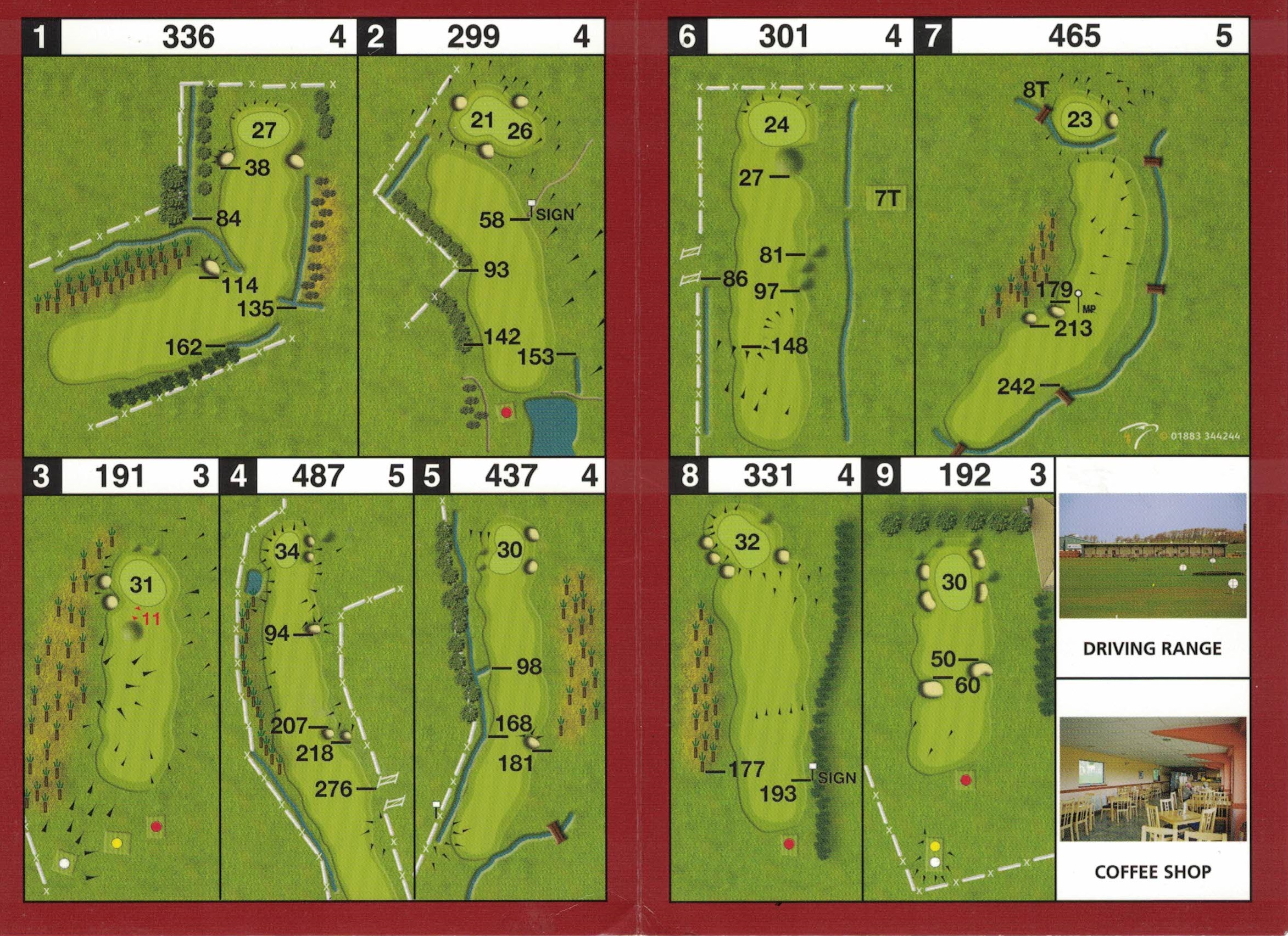
The Broadlees free laminated course guide, that much grander clubs could learn from.

The Andersons display good commercial instincts, no more so than with the ‘free’ laminated course guide (see above). For a pay-and-play operation of this scale it is more than you expect, and much better than many established member clubs that charge several times the greenfee.
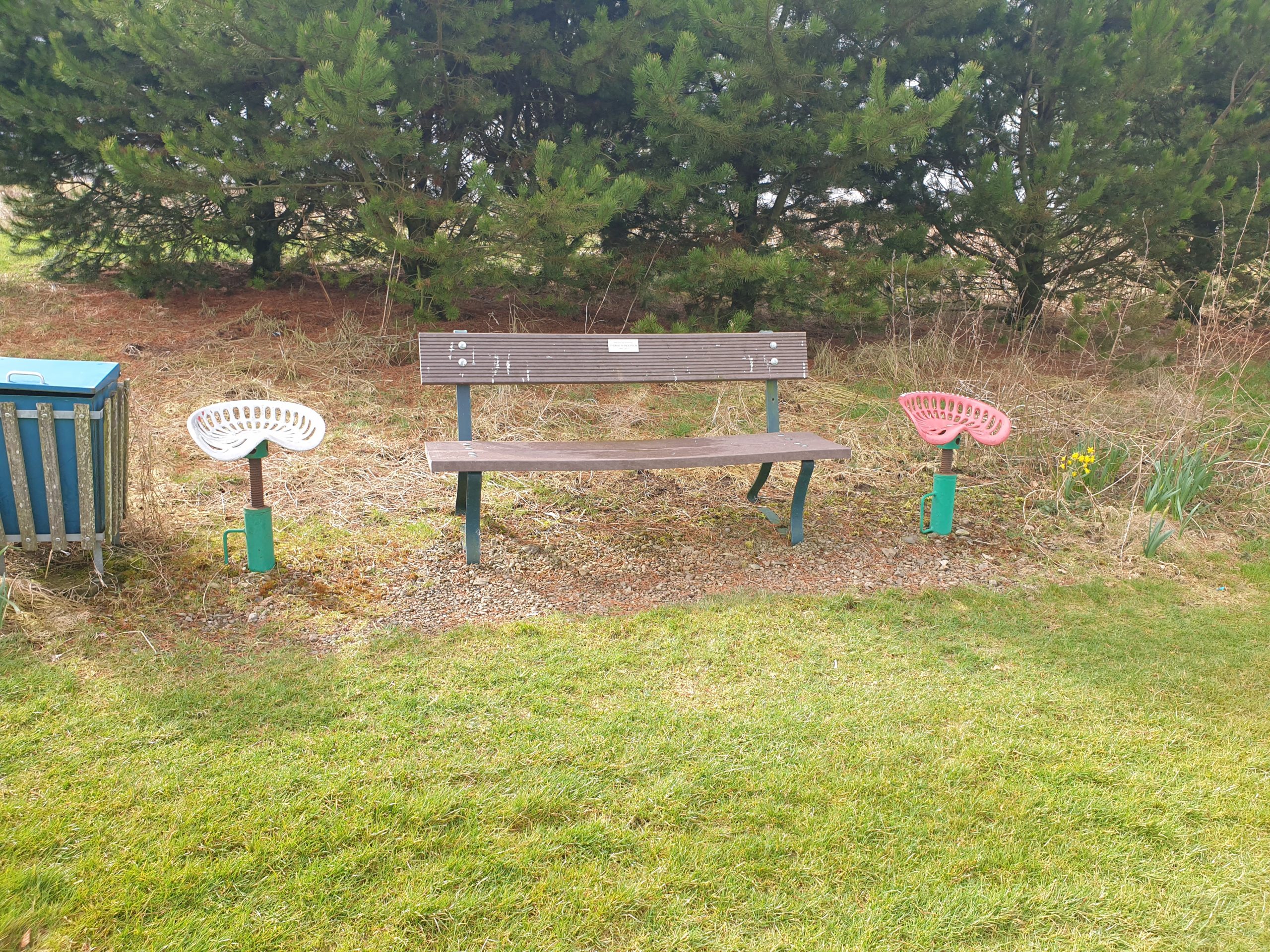
A poignant fifth hole spot with tractor seats (?) repurposed for rest — an honest summary of Broadlees origins. The memorial bench commemorates John Anderson.

What you might get when a farmer builds a golf course on a limited budget is, I think, what you get here. The bones are reasonable at around 3000 yards, a par 36 with two par fives and two par threes. The par-five 4th (Powmillion, 479 yards) and the par-five 7th (Over the Burn, 456 yards) give the round depth. Water features on some holes, including a pond at the 2nd and a burn that winds its way around the 7th green, retained by a rustic timber revetted bank. Bunkering is sufficient, but was unraked when I played.
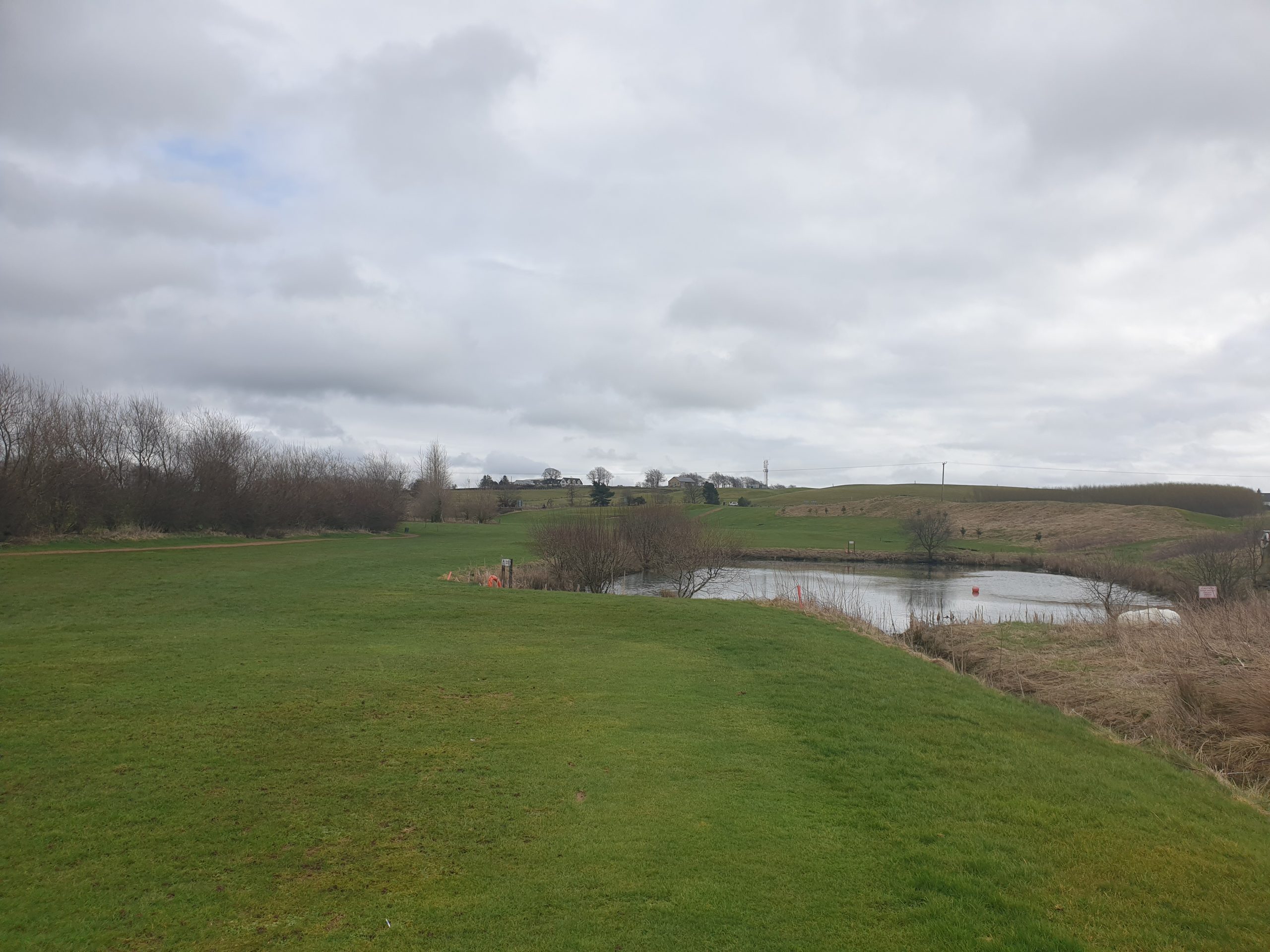
The limited framing developed is shown here at the 2nd hole, ‘Gas Works’, a short par 4.

The central challenge with designing a course on open farmland, such as Broadlees, is framing. Well framed holes visually present a picture using trees, contour, rough, bunkers, water and elevation. This skill is epitomised by the Camoufleur Alister MacKenzie, whose work can be seen at Pitreavie (Dunfermline) see blog 150. At Broadlees, fairways unceremoniously bleed into rough. The trees planted are still young; scrub and rough areas are unformed; the contours, while present, have not yet sharpened. I hope the Anderson family get to see Broadlees mature.
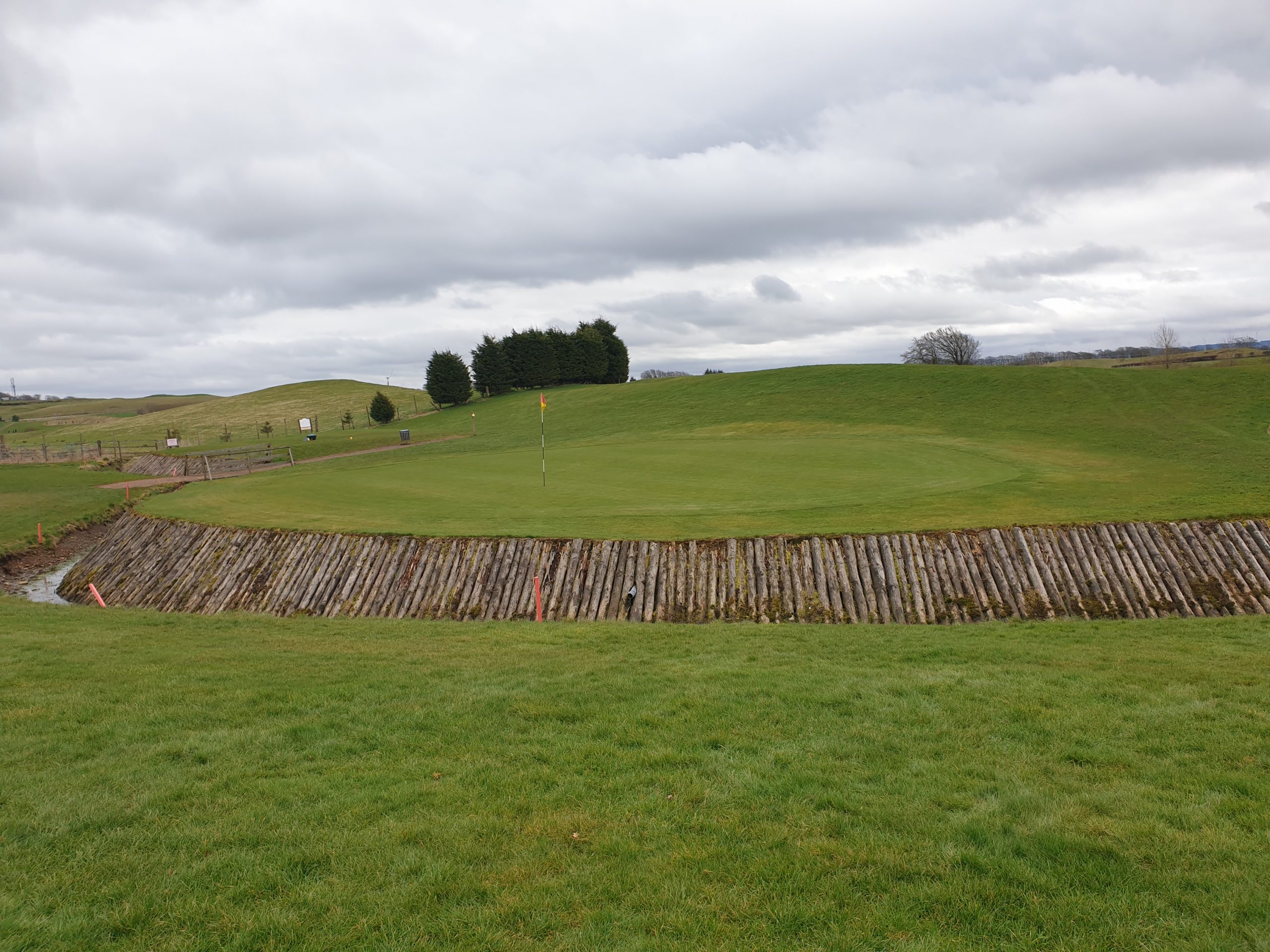
The 7th green (Over the Burn, par 5, 456 yards), its rustic timber-revetted bank is the course’s most marked piece of construction.

The greens are the strongest element. True, consistent and well-presented on a late-March morning when much of the course was still very wet. However, the claim that they rank among the finest putting surfaces in Lanarkshire is bold, and nowhere near the truth in my opinion.
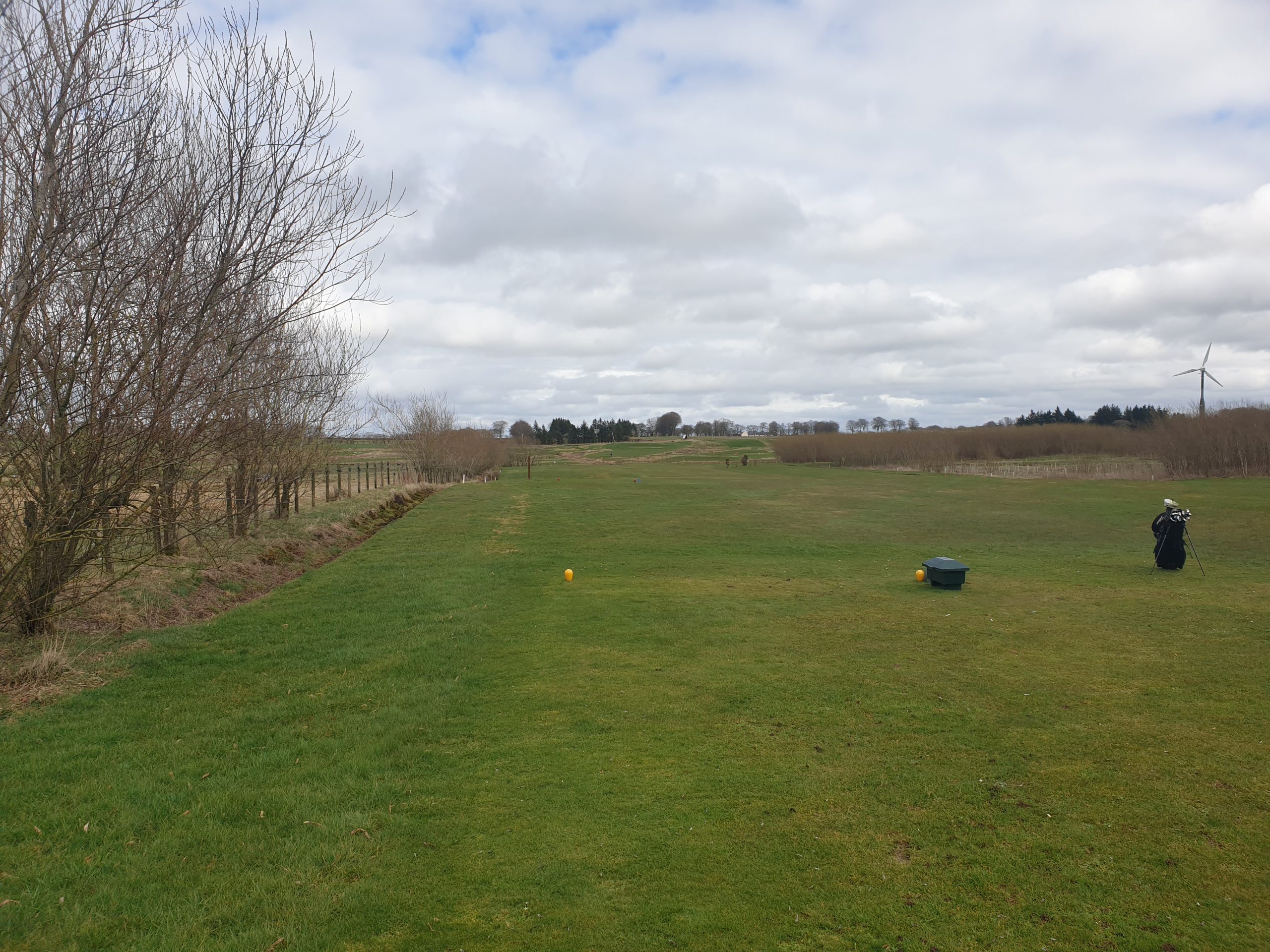
The 6th, ‘Out the Moss’ (par 4, 290 yards). A typical hole on Broadlees

The two wind turbines deserve a mention as they are visible from most holes and dominate the final green. They present a reminder that Broadlees is a commercial enterprise built by farmers who needed multiple revenue streams from a single property. The turbines, golf course, cafe, Santa’s grotto. Each a response to the same challenge – making a small rural business pay in a Scottish golf landscape where established member clubs and council-owned courses provide stiff, and often quietly subsidised, competition.
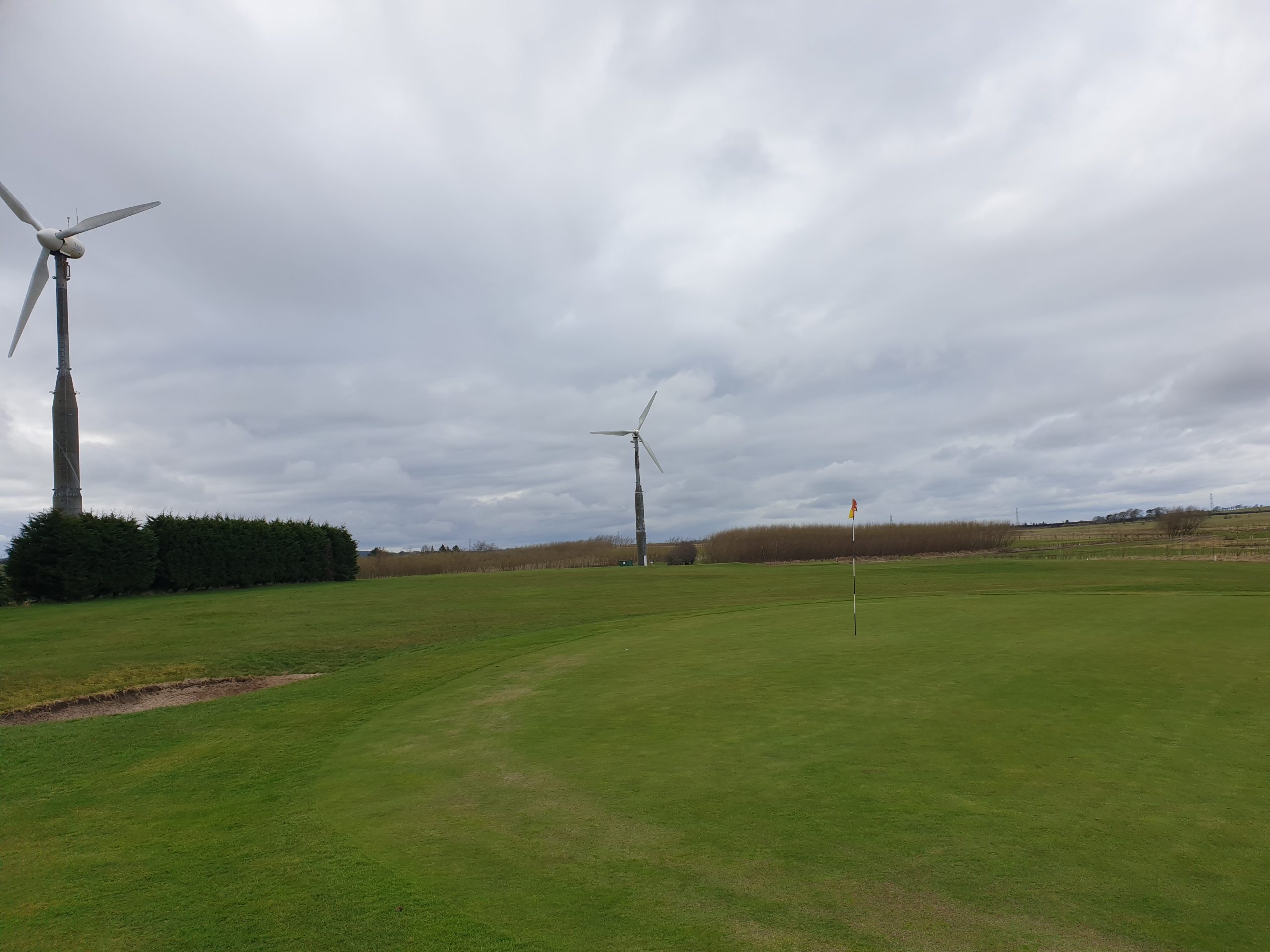
The ninth, with Farm windturbines

At £16 for nine holes, Broadlees is cheap, and relatively good value. Within a few miles, South Lanarkshire golfers have many choices, so Broadlees needs to keep well below the competition fees, certainly until the course matures.

The Andersons, however, were not finished. In 2021, they added a second course — and this one was genuinely unlike anything else in Scotland. See Blog 186 to find out more.

Value: 3.5 / 5. The Andersons have built something from nothing and kept adding to it for twenty years. That deserves acknowledgement. But a golf course is not only measured by the effort that went into building it. The framing will come. It just wasn’t there yet. But at the price it’s good value.

Facts:

Course type: Parkland/Pasture

Par 36 (2 par 5s, 5 par 4s, 2 par 3s)

Distance: 2,954 yards (yellow tees)

Moly’s Gross Score: 45 (9 holes)

See also: Blog 186 — Broadlees Par 3 Golf Course
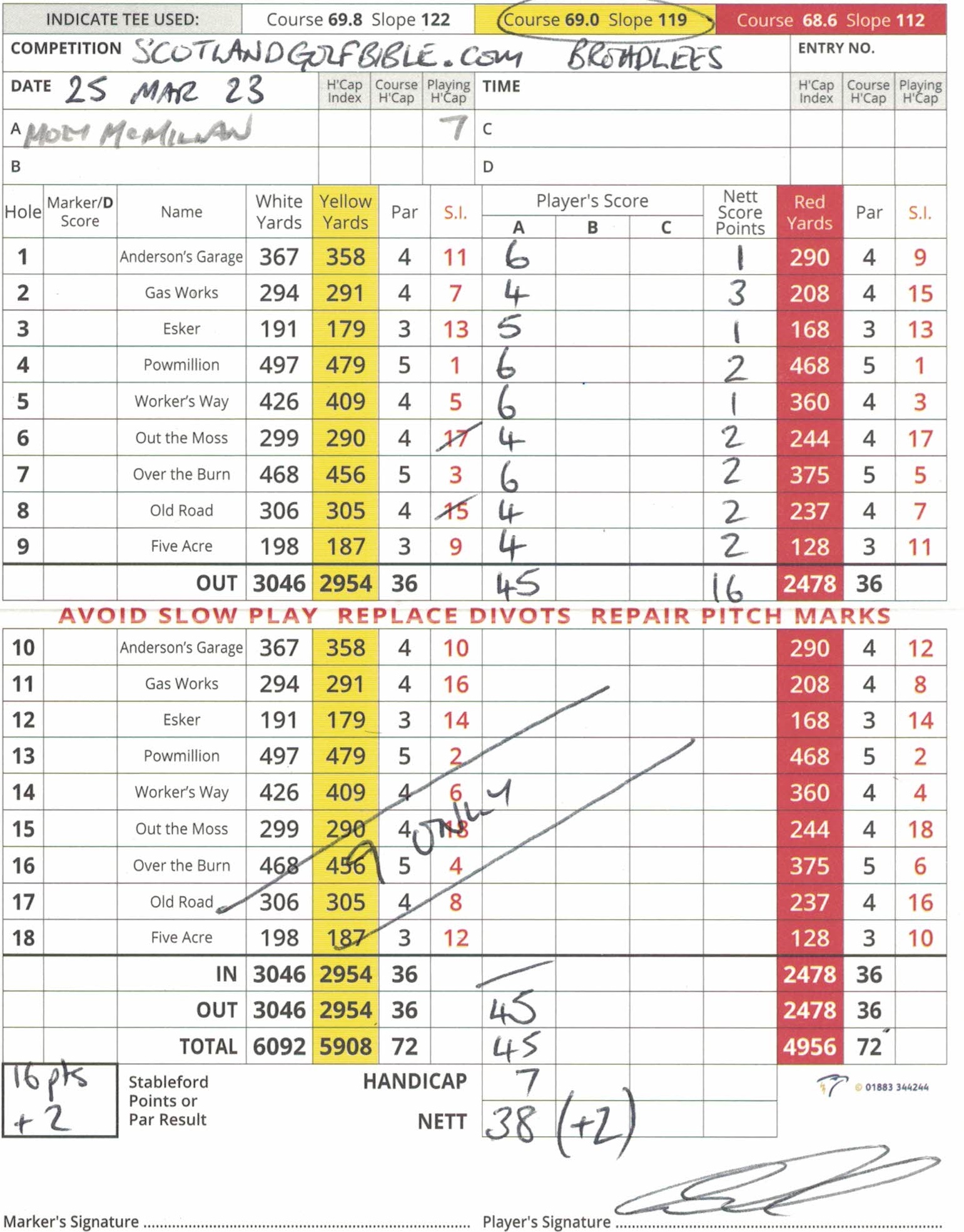
Moly’s card. Level 5s, I hit the ball pretty steady.

184. West Kilbride. 24 Mar 2023.

Walter Hagen thought better of it. He made a big mistake.

Round: £40 (Winter rate). Par 71. Course Rating 69.7, Slope 120.

Value: 5/5.

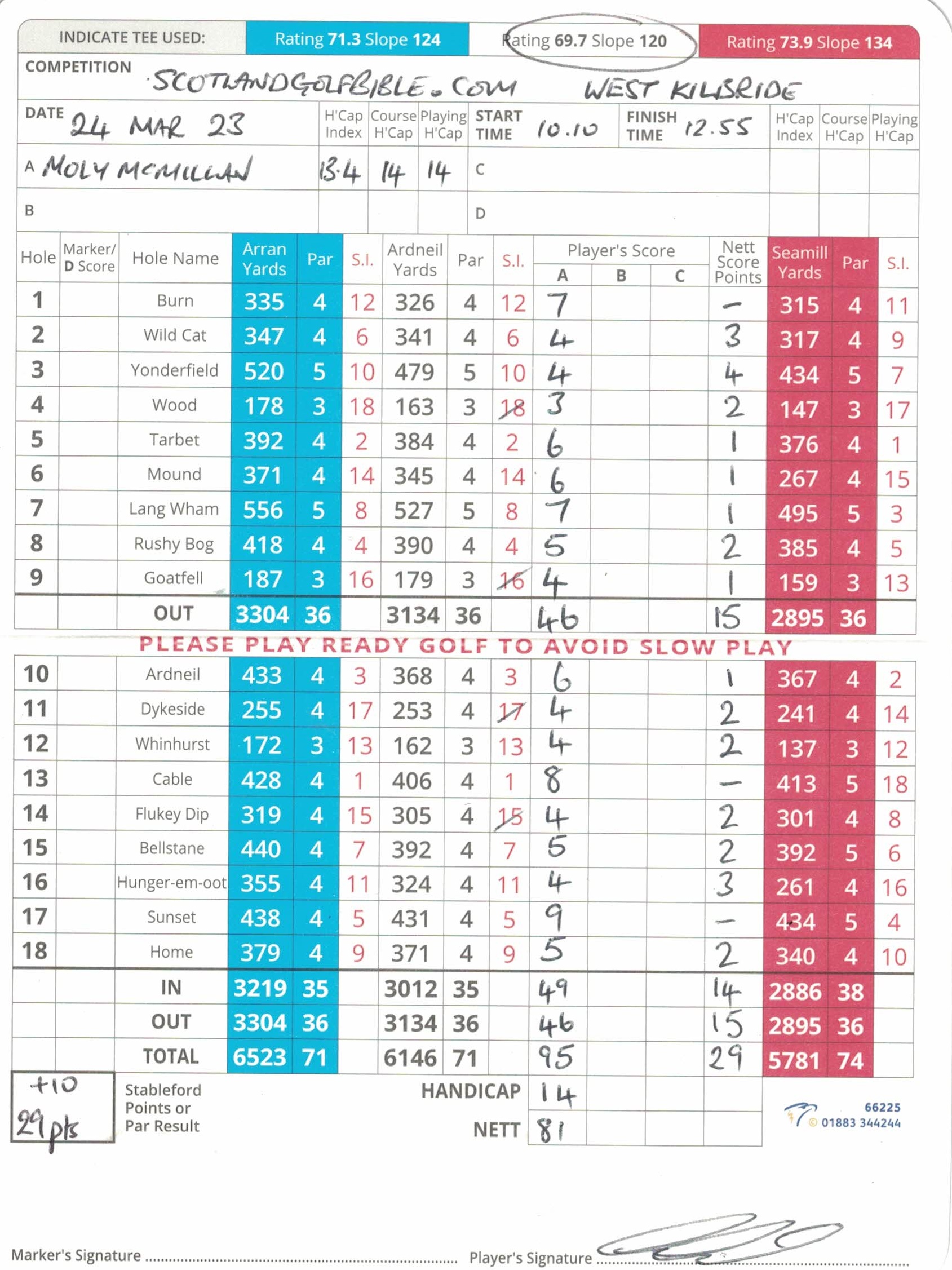
Moly’s Score: 95.

Three miles south of Seamill on a rocky promontory above the Firth of Clyde, sits Portencross Castle, a squat fourteenth-century tower house with a roofline destroyed in 1739 and never repaired. This place was consequential long before the castle was built as its land was given by Robert the Bruce to Sir Robert Boyd of Kilmarnock for his service at Bannockburn. The castle became a purgatory stop for Scotland’s dead kings; their bodies lying in state before being transported by a birlinn, a traditional Hebridean ship, to Iona for burial.

By the 1890s, the Craufurds had long since replaced the Boyds of Kilmarnock dynasty. It was Hugh Craufurd, Laird of Auchenames and Portencross, who played the first tee shot at West Kilbride Golf Club in 1893, on the nine-hole course laid out by Old Tom Morris.

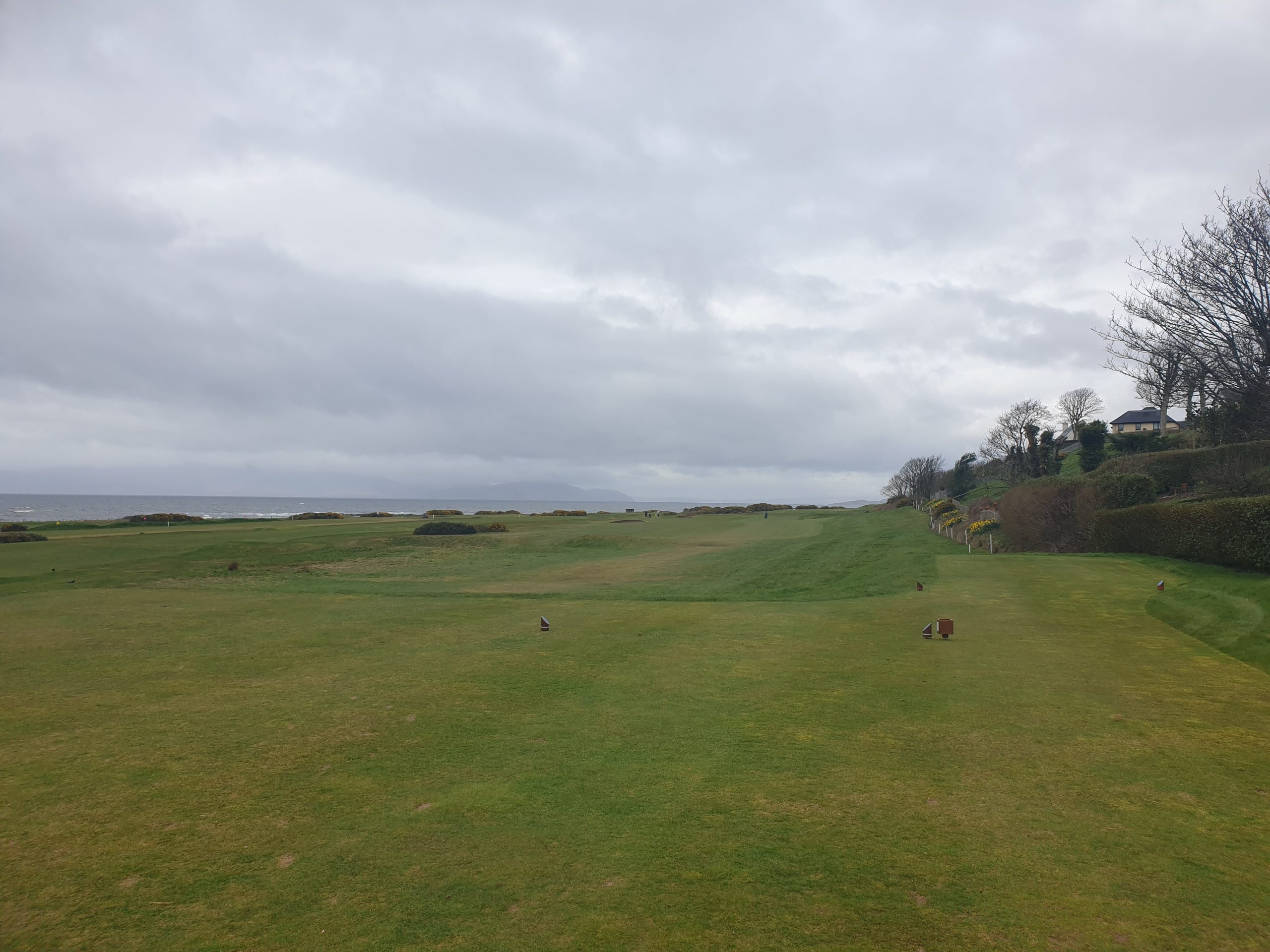
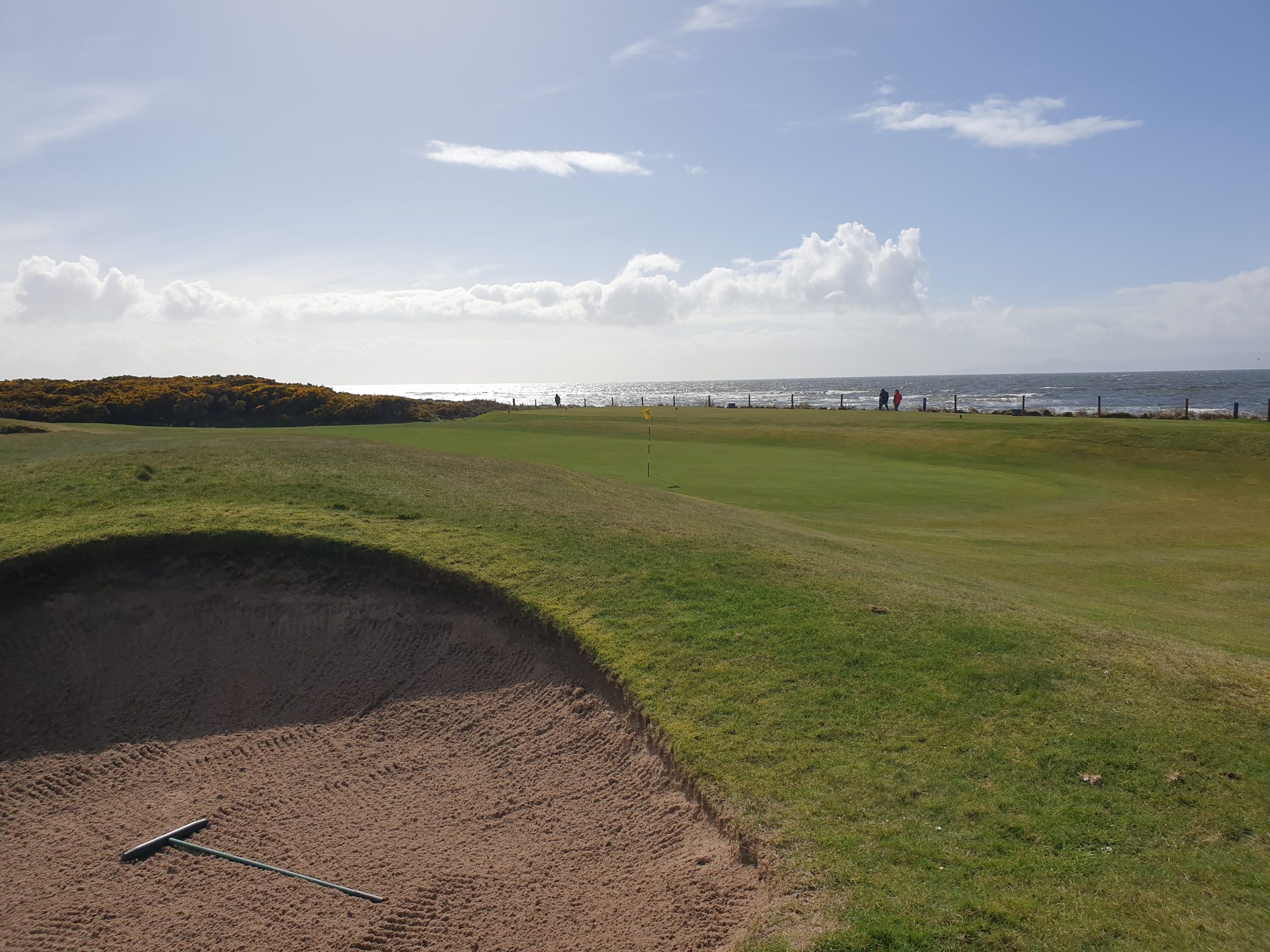
Hole 1, Burn, looking at the Firth of Clyde and the Isle of Arran. The Laird of Auchenames drove off here in May 1893.

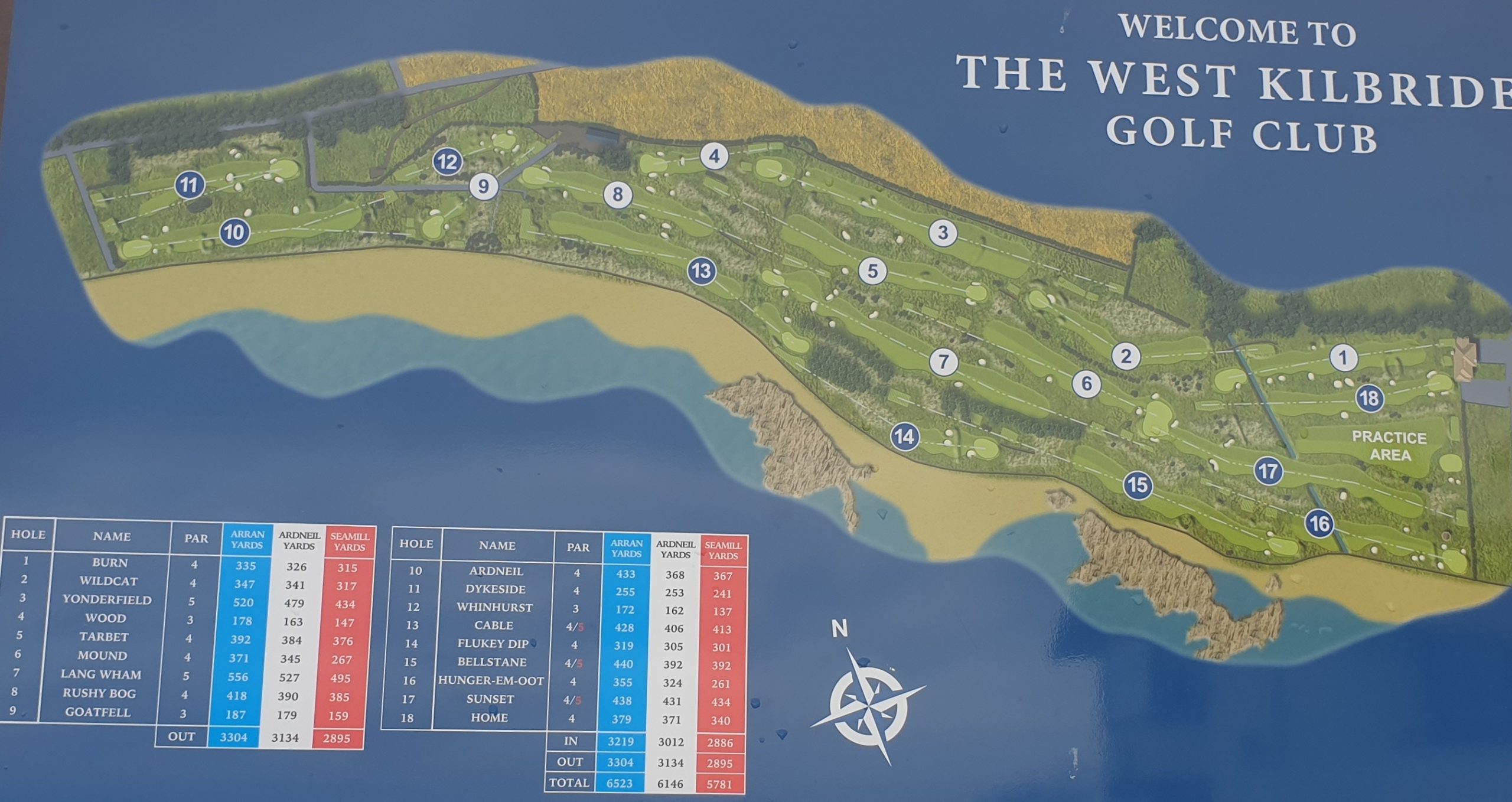
The course extended to 18 in 1905, and the layout was altered again in 1914 and 1925, both done by James Braid. There are many parallels with Lundin GC, blog 84, with the links land predominantly the Morris holes, with Braid encroaching on the more arable turf. The resulting layout it is not a simple out-and-back routing, with Braid keen to make regular changes in wind effect, where he could.

The Old Tom / James Braid layout, a course with parallels to Lundin GC in Fife.

I played alone for only £40 on the winter rate, an unbelievable bargain, in changeable weather conditions as the photos show. Being alone at West Kilbride was mostly meditative, despite a forensic start.

At the first hole, Burn, a par four of 326 yards, my thinned drive embedded in the face of a bunker; not in the sand, but in the turf wall – a rule referee wasn’t available.

The opening drive, embedded in the face of the bunker. A rules quiz – what can you do?

Does a ball embedded in the face of a bunker entitle you to free relief? The answer is yes — provided the ball is embedded in the turf of the rivetted wall or face, not in sand. The relief is to find the nearest point in the general area not nearer the hole and drop within one club-length. No penalty. The catch: if any part of the ball is touching sand, free relief evaporates and you play it as it lies or take an unplayable.

I took the free drop and still made seven. The rules of golf are at times generous, but they don’t always mean a lower score.

The approach to the par five 3rd hole ‘Yonderfield’. The trees perfectly illustrating the prevailing wind underlying how West Kilbride challenges your game.

I played a good round in difficult windy conditions with Out of Bounds (OOB) in play on twelve holes. There is nowhere to hide at West Kilbride. I finished with 95 gross and 29 Stableford points off 14, which in those conditions represented something around par for the day.

The front nine is somewhat on arable, not true links, land. The back nine has more of the original links land holes, giving you two linked but distinct experiences. It is at the turn, Ardneil, the tenth, that the course reveals its real character, with OOBs running the complete left hand side. The westerly prevailing wind becomes your friend here.

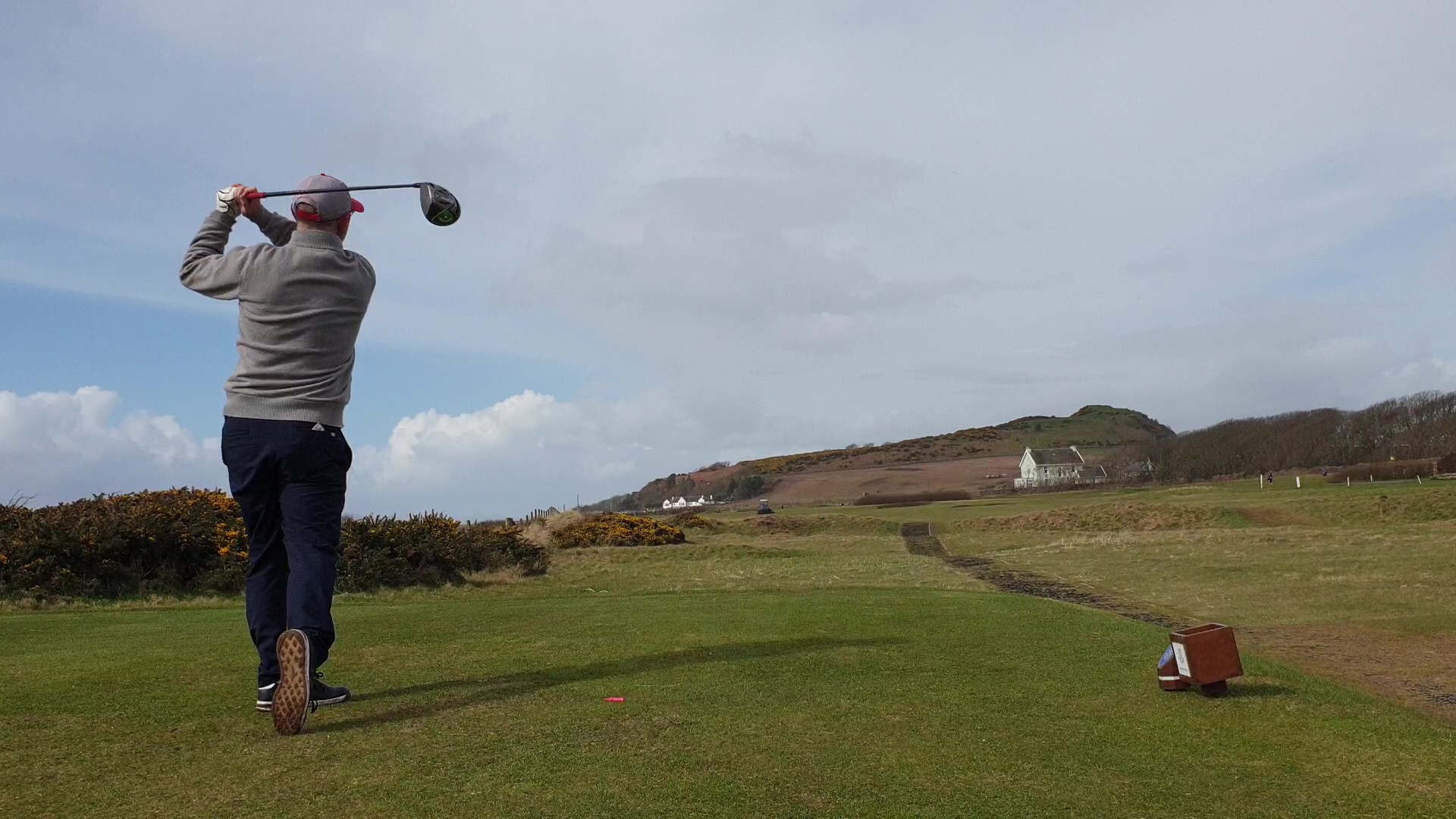
Moly driving at the difficult par four 10th, the stroke index 3 hole, with gorse starting to bloom in March! As a lone golfer you need to be good at setting the camera.

By my back nine, something else had changed: the weather. The grey overcast of the first hour had given way to Ayrshire sunshine, the Firth beginning to catch the light and Arran stunningly on the horizon. Links golf in Scotland operates a variable weather tariff, not unlike most of the fees these days. The same course that hands you a seven on the first hole in a grey wind can, within two hours, be offering something close to transcendence.

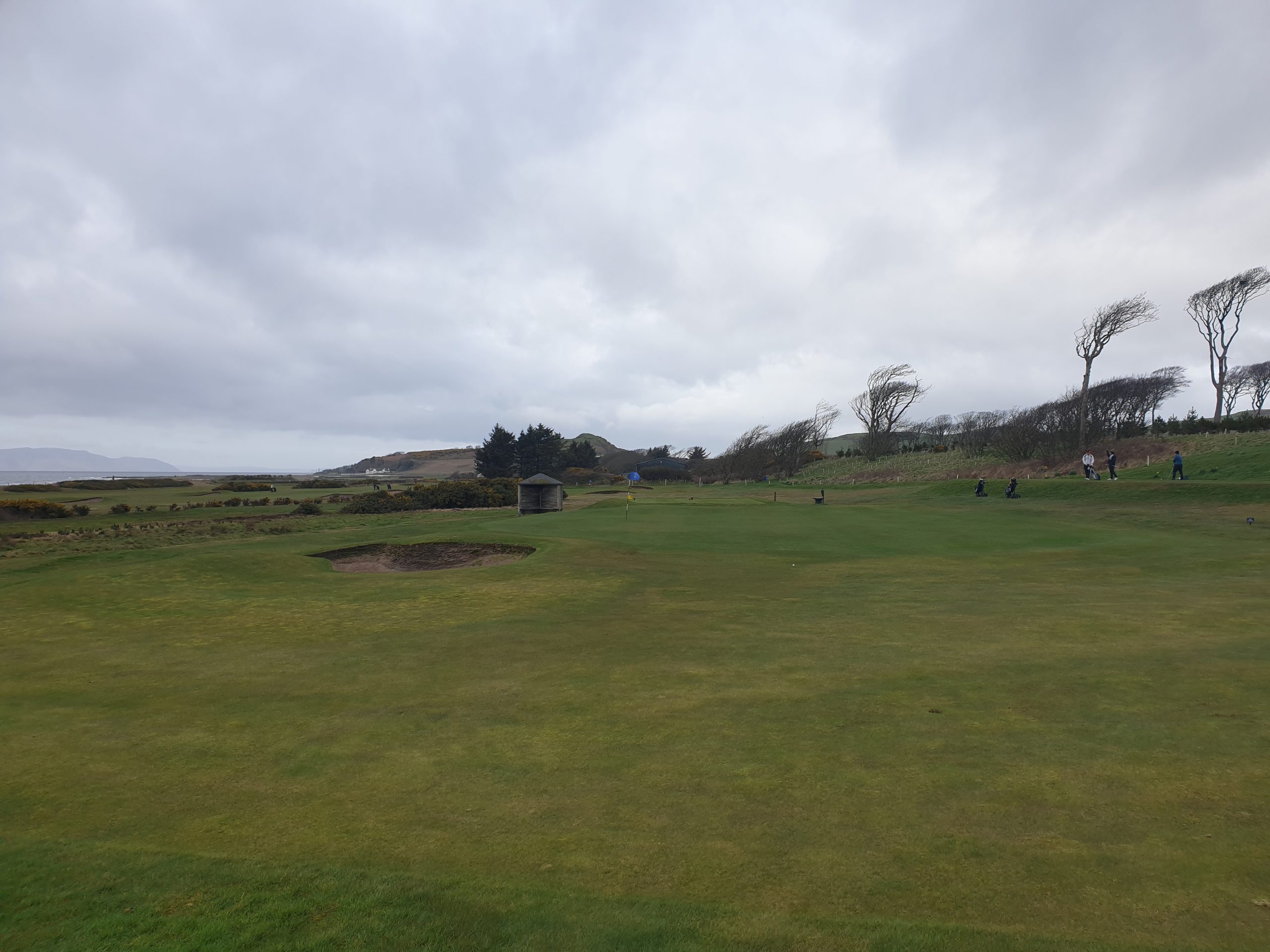
The green at the 13th, the toughest hole – stroke index 1, 406 yards, par 4. The conditioning fully on show, as was the improving weather.

The greens and their surrounds were excellent, brilliant conditioning for late March. The links turf was quality. The hole names carry their own character: Yonderfield, Rushy Bog, Lang Wham, Hunger-em-oot.

The club has attracting high profile visitors over the years and were keen to get Walter Hagen, the “first touring pro” to play an exhibition. Hagen failed to agree his fee and “went elsewhere”, ironically agreeing to play The Machrie on the Isle of Islay, but traveled incorrectly to Machrie Bay on Arran, a much lesser course; blog 110. This was a mistake in more ways than he imagined! Open Champion Bobby Locke played here in 1951, clearly being less demanding than Hagen, the real hustler.

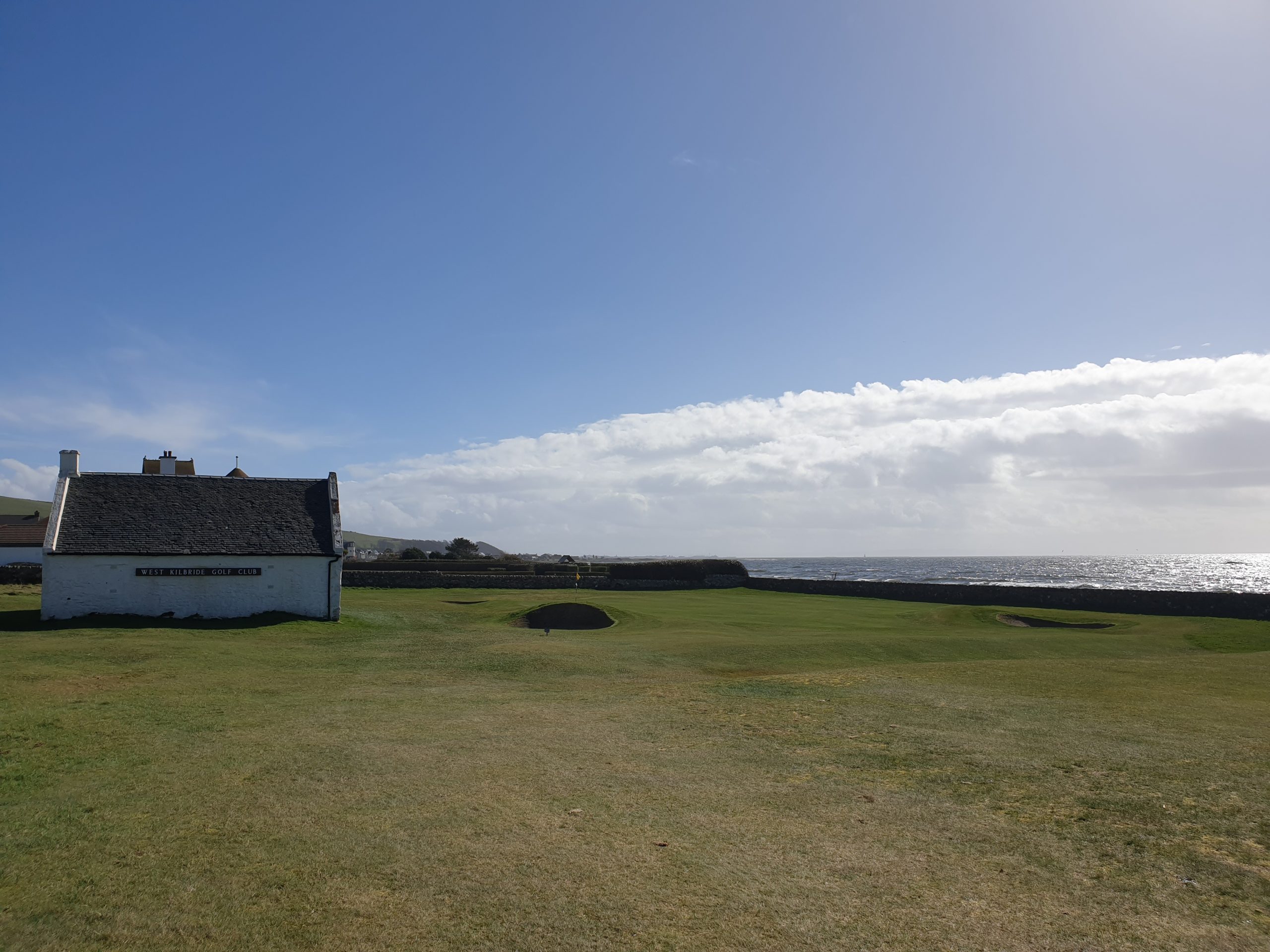
Hole 16, Hunger-em-oot: the signature hole. The West Kilbride Golf Club outbuilding with its sign, the two flanking bunkers, and the Firth of Clyde beyond. This is the image of the course.

West Kilbride is the most northerly of Ayrshire’s true links courses, including Dundonald, Glasgow Gailes, Troon, Prestwick and Turnberry, partly explaining the lower pricing of £40 in March, which deserves reflection.

The course costs £85 on a summer weekday, more than double the winter rate. That Summer/Winter gap has widened considerably over the past decade as Scottish links golf has repriced itself upward as a premium product. At the top of the market, Kingsbarns charges £448 and Turnberry’s rack rate is £545. Green fees at premium Scottish courses have inflated at roughly 7-8% per year over the past two decades, three times the rate of general inflation. The winter links visitor becomes a shrewder operator.

The course is genuinely excellent; I would go back without hesitation and happily pay more than £40 to do so.

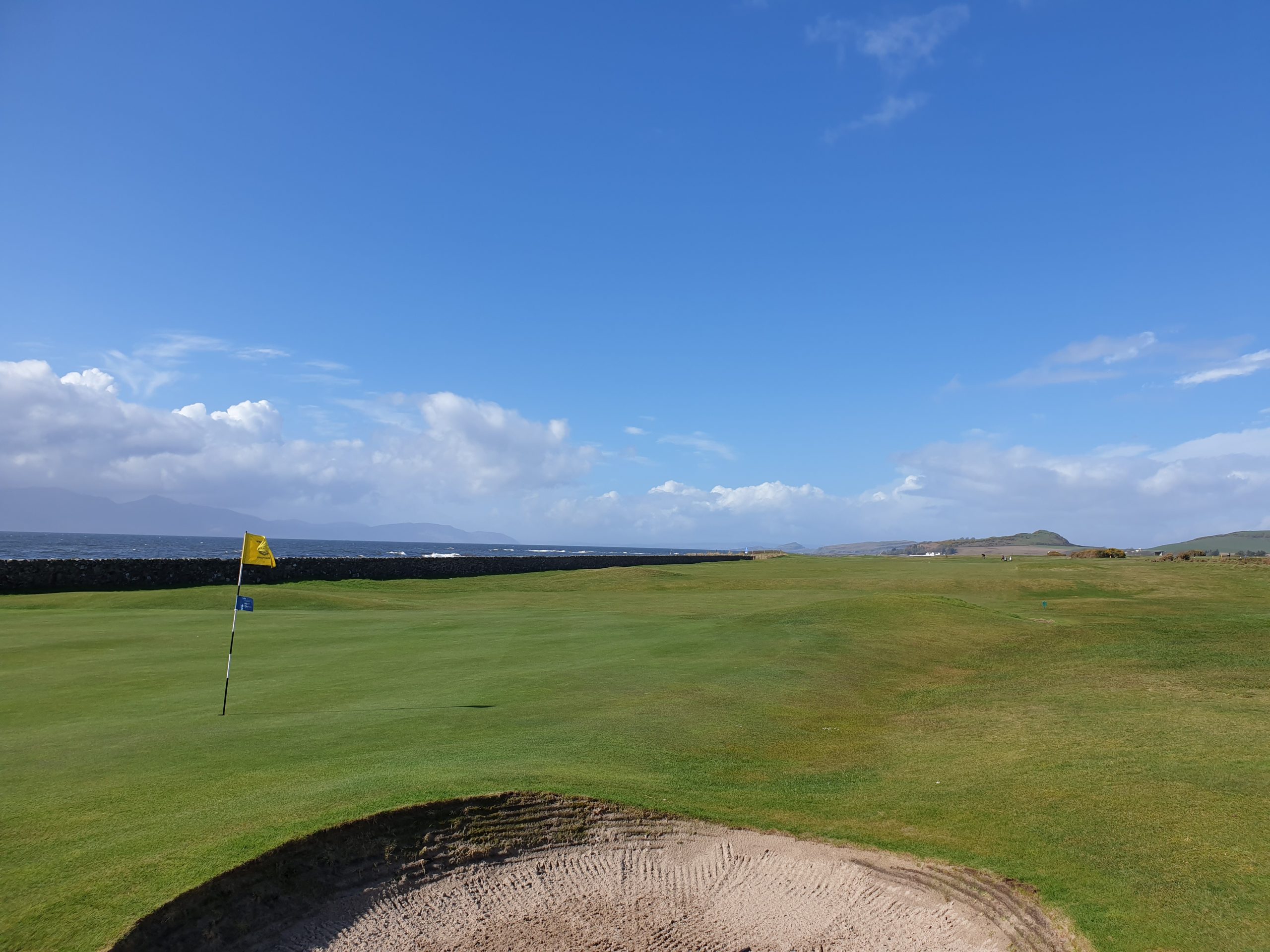
Hole 16 green: looking south along the Firth of Clyde toward Arran. Stone walls, sunshine, the flag. This is what £40 buys you in March at West Kilbride.

Facts:

Course Type: Links

Par 71 (2 par 5s, 13 par 4s, 4 par 3s)

Distance: 6,146 yards (Ardneil/yellow tees)

Course Rating 69.7, Slope 120

Moly’s Gross Score: 95 (29 Stableford points, net 81)

Moly’s scorecard, a day for a stableford preferably.

183. Mearns Castle. 24 Mar 23.

“Most scenic and challenging in the area.” An exaggerated claim by the Academy.

Round £10 (GolfNow Hot Deal, now £20). Par 31. Value 2/5.

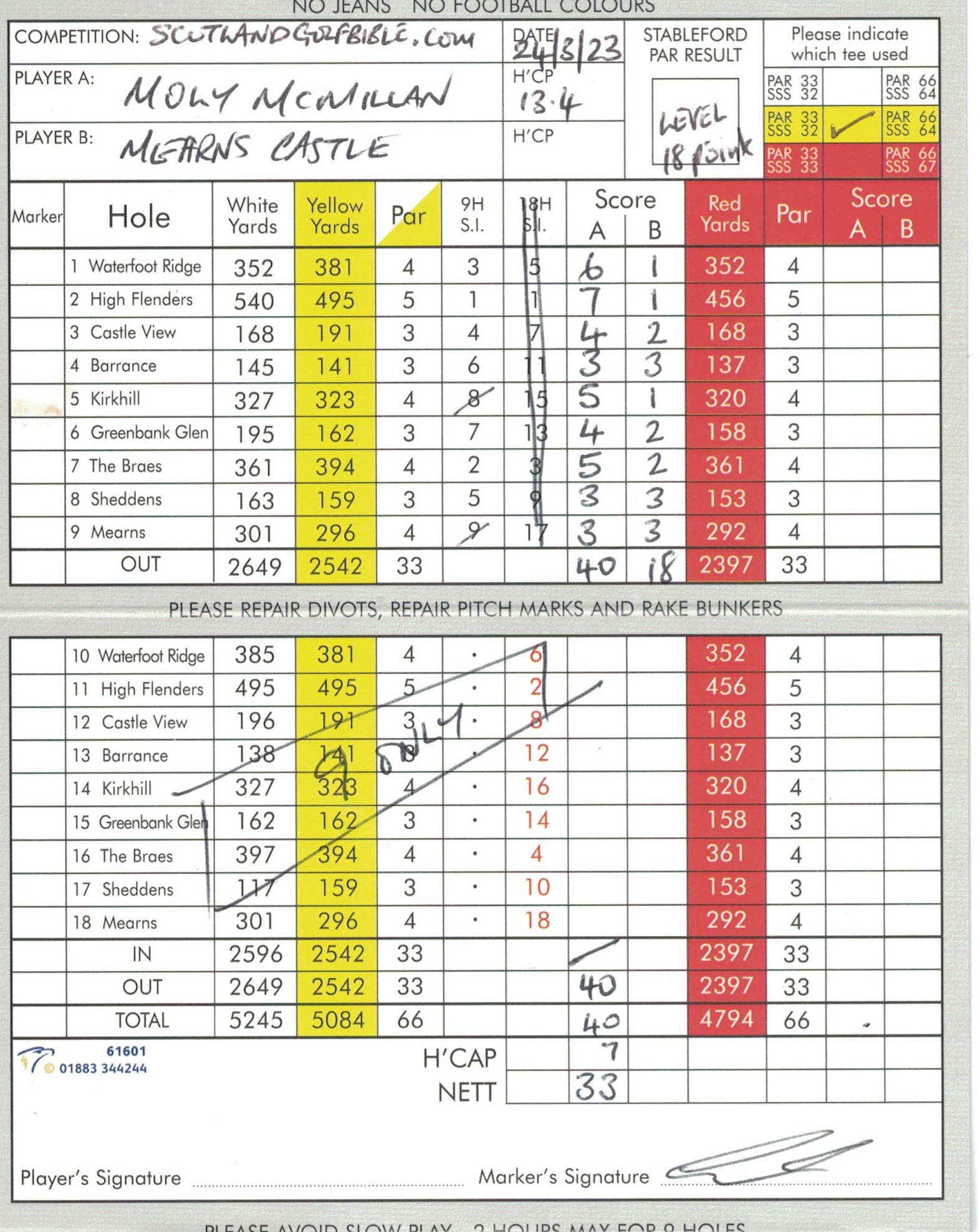
Moly’s Score – 40

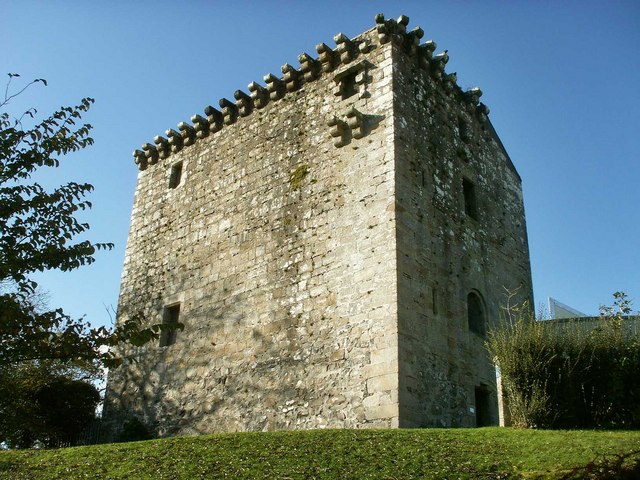
There is a real Mearns Castle about half a mile from the golf course, built in 1449 by Lord Herbert Maxwell. The same Maxwell family whose descendants would eventually own Southerness on the Solway Firth, reviewed in Blog 164, a course that justifies the word “scenic” more than anything I encountered here.

The actual nearby ‘Mearns Castle’, a 15th century Maxwell tower house, which the course takes its name. I wonder if Satnav ever gets this confused with the course.

The castle has, as far as I can establish, no connection whatsoever to the golf academy except proximity and, one suspects, the marketable romance of a medieval tower.

The golf academy is a substantial operation with Toptracer range, tuition, café, fitness studio, nail salon, and a massage therapist! More of a leisure complex with a 9-hole course attached. Nothing wrong with that, but problems begin when the website describes that course as “one of the most scenic and challenging courses in the area.”

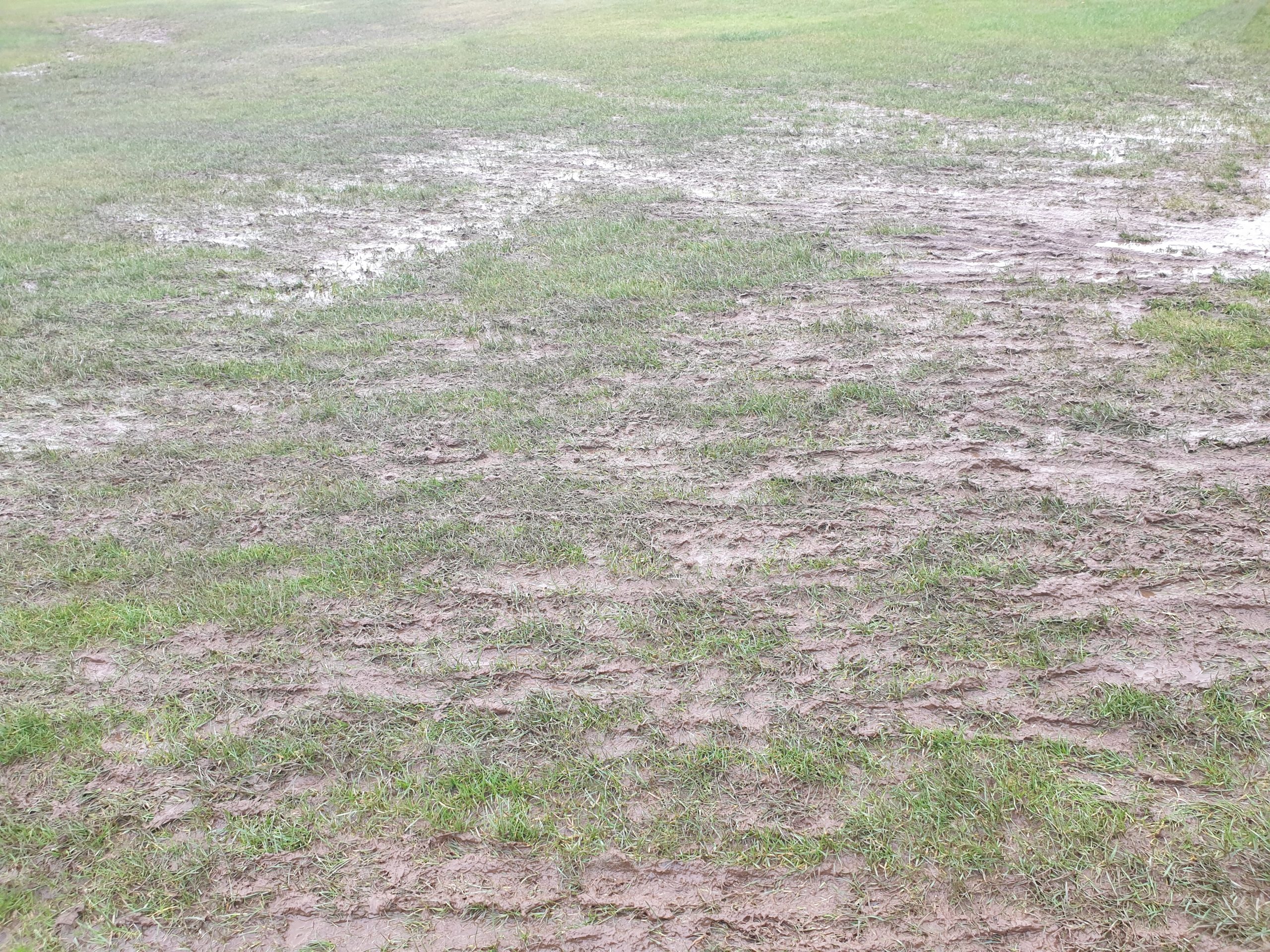
I played it on 24 March 2023, via a GolfNow Hot Deal, for £10. It was waterlogged. It should have been closed.

How could you allow play with fairways like this in several places. Sometimes short term economics doesn’t make sense. One never knows if a Blogger will come along!

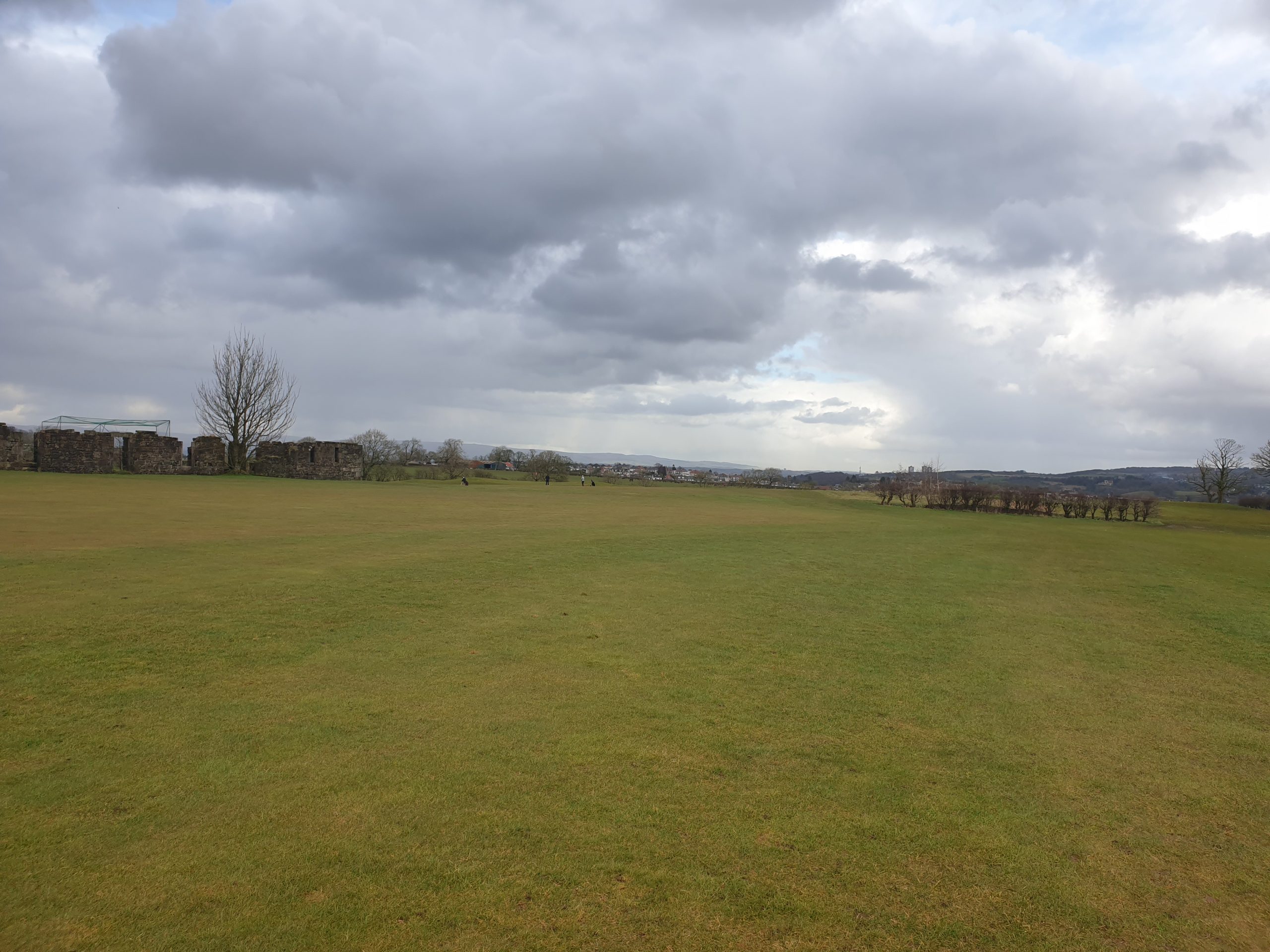
The course occupies pleasant enough parkland on the southern fringes of Newton Mearns, the well heeled commuter town south of Glasgow. The 1st offered an early introduction to the course’s style: there is a hidden fairway ditch ready to swallow a ball without warning. This was one of the very few “challenging” features though.

The course had minimal fairway bunkering. However the greens were surprisingly good surfaces, so well done to the greenkeepers. It is the one positive comment I can offer.

The greens were redeeming, a benefit for players learning the game. Here at the 4th.

The course website mentioned “continued investment in drainage and course improvements.” This is a tacit acknowledgement that drainage was a problem, which again raises the question why the course was open. A course that quietly admits its drainage issues while remaining open in March when waterlogged is providing very poor value, even at £10.

The was the typically bland approach view, here at the 5th hole, with the building ruins on the left being one of the very few interesting features.

The list price is now £20 for nine holes, I paid £10 on a Hot Deal. But golf on a course that should have been closed, is not good value at any price. The marketing overclaim tips it further – a course that sets expectations it cannot meet is doing its visitors a disservice.

Facts:

Course Type: Parkland

Par 31 (9 holes)

Moly’s Gross Score: 40 (net par)

Round: £10 (GolfNow Hot Deal). List price £20 (9 holes).

Value: 2/5

Moly shot 40 on a waterlogged day.

182. Craigielaw. 23 Mar 23

The course that broke Kilspindie’s heart — a story for another blog.

Value 3/5 (4/5 using GolfNow)

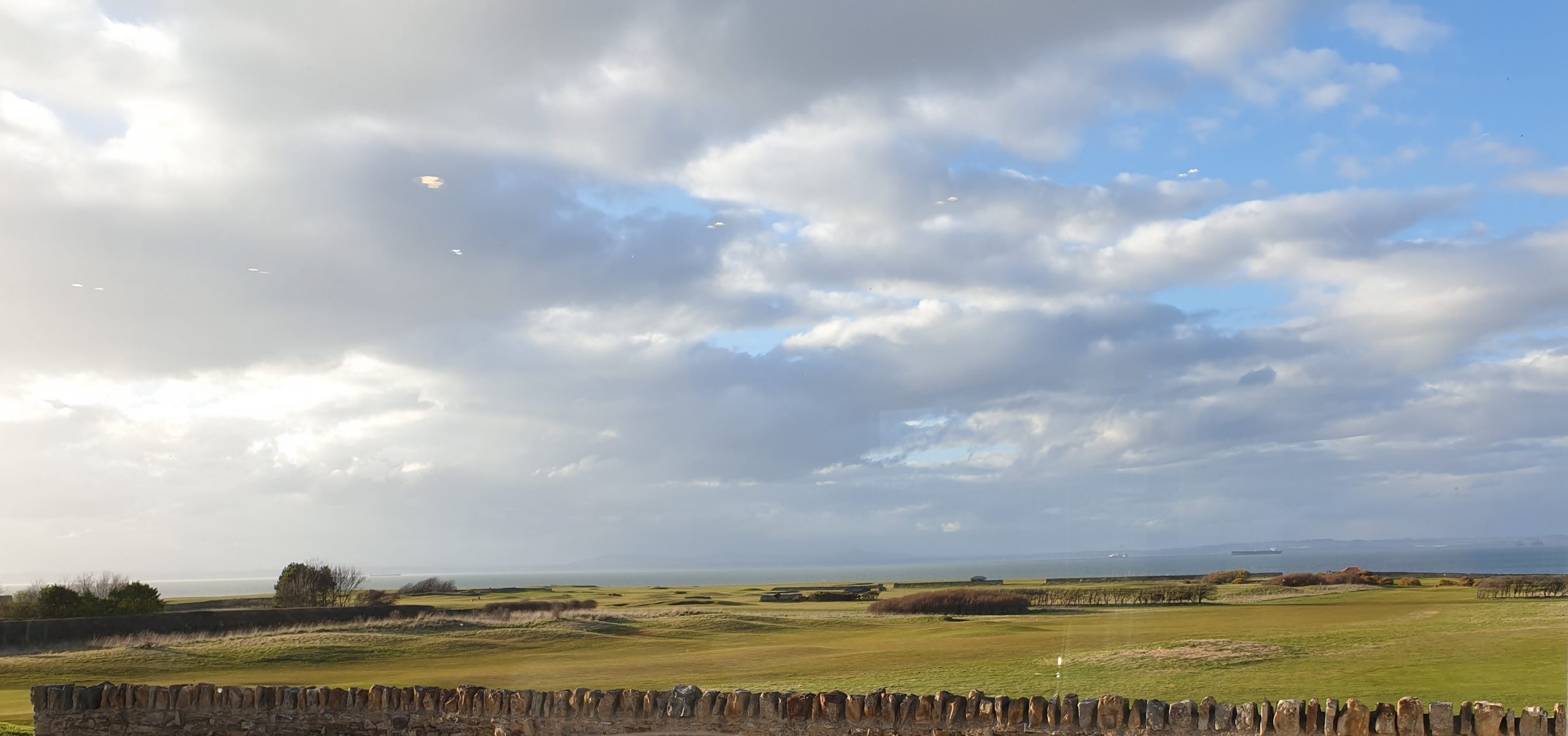
The panoramic clubhouse view back over Craigielaw links towards the Firth of Forth. On a clear day, as good as East Lothian gets.

Craigielaw Golf Club is on Wemyss and March Estates land – the same Estate that has leased its land to neighbouring Kilspindie Golf Club since 1867. In 2001, after two years of fractious negotiations, the Estate cancelled a deal that would have allowed Kilspindie to operate a second course and announced they themselves would build and run Craigielaw Golf Club. Kilspindie’s members, who had already paid handsomely for the privilege of playing ‘their’ second course, were left short changed — that story will feature in Kilspindie’s blog.

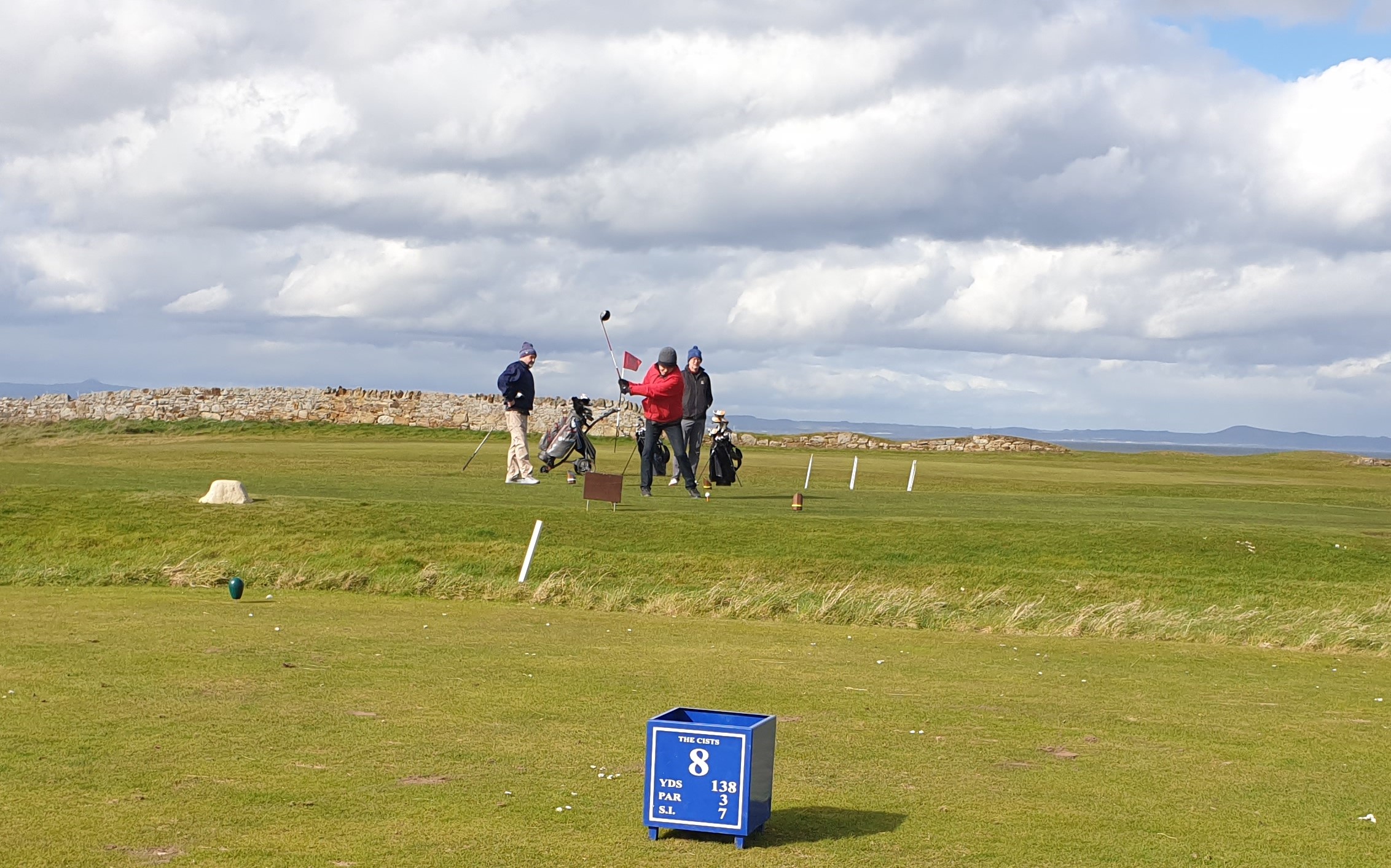
The 8th tee — a short par 3. The golfers here are not playing Craigielaw, they are on the 18th hole of the entirely separate Kilspindie Golf Club. Possibly the two closest tees from independent clubs anywhere? If you know of closer, let me know.

What elevates this origin story beyond a mere property dispute is who, at the time, was the Countess of Wemyss and March (see picture below). In 1995, James Charteris, 13th Earl of Wemyss, had married Amanda Feilding — an English aristocrat, artist, drug policy reformer, and the world’s most committed advocate of trepanation, the practice of drilling a hole in the skull to enhance consciousness and cerebral blood flow.

Amanda Feilding, Countess of Wemyss, with her pet pigeon Birdie, and a human skull, a tribute to her belief in trepanning. [Credit: Beckley Foundation — permission pending]

In 1970, Amanda had drilled a hole in her own forehead with a dentist’s drill, filmed the entire procedure, and called the resulting short film Heartbeat in the Brain. Audiences at early New York screenings were reportedly seen dropping from their seats. She stood for Parliament twice — in 1979 and 1983 — on the sole platform of free trepanation on the NHS, receiving 40 votes and then 139. She later founded the Beckley Foundation, dedicated to psychedelic research, and lived to see much of that work vindicated by mainstream science before her death in May 2025, aged 82.

So when the Wemyss and March Estates Directors, including Lady Wemyss, decided on the use of the land, it might have been fitting if anyone said “We need to operate a golf course like we need a hole in the head!”.

Back to golf. Designed by Donald Steel, Craigielaw is a thoughtful layout. The hole names are a delight — Coffin Lane, Bellfire Knowe, Doos Wa’s.

The sixth, ‘Kilspindie’, a respectful but perhaps pointed name, a tough par 3 where the prevailing wind will challenge the out of bound right.

The property is well set up — impressive clubhouse, lodge accommodation, excellent practice facilities. The bunkering is Steel at his most unforgiving — cavernous, steep-faced pot bunkers with no interest whatsoever in your handicap.

First ‘The Steading’, a drivable par 4. The Firth of Forth and Gullane Hill beyond..

The turf lacks the crisp links quality of nearby Gullane; the geology feels subtly different, more transitional than pure links. And the housing around the 10th and 11th — Gosford Park, as it happens, whose residents were central to the original dispute — briefly breaks the links illusion. The course recovers, but it’s a lapse.

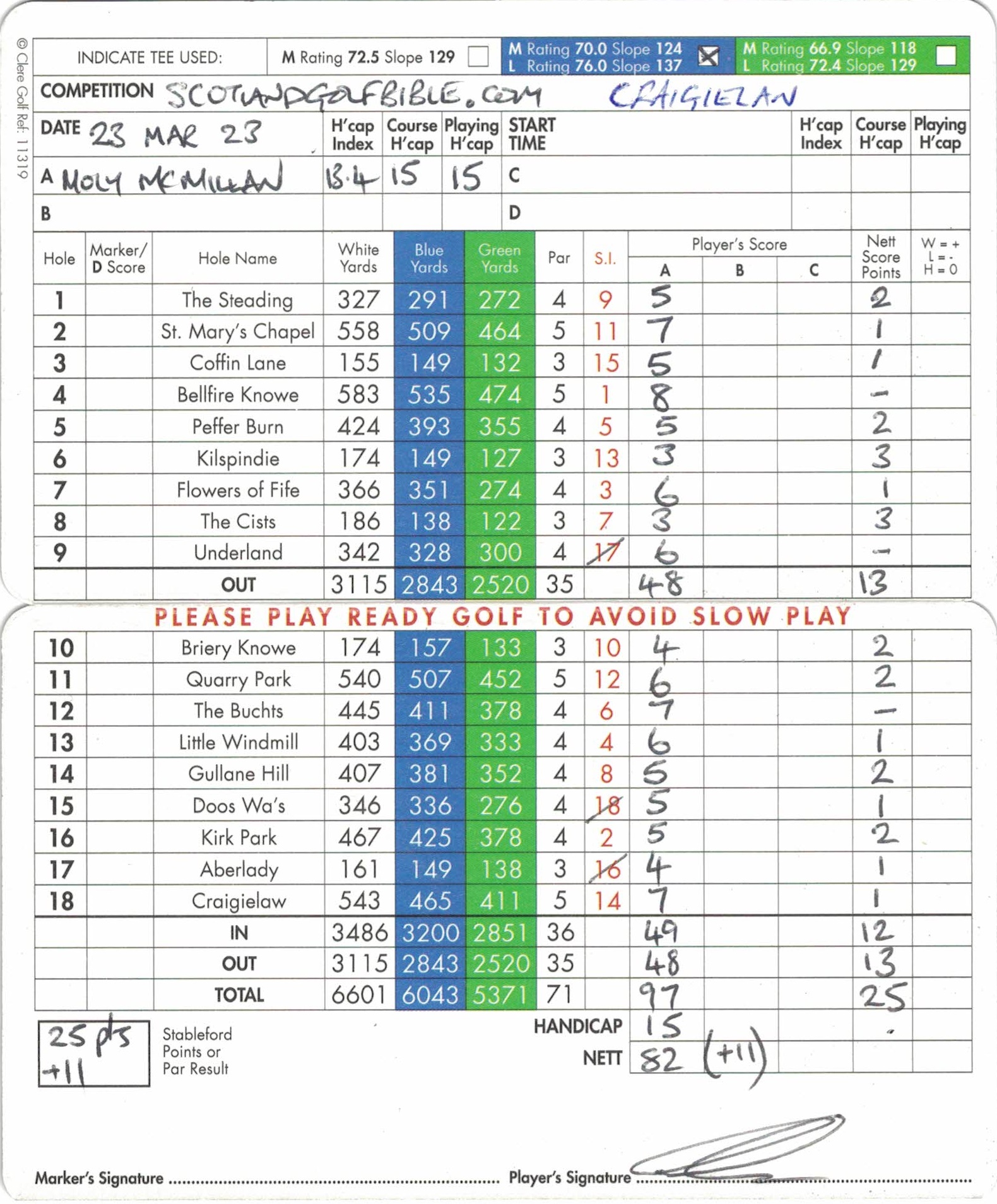
Moly at the 4th, ‘Bellfire Knowe.’ The flag is just visible over the lip. The 8 on the scorecard tells you the rest.

Value? At £125 for a summer midweek round, the price reflects the postcode — Muirfield, Gullane and Luffness New are all neighbours — more than the course itself. Good golf, honestly designed, but 3 out of 5 at full price? Not sure. However, I paid £45 through GolfNow. A Donald Steel championship links in East Lothian for £45 is 4 out of 5 without hesitation. Check GolfNow before you book.

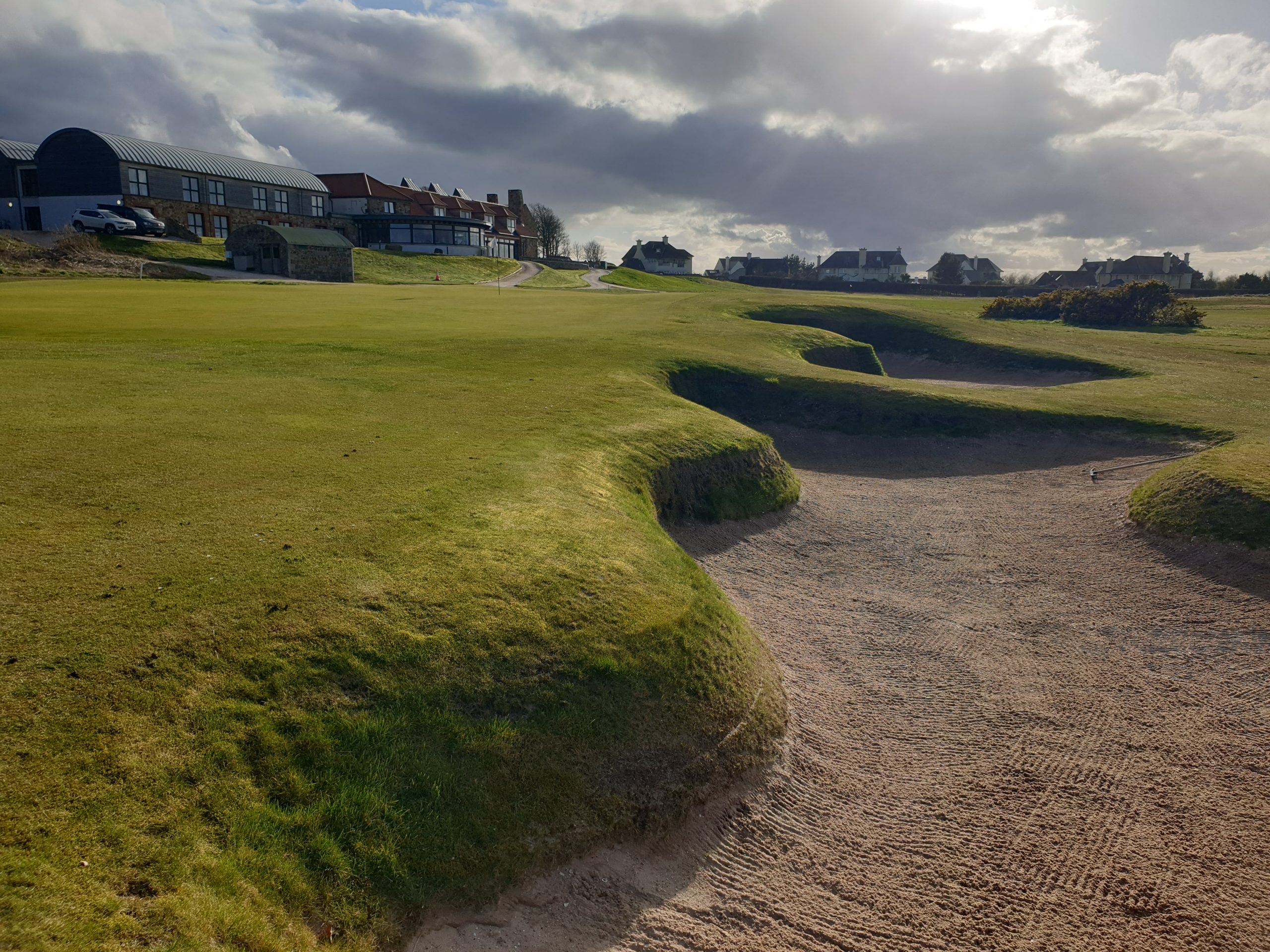
The 18th green, ‘Craigielaw’ — 465 yards, par five — with the modern clubhouse beyond. The bunkering here is the most dramatic on the course.

Facts:

Round £125. Par 71. Course/Slope Rating 70.0/124. Value3/5 (4/5 using GolfNow).

Moly’s Score – 97

Moly’s 97, was OK on a day with very high winds.

« Older posts Newer posts »

© 2026 Scotland Golf Bible

Theme by Anders NorenUp ↑