Scotland Golf Bible

A guide to green fee value for money

212. Ranfurly Castle. 26 Jun 23.

The castle club that left its castle behind, and paid for its new course by selling building plots. Property-funded golf is nothing new.

Price Paid: £63, society rate (the “Cavens” package: coffee and a roll, 18 holes and a two-course meal)
Current Price (2026): Current Price (2026): £55 visitor green fee + £3 Scottish Golf booking fee = £58 (winter weekday). Green fees not published; 2027 rates not yet bookable.
Value: 4/5 at £63 with food / 3/5 at current list
Moly’s Score: 95 gross, net 81, 30 Stableford points
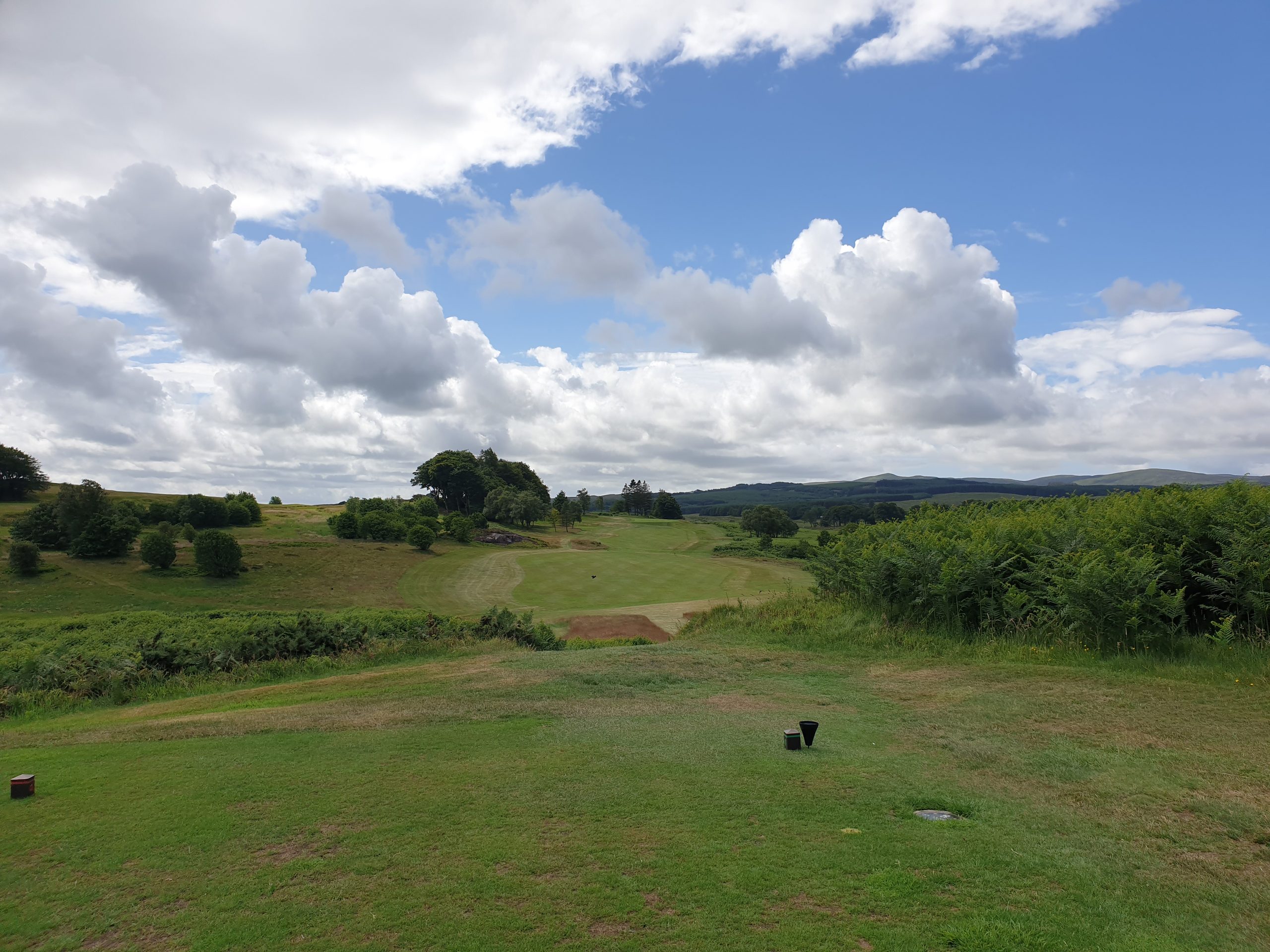
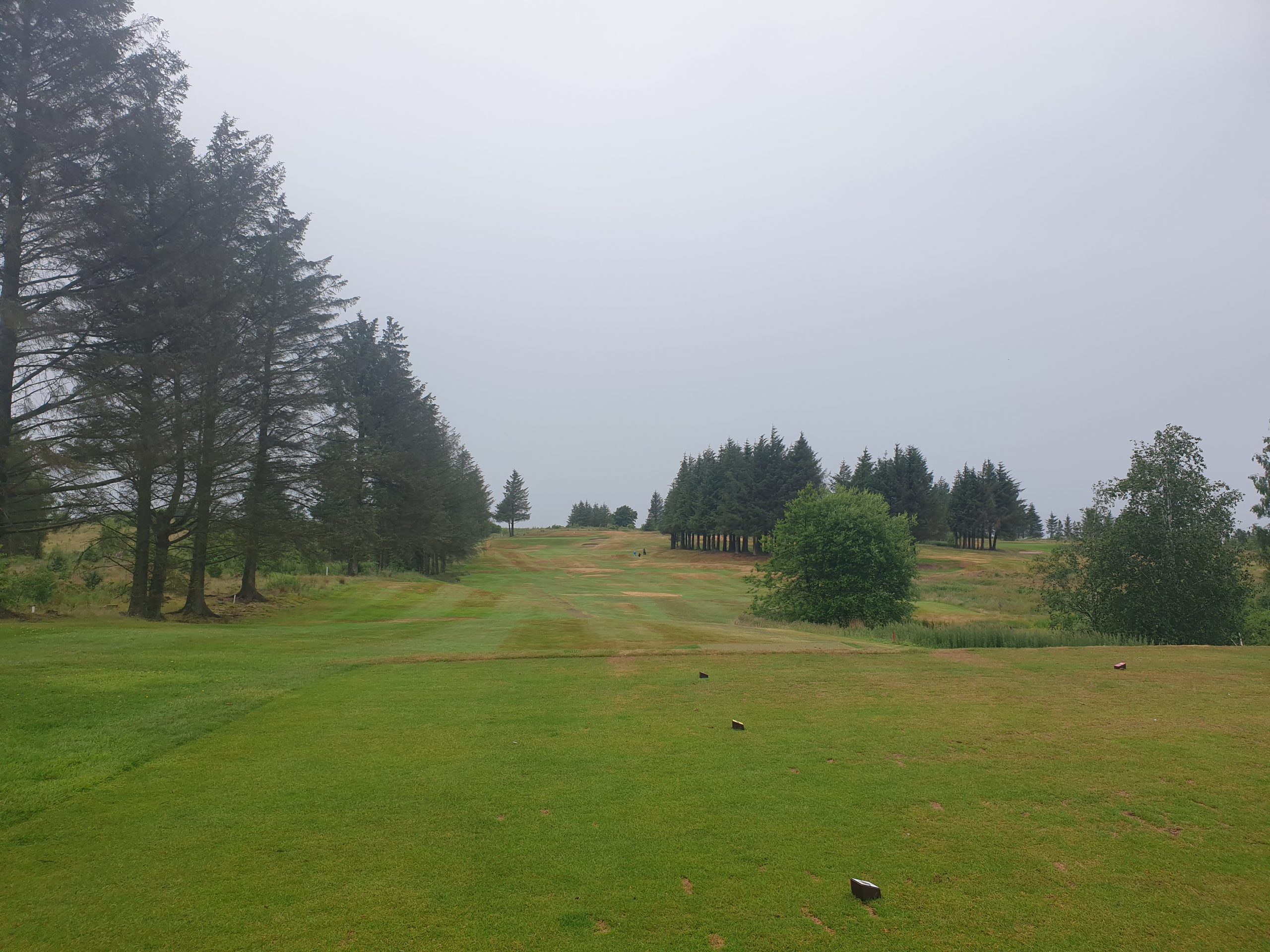
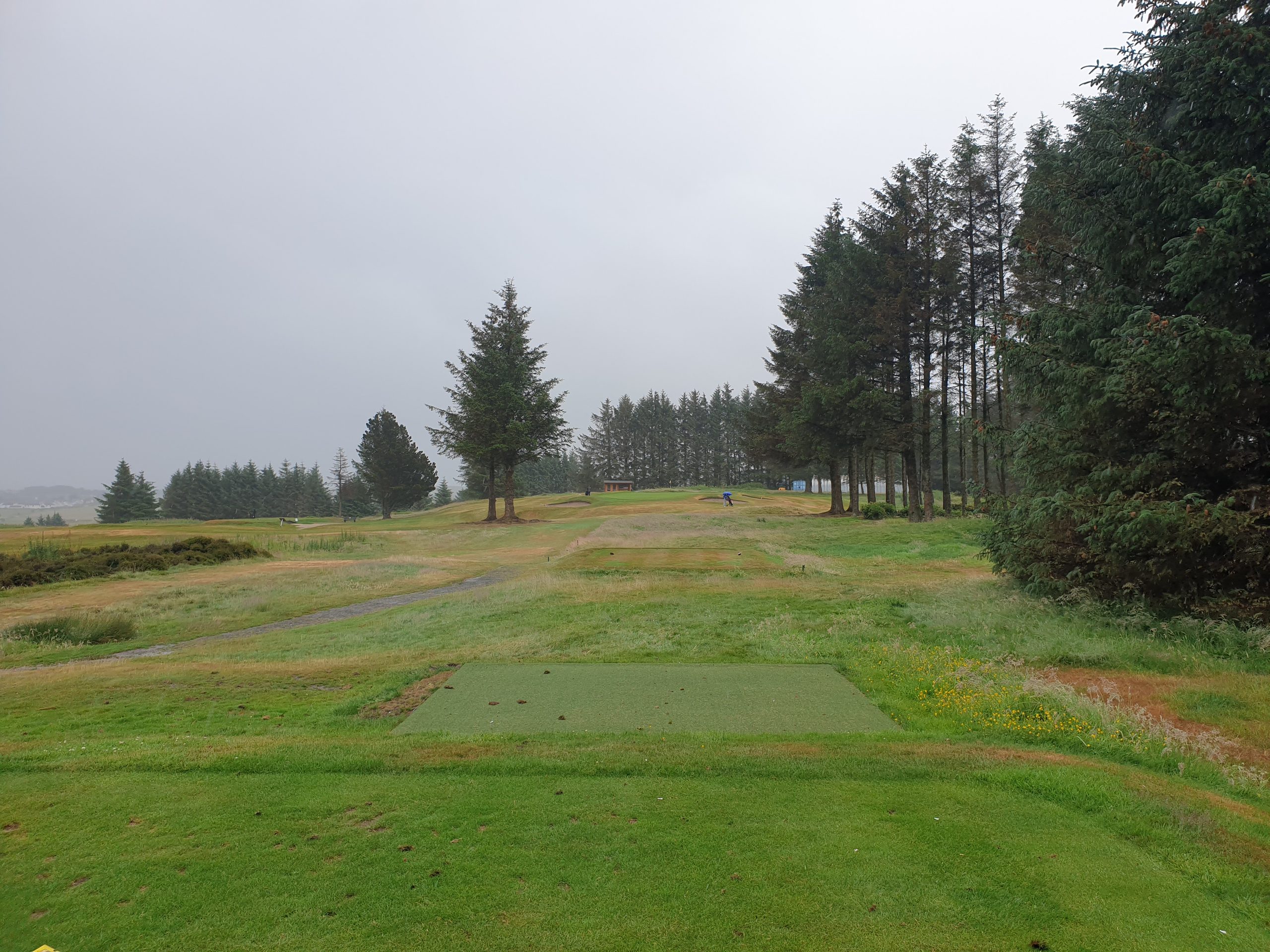
The 8th, Rowans, stroke index 1. You drive from a raised tee down into a moorland bowl of bracken and heather, with Misty Law on the skyline. Pure Renfrewshire moorland.

Ranfurly Castle is not on Ranfurly Castle’s golf course. The ruin is a 15th-century tower built by the ancestors of John Knox, the leader of the Scottish Reformation. It actually stands near the 17th fairway of Old Ranfurly, the other golf club in Bridge of Weir, a Renfrewshire village, 15 miles west of Glasgow. The club was founded beside the castle in 1889, but moved out in 1904 after a row over the lease and took the name with it. A new club, Old Ranfurly, formed in 1905 on the ground left behind. So the ‘Old’ club is the younger one and has the castle. Confused?

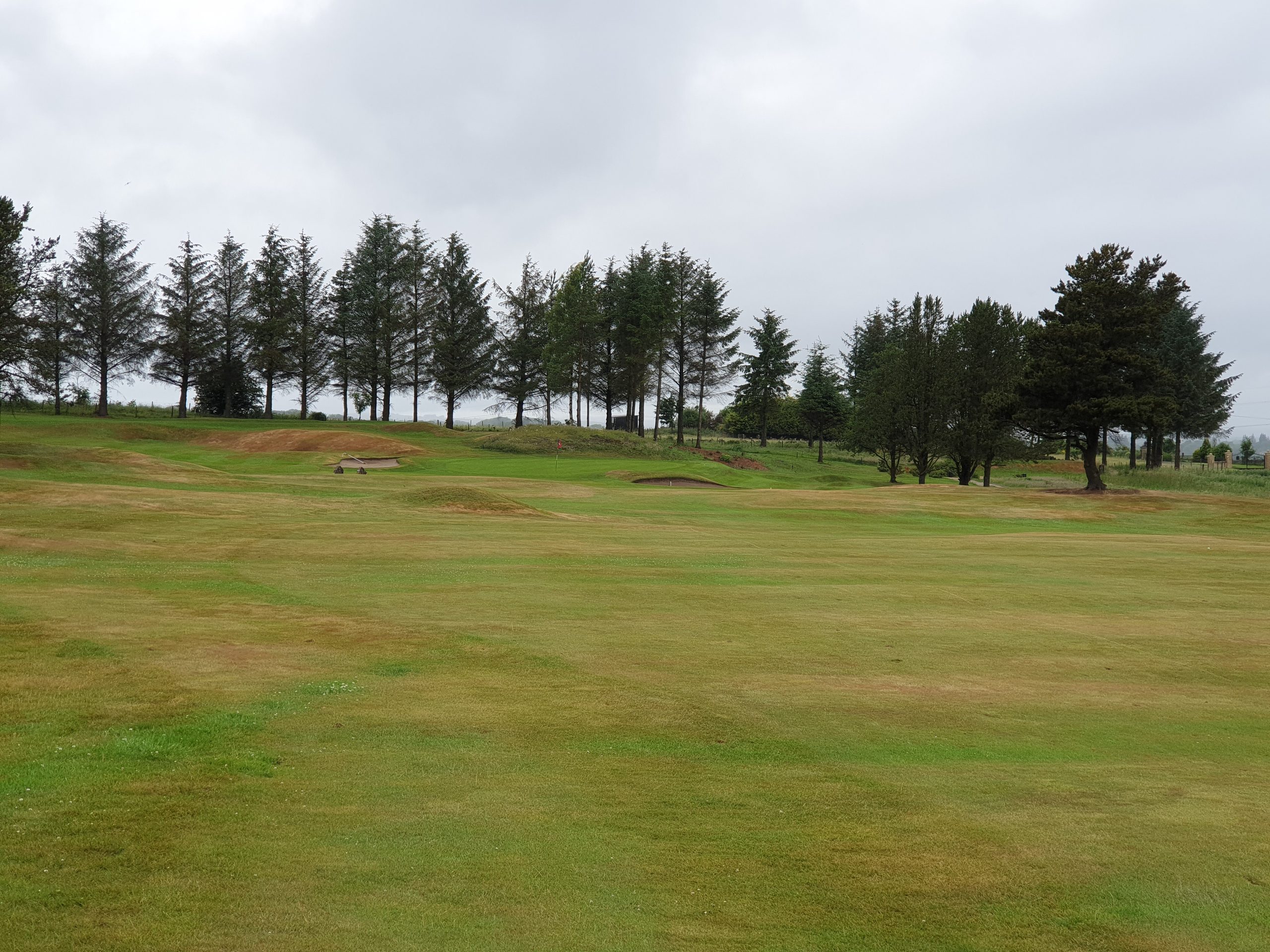
Birdie chance at the short par three 5th?

In December 1903 the members bought Clevans and East Barnbeth farms, totalling 220 acres, for £6,500. The Bridge of Weir Thistle club, which had been playing nine holes at Clevans, was promptly squeezed out to Auchensale. Perhaps evicted tenants make the most efficient landlords? Both farm names survive as hole names. James Cuthbertson, the captain who opened the new course, recorded in a 1950 letter now framed in the clubhouse that the land where the 1st and 18th now run was under “a rather miserable crop of turnips and potatoes”. Part of the 3rd was swamp. The present 14th was the old Barmufflock Dam, “an impassable morass”. It took 80 men and women, with 17 horses and carts, to clear the ground. The condition of the course is thankfully much improved.
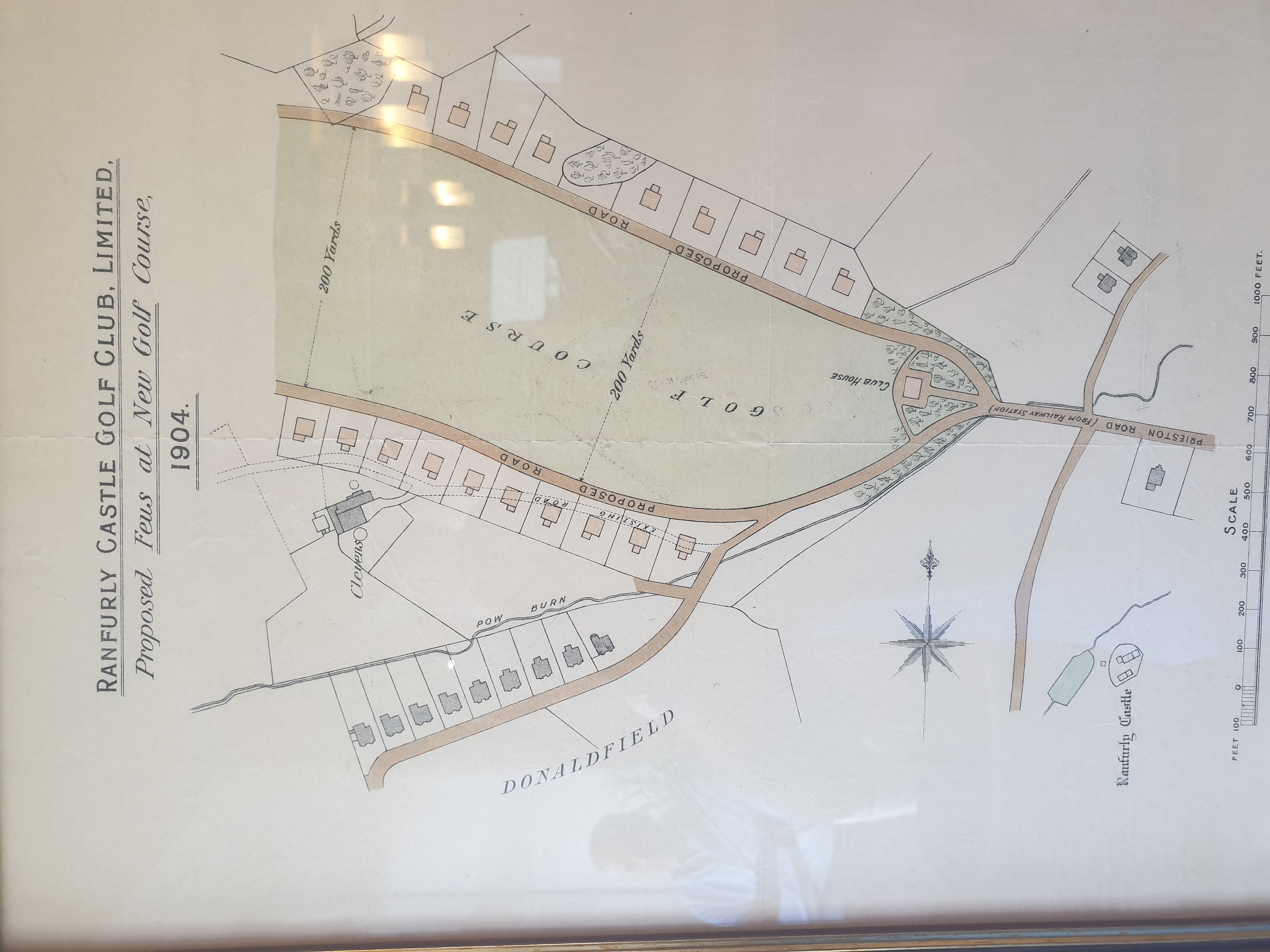
The 1904 plan of “Proposed Feus at New Golf Course”. The fairway is the middle of the sandwich, with building plots for villas on both sides.

Then the clever part. The committee reckoned the land along both sides of the new course was worth not £30 an acre but £400 to £500. So they feued it (the Scottish system of granting land in perpetuity for a fixed annual payment, the feu duty) for villas, raised £2,684 from feu duties, and had the members lend another £6,000 in debentures. In other words, an Edwardian golf club funded its new course with a housing scheme. Modern developers are not inventing any wheels.
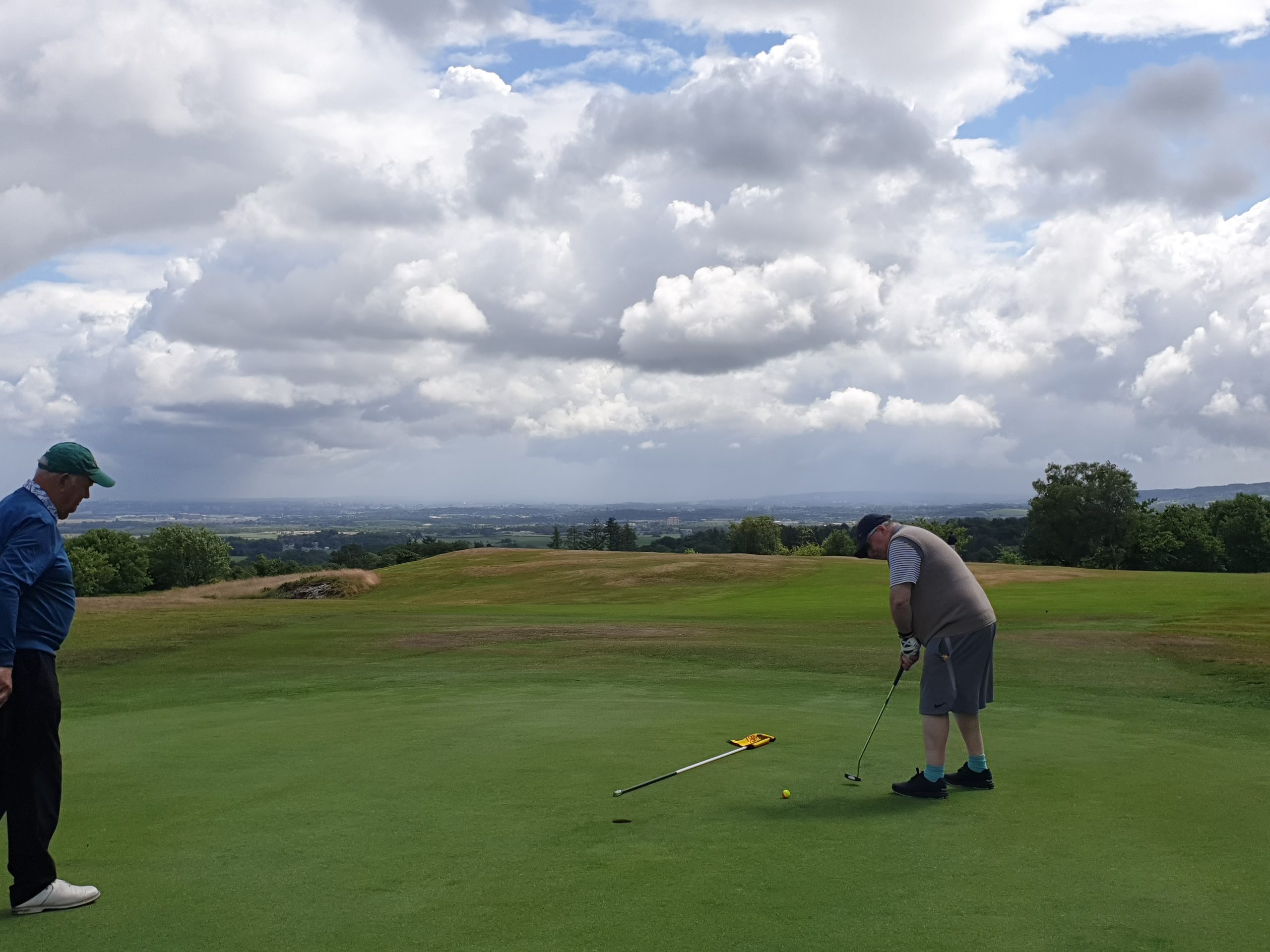
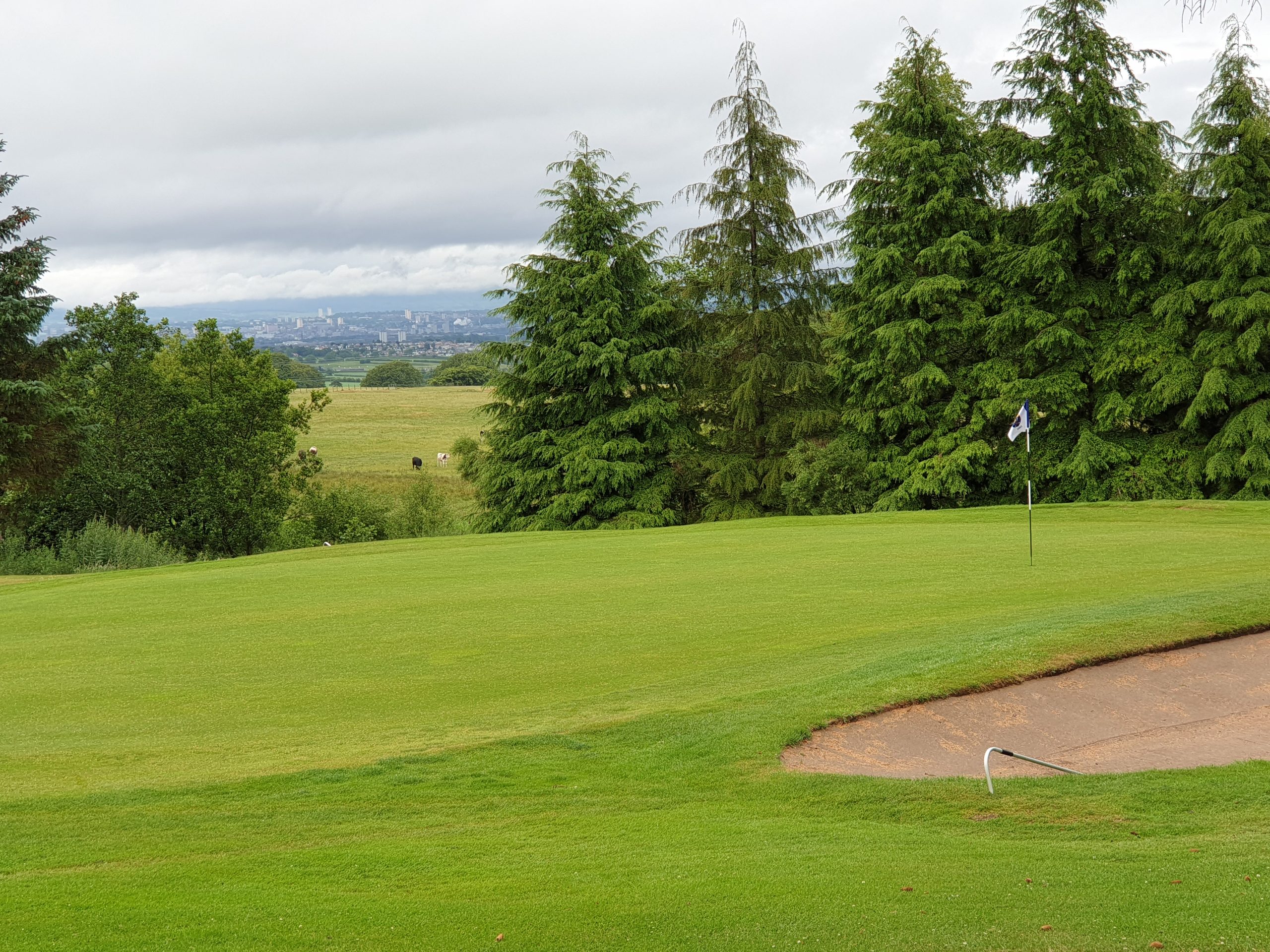
Frank putts out on the 2nd, top of the climb, with the Clyde valley and Glasgow spread out behind and a shower drifting across the horizon.

The new course, laid out by Andrew Kirkaldy, opened in 1905. James Braid made recommendations in 1923, only some of which were adopted.But the current course is an intriguing 1930 rebuild. The club rejected two routings by Harry Colt, arguably the leading architect of his day, in favour of one by its own captain, James Robson. It then paid Colt to design the holes on Robson’s plan and oversee the work. Ranfurly members clearly knew their own minds.
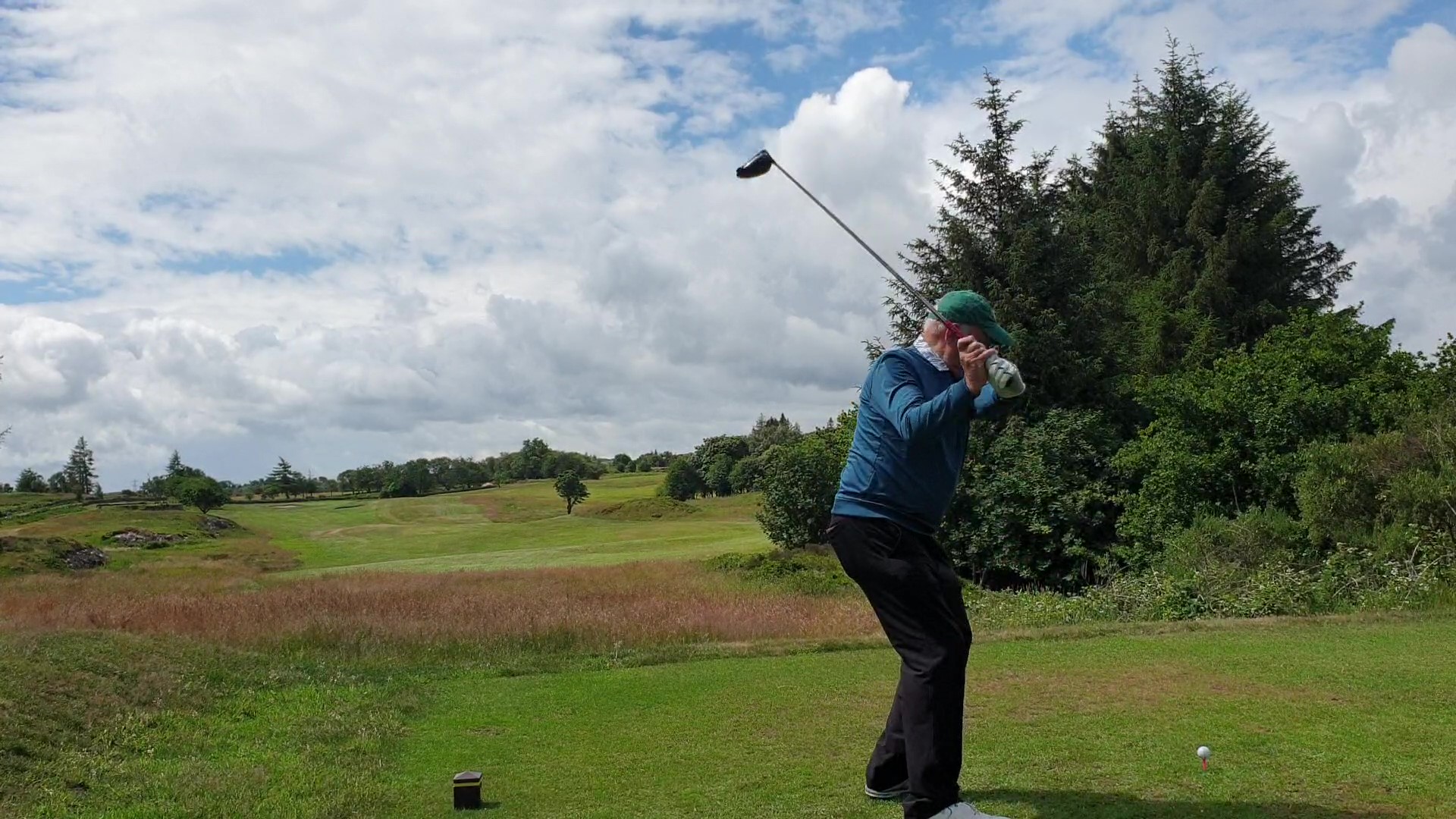
Brian at the difficult par five 3rd hole.

It is a tough course. The first two holes climb steeply onto a moorland plateau. Fourteen holes are played up there, and the last two bring you back down. I played with my Apex Scotland buddies, Frank, Gordon and Brian, first seen at Longniddry (Blog 128). The wind blew hard on the plateau, the rough was thick, and the greens slope steeply and come in every size. Worse, there are several blind tee shots. Our round took four hours 45 minutes. The slope rating from the yellows is a modest 121. We didn’t find it modest.
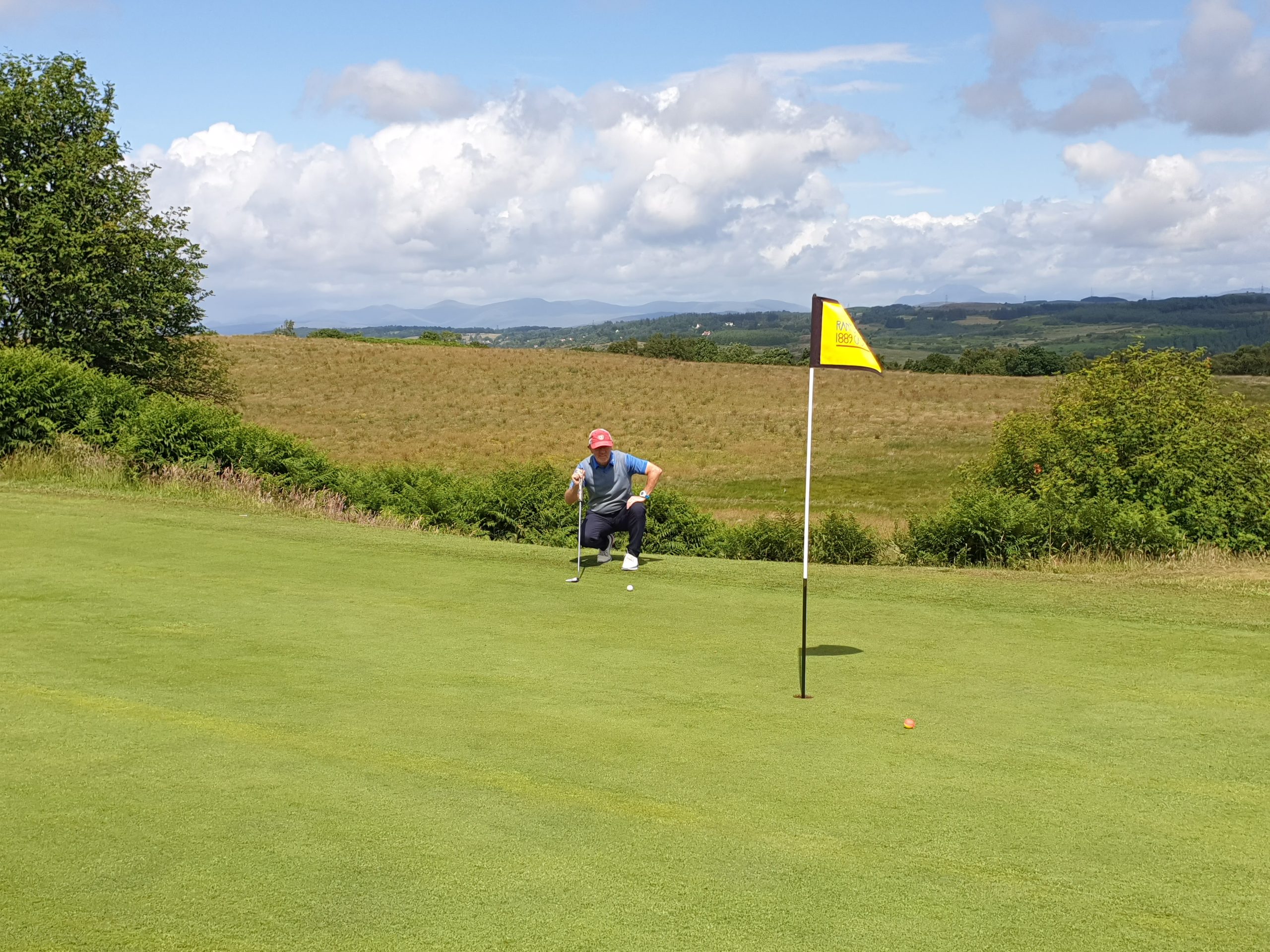
Lining up a birdie putt at the Wee De’il, the 114-yard 5th, with the Arrochar Alps on the skyline.

The views are wonderful. On the 2nd and 11th you look east over Glasgow, and on the 5th north to the Arrochar Alps. The conifers that frame the 9th and 12th rival Braid’s arboretum at East Ren (Blog 169). The 14th, Barmufflock, is my favourite piece of history on the course. Cuthbertson’s impassable morass is now a well-bunkered par 3 in a hollow, though the matting across the approach suggests the morass hasn’t entirely given up.
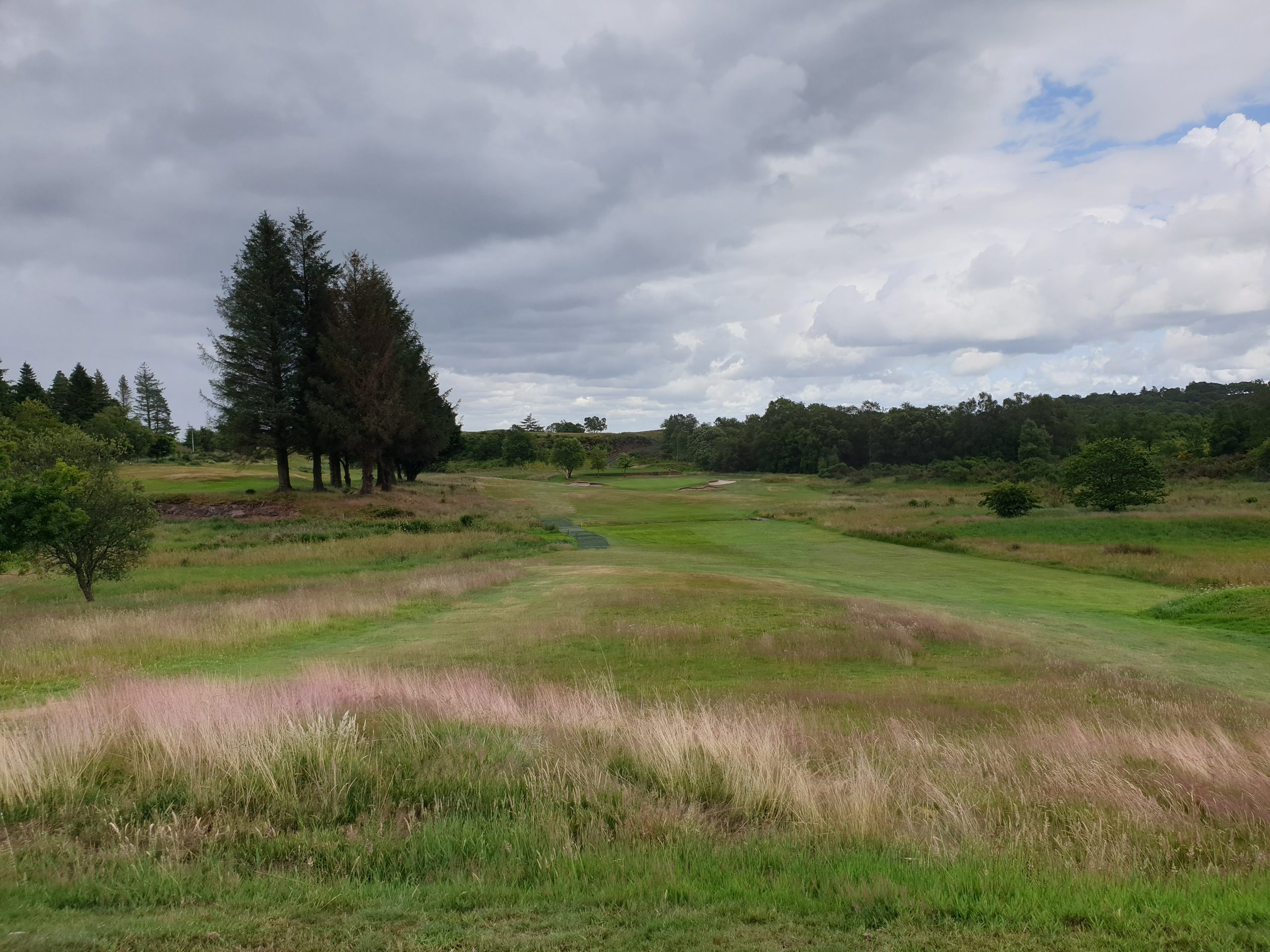
The 14th, Barmufflock. In 1904 it was the old dam and “an impassable morass”. Today it’s a 178-yard par 3, with matting to remind you what lies underneath.

The clubhouse walls are worth a look too. A framed photograph shows Lady Spiers of Elderslie opening the Ladies’ Golf Club clubhouse in October 1897. The Bridge of Weir and Ranfurly Ladies’ club was formed in 1896 and was a separate club, with its own nine holes and 270 members by 1914. The castle club itself didn’t absorb a ladies’ section until around the Second World War. So the Victorian ladies were ahead of the men, if not exactly welcomed by them.
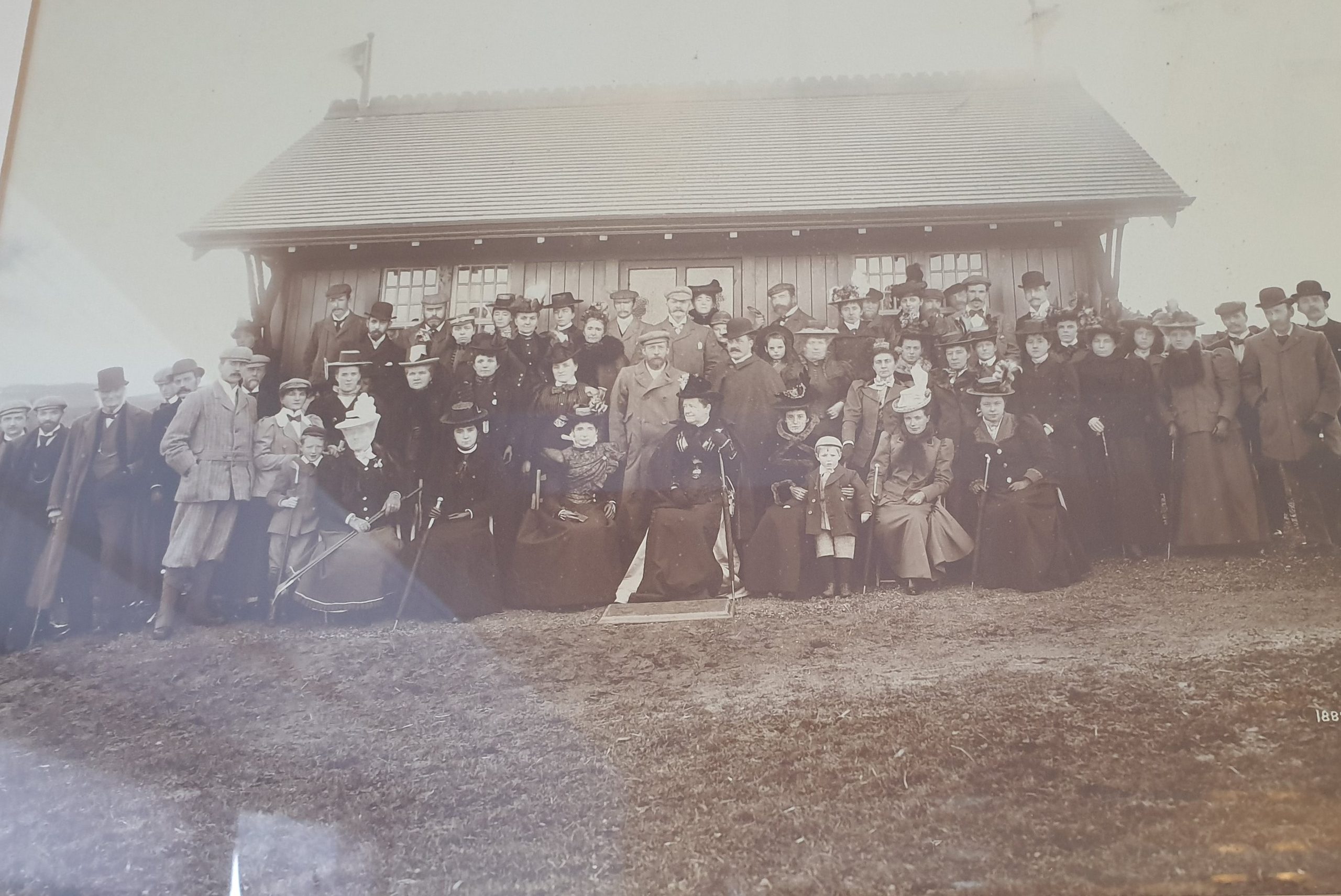
Lady Spiers of Elderslie opens the Ladies’ Golf Club, 16 October 1897. The hats alone deserve a blog.

A neighbouring panel claims that Lady Anne Spiers’s Houston lacemakers made the canopy over Queen Victoria’s throne at the 1897 Diamond Jubilee “ceremony in Westminster Abbey”. It’s a lovely story, but the details don’t hold up. The 1897 Diamond Jubilee service was held outdoors on the steps of St Paul’s, with the Queen in her carriage because she could no longer manage the steps. The Westminster Abbey service was the Golden Jubilee, ten years earlier. Either the lace went to 1887, or the story has improved with retelling.
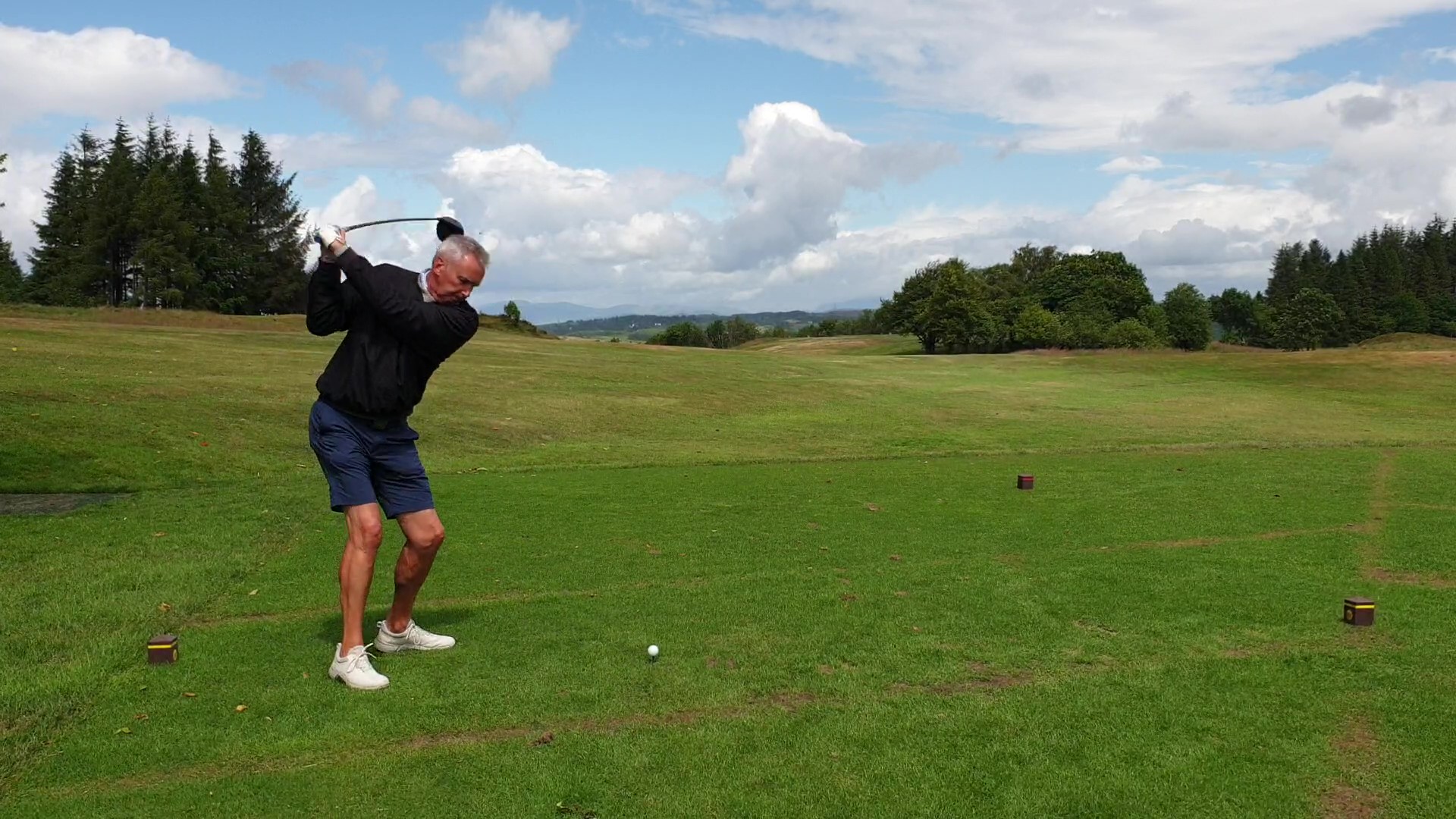
Gordon at the drivable par four 4th.

A photograph on the same wall fares better. It shows Sandy Herd watching Willie Fernie putt on “the 18th green at Ranfurly Castle” in July 1895. I went looking for a flaw and found none. The club had stretched to eighteen holes in 1894 and opened them in 1895 with a professional foursome of J. H. Taylor, Herd, Andrew Kirkaldy and Fernie. The caption is right. It’s just that the green in the photo now belongs to Old Ranfurly.
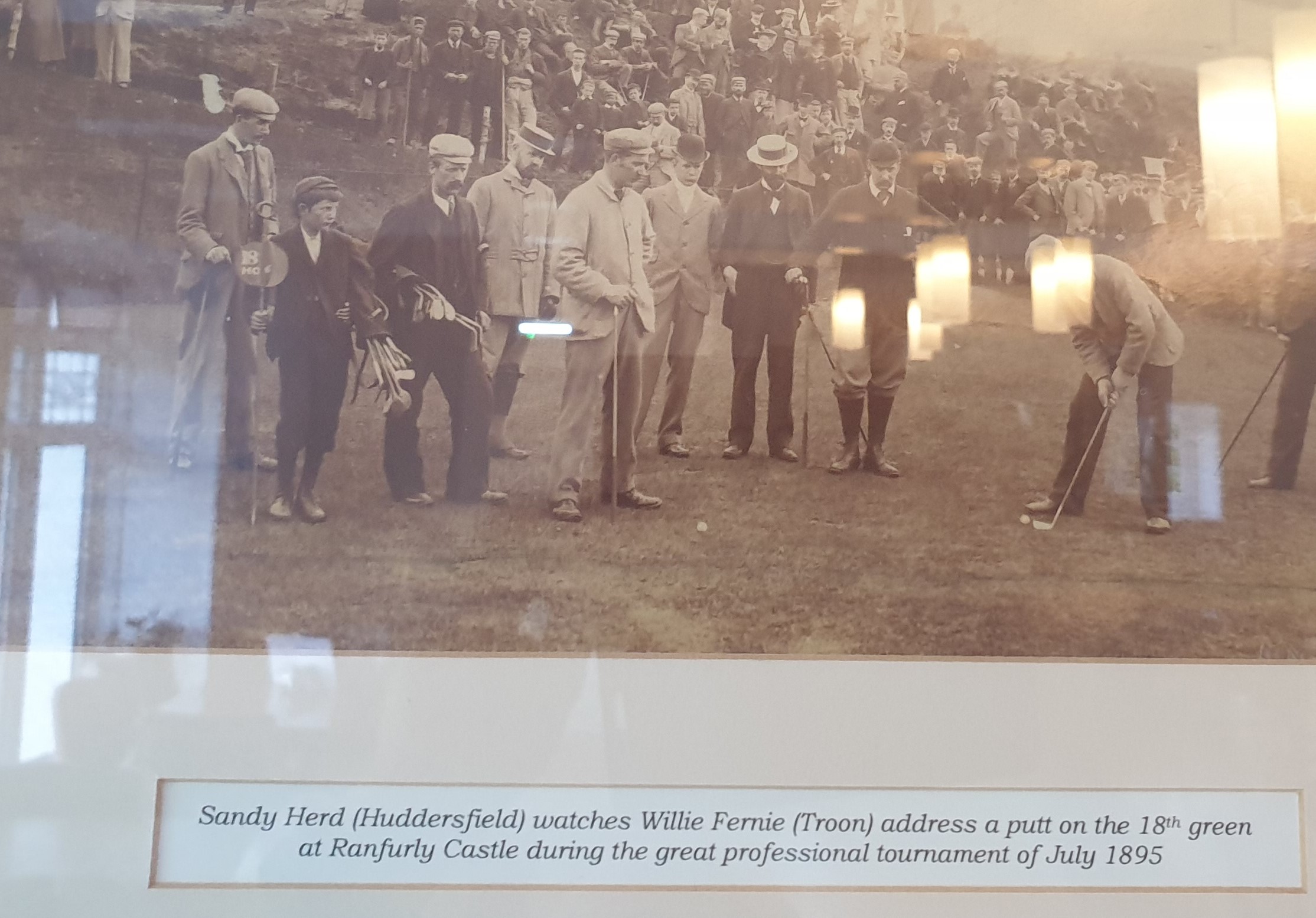
Sandy Herd watches Willie Fernie putt on the 18th green, July 1895.

On value: £63 bought coffee, a roll, eighteen holes on a genuinely good moorland course and a two-course meal. That’s 4/5. The clubhouse is J. A. Campbell’s 1905 Arts and Crafts building with its clock tower, now B-listed. He won the commission in competition, and the club promptly cut his £4,750 estimate to £3,500. Ranfurly members have always known the value of money. It’s a fine place to eat the meal.

Facts:
Course Type: Moorland
Par: 70 (1 par 5, 14 par 4s, 3 par 3s)
Distance: 5,942 yards (yellow)
Course Rating / Slope: 69.1 / 121
Course Quality: 4/5
Moly’s Gross Score: 95
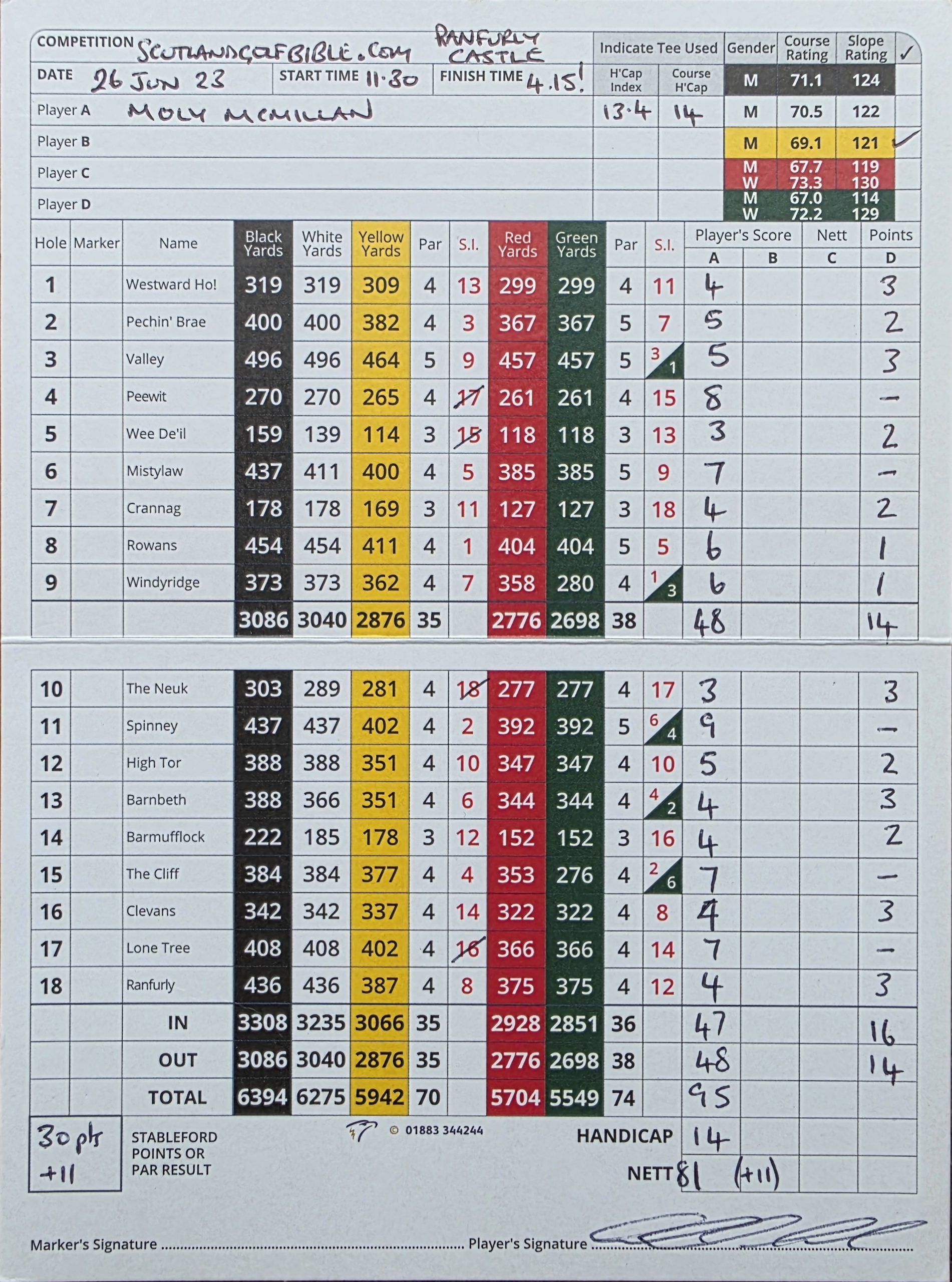
five ‘blobs’. A bearable Stableford but poor stroke play card.

211. Bonnyton. 25 Jun 23.

All is not what it seems at the delightful Bonnyton.

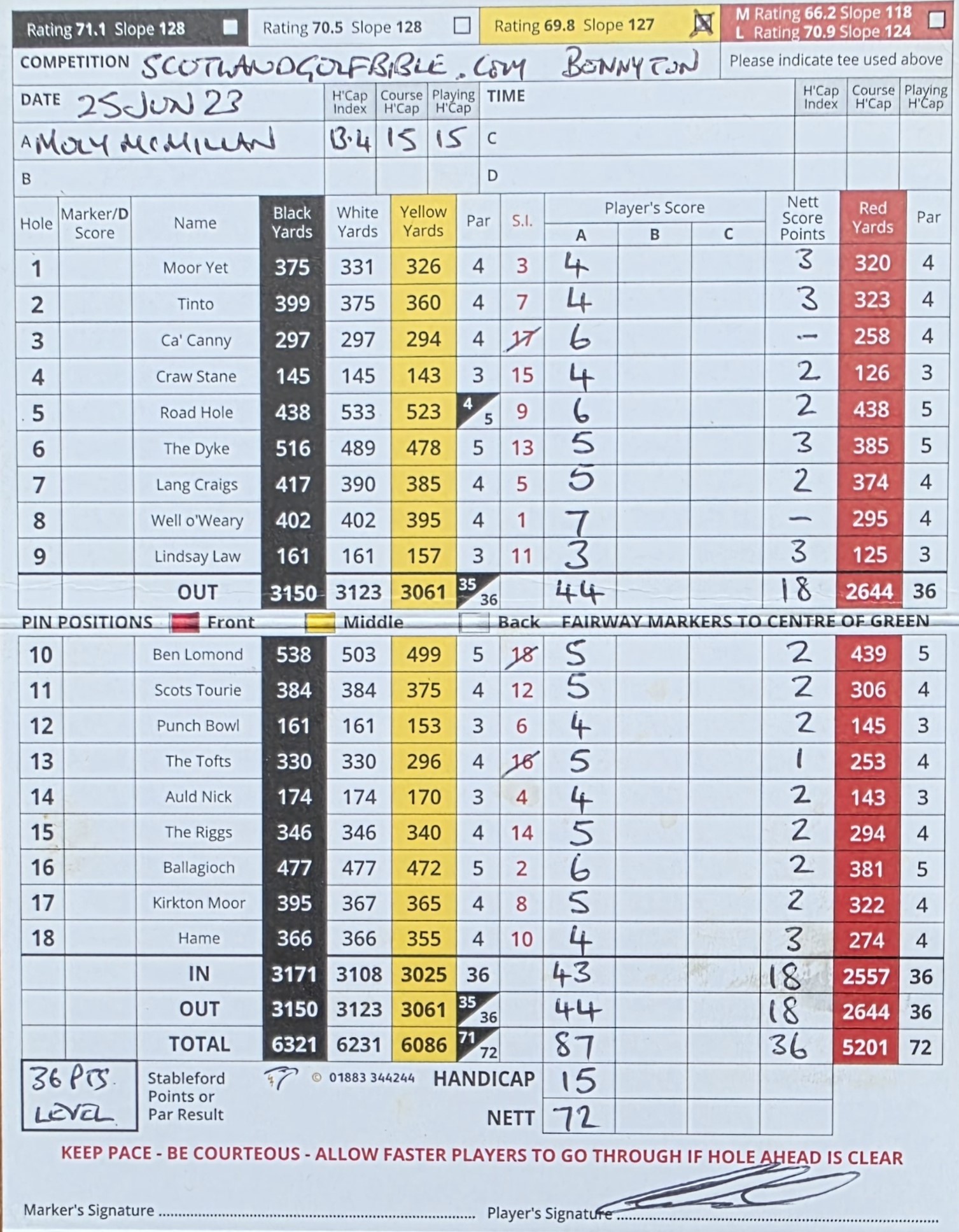
Price Paid: £23 (GolfNow)
Current Price (2026): around £45 / GolfNow ~£30
Value Rating: 5/5 at £23 / 5/5 at current GolfNow / 4.5/5 at current list
Moly’s Score: 87 gross, net 72, 36 Stableford points

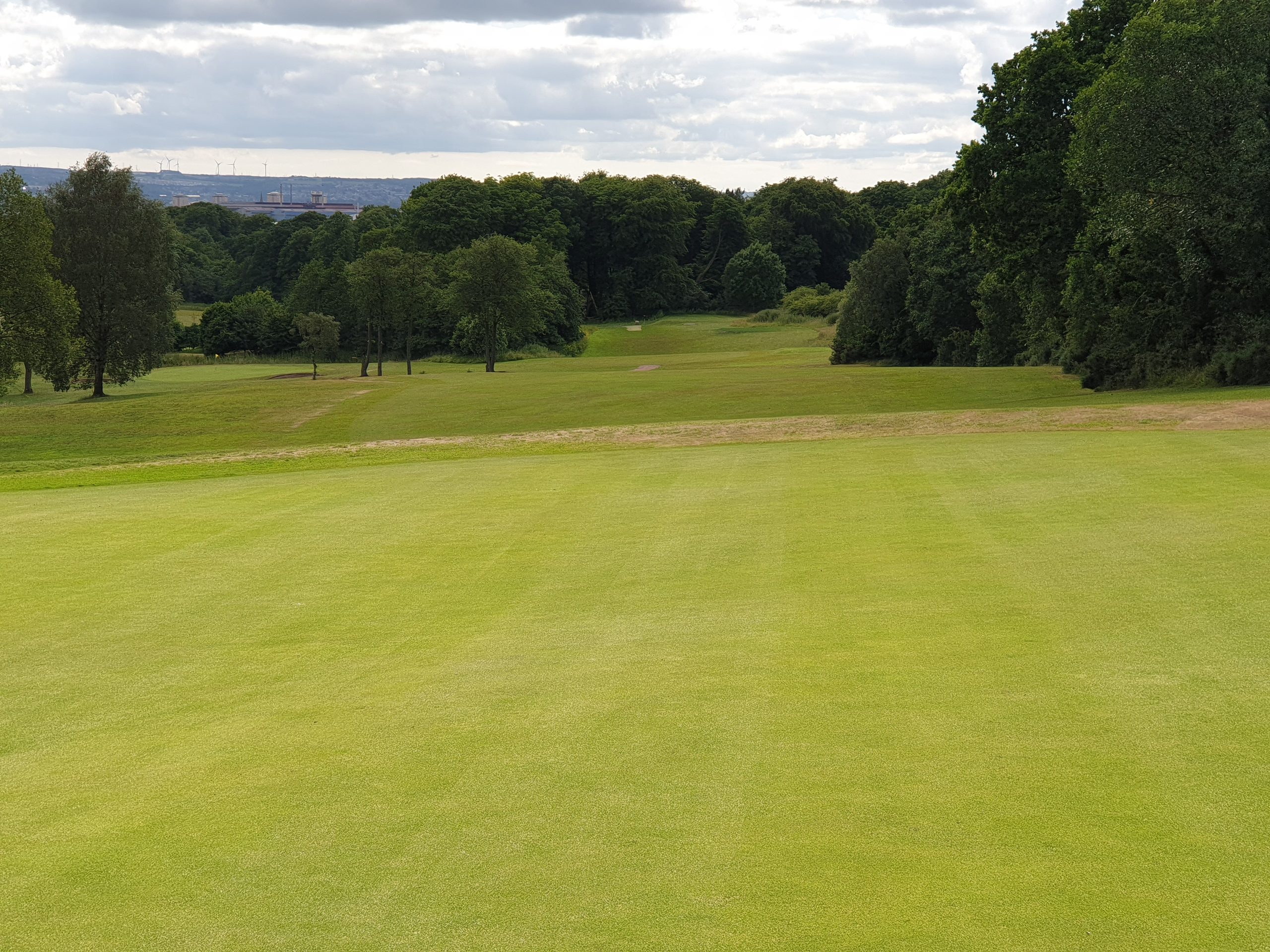
The 11th green, 750 feet up, with Glasgow’s tower blocks below under a low lid of cloud. The view was not always available on this rainy day.

A friend once ordered a bacon burger in the Bonnyton clubhouse. The lady behind the bar paused, then asked, very kindly, whether a beef burger would be all right.

Bonnyton sits on the moor just west of Eaglesham, in East Renfrewshire, about ten miles south of Glasgow city centre. The hole markers say the club was founded in 1957. The scorecard says the course was designed by Dr Alister MacKenzie, of Augusta National fame, who died in 1934. I sharpened my pencil.

The 1st climbs between ranks of spruce. On our day the mist came down to meet it.

But here the club is right. Bonnyton Moor Golf Club was started in 1922 by the Lindsays, a family of Glasgow publicans, with a dormie house so golfers could stay over. Presumably they liked a drink. Mackenzie advised on the course design through 1922-23, and it opened in June 1923 with an exhibition match including the then reigning Open champion, Walter Hagen. Sadly, the old club faded out in the mid-1950s. Then something more interesting happened.

In the same months MacKenzie was working on Bonnyton, he was also laying out Moor Allerton in Leeds, opened in March 1923 by the Leeds Jewish community. It was the first Jewish golf club in Britain. He couldn’t have known his Scottish moor would become another.

7th, Lang Craigs: the heathland at its best, all humps and hollows and bunkers cut into the slope.

Many of Scotland’s institutions sorted their members by religion, especially in the West of Scotland. Catholics and Protestants largely remained segregated and played golf apart, and Glasgow’s Jewish golfers were often shut out altogether, playing on the public courses. Nobody wrote a rule. They didn’t need to. The blackball did the work: an anonymous vote, no reason given, no appeal. The historian Daniel Dee records that Glasgow’s Jewish golfers believed the local clubs were afraid of being “swamped”. Local memory names a club or two along the road. I can find nothing in print to pin it on any one of them, so I won’t.

The Glasgow Jewish Institute formed a golf section in 1931. In the early 1950s the community began raising money for a course of its own, and when the derelict Bonnyton Moor came up, they bought it. The club reopened under Jewish ownership on 19 May 1957, with more than 700 people there. That was twelve years after Belsen. It’s a sobering thought that, in a self-professing welcoming country, a community that had just watched what exclusion can lead to still had to buy its own hillside to get a game. Prejudice sadly runs deep.

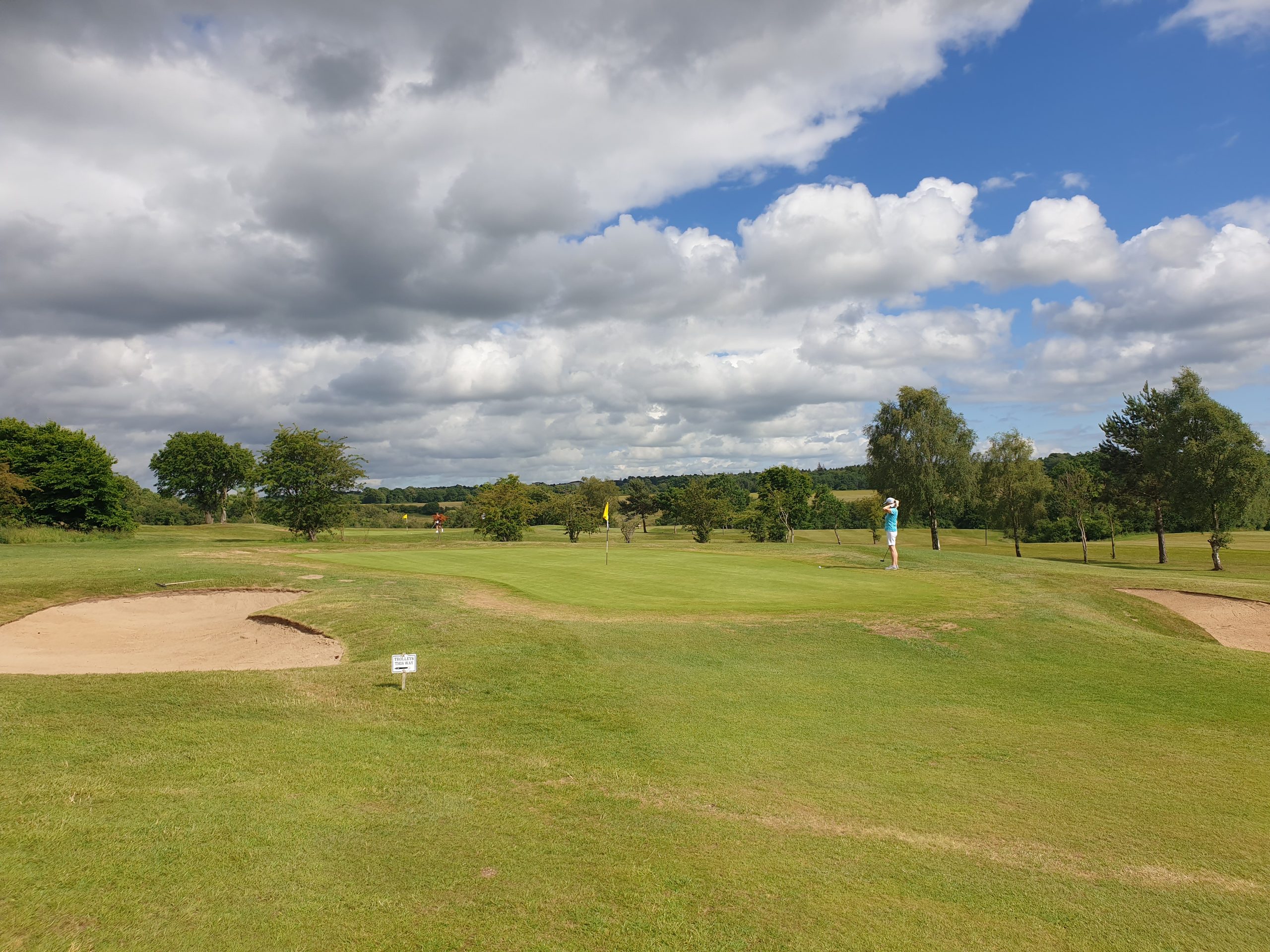
9th, Lindsay Law in the rain. The figure in blue ahead is not enjoying it either.

What they did next is the best part. The new owners advertised Bonnyton as an open club, with “no bar on the grounds of religion, race or colour”. A club founded because of exclusion excluded nobody. As one member later observed, once there was a Jewish club, the other clubs became more ready to accept Jews. Today most members aren’t Jewish, and pies and mince have long since replaced the fish and borscht. The beef burger may be the last loyal custodian of the old ways. Meanwhile neighbouring Eastwood, founded in 1893, closed in 2019. It’s said a few Bonnyton members allowed themselves a quiet smile, in memory of their fathers.

The 12th, Punch Bowl, SI 6. A tough par 3.

And the golf? It’s an excellent heathland layout in great condition. The fairways are generous and driving is relatively easy. The greens are where Bonnyton earns its rating: tiered, steeply sloping and, in places, tiny. Two of the par 3s rank among the hardest holes on the card, Auld Nick (14th) at SI 4 and Punch Bowl (12th) at SI 6, which is rarer than it should be. There’s a real East Ren feel to it (Blog 169), which is no surprise with Braid’s heathland just over the hill.

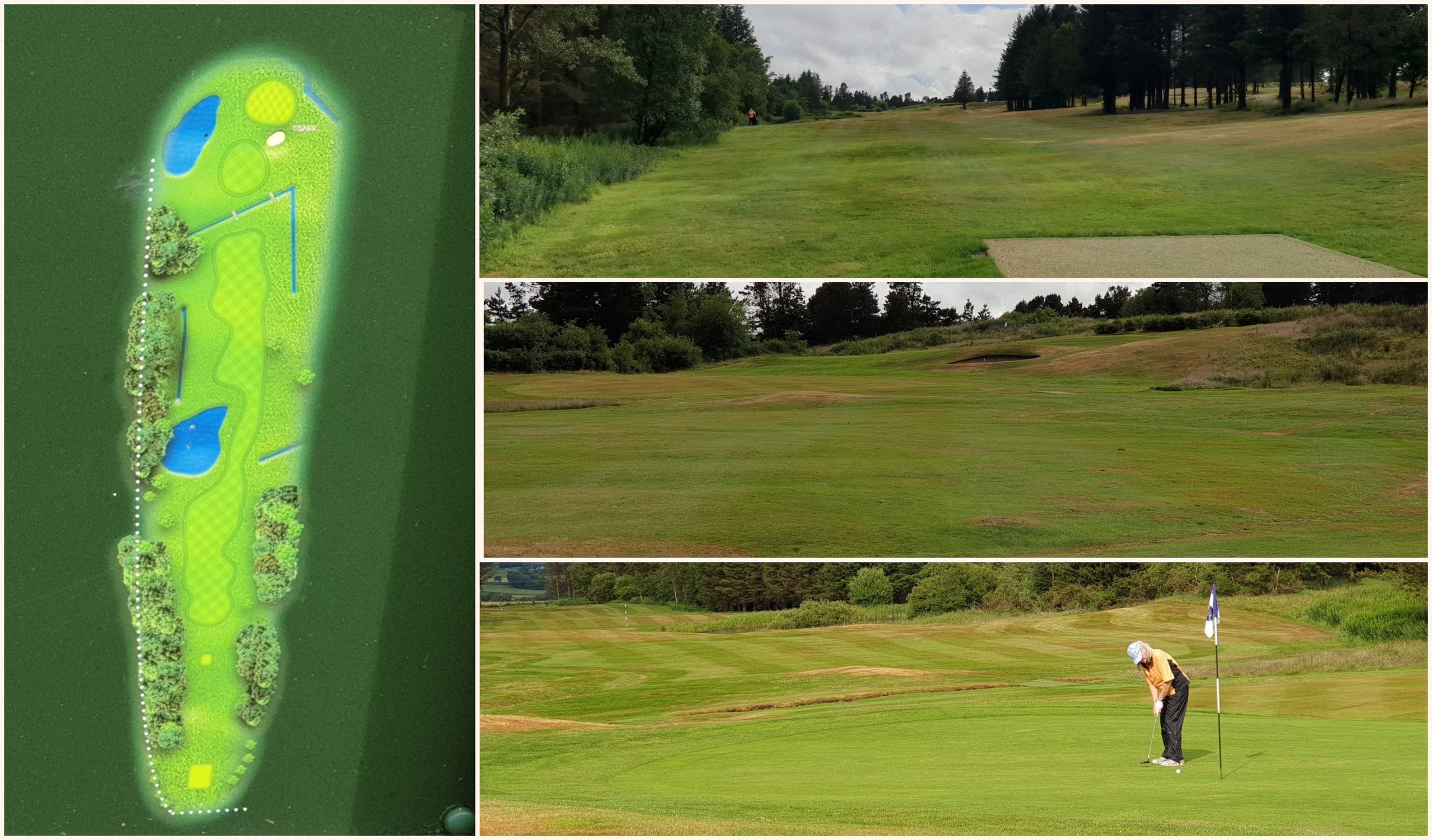
The par 5 16th, Ballagioch, SI 2. The hole plan shows two ponds and two ditches. From the tee you see none of them. MacKenzie would have approved of the deception, if not the lost balls.

Then there’s the 16th, Ballagioch, a 472-yard par 5. From the tee it’s an innocent avenue of spruce. The plan shows water on both shots and out of bounds down the left. MacKenzie loved deception, but he hated golfers wasting time looking for balls, and I suspect the ponds came later. Either way, all is not what it seems.

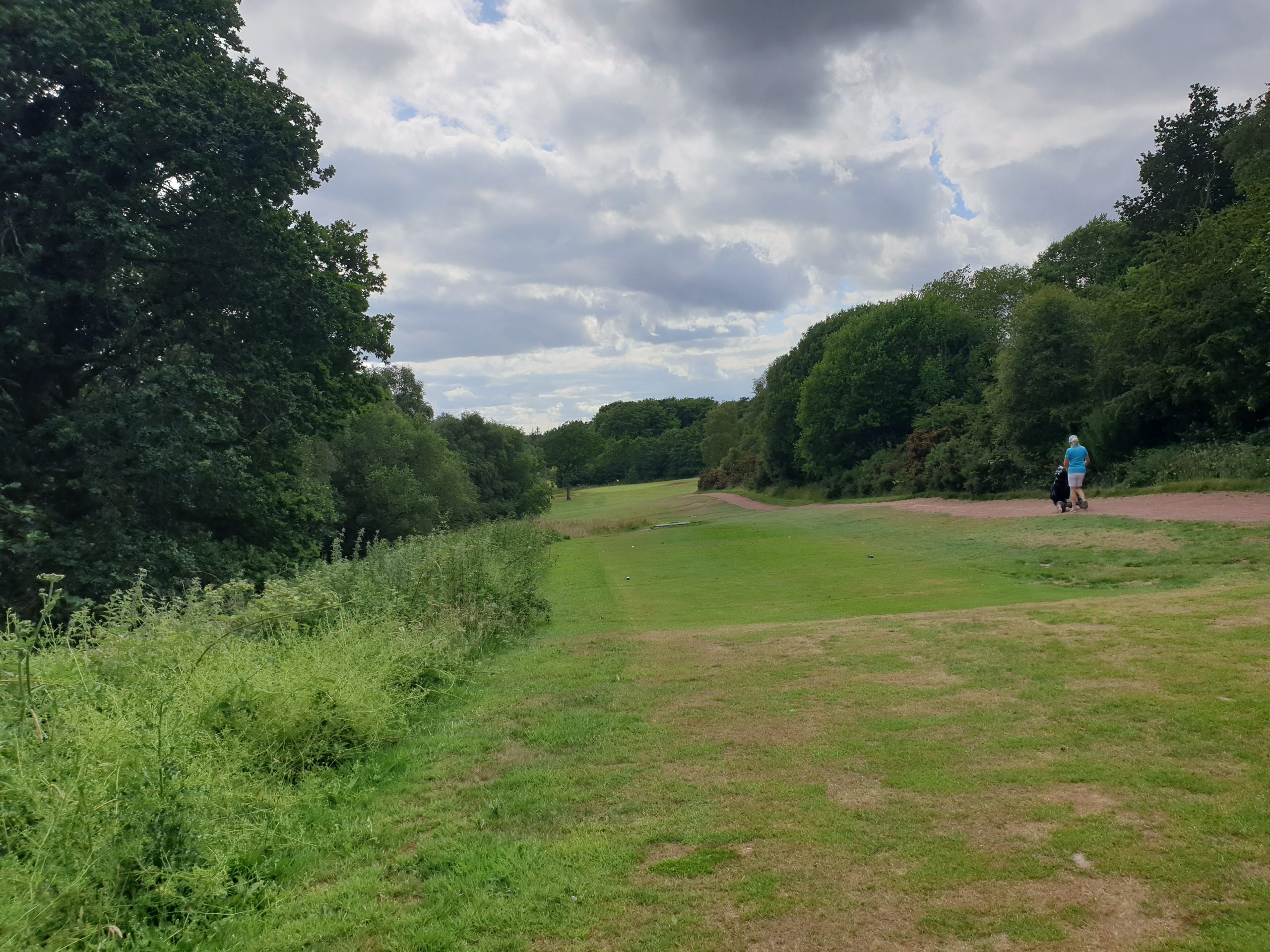
Fran on the reds at the 13th, with the Renfrewshire lowlands behind. Her course was 885 yards shorter than mine.

It poured. I shot 87, playing exactly to handicap for 36 points. At £23 through GolfNow, a MacKenzie course in this condition was absurd value. I’d go back tomorrow, and I’d happily order the beef burger, as a show of respect.

Facts:
Course Type: Heathland
Par: 72 (4 par 5s, 10 par 4s, 4 par 3s)
Distance: 6,086 yards (yellow)
Course Rating / Slope: 69.8 / 127
Course Quality: 4/5
Moly’s Gross Score: 87

87 was a good score for me in the rainy conditions.

210. Dalziel Park. 24 Jun 23.

“The best golf course in Lanarkshire.” Probably not.

Price Paid: £10 for 9 holes, senior rate.
Current Price (2026/27): Seniors: weekday 9 holes £18, weekend £22. Adult weekday £20, weekend £30. GolfNow for 18 holes about £25.
Value Rating: 3/5 at £10 paid; 2/5 at GolfNow (~£25 for 18); 2/5 at £22 current senior weekend; 2.5/5 at £30 current adult
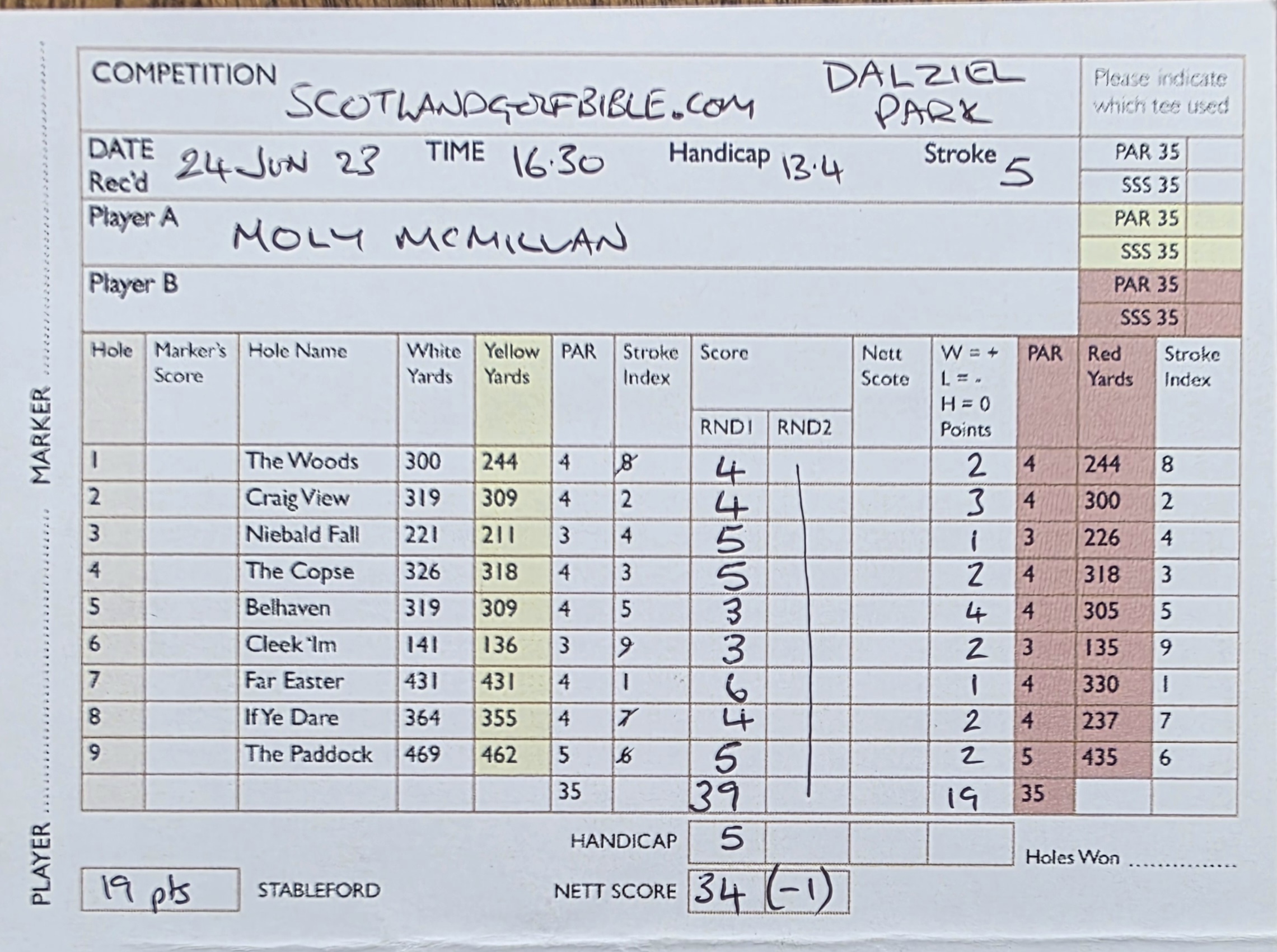
Moly’s Score: 39 gross

Carlsberg had the sense to at least say “probably”. Dalziel Park’s website does not. Its heading declares itself “The best golf course in Lanarkshire”.

Dalziel (pronounced ‘Deel’) Park is a nine-hole course in North Lanarkshire, about two miles north-east of Motherwell and 15 miles from Glasgow.

Fran on the 1st green under a big Lanarkshire sky. Shapely bunkers, a good green and wide-open parkland: Dalziel Park at its best.

The land was the Cleland Estate, mined for coal in Victorian times. In 1947 Sir John Colville, later Lord Clydesmuir, sold it for £6,000 to the Dalziel High School War Memorial Trust. The Trust wanted playing fields as a living memorial to former pupils killed in both world wars. In 1990, facing rising maintenance costs, the Trust turned the estate into Dalziel Park, including housing and a hotel on the site of the demolished Cleland House. The golf course opened in November 1997. The Trust’s own website calls the result “one of the finest facilities in Scotland”. The hyperbole may be in the title deeds.

Looking back down the 2nd from the green. Immaculate turf and mature woodland, with wind turbines and industrial Lanarkshire on the skyline.

The course has been bigger. A second nine was added at some point, but by 2012 only the original nine were in play. In 2011 the club was bought by the leisure company of former Celtic striker Harry Hood, and it is now part of the Lisini hospitality group. Today it’s a par 35 of 2,775 yards from the yellow tees.

Credit where it’s due. The greens were good, and some of the greenside bunkers are well shaped. The club calls the course ‘a stern test for all golfers with its tight fairways’. In truth, much of it is open parkland with no fairway bunkers. The 7th, Far Easter, is a 431-yard par 4 and stroke index 1, and it cost me a double-bogie 6. I still went round in 39. It’s a decent course to learn the game on. That’s a real compliment, and a very different claim.

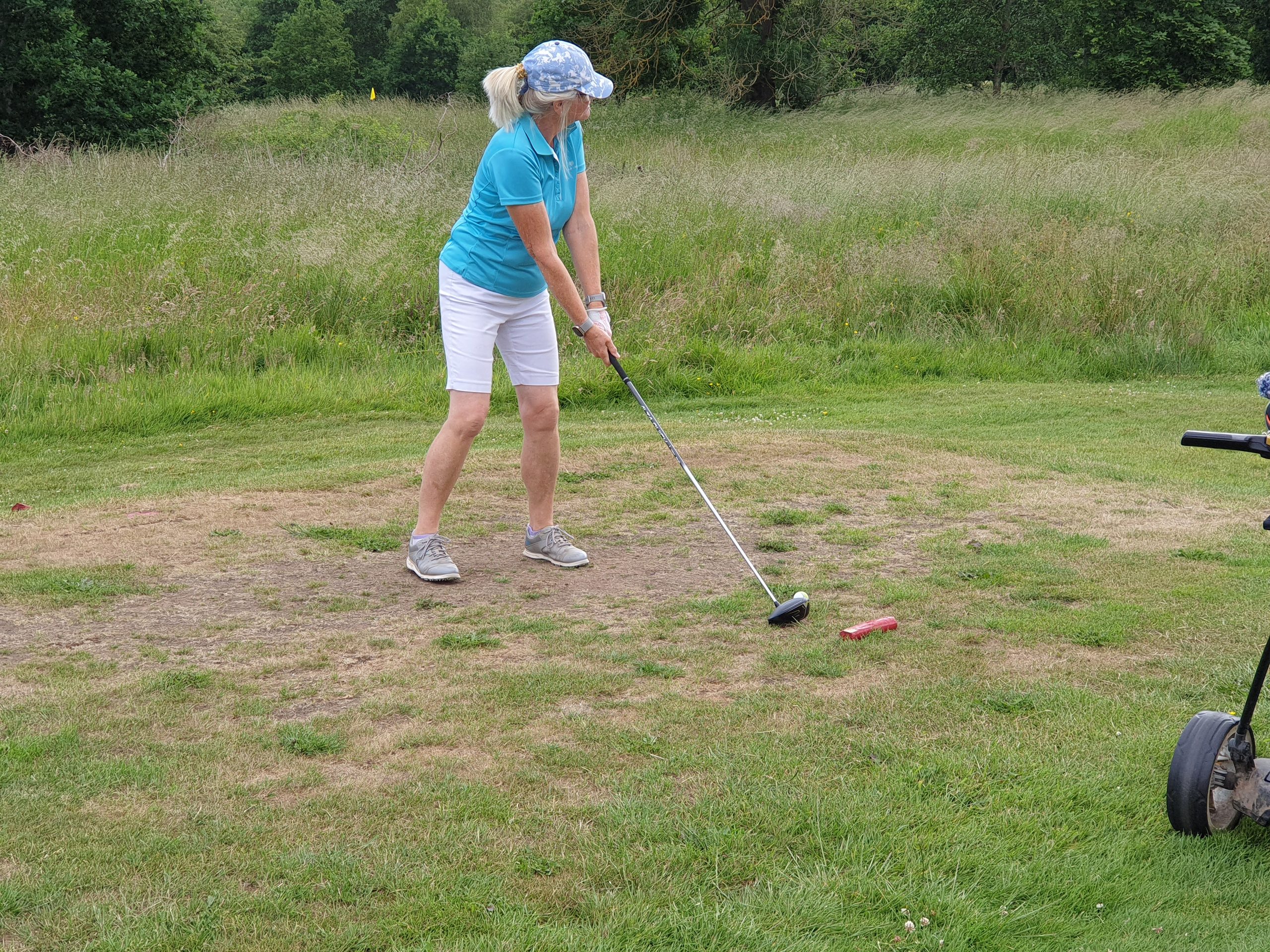
Fran heading off the 3rd tee down a tree-lined corridor. The tee itself is patchy and tired.

The tees were poor, and the ladies’ tees were worse. On the 5th, Fran teed up on bare earth. In 2023 the price list offered a “Father + Child” rate, not a parent and child rate. The hotel had a nice quarterly magazine, but its club diary listed no ladies’ events that I could see. Together these suggest a course that hasn’t given much thought to half its potential customers.

Fran on the 5th, addressing the ball on what was once a tee and is now mostly soil. The red tees were the worst on the course.

Overclaiming is not harmless puffery. A 1978 study of 903 consumers concluded that exaggeration which leaves expectations unmet does not help the seller. A 2010 study in the Journal of the Academy of Marketing Science went further: customers who feel misled become distrustful, and that distrust spills over onto other businesses. Claes Fornell, the customer-satisfaction researcher, puts it simply: exaggerate, and you may win one sale at the cost of a long-term customer. Lanark (Blog 165) is ranked 33rd in Scotland and doesn’t need to tell anyone it’s the best. Nobody playing Dalziel Park will think it is.

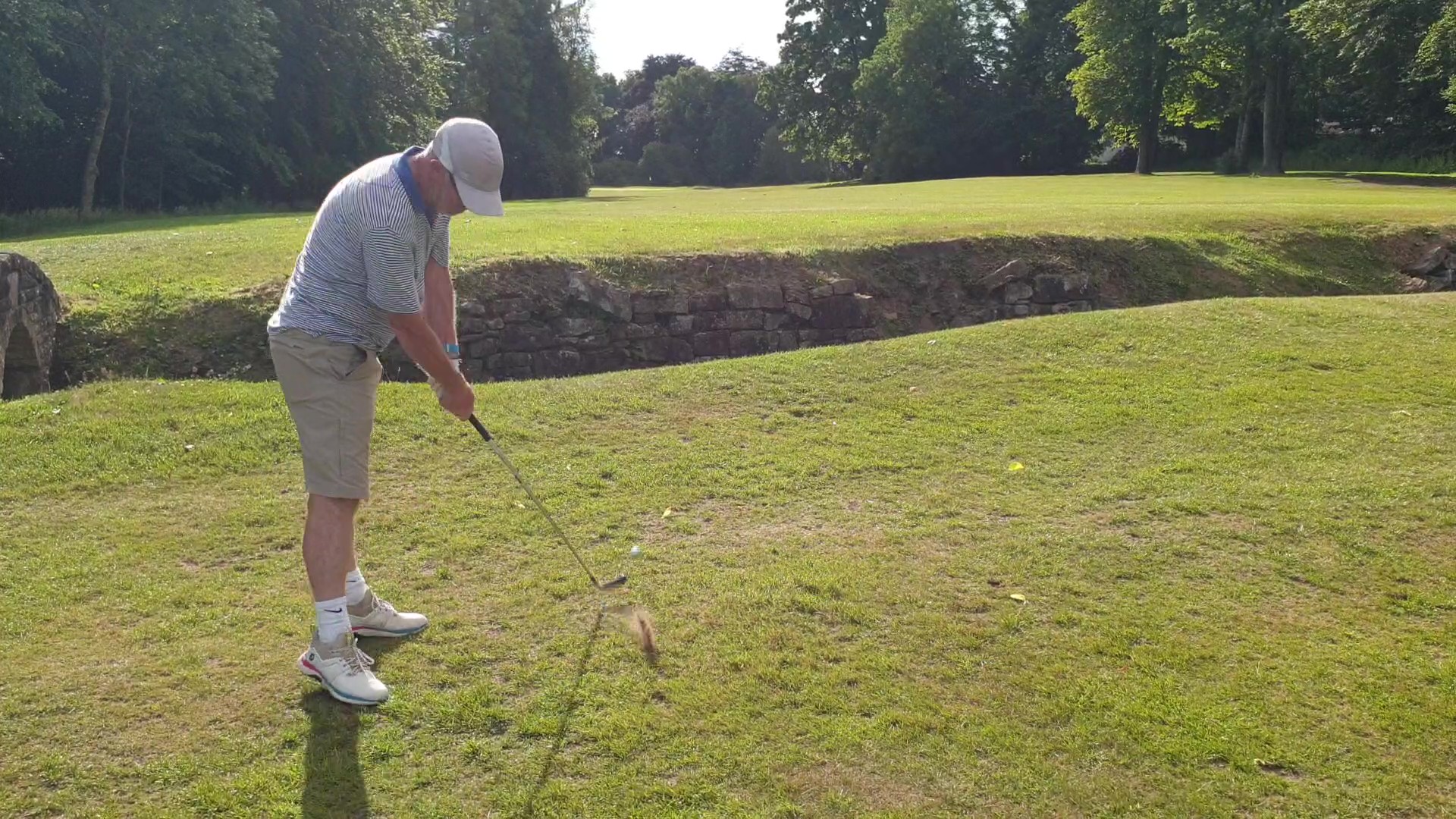
My approach to the 9th over the old stone bridge and walled burn, the most characterful corner of the course and a reminder of the estate it used to be.

Further credit: there was a seniors’ discount. At £10 for a senior on a Saturday, nine good greens were fair value: 3/5. Today the same senior pays £22, a 120% rise, and an adult pays £30 at the weekend. At those prices, 2/5. Would I go back? To learn the game, maybe. To play the “best course in Lanarkshire”, no chance.

Fran chipping to the 9th green to finish.

Facts:
Course Type: Parkland
Par: 35 for 9 holes (1 par 5, 6 par 4s, 2 par 3s)
Distance: 2,775 yards (yellow tees)
Course Rating / Slope: CR 33 / SR 121
Course Quality: 2/5
Moly’s Gross Score: 39

Decent round of 39

209. Dunbar. 23 Jun 23.

Bandit at Dunbar? The verdict: not proven.

Price Paid: Member’s guest.
Current Price (2026): £195 Mon–Wed, £225 Friday, £265 weekends (April–October); twilight £165 Mon–Wed from 14:30.
Value Rating: Current twilight: 4/5 / Current list: 3/5
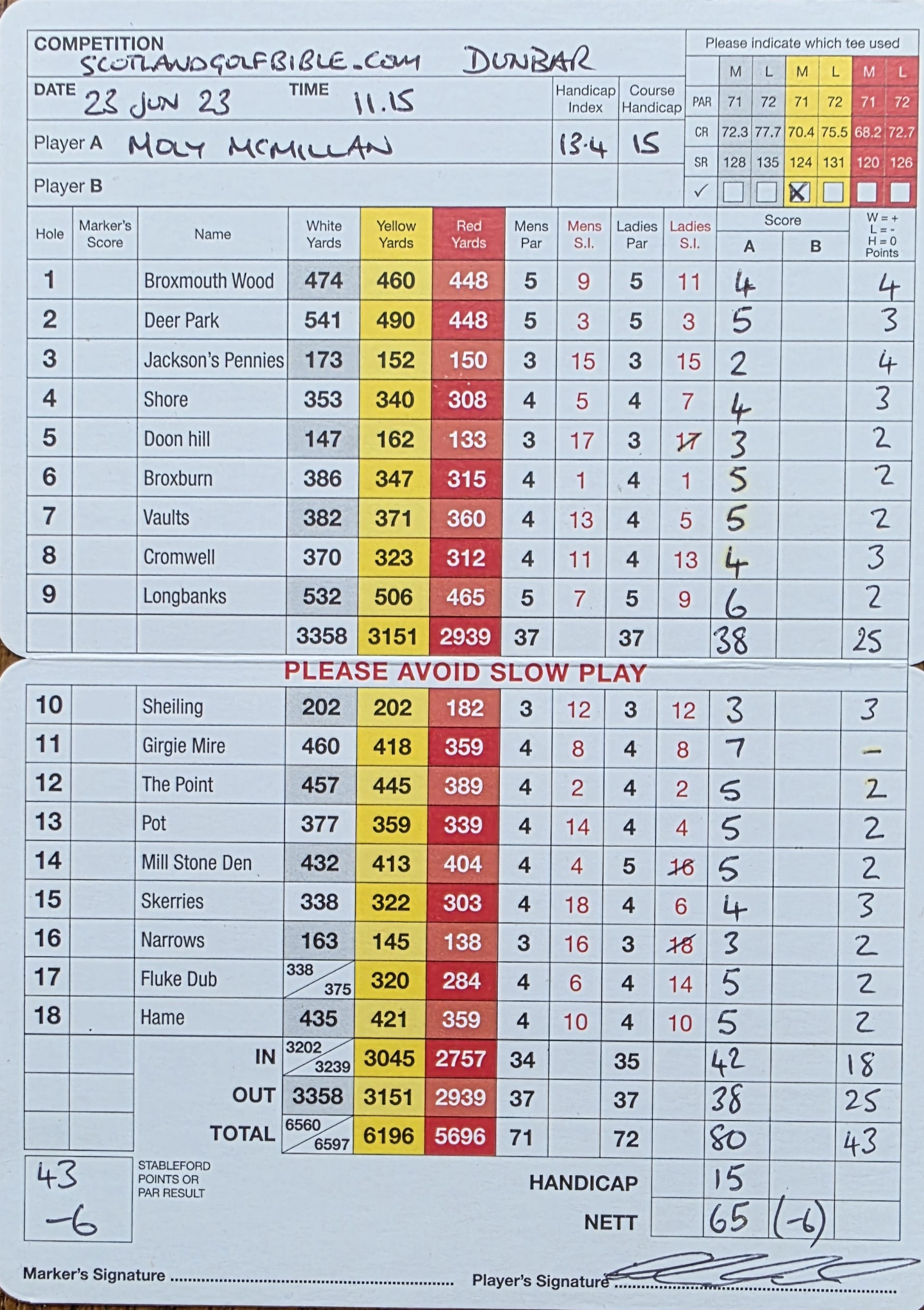
Moly’s Score: 80 gross, 42 Stableford points (Card has 43, see below for detail)

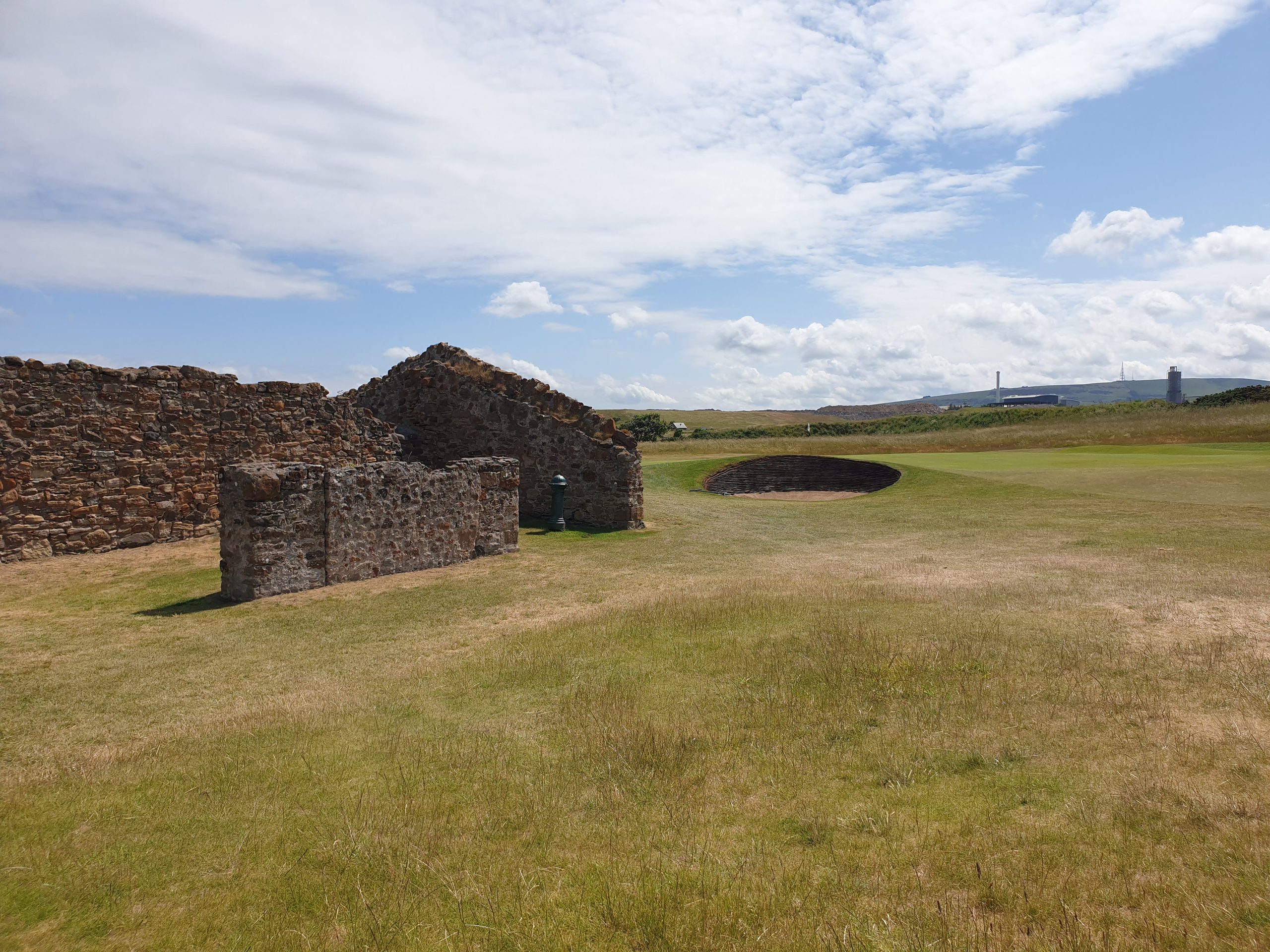
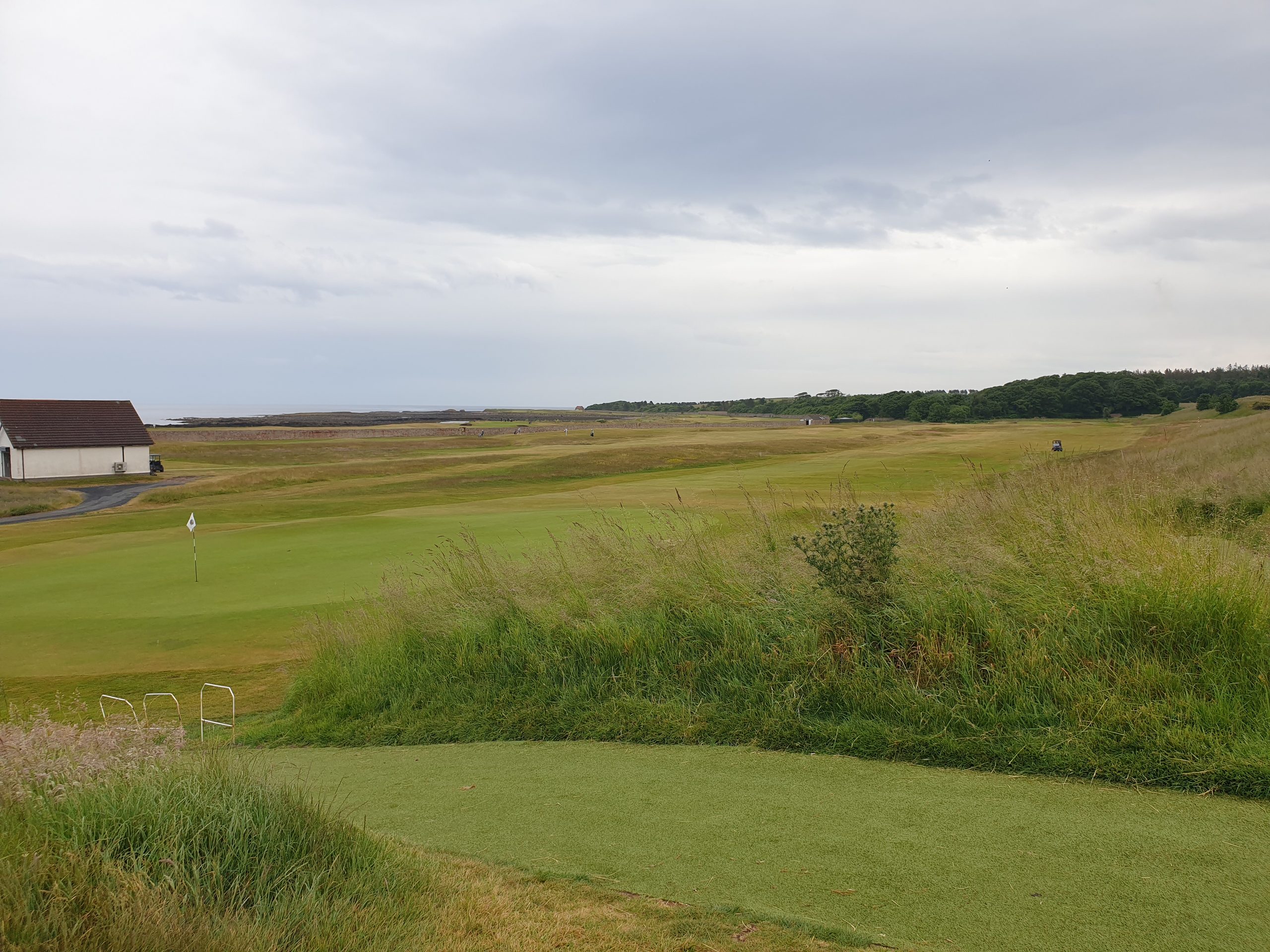
The 10th green at Dunbar: a perfectly revetted bunker, the Category B-listed “Vaults” with its cast-iron drinking fountain, and the cement works chimneys behind. Three centuries of East Lothian in one frame.

Club golf has no higher compliment than the enquiry “what did you say your handicap is?”. By the 4th green I was six under my handicap and the dreaded word “bandit” had been alluded to, fully justified in my opinion. The witnesses were Jim Taylor, a Dunbar member, excellent golfer and our host; Mark Wright, an Edinburgh eye surgeon, so presumably the best-qualified judge of what he’d seen; and Mike Johnstone, cycling buddy of Mark, who had hosted me at Kilspindie (Blog 206) two days earlier and set up the game.

Dunbar Golf Club’s East Links sits on the eastern edge of Dunbar, East Lothian, about 30 miles east of Edinburgh. There was a West Links but that closed more than a century ago. It’s a thin strip of links squeezed between an old red sandstone wall and a rocky shore. The club traces itself to a golfing society of 1794. In 1856 it laid out fifteen holes on the seaward side of the wall. Old Tom Morris altered seven holes in 1894, and the present layout largely dates from 1922–24, when James Braid and Ben Sayers extended it. So the course’s place in the Braid Atlas, developed by Scott Cook, is a genuine credit, not a courtesy. Dunbar has hosted Final Qualifying for the Open four times when the Open went to Muirfield, most recently in 2014.

Looking back down the 2nd from the 3rd tee. Fairways run side by side on a strip of land so narrow that the scorecard warns you’ll stray onto the wrong one.

My start was ridiculous. On the 1st my third shot nearly dropped for an eagle, so I settled for a birdie from 6 inches. On the par five 2nd I was on in two and three-putted for the kind of par professionals hate. On the 3rd, Jackson’s Pennies, I hit the tee shot to six feet and holed another birdie. A par on four left me at 2 under with 13 stableford points, albeit card shows 14.

The elevated 3rd tee, which the guidebooks rightly call the best view on the links. My tee shot finished ten feet away, and the putt went in.

So why do we play this well so seldom? Because the handicap system is built that way. Your index is the average of your best eight score differentials from your last twenty rounds. The other twelve don’t count. A handicap measures what you can do, not what you usually do, so most of the time you’ll fall short of it. My differential that day was 8.7 against an index of 13.4. That’s unusual, but it’s a long way short of the 7.0 gap that triggers an automatic cut. I wasn’t a bandit. I was just having my good day.

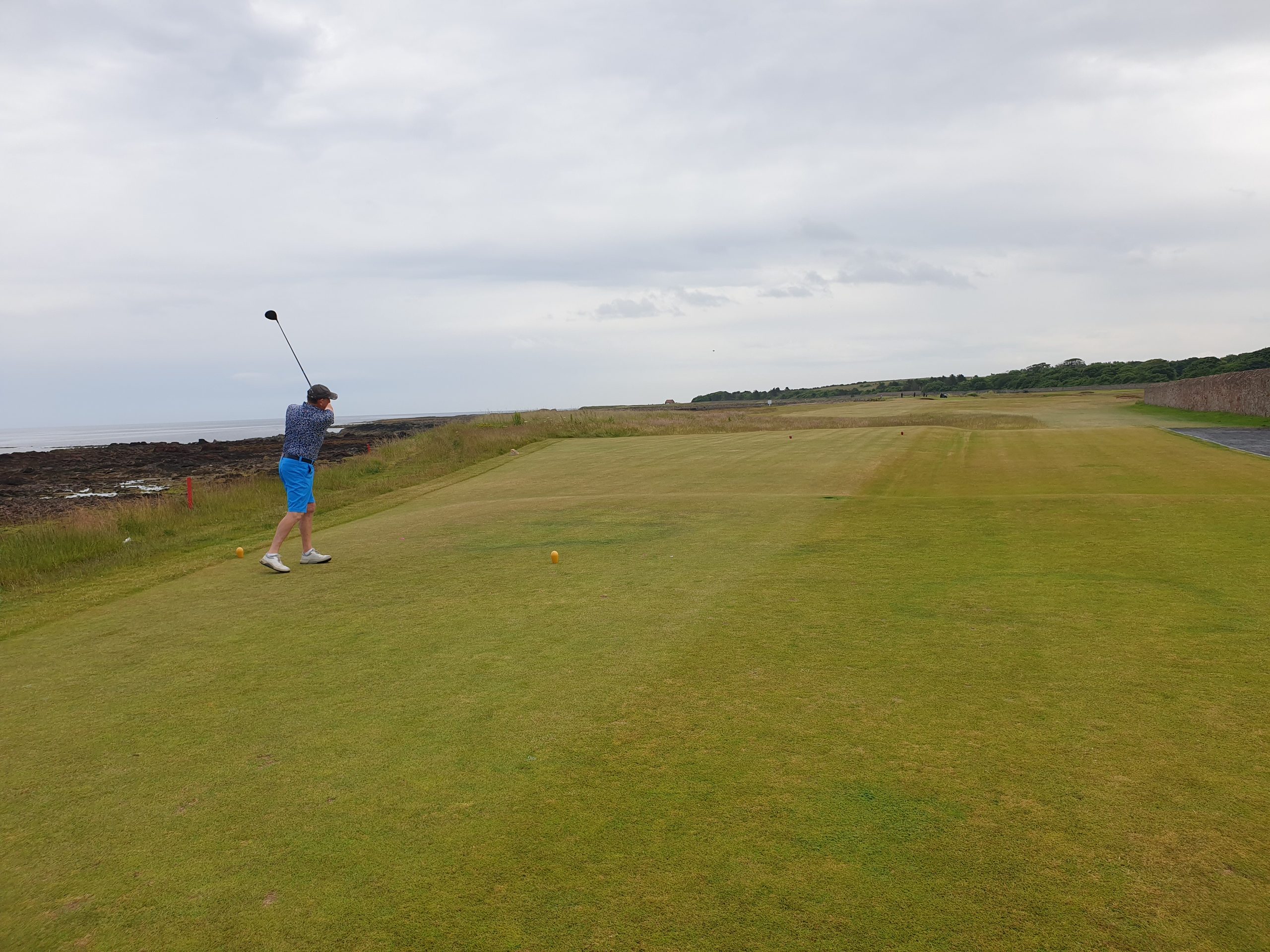
Jim drives at the 4th, with the Firth of Forth on the left, the wall on the right and very little in between.

Now the confession. I wrote 15 on the card. Off the yellows the correct figure is 14, because I applied the slope and forgot to subtract the course rating’s 0.6 below par. That one stroke fell on the 3rd. So it was 42 points, not 43, and five under after four holes, not six. My playing partners were right, but only by one shot.

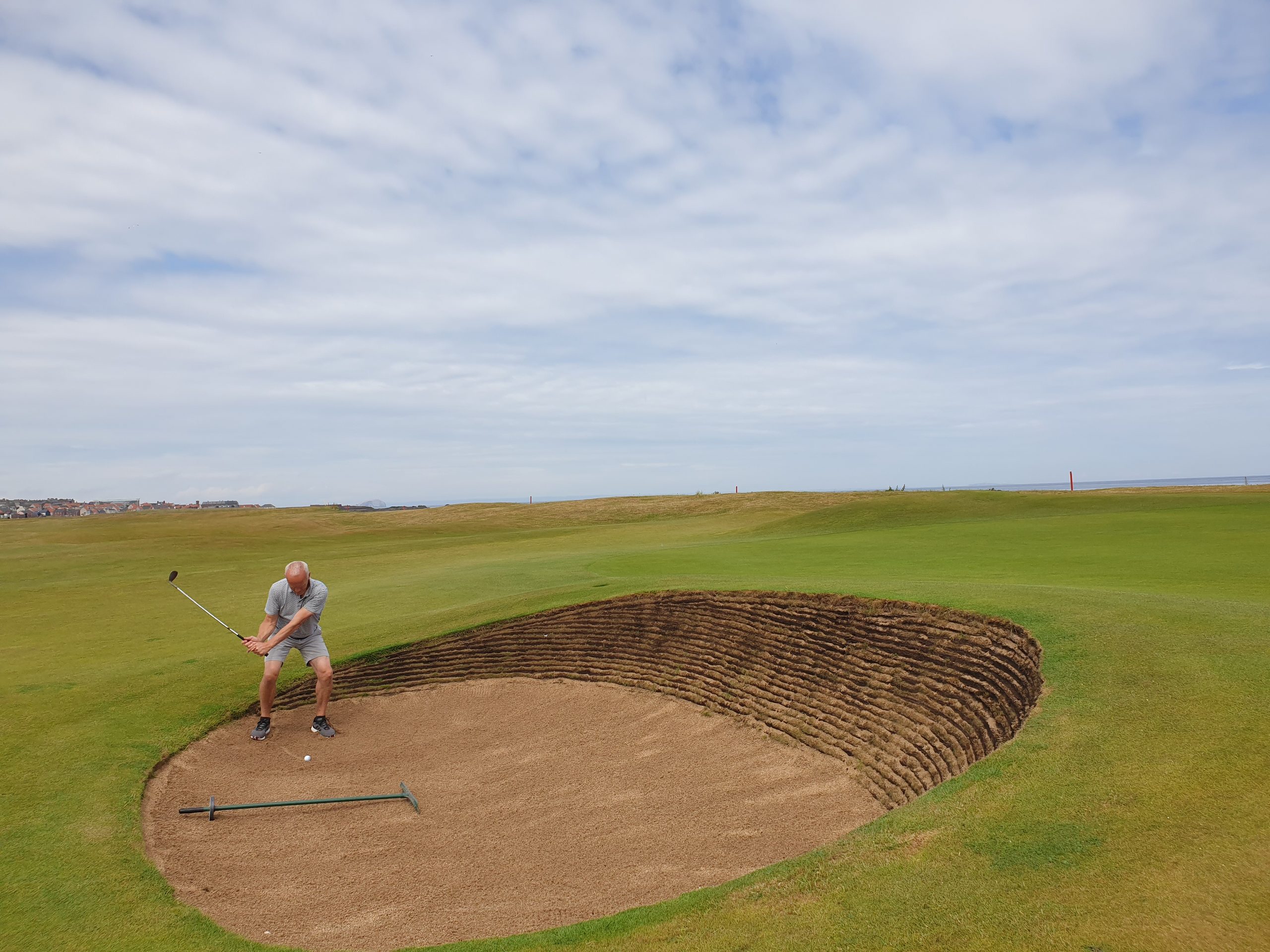
Mike splashes out of a revetted bunker at the 4th, with the Bass Rock on the horizon. Dunbar’s bunkers are works of art and they punish you properly.

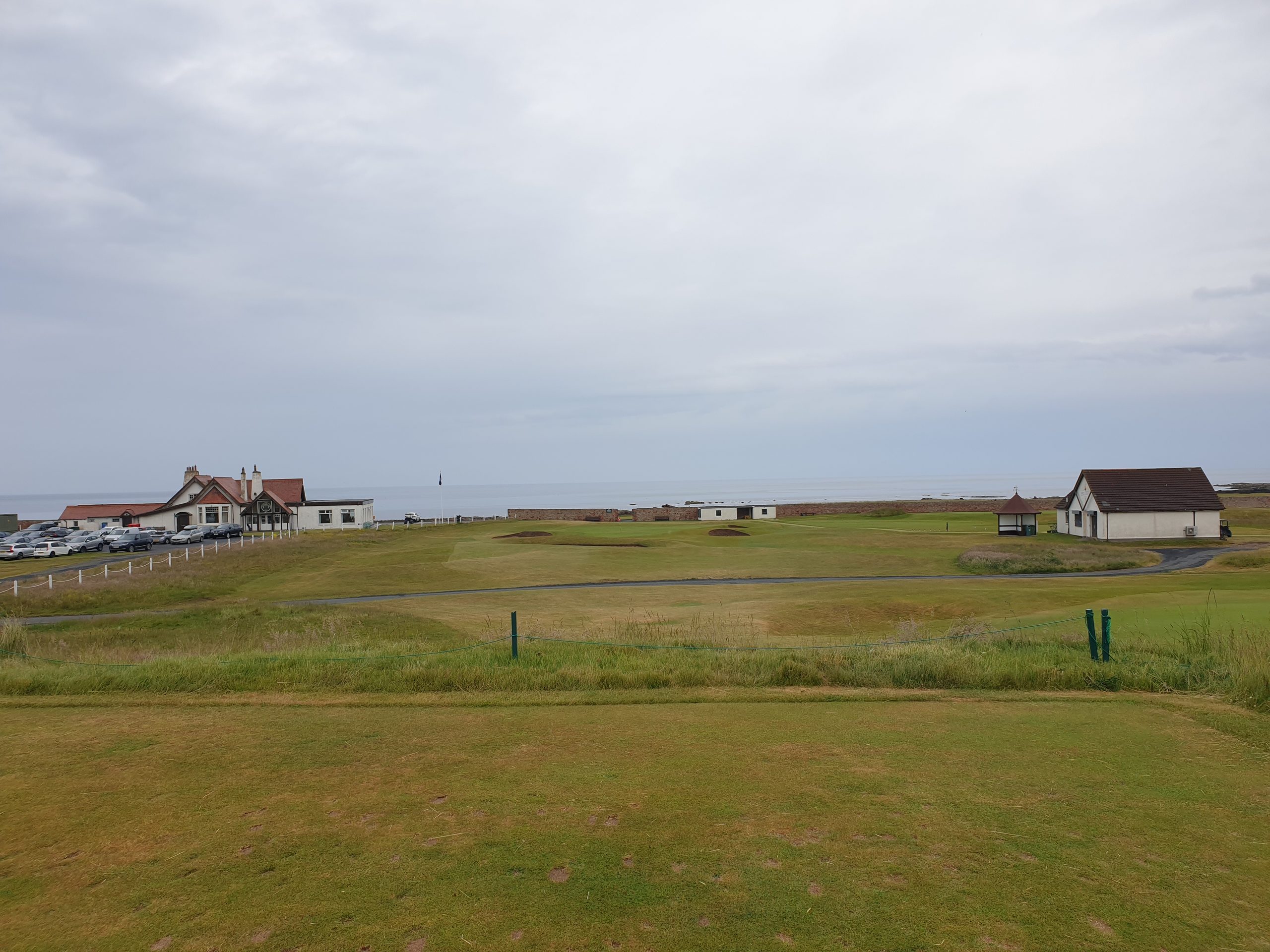
The front and back nine balance is the course’s one weakness. The front nine is par 37 with three par 5s; the back nine is par 34 with none. It isn’t a true out-and-back either, and the holes are so closely adjoined the fairways are at times double the width. The answer is in part a new clubhouse, funded by CALA Homes and approved in October 2022. The club expects it to open by the end of 2026, but the plans promise only a “slight alteration” to the course itself.

The wall that runs alongside most of the course is said to have been built by Napoleonic prisoners of war. Links Magazine states this as fact. Bunkered calls it a tale from the caddies. The official listing for the Broxmouth Park walls gives no builder or date at all. The verdict is the Scottish one: not proven.

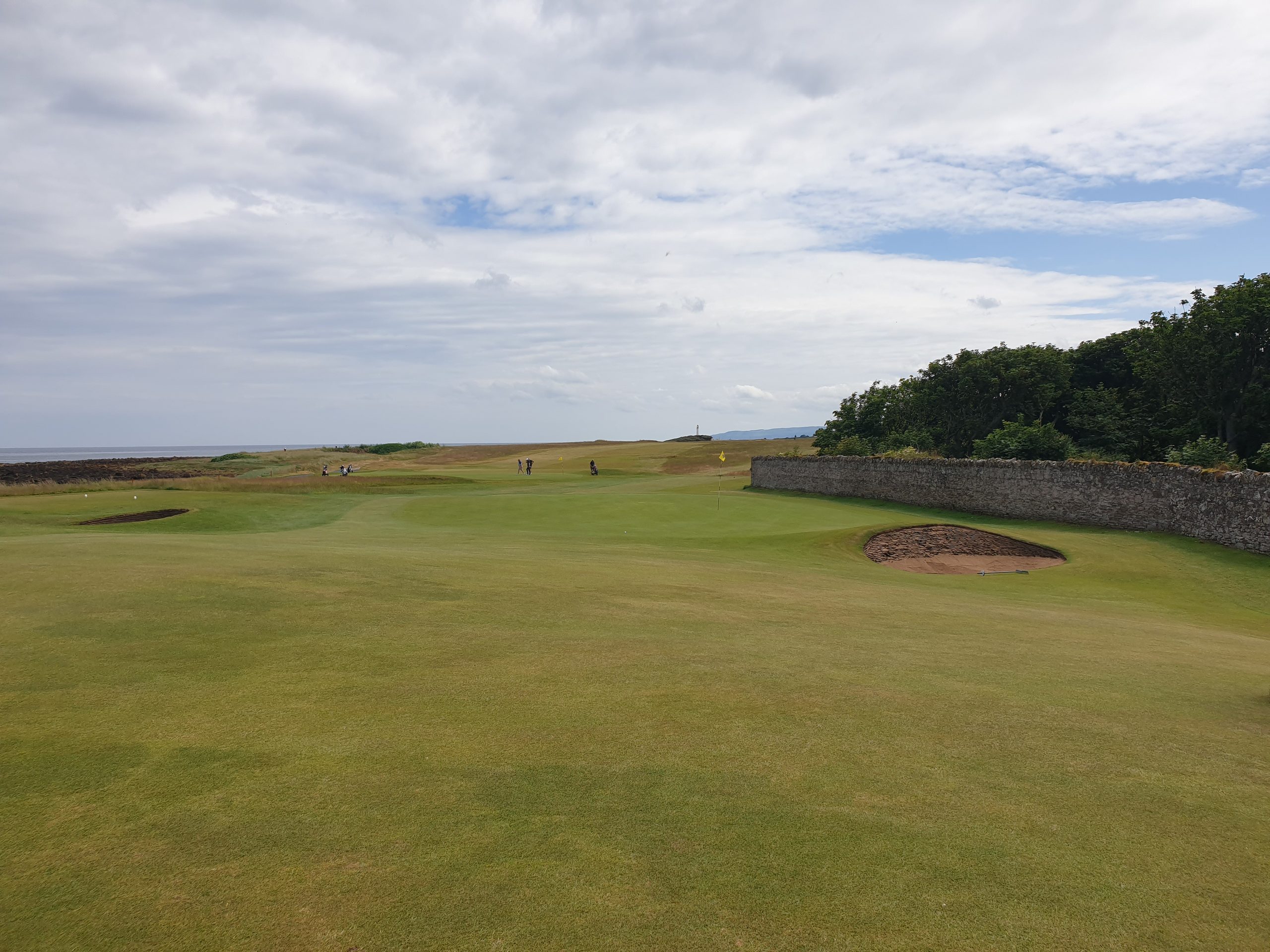
The 7th green, tucked against the wall, with Barns Ness lighthouse in the distance.

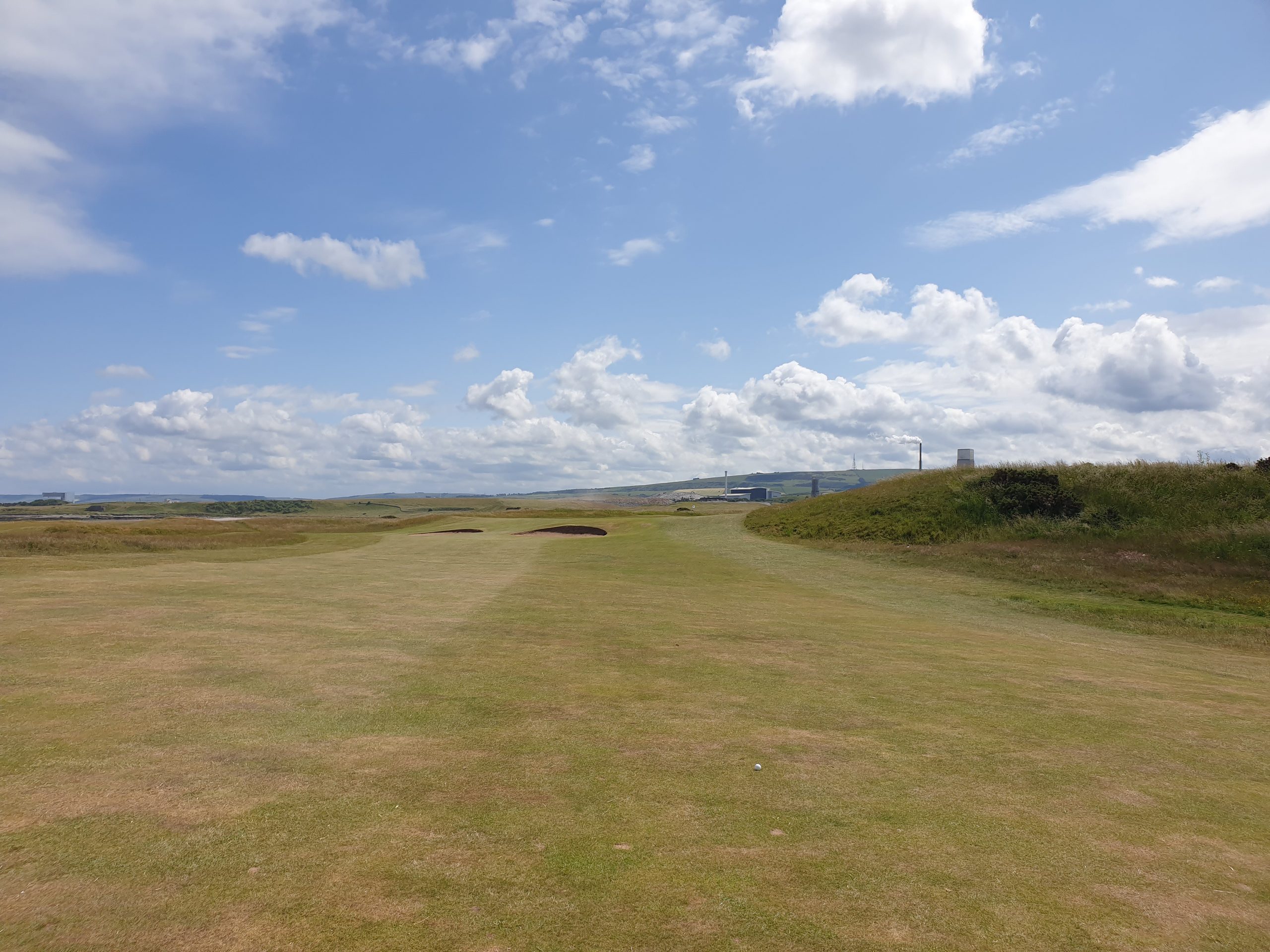
The land has a better story than the wall. The Dukes of Roxburghe owned the links until 1960, when they sold up to Portland Cement. For half a century the club’s landlord was the cement company whose chimneys you can see from the 13th. The club only bought its own course in 2011. Add Torness power station, the landfill and the lighthouse, and the views are the most industrial of any top-class links I know. The course is immaculate regardless.

The 13th, heading towards the cement works and landfill, with Torness on the horizon to the left.

Then came the 11th, Girgie Mire. My approach was perfect until it caught the lip of a bunker. Seven shots, no points. Every bandit needs one hole that proves he’s human.

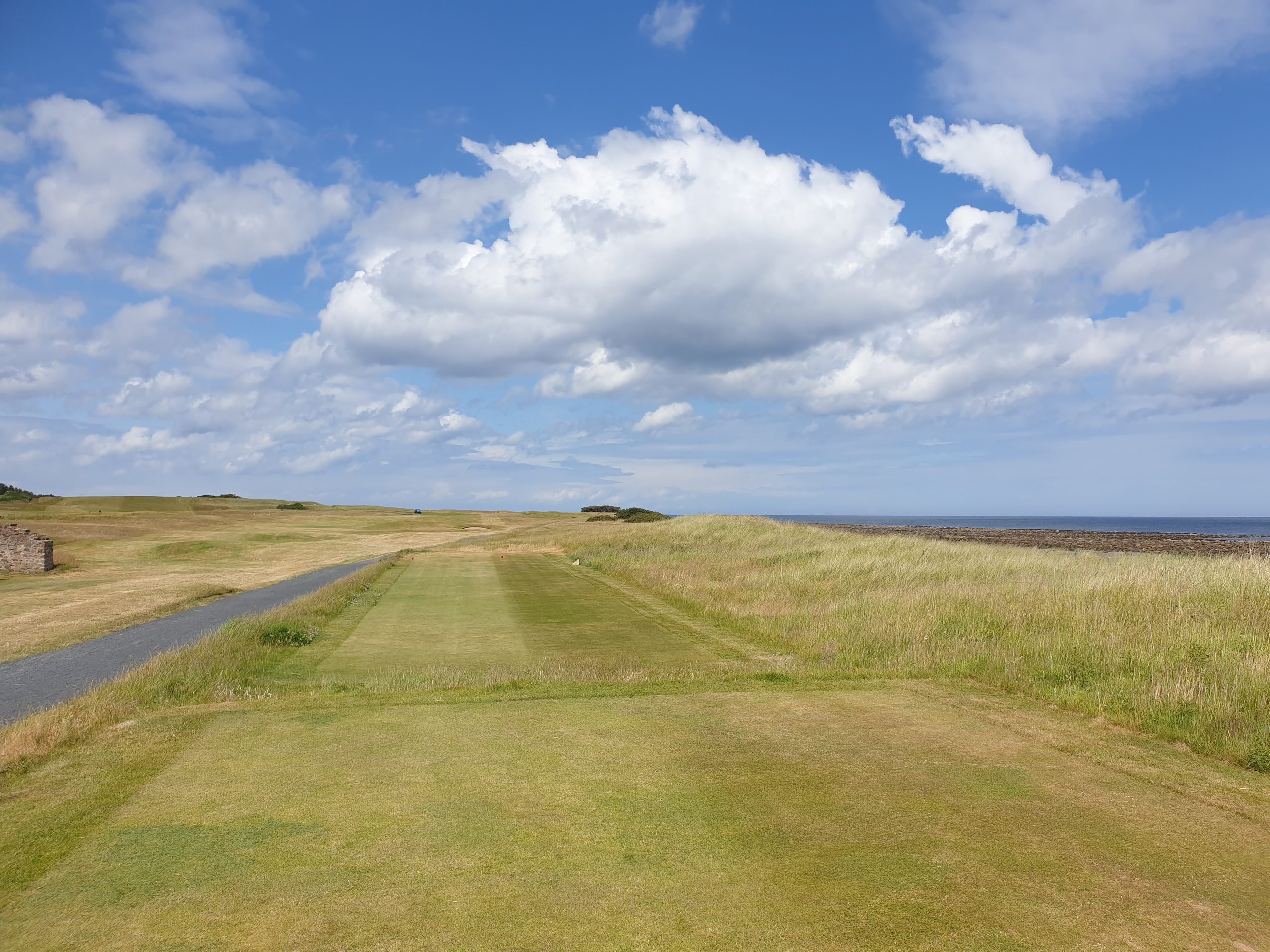
The 11th tee runs along the shore. A good drive and a better approach, and it still produced the only blank on my card.
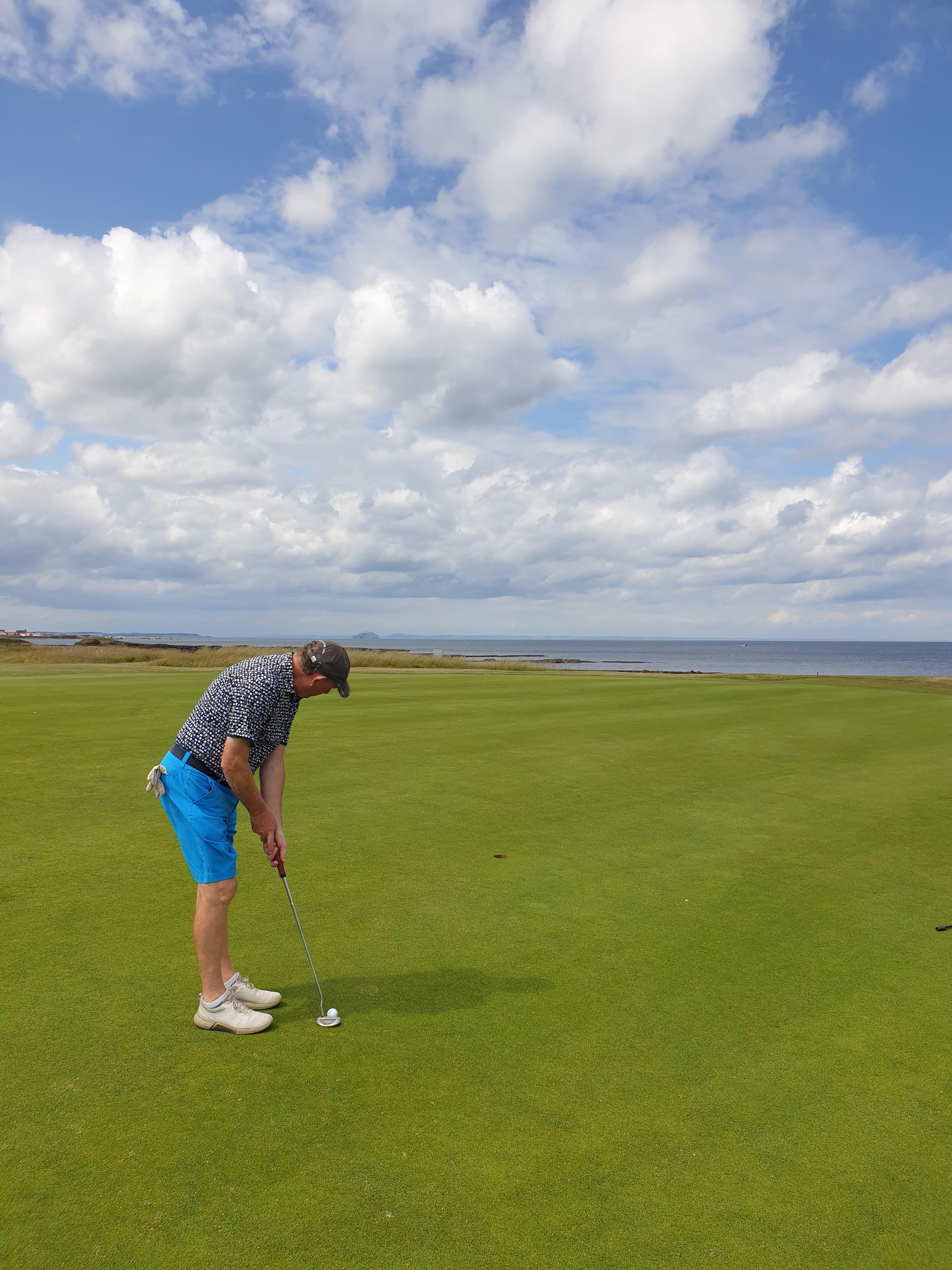
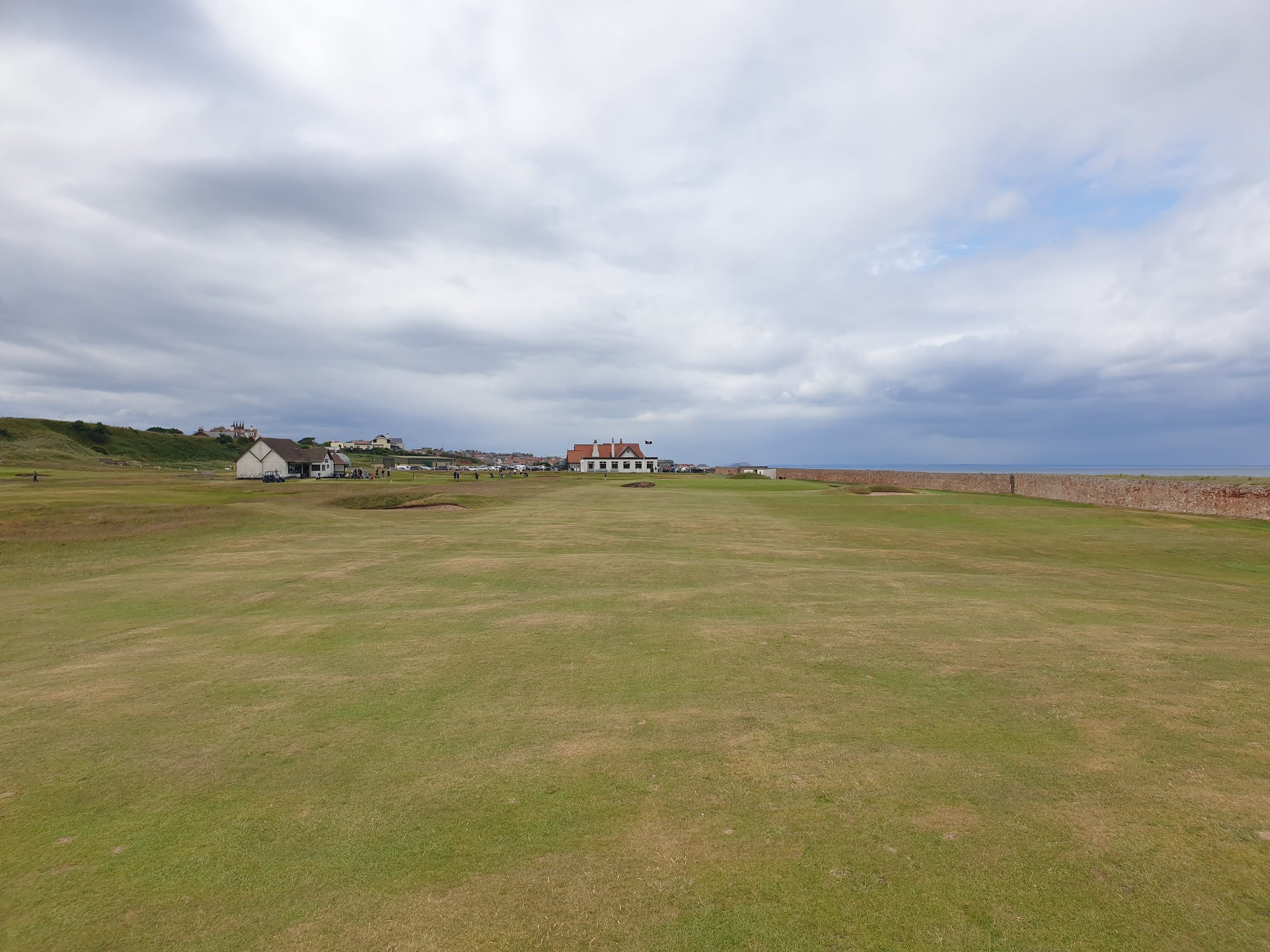
Jim putting on the 12th, with the Bass Rock behind him.

The word bandit itself comes from the Italian bandito, a man placed under a ban: an outlaw by proclamation. In golf it’s a synonym for a sandbagger, and nobody seems to know when golf borrowed it. A handicap committee’s version of the proclamation is a cut. Mine came shortly thereafter in the season, and Cruden Bay and Aberdeenshire Opens will tell that story.

The 18th, heading home towards a clubhouse that is about to be replaced.

As for value, Dunbar is a 5 star quality course. At £195 midweek, I’d give it 3/5. The twilight rate of £165 lifts it to 4, given the quality and the exorbitant neighbouring prices (Gullane No 1, North Berwick, etc). Would I go back? In a heartbeat, preferably as somebody’s guest, and preferably with the same game.

Facts:
Course Type: Links
Par: 71 (3 par 5s, 11 par 4s, 4 par 3s)
Distance: 6,196 yards (yellow tees)
Course Rating / Slope: 70.4 / 124
Course Quality: 5/5
Moly’s Gross Score: 80 (42 Stableford points on the correct course handicap of 14)

My terrific start came undone on the back nine, but overall a great score for my first Dunbar round.

« Older posts

© 2026 Scotland Golf Bible

Theme by Anders Noren — Up ↑